Milling a curved end

Milling a curved end

Home Forums Beginners questions Milling a curved end

Viewing 25 posts - 1 through 25 (of 26 total)
  • Author
    Posts
  • #82331
    Wolfie
    Participant
      @wolfie
      OK I have made the con rod for my engine but aesthetically it need the ends curving. I’ve done one end with a file but it looks like a donkey’s hind leg
      How do I do this in the milling machine
       
      (I don’t have a circular table thing)

      Edited By Wolfie on 18/01/2012 09:02:55

      #5875
      Wolfie
      Participant
        @wolfie
        #82336
        methusala
        Participant
          @methusala
          Hi Wolfie, Have a look at the” model engine news” web site, then go to the “alpha index “
          located on the side panel and scroll down to item no. 416. there you will find all the
          information that you require, plus a whole lot more besides . The site is a mine of
          information albeit about model aero engines but still applicable to most model engineering
          projects .
          hope this helps.
           
          Colin.
          #82338
          Dave C
          Participant
            @davec87625
            Hi Wolfie
             
            I am in the same position as you regards the rotary table.
            I overcame the problem by making some filing buttons. I just made mine from mild steel but hardened silver steel would have been a better option. However the lack of gas bottle at the time and the fact that only two ends needed doing dictated the cheep option.
            Get some rod the same size diameter as the hole in the con rod. then turn two pieces of bar off about 6mm thick and to the outer diameter of your con rod end with a central drilled hole to match the rod.
            You can then use them as a guide to filing if assembled with one on each side of the rod end. File near enough to the guides and the finish by draw filing, whilst draw filing the guides should roll. surprisingly good results can be achieved for very little effort.
            LBSC describes ways of doing the ends in the lathe with a milling cutter but I didn’t fancy the idea much.
            Long winded answer but I hope its of some use to you.
            #82339
            Terry Lane
            Participant
              @terrylane
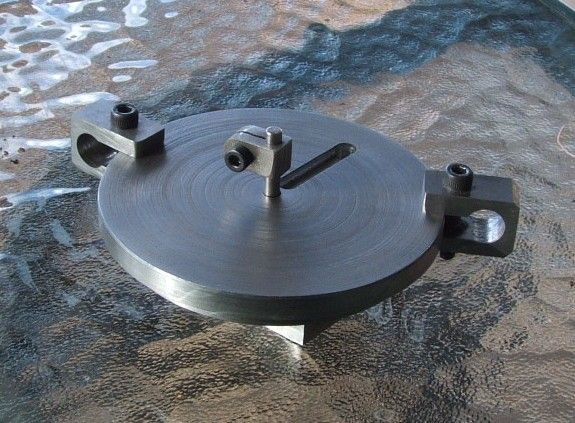
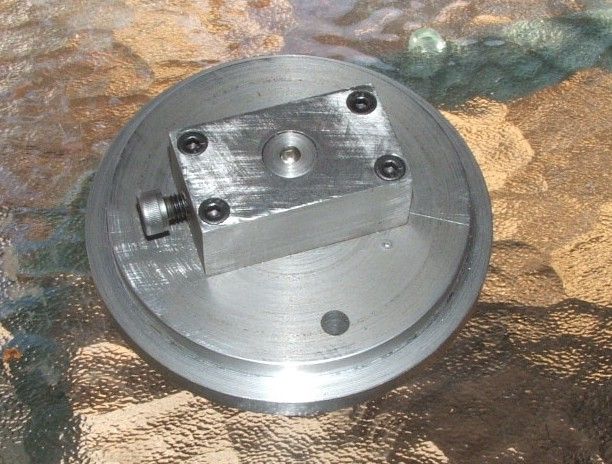
              Knock up one of these. In use the bottom block is gripped in the mill vice and an end mill lowered into the slot – the workpiece is located on the pin and rotated by hand against the mill, with light cuts. DO ensure you are not climb milling tho!
               
              I should be using mine tomorrow – I see if I can remember some action shots.
               

              #82341
              Terryd
              Participant
                @terryd72465
                Hi Wolfie,
                 
                You don’t need to use a milling machine, it’s very satisfying to do it by hand methods, and quicker than setting up the machine accurately for just a couple of ends.
                 
                Here is a guy using filing buttons to guide him rounding a bearing block and here to round the end of some linkage rods.
                 
                Scroll down the first page at least to see other examples of them being used.
                 
                Best regards,
                 
                Terry

                Edited By Terryd on 18/01/2012 10:53:48

                #82342
                Wolfie
                Participant
                  @wolfie
                  Hi thats a great site, but I can’t find an item 416?
                  Also interesting stuff there Terry,  learned something there

                  Edited By Wolfie on 18/01/2012 11:06:42

                  #82343
                  Bazyle
                  Participant
                    @bazyle
                    With appologies for being too basic but I wonder if everyone knows the way to file a curve. Rather than try to make the file follow round the curve you must do the opposite.
                    So with the hole in your connecting rod going left to right and the curve uppermost like a hill in front of you start with the file horizontal and gradually through the stroke drop the handle so the file ends almost vertical. Instead of being like a car going over a bridge it is like a plane taking off.
                     
                    It is well worth getting old MEs from the ’60s onwards when someone is having a clearout and thumbing through them while watching tv as all this stuff is in there.
                    #82348
                    DMB
                    Participant
                      @dmb
                      Thats it, Bayzle. Just flick thro` each vol., use old envelope for a bookmark on useful articles. Later, copy these items on your printer or simply scan them into `puter. Easy way to create your own encyclopaedic `how to do it` manual. Why mess about with donkeys years worth of indexes to trawl thro` umpteen times every time that you want to know something. Thats what I have done, right from 1930`s. Sounds a lot but apart from LBSC theres not a lot else, since some good ideas from way back have been superceded by more recnt better ideas. I would say that 1950 onwards with each decade revealing better ways of `how to do it`. One example; instead of punching a piece of flexible steel tape with loads of holes and stringing it around a wooden disk to create a new set of dividing holes, its now only necessary to print out required number of divs. on a circular bit of paper + stick it to any old disc and use a pointer.Job done!
                      John
                      #82357
                      Terryd
                      Participant
                        @terryd72465

                        Y

                        Posted by Bazyle on 18/01/2012 11:00:27:

                        With appologies for being too basic but I wonder if everyone knows the way to file a curve. Rather than try to make the file follow round the curve you must do the opposite.
                        So with the hole in your connecting rod going left to right and the curve uppermost like a hill in front of you start with the file horizontal and gradually through the stroke drop the handle so the file ends almost vertical. Instead of being like a car going over a bridge it is like a plane taking off.
                         
                        It is well worth getting old MEs from the ’60s onwards when someone is having a clearout and thumbing through them while watching tv as all this stuff is in there.
                         
                        Hi Bazyle,
                         
                        You are absolutely spot on. When I was teaching that is exactly the way I taught youngsters to file a curve and they quickly achieved good results, which chuffed them no end and as you know nothing breeds success like success. There are a great number of techniques and skills such as the one you describe developed over a very long time which really are ‘best practice’.
                         
                        It is this sort of success, achievement, self confidence and esteem gained by students following good practice that kept me teaching for so long. These are skills that cannot be learned easily from a book, or are easily missed when reading text, Many beginners working on their own wouldn’t even realise that they need to learn basic techniques, they just do as best they can without realising that there are better ways.
                         
                        Further there really is no real substitute for learning from demonstration followed by practice. Videos are ok but as with any skill, tool use as with a golf swing or tennis serve etc, really needs someone competent at hand to show you the little adjustments to stance, action, grip etc in order to progress. That’s why sportsmen need coaches.
                         
                        A sad day when ‘apprenticeship’ means a 6 weeks competency course in shelf stacking.
                         
                        Best regards
                         
                        Terry
                        #82370
                        Bazyle
                        Participant
                          @bazyle
                          My only tutor was ME
                          By thumb through I meant read thoroughly. The pre 1950 may be a bit thin but I enjoyed reading all of the content as often there is some wisdom burried in the build articles. I am hanging on to my copies so when my memory cells die off I can enjoy reading them afresh.
                          #82378
                          methusala
                          Participant
                            @methusala
                            Hi wolfie, Sorry I forgot to say click the “site map” first then that will bring up the
                            “alpha index” then scroll down to item 416.
                             
                            Colin.
                            #82394
                            60019
                            Participant
                              @60019
                              How do I do this in the milling machine
                               
                              (I don’t have a circular table thing)
                              Neither do I yet, nor have I yet acquired the filing skills to do this with confidence on parts I would hate to scrap. So I experimented with the Radius function on my DRO when I needed to create the cutout in the Metro Inner Frames to clear the leading axle. I managed to do this as four part quadrants using a 0.2mm step size + confidence in my mathematics + a lot of hand wheel twiddling. I like to think of it as a poor man’s CNC.
                               
                              Wolfie, I cannot remember if you’ve mentioned you have a DRO on your mill; when I get to the connecting rod ends, and if my artisan skills have not improved by then, this is the way that I will be doing them.
                               
                              Mike


                              #82396
                              Terry Lane
                              Participant
                                @terrylane
                                Posted by Terryd on 18/01/2012 10:49:16:

                                Hi Wolfie,
                                 
                                You don’t need to use a milling machine, it’s very satisfying to do it by hand methods, and quicker than setting up the machine accurately for just a couple of ends.
                                 
                                Here is a guy using filing buttons to guide him rounding a bearing block
                                 
                                Terry
                                Edited By Terryd on 18/01/2012 10:53:48

                                I notice some of my filing button adventures on that page!

                                #82397
                                Clive Hartland
                                Participant
                                  @clivehartland94829
                                  Filing buttons, it just came to me that enclosed ball bearings would make good filing buttons as they would easily rotate and the periphery is hard.
                                  Might be worth saving all the old bearings.
                                   
                                  Clive
                                  #82409
                                  Terryd
                                  Participant
                                    @terryd72465
                                    Posted by Tel on 18/01/2012 19:39:22:

                                    Posted by Terryd on 18/01/2012 10:49:16:

                                    Hi Wolfie,
                                     
                                    You don’t need to use a milling machine, it’s very satisfying to do it by hand methods, and quicker than setting up the machine accurately for just a couple of ends.
                                     
                                    Here is a guy using filing buttons to guide him rounding a bearing block
                                     
                                    Terry
                                    Edited By Terryd on 18/01/2012 10:53:48

                                    I notice some of my filing button adventures on that page!

                                    Exactly.
                                     
                                    Terry
                                    #82422
                                    Jon
                                    Participant
                                      @jon
                                      Posted by Bazyle on 18/01/2012 11:00:27:

                                      So with the hole in your connecting rod going left to right and the curve uppermost like a hill in front of you start with the file horizontal and gradually through the stroke drop the handle so the file ends almost vertical.
                                       
                                       
                                      Afraid gonna have to disagree with that as one of a few in this day an age that filed quality items for a living by traditional means.
                                       
                                      Looking at the cylindrical hole keep file horizontal push and look where metals removed subconsciously. The key is to look what you are doing, no need to stop and stare you have to start again then.
                                      Generally as pushing file forward on left side the hardest, you want to keep altering the angle paying attention to where the metal needs to come off. When competant you can do this arcing and sweeping up and down at 45 degrees flicking the wrist.
                                      Top centre down to 3 o clock is easier if right handed.
                                      Nice fluent strokes putting your back in to it.
                                       
                                      Apprentices when seen doing as mentioned above would have been told and shown straight away, if persisted twice, shown the door, it has happened.
                                      The only time that would be used is to draw file prior to polishing.
                                       
                                      A good tutorial that no book can attempt to teach is to use hardened pegs a few thou up on diameter required. Certainly quicker if doing more than three. All you have to do is keep the file horizontal far quicker than milling.
                                      #82473
                                      Sub Mandrel
                                      Participant
                                        @submandrel
                                        I vote for filing buttons – they work like magic.
                                         
                                        Neil
                                        #82480
                                        Terryd
                                        Participant
                                          @terryd72465
                                          Posted by Stub Mandrel on 19/01/2012 20:21:33:

                                          I vote for filing buttons – they work like magic.
                                           
                                          Neil
                                          Hi Neil,
                                           
                                          I agree,
                                           
                                          sounds a bit like the ‘hardened pegs’ Jon was banging on about.
                                           
                                          T
                                          #82491
                                          Jon
                                          Participant
                                            @jon
                                            Yes the same Terry.
                                             
                                            Got no piccies but essentially we used to do a lot of springs with eyes going on products costing as much as a cheap house. These eyes were screw fixing points along with a raised groove filed in elsewhere.
                                            These eyes could be 10 to 15 thou thick on a around a 3/16″ dia screw head. Close you get the worse it looks if out.
                                             
                                            For these pegs to work best keep where it goes in to the hole short soit doesnt protrude through. Other large end doesnt matter.
                                            Hold peg and part in vice and remove metal, then rotate as necessary.
                                            Work clean its easier in the end. Now because the pegs were slightly oversize youcan then polish a few though off where filed. You would have to do that if milled any way.
                                             
                                            It gets trial and error when having to file the part round to fit snugly in to the opposite arrangement with no gaps or play, just takes time. Smoke it up or engineer blue it otherwise an ink marker does just as well.
                                             
                                             
                                            #82499
                                            Terryd
                                            Participant
                                              @terryd72465
                                              Hi Wolfie,
                                               
                                              reading other threads it seems as though us ‘Luddites’ have got it all wrong and have wasted your time, leading you astray down wicked paths – sorry . What you really need to do is forget archaic technology such as hand tools and get yourself set up with an array of cnc machinery and get program (buy or free) spend time learning how to produce cad models and upload them to your new machine.
                                               
                                              If you are really clever like all those ‘Hi Tech’ guys you can get instructions from other sites on building robotic arms to do the machine loading and even assembly (like they do in real factories not playshops like ours) and you will then be able to enjoy your model without having to lift a finger. Just be creative and design the parts, spend advanced skill time sourcing materials and enjoy the results that your robots bring to you in your favourite armchair.
                                               
                                              Result – perfectly radiused con rods
                                               
                                              Best regards
                                               
                                              Terry

                                              Edited By Terryd on 20/01/2012 07:31:13

                                              #82503
                                              David Haynes
                                              Participant
                                                @davidhaynes53962
                                                It is an ongoing discussion that has even permeated the ME competition arena; how do you compare fine ME models that have been built by differing methods? How do you compare a model built from a kit with one built by CNC and one built entirely by hand. The last ‘entirely by hand’ is a misnomer, because we all depend to some degree on external inputs which may have been anything but ‘by hand’. I think a basic acceptance is developing that some folk use different routes to get to a model. The majority may have a manually operated lathe as their main machine tool but some may have the latest full spec CNC system. I am sure that subconsciously we all recognise that different skills are in use in all these variations, some more hands on and ‘artisan’ than others. We cannot get away from the fact though, that these basic first principal skills remain important, even if only as a step towards more digitally based ones. Otherwise we will simply move straight to computer simulators with an authentic smoke aroma generator at the back!
                                                 
                                                By the way, filing buttons are great, but so is the gadget for machining the curve.
                                                 
                                                Dave
                                                #82506
                                                Jon
                                                Participant
                                                  @jon
                                                  Good point there Terry and David regarding learning basic skills before writing progs for CNC.
                                                  Maybe there should be three classes, pretty much hand made, by manual machine labour and sat behind a desk.
                                                   
                                                  Some of the stuff i used to do it took the best
                                                  programmers years to get right and could only get it so far. In all parts supplied that needed filing up and fitting by trial and error was best
                                                  they could achieve.
                                                  To cap that the end job takes less time but the overall costs were the same.
                                                  Or in other words cnc cant do everything its limited to the programmer and may need specific highly skilled labour to put right.
                                                   
                                                  I have made all these individual parts entirely by hand when had to so did my predecessors for 300 years even the screws.
                                                   
                                                  What i dislike about cnc made stuff is when the
                                                  writer knows nothing on how to make traditionally, ‘the book says’. Reading books only
                                                  tells you so much, best way is on the job learning in at the deep end.
                                                   
                                                  I have several repeat customers that are
                                                  brilliant program/operators. They all say what i produce would take them
                                                  a solid day and a half to proggy a 5 axis machine but parts would come
                                                  off in 15 mins plus 1/2hr finishing. Fine if doing several hundred each
                                                  one the same as the next but that aint me everyone different and unique
                                                  fitting into a niche market worldwide. Paul on here has seen one item.
                                                  Different complexities some take 1 1/4hrs, some can take 4 1/2hrs to make complete as a one off.
                                                  Now heres the scenario, what i can do as a one off in 1hr 23 mins, cnc made ones are sold 143% dearer a lot more basic and complete with machine markings! And i am making a killing.
                                                   
                                                  I am not against cnc i have a lathe some where rotting away bought for doing the repeat laborious jobs.
                                                  Cnc is fine its all dependant upon the complexity and time given to writing.
                                                   
                                                  I can do two of the three ways very very well, whilst others may be more specific or generalised across the board by other methods.
                                                  Which ever method, its still engineering and best of luck.
                                                  #82509
                                                  Ian S C
                                                  Participant
                                                    @iansc
                                                    Terry, I’m staying the I am for now, this computerised machining is no good if it can’t go out and get a good bargin, load the machine, then call me when the jobs finished, and ready to go. I quite like doing all that my self, even to using the armstrong milling machine (file), instead of setting up the mill to do a simple little job like rounding the end of a con rod, using filing buttons. I make mine from MS and case harden them. Ian S C
                                                    #82728
                                                    Sub Mandrel
                                                    Participant
                                                      @submandrel
                                                      Can I vote for the ‘reverse filing’ method described above?
                                                       
                                                      Making the counterweighted cranks for the H-C nearly 2″ long by 5/8″ wide, I needed one end curved and rounded at the corners, the other following round the crank.
                                                       
                                                      I held them in the 3-jaw between two jaws and pushed up against the third to do the gently curved end, all the other curves donme by hand, using an M6 cap screw as a guide for the crankpin hole.
                                                       
                                                      I was amazed at how easy it was to get smooth, blended curves with the handle-down tip-up technique.
                                                       
                                                      Neil
                                                    Viewing 25 posts - 1 through 25 (of 26 total)
                                                    • Please log in to reply to this topic. Registering is free and easy using the links on the menu at the top of this page.

                                                    Latest Replies

                                                    Home Forums Beginners questions Topics

                                                    Viewing 25 topics - 1 through 25 (of 25 total)
                                                    Viewing 25 topics - 1 through 25 (of 25 total)

                                                    View full reply list.