What Did You Do Today (2017)

What Did You Do Today (2017)

Home Forums The Tea Room What Did You Do Today (2017)

Viewing 25 posts - 1,026 through 1,050 (of 2,518 total)
  • Author
    Posts
  • #299338
    SillyOldDuffer
    Moderator
      @sillyoldduffer

      I came across 'catenary' referring to copper and fibre communications cables strung between poles and buildings about 15 years ago. They were considered a cheap and nasty substitute for deep buried ducts. My mate the telephone engineer didn't recognise the name.

      Checking into it today on the web, you can buy Catenary Wire and there's a Wikipedia entry as well. Looking at the definitions closely, a catenary involves at least two wires. The catenary wire, or wires, support the weight of the cabling that actually carries the power or signals.

      The original meaning is the curve taken by a chain suspended at both ends that's supporting only it's own weight, ie the tension in the chain is only due to gravity. Mathematically this curve is Andrew's hyperbolic cosine.

      Looks like this is another example of a word taking on a shaded new meaning. It gets worse – I've just realised that I don't understand the difference between a wire and a cable, or a cable, rope and hawser!

      Dave

      Edit typos…

      Edited By SillyOldDuffer on 23/05/2017 15:14:13

      #299340
      Martin Kyte
      Participant
        @martinkyte99762

        Is the rope, cable laid or hawser laid?

        ;0)

        regards Martin

        #299342
        Neil Wyatt
        Moderator
          @neilwyatt

          Wire and cable is easy, a cable is made of wires.

          N.

          #299348
          SillyOldDuffer
          Moderator
            @sillyoldduffer
            Posted by Neil Wyatt on 23/05/2017 15:27:14:

            Wire and cable is easy, a cable is made of wires.

            N.

            Trouble is one of the definitions of Wire is:

            b. A strand or rod of such material, or a cable made of such strands twisted together.
            I take this to mean that a wire can be a cable made of wires!
            My head hurts.
            #299349
            Bazyle
            Participant
              @bazyle

              easy – a cable is a unit of distance cheeky

              #299351
              Anonymous

                So is a chain.

                Andrew

                #299352
                duncan webster 1
                Participant
                  @duncanwebster1

                  so are rods, poles and perches (all = 5.5 yards), and links (= chain/100). Those who want to revert to Imperial, beware what you wish for

                  Edited By duncan webster on 23/05/2017 16:09:00

                  #299353
                  SillyOldDuffer
                  Moderator
                    @sillyoldduffer

                    I made the mistake of looking up hawser, my bold:

                    'Hawser: A large rope or cablet, which holds the middle degree between the cable and towline, being a size smaller than the former, and as much larger than the latter; curiously, it is not hawser but cable laid'

                    Also, hawsers don't go through hawse-holes. Of course not – it's Cables that go through hawse-holes.

                    #299354
                    Sam Longley 1
                    Participant
                      @samlongley1
                      Posted by Andrew Johnston on 23/05/2017 13:18:32:

                      Posted by SillyOldDuffer on 23/05/2017 12:59:50:

                      Anyone else call overhead cables 'catenarys'?

                      No. A catenary is the curve given by the hyperbolic cosine. A chain or cable only has this shape if it is free hanging. If there is tension applied the shape is no longer purely catenary. So not all overhead cables are catenary.

                      Andrew

                      I think that you are wrong. depending on the values inserted in the formulae the curve transposed into the graph can be changed. it can have a steeply curved bottom section or a fairly flat bottom section with sharply curved shoulders. (The points of suspension being the same distance apart)

                      I accept that a particular value can be inserted to match the curve of the chain/ rope etc in question but as the curve of the formulae can be altered to give a distorted curve then the definition cannot be a true definition of a catinery. I am not aware of any chain/rope etc that will give a distorted curve unless it has a core or outer cover that might change the stresses in the material ( perhaps lead cored rope etc but we are not talking about special purpose ropes )

                      A bit like saying that Pythagoras theory can be proven by measuring the area of squares on the hypotenuse & comparing to the sum of the squares on the other 2 sides. It may be true but it is not the scientific method for proving the theory.

                      #299358
                      Frances IoM
                      Participant
                        @francesiom58905

                        “so are rods, poles and perches (all = 5.5 yards)”
                        Roods + perches are sq measure 4 roods to the acre 40 perches to the rood ?

                        a chain + link is a linear measure

                        #299359
                        JasonB
                        Moderator
                          @jasonb
                          Posted by duncan webster on 23/05/2017 16:08:45:

                          so are rods, poles and perches (all = 5.5 yards), and links (= chain/100). Those who want to revert to Imperial, beware what you wish for

                          I've used metric chains for land surveying, 20m long if I remember rightly

                          #299361
                          Michael Gilligan
                          Participant
                            @michaelgilligan61133
                            Posted by Sam Longley 1 on 23/05/2017 16:11:53:

                            I accept that a particular value can be inserted to match the curve of the chain/ rope etc in question but as the curve of the formulae can be altered to give a distorted curve then the definition cannot be a true definition of a catinery. I am not aware of any chain/rope etc that will give a distorted curve unless it has a core or outer cover that might change the stresses in the material ( perhaps lead cored rope etc but we are not talking about special purpose ropes )

                            .

                            Agreed, Sam

                            In my, admittedly limited, understanding; that is why the catenary curve is described in terms of a freely hanging chain [with infinitesimally small links].

                            If you're ever in Barcelona … pay a visit to the exhibition in the roof space of Cas Milà, where Gaudi's architectural models are displayed: **LINK**

                            http://mathstat.slu.edu/escher/index.php/The_Geometry_of_Antoni_Gaudi

                            MichaelG.

                            #299363
                            Sam Longley 1
                            Participant
                              @samlongley1
                              Posted by JasonB on 23/05/2017 16:48:20:

                              Posted by duncan webster on 23/05/2017 16:08:45:

                              so are rods, poles and perches (all = 5.5 yards), and links (= chain/100). Those who want to revert to Imperial, beware what you wish for

                              I've used metric chains for land surveying, 20m long if I remember rightly

                              & did you lay them on the ground & insert pins in the small holes in the handles or did you tension them with weights across tripods with plum bobs hanging down to give the distances

                              All done to bore the pants off us students in Hylands Park Chelmsford- I still have a very accurate survey of just one little section 50 years later. God knows why but I could not bear to chuck my student notes away after spending so many hours writing them

                              #299364
                              Sam Longley 1
                              Participant
                                @samlongley1
                                Posted by Michael Gilligan on 23/05/2017 17:03:36:

                                Posted by Sam Longley 1 on 23/05/2017 16:11:53:

                                I accept that a particular value can be inserted to match the curve of the chain/ rope etc in question but as the curve of the formulae can be altered to give a distorted curve then the definition cannot be a true definition of a catinery. I am not aware of any chain/rope etc that will give a distorted curve unless it has a core or outer cover that might change the stresses in the material ( perhaps lead cored rope etc but we are not talking about special purpose ropes )

                                .

                                Agreed, Sam

                                In my, admittedly limited, understanding; that is why the catenary curve is described in terms of a freely hanging chain [with infinitesimally small links].

                                If you're ever in Barcelona … pay a visit to the exhibition in the roof space of Cas Milà, where Gaudi's architectural models are displayed: **LINK**

                                http://mathstat.slu.edu/escher/index.php/The_Geometry_of_Antoni_Gaudi

                                MichaelG.

                                I notice the link shows a sketch of a hypobolic perabola. If you want to see one in the flesh take a drive up the A1. It started out as a garage forecourt roof then became a Wimpey bar or something. Not sure what it is now but it was there when I went to Doncaster MEX the other Friday.

                                I always remember it because our lecturer had great pride in explaining that description when asked  & I was able to tell my father- who replied with "Oh!  right !"- as we drove past one day.        What a waste of education !!!!!

                                Edited By Sam Longley 1 on 23/05/2017 17:33:59

                                #299365
                                JasonB
                                Moderator
                                  @jasonb
                                  Posted by Sam Longley 1 on 23/05/2017 17:21:11:

                                  I've used metric chains for land surveying, 20m long if I remember rightly

                                  & did you lay them on the ground & insert pins in the small holes in the handles or did you tension them with weights across tripods with plum bobs hanging down to give the distances

                                  I seem to remember throwing them out on the grass and just pinning the ends, measured sideways from the chain to get position of features in the park opposite the college.

                                  #299366
                                  SillyOldDuffer
                                  Moderator
                                    @sillyoldduffer

                                    If a road surface consists of a series of inverted catenary curves, you can have vehicles with square wheels. Now there's an idea for an interesting model.

                                    #299367
                                    Bazyle
                                    Participant
                                      @bazyle
                                      Posted by JasonB on 23/05/2017 16:48:20:

                                      I've used metric chains for land surveying, 20m long if I remember rightly

                                      Aaaaagh. Them's not real chains. 22 YARDS please. The length of a cricket pitch (adult) of course. Should have been putting it to practical use this afternoon except it started to drizzle so we just rolled it.

                                      #299370
                                      duncan webster 1
                                      Participant
                                        @duncanwebster1
                                        Posted by Frances IoM on 23/05/2017 16:34:33:
                                        "so are rods, poles and perches (all = 5.5 yards)"
                                        Roods + perches are sq measure 4 roods to the acre 40 perches to the rood ?

                                        a chain + link is a linear measure

                                        Yes Roods are square measure, but perch is length, even tho' some sources use it for area. It should actually be square perches, but context makes it all clear. If I say I have a 10 perch allotment, it's obviously area, see

                                        **LINK**

                                        **LINK**

                                        I haven't even mentioned hides, which were enough land to support a household, reckoned between 60 and 120 acres, depending on the quality of the land. As I said, be careful what you wish for imperialists!

                                        And a metric chain (20m) is 21' 10.5", if the difference matters I suggest you should be using something more accurate (like GPS)

                                        #299374
                                        JasonB
                                        Moderator
                                          @jasonb
                                          Posted by duncan webster on 23/05/2017 18:20:51:

                                          And a metric chain (20m) is 21' 10.5", if the difference matters I suggest you should be using something more accurate (like GPS)

                                          I doubt it does matter on a criket pitch, have you seen how thick the lines are they use to mark thing outsmile p

                                          #299376
                                          SillyOldDuffer
                                          Moderator
                                            @sillyoldduffer

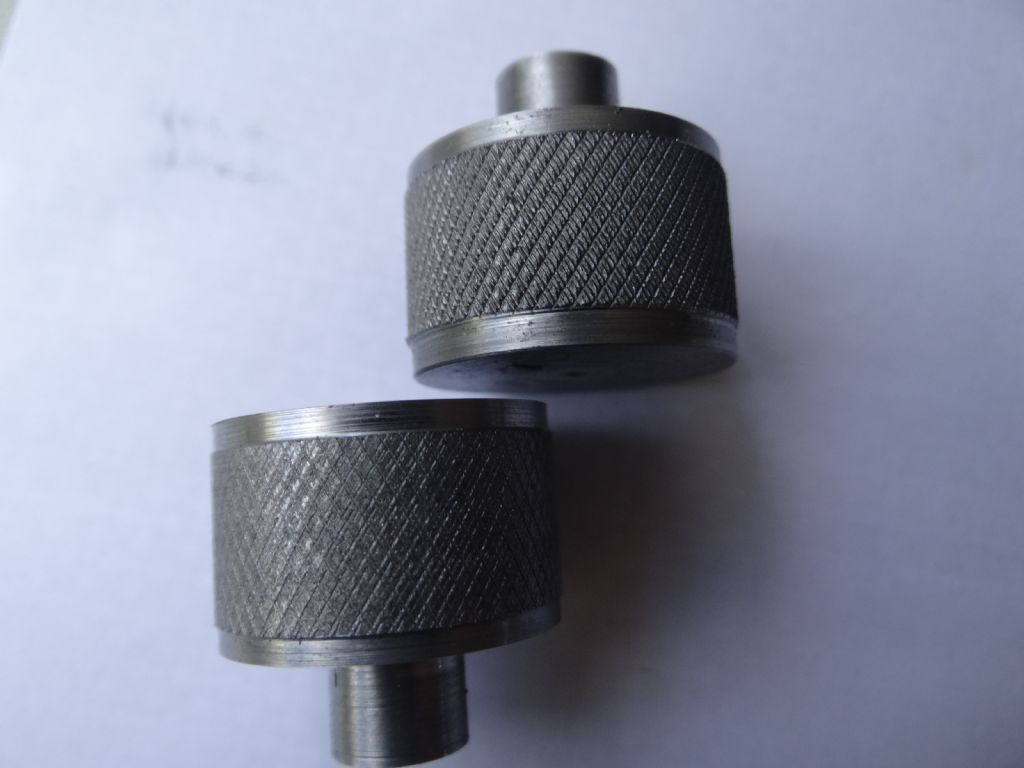
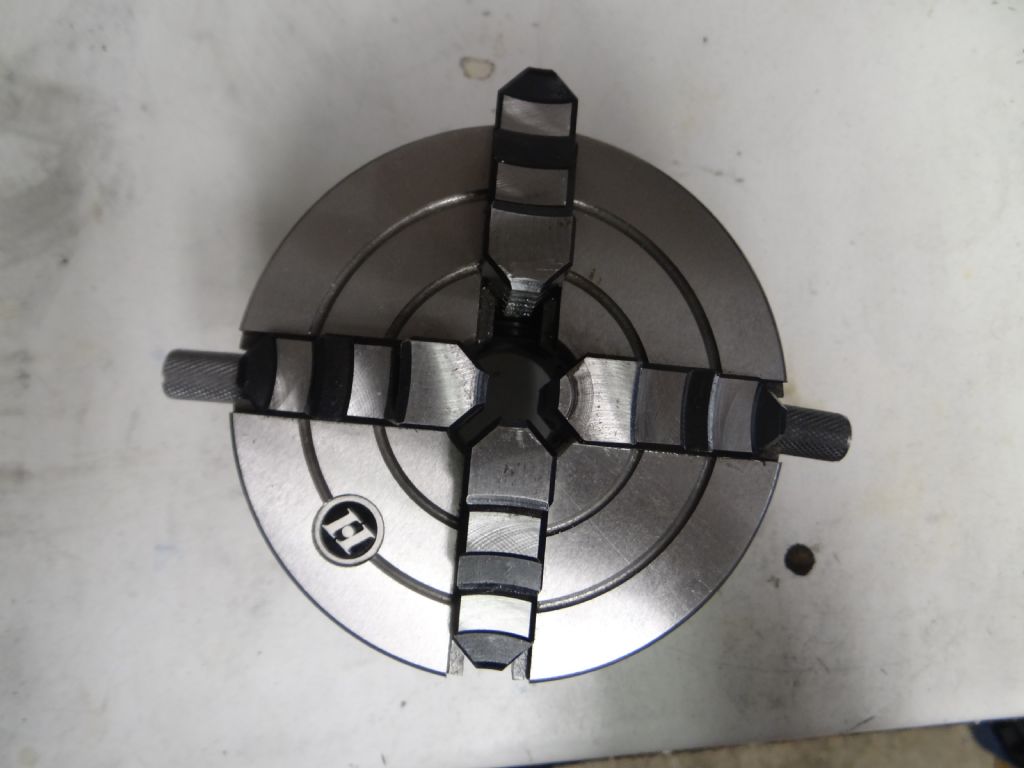
                                            Today I have been punished for being a smart-ass. Yesterday I made a pair of adjusting knobs to simplify setting up a 4-jaw chuck. The ideas is to turn both at the same time to zero in on the centre. As the knobs are short there's plenty of elbow room, and the width provides leverage.

                                            dsc04413.jpg

                                            Apart from the bad knurling what could possibly go wrong? The idea is brilliant; my fortune is made.

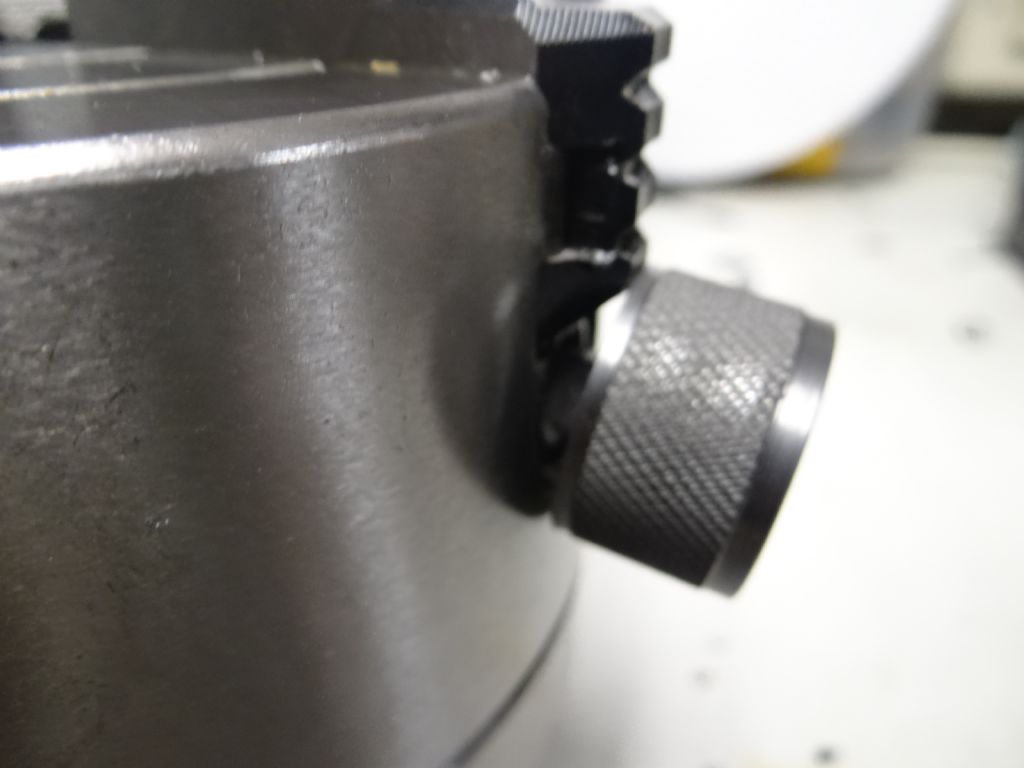
                                            After squaring off the shaft to fit the chuck, I realise that the s*dding things foul as soon as the jaws clear the body of the chuck. This is a serious design error.

                                            dsc04416.jpg

                                            The quick cure was to turn the knobs down so that the jaws will clear them. Hurrah, it works.

                                            dsc04415.jpg

                                            Alas, although the adjusters are quite useful for centring in the early stages while the jaws are loose there's not enough leverage to completely tighten them up. Even though the new knurling is much better, the reduced diameter version isn't quite successful either. Now I'm asking why I didn't think this through.

                                            Maybe I should just take up metal detecting as a hobby. It will be a success – there's tons of scrap in my garage.

                                            Dave

                                            #299389
                                            Brian H
                                            Participant
                                              @brianh50089

                                              Obviously the continentals weren't into cricket.

                                              Brian

                                              #299395
                                              Steven Vine
                                              Participant
                                                @stevenvine79904

                                                Posted by SillyOldDuffer on 23/05/2017 18:32:19:

                                                Alas, although the adjusters are quite useful for centring in the early stages while the jaws are loose there's not enough leverage to completely tighten them up.

                                                Dave

                                                Hi Dave

                                                Can this disaster be saved by cross drilling the knob, to accept a very short 3mm diameter tommy bar, to provide a bit more leverage; or will a tommy bar get in the way and be inconvenient. Maybe cross drill a couple of times, so that the tommy bar can be re-positioned if it fouls the jaws?

                                                Closely following all your ups and downs laugh. Lol.

                                                Steve

                                                #299400
                                                Michael Gilligan
                                                Participant
                                                  @michaelgilligan61133

                                                  Posted by SillyOldDuffer on 23/05/2017 18:32:19:

                                                  Today I have been punished for being a smart-ass. Yesterday I made a pair of adjusting knobs to simplify setting up a 4-jaw chuck. The ideas is to turn both at the same time to zero in on the centre. As the knobs are short there's plenty of elbow room, and the width provides leverage.

                                                  [ … ]

                                                  Now I'm asking why I didn't think this through.

                                                  .

                                                  Nothing wrong with the general principle, Dave, but … as you have discovered; the optimum proportions need to be found.

                                                  • Make the squares a fairly snug fit in the sockets, and then longer shanks won't feel so cumbersome
                                                  • Make the devices out of hex socket screws, or put hexagons on the end; and then you can tighten with an Allen key, or a socket wrench, as appropriate.

                                                  MichaelG.

                                                  #299403
                                                  Frances IoM
                                                  Participant
                                                    @francesiom58905

                                                    “Yes Roods are square measure, but perch is length, even tho’ some sources use it for area.”
                                                    I stand corrected – maybe you could inform the Ordnance survey esp those who did the 19th century 1:2500 mapping which gave field sizes in acres to 3 decimal figures but for convenience also included an algorithm to convert back to the common A R P. The O/S mapping was the one accepted for legal purposes.

                                                    Re strange units – on the IoM pre 19th century many fields cut for hay were expressed in daymoths – ie how many man days were required to manually mow the field.

                                                    #299419
                                                    JasonB
                                                    Moderator
                                                      @jasonb

                                                      Regarding the pair of stubby chuck keys, I can't find the picture at the moment but I saw a pair on MEM forum that had the shank (your knurled part) long enough to clear the jaw when it was fully would out and then a plastic handle/knob about 2" dia. This gives you enough to grip and you can apply a good amount of pressure when the other two jaws ate getting tight on teh work to move it against them.

                                                      Once you start having to juggle extra tommy bars or allen keys it all starts to get a bit of a fiddle. Though I would suggest the twin keys are used to get things close and then the normal key used to finally tighten and fine tune.

                                                    Viewing 25 posts - 1,026 through 1,050 (of 2,518 total)
                                                    • Please log in to reply to this topic. Registering is free and easy using the links on the menu at the top of this page.

                                                    Latest Replies

                                                    Home Forums The Tea Room Topics

                                                    Viewing 25 topics - 1 through 25 (of 25 total)
                                                    Viewing 25 topics - 1 through 25 (of 25 total)

                                                    View full reply list.