
Rivetting with a hydraulic press

Rivetting with a hydraulic press

Home › Forums › Workshop Tools and Tooling › Rivetting with a hydraulic press

Viewing 25 posts - 1 through 25 (of 40 total)
  • Author
    Posts
  • #869870
    Martin Johnson 1
    Participant
      @martinjohnson1
      #869881
      Jez
      Participant
        @jez

        Hi Martin,

        I used a similar press (bench version, but 10 tons) to set 3/16″ cold iron rivets.  Worked well, and from memory took 4.7 tons to set them properly.

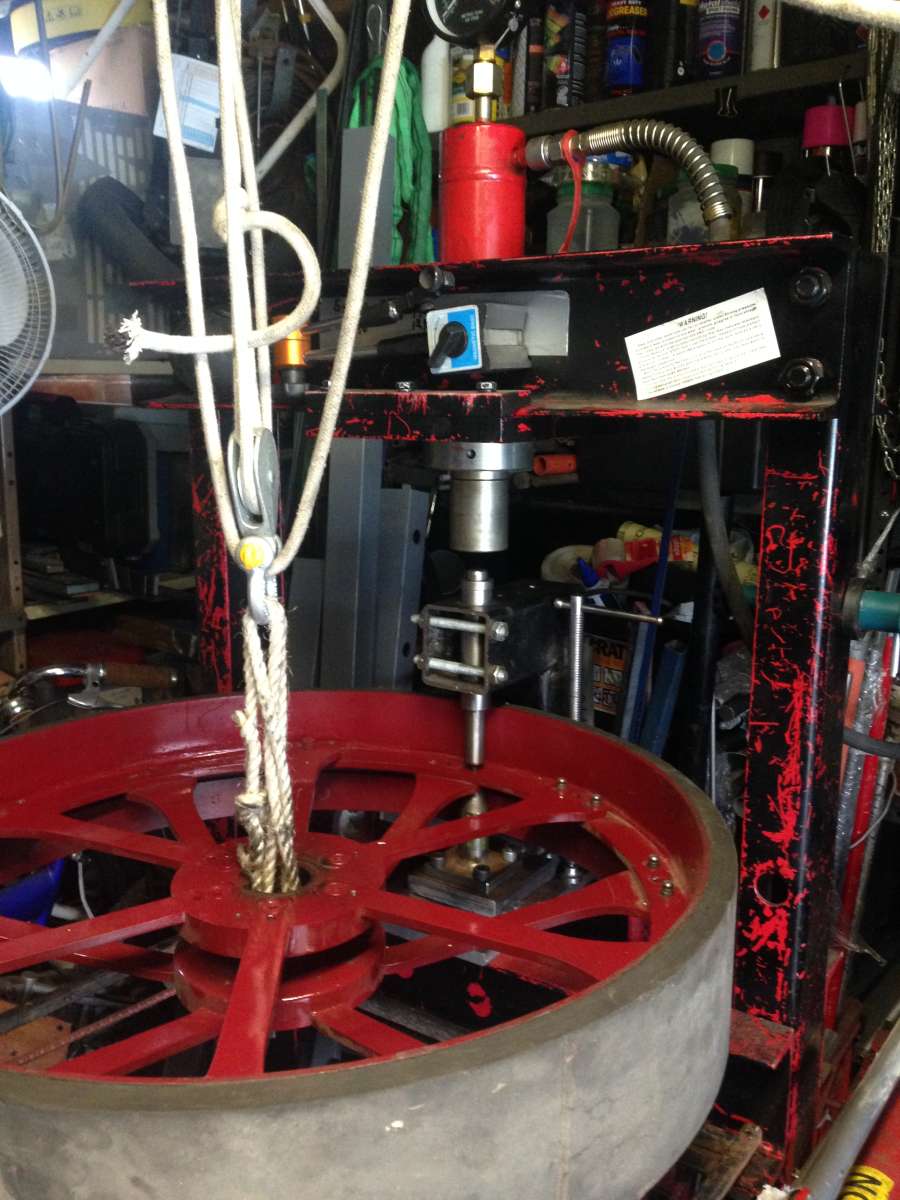
        I made a riveting jig for the wheels – the bottom set is removable:

        Capture1


        Cheers, Jez.

        #869882
        Clive Foster
        Participant
          @clivefoster55965

          that is remarkably good price for a hydraulic press.

          I have similar one, rather older and bought as a supply your own jack kit, which is effective but somewhat cumbersome is use. Tends to be tricky to hold things in the press and align them when working solo. The pressure rod tends to wobble about a bit as its hung on a spring supported plate with a fairly sloppy bearing to support the rod itself.

          I’ve found it distressingly easy to end up pushing a bit off line. But I don’t use it much. 10 presses a year would be really busy. So its not too great a pain to take bait of extra care whilst muttering appropriate verbal encouragement.

          Given several hundred to do I reckon the odds of messing up with this sort of press are just too high.

          For more precise work I think a bench top size device based around the relatively inexpensive 12 ton rams sol as spare parts for pullers and extraction devices might prove more satisfactory. For example Simply bearings sell one or around £30.00

          https://www.simplybearings.co.uk/products/kdpau301?gad_source=1&gad_campaignid=24124593780&gbraid=0AAAAAD-_g0HIqtGwKCZTDywCvg0eglKjg&gclid=EAIaIQobChMIsfnY94fBlwMVw4b9BR1iZDTgEAQYCSABEgJ4K_D_BwE

          Having something sat on a bench makes it much easier to arrange support for large components like frames greatly easing handling.

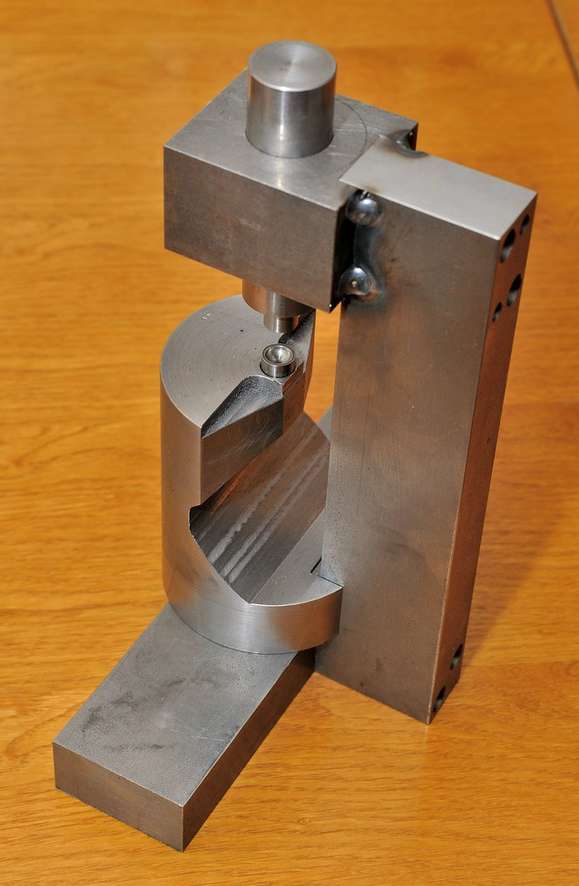
          Some years ago I used one to make a special puller to help ship Range Rover suspension parts based on the vastly expensive official sykes picavant design. If I ever need a bench top hydraulic press I only need to make a baseplate and spacer rods to go with the internally threaded puller carrier and I’m in business.

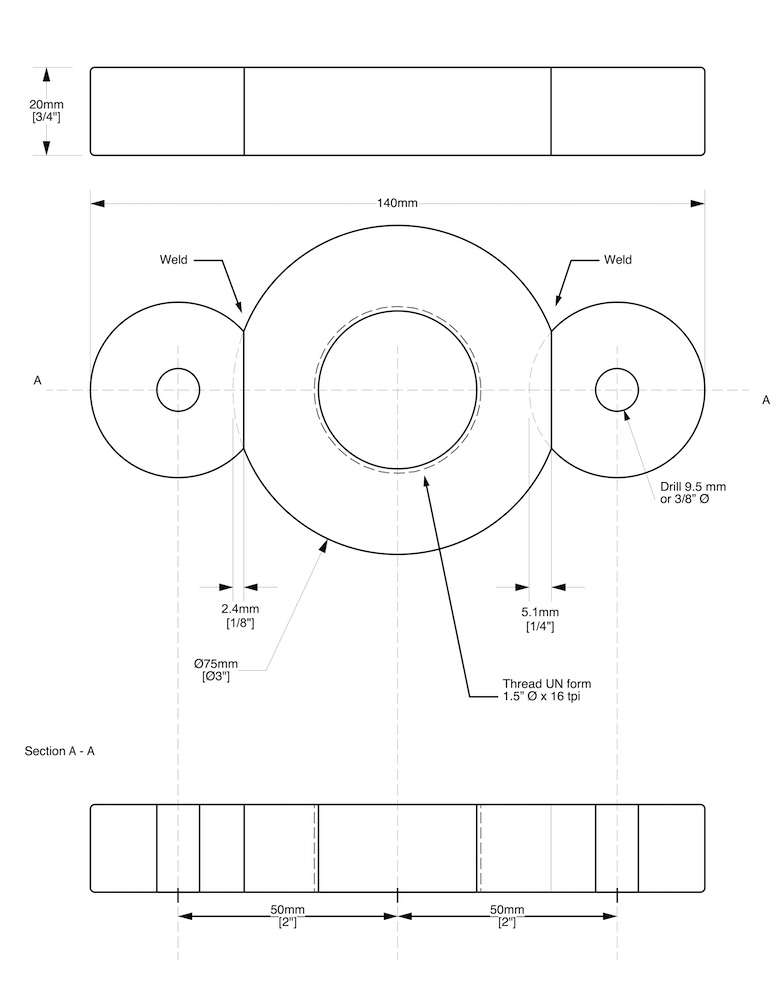
          This is my carrier, obviously adjust dimensions to suit if you fancy making one.

          Ram CarrierR


          Clive


          #869902
          Bob Worsley
          Participant
            @bobworsley31976

            I did start looking at 2″ and 3″ traction engine wheels, lots of rivets. I did wonder if using a spot welder to get the rivet red hot and then using a simple mechanical press to close would work, but never got to try it.

            An alternative could be the PSUs from computers/servers etc. They will supply dozens of amps at 2V/3V etc and might do the same job? Yet to work out how to fool the PSU into working, they are all now ‘inteligent’.


            #869906
            Bazyle
            Participant
              @bazyle

              One thing to look out for with these jack style presses is the pressure release. Rather fiddly so you will need to invent a tool that works better for your hands and stays in place.

              #869925
              DC31k
              Participant
                @dc31k

                To me, the thought of using a manual hydraulic press for several hundred anything is on a parallel with those computational questions which in theory can be solved, but in practice would take longer than the age of the universe to do so.

                Have a think (use a car bottle jack as your performance test item) of how much ram travel is required to set a rivet. How many stokes of the operating handle are required to achieve this travel (let alone to bring the ram from fully closed to touching the rivet).

                As above, the release mechanism on a standard press can be fiddly, and as the return is spring assisted, the ram always closes fully (could be limited by a stop).

                The speed issue could perhaps be solved with an air over hydraulic version (foot operated, leaving both hands free to manipulate the work, or an Enerpak-type ram, with electric two speed pump (fast moving under no load, slow moving when loaded – many trolley jacks with quick lift work in the same way). Both are expensive; the latter very expensive.

                #869930
                John Hinkley
                Participant
                  @johnhinkley26699

                  Martin,

                  I bought one of those budget hydraulic presses and it was a bit “bare bones” and the push rod was somewhat imprecise. I made a couple of close-fitting collars to fit either side of the plate through which it passes. That effectively reduced the wobble and it worked well when I used it to broach a number of 4mm keyways. Good value in my opinion.

                  John


                  #869968
                  Paul Lousick
                  Participant
                    @paullousick59116

                    Similar to the posts above, I cold pressed the rivets on the wheels of my traction engine.  The rear wheels are 24″ diameter with 5/16″ rivets. Final force needed to close the rivets was about 15 tons which was done in 3 stages with 3 different shaped snaps.  A jig was fabricated to guide the top snap.

                    Wheel Rivets

                    #869969
                    Dalboy
                    Participant
                      @dalboy

                      Just watched this guy using a homemade rivet tool worth looking at.

                      Just HERE

                      #869975
                      bernard towers
                      Participant
                        @bernardtowers37738

                        have you ever seen welding that bad

                        #869979
                        John Hinkley
                        Participant
                          @johnhinkley26699
                          On bernard towers Said:

                          have you ever seen welding that bad

                          Yes!  When looking through the sheild at my first attempt at stick welding 40+ years ago!

                          I’d be pretty ashamed to show that on YouTube.  Not even a visible attempt at grinding it down a bit!

                          John

                          #869991
                          Macolm
                          Participant
                            @macolm

                            A spot welder type rivet heater could be effective, but would complicate things considerably. You would need to achieve a volt or so across the rivet, and a current of a thousand amps (or considerably more to get a quick cycle time). The anvils would need to be copper/chromium to stand up to the pressure, and it would probably need three volts open circuit to achieve a one volt drop across the rivet. A site size transformer would be needed for sustained rate of working.

                            The benefits would be a low setting force, and the rivets would tighten in the time honoured way as they cooled. If you were in sufficient production quantities, it might be the way to go.

                            #870057
                            DC31k
                            Participant
                              @dc31k
                              On Macolm Said:

                              A spot welder type rivet heater could be effective…

                              Could you or others comment on whether an induction heater might be a practical proposition. The technology is affordable today and the coil might be able to stay in place while the rivet is squeezed.

                              I suspect that with something so small, by the time you take away the heating coil, bring in and position the squeezer, the heat will be lost.

                              #870058
                              Martin Johnson 1
                              Participant
                                @martinjohnson1

                                Thanks for the replies chaps.  Much here to consider, but the actual figures for closing force are really valuable.  Probably don’t need silly tonnage to close 1/8″ rivets, but will likely need guides for the snaps.

                                That link to the business end of a SP gear puller looks VERY interesting!

                                I have tried heating rivets when I built my traction engine (probably what finished off the now arthritic hands!) but the heat goes too quick to be practical.  Fortunately, cranking pumps is not an issue for me, but hammering sure is.

                                All do able given the information  – Thanks,

                                Martin

                                #870080
                                duncan webster 1
                                Participant
                                  @duncanwebster1
                                  On bernard towers Said:

                                  have you ever seen welding that bad

                                  That’s what we used to call chicken sh*t welding, I’d be ashamed to put that in the public domain

                                  #870089
                                  Nicholas Farr
                                  Participant
                                    @nicholasfarr14254

                                    Hi, believe it or not, but I’ve seen worse welding than that many times, and some have been in a worrying situation, some of which even Angels would fear to tread.

                                    Regards Nick.

                                    #870091
                                    Macolm
                                    Participant
                                      @macolm

                                      The problem is that a spot welder is heating a very short length and relatively very large area of direct electrical resistance. This translates to requiring a very low voltage and an extremely large current. Discharging a large capacitor through a small item can work, but is impractical for the volume of metal we are considering here. Fortunately a mains transformer with a single turn secondary can be designed to fit the bill.

                                      In designing a transformer, the key parameter is the “turns per volt”. Thus a suitable transformer might have a single turn of (very thick) wire for the secondary, and 240 turns of the correct thickness of wire for the primary, supplied from the 240 volt mains. So far so good, we might need two secondary turns in practice to cope with the resistive losses in the necessary wiring to connect up the weld head or in this case, the rivet.

                                      The problem with an induction heater is that very few turns are used because it operates at a much higher frequency than 50 Hz mains. Thus there is no practical way to reduce the secondary voltage to the appropriate low value needed. As an aside, I have in fact considered using an induction hob circuit board to make a small heat treatment oven. This would avoid the use of resistance wire as the heater and the problem of the very limited electrical insulation techniques that are suitable.

                                      Finally, the beauty of the “spot weld” technique for heating anything is the speed of achieving the temperature, which means that there is little time for heat loss. Indeed, a very good use for a clamp type spot welder is removing far-gone rusted nuts. Clamped across the nut, it takes only a second or two to get it red hot. The bolt stays much colder, and the nut can be quickly unscrewed.

                                      #870131
                                      noel shelley
                                      Participant
                                        @noelshelley55608

                                        The jack type press is fine for a bearing or two but would be VERY tiresome for 200 rivets and the gear puller type shown would strip the tread before long, used both. A 15 tonne frame fitted with a 12 or 15 tonne cylinder eg 4″ bore and of the double acting type with a 3000psi+ power pack and a manual or solenoid spool valve. Now the job is a joy, but is it worth the trouble of making and the cost ? If the answer is yes get back to me formore info. Noel.

                                        #870162
                                        Paul Lousick
                                        Participant
                                          @paullousick59116

                                          Attempting to press and form 1/8″ diameter rivets is going to be difficult because they do not have much mass and will cool quickly, especially as soon as they are inserted into holes that are cold. They have to remain red hot for rounding the head.

                                          We recently replaced 5/8″ thick plates on the firebox of a full size engine with 3/4″ rivets which was a 3 person operation. The rivets were heated to red hot in a furnace and at the same time the plates were warmed with a large blow torch by a second person. When red hot the rivets were quickly placed into the holes in the plates and kept hot with the blow torch while a 3rd person positioned the hydraulic squeezer and formed the rounded head in a single press.  The whole operation of taking the rivet from the furnace and squeezing the rivet was about than 30 seconds. The squeezer had an 8″ dia cylinder at 2000 psi, producing about 50 tons of force. (Note. Instead of a squeezer, a pneumatic hammer with suitable snap con also be used to form a round head while the rivet is still red hot)

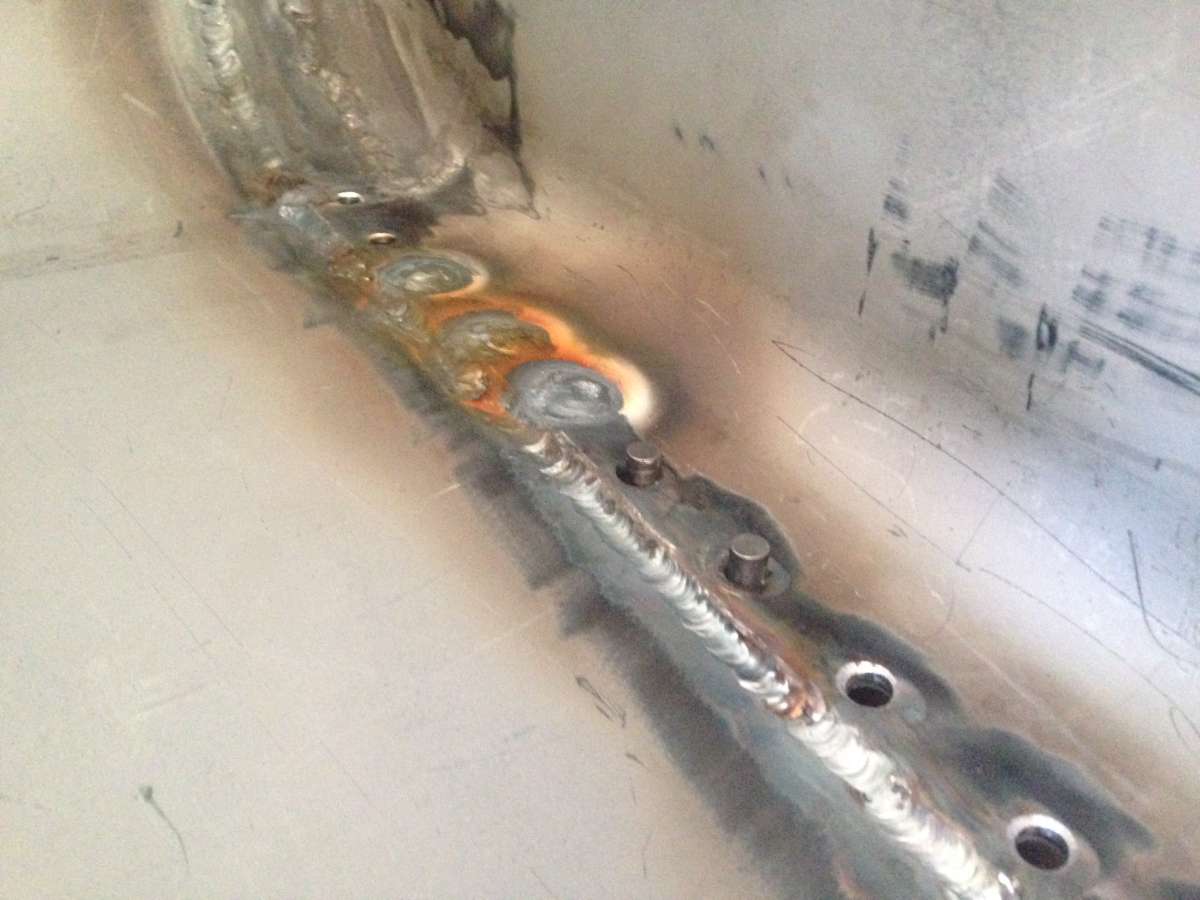
                                          If the rivets are on the outside of your engine frames and they only has to look like a rivetted structure, they can be welded on the inside of the frame, out of sight. This how I made the tender/water tank on my traction engine. Welding the rives also ensure that they are water tight.

                                          IMG_1086

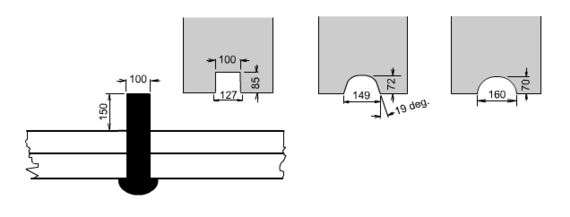
                                          Cold forming the head of a rivet should be done in 3 stages, using different shaped snaps, which is how I rivetted the wheels on my engine.  See details below, based on the diameter of the rivet.

                                          Rivet snap


                                          #870163
                                          Speedy Builder5
                                          Participant
                                            @speedybuilder5

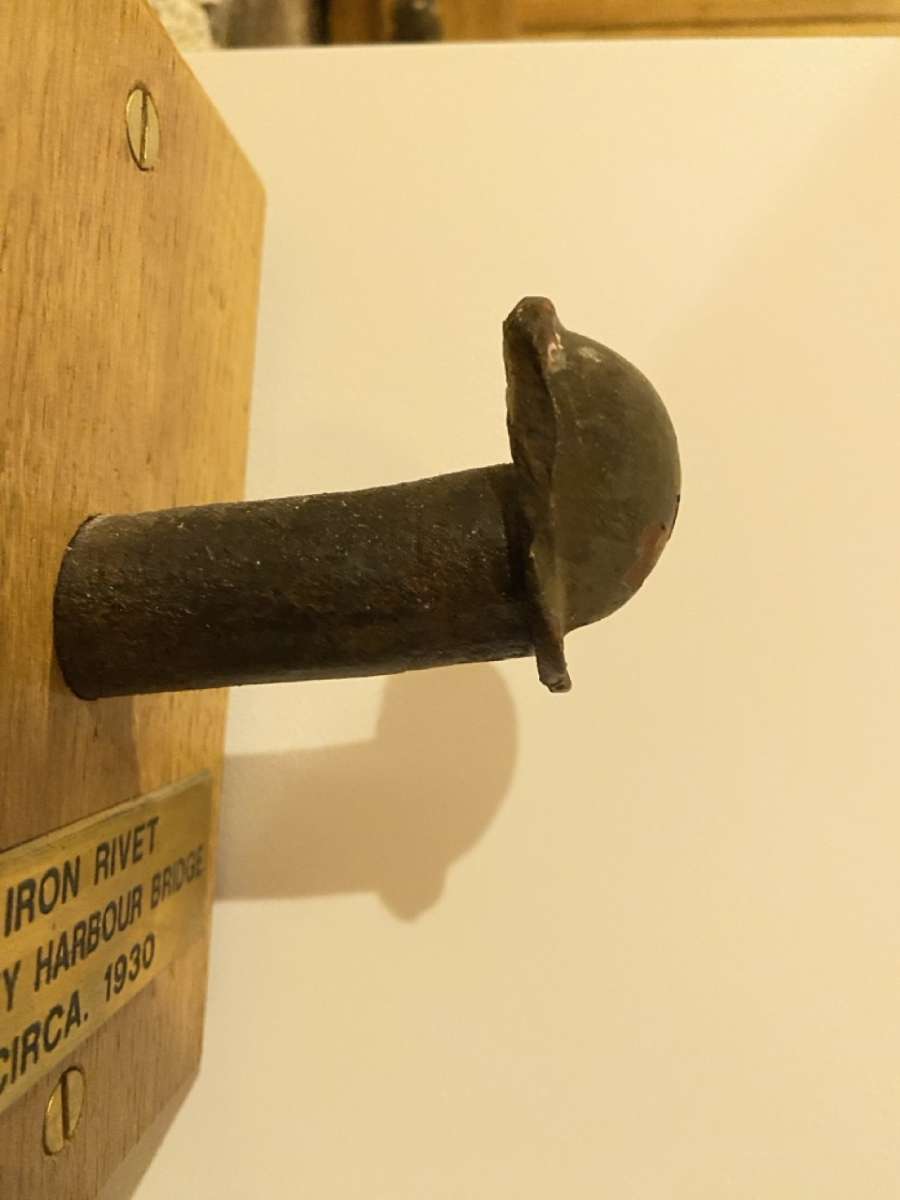
                                            This is a rivet taken from Sydney Harbour bridge during repairs.  Its 3/4″ diameter and the hot forged head is well off centre, but it worked until the rusty section of the structure was replaced.

                                            Bob

                                            Sydney Rivet

                                            #870179
                                            Paul Lousick
                                            Participant
                                              @paullousick59116

                                              My previous post should have said. Attempting to press and form 1/8″ diameter hot rivets

                                              #870183
                                              noel shelley
                                              Participant
                                                @noelshelley55608

                                                Heating 1/2″ or bigger rivets for hot setting is fine but 1/8″ or there abouts is pointless ! How do you handle a 1/8″ red hot rivet and in seconds place it and set it in an awkward location ? The SP gear puller only has a short stroke of about3/4″ and a force of may be 5 Tonnes, the weak point is the forcing screw and with heavy use it’s fine thread will fail in this sort of use.

                                                Had you considered unslotted round headed BA bolts, 5BA ? I only discovered the existance of such a thing recently. Fitting them may require a threaded hole and a slight counter sunk to allow the head to seat and some imagination as to how the tighten them, or simply put a nut on the inside.

                                                Pauls 50 tonne power operated press, or a home made 15Tonner would be great to use and once you have the power pack, ram and spool valve it opens up a new world. A redundant piece of production equipment bought for £10 gave me all I needed to make an automated bender that would bend 40mmdia solid bar or 2 1/4″ tube with ease. A short stroke ram and heavy yoke would make a nice portable rivet press ?  Noel.

                                                PS. The SP type puller shown above mentions 10 tonnes Has any one tested one ? The original SP I bought in the 70s mentioned 5 Tonnes – I would be cautious of the 10T claim.

                                                #870196
                                                Macolm
                                                Participant
                                                  @macolm

                                                  If there is benefit in hot setting small rivets, then I am sure a suitable variant of the small spot welder electrical arrangement would be very effective. The heating time would best be about a couple of seconds, and from my experience would be limited to the rivet itself with little loss of heat to the surrounding metal. Then again, the setting force would be much lower than that for the same rivet cold. Seems like a worthwhile project for someone.

                                                  #870310
                                                  old mart
                                                  Participant
                                                    @oldmart

                                                    If you are lucky enough to have a fly press, it would be much faster to use

                                                    #870340
                                                    Nigel Graham 2
                                                    Participant
                                                      @nigelgraham2

                                                      Hot-setting rivets is fine at full-size because that’s a sizeable volume of steel to retain its heat in a process designed for speed.

                                                      I doubt it can be applied to the tiddly things we use. The rivet would cool to black before we can insert them and bring the snaps anywhere them. Heating them in situ will of course heat the surrounding steel, risking all sorts of harm.

                                                      If the rivets are for show only and the reverse will be invisible, use those round-headed slotless screws in tapped holes, with locking / sealing compound. (I think they have a tiny hexagon for a spanner.)

                                                      If they are close enough to scale, consider those button-headed Allen screws. They are made only in metric but M5 is near enough to 3/16″ diameter here. Painting will fill the sockets – the larger ones might want filler as well. I used M5 ones for the rear ring of my steam-wagon’s smokebox, tapped into the ring. You can see only the upper ones, and once painted their real identity is sufficiently camouflaged. The front, or door, ring is held with 3/16″ rivets lightly hammered shut on the inside – they take no significant loads, and those in shear.  The heads of these different fasteners match closely enough for aesthetics, given that the rings are several inches apart and the bunkers obscure most of the smokebox.


                                                      Now, that’s for hidden reverse applications. What of visible reverse sides?

                                                      We can buy only a limited range of those slotless screws. I wonder if hemispherical nuts to match would be feasible, short of putting standard ones on a little mandrel in the lathe and form-tooling the radius. Or making them from scratch. (Use a ‘Dremel’ or similar with small cutting-disc to trim the protruding screw.)


                                                    Viewing 25 posts - 1 through 25 (of 40 total)
                                                    • Please log in to reply to this topic. Registering is free and easy using the links on the menu at the top of this page.

                                                    Latest Replies

                                                    Viewing 25 topics - 1 through 25 (of 25 total)
                                                    Viewing 25 topics - 1 through 25 (of 25 total)

                                                    View full reply list.