New Compressor

New Compressor

Home Forums General Questions New Compressor

Viewing 23 posts - 1 through 23 (of 23 total)
  • Author
    Posts
  • #810927
    Andy Brocklehurst
    Participant
      @andybrocklehurst85292

      My old compressor thankfully finally died, it was far too noisy for my small workshop.

      At the weekend I bought a new Clarke shhhh50/350 quiet compressor and what a difference it’s made, it’s very bearable working while this things running!

      Any how to my question, I obviously want to look after this the best I can and Clarke recommends draining the tank daily of water that’s gathered in the tank through condensation.

      I’ve been religiously doing this since Sunday 😀 and it’s already becoming a pain moving things to drag the compressor out, getting on the floor (which is hard work)to unscrew the drain valve.

      Would it have a detrimental effect on the compressor if I replaced the drain valve with a 1.5m length of tubing with a ball valve on the end so I can put it where it’s easier to get to and just crack the valve open when I’ve finished using it?

      thanks.

      #810933
      Journeyman
      Participant
        @journeyman

        There are automatic valves that will do the job. Not sure how they function as I don’t have a compressor but might be worth investigation.

        Link to one I found on-line. Automatic Drain Valve have no idea if this is any good prices go from around £20 upwards!

        John

        #810937
        noel shelley
        Participant
          @noelshelley55608

          NOT a problem BUT Since the pipe will be at the tank pressure all the time and were  it to get loose be VERY dangerous I would use a properly crimped hose, a hydraulic hose would come to mind. With BSP fittings it will screw straight into the tank and your tap on the other end. The tank end will be BSPT may be 3/8″ or 1/2″. If you are near me I can give you one where are you ?  Noel.

          #810961
          Andy Brocklehurst
          Participant
            @andybrocklehurst85292
            On Journeyman Said:

            There are automatic valves that will do the job. Not sure how they function as I don’t have a compressor but might be worth investigation.

            Link to one I found on-line. Automatic Drain Valve have no idea if this is any good prices go from around £20 upwards!

            John

            Thanks John, I’ll look into them.


            #810962
            Andy Brocklehurst
            Participant
              @andybrocklehurst85292
              On noel shelley Said:

              NOT a problem BUT Since the pipe will be at the tank pressure all the time and were  it to get loose be VERY dangerous I would use a properly crimped hose, a hydraulic hose would come to mind. With BSP fittings it will screw straight into the tank and your tap on the other end. The tank end will be BSPT may be 3/8″ or 1/2″. If you are near me I can give you one where are you ?  Noel.

              thanks Noel, that’s very generous of you. Im in Macclesfield, Cheshire.


              #810974
              cogdobbler
              Participant
                @cogdobbler

                You don’t need to drain it every day in most home hobby workshop applications. If it were running all day every day, it might need draining daily. But for most of us, it will run only the odd bit here and there so probably draining once a week would be enough. On weeks when you are not in the workshop it will need no draining. (Cue the Googlista doomsayers quoting the one famous video online showing a compressor tank that blew up , 3, 2, 1…)

                It depends on the humidity of the air being sucked into the compressor too. If you are finding large amounts of water coming out the drain then drain more often. If its just a tiny bit, nowt to worry about.

                A remote valve as suggested is a good idea though. Things that are not easy and user-friendly will get neglected once the novelty wears off. Automatic drain valve, aka trap, is worth looking at too.

                #810978
                Andy Brocklehurst
                Participant
                  @andybrocklehurst85292
                  On cogdobbler Said:

                  You don’t need to drain it every day in most home hobby workshop applications. If it were running all day every day, it might need draining daily. But for most of us, it will run only the odd bit here and there so probably draining once a week would be enough. On weeks when you are not in the workshop it will need no draining. (Cue the Googlista doomsayers quoting the one famous video online showing a compressor tank that blew up , 3, 2, 1…)

                  It depends on the humidity of the air being sucked into the compressor too. If you are finding large amounts of water coming out the drain then drain more often. If its just a tiny bit, nowt to worry about.

                  A remote valve as suggested is a good idea though. Things that are not easy and user-friendly will get neglected once the novelty wears off. Automatic drain valve, aka trap, is worth looking at too.

                  Thanks for that, I would imagine Clarkes recommended drain daily is when it’s used constantly and they’re erring on the side of caution?

                  As you say when the novelty wears off it will get neglected is spot on and the main reason I was trying to make it easy to do.

                  #810979
                  larry phelan 1
                  Participant
                    @larryphelan1

                    Is it too big to mount it on a shelf or brackets on the wall at a suitable heigh

                    One of my friends has his unit so mounted to save floor space, easy to drain !

                    No need for valves/pipes ect.

                    #810988
                    Bazyle
                    Participant
                      @bazyle

                      Put the tap on the vessel so no pressure tube involved. Operate the tap with a lever, bowden cable  etc – think steam loco drain cocks.

                      #810991
                      IanT
                      Participant
                        @iant

                        It might also be useful to mention internal cylinder coatings in this conversation.

                        Some air compressors come ‘pre-coated’ but most of the cheaper ones don’t. You can do a DIY coating for these but it’s much easier/better to buy one where it’s already been done for you. Otherwise rust might/will eventually cause problems.

                        Regards,


                        IanT

                        #811007
                        old mart
                        Participant
                          @oldmart

                          Both the  main restoration compressor and the portable one for pumping up tyres at the museum have remote reciever drains which make the bother of getting underneath to reach the valve an easy job. The recievers get drained every day after shutting down. As per H & S rules only proper crimped clips are used on the hose joints, never screwed Jubilee type.

                          #811050
                          noel shelley
                          Participant
                            @noelshelley55608

                            Just in passing – I had to deal with a faulty compressor of the cheaper type that many use. it was 11 years old and I SHOULD have conducted a hydraulic test before repairing it but didn’t ! Having repaired it, on running it I saw a small puddle under the tank, and NO it was not under the drain – The tank had corroded through ! I was a long way out of pocket ! These tanks are only just about thick enough, would a yield point calculation have revealed this ? Noel.

                            #811754
                            old fool
                            Participant
                              @old-fool

                              Automatic drain valves can b had from motor factors dealing with HGV parts, they are common on lorry air tanks.

                              PS I don’t know how they work either

                              Bob

                              #811756
                              JasonB
                              Moderator
                                @jasonb

                                Don’t know Nowl, but my noisy Clarke one must be 40yrs old and rarely gets drained. Should I start to be worried?

                                #811768
                                Andy Brocklehurst
                                Participant
                                  @andybrocklehurst85292
                                  On JasonB Said:

                                  Don’t know Nowl, but my noisy Clarke one must be 40yrs old and rarely gets drained. Should I start to be worried?

                                  Probably not! The scrap man took my old one, after this post I wished Id have cut it open just for curiosities sake to see how much it had corroded.


                                  Thanks everyone who commented.

                                  #811806
                                  bernard towers
                                  Participant
                                    @bernardtowers37738

                                    They work from a drop in press on the tank side causing the valve to lift until the tank pressure again takes over. Wouldn’t mind a pound for everyone ive overhauled.

                                    #811813
                                    Richard Simpson
                                    Participant
                                      @richardsimpson88330
                                      On old fool Said:

                                      Automatic drain valves can b had from motor factors dealing with HGV parts, they are common on lorry air tanks.

                                      PS I don’t know how they work either

                                      Bob

                                      The ones I have worked on were operated by a float.  When the level of collected water gets to a certain level it opens a valve which blows the water down the drain line.  When the water level drops the valve closes again.  Commonly found in older marine pneumatic control systems on air reservoirs.  They’re great until the valve sticks open and you loose system pressure.

                                      #811821
                                      old mart
                                      Participant
                                        @oldmart

                                        The compressors at the museum get regular checks by the insurance company and I was told that by far the commonest failure mode for a reciever is for a weld to start leaking rather than a catastrophic burst. It would be easy to wind some wire cable around the reciever body to prevent an expolsion if anybody is that worried, that was done with high pressure cylinders fitted to aircraft during the war to reduce the danger of shrapnel or gunfire hits. The wire had to be removed if a bottle was to be tested, we never replaced any wire,and fortunately bottles like that were rare in the 70’s and 80’s.

                                        #811853
                                        howardb
                                        Participant
                                          @howardb

                                          My old 50 litre tank compressor died because I neglected to check the lube oil.

                                          It cost about 80 quid new from a diy shed here in France about 14 years ago.

                                          I replaced it with a Parkside 25 litre tank compressor, which seems to be more on the ball. It pumps up to 10 bar and cuts back in at 8 bar, exactly as the instruction book says.
                                          <h4>The old compressor needed a new unloading valve and a new pressure switch cost about €50. </h4>
                                          I cant un-bold that last sentence – why?

                                          #811868
                                          SillyOldDuffer
                                          Moderator
                                            @sillyoldduffer
                                            On JasonB Said:

                                            Don’t know Nowl, but my noisy Clarke one must be 40yrs old and rarely gets drained. Should I start to be worried?

                                            Yes.  The compressor is not safe just because it hasn’t failed yet!   In reality the inside of a 40 year old tank is unlikely to be ‘as new’.  Believing otherwise in the absence of evidence is wishful thinking.

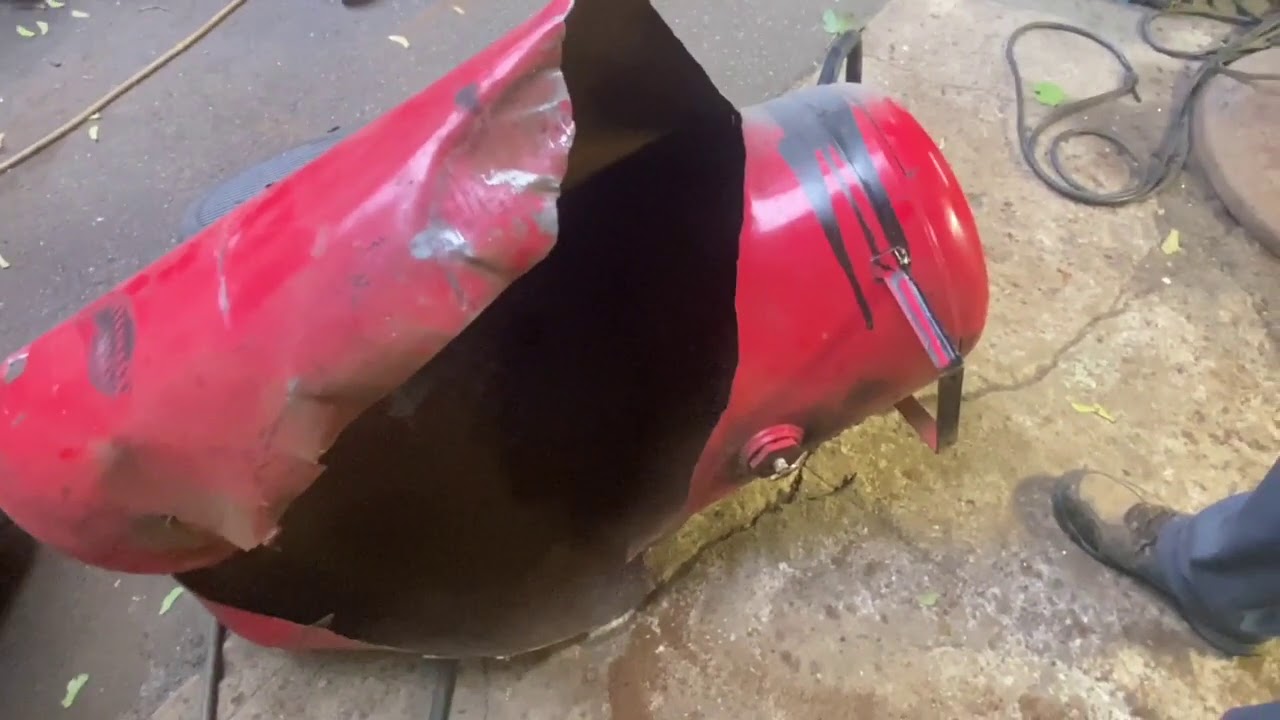
                                            Time to replace it.  As service to the community, how about cutting the old one open and sharing the photographs? 

                                            Judging by how infrequently exploding compressors are in the news, they don’t often disintegrate with bang! But bear in mind a hobbyist wrecking his workshop and ending up with minor injuries in A&E isn’t worth reporting!

                                            That said, I guess most old compressors go quietly, either scrapped because the pump or some other component has failed, or it  develops a slow-puncture.   These days usually cheaper to replace than repair, so most compressors never get to the dangerous stage.

                                            I guess how compressors are used makes a difference.   If run every day and depressurised in the normal way, then less likely to collect condensation inside because damp is flushed out and any corrosion is scattered throughout the tank.   On the other hand, leaving the tank full of compressed air is risky.  Condensation and pooling are encouraged, plus the tank is left full of pressurised Oxygen that’s chemically far more corrosive than normal.   Also, pooling is liable to create a stress raiser by corroding the tank along the waterline.  Once a stress raising groove exists, it’s flexed every time the tank is filled and emptied, resulting in a fatique failure.

                                            https://i.ytimg.com/vi/W2LbTHfU5fQ/maxresdefault.jpg

                                            Assuming all is well because it’s not gone wrong yet is a common cause of accidents.   Consider one’s self!  Just because I haven’t died yet doesn’t mean I’m immortal!  Truth is the risk my body will fail fatally in the near future gets worse with every passing second.   Jason’s compressor is the same – nothing avoids the malign attention of Father Time!

                                            On the subject of H&S, Model Engineering is safer than many other hobbies.  Most dangerous tool in my workshop is the pillar drill, and I was once hit hard enough the face to draw blood when the lathe chuck caught and flung a ball of swarf.  Would have been serious if it had gone in my eyes.  Model Engineering isn’t in the same league as horse-riding, and is less dangerous than amateur radio and golf!

                                            Dave


                                            #811872
                                            noel shelley
                                            Participant
                                              @noelshelley55608

                                              An interesting observation of Daves picture is that appears to have HGV type of air tank drain valve. This is what the OP wanted – attach a length of cord to the ring and to drain down just pull the cord. I think they had a 22mm thread so may need an adaptor to convert to BSP. The tank being a pressure vessel should have a hydraulic test every 10 years. One only has to look at the thickness of the burst tank to see that domestic tanks are not made to industrial standards where the wall may well be 1/4″ thick. A spare compressor was put in the shed some 20 years ago and I recently looked at it, I thought the gauge that showed 90 psi was faulty only to find it was correct – it had held pressure for 20 years ! Ah well. Noel.

                                              #813014
                                              Henry Buckeldee
                                              Participant
                                                @henrybuckeldee88769

                                                Looking at that receiver, a tin can would be a more appropriate name. I believe in industry wall thickness would be ultrasonic tested every year. And a hydraulic test every 10 years perhaps.

                                                #813071
                                                not done it yet
                                                Participant
                                                  @notdoneityet

                                                  If that was a truck brake pressure receiver, it would not be that big – maybe 15 litres?  One would not want to be standing close to that when it failed – let alone a receiver of perhaps 100 litres, or more.  There are youtube videos of failures.  They only fail catastrophically once.

                                                  Just don’t go there  – the outcome could be fatal.  Drain the tank regularly and hydraulically test it every five years, at least, after the first ten years of use.  More often, if abused.

                                                Viewing 23 posts - 1 through 23 (of 23 total)
                                                • Please log in to reply to this topic. Registering is free and easy using the links on the menu at the top of this page.

                                                Latest Replies

                                                Home Forums General Questions Topics

                                                Viewing 25 topics - 1 through 25 (of 25 total)
                                                Viewing 25 topics - 1 through 25 (of 25 total)

                                                View full reply list.