Centec Mk III vertical head

Centec Mk III vertical head

Home Forums Manual machine tools Centec Mk III vertical head

Viewing 22 posts - 1 through 22 (of 22 total)
  • Author
    Posts
  • #522341
    PropPete
    Participant
      @proppete

      My Centec 2B doesn't work for the highest 2 speeds. The 3ph 0.75hp motor, powered by a static phase converter, turns over slowly, but I've not left it on long enough to see if it eventually overcomes the resistance. I've had the mill for10 years and it doesn't get used much. I know it's cold and the old grease might have turned to the consistency of pitch, but I think it might be time to strip, clean and rebuild the Mk III vertical head while I'm looking at other causes. Has anyone any tips and tricks for servicing the vertical head?

      Pete

      #14148
      PropPete
      Participant
        @proppete

        Service and rebuild

        #522342
        Dave Halford
        Participant
          @davehalford22513

          Hi Pete,

          Take the belt off the head and try the high gears then. I suspect nothing will change.

          Warm it up on low speed first, the gear box is a bit lossy and needs to warm up. My 2A (same box) is happy after 5 or 10 minutes running in low speed.

          You should have oil in the head, check the dipstick, it tends to drain out.

          Edited By Dave Halford on 24/01/2021 18:15:17

          #522358
          not done it yet
          Participant
            @notdoneityet

            Are you sure the belt(s) is (are) not slipping?

            Your motor is the wrong size. The 2B motor was 1 Hp. The 2A was 0.75 HP. I stand to be corrected on this but it is clearly documented, c/o Nick Farr, who provided the copy of Centec comparison for 2A and 2B machines in this thread nearly 5 years ago.

            **LINK**

            My 2B was sluggish until warmed up – failing to achieve full speed in high gear at times, while powered by a single phase motor, and only when cold. However a change to a very slightly more powerful motor running on a VFD sorted the issue, although a change of oil in the main gearbox may have helped. I suspect a 3 phase one horse motor would cope adequately.

            I expect the problem is not apparent in horizontal mode of operation as the motor is only driving one gearbox.

            Excessive greasing of the bearings may find its way into the oil, thickening it up slightly?

            I reckon the oil level should be checked without screwing in the dipstick (as is the convention for most engines/gearboxes), but I find that due to the slow seepage, it is probably better to only fill to the bottom level on the dipstick and check/replenish more often.

            Edited By not done it yet on 24/01/2021 19:13:01

            #522487
            PropPete
            Participant
              @proppete

              Thanks. I'll check the motor hp when I feel like getting on my knees and burying my head inside the base again. A previous owner has replaced the motor, and may have used a lower power one.

              I checked the oil, which I always do without using the dipstick (never discovered the art of using it without getting oil all over it!), and it was a little low but good enough. I ran it for a few minutes at low speed, then tried a high speed. It sounded promising but still didn't get up to speed. I'll investigate further when the weather warms up.

              #522781
              PropPete
              Participant
                @proppete

                I left the workshop heater on to warm things up this morning, then tried a few things.

                The motor is definitely rated at 0.75hp, so the m/c is probably underpowered. I'll look out for an affordable 1hp motor.

                I guess the problem of not running at max speed is down to the low power motor, but I know it was running ok early last year. This afternoon I warmed things up by running at a lower speed for 10 mins or so. After that, it ran happily at the 5th speed (it couldn't from cold), but just rumbled away as before when I tried the 6th speed.

                I use an ISO 68 lubricating oil, which I believe is an approximate equivalent to the recommended Shell Mex CY2. Pretty thick stuff, though it has the advantage of reducing leakage from the bottom seal of the VH.

                A lot of grease sprays from the VH pulley shaft rear bearing, and spreads all over the pulley. I'm guessing the rear seal has gone, so I think I'll strip down the head, give it a good clean and replace that seal. I've not investigated the arrangement, but I'm assuming the shaft runs in taper roller bearings with separate seals, and not in deep groove sealed ball bearings?

                It would make sense to replace the vertical spindle seal at the same time since it seems to be a bit of a weakness with this VH. Has anyone replaced this? If so, what type and size is it, please?

                #523426
                PropPete
                Participant
                  @proppete

                  Thanks to all those that gave advice. Risking a hernia, I removed the VH, cleaned out the old grease and other crud as best I could without a total strip-down, re-greased the pulley spindle bearings, and remounted it. After a bit of warming up at low speed, I could get all 6 speeds, though the highest speed was only stable if I changed the 3 phase static converter from 1/2 – 1 hp to 1 – 2 hp. I suspect that things will be easier in warmer weather.

                  Interestingly, there is a labyrinth seal for the rear pulley shaft taper bearing. They are obviously not perfect seals but are good enough for thick grease, plus they have the advantage of venting air from enclosed spaces. That bearing and the seal were pretty choked with grease before I cleaned up, so I wonder if air pressure as things warmed up was the reason why grease was sprayed out over the rear pulley, and why I had to dodge a few drops of oil spraying out from the quill seal. Since I remounted the VH, there's been no leakage of grease or oil from either of those regions.

                  Running at the highest speeds reminded me that, although a delight of a machine to use, the Centec is not the quietest one I've come across!

                  #523439
                  not done it yet
                  Participant
                    @notdoneityet

                    I note you had a problem with your power feed/ converter back in 2016 How was that resolved? If changing the converter phase connections to the motor fixed that problem, I would strongly suspect the converter requires a good overhaul, particularly as changing the range has improved the start-up in higher gears.

                    When changing from horizontal to vertical operation, the motor/drive must be reversed. Perhaps someone has been running the vertical head in reverse (scroll seal will be obviously pumping grease out of the bearing – quite quickly if over-greased. You did not change the bottom seal, but has stopped seeping? No scroll or lip seal will prevent leakage against the pressure of a grease gun and all engines use some means of keeping the crankcase pressure close to atmospheric – to avoid oil leakage through seals.

                    The vertical head is quite heavy, isn’t it🙂🙂 Raising the table and use of wooden blocks on the table can reduce your risk of a hernia. Mine has a 120mm riser block to contend with – it is only replacing the head that is challenging.

                    Do you not use your machine in horizontal mode? I do – that was one reason for purchasing the Centec!

                    My vertical head tends to lose oil over long periods of non-use (the Raglan tends to be used for smaller jobs) – I don't get great globs of oil thrown out while running and I have not checked for ventilation, which I would expect to be present.

                    The machine is likely over 60 years old and are all spur and bevel gears, so may not be the most quiet, but I don’t find mine annoying or particularly noisy – but my hearing is not so good after 60 years of noisy workplaces and hobbies.

                    #523466
                    PropPete
                    Participant
                      @proppete

                      Thanks 'not done it yet'.

                      I replaced the power feed motor switch, which cured the problem of it cutting out due to 'overload'. The original switch was well past retirement age!

                      The labyrinth seal is a series of grooves rather than a scroll, so I don't think there is any pumping action. I do reverse the drive direction from time to time – I seem to have acquired a few LH reamers over the years, and sometimes it's more convenient for access for a slitting saw. I didn't change the quill seal, so was somewhat surprised and delighted that no oil seemed to be sprayed over my clothes. It's early days, and some oil might be working its way out, so I'll keep an eye on it. If the problems come back, I might introduce breathers in the enclosed spaces just to see what happens.

                      Fortunately, I've no need for riser blocks because the stuff I work with is relatively small (so far!). I do have a portable crane I could have used, but it's in another garage 100 yards away, and I would have to clear a lot of stuff out of the workshop to get it in position. I don't think I'll be manually heaving the head about again – anno domini is taking its toll on the muscles and joints, I fear!

                      I have never used the Centec in horizontal mode, even though it came with a formidable set of cutters. I can't think of a job I've done which would warrant the change over. Vertical milling might be slower at times, but I'm usually in no hurry (or not adventurous!).

                      With the motor in the metal pedestal, I suspect a lot of the noise is caused by resonance. The belt tensioner is a bit of a bodge, and uses the drip tray as the reaction point, metal to metal. For years, I've been meaning to try a rubber mounting on the belt tensioner, and some sound dampening material on the panels to see if they reduce the noise but, as usual, I 've not done it yet. indecision

                      #523479
                      Dave Halford
                      Participant
                        @davehalford22513

                        Pete,

                        One mod from the Yahoo site was using a length of threaded rod tensioned side to side to take some of the drumming out.

                        Top speed is direct drive and mine with a 1400 motor is not that noisy either.

                        Grease is only applied every 3 months of daily use.

                        #523481
                        duncan webster 1
                        Participant
                          @duncanwebster1

                          Switching to a 3 phase motor gets rid of the noise from the cabinet

                          Edited By duncan webster on 29/01/2021 11:44:32

                          #523491
                          PropPete
                          Participant
                            @proppete

                            Thanks Dave, I'll take a look at that, though I believe the Yahoo site is now no longer accessible? Thinking about it, I probably do over-grease the machine, so I'll try to curb my enthusiasm in future.

                            It is a 3 phase motor, driven by a Motorun converter, Duncan. I hate to think what it would sound like if it was single phase!

                            However, today I measured motor and spindle speeds for the first time after 15 years of owning the machine – just shows what an amateur I am!

                            The motor runs at 1510 rpm, which is nearly 8% faster than it would with a 50Hz supply. The energy companies are required to hold a tolerance of +/-1%, so the difference will be down to the phase converter.

                            Surprisingly, the spindle speeds are 25% higher than the published figures! Clearly, a previous owner has modified the pulley diameters. I'd like a lower bottom speed, so I will probably change the motor pulley some time. I suspect these higher speeds help explain why it is so difficult to achieve the max speeds when the machine is cold.

                            #523510
                            Dave Halford
                            Participant
                              @davehalford22513

                              The Yahoo site was dead long before Yahoo killed them all off – the site owner went to sleep.

                              I once tried compensating for not having 60hz by upping the pulley size on a lathe, the motor was very unhappy.

                              #523549
                              not done it yet
                              Participant
                                @notdoneityet

                                Question: How do converters do that – I would have thought that one phase of the three would be directly from the single phase supply?

                                It is the spindle speed that is important re the power required – demonstrated by the ease and difficulty in the different gears. I reckon a VFD would probably work much better than a converter. Mine has a 1.2Hp motor and it can be run quite slowly, if required.

                                I note that some 2A machines were fitted with 2 pole motors. I’m expecting yours is 4 pole, but is it running at the ‘normal’ speeds or x2? (it is easy to get a tacho reading the wrong scale).

                                Edited By not done it yet on 29/01/2021 16:53:45

                                #523566
                                PropPete
                                Participant
                                  @proppete

                                  Yes, I've no idea how converters could do that. I kept checking the 4 pole Centec motor speed because I didn't believe it. I checked the tacho against a single phase synchronous motor, whose unloaded speed is rated at 3000rpm, give or take a bit of slippage.

                                  Coincidentally, I was looking at the prices of VFDs when your post popped up. I have one on my lathe and am pretty happy with it. I've had to forego the heaviest of cuts though!

                                  #523585
                                  not done it yet
                                  Participant
                                    @notdoneityet

                                    I calibrate my tacho against the mains frequency – so it could be easy to get it wrong by a factor of two.🙂 I hold the head tightly against any old neon, on an extension socket strip or the cooker switch, usually. Not too much error in that calibration method.

                                    I am lucky in that I can choose to select the speed via the VFD or the variable mechanical speed control on my lathe, both while on the run. I mostly use the VFD to alter the speed – twiddling a pot is less hassle than moving a lever.🙂

                                    Same with the mill, once in the ‘ball park’ on the gearbox. The mill power feed is also running on a VFD, so between that lot I can usually easily find a good setting for best cutting with minimum chatter. I do have to remember to stop the feed before the cutter.🙂

                                    #523590
                                    PropPete
                                    Participant
                                      @proppete

                                      Mine's a stone-age tacho, not optical laugh

                                      I realised I would need 2 VFDs, and probably 2 remote control boxes. Getting expensive! crying What make are your VFDs? I looked at Mitsubishi from Newton Tesla as I've had a good experience with them.

                                      I like the note about stopping the feed before the cutter. You wouldn't make that mistake very often before it was seared into your brain disgust

                                      #523599
                                      not done it yet
                                      Participant
                                        @notdoneityet

                                        Three of mine are pedigree chinese mongrels🙂 Cheap and cheerful, but as I never leave the machine unattended their shortcomings are not a problem for me. The other two in use are probably of better pedigree.

                                        I also generally use heavier milling cutters so no real problems – yet – the power feed is only about half power (a 240 VFD driving the star wound feed motor) and is often running at less than 50Hz, so complains before trying to break anything. There is a shear pin in the power feed which I have only changed a couple of times.

                                        Once you have made up a pendent control (or have one to copy) the rest are easier.

                                        I have to remember to change the spindle direction at first start-up when I’ve changed from vertical to horizontal – or is it the other way round – on the Centec. The two Raglans and the surface grinder don’t have that to think about.

                                        #523628
                                        Gary Wooding
                                        Participant
                                          @garywooding25363

                                          Posted by PropPete on 29/01/2021 20:15:44:

                                          I realised I would need 2 VFDs, and probably 2 remote control boxes. Getting expensive! crying What make are your VFDs? I looked at Mitsubishi from Newton Tesla as I've had a good experience with them.

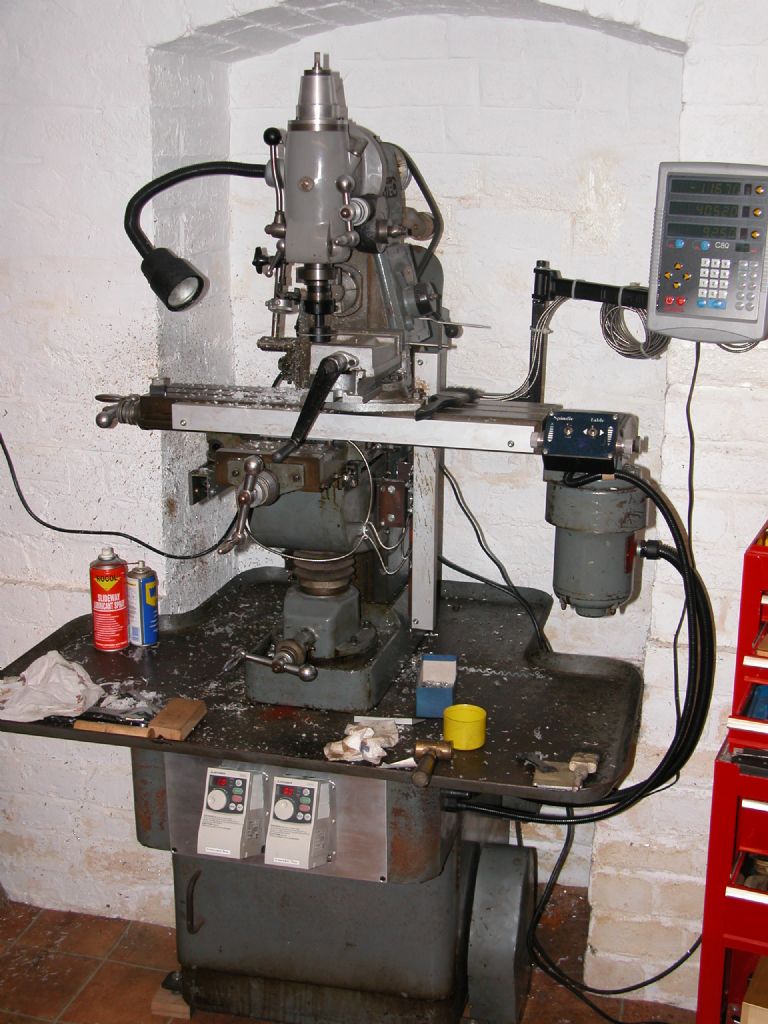
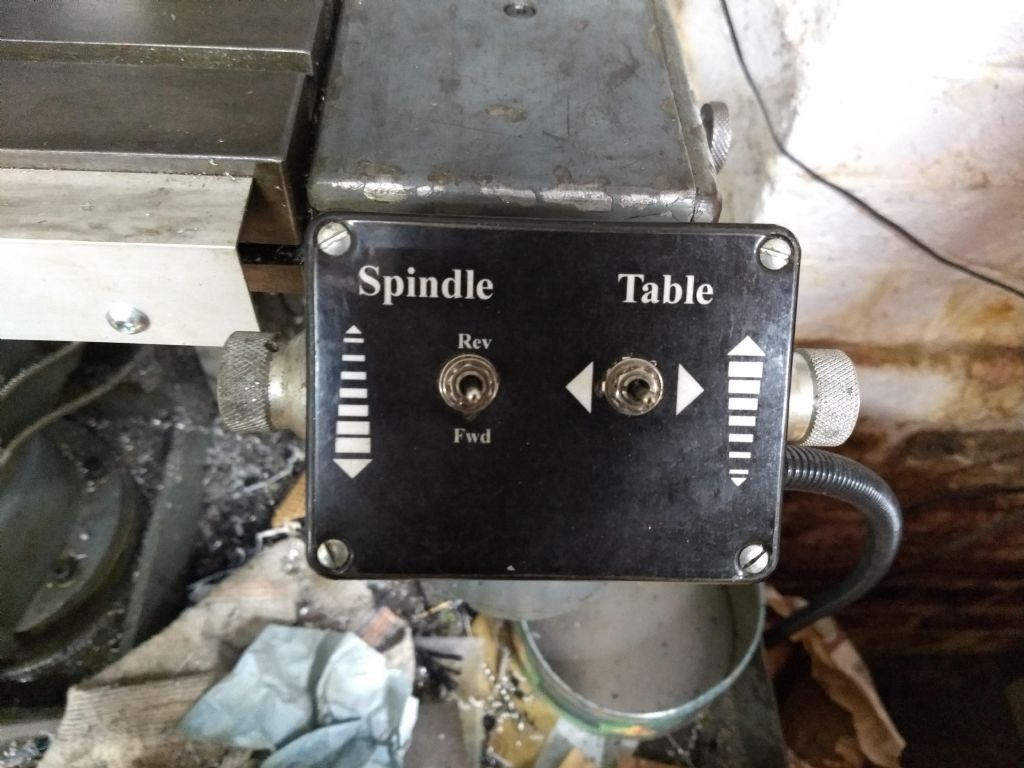
                                          I use two Mitsubishi VFDs on my 2B, both operated from a single box attached to the end of the table.

                                          dscn2396.jpg

                                          2vfds.jpg

                                          #523658
                                          PropPete
                                          Participant
                                            @proppete

                                            Nice setup, Gary. Are your motors original? If so, did you have to do anything to them to suit the VFDs output?

                                            #523836
                                            Gary Wooding
                                            Participant
                                              @garywooding25363

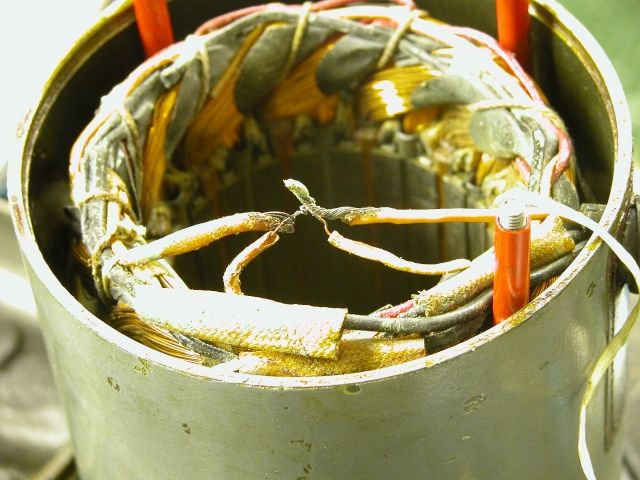
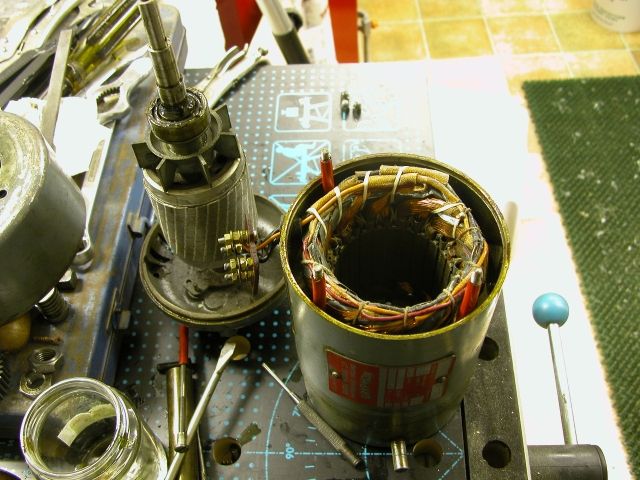
                                              Both motors are original and both were wound in star only. I had to remove each motor and open it up to gain access to the star point which was then 'burst' and extension leads added which were then connected in 'delta' mode. The spindle motor, although heavy and awkward, was not too difficult to remove and replace inside the cabinet, but the table motor was another matter involving removal of the lead screw.

                                              table motor 2.jpg

                                              table motor 1.jpg

                                              #523871
                                              PropPete
                                              Participant
                                                @proppete

                                                Thanks Gary, that's very useful.

                                              Viewing 22 posts - 1 through 22 (of 22 total)
                                              • Please log in to reply to this topic. Registering is free and easy using the links on the menu at the top of this page.

                                              Latest Replies

                                              Home Forums Manual machine tools Topics

                                              Viewing 25 topics - 1 through 25 (of 25 total)
                                              Viewing 25 topics - 1 through 25 (of 25 total)

                                              View full reply list.