Backplate

Backplate

Home Forums General Questions Backplate

Viewing 25 posts - 1 through 25 (of 28 total)
  • Author
    Posts
  • #812051
    Steve355
    Participant
      @steve355

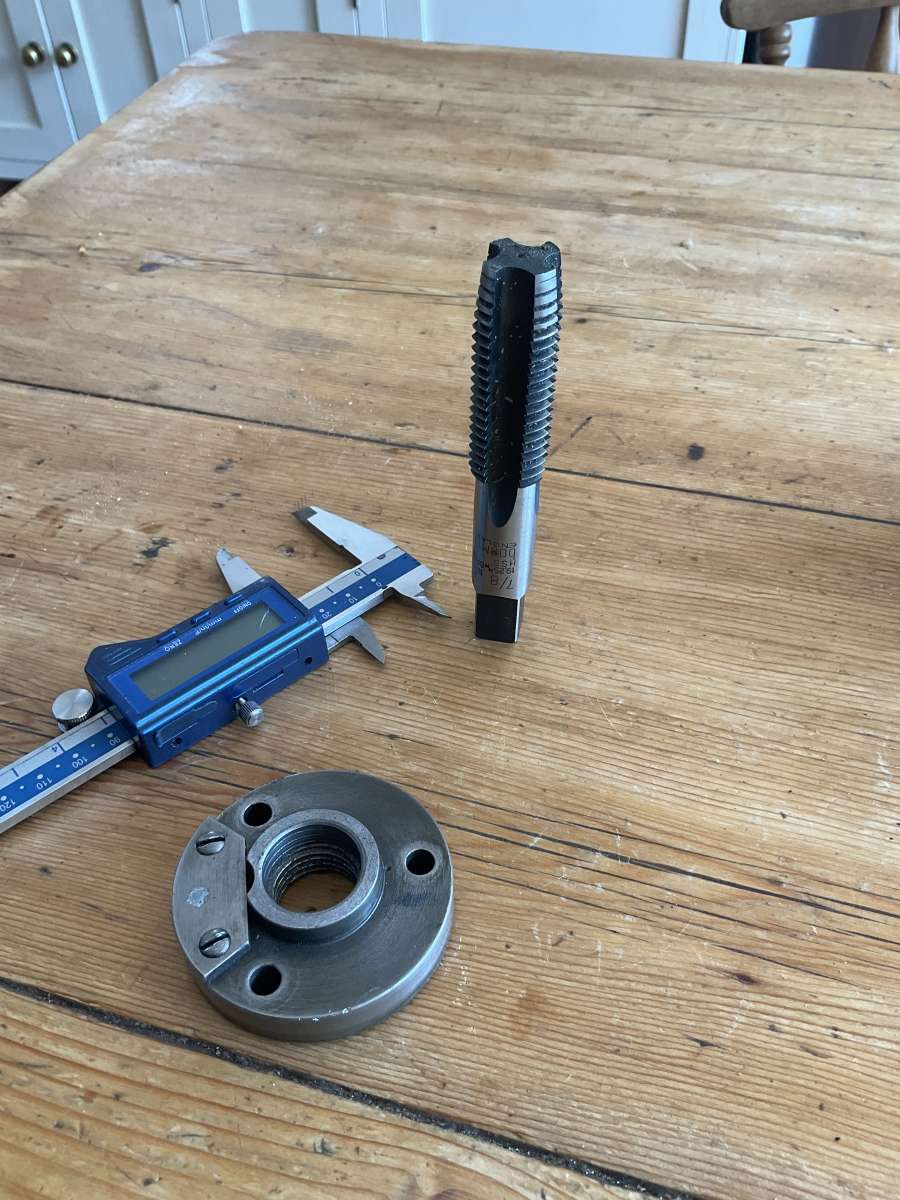
      My main 3-jaw chuck is too big for my little lathe. It actually came with the lathe, but without a backplate, so a while back I made a cast iron backplate for it. It was one of the first projects I did with the lathe, and it worked out pretty well. But the fact remains that the chuck is too big.

      So I’ve kept an eye out on eBay for a suitable, small, low profile chuck with the required 7/8” thread and recently one came up as 7/8” BSF, so I negotiated a cheap deal for it. I thought it likely that in fact it was BSW and the seller was wrong. However, it turns out that the seller was correct, so now I have a nice little chuck but with a 11 TPI rather than 9 TPI backplate.

      So I have a few options:

      1) run my 7/8” 9 TPI tap through it to “convert” it to BSW.

      2) buy a piece of (bright steel?) rod slightly larger than the exactly 2.5” that it currently is and proceed in the usual fashion to make a backplate. Existing backplate can be used as a template for the holes.

      3) CNC a new one

      Thoughts ?

      IMG_1018


      #812056
      duncan webster 1
      Participant
        @duncanwebster1

        Do it properly, make a new one. Whether by CNC or manual is irrelevant

        #812058
        Bazyle
        Participant
          @bazyle

          The best thing would be to find out what lathe it is actually for so it can be passed on to someone who probably is desperately looking for one. Then start again.

          We could do with a reference table on here (or Lathes.co.uk) of all nose threads.

          #812060
          Bazyle
          Participant
            @bazyle
            #812070
            old mart
            Participant
              @oldmart

              Can you modify the backplate from the oversize chuck to fit the new one on?

              #812130
              Howard Lewis
              Participant
                @howardlewis46836

                32/4 BSw x 9 sounds like an early Myford ML1, 2, 3, or 4.

                Could you bore out the “new” backplate and bush, before boring and tapping to 3/4 BSW?

                The tapping will be hard work, but not for too long.

                One tapped, fit the backplate to the spindle,and skim the face and then the OD to be a snug fit in the chuck.

                Hopefully, the holes in the backplate will line up with tappings in the chuck.

                Let us know how you get on!

                Howard

                #812169
                Nicholas Farr
                Participant
                  @nicholasfarr14254

                  Hi Steve355, if you run your tap through it, you will probably have very little thread left in it to hold it on securely. Like Duncan says, make a new one, you can get a suitable unmachined one from Chronos

                  You could always flog the one you have maybe.

                  Regards Nick.

                  #812171
                  Diogenes
                  Participant
                    @diogenes

                    If you have the tap, buy a slice of CI and make one.

                    #812173
                    JasonB
                    Moderator
                      @jasonb

                      Whatever way you make it I would screwcut or thread mill the thread on the CNC, less chance of getting a wonky thread than doing it with a large coarse tap. At the very minimum do about 90% by machine then complete the final profile with the tap.

                      A slice of 65mm CI would be sufficient to make it from and 1/4 the price of a backplate casting.

                      #812185
                      Nicholas Farr
                      Participant
                        @nicholasfarr14254

                        Hi, yes a slice would do it, I just mentioned the one from Chronos, as it has the normal shape, and therefore less machining and less waste of material.

                        I’ve used a slice of steel at times, but I’ve been lucky enough to get pieces of the right diameter from work. I agree with the way JasonB has said to thread it.

                        Regards Nick.

                        #812201
                        Diogenes
                        Participant
                          @diogenes

                          Yes same here, apologies forgot to mention technique!

                          #812247
                          cogdobbler
                          Participant
                            @cogdobbler

                            I heartily agree with Jason’s advice to screwcut the thread, and maybe use your tap to clean up the last  couple of thou. This is more likely to give you a thread that is straight, square and concentric. (Plus a lot less sweat involved !)

                            These days screwcutting boring bars and inserts are so  cheap and do such a good job it really is a doddle. And cast iron is nice material to screwcut.

                            #812364
                            Steve355
                            Participant
                              @steve355

                              I think what Jason is suggesting is to use the CNC and thread mlll it.

                              I am quite tempted to:

                              1) get a lump of slightly oversized cast iron or steel

                              2) Surface grind flat on both sides

                              3) Get the CNC to mill all 4 holes

                              4) use the CNC to thread the centre hole, test/finish with tap

                              5) finish off the backplate on the lathe – diameter, fit, face etc.


                              i don’t have a thread milling  bit and I’ve never done it before. But it’s good fun to try,

                              #812369
                              JasonB
                              Moderator
                                @jasonb

                                I was suggesting that you don’t use the tap. Either screwcut on the lathe or threadmill on the CNC

                                No need to grind both sides as the chuck side gets finished when it is on the lathe. I’d also tend to mill the face that goes against the spindle register and do the thread in one setting ensuring that surface is true to the bore/thread. So mount on the CNC in the orientation you have it in your first image. Level the top, adaptive and finish cuts to form the spigot with a corner radius cutter to leave a fillet in the internal corner. Use the mill to bore the 5 holes and then threadmill, knock off edges with a chamfer mill. Mount on lathe and turn larger OD, face and any chuck locating spigot.


                                Edit. Looking at the cost of thread mills of that size (£70+) I’d screwcut it on the lathe. Though I suppose you could make a single point threadmill which would not be as costly as a carbide thread mill.


                                #812381
                                Steve355
                                Participant
                                  @steve355

                                  I’m pretty sure I screwcut the last edit backplate I did, before finishing it with the tap. The difficulty I had with that, as that it was strapped to the faceplate, which has quite a small centre hole, so I was constantly worried about crashing the screw cutter. So I did what I could and finished it off with the tap. In practice it is accurate enough for a 3 jaw.

                                  Somewhere I still have the cutter I ground for making that screw. Tbh the problem might be that there could be a small amount of wear on the lathe lead screw, which could result in a slightly less than perfect thread. But I guess that’s where the tap comes in.

                                  This backplate is much smaller and the blank can probably be held in my existing 3 jaw, which makes the whole thing much easier to do on the lathe. I remember fixing the last one to the faceplate was tricky.

                                  The problem is the 3 locating holes. I’m pretty sure that last time, I simply used the chuck as a template, centre punched them and drilled them on the pillar drill one by one. To do them on the CNC could actually be tricky. It looks like their centres is 1 inch from the centre of the central mounting hole… and it looks like they are 120 degrees apart. But that may not be exactly the case! Using the chuck as a template seems like a good idea.


                                  #812431
                                  cogdobbler
                                  Participant
                                    @cogdobbler

                                    Put packing pieces between the job and the faceplate to create clearance for your boring bar to run into. Pieces of square HSS tool bit or key steel work well for this.

                                    Machine the thread, the register recess and the back face all in one setting so they are all true to each other.

                                    Wear on your lathe leadscrew will not be a factor unless you have a phenomenally clapped out lathe. It’s a short thread length so error will be negligible in practical terms. That’s why the halfnuts are brass or Mazak , so they wear but not the steel leadscrew. I have screwcut backplates and similar on lathes made before World War 2 with no problem. And your tap used to clean the last 2 or 3 thou out will correct any error as you say.


                                    #812437
                                    Steve355
                                    Participant
                                      @steve355

                                      >>Put packing pieces between the job and the faceplate to create clearance for your boring bar to run into. Pieces of square HSS tool bit or key steel work well for this.

                                      Obvious now you mention it! As I recall, I roughly drilled and tapped the blank so I could bolt it to the faceplate. Then I turned the spigot and turned the overall backplate to diameter, but I couldn’t turn it all the way due to the faceplate. Some packing would have been ideal.

                                      #813002
                                      Steve355
                                      Participant
                                        @steve355

                                        So…. I have some cast iron on order for the new backplate, and I’m trying to find a suitable “proper” internal threading bar for the job. It needs to be as long and as small as possible to cut the 7/8” 9TPI thread. Not much room in there.

                                        I did have a homemade one but I have lost or repurposed it, so I should buy a commercial one.

                                        Chronos have a bunch of potentials…

                                        https://www.chronos.ltd.uk/product/imperial-55-soba-5-16-hss-threading-tool-holder/

                                        but they don’t seem to publish the key number, which is surely the distance from the tip of the threading tool to the opposite side of the bar.

                                        Any thoughts on a suitable threading tool?

                                        thanks

                                        Steve

                                        #813007
                                        bernard towers
                                        Participant
                                          @bernardtowers37738

                                          there is live chat available if you scroll to the bottom of the page and ask the question.

                                          #813032
                                          cogdobbler
                                          Participant
                                            @cogdobbler
                                            On Steve355 Said:

                                            So…. I have some cast iron on order for the new backplate, and I’m trying to find a suitable “proper” internal threading bar for the job. It needs to be as long and as small as possible to cut the 7/8” 9TPI thread. Not much room in there.

                                            I did have a homemade one but I have lost or repurposed it, so I should buy a commercial one.

                                            Chronos have a bunch of potentials…

                                            https://www.chronos.ltd.uk/product/imperial-55-soba-5-16-hss-threading-tool-holder/

                                            but they don’t seem to publish the key number, which is surely the distance from the tip of the threading tool to the opposite side of the bar.

                                            Any thoughts on a suitable threading tool?

                                            thanks

                                            Steve

                                            It says on the linked advert that it is 6″ long. So that would leave about 5″ sticking out from your 1″ or so deep backplate thread. More than enough.

                                            I am not a great fan of that type of boring/threading bar though, as the shank is a lot thinner (5/16″) than it needs to be, due to the large turnover on the cutting end. Can get a bit chattery.  I would look for something like a 13mm diameter shank with 55 degree carbide insert (preferably the ground  xxGT type). They are cheap enough these days if you shop around.

                                            Or a 3/8″ diameter boring bar with the square hole in the end to hold a piece of 1/8″ or 3/16″ HSS. You can grind your own toolbit with way less overhang than the linked-to type.

                                            #813050
                                            JasonB
                                            Moderator
                                              @jasonb

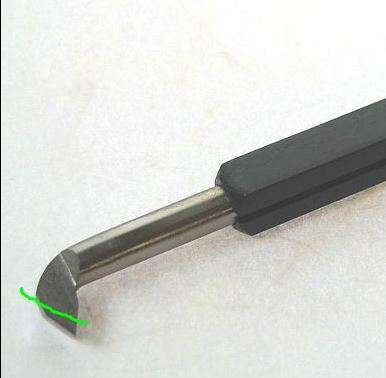
                                              If it was too big to fit in the hole it is not exactly difficult to freehand grind the end which would reduce the overall size.

                                              grind

                                              #815657
                                              Steve355
                                              Participant
                                                @steve355

                                                Quick question on this now I’ve got around to doing it. On my scratch pass I’m getting more like 14TPI than the 9TPI I am expecting. It’s a long time since I used the change gears and I can’t remember everything…

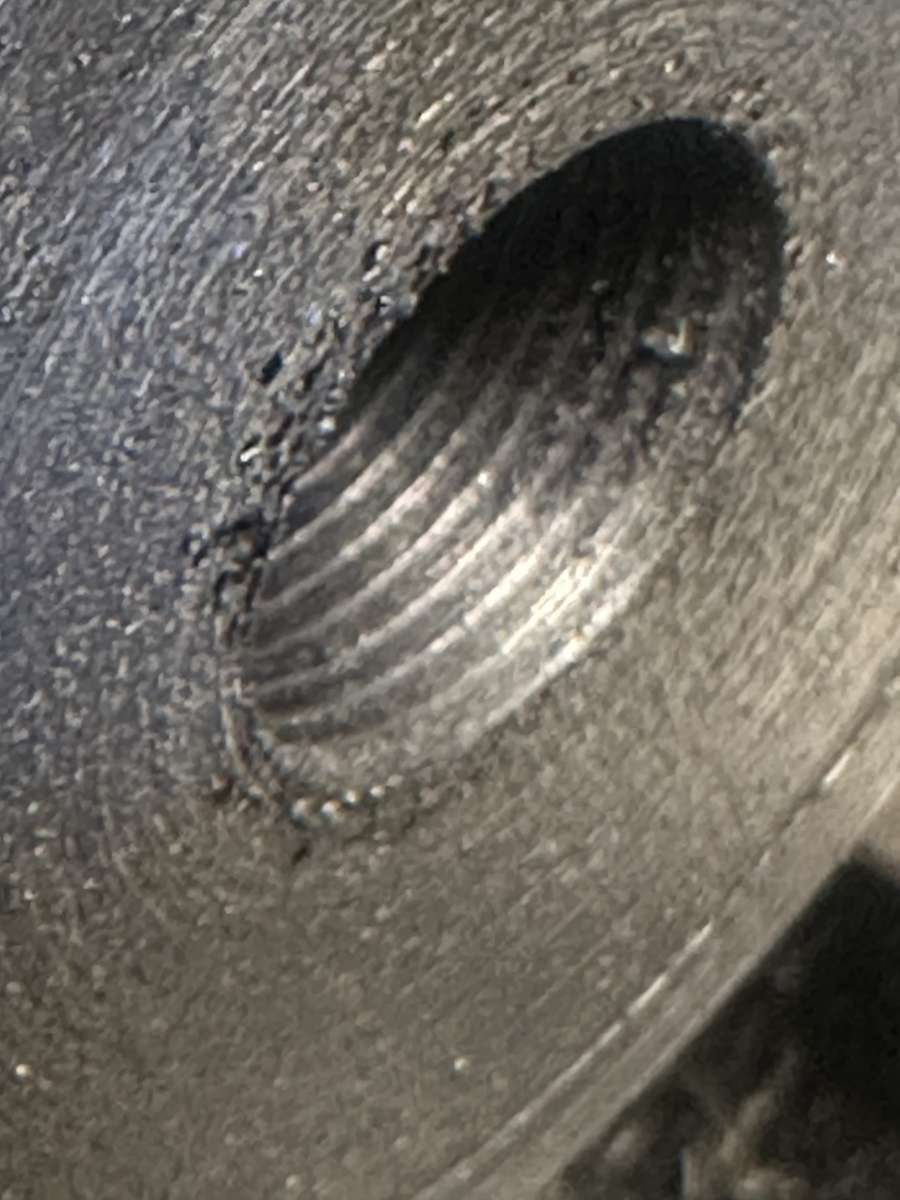
                                                Scratch pass

                                                IMG_5634

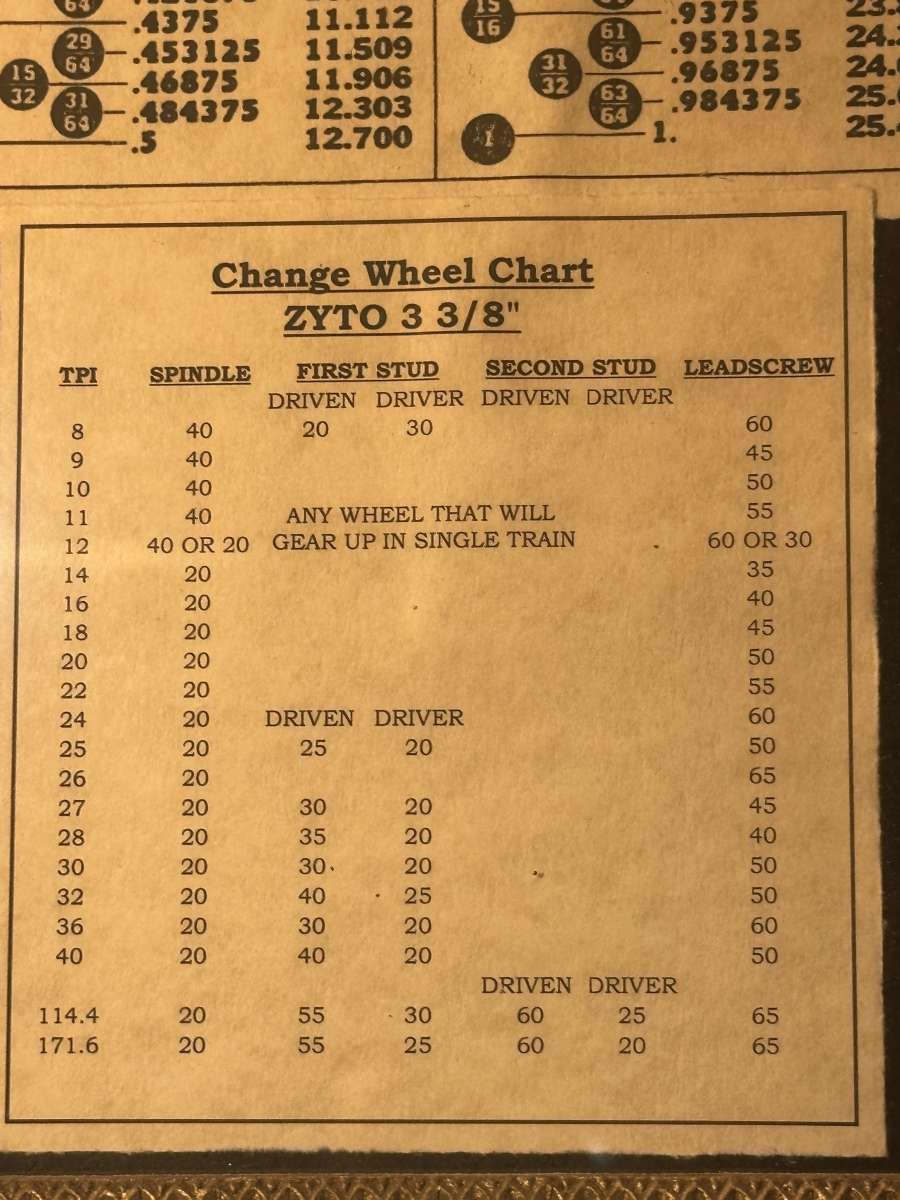
                                                Here’s the TPI chart.

                                                IMG_5636

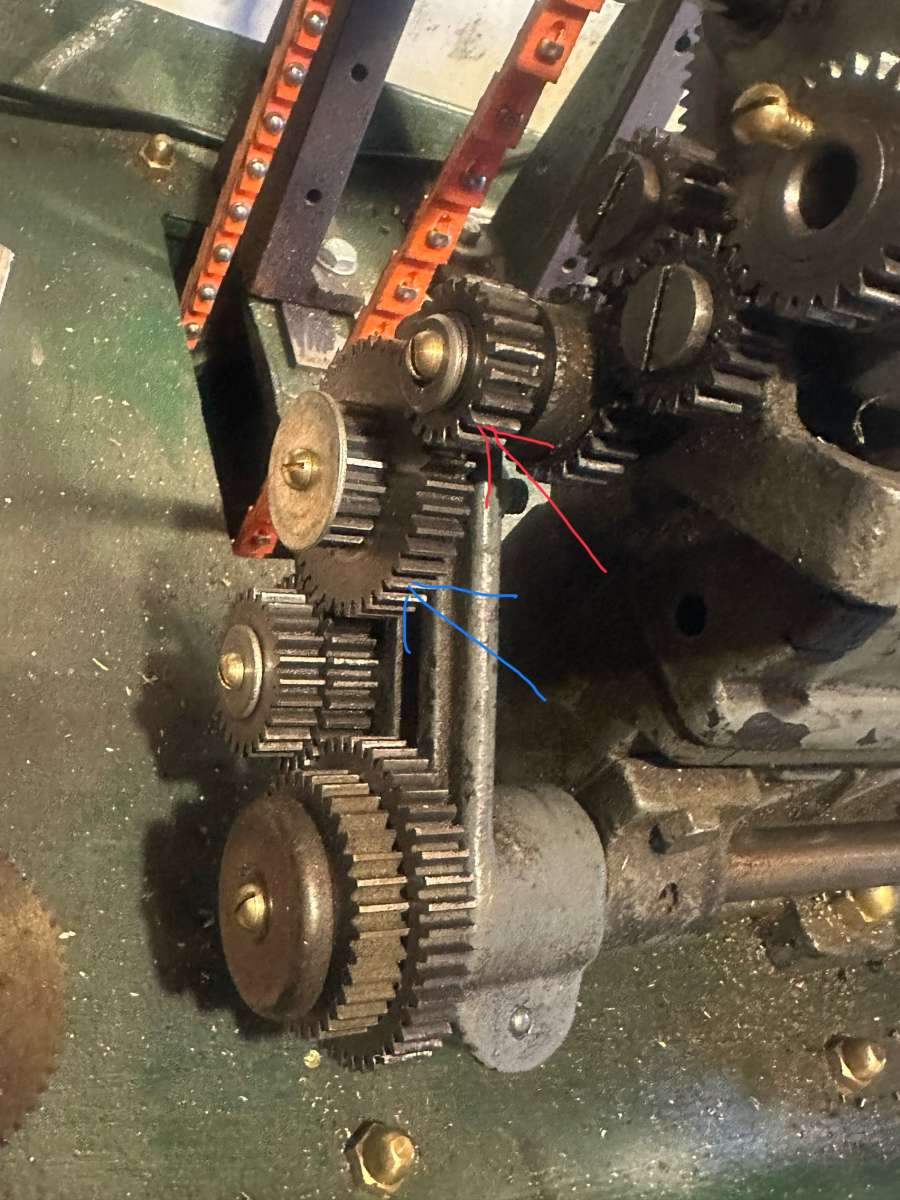
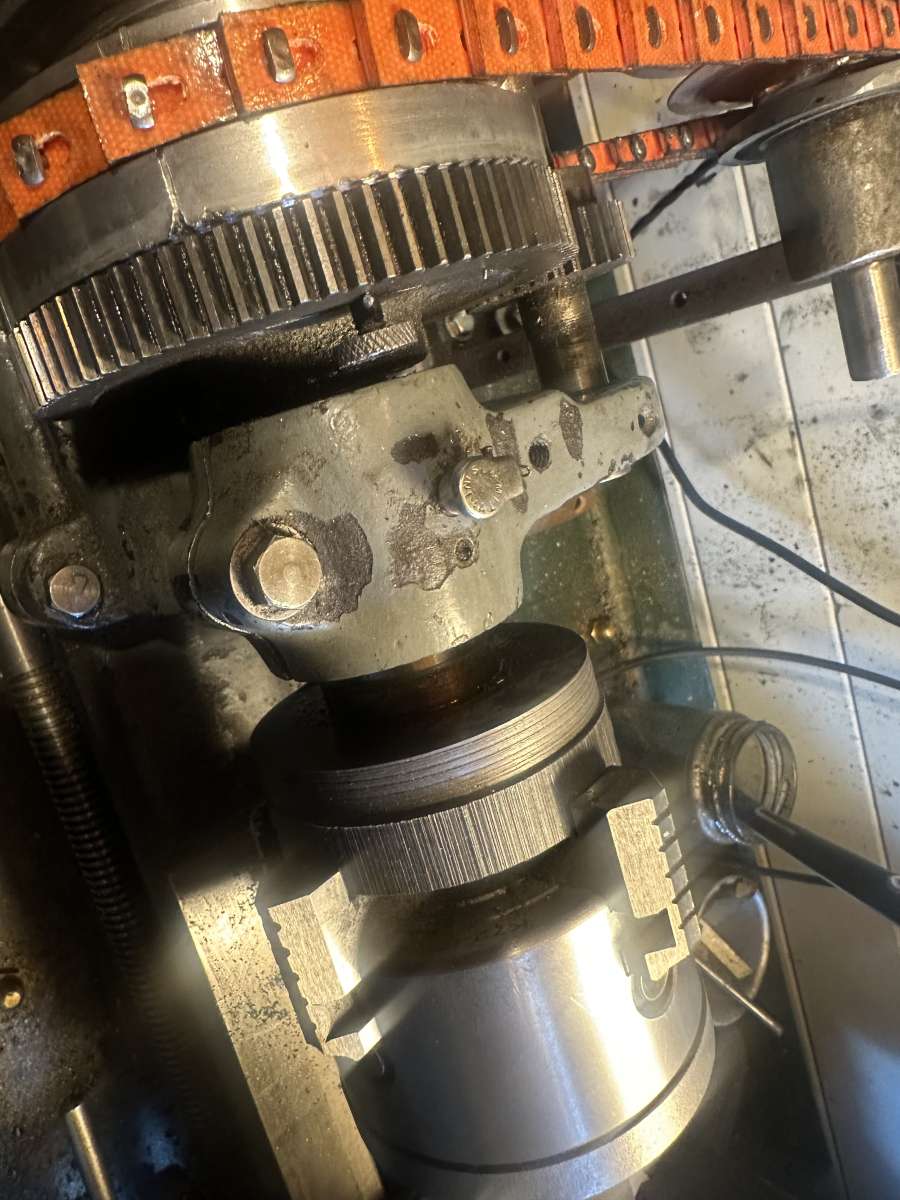
                                                I think I have the 40 tooth gear on blue when in fact I should have it on red, with any gear between that gear and the 45 tooth gear on the lead screw.

                                                Does that sound right?


                                                IMG_5635


                                                #815759
                                                Diogenes
                                                Participant
                                                  @diogenes

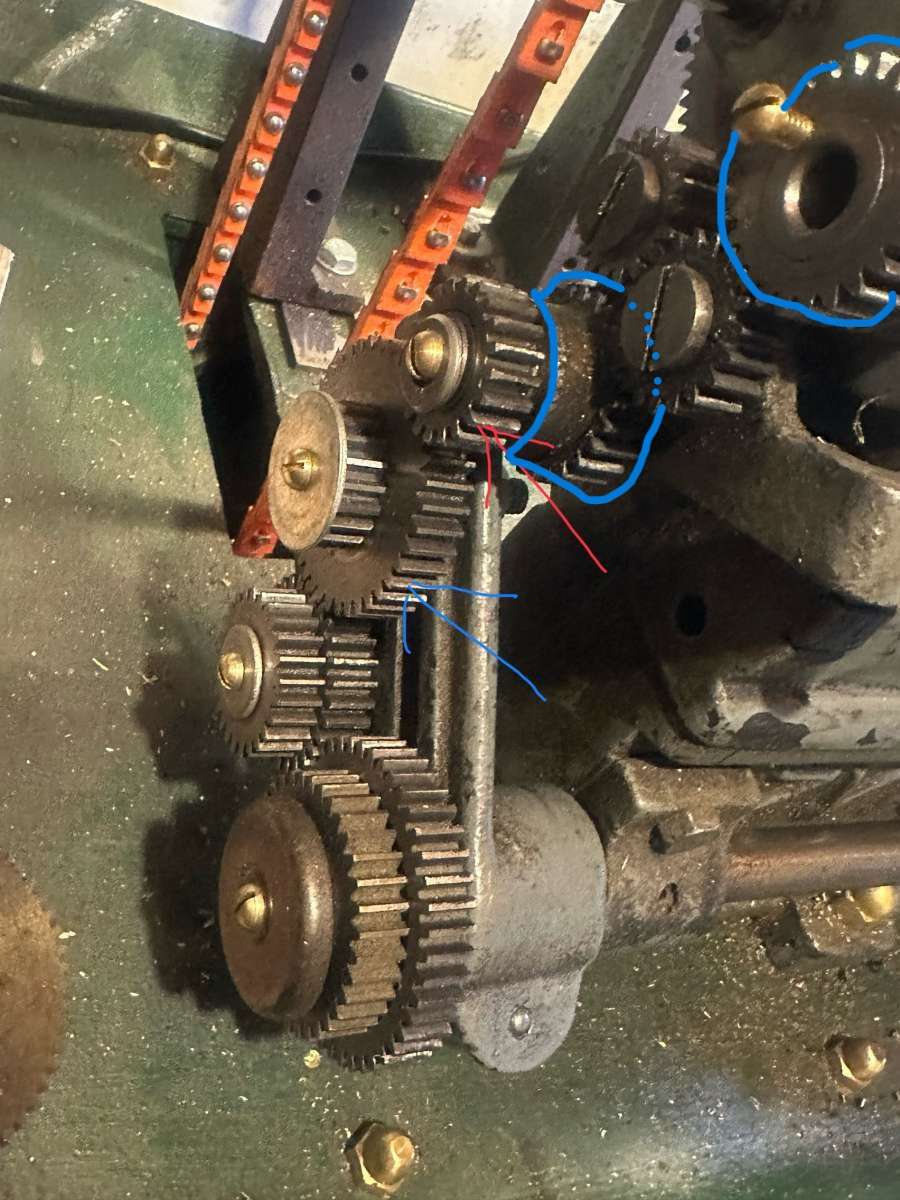
                                                  Yes – put the blue one where the red one is, and then use any gear on any stud that will fill the gap between that and the leadscrew 45.

                                                  That said, do check that the two gears that I have outlined in blue DO actually have the same number of teeth.

                                                  Zyto gear

                                                  #815826
                                                  Steve355
                                                  Participant
                                                    @steve355

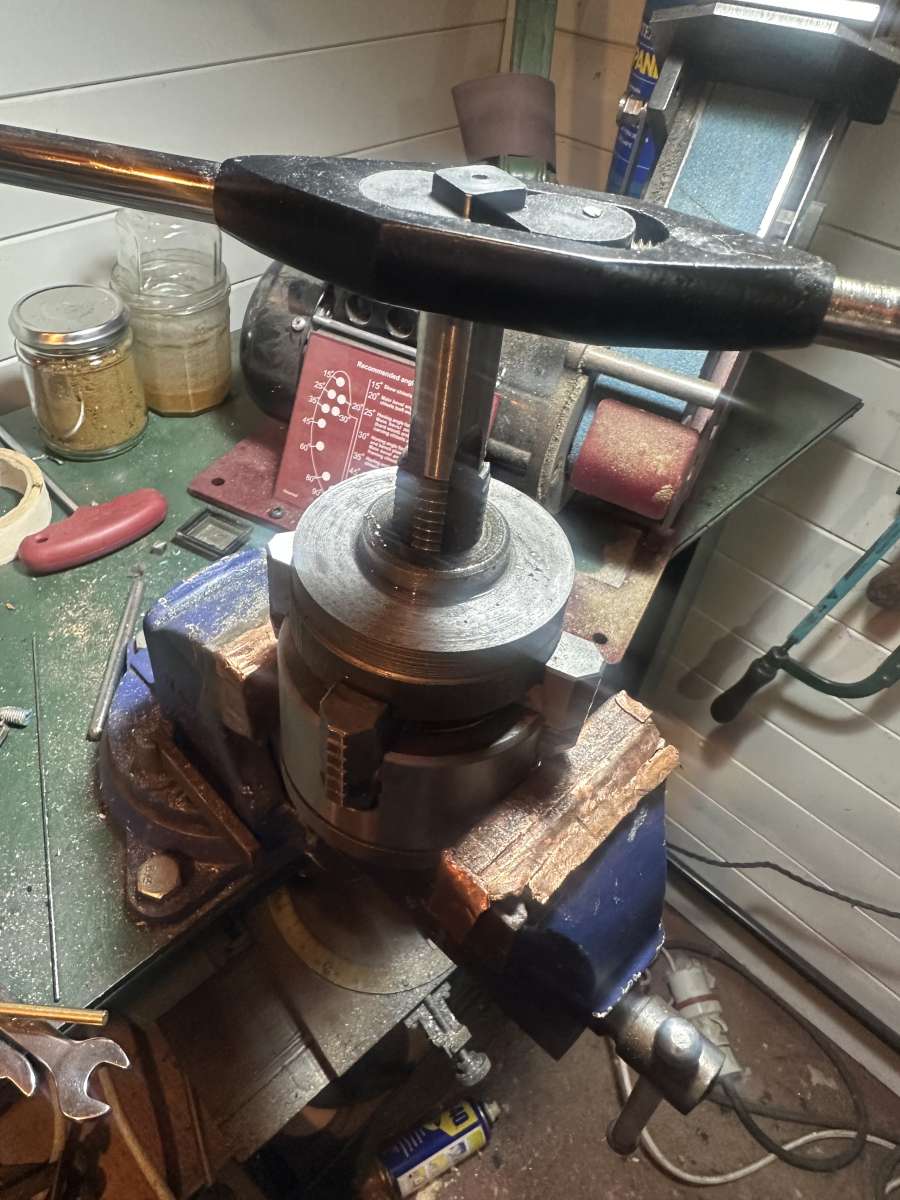
                                                    Thanks for that, I checked and both gears had equal teeth. All working nicely now. I took it perhaps 75% of the way using the threading bar and finished off with the tap, which was very easy.

                                                    Test fit seems great, I’ll put a DTI on it tomorrow and turn the chuck side.

                                                    That little Chinese DRO I bought made the job MUCH easier, both in terms of re-zeroing the cross slide and also stopping the carriage at exactly the right place, avoiding crashes.

                                                    IMG_5638IMG_5639

                                                    #815831
                                                    Diogenes
                                                    Participant
                                                      @diogenes

                                                      👍 – glad it went well – now the threading is done, do you have suitable gears for a fine-feed?

                                                    Viewing 25 posts - 1 through 25 (of 28 total)
                                                    • Please log in to reply to this topic. Registering is free and easy using the links on the menu at the top of this page.

                                                    Latest Replies

                                                    Home Forums General Questions Topics

                                                    Viewing 25 topics - 1 through 25 (of 25 total)
                                                    Viewing 25 topics - 1 through 25 (of 25 total)

                                                    View full reply list.