To silver solder or not to silver solder HELP

To silver solder or not to silver solder HELP

Home Forums Hints And Tips for model engineers To silver solder or not to silver solder HELP

Viewing 18 posts - 1 through 18 (of 18 total)
  • Author
    Posts
  • #845263
    David George 1
    Participant
      @davidgeorge1

      Help With a quandary.

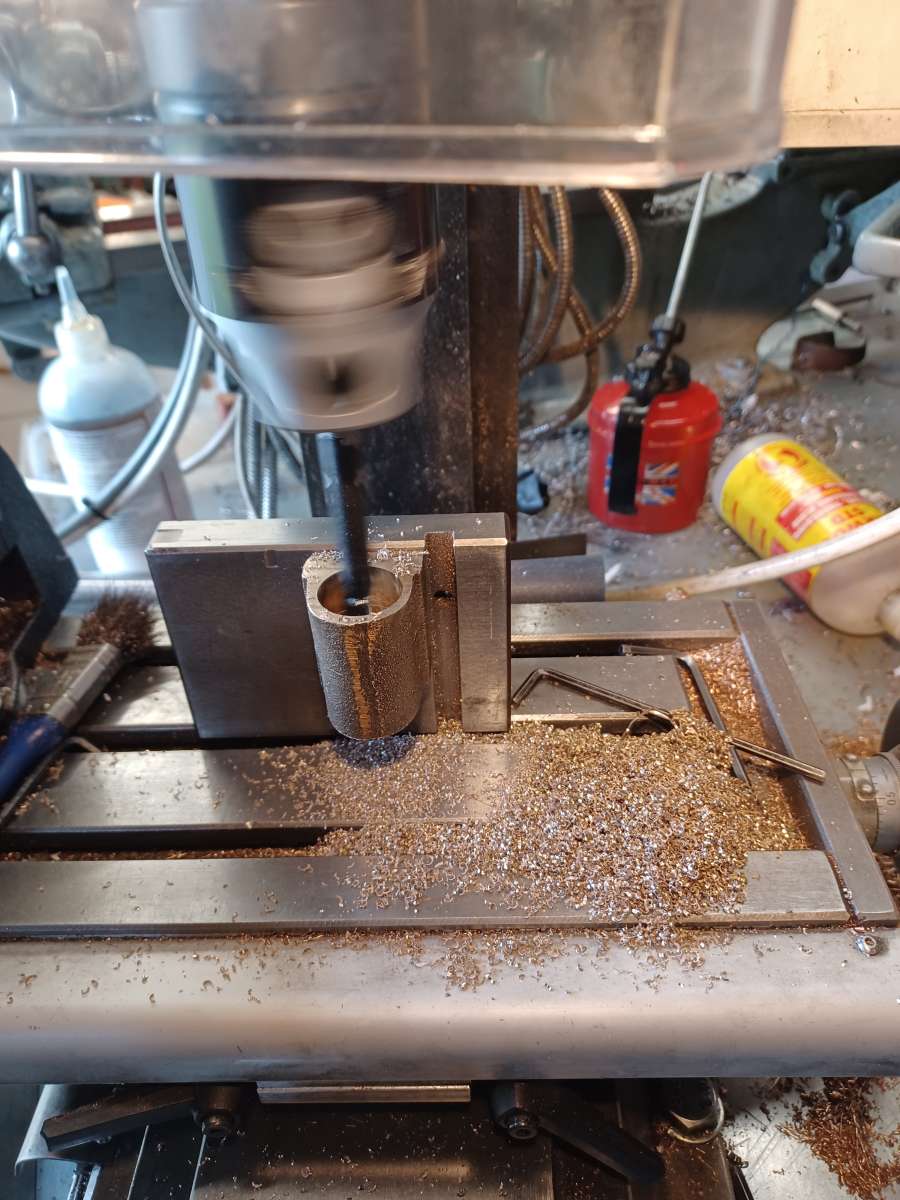
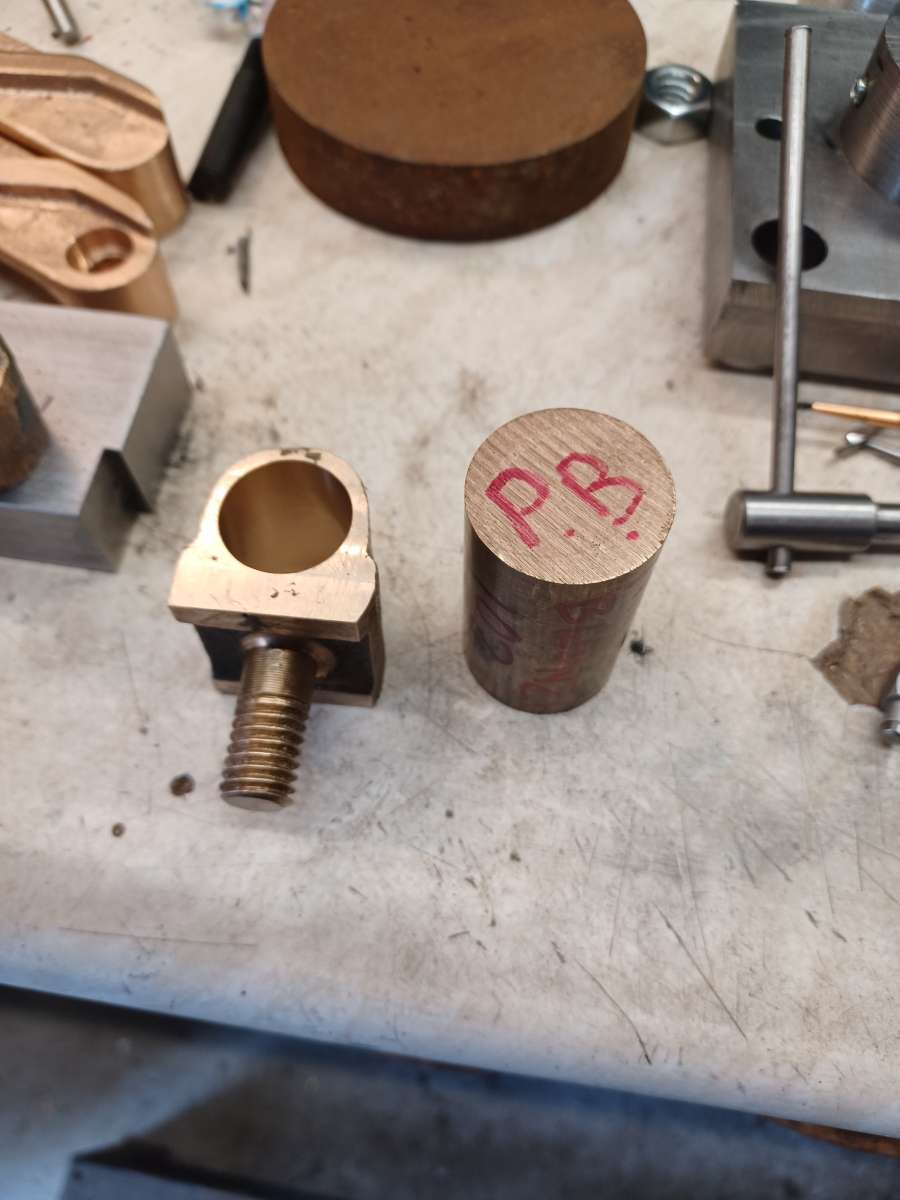
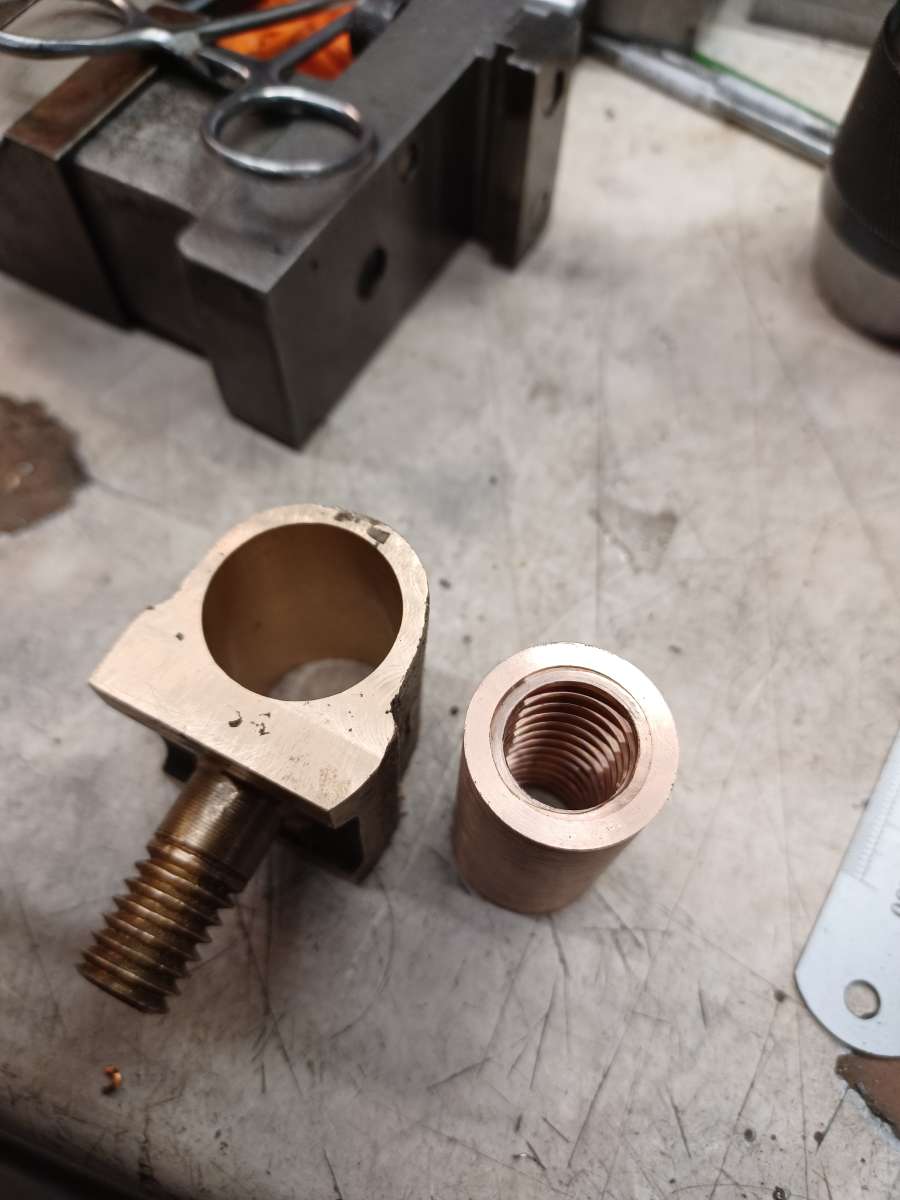
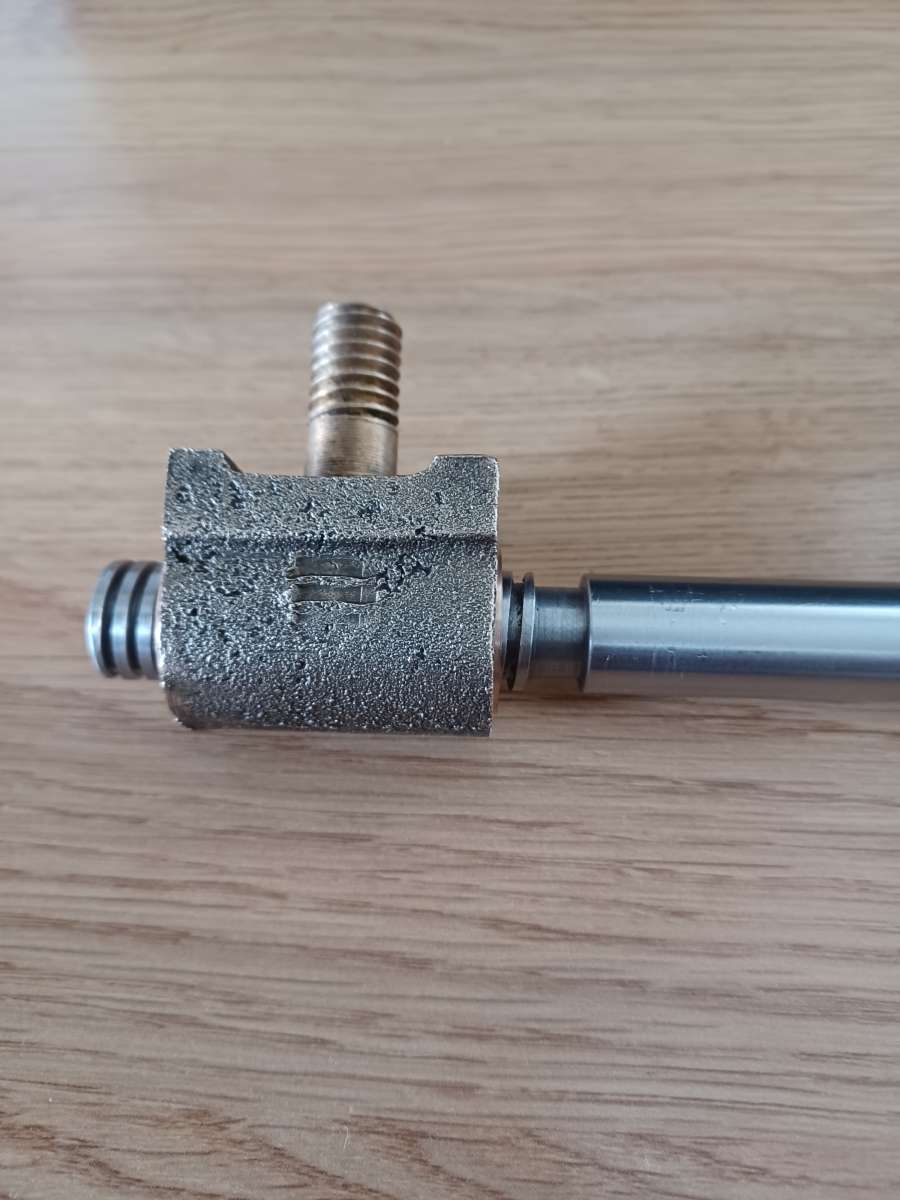
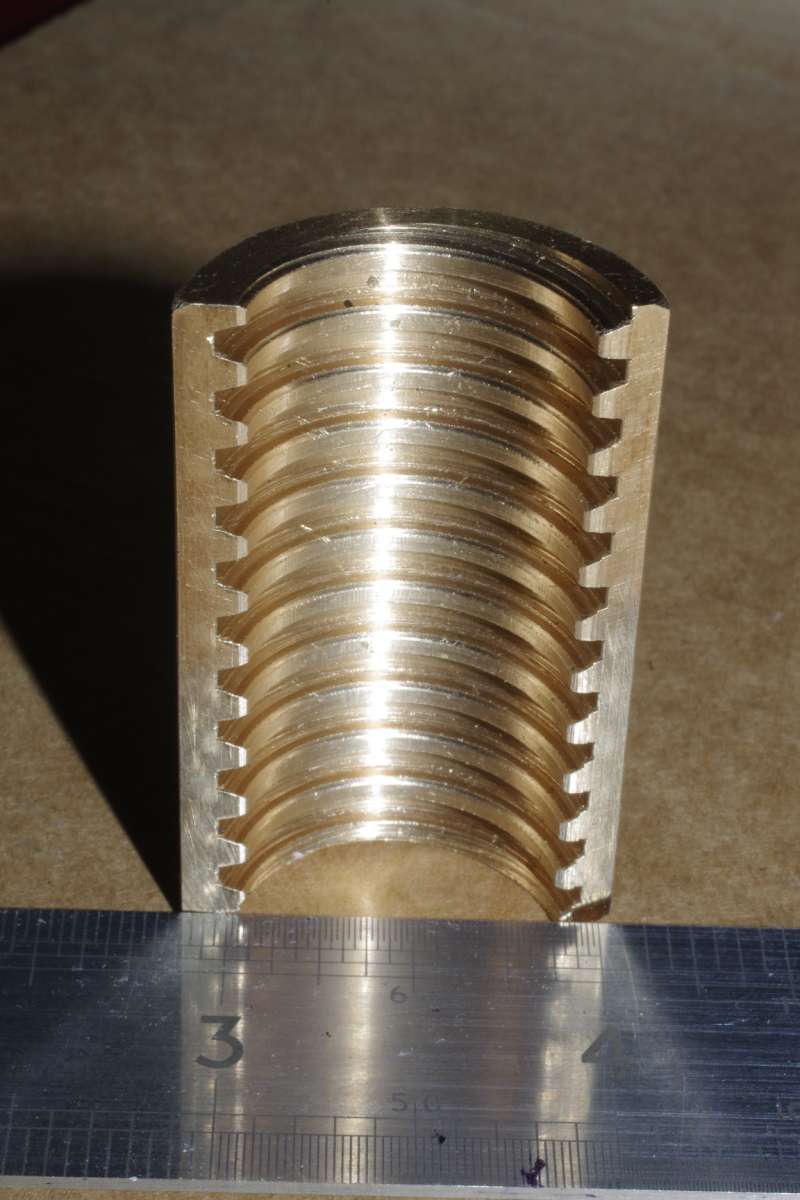
      I have a bronze casting which comes from a 1918 ish Early M Type Drummond lathe which needs replacing as the internal thread was totally shot. I have made replacement half nuts for later models which are screw cut easier as the leadscrew on the later models  are 3/4″ outside diameter where as the earlier were only 5/8″ diameter and as a closed solid nut not so easy to screw cut working down a 1/2″ diameter bore in a solid piece of Phosphor bronze is a bit time consuming but I managed to cut a reasonable thread in a bush to insert into the bronze casting which I have bored out on the mill to take the replacement bush.

      20260410_165005

      20260410_170811

      20260420_150620

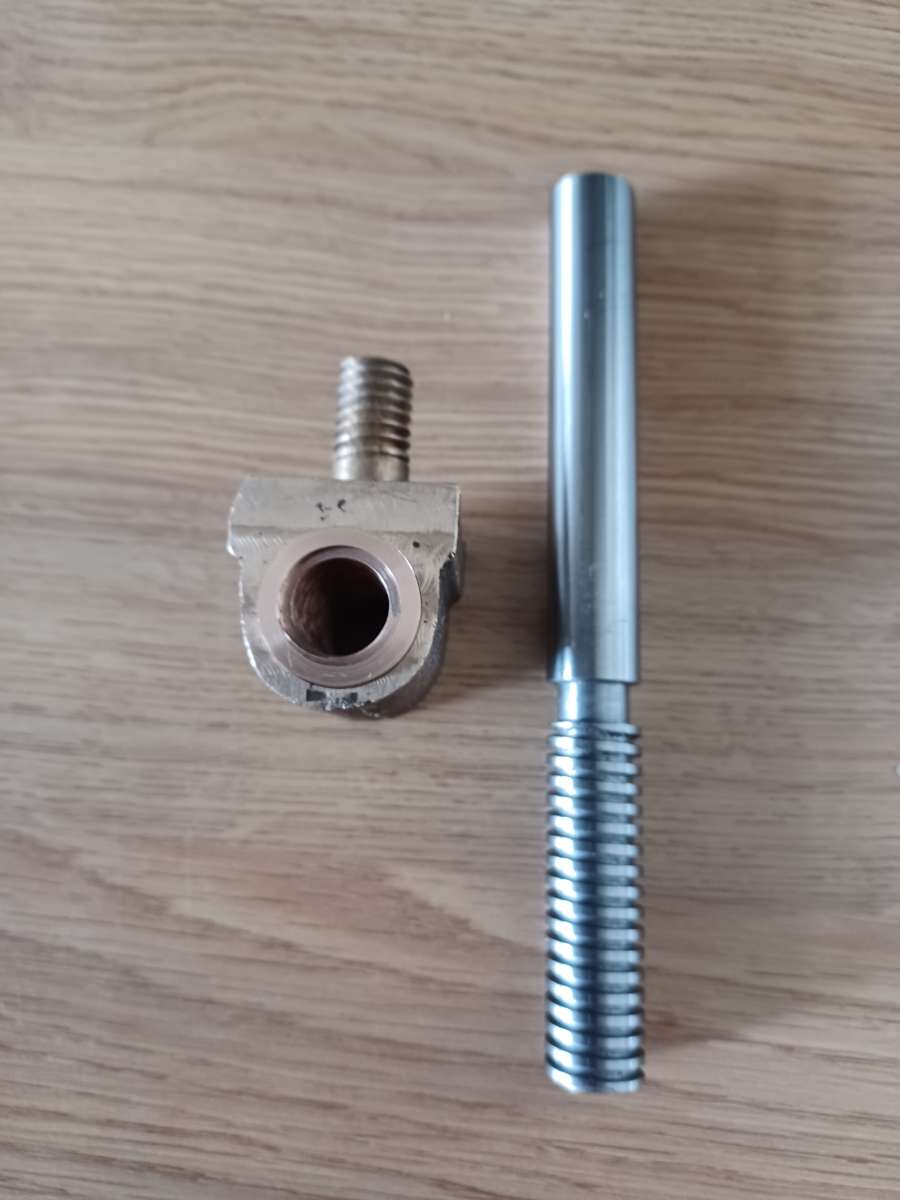
      I have bought some high strength silver solder and flux from Cup Alloys which they recommended and now ready to solder the bush in place with a slight clearance for the solder to flow I am in a quandary will heating the parts to solder, distort the thread or should I fix it in place with a Loctite product!


      20260420_152022

      20260420_152132

      Just wondered if anyone who silver solders parts together may have more knowledge which may give me more information.

      David George


      #845269
      Andrew Crow
      Participant
        @andrewcrow91475

        Hello David, I recently silver soldered a fabricated top slide nut for a Myford S7 it came out OK although nowhere near the size of the nut you are soldering, I also had the advantage of a tap to help with the clean up.

        If you do solder it may pay to file some small grooves down the bore to help the solder flow through.

        The loctite route would probably work, certainly no clean up needed, you could always fit a cross pin on the joint afterwards to give a bit more security or maybe a grubscrew vertically down the joint line.

        Andy

        #845270
        RobCox
        Participant
          @robcox

          Just use loctite, no risk of distortion and can be disassembled if needed.

          I did a similar repair on my Elliott model 00 mill y axis nut several years ago, boring out the cast iron nut and fitting a bronze sleeve. I fixed the sleeve in place with loctite 603. It’s given zero problems in about 8 years of service.

          Rob

          #845271
          Ian P
          Participant
            @ianp

            I suggest soft solder would be the most appropriate, although I’m sure the right grade of Loctite would be just as good.

            One big advantage is that either method ‘undoable’ so in a hundred years time a future owner of the lathe could replace the bush you have made (Best leave some notes written in indelible ink on suitable paper).

            Ian P

            #845286
            Kiwi Bloke
            Participant
              @kiwibloke62605

              +1 for soft solder, but make sure it’s lead/tin solder, not the horrible ‘lead-free’ stuff that doesn’t flow anywhere as readily as the ‘proper’ stuff. No worries about strength: it’s loaded in shear, and the joint area is considerable. I don’t think there would be any need to silver solder.

              #845292
              David George 1
              Participant
                @davidgeorge1

                Thanks Foe all the Replies and I have decided to Locktite it as is less likly to cause a distortion and should hold with the area in contact.


                Thanks


                David

                #845295
                Dave Halford
                Participant
                  @davehalford22513

                  I replaced my badly worn saddle 1/2″ lead screw thread tennoned into the original power section with 603. The joint area is quite small but it’s holding.

                  #845308
                  Charles Lamont
                  Participant
                    @charleslamont71117

                    Loctite is what I would do. If you have not already done it, beware that you will have very little adjustment time as the copper content catalyzes the Loctite cure.

                    #845319
                    JasonB
                    Moderator
                      @jasonb

                      As it is made I would go with Loctite.

                      Had you asked earlier I would have said rough out the bore and silver solder in the sleeve, then bore and screwcut. I do similar when fabricating things like engine cylinders leaving the bore and flange thicknesses a bit over so they can be finish machined after soldering.

                      Even if planing to Loctite from the start I may have left a small coller on a longer sleeve to take the thrust as we generally feed in one dircetion for most of the time.

                      #845334
                      Martin Johnson 1
                      Participant
                        @martinjohnson1

                        Don’t under estimate soft solder.

                        Loctite quote a shear strength of 2300 psi on aluminium (the only non ferrous metal they quote) for 680 grade.

                        Engineer’s edge gives a minimum of 2900 psi for tin solders on steel.  My guess is that would increase on brass or bronze substrate.

                        Martin

                        #845337
                        old mart
                        Participant
                          @oldmart

                          Loctite would be effective and very easy because your joint surface is very large. I soft soldered a part thread insert into the leadscrew nut for the Smart & Brown model A lathe and have had no bother since. I tinned both parts before letting them fit together by gravity upon final heating.


                          _IGP2133

                          #845341
                          bernard towers
                          Participant
                            @bernardtowers37738

                            Same for the X way nut on my mill and that was eons ago

                            #845347
                            Michael Gilligan
                            Participant
                              @michaelgilligan61133

                              Wow … this took some finding:

                              Loctite 680 Technical DataSheet

                              https://webaps.ellsworth.com/edl/Actions/GetLibraryFile.aspx?document=13474&language=en

                              … or am I just having a bad day ?

                              MichaelG.

                              #845350
                              JasonB
                              Moderator
                                @jasonb

                                Bad bay I think.

                                First result was to the pdf with Google by entering henkle 680 data sheet

                                Even just entering Loctite 680 the first result was the henkle page with a downloadTDS sheet at the top

                                #845363
                                Michael Gilligan
                                Participant
                                  @michaelgilligan61133

                                  Oh well … an early night for me, I think

                                  MichaelG.

                                  #845375
                                  Nigel Graham 2
                                  Participant
                                    @nigelgraham2

                                    I performed a similar repair on the cross-slide nut on my Harrison L5 lathe, using soft solder without problems.

                                    However, I did give the insert a flange to take most of the thrust from the solder.

                                    (If I use a rear tool-post for parting-off the solder will take all the stress, but the joint area is large and the axial load from a narrow parting-tool modest.)

                                    #845378
                                    bernard towers
                                    Participant
                                      @bernardtowers37738

                                      funny that brass coppers and bronzes are not mentioned or have I missed them?

                                      #845395
                                      Michael Gilligan
                                      Participant
                                        @michaelgilligan61133
                                        On bernard towers Said:

                                        funny that brass coppers and bronzes are not mentioned or have I missed them?

                                        Don’t take my word for it, Bernard … but if memory serves me well, the ‘Accelerators’  from Loctite are mostly based on Copper Sulphate.

                                        ergo … the resin cures to full strength onBrass, etc. … it just happens quicker !

                                        .

                                        See Charles Lamont’s post, above.

                                        MichaelG.


                                      Viewing 18 posts - 1 through 18 (of 18 total)
                                      • Please log in to reply to this topic. Registering is free and easy using the links on the menu at the top of this page.

                                      Latest Replies

                                      Viewing 25 topics - 1 through 25 (of 25 total)
                                      Viewing 25 topics - 1 through 25 (of 25 total)

                                      View full reply list.