Willy the Little Wobbler

Willy the Little Wobbler

Home Forums Stationary engines Willy the Little Wobbler

Viewing 25 posts - 1 through 25 (of 29 total)
  • Author
    Posts
  • #830835
    JasonB
    Moderator
      @jasonb

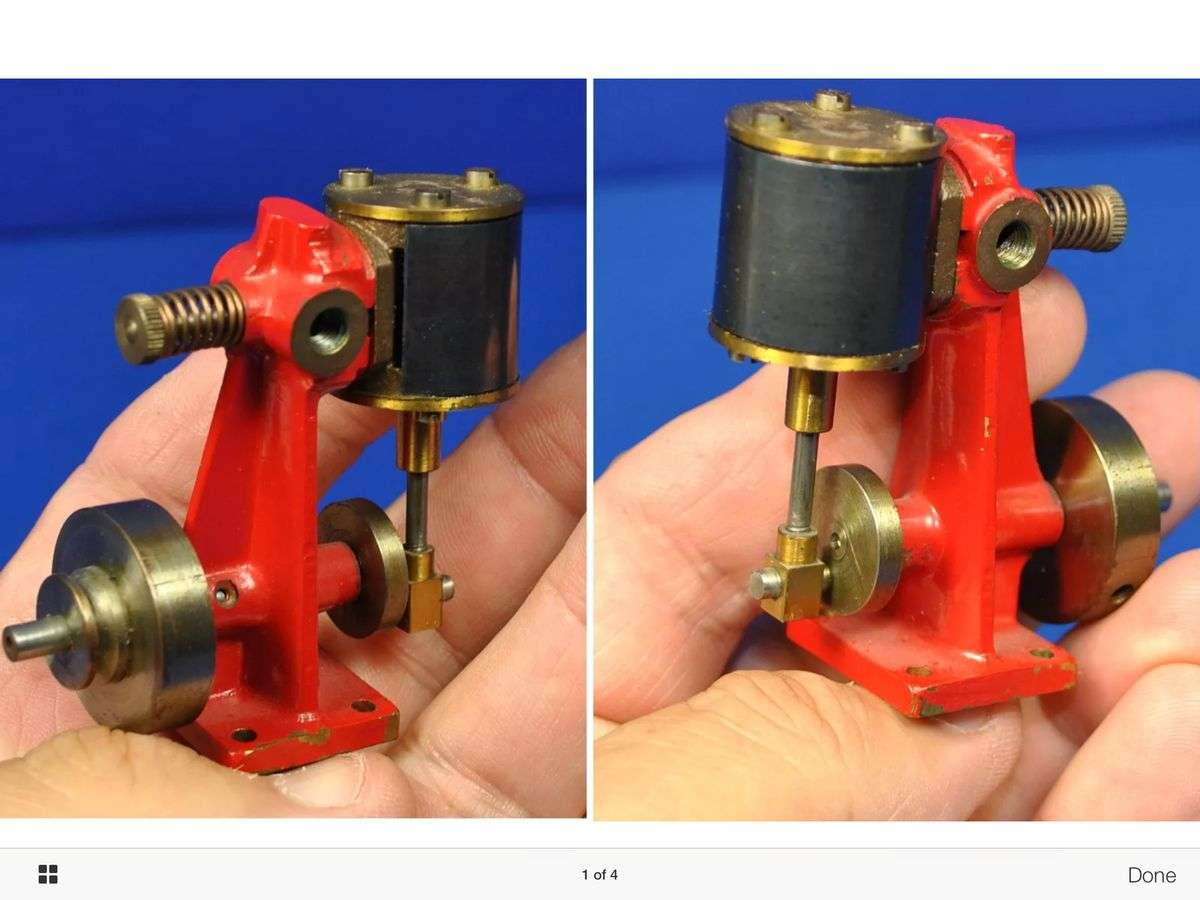
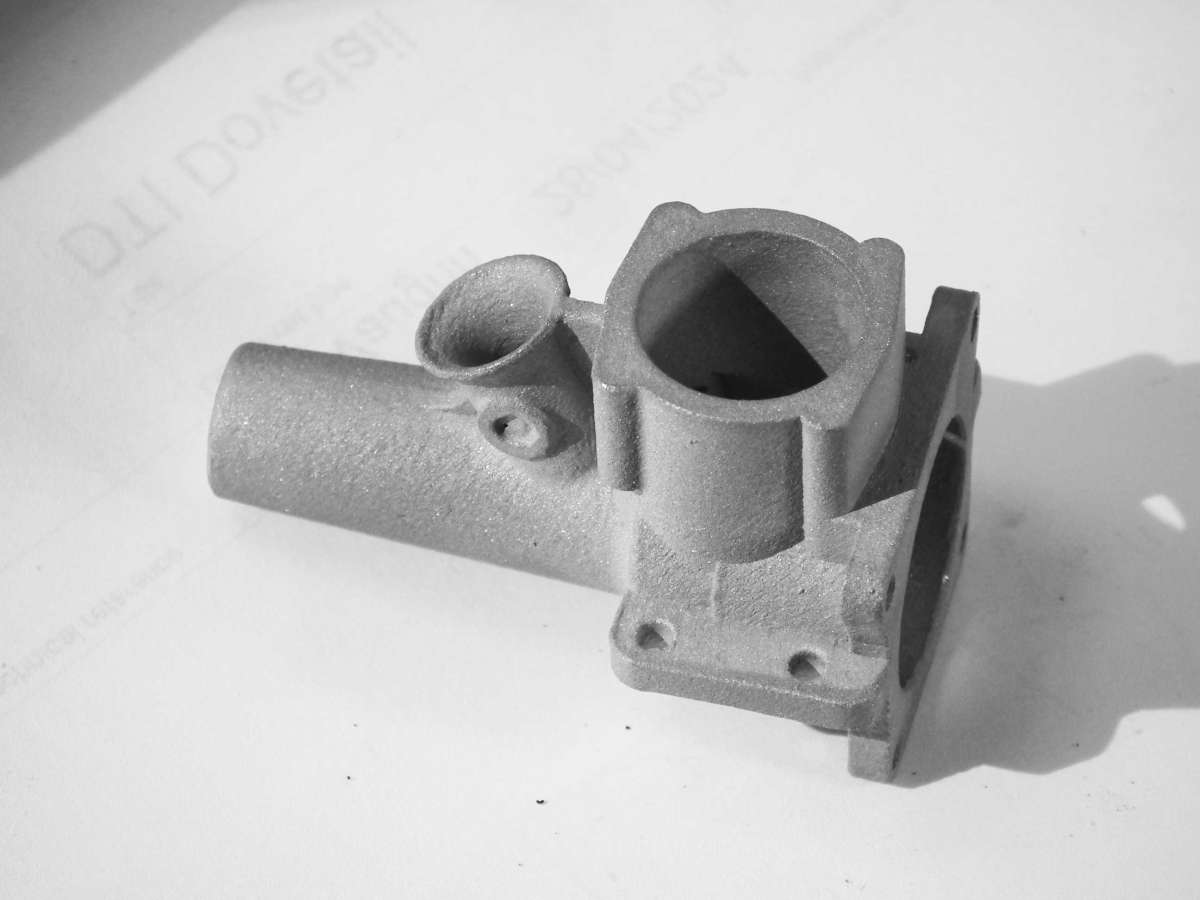
      Those that have been following my Kelsey thread will have seen that I had thoughts of a single cylinder version but was a bit put off as most of the work would just have been a repeat of the Vee Twin. However I have a large folder on my computer of “Future Projects” and one image that I have had stored away there for a couple of years is this little wobble. I think it may be an early Stuart from the days when they had cast cylinders not the current extrusion as the screws would have gone into the cylinder flanges rather than the long studs used on the extruded one.

      wobbler

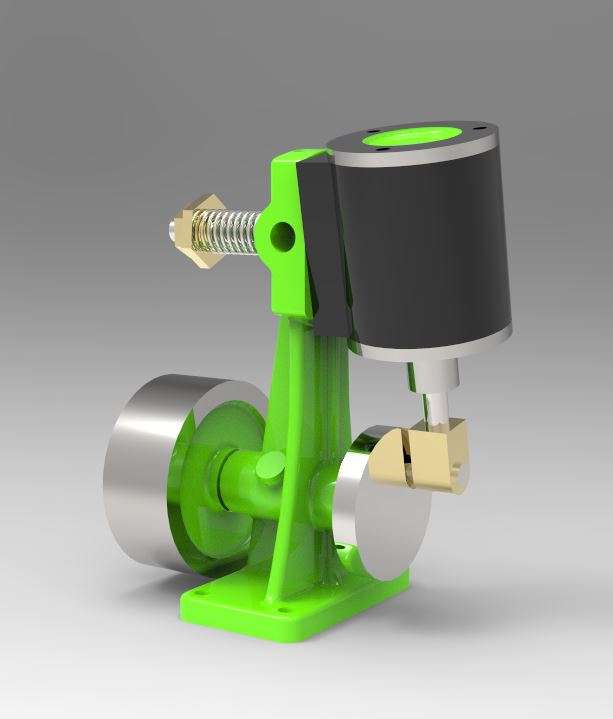
      A bit of time spent on Alibre and I had a design that I was happy with and decided to upload the frame to Craftcloud just to see what a 3D metal printed one might cost as an alternative to making it by fabrication.

      frog

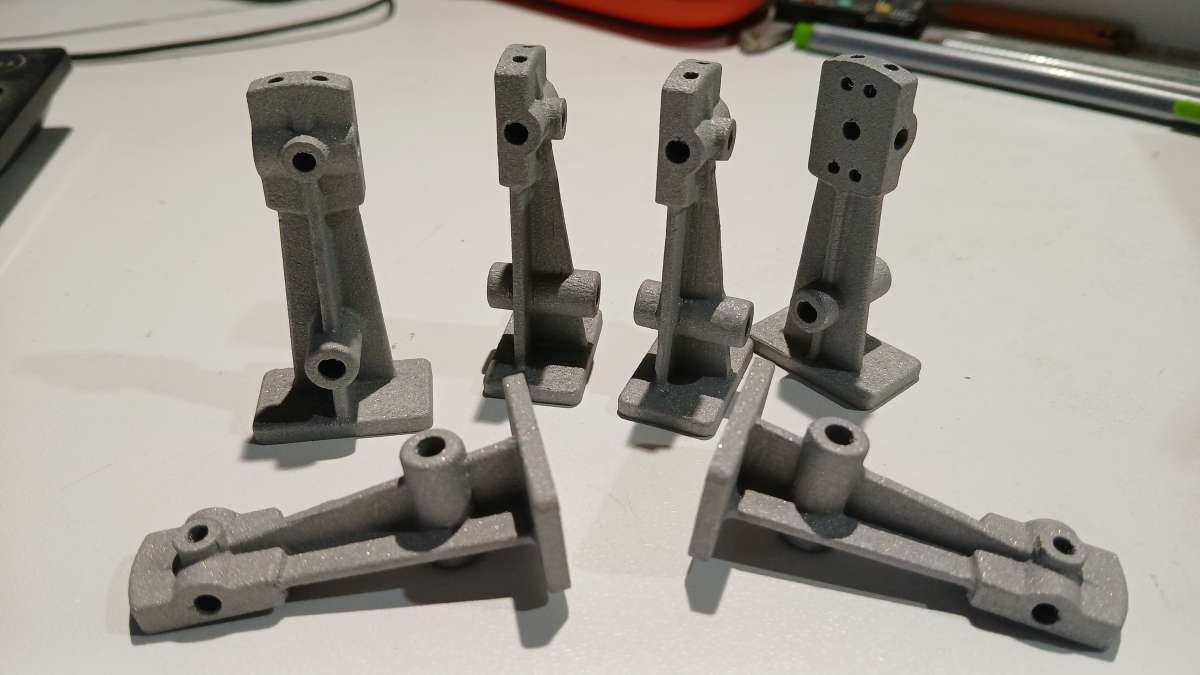
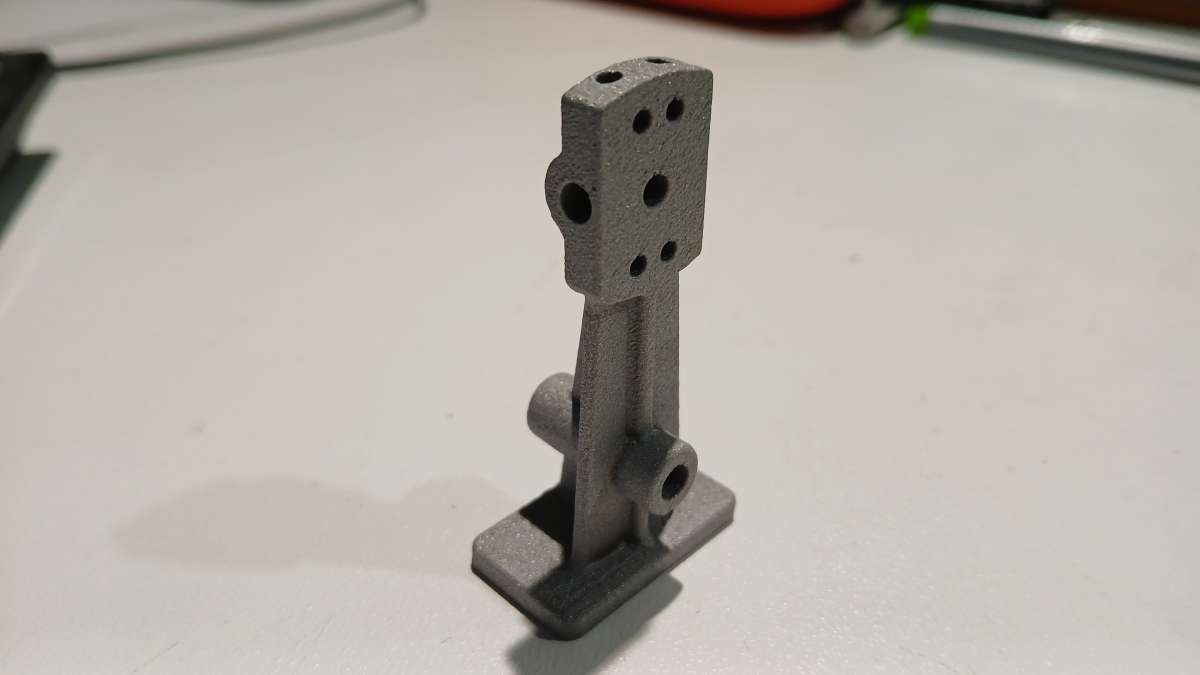
      The price looked reasonable, so I went back and modified the frame file to be more like a casting by suppressing all the holes and adding a small machining allowance. As mentioned earlier in the year in my A J Weed engine build a lot of the online quotes have a set “job price” that includes printing, post and tax and as this is quite a small item it easily fell within the job price. Playing about with the quantity required showed that I could actually get six frames printed for the same job price as just one so decided that was the sensible option as six frames for £37.00 seemed quite reasonable to me particularly considering that just one spare casting for the Stuart single ST would set me back about £43.00.

      I then did a less sensible thing and deleted the quote for the pattern instead of deleting the one for the finished standard and did not realise until the prints arrived just 10 days later. Apart from the holes and no machining allowance I was happy with the way they turned out and after poking a couple of drill bit shanks into the holes was relieved to find they were all 0-2 to 0.3mm undersize. The material is Aluminium and I opted for a bead blasted finish.

      20251229_093608

      20251229_093622

      With the prints arriving on the 29th December is set myself the task of making the engine before the end of the year so got my finger out in no particular order.


      Standard.

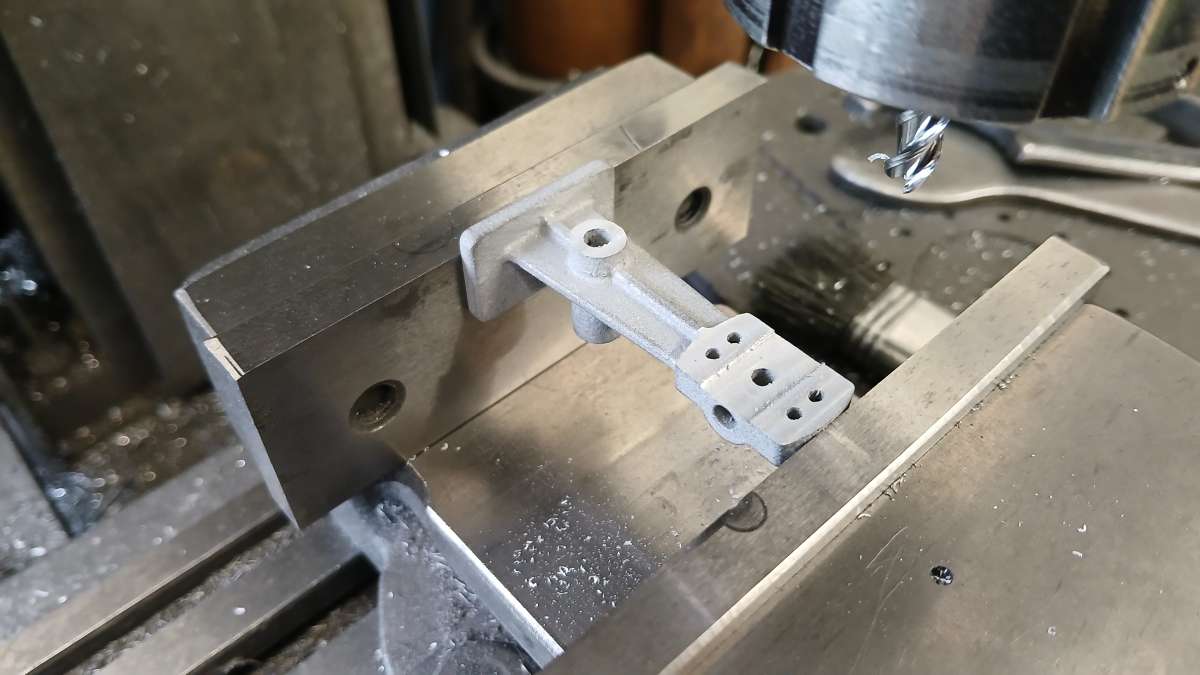
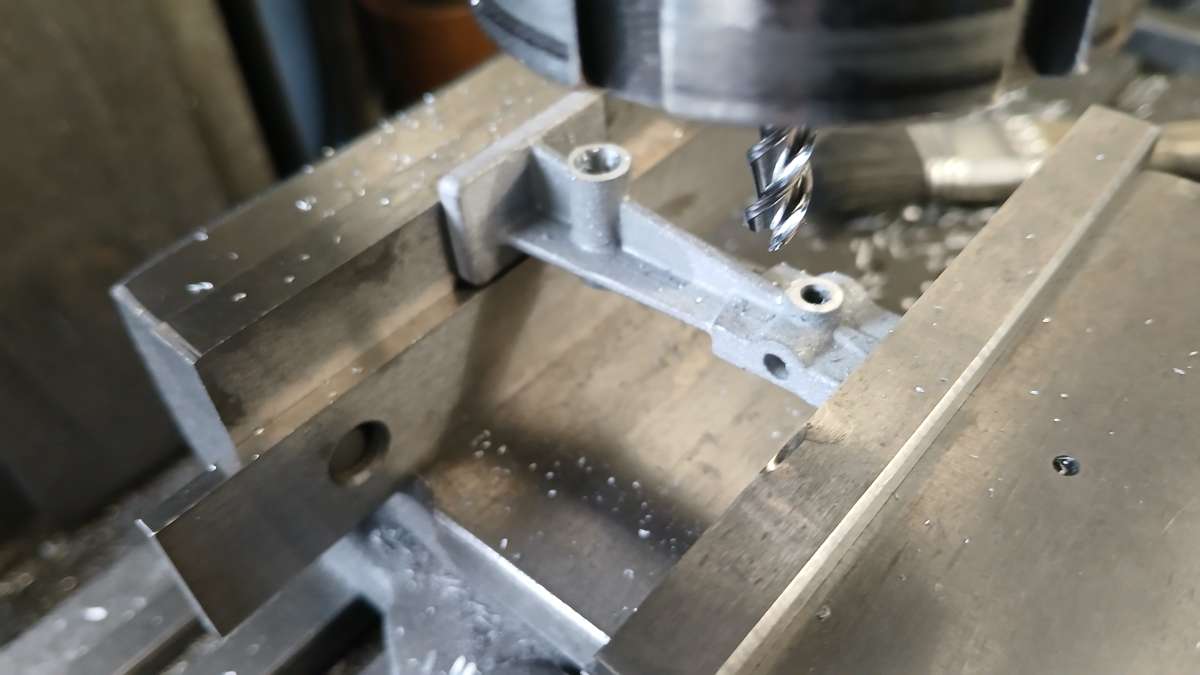
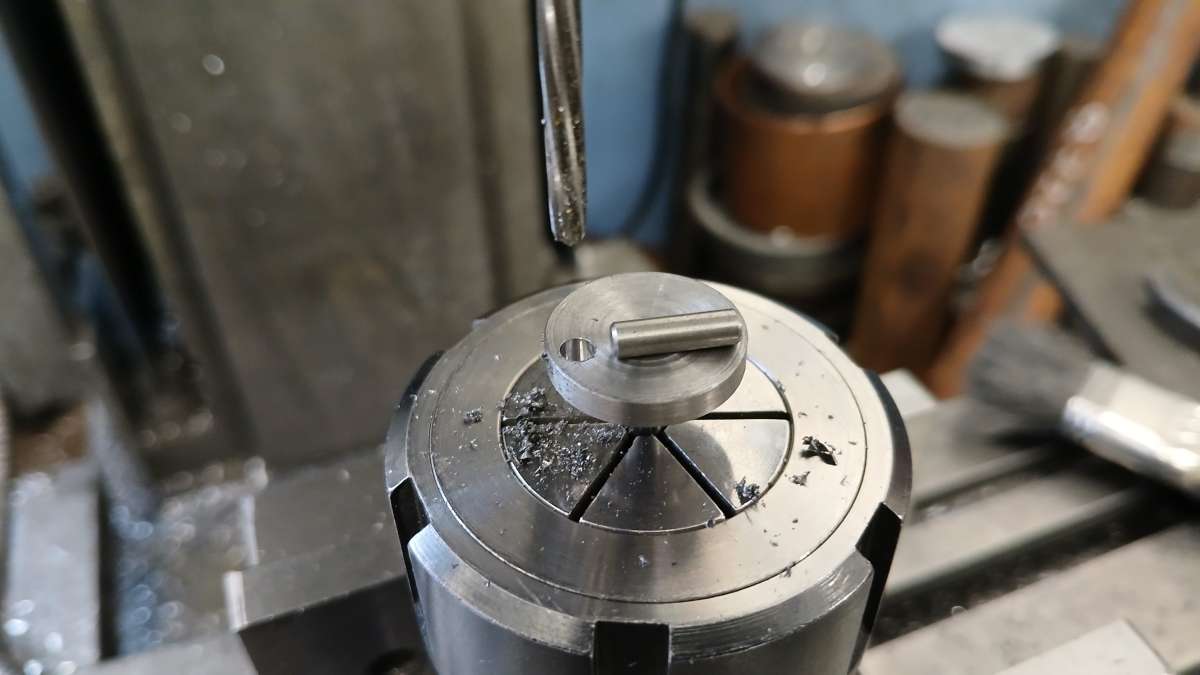
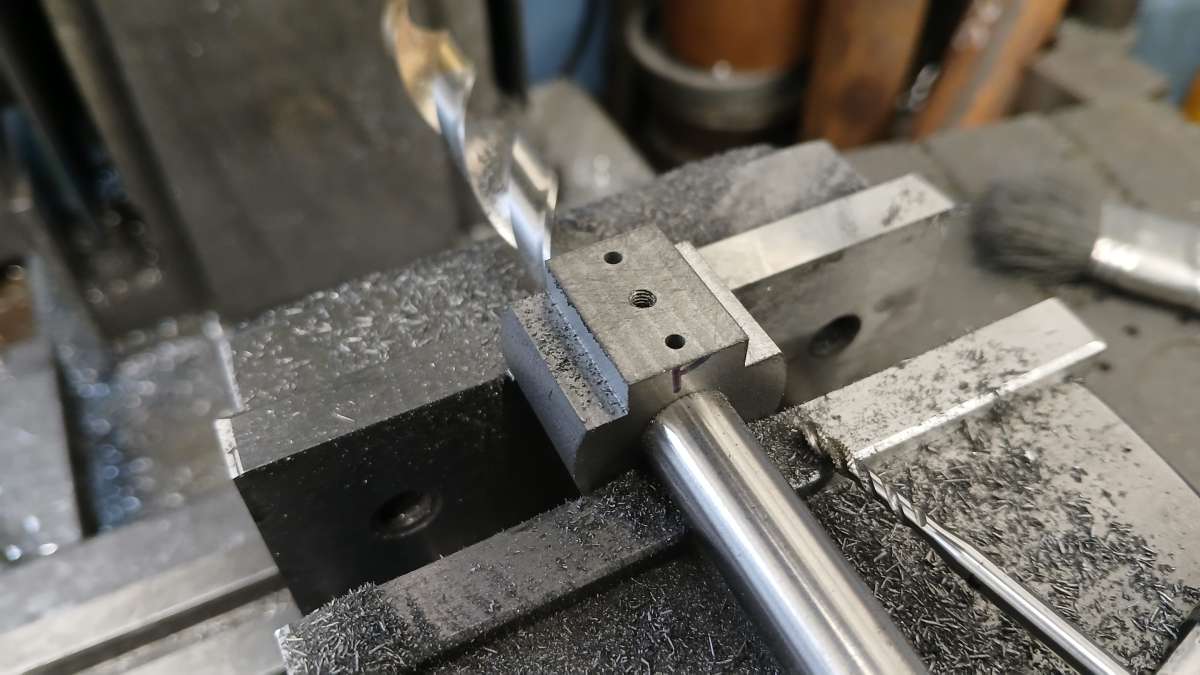
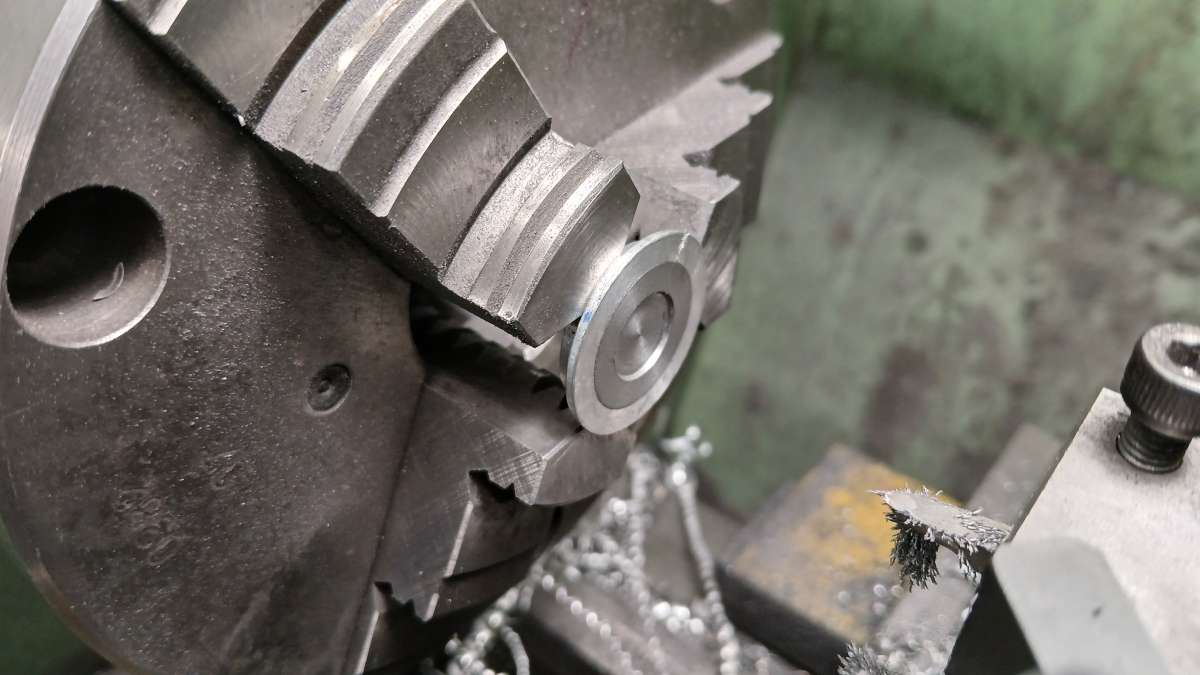
      After quickly rubbing the bottom over some Emery cloth laid on a tile I set it up in the mill vice using a close fitting drill shank to locate the crankshaft bore as my datum point. I took 1mm off the crankshaft boss and the lightest of skims off the port face plus a deeper pass through the middle to reduce port face friction.

      20251230_083726

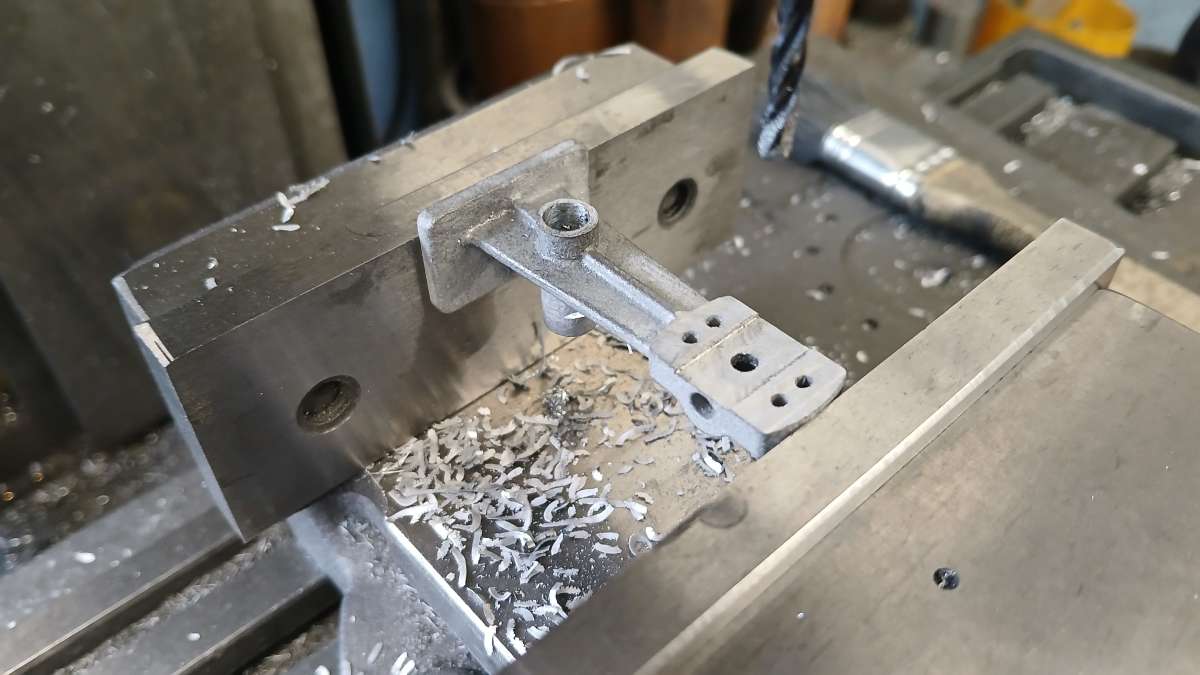
      The crank boss was drilled out from 3.7mm  to 5.8mm then reamed 6mm to take a bronze bush and the cylinder pivot drilled 2.8mm from 2.7mm before being reamed 3mm. The ctr to ctr distance was as drawn at 31mm.

      20251230_084543

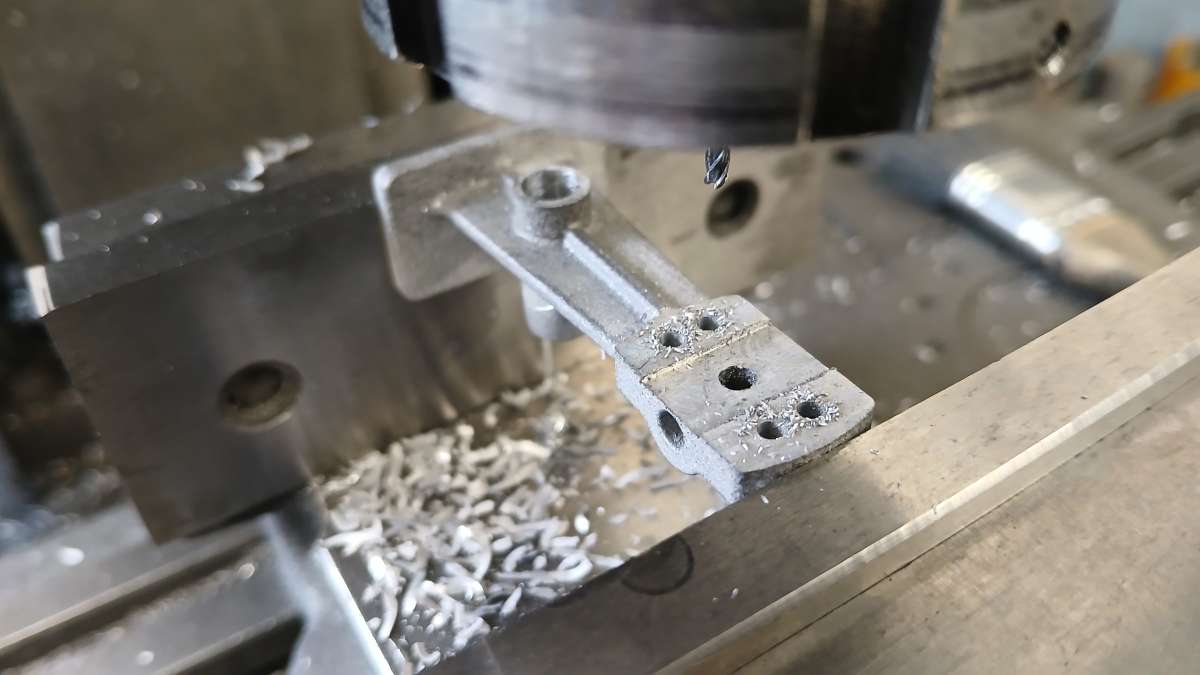
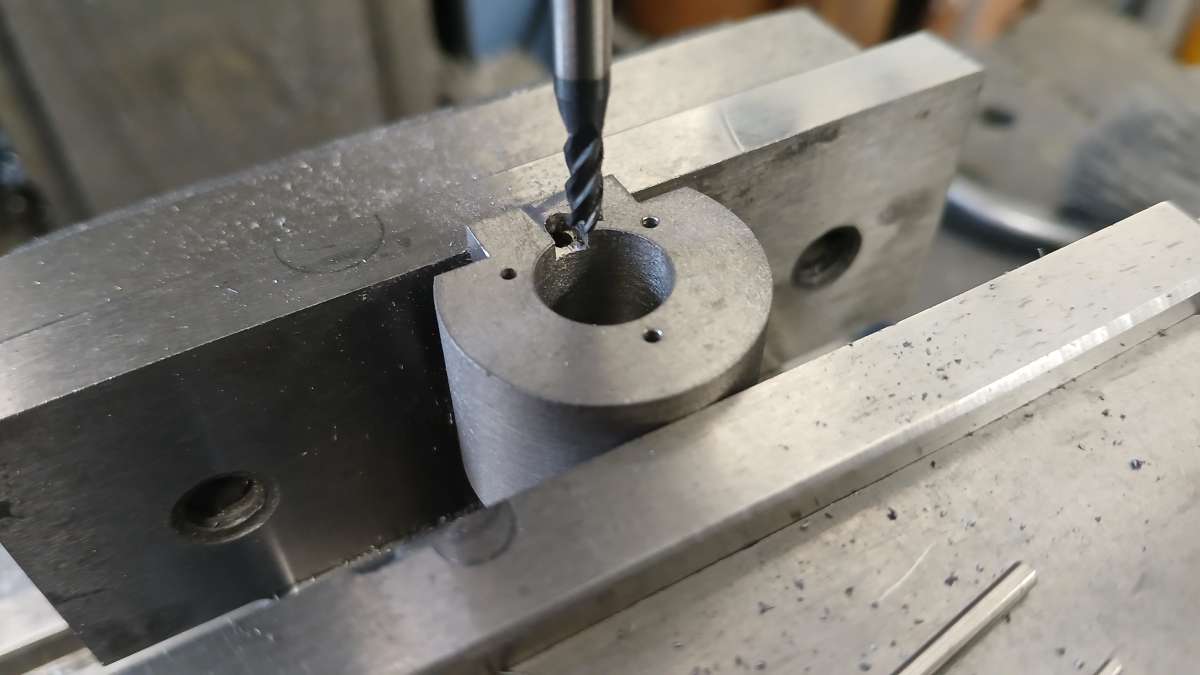
      Four plunge cuts with a 2mm milling cutter crispened up the edges of the steam/air ports.

      20251230_085012

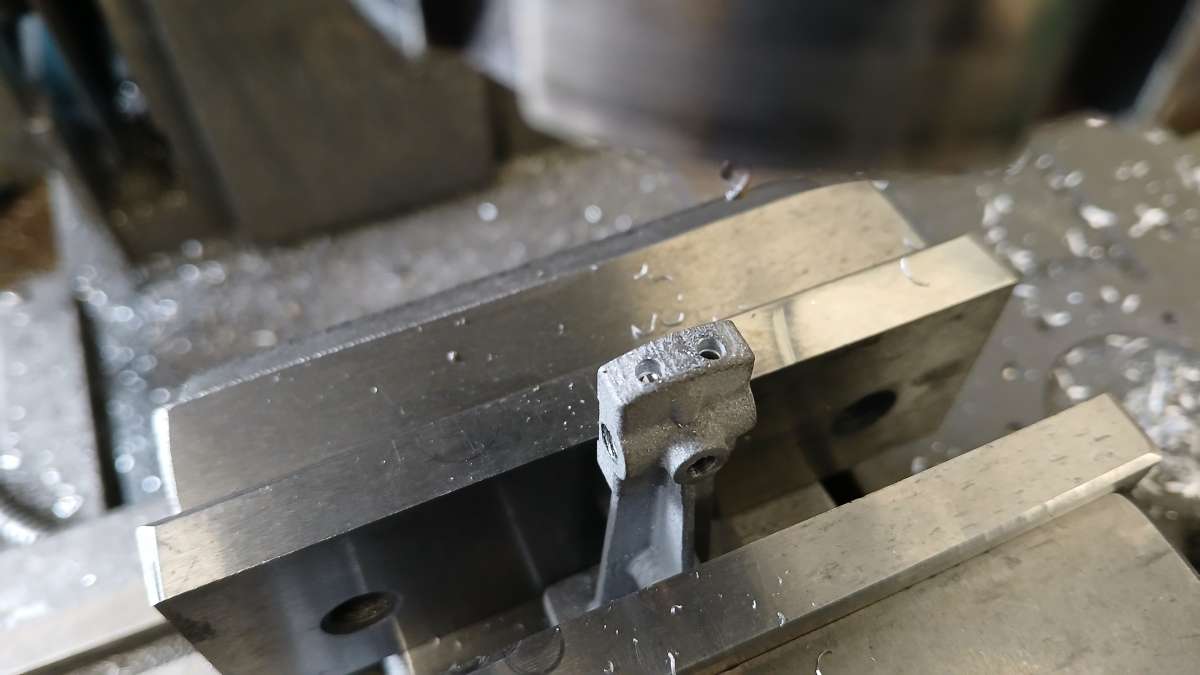
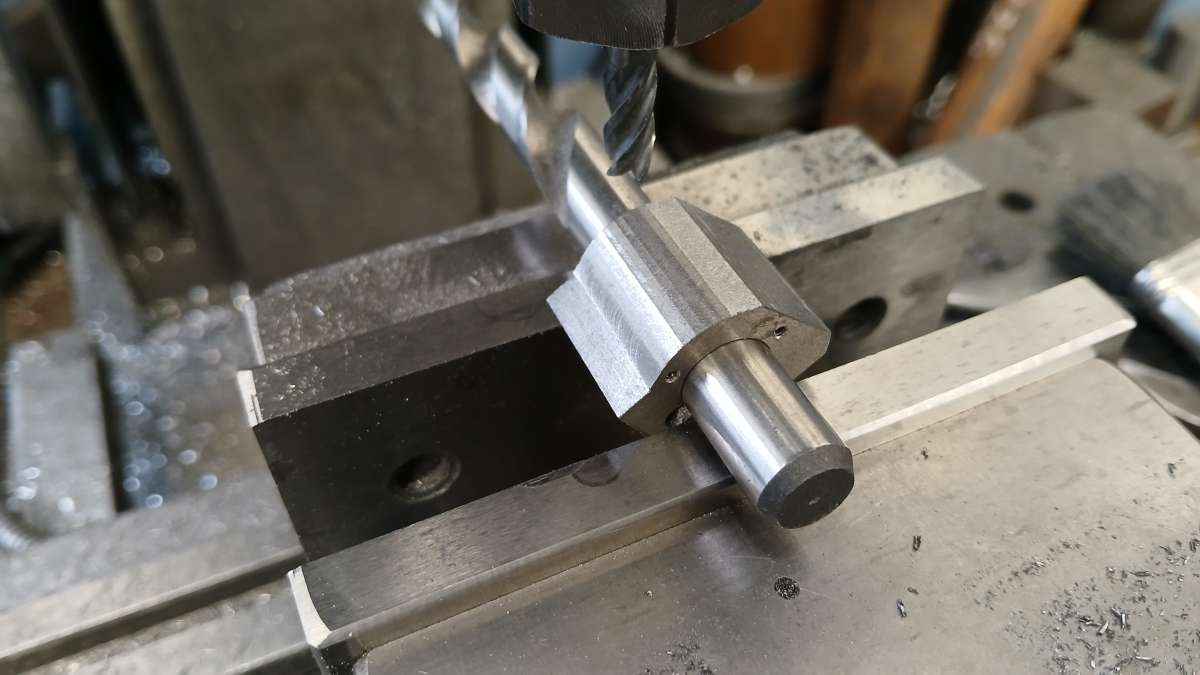
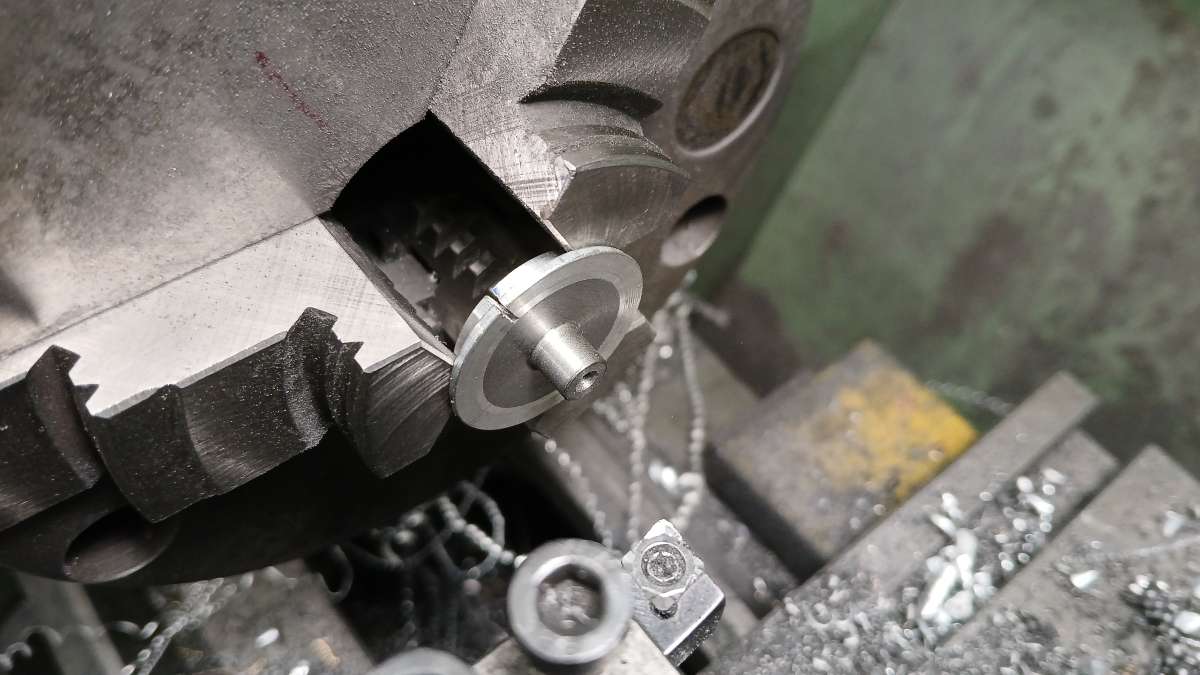
      Flipping the print the other way up the opposite ends of the crankshaft and pivot bosses were squared up.

      20251230_085442

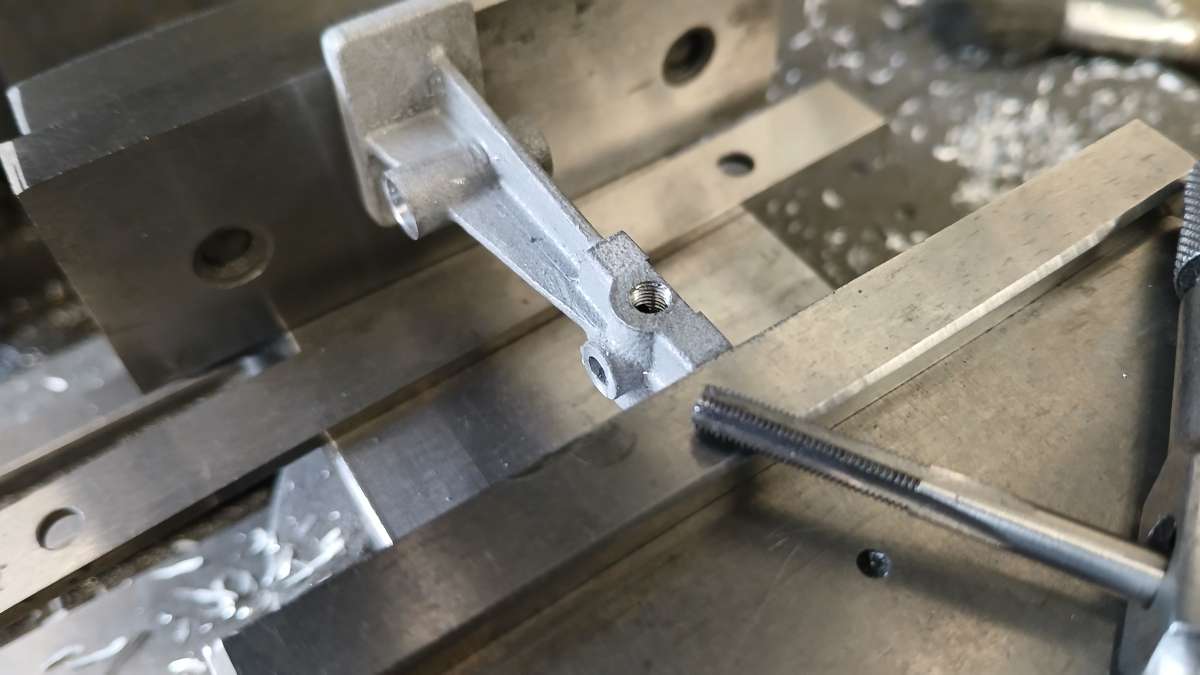
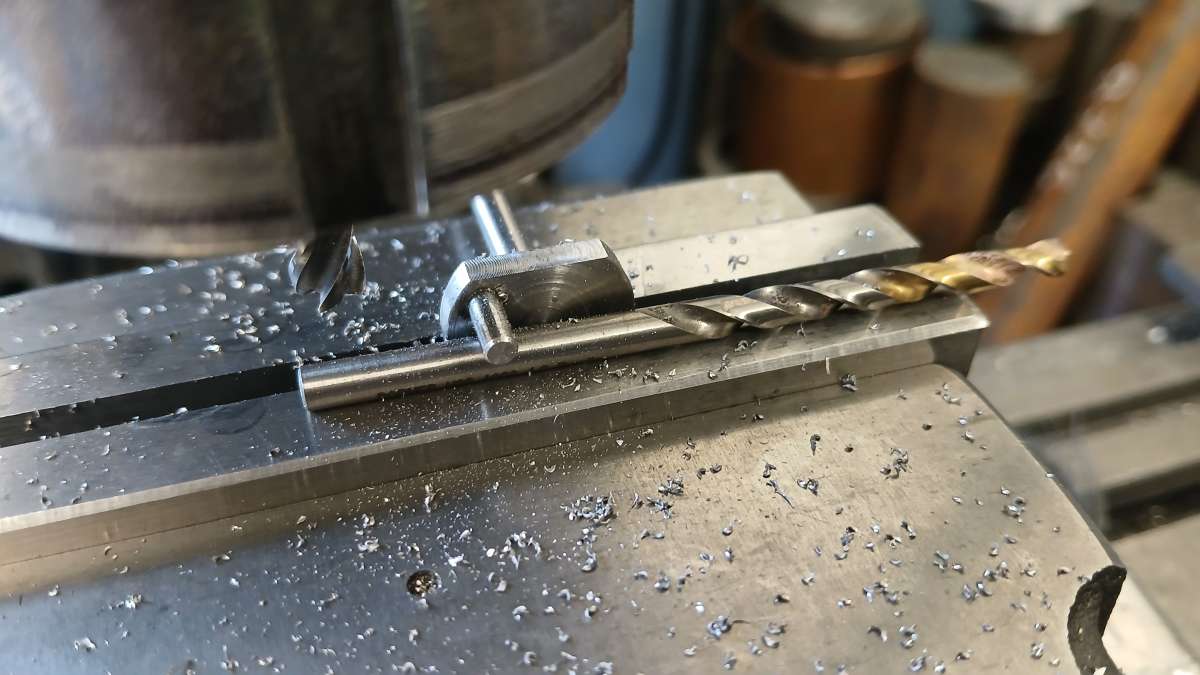
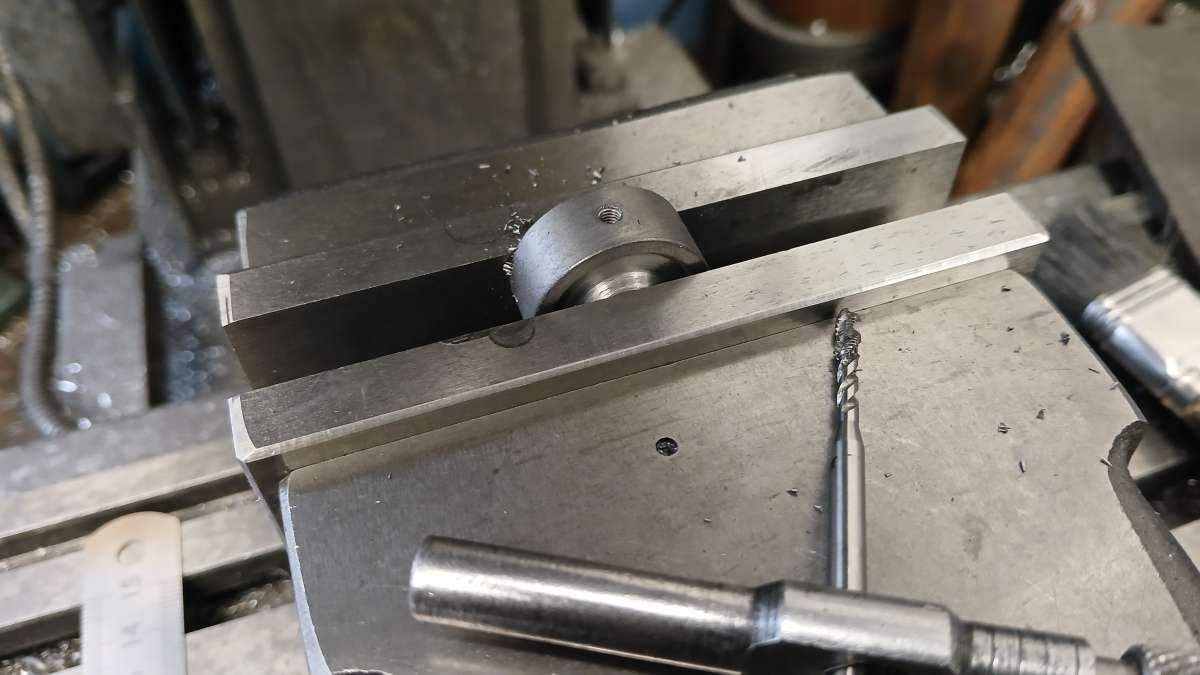
      Then onto its sides to run the 3.5mm drill in and then tap for inlet & exhaust M4 x 0.5.

      20251230_090145

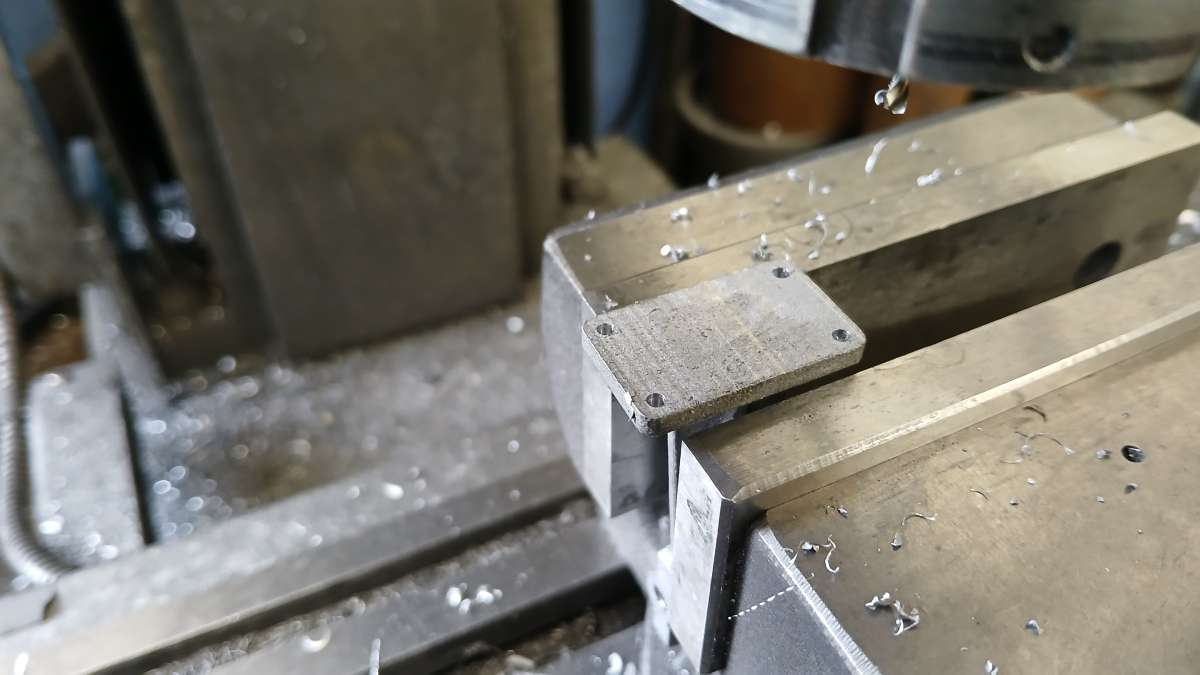
      The bottom was then drilled 2mm for some fixing holes, these had not been put onto the design at the time of ordering so were not present on the print.

      20251230_091641

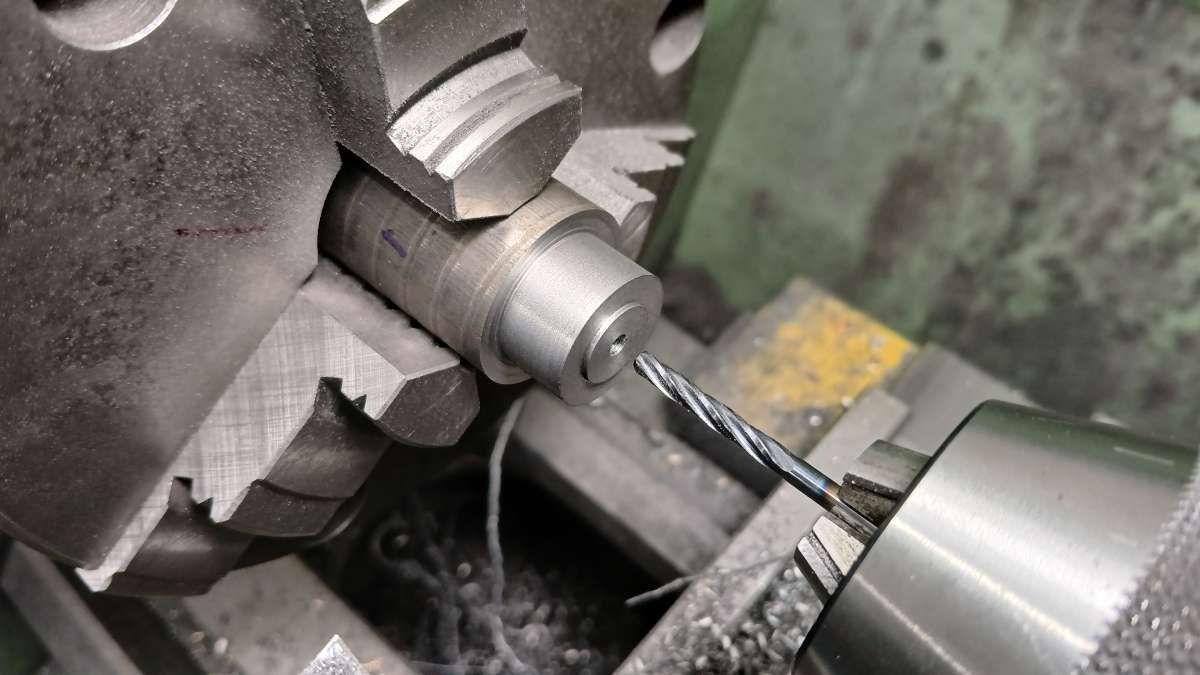
      Setting the casting up for the final sixth time the two linking passages were cleaned out to their 2mm diameter and then counterdrilled 2.5mm for a short depth so the plugs had something to stop against rather than block a port hole.

      20251230_091041

      A length of aluminium was turned to fit the 2.5mm holes and two pieces cut off and Loctited into position to close off the drillings.

      20251230_093916


      #830905
      Graham Meek
      Participant
        @grahammeek88282

        Hi Jason,

        The Stuart ST lives on.

        While I know the holes in your “Castings” were not intended. Would it be possible using this printing process to have the two steam passages “printed in”? Thereby saving a further couple of operations and blanking them off.

        From what I have seen of this process I am assuming some form of port face hole would still be needed. Am I right?

        Regards

        Gray,

        #830910
        JasonB
        Moderator
          @jasonb

          Gray, yes I would think it possible to close the holes off at the top. As you say the “void” would still need to be open somewhere to allow the unbonded layers of metal powder out much like you would need a way to remove the sand from a traditional core.

          Mike Tull over on MEM forum has just had some nice exhaust manifolds and other pipework printed for his Mercedes GP Engine  which is otherwise mostly CNC machined on small Emco machines

          #830911
          Graham Meek
          Participant
            @grahammeek88282

            Hi Jason,

            Thanks for the info and the two links. I have not visited that forum for a long while and did not realise what I have been missing.

            Regards

            Gray,

            #830938
            Danni Burns
            Participant
              @danniburns84841

              Hi Jason

              How is the machining and strength of material (e.g. the finish and threads)?

              Just the same as Ali?

              regards


              #830946
              JasonB
              Moderator
                @jasonb

                Danni the aluminium used here and the previous stainles ssteel part I had done all machined much like a piece of solid material would.

                Neither have had any particularly loaded threads, infact the stainless was all through holes and the only ones this time are M4 x 0.5 air connections which don’t get any real pull out load. They cut without problem with traditional taps.

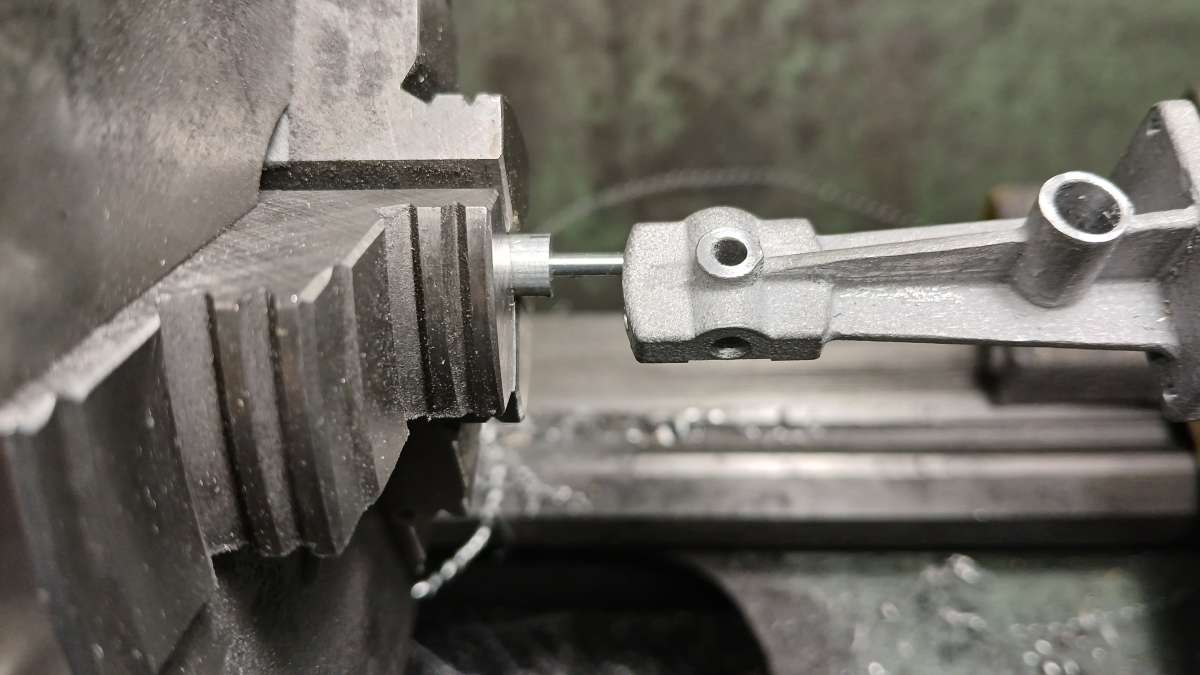
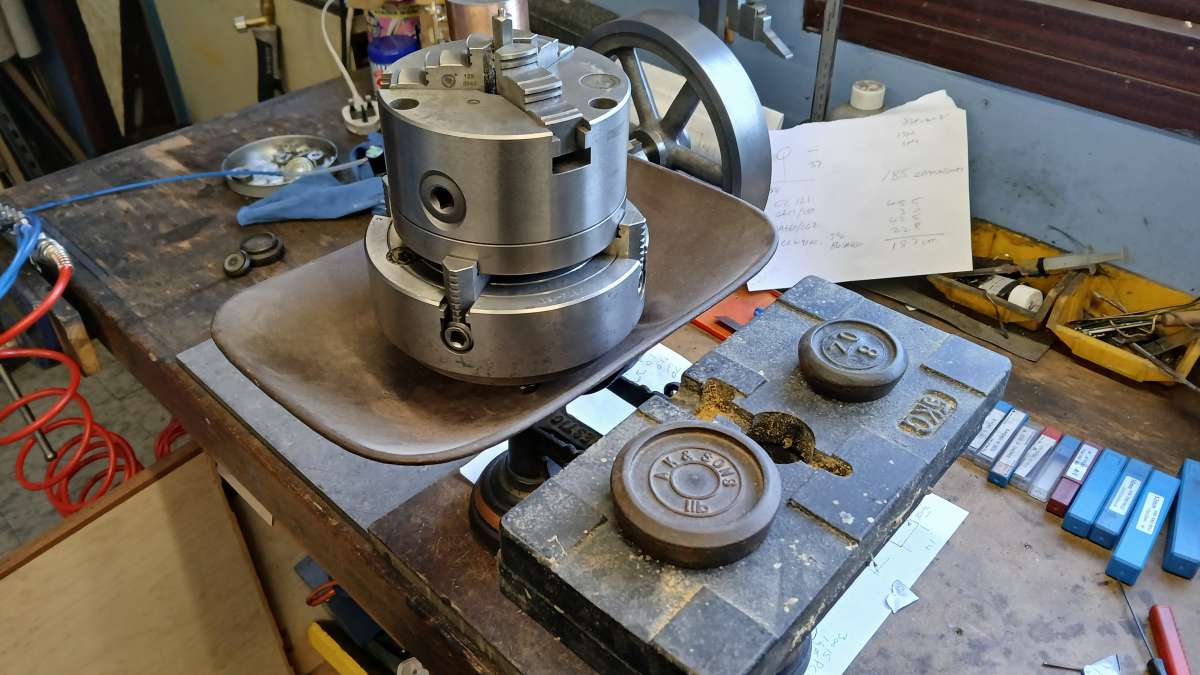
                However as I wa sfiddling with Willy this afternoon I thought I would do a quick test as best I could cobble together in the workshop.

                The weight of the two chucks was 10.7kg obviously it could have taken mor ebut I did not want to test to destruction

                20260102_134741

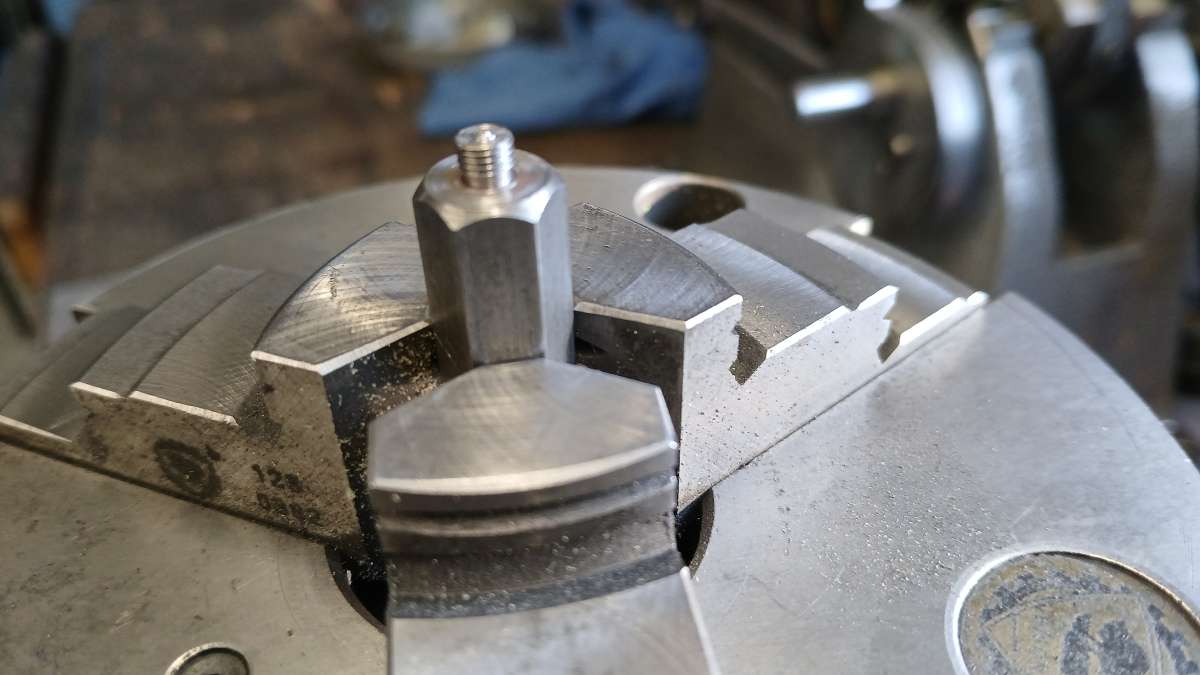
                The length of thread on the adaptor probably 3mm so 0.75D

                20260102_133257

                So if anyone reading is able to calculate the pull out load achieved I’d be interested to know what it was. The frame was printed laying on it’s side so what load there was was trying to pull the layers apart.

                Now I don’t know if it is the cold weather with snow on the ground here in Surrey or my fiddling with Willy but he is now wobbling a lot slower and will also self start if the crank is in the right position which is more to my liking. After this video I nipped back inside and got the Tacho out again and was pleased to see that he also ran faster than yesterdays video to the tune of 3685rpm and I did get a brief reading of 3702rpm😲


                #830980
                Danni Burns
                Participant
                  @danniburns84841

                  very interesting. Thanks

                  #831117
                  JasonB
                  Moderator
                    @jasonb

                    Crankshaft

                    As this was to be of built up construction an dLoctited together I did it fairly early on. The crank disk was turned to diameter, a short 1mm spigot formed and then drilled 3.8mm followed by reaming 4mm.

                    20251228_085103

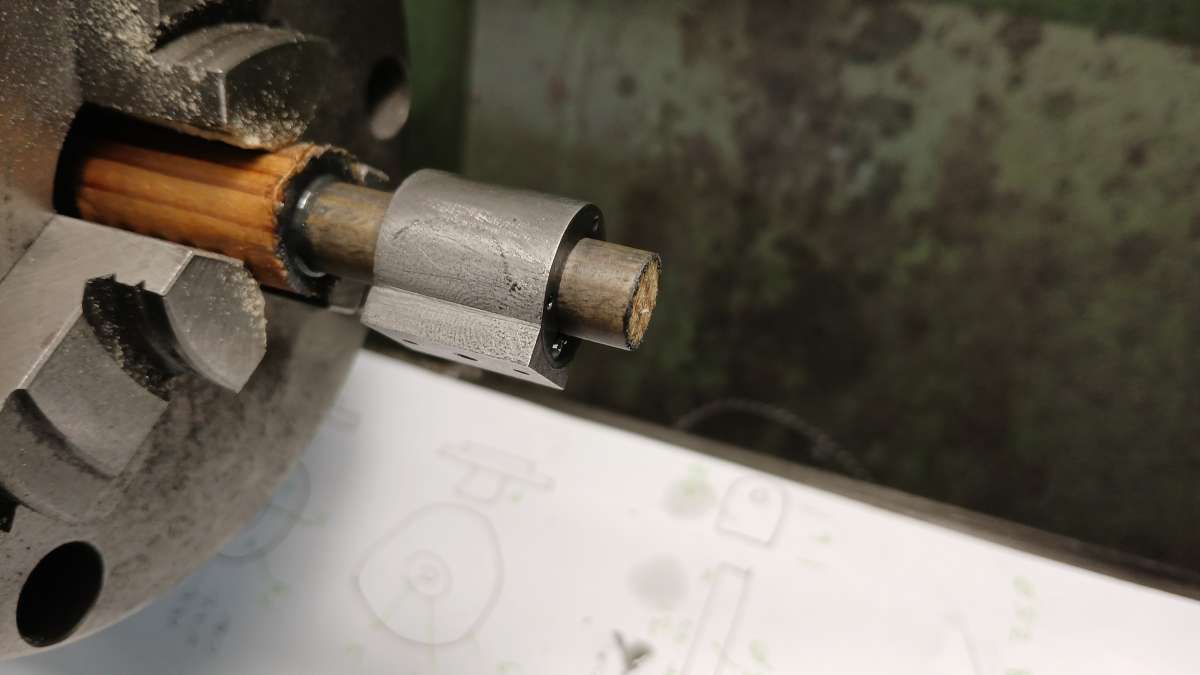
                    After sawing off it was loctited to a length of 4mm silver steel and left to go off. Once set the 4mm shaft was held in the lathe and the disc faced back to 3mm thick. Then over to the mill to drill 2.8mm and ream 3mm at a 6.5mm offset from the centre. I used a hand reamer for this (under power) and did not quite go all the way through as the taper of the reamer can be used to get a press fit. The 3mm silver steel pin was pressed in using the mill vice with a drop of Loctite for good measure.

                    20251228_140336

                    Using a drill bit as a packer to get the same angle on both sides the disc was milled to give a counterbalance to the piston & rod. Just eyeballed nothing scientific. After test running I also added a small flat  on the shaft for the flywheel grub screw.

                    20251231_092510

                    Crankshaft Bearing

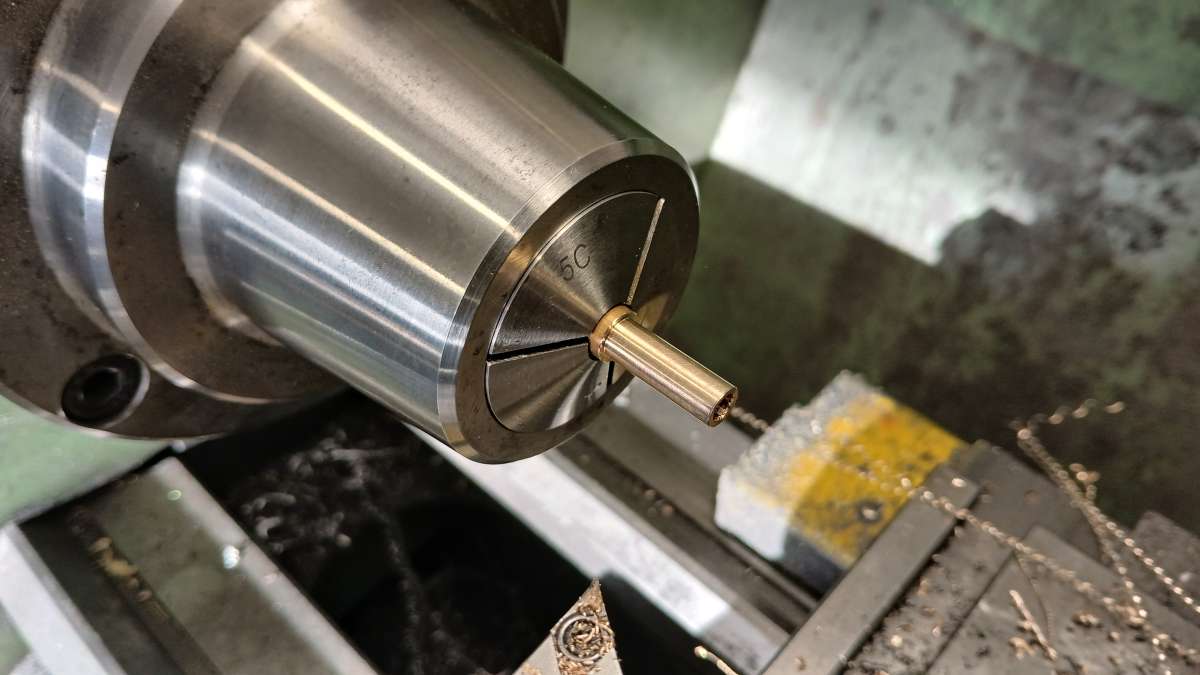
                    A piece of 8mm bronze was turned a nice snug fit into the frame and then drilled and reamed 4mm. It was sawn off and faced to leave a 1mm thick flange at the full 8mm diameter.

                    20251230_110803


                    Flywheel

                    A piece of 25mm nominal cast iron bar was turned to 25mm diameter and faced. I then used a HSS tool with a rounded end to form the 1mm tall spigot and also the recessed face. After drilling 3.8 and reaming the other side was faced and recessed but without a spigot.

                    20251228_091636

                    Then into the mill to drill and tap M3 for a grub screw.

                    20251228_092615

                    #831179
                    John MC
                    Participant
                      @johnmc39344

                      Interesting, will we see more 3D printed “castings/printings” rather than the traditional casting?   Jason’s pricing seems to suggest that might well be.  Could this be the future?

                      Like Danni, I would like to know more about the mechanical properties of the metal after printing. some conflicting information out there.

                      As mentioned in the “Kelsey” thread, aluminium for the basic structure is fine, why not run the crank shaft directly in the aluminium?  What grade of aluminium was used?  For an engine that’s going to earn it’s keep bronze could replace the aluminium?


                      #831185
                      David Jupp
                      Participant
                        @davidjupp51506

                        3D printed metals typically have excellent mechanical properties.  This because the melt pool size is small, so resulting grain size in the solid is also small – this helps both strength and toughness.

                        Properties can be similar to forged metal, though generally will be uniform in all directions – forged items often have deliberately non-uniform properties.

                        #831215
                        JasonB
                        Moderator
                          @jasonb

                          Costing can be a bit variable sometimes quite good other times it seems expensive when compared to casting. But a lot depends on what you are after, if it is a one off casting or a batch then pattern making costs will be higher for a single but can be spread over the cost of a batch. But can be worth it where fine detail, complex cores etc are wanted that may be hard to cast or involve more costly core boxes etc.

                          Some interesting recent posts over on MEM which go along with what David has said, the prints can attain the same strength as solid or cast metal.

                          Although the basic structure is fine in aluminium there could possibly be issues with it as a bearing surrface picking up both for the revolving crankshaft and the sliding cylinders on the port face. I went with a bronze sleeve for the crankshaft as it is not something that could be automatically oiled while running unless you go to pumped oiling which you don’t see on many small steam engines. The cylinders on the other hand can be lubricated with either displacement lubricators if using steam or inline oilers when running on air for longer periods.

                          The usual 3D printed aluminium is AlSi10Mg though you can go for 6081 which is the old HE30 and they heat treat to T6. Someone on MEM did the maths and in theory that short length of male threaded steel I had in the print should fail before the aluminium threads strip out. I’m not going to risk one of these prints trying but next time I order will just have a block of metal printed to try and pull the thread out. A simple drop of oil is enough for my <10min runs

                          At the moment there don’t seem to be that many doing 3D prints directly in bronze (or brass and iron), but they all offer a service where the model is printed in wax and then investment cast in bronze but that does put the price up

                          If you have seen my article in the current mag then there are several people using 3D metal prints to recreate old model aero engines where you can’t get the castings anymore like this Sugden Special. They don’t have problems with their heads popping off be that for compression ignition diesels or high performance competition engines. These engines would have had bearings and liners added originally so that side of things is taken care of.

                          Photo 31

                          #831233
                          John MC
                          Participant
                            @johnmc39344

                            On the subject of costs, cast vs printing, disintermediation (cutting out the middleman, the pattern making) suggests that printing should be cheaper.  But, as Jason says, will you get what you want in terms of accuracy and finish?

                            When I retired a few years ago, it was an up and coming process and it certainly has!  Over the last 40+ years I have bought a lot of castings, mostly Aluminium.  At one time, I had the choice of 6 different foundries within a 50 mile radius of home, all but one gone now.  3D printing is just the opposite, spoilt for choice for plastic, at least two of which offer metal printing as well, with, I’m sure, more to follow.

                            As for the mechanical properties of printed metals, as I said before, some conflicting information available.  Renishaw, market leaders in the process, reckoned to work to about 80% of the properties of the wrought version of the metal.  I’ve also seen, from another business, claims that mechanical properties are better than the wrought equivalent except for fatigue.  I don’t believe this because yield and fatigue strengths are closely related.  They blame it on surface finish, if that’s true, then polish it, as would happen anyway.

                            Back to Jason’s delightful little engine.  Crank shaft lubrication.  On my Stuart Turner version of this engine, I have drilled a small hole in the web above the crank shaft bearing to direct oil on to the shaft.  I also relieved the middle third length of the bearing, by reducing shaft diameter.  No need for excess friction.  It also acts as a reservoir for oil.

                            With hindsight, a boss on the print to fit a lubricator would have been nice.  Likewise, somewhere around the port face and cylinder pivot?

                            Will there be a chance of buying the a printed frame.  I enjoy the occasional brake from my usual workshop activities, this little engine would be ideal!


                            =

                            #831237
                            JasonB
                            Moderator
                              @jasonb

                              I think accuracy and finish are likely to be better.

                              No hoping that you have allowed the right amount for shrinkage. No problems with the two mould halves not lining up and leaving a step at the parting line. Machining allowances can be included but fairly minimal and there is no need to worry about draft angle or flash around loose pieces as they are not needed. You can also print thinner than you may be able to do so with castings which is useful for models where you may want to cast something that was say 6mm thick in full size and your 1/4 scale model can still do it at 1.5mm where as you may have had to cast at overscale thinkness to be sure the meatl flows.

                              You are also not going to get voids, areas of shrinkage or hard spots in a print that you can with a casting

                              Finish more consistently as you don’t have a fettled parting line that ends up smoother than the “cast” surface. Also given the surface finish I have been seeing lately on the now commonly used bound sands the print is going to have  a better surface as the tendancy seems to be to just dump a load of the freshly mixed sand into the cope or drag and just push it down. This gives a reasonable finish on the horizontal surfaces but the more vertical they become the rougher they are due to the sand not being packed well against the mould

                              I did actually ad a small boss to the intended print file but it was not on the one I actually got printed, you can see it on the rendering at the start of the thread. Though I was still able to add an oil hole with CSK around it.

                              I may have a few of the other 5 prints available.

                              #831242
                              JasonB
                              Moderator
                                @jasonb

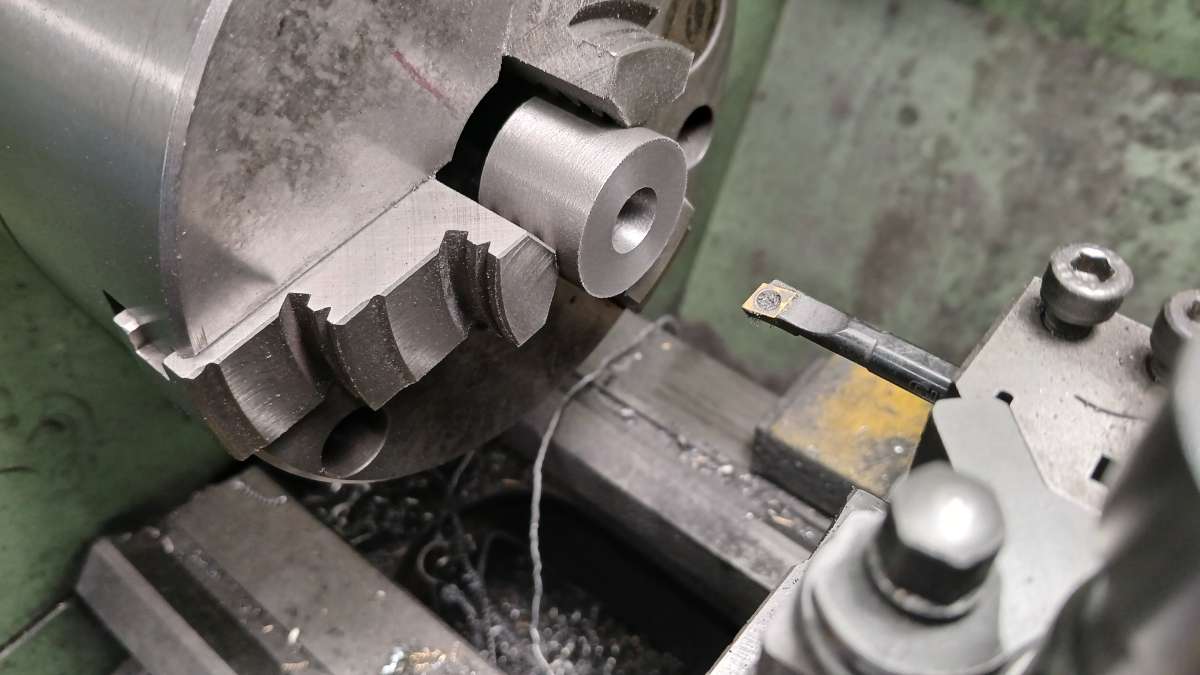
                                The cylinder follows much the same method that I used for Kelsey. It would come out of a piece of 25mm cast iron bar if the initial hole were offset but I had some 27mm material so used that without the need to offset the hole. I started by facing, drilling and then boring to 11mm diameter. That is a small 04 size insert you can see.

                                20251228_142744

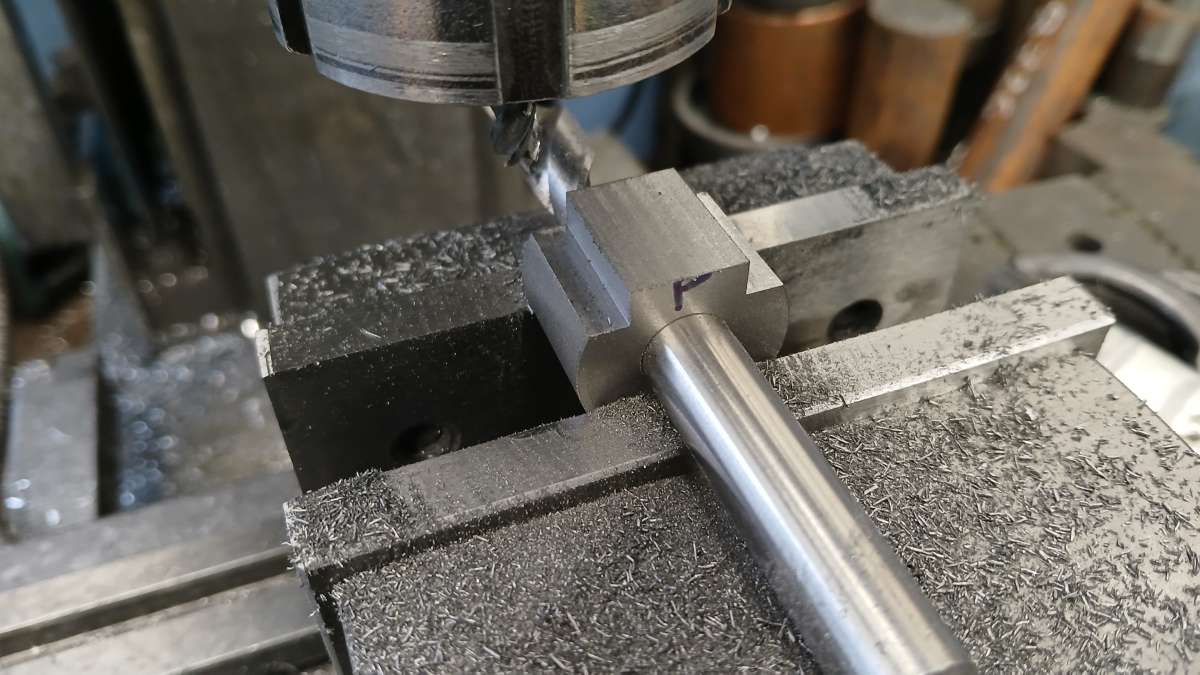
                                Then over to the mill to flatten the port face taking the height off an 11mm drill placed in the bore. That was also used to find the ctr line and equal amounts taken off each side to get the finished 14mm width. I also added the two 2mm steam/air ports and the M3 tapped pivot hole making sure to stop all three short of the bore.

                                20251228_144510

                                20251228_145319

                                With the cylinder now on end the ctr of the bore was found the 3 cylinder cover screw holes drilled and tapped M1.6. I also drilled a 2mm hole down to meet the port drilling and opened up the end with a 3mm milling cutter so it connected with the bore. repeat for the other end.

                                20251229_121516

                                It was then the facetted cutting to get the final shape of the cylinder followed by a bit of filing to blend the facets into one radius.

                                20251229_135532

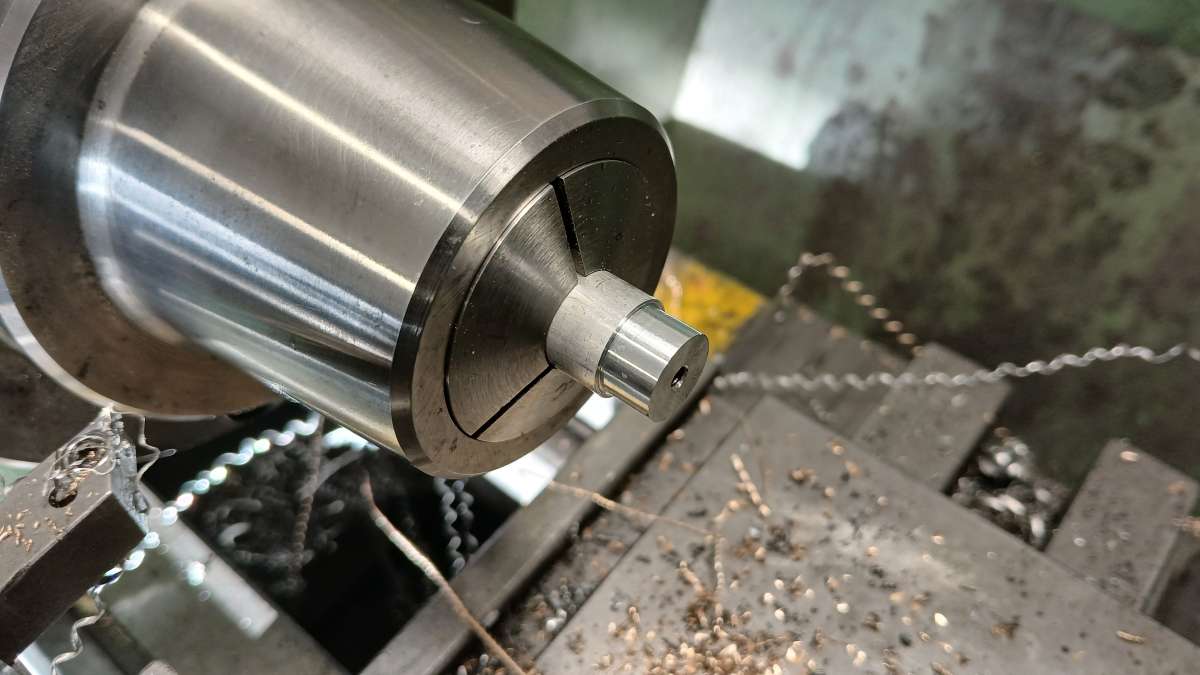
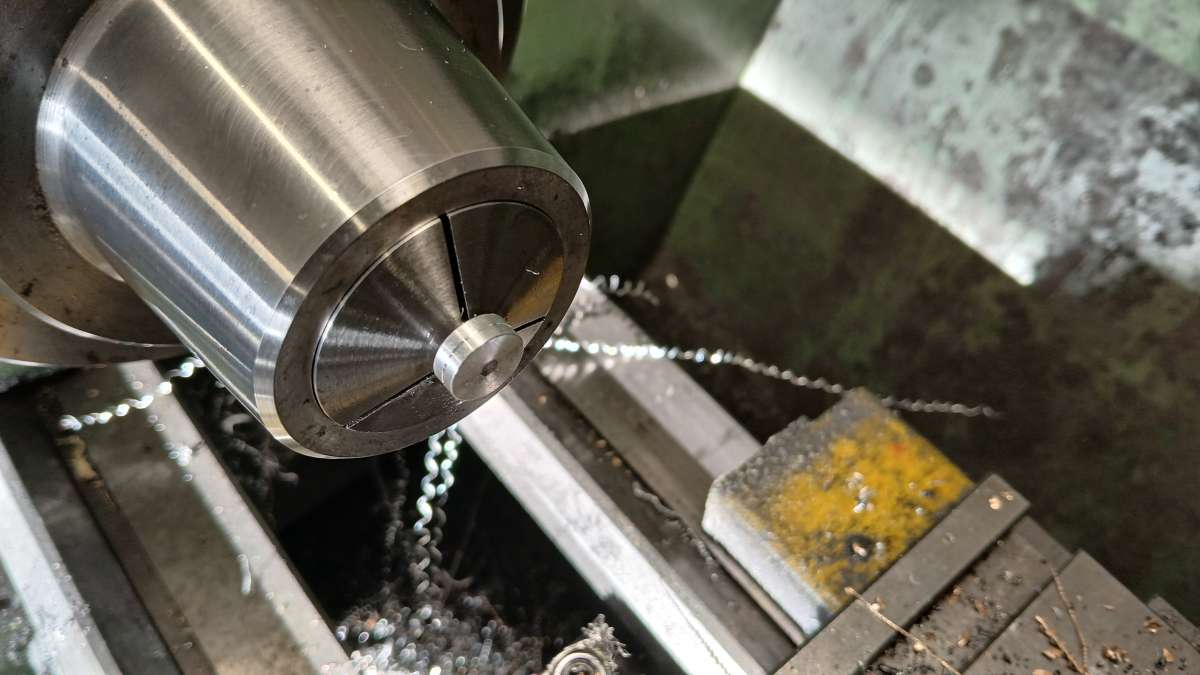
                                Both end covers were cut from 25mm CI bar and the inner face done first complete with 0.8mm long spigots, one being drilled 2.8mm and reamed 3mm for the piston rod.

                                20251229_142117

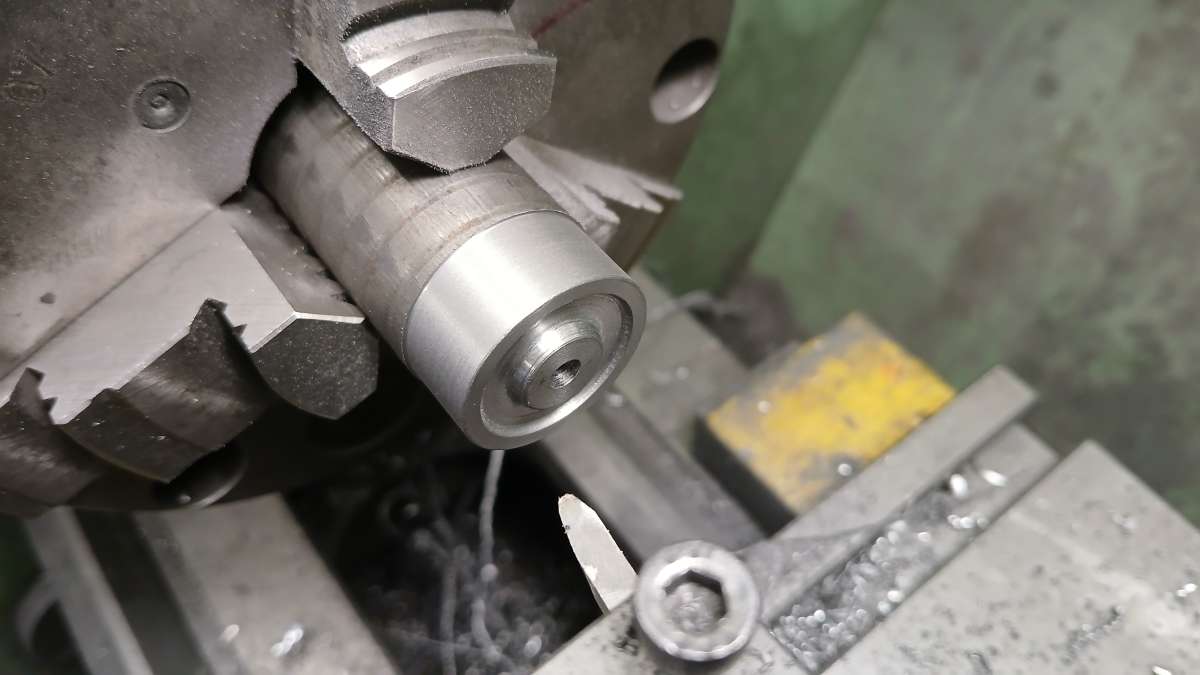
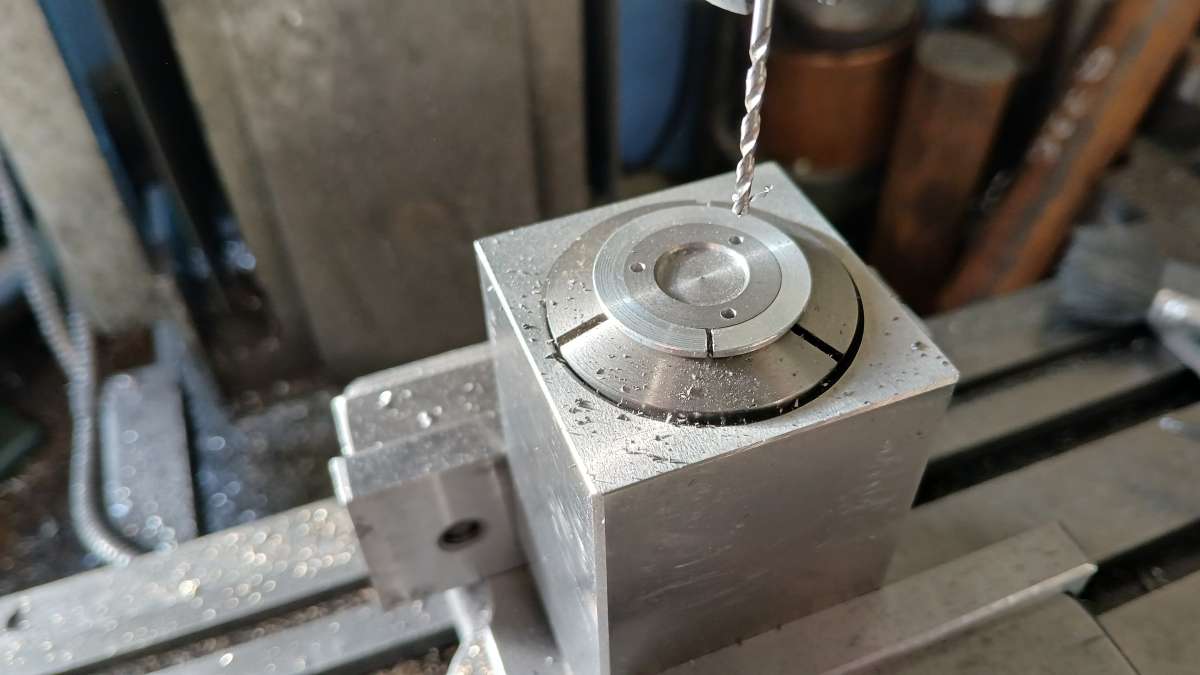
                                Rather than cut my soft jaws I went with a split bush to hold the only 1.5mm thick covers concentric and without wobble. After facing to length the top one had a decorative recess cut. I prefer a recess to a raised area as it makes painting easy with the higher bare metal surround easily cleane dup to leave the paint in the recess rather than trying to mask around a raised area.


                                20251229_143756

                                The other one which was cut off longer had a spigot formed so there is some length to guide the piston rod. The one I based mine on did not have a gland so I did the same but teh OD could be threaded and a gland nut added if desired.

                                20251229_144538

                                The last job on the covers was to drill the screw holes.

                                20251230_105052


                                #831804
                                JasonB
                                Moderator
                                  @jasonb

                                  A piece of wooden dowel was turned down to a firm fit in the cylinder, loaded with a mix of oil and 600g silicon carbide powder and the cylinder lapped.

                                  20251230_101656

                                  The piston material was then faced and turned 0.2mm over diameter before being drilled & tapped M3

                                  20251230_111940

                                  It was then screwed onto the piston rod for final turning to diameter using the cylinder to gauge the size and a small oil groove added. No photos of the piston rod as it is just a piece of 3mm stainless steel tapped M3 at both ends.

                                  20251230_113422

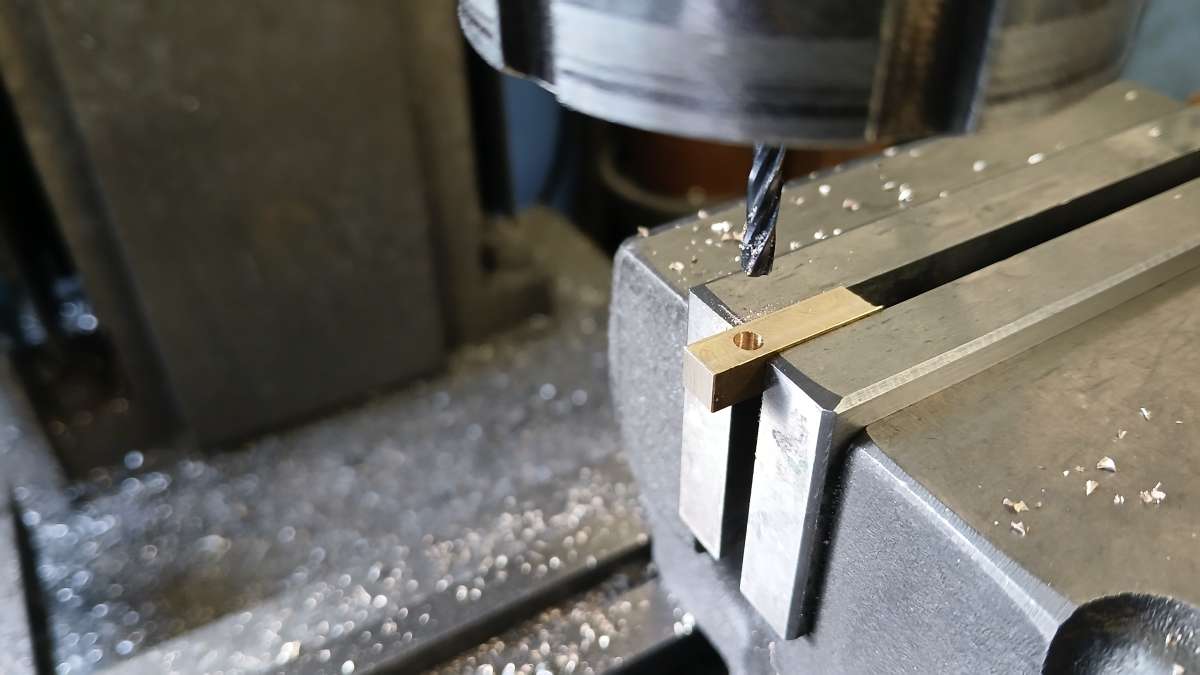
                                  A small offcut of brass was milled to a 5mm x 5mm square section, the end squared up and a hole drilled and reamed 3mm for the crank pin.

                                  20251230_102403

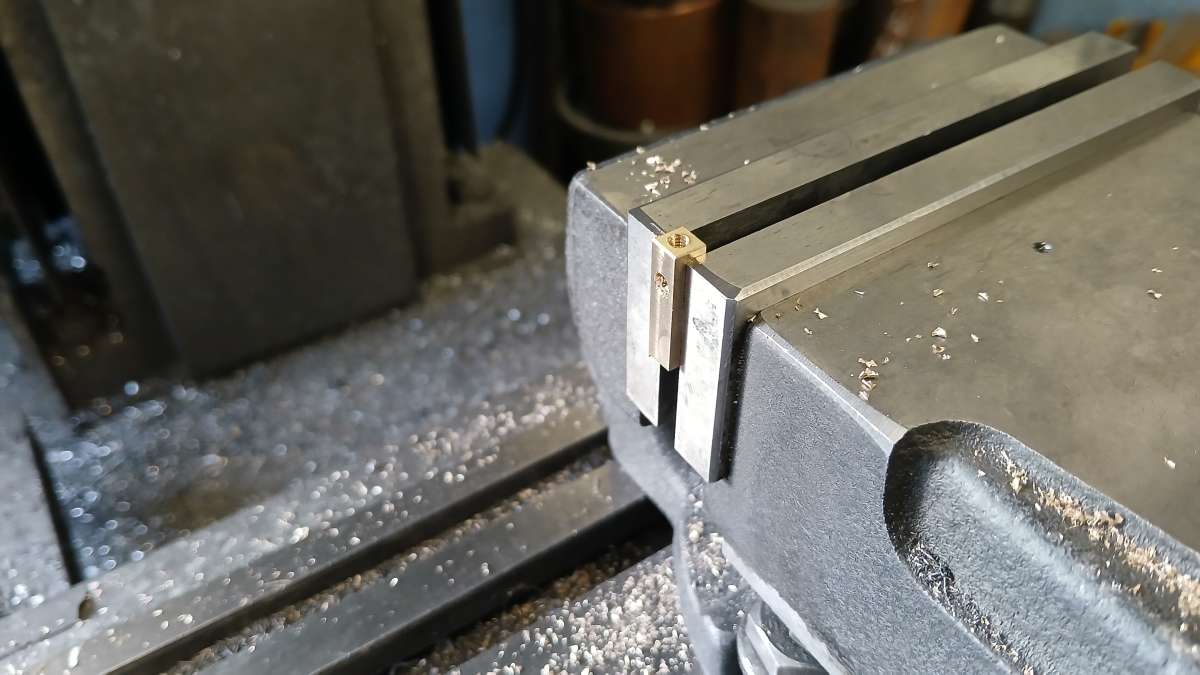
                                  It was then held end up to drill and tap for the piston rod. After sawing off the end was rounded over concentric to the pin hole.

                                  20251230_102933

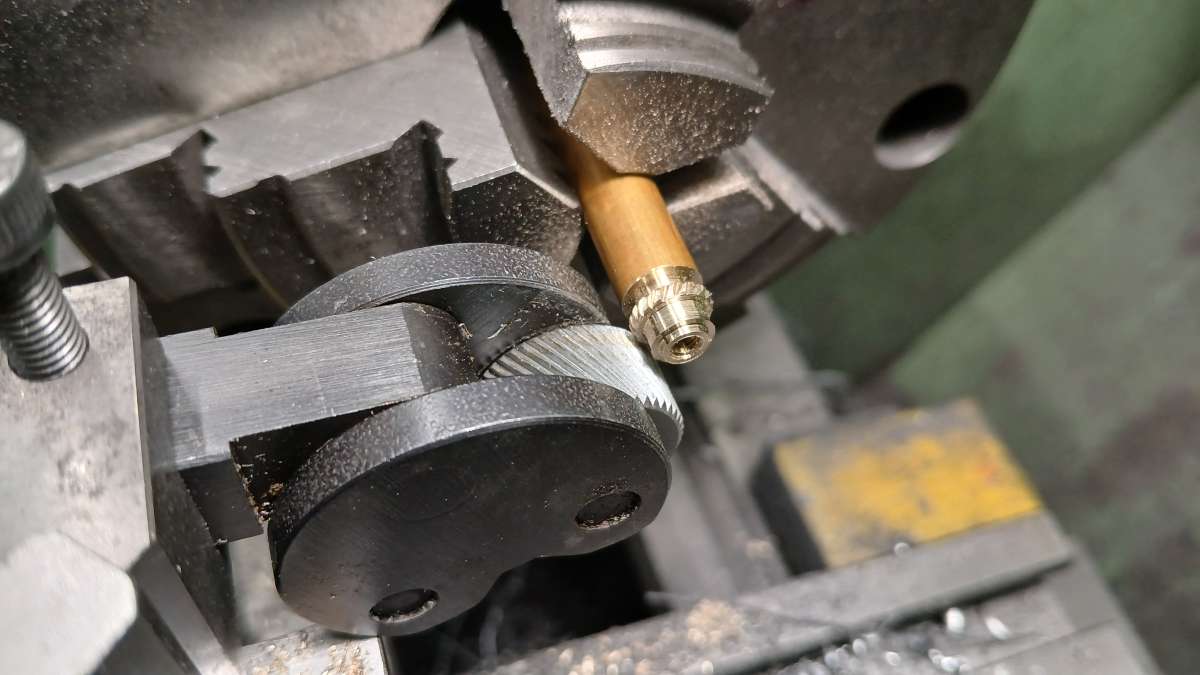
                                  Again no pictured of teh cylinder pivot as it is also just a piece of 3mm stainless threaded at both ends. The spring adjusting nut was turned from 8mm brass and rather than a hex hed like I used on kelsey I formed a half round bead and then using just one wheel of a pair of diamond knurls cut a good representation of a rope knurl.

                                  20251228_093802

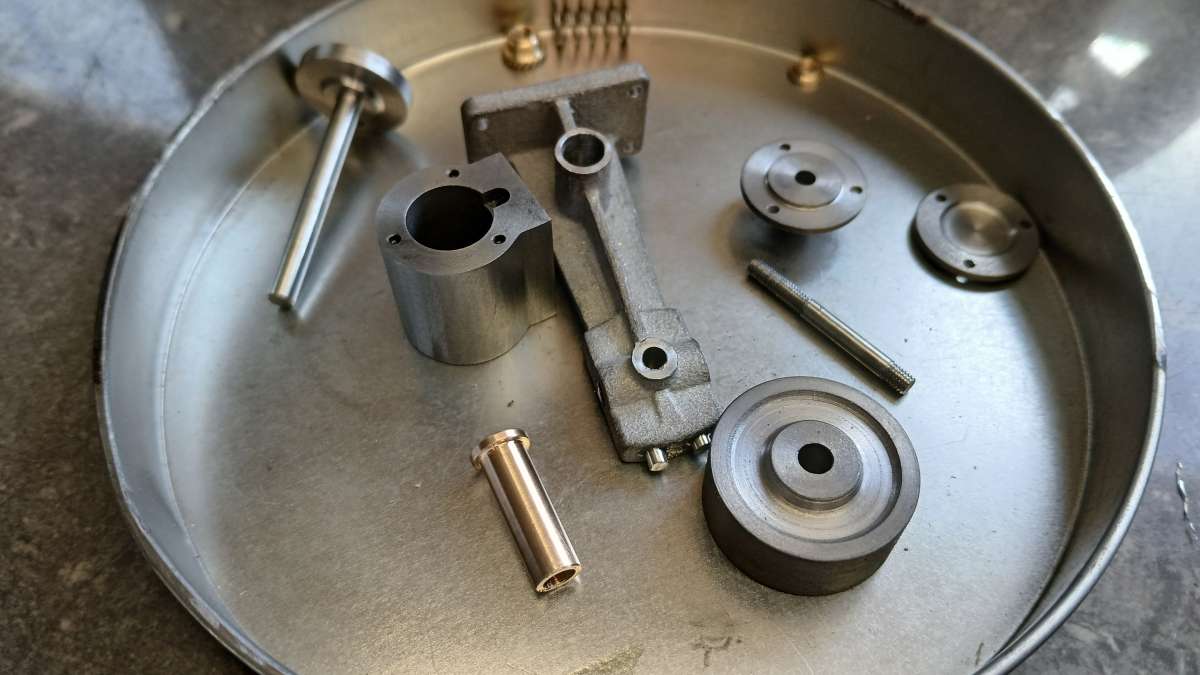
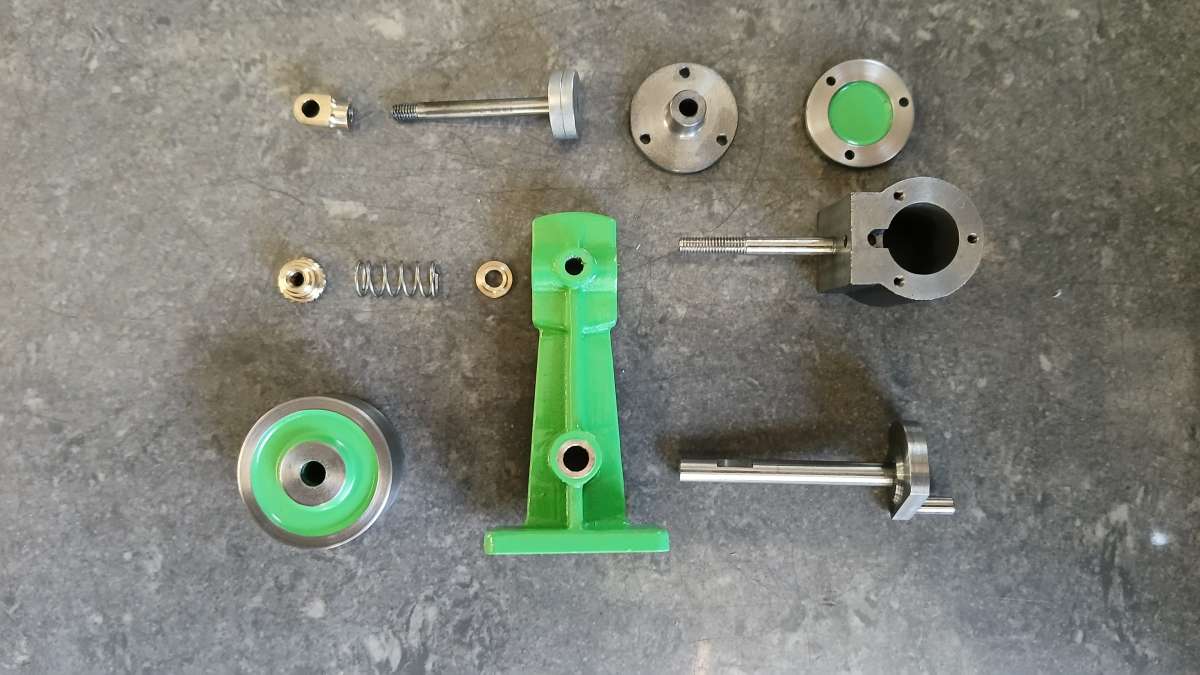
                                  And I think that just about covers all the parts.

                                  20251230_114954

                                  After a successful test run the engine was stripped, cleaned and painted.

                                  20251231_111341

                                  Still not too late to guess how long it took me to complete.


                                  #831808
                                  Grindstone Cowboy
                                  Participant
                                    @grindstonecowboy

                                    As always, exceedingly impressed and humbled. My guess is 8 hours 55 minutes.

                                    Rob

                                    #831817
                                    Andrew Crow
                                    Participant
                                      @andrewcrow91475
                                      On Grindstone Cowboy Said:

                                      As always, exceedingly impressed and humbled. My guess is 8 hours 55 minutes.

                                      Rob

                                      I would second that comment, although I think it would have taken a little longer, I would say more like 12 hours and 30 minutes.

                                      Andy

                                      #831830
                                      Colin Heseltine
                                      Participant
                                        @colinheseltine48622

                                        Its Jason, so im going with 7hrs 30 mins

                                        Colin

                                        #831888
                                        JasonB
                                        Moderator
                                          @jasonb

                                          Thanks, keep the guesses coming, I’ll leave it until Sunday evening to let you know how long it took me.

                                          Although I have posted the videos in the Kelsey thread I will put them here so it is all in one place

                                          During the test run and while doing the video above I could not get Willy to run as slowly as I would have liked, he was a bit stiff and he needed a good flick to get him going when the regulator was at a low opening but as I wanted to get the completed video out before the end of the year run as it was.

                                          With a little more time I had a fiddle and there was a bit of tightness when turning the flywheel over. I tracked it down to the big end which was a bit tight on the pin, running a hand reamer through the previously machine reamed 3mm hole just eased it enough to free things up. I think what had happened was that I rounded over the big end by screwing it to an arbor and using the rotary table, the cap head screw had brused the edge of the hole slightly.

                                          With the engine back together and no change to the pressure it ran a lot slower and if the crank was in the right place would self start as the regulator was opened – something it did not do before.

                                          One other bonus of this fiddling was that I found the small adaptor for the airhose I had made could be screwed in too far and partially block the inlet drilled passages. With it not screwed in so far there was a good improvement in speed, going from 2700rpm as seen at the end of the first video to 3687rpm an increase of almost 1000rpm for the same pressure but with no restriction to the passages😀

                                          #831904
                                          Grizzly bear
                                          Participant
                                            @grizzlybear

                                            Brilliant, thank you for the demo.

                                            #832175
                                            JasonB
                                            Moderator
                                              @jasonb

                                              How long did it take?

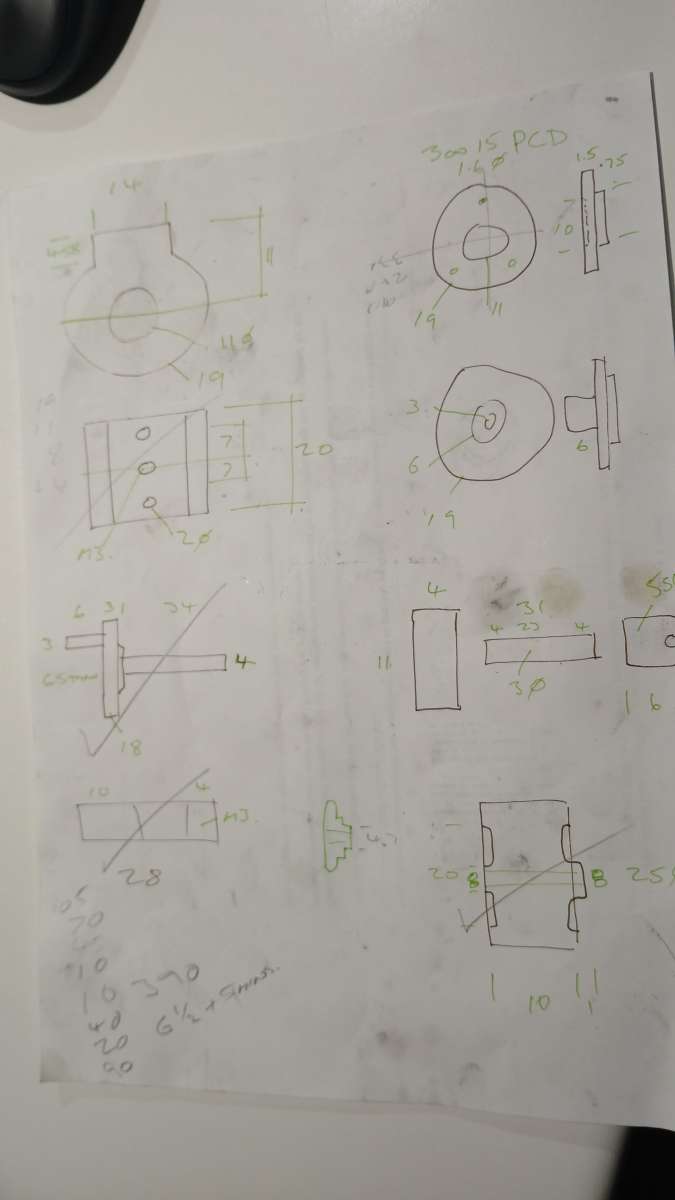
                                              I recorded my time on this one and totalled it up when the engine ran, I added a flat to the crankshaft afterwards so then added that on which can be seen on mt “working drawings”

                                              Guesses in no particular order

                                              8.55   Grindstone Cowboy

                                              12.30 Andrew Crow

                                              7.30 Colin Heseltine

                                              8.20 Diogenes

                                              9.45 Danni Burns

                                              7.30 Keith Beaumont

                                              12.00 Mark Eastwood

                                              36.00 Dalboy

                                              Well you were all over some by more than others. The building time was 6 hours 35 minutes which does not include painting which was just a rattle can job.

                                              20260112_071520

                                              I may have a couple of the spare 3D prints available if anyone wants to PM me.

                                              #832206
                                              Danni Burns
                                              Participant
                                                @danniburns84841

                                                Obviously, far more efficient than anyone gave you credit for.

                                                Colin gets the cigar. Congrats.


                                                #832293
                                                Colin Heseltine
                                                Participant
                                                  @colinheseltine48622


                                                  #832320
                                                  Bazyle
                                                  Participant
                                                    @bazyle

                                                    In the light of another thread wrt 3D printers just started, Jason did you do a test print of the design bof the standard in plastic before committing to metal?

                                                    #832328
                                                    JasonB
                                                    Moderator
                                                      @jasonb

                                                      No and I don’t before I run a part on the CNC either. I just check it all goes together and rotates and moves as it should in CAD.

                                                    Viewing 25 posts - 1 through 25 (of 29 total)
                                                    • Please log in to reply to this topic. Registering is free and easy using the links on the menu at the top of this page.

                                                    Latest Replies

                                                    Home Forums Stationary engines Topics

                                                    Viewing 25 topics - 1 through 25 (of 25 total)
                                                    Viewing 25 topics - 1 through 25 (of 25 total)

                                                    View full reply list.