Is it the lathe or is it the tool?

Is it the lathe or is it the tool?

Home Forums Hints And Tips for model engineers Is it the lathe or is it the tool?

Viewing 25 posts - 1 through 25 (of 27 total)
  • Author
    Posts
  • #228808
    Roderick Jenkins
    Participant
      @roderickjenkins93242

      I've heard it said that light lathes like the Myford 7 series can only nibble away at turning.

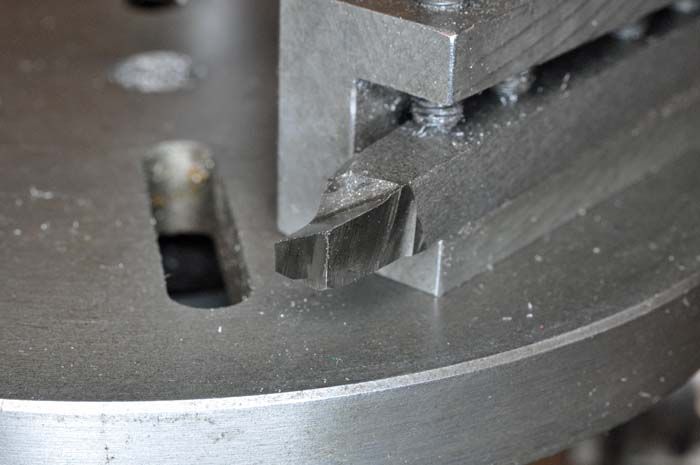
      I've just re-ground my "shifting" tool:

      shift 2.jpg

       
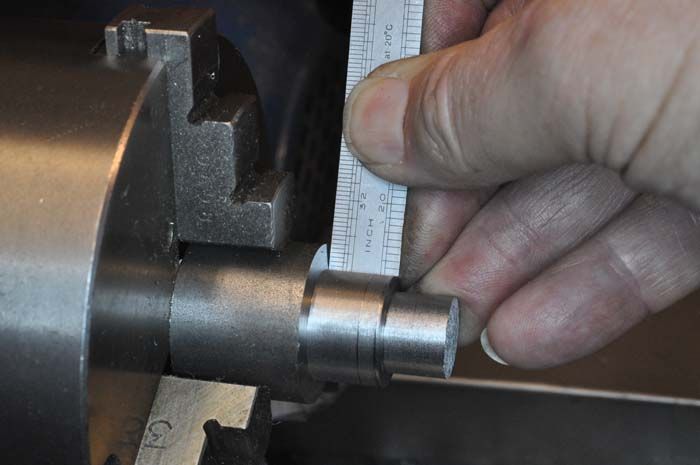
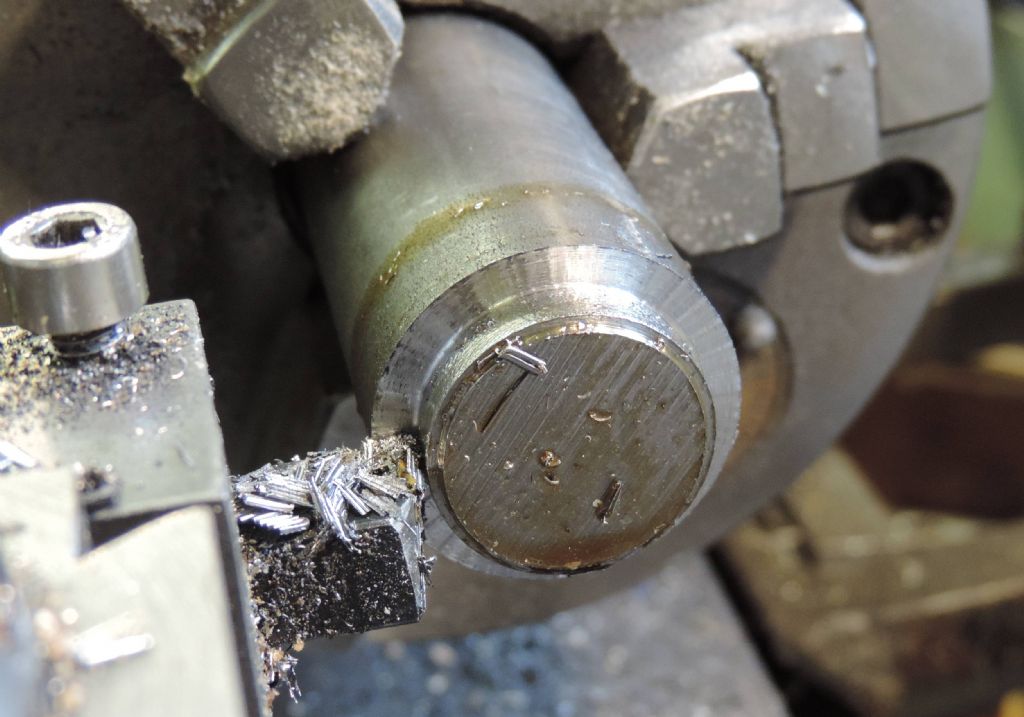
      shift1.jpg

      3/16" depth of cut, that's 3/8" off the diameter.  FC mild steel.

      Cheers,

      Rod

      PS.  The lathe is going the right way!

      Edited By Roderick Jenkins on 07/03/2016 16:13:52

      #30558
      Roderick Jenkins
      Participant
        @roderickjenkins93242
        #228809
        JasonB
        Moderator
          @jasonb

          But what feed rate?

          #228812
          roy entwistle
          Participant
            @royentwistle24699

            How rigid is your QCTP ?

            #228816
            Roderick Jenkins
            Participant
              @roderickjenkins93242

              2 thou per rev. Not sure how to answer Roy's query – It's a standard Dickson QCTP mounted on the top-slide.

              Rod

              #228820
              mark costello 1
              Participant
                @markcostello1

                The high shear angle means the tool will not last as long as one with a less steeper angle, which may be of no consequence to the job at hand. You will be just sharpening the tool more.

                #228824
                JasonB
                Moderator
                  @jasonb

                  I have also heard it said that the far eastern lathes are a bit flimsy. So n0t to be outdone by Rod 0.250" depth of cut (1/2" off dia), 1" mild steel, 250rpm, 0.0025"/rev. Less top rake than Rods thats why its breaking the chips, the long curl may look impressive but who wants all that swarf wrapped around their tool.

                  PS Genuine Dickson post, imported holder.

                  Edited By JasonB on 07/03/2016 17:07:08

                  #228826
                  Nick_G
                  Participant
                    @nick_g
                    Posted by Roderick Jenkins on 07/03/2016 16:12:13:


                    3/16" depth of cut, that's 3/8" off the diameter. FC mild steel.

                    Cheers,

                    Rod


                    .

                    Just out of curiosity I had a play also.

                     
                    .
                    Depth of cut was .250 thou (so 1/4 off dia. Feed rate was 6 thou per cut.
                     
                    Oh and it was EN8 wink
                     
                    Could I should think have gone quite a bit more aggressive if I had used a centre in the tailstock. – Perhaps even more if I had switched the flood coolant on.
                     
                    I would imagine when Mr Stevenson and others with proper machines see this they will view them as baby lathe teething nibbles. laugh
                     
                    Nick


                    Edited By Nick_G on 07/03/2016 17:12:37

                    #228828
                    JasonB
                    Moderator
                      @jasonb
                      Posted by Nick_G on 07/03/2016 17:11:50:

                      .
                      Depth of cut was .250 thou (so 1/4 off dia. Feed rate was 6 thou per cut.

                      Something not right there do you mean 0.125" DOC as it looks about half the width of the tangental tool which is quite wimpy really

                      #228830
                      Roderick Jenkins
                      Participant
                        @roderickjenkins93242
                        Posted by JasonB on 07/03/2016 17:06:53:

                        Less top rake than Rods thats why its breaking the chips,

                        I don't think I've got any top rake, just lots of side rake wink

                        I did wonder if this thread might turn into a tool waving exercisesurprise

                        Rod

                        #228831
                        Nick_G
                        Participant
                          @nick_g
                          Posted by JasonB on 07/03/2016 17:19:54:

                          Something not right there do you mean 0.125" DOC as it looks about half the width of the tangental tool which is quite wimpy really

                          .

                          Yup I do indeed mean that. laugh

                          Got confuddled. …………. I knew what I meant anyway, winkwink But it's a good job you are on the ball Jason. (where would the ME website be without you.? cheeky. &nbsp

                          You are not the first to mention my wimpy tool. ……………… But I think you are the first guy to say so though.! surprise

                          Nick wink

                          #228836
                          Ajohnw
                          Participant
                            @ajohnw51620

                            I've mentioned the type of tool Rod has used several times. Sharpening is easy if there is a suitable stone around as it can be done in the lathe. It takes seconds. Tools are best sharpened before they show signs of tool wear on the work or the performance drops off 'cause it's too late then.

                            I think Jason's chips breaking are down to the lathe not the tool. Also looks like there is more signs of tearing than Rod's.

                            A 1/4" depth of cut is 1/2" of the diameter. Tangental tool – interesting as some one who is using that wouldn't be too concerned about adding around 15 degrees back rake to the tool with any of the angles the others have used. Rod might be as it weakens the tool.

                            Sorry folks the boxford is out of use at the moment and I am not going to do that to the wabeco.

                            Really from the lathes point of view Rod's is the best option IMHO (if I have one – the H part, plenty of the others) as there is less load on the lathe- good for bearing life.

                            Nice big larger than life shots of the results would be interesting.

                            John

                            #228847
                            Bazyle
                            Participant
                              @bazyle

                              The "know your lathe" book advises roughing tool edge included angle of 61 degrees so no casual grinding to only 60 degrees you lot. frown

                              #228852
                              JasonB
                              Moderator
                                @jasonb
                                Posted by Ajohnw on 07/03/2016 17:38:38:

                                I think Jason's chips breaking are down to the lathe not the tool. Also looks like there is more signs of tearing than Rod's.

                                I'd agree that there is some tearing which I would expect with less cutting angle but as for the chip breaking being due to the lathe, that is definately down to the tool.

                                This is the tool used for the first video, which was straight off the rack not freshly sharpened like Rods. Maybe 5deg top angle

                                Now this is the same tool but given some more top angle to give a sharper cutting angle on the off hand grinder no touching up with a stone.

                                And here you can see the increase angle which results in curly swarf that wants to wrap itself around the tool which is why I stopped the video a bit sharpish.

                                Swarf looks quite cleanly cut too. You can also see the better (not perfect)finish on the remaining 1/2" dia, the blue mark is where the first cut stopped and the second started. Face of the bar looks cleanly cut too.

                                So in answer to Rods questing – its the tool

                                In normal use I would not be taking cuts like this, rather use a carbide tool at 1000rpm and about half that depth of cut. Two passes will still remove the same amount of metal in less time than with one slow deep cut and put less strain on the machine.

                                J


                                Edited By JasonB on 07/03/2016 18:33:28

                                #228854
                                Ajohnw
                                Participant
                                  @ajohnw51620

                                  You should try the 15 degrees back rake too Jason and a bit of very small stoned on rad, that only needs to be a few times the feed, big ones often encourage tearing on deep cuts. Harder on the lathe too.

                                  I have become lazy when grinding but If I ever do start building engines I will be going back to it. I've been concerned about tools breaking as when i have used it in the past it's been with 5/16 hss bits in a holder that sets the back rake on rather powerful machines. Ok really though with 1/4" deep cuts and 15 thou or more per rev feed or even more really. Doubt if me boxford would match that so 5/16 bits and back rake should be fine.

                                  Not sure if I mentioned deflection but those bright rings are an indication – might be a couple of microns deep.

                                  John

                                  Edited By Ajohnw on 07/03/2016 18:44:46

                                  #228896
                                  John Reese
                                  Participant
                                    @johnreese12848

                                    The main issue with the tool shown is that there is no chip control. Have you considered grinding the top of the tool so there is a rounded groove giving the required side rake and acting as a chipbreaker?

                                    I am considering making new tool holder for my QCTP. I plan to make the tool slot at a 15 degree angle for back rake. On the surface grinder I plan to grind about 12* clearance on the front face of the tool (full length), Then grind a groove in the top face of the tool that will give me about 15* side rake (full length. I intend to keep the groove fairly narrow to act as a chipbreaker, leaving enough of the top flat for the clamping screws. The idea is to grind the worn tip of the tool and move the tool forward in the holder. Has anyone tried this approach?

                                    #228900
                                    John Stevenson 1
                                    Participant
                                      @johnstevenson1
                                      Posted by Nick_G on 07/03/2016 17:11:50:

                                      Rod

                                      .

                                      I would imagine when Mr Stevenson and others with proper machines see this they will view them as baby lathe teething nibbles. laugh
                                      Nick

                                      .

                                      .

                                      Never wink

                                      I still have and use a small C0 baby lathe, it's brilliant at what it does but must admit it's a bit lacking in the power department.

                                      So I just drive it with a jack shaft from the chuck of the big TOS and at 10HP it won't miss a little tiny bit.

                                      #228904
                                      Ajohnw
                                      Participant
                                        @ajohnw51620

                                        Any one know how the C1 compares with the C0. I saw one for sale recently. Not sure why but I had a gut feeling that the C1 is more interesting.

                                        John

                                        #228909
                                        MW
                                        Participant
                                          @mw27036

                                          It's funny how when you've got a small machine you want a big one, then when you've got the big machine you want a small one.

                                          #228910
                                          Roger Provins 2
                                          Participant
                                            @rogerprovins2
                                            Posted by Michael Walters on 07/03/2016 23:20:31:

                                            It's funny how when you've got a small machine you want a big one, then when you've got the big machine you want a small one.

                                            Which is why I have 9×20 .. sort of middle sized.

                                            #228946
                                            Neil Wyatt
                                            Moderator
                                              @neilwyatt

                                              Poor little mini-lathe chatters a bit a 3mm depth of cut, but then I was using a tip marked as 'light finishing' and my home made QCTP.

                                              The built in chip breaker means I can't show off any curls of swarf.

                                              deep_cut.jpg

                                              Neil

                                              #228966
                                              Roderick Jenkins
                                              Participant
                                                @roderickjenkins93242

                                                Which, I think, helps to emphasise that it's the tool that makes the difference. In some circumstances on modern low power and stiffness lathes it is better to be guided by some old school techniques developed for treadle lathes rather than modern industrial practise. I do, however, use all sorts of replaceable tip tools for most of my turning.

                                                I put up with the curly swarf – Normally I use a pair of 10" surgeons forceps to pull it out of the way.

                                                Cheers,

                                                Rod

                                                #228970
                                                MW
                                                Participant
                                                  @mw27036

                                                  "I put up with the curly swarf – Normally I use a pair of 10" surgeons forceps to pull it out of the way."

                                                  I love those forceps, i have an old set of sheffield ones inherited from my father, so handy.

                                                  To answer the question, technically it's both the tool and the lathe, because one would be lost without the other!

                                                  😛

                                                  Michael W

                                                  #229248
                                                  Bob Rodgerson
                                                  Participant
                                                    @bobrodgerson97362

                                                    Seeing that picture of Johns lathe has set me thinking. I have a duality lathe that fits on the bed of my Tormach mill. Basically it is the same as the small Seig lathes but it has an extended spindle that has an external thread that a 4th axis gear drive is attached. I have got the 4th axis drive for the lathe but so far haven't fitted it because I have used the rotary table for my 4th axis work.

                                                    One of the things that I don't like about this mini lathe is that it hasn't got much power and can't be used for very deep cuts. I think that a 1 H.P. motor with inverter and variable speed drive could be arranged to fit the lathe using the threaded spindle to accept a toothed belt pulley. The spindles on these machines seem pretty robust and the cutting tools will be mounted to a holder that is clamped to the milling spindle nose eliminating a lot of the problems of deflection that a normal lathe is subjected to.

                                                    Any thoughts on this idea, is it goer?

                                                    #229254
                                                    Ajohnw
                                                    Participant
                                                      @ajohnw51620
                                                      Posted by Roderick Jenkins on 08/03/2016 10:46:11:

                                                      Which, I think, helps to emphasise that it's the tool that makes the difference. In some circumstances on modern low power and stiffness lathes it is better to be guided by some old school techniques developed for treadle lathes rather than modern industrial practise. I do, however, use all sorts of replaceable tip tools for most of my turning.

                                                      I put up with the curly swarf – Normally I use a pair of 10" surgeons forceps to pull it out of the way.

                                                      Cheers,

                                                      Rod

                                                      If Jason's feed was 2thou per rev or similar it will be the finish he was getting that broke the chips. I thought material and headstock bearings maybe. It doesn't take much to break swarf that thin.

                                                      I use a swarf hook and initial guide it out of the way if needed.

                                                      I haven't done much really heavy turning. In one case I fitted a 1" superweld tool having ground a chip breaker on it and really let rip blue swarf and a heavy feed. The lathe had an all over guard that slid down the bed. I was ok but chips were flying over the tail stock and as it was unusual to here a large lathe motor really working people were coming along to look – had to get rid of the chip breaker. Since that I have had mixed feeling about them so don't use them. I also feel that fine feed and long streams of swarf is a sign of a good set up. The longer the better. I tried making the chip breaker longer and deeper – end result was that it compacted the swarf increasing it's apparent thickness considerably. The finish was awful, dull grey with lots of very shallow ripping – much the same as with the chip breaker on.

                                                      For a while my ML7 had a built in chip breaker. Swarf mostly broke of into rather small chips – loose headstock bearings. My boxford isn't too bad, the swarf breaks periodically. Sometimes the feed needs to be upped from the 2 min settings to get good curls of swarf and a good finish on light finishing cuts – that might just take a shift from 1 1 1/2 thou a to 2 per rev. Maybe more.

                                                      John

                                                    Viewing 25 posts - 1 through 25 (of 27 total)
                                                    • Please log in to reply to this topic. Registering is free and easy using the links on the menu at the top of this page.

                                                    Latest Replies

                                                    Viewing 25 topics - 1 through 25 (of 25 total)
                                                    Viewing 25 topics - 1 through 25 (of 25 total)

                                                    View full reply list.