Vacuum Bulkhead Penetrator Design – Advice Please

Vacuum Bulkhead Penetrator Design – Advice Please

Home Forums Clocks and Scientific Instruments Vacuum Bulkhead Penetrator Design – Advice Please

Viewing 25 posts - 1 through 25 (of 25 total)
  • Author
    Posts
  • #825078
    SillyOldDuffer
    Moderator
      @sillyoldduffer

      This is my first stab at a bulkhead penetrator design for my pendulum clock.  The pendulum swings inside a vacuum chamber also containing some electronics.  Although unlikely in practice because my pump isn’t good enough, assume the vacuum is 0mb. (-14psi).  Leaks must be minimised because tiny pressure changes serious affect time-keeping, and this hopes to be a first class precision clock.

      The penetrator will be screwed into an M10 x 1.0 hole in a cast-iron base. The bolt head is outside at atmospheric pressure (1bar, +14psi)

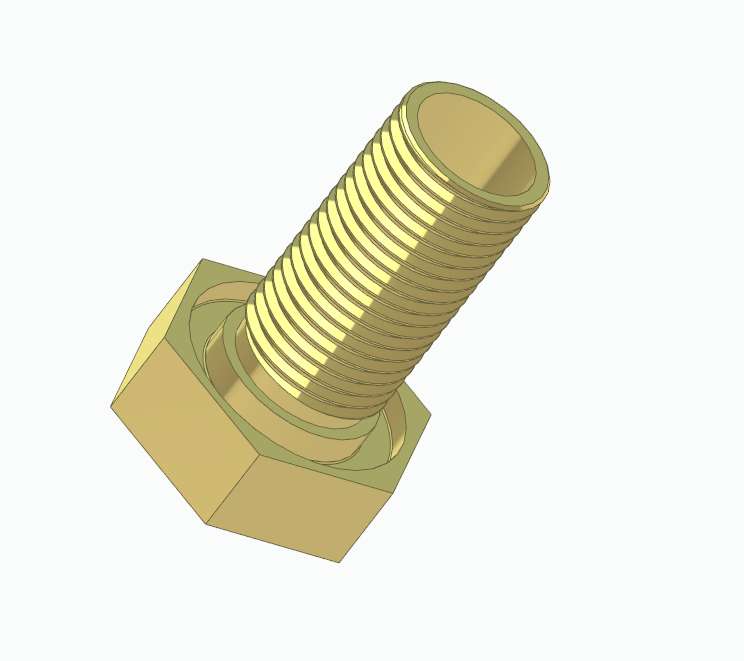
      The Brass bolt-body, 25mm long, head 12mm Across Flats.  Note the slot for a Nitrile O-Ring:

      Screenshot 2025-11-17 215110

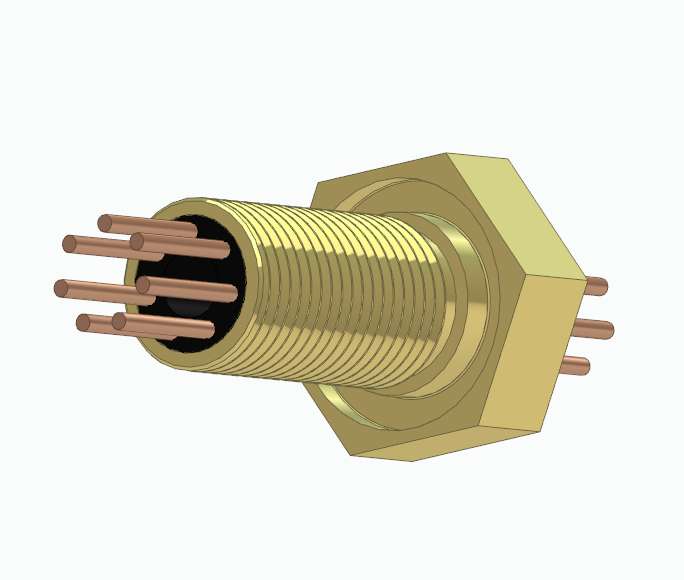
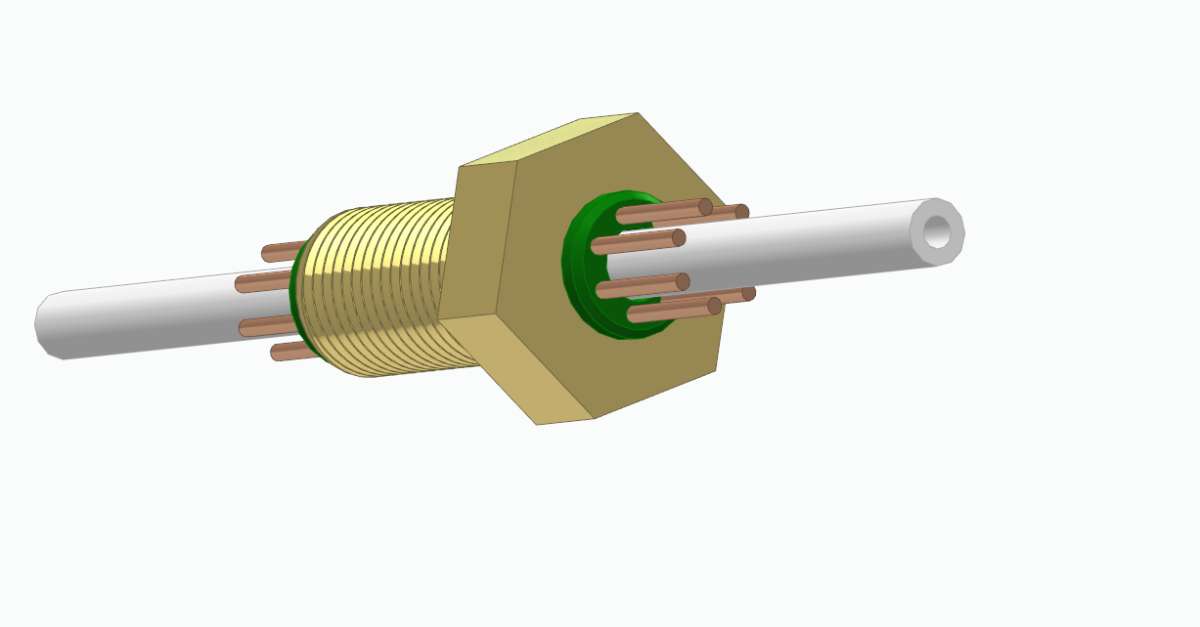
      The centre hole to be filled with Epoxy or other sealing compound, with 7 uninsulated copper wires spaced around a 4mm exhaust pipe:

      Screenshot 2025-11-17 215239

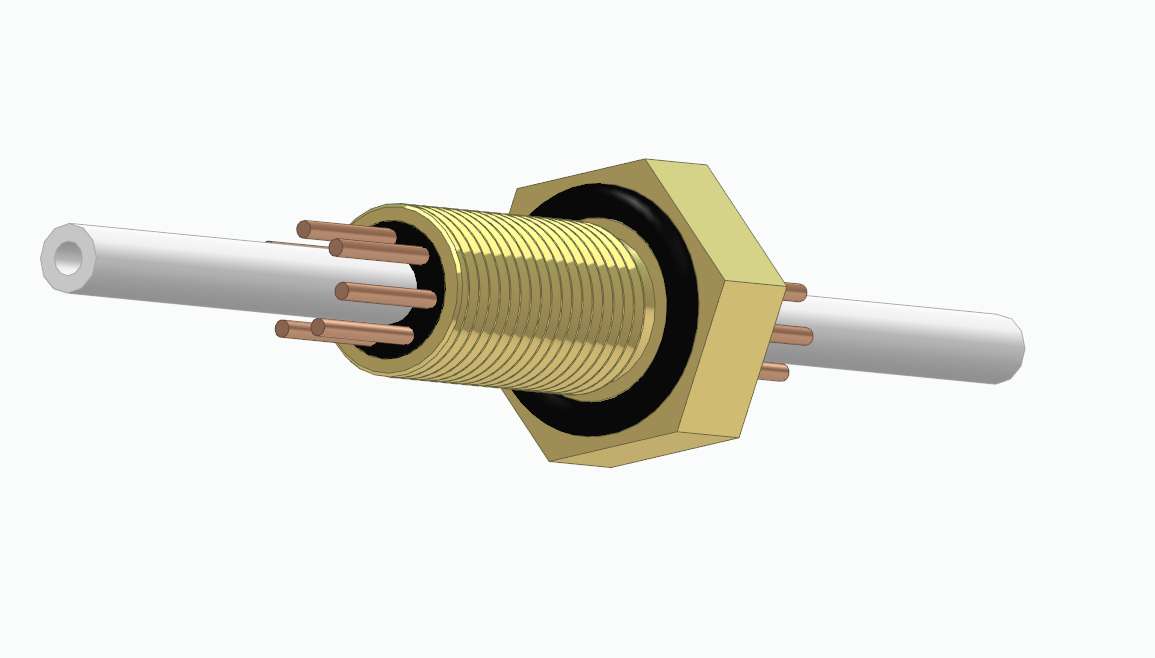
      Showing the exhaust pipe, which is 4mm o/d, 2mm i/d PTFE.  The 4mm diameter connects to a commercial fitting.


      Screenshot 2025-11-17 215352

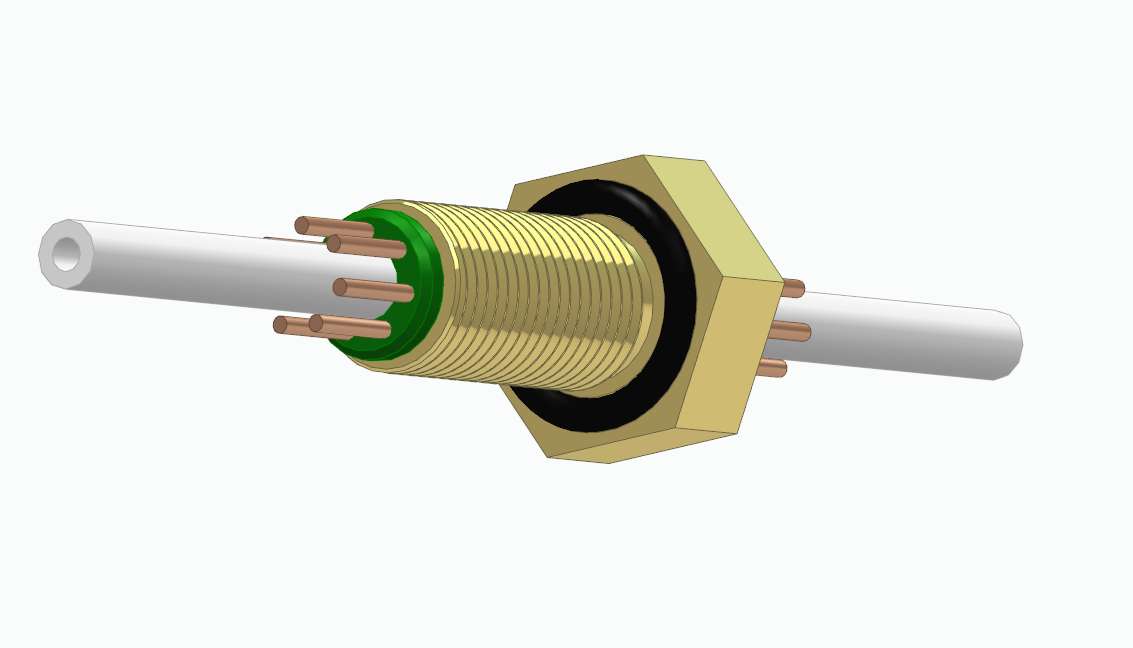
      The copper wires will be bent inside and outside to facilitate connecting up.  To prevent short circuits they will be sleeved by insulating rings (shown in green):

      Screenshot 2025-11-17 215449


      Rear view:

      Screenshot 2025-11-17 215724

      Questions;

      1. Is this design sound, or how can it be improved.
      2. Is epoxy suitable for the potting, or something else.
      3. I propose to use plumbers sealant on the thread.  Is that sensible?
      4. The o-ring groove is a new to me challenge:
        1. Width 2.25mm on a 12.60mm radius, depth 1.60 to 1.65mm
        2. Bottom edges rounded
        3. Finish Ra 1.6um or better
        4. Target squeeze 0.4mm compression. This done by leaving the centre of the bolt proud by 0.4mm.  Is that how it’s done?
      5. How would you:
        1. make the o-ring groove, especially the finish
        2. fill the centre with no bubbles gloop without disturbing the pipe and 7 surrounding wires.
      6. Any objection to using enamelled magnet wire rather than bare copper?
      7. Ideally the wire section would be square.  Anyone know of a source.

      Thanks in anticipation,

      Dave


      #825081
      Dick H
      Participant
        @dickh

        I think the usual term for such vacuum connectors is “Feedthrough”. I seem to remember our research group some 40+ years ago trying to investigate the sampling area of a ESCA or XPS  machine using a home made device with 12 or 16 gold spots and a comparable number of wires embedded in epoxy. The device ran at lower than 10 -7 torr. So yes it should work and the O-ring seal should do for your purposes.

        #825088
        duncan webster 1
        Participant
          @duncanwebster1

          <p style=”text-align: left;”>When I worked on gas centrifuge, which were at much lower pressure than we are talking about here, we used Oxley pins to get power in to the motors. PTFE bush with a barbed pin through the hole. Oxley are very much still in business. I don’t see why your vac pipe connector has to go through the same hole. Drill through elsewhere, tap outside and use a Dowty washer under the pipe fitting. We used nitrile o rings. Each joint had 2 rings then we could leak test the space between which is a lot quicker than pulling the whole thing down.</p>

          #825089
          Wade Beatty
          Participant
            @wadebeatty78296

            I’m with Duncan, he beat me to it. Separate the flow and the electrical feeds. There are known solutions to both but I have never seen them combined. Just my opinion from experience. I am certain you can make your bulkhead work with time, but sealing threaded connections and electrical bulkheads individually is well known tech.

            #825092
            Joseph Noci 1
            Participant
              @josephnoci1

              And general epoxies from the hardware store all shrink as they cure.

              #825093
              Diogenes
              Participant
                @diogenes

                ..maybe there’s an injection-moulded connector available with pin conductors already through it, with the level of integrity you need – think remote sensing for industrial, marine, aviation, military applications in +/- pressure environments..

                If I had to make, one I’d use ‘male/male’ solid pins with a centrally-disposed flange that is then ‘trapped’ and ‘glued’ in the counterbored faces of two discs of phenolic, and then arrange some means of making a compression fitting to hold and seal the assembly.


                #825095
                David Senior
                Participant
                  @davidsenior29320

                  I suspect the ptfe tube will be a problem. When you apply the vacuum it will tend to reduce in diameter, and, as the epoxy isn’t likely to have a good grip on it, the seal will have gone. Probably needs to be a metal pipe.

                  If you are worried about making the O-ring groove on the bolt, consider putting the recess in the mating part and just aiming for a good finish on the bolt sealing face. Or use a Dowty washer?

                  Dave

                  #825096
                  JasonB
                  Moderator
                    @jasonb

                    Potting epoxy from your local electrical wholesaler will be better than any old epoxy. A vacuum is the only way to really suck bubbles out.

                    3D print something like your green spacers to hold the wires while potting, if you apply a little tension they will remain straight.

                    Why use thread sealant when you have an O ring as a seal.

                    Cut a recess around the M10 hole for the O ring as it will be a lot easier. Keep a plain 10mm shank about 2mm long so the ring is not against a thread.

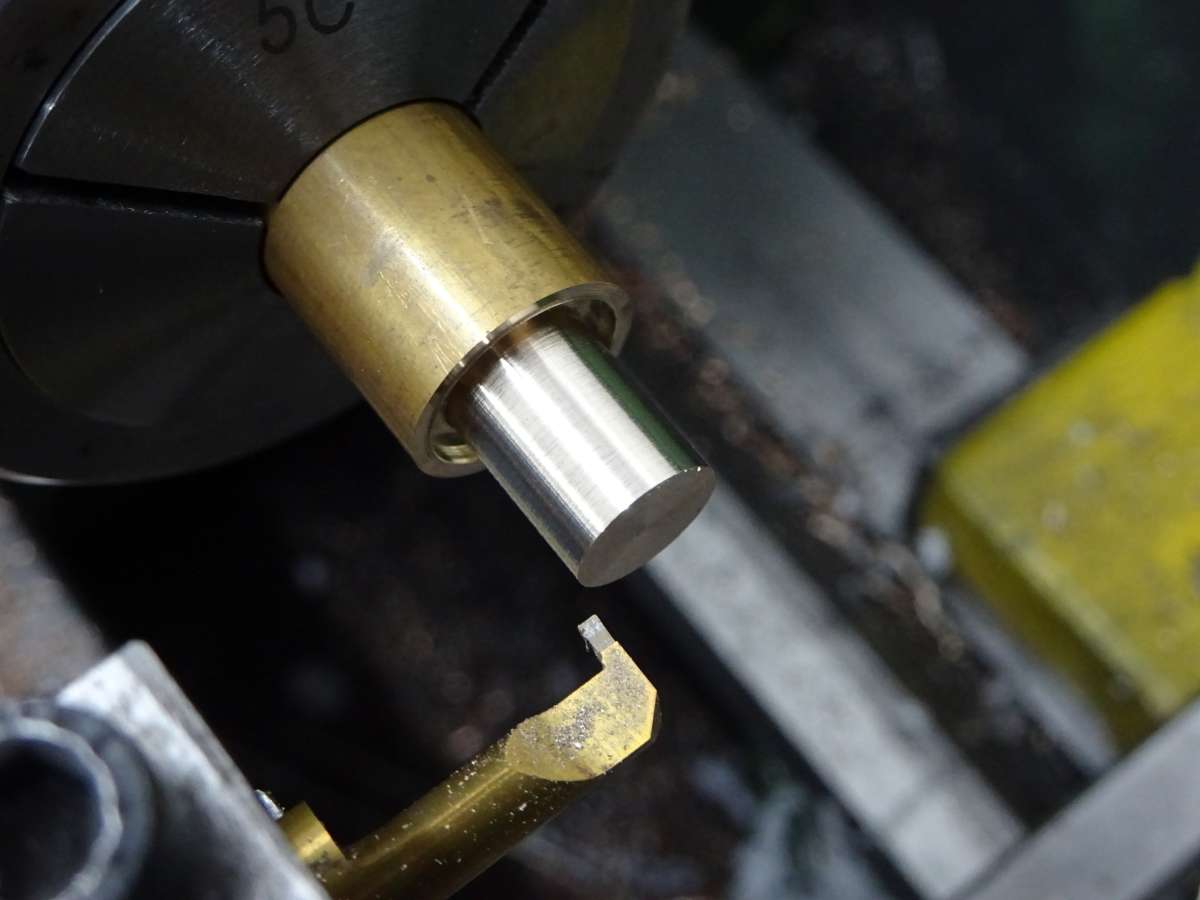
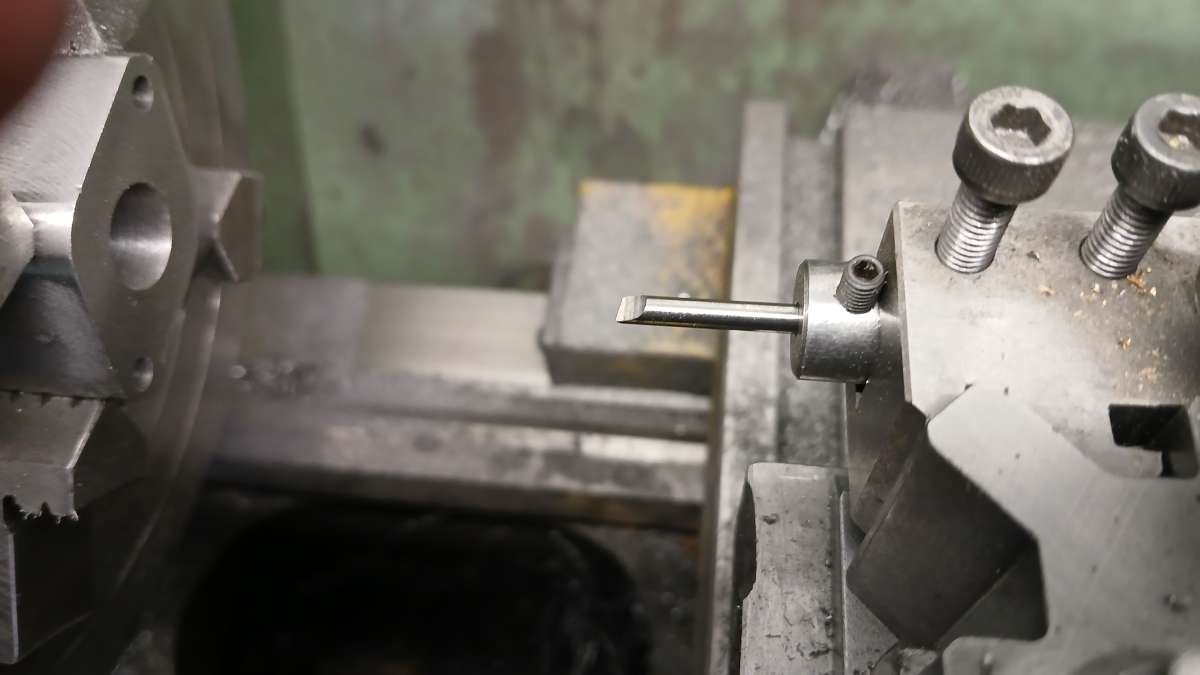
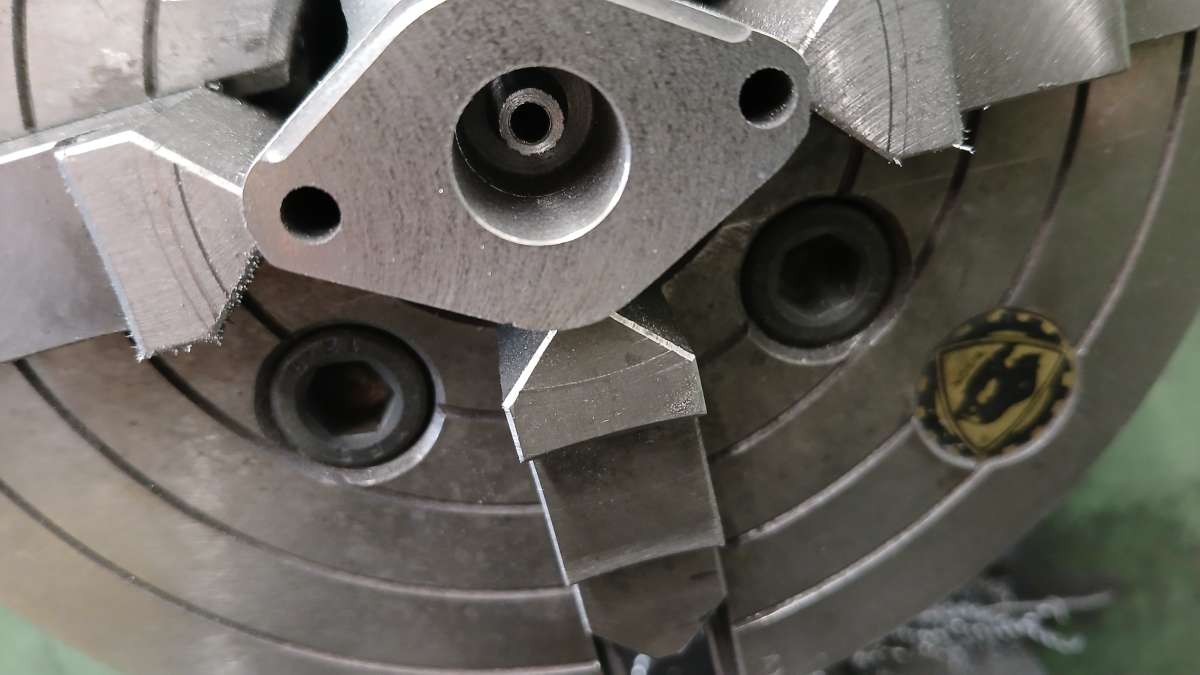
                    Otherwide gring a tool to cut the recess in the bolt, probably a cranked one as straight would be a bit long. Or bore a 10mm clearance hole in some Silver steel and make a hollow cutter like  a Rotabroach type.

                    DSC02644

                    20250924_120033

                    20250924_120045

                    Your sizes are wrong as 12mm AF won’t leave room for an or ring around the M10 thread

                    Copper is soft so easy to roll it square

                    #825097
                    JasonB
                    Moderator
                      @jasonb

                      This sort of setup for the O ring where the seal is radial would be easier to machine as if you can’t turn and bore a decent finish then the job is a non starter.

                      tails

                      #825098
                      David Jupp
                      Participant
                        @davidjupp51506

                        A lot of commercial feedthroughs use glass as the bonding/seal/insulator for the pins.  Compliant seals are used in some types.

                        Seal between feedthrough and the pressure boundary is often 1 or 2 ‘O’ rings in grooves, similar to shown by Jason.

                        You don’t necessarily need threads at all – let the pressure differential hold the feedthrough in place.

                        If tempted to use Dowty washer, be careful – they are designed for holding high pressures in, not for keeping pressure out.  Might work, might not.

                        A web search for feedthroughs should find examples from several manufacturers, which may give some ideas.  Kemlon, Spectite to name just a couple.  Probably best to concentrate on those that mention vacuum duty.

                        Think about how to hold the pins in position during manufacture if potting them.


                        #825102
                        Robert Atkinson 2
                        Participant
                          @robertatkinson2

                          As noted by others PTFE is about the worst choice for the tube. Nothing will stick to it and it will collapse under pressure. Use metal.
                          Old fashoned sealing wax is much better than exoxy for vacuum sealing.  If worried about strength use a plug of wax at the vacuum side backed up with epoxy.
                          You need to put a step or taper in the inner diameter to ensure the sealant can’t be sucked through and pressure increases sealing.

                          Robert.

                          #825108
                          Dave S
                          Participant
                            @daves59043

                            Rather than thread in I would consider a flanged plug. There are no twist forces on the o ring, which is simply compressed and you don’t have to worry about twisting the wires either.
                            I think in theory you could also then machine the plug from a none conductive material and rather than a large bore drill 7 taper holes to hold taper pins (arranged to be sucked in tighter) for the pass through. Could even make the outer bore tapered.

                            Low out gas plastic, fully supported by the bore, with the flange as a doesn’t fall out retainer


                            Dave

                            #825109
                            SillyOldDuffer
                            Moderator
                              @sillyoldduffer

                              Wow, this is the forum at it’s best!  Really good advice and quick.  Thank you.

                              On Dick H Said:

                              I think the usual term for such vacuum connectors is “Feedthrough”.

                              I’ll use that in future, and it gets better results from Google.

                              On duncan webster 1 Said:

                              … we used Oxley pins …I don’t see why your vac pipe connector has to go through the same hole. Drill through elsewhere, tap outside and use a Dowty washer under the pipe fitting. …

                              Oxley pins and Dowty Washers both new to me, and relevant.    Wade makes the same point about separating the exhaust pipe from the electric wiring and I’m persuaded.   I combined them to avoid making two potentially leaky holes in the base and because there’s precious little space inside for them.  But I can find room for two small holes, and they simplify the feedthroughs,  One reason for using PTFE pipe is it being flexible makes it easier to feed  through the maze of electronics under the base – also tight for space.  However, a separate feedthrough likely means PTFE can be replaced by a straight-ish copper pipe.  Good to have a CAD model to see, because the clock is doing a run test and I can’t turn it upside down and look at the real thing.

                              On Joseph Noci 1 Said:

                              And general epoxies from the hardware store all shrink as they cure.

                              Good to know what to avoid!  I didn’t know that.

                              On Diogenes Said:

                              ..maybe there’s an injection-moulded connector available with pin conductors already…

                              There are, and Robert has a MIL-STD socket, too big unfortunately.  New connectors are expensive.  At the moment DIY is cheaper, and it has fun and interest too.  If DIY doesn’t work, a connector is the answer.  Until this morning, I was biased against commercial connectors because they don’t include an exhaust pipe.  Not now – Duncan and Wade persuaded me this morning to separate the exhaust and electric feedthroughs.

                              On David Senior Said:

                              I suspect the ptfe tube will be a problem. When you apply the vacuum it will tend to reduce in diameter, and, as the epoxy isn’t likely to have a good grip on it, the seal will have gone. Probably needs to be a metal pipe.

                              Point taken!!!

                              If you are worried about making the O-ring groove on the bolt, consider putting the recess in the mating part and just aiming for a good finish on the bolt sealing face.

                              Dave

                              The size and shape of the mating part is awkward.  The bolt sits in a recess under a cast-iron block, the base, that’s much too big for my lathe’s chucks.  It’s a faceplate job, and reaching the surface requires a fully extended cutter. As the surface is sloped and very hard, the cutters will chatter.  I’m intimidated.    In contrast, easy enough to mill the recess with a carbide cutter, but not the groove.  Simpler, I think, to groove the bolt head because the part can be held in a 3-jaw.

                              On JasonB Said:

                              Potting epoxy from your local electrical wholesaler will be better than any old epoxy. A vacuum is the only way to really suck bubbles out.

                              Good idea.  And I have a vacuum pump!

                              3D print something like your green spacers to hold the wires while potting, if you apply a little tension they will remain straight.

                              Yes!!!

                              Why use thread sealant when you have an O ring as a seal.

                              Belt and braces.  Thinking about it though, O-rings work by being pressed into the gaps.  Therefore the O-ring might work better without sealant, because a pressure differential both sides will push the rubber in more firmly.

                              Cut a recess around the M10 hole for the O ring as it will be a lot easier. Keep a plain 10mm shank about 2mm long so the ring is not against a thread.

                              That’s the plan.

                              Otherwide gring a tool to cut the recess in the bolt, probably a cranked one as straight would be a bit long. Or bore a 10mm clearance hole in some Silver steel and make a hollow cutter like  a Rotabroach type.

                              Excellent! I hadn’t thought of cranking or a Rotabroach.   Thanks for the photos too – very clear.

                              Your sizes are wrong as 12mm AF won’t leave room for an or ring around the M10 thread

                              Typo, actually 16mm AF.

                              Copper is soft so easy to roll it square

                              Why didn’t I think of that?  I have a roller.

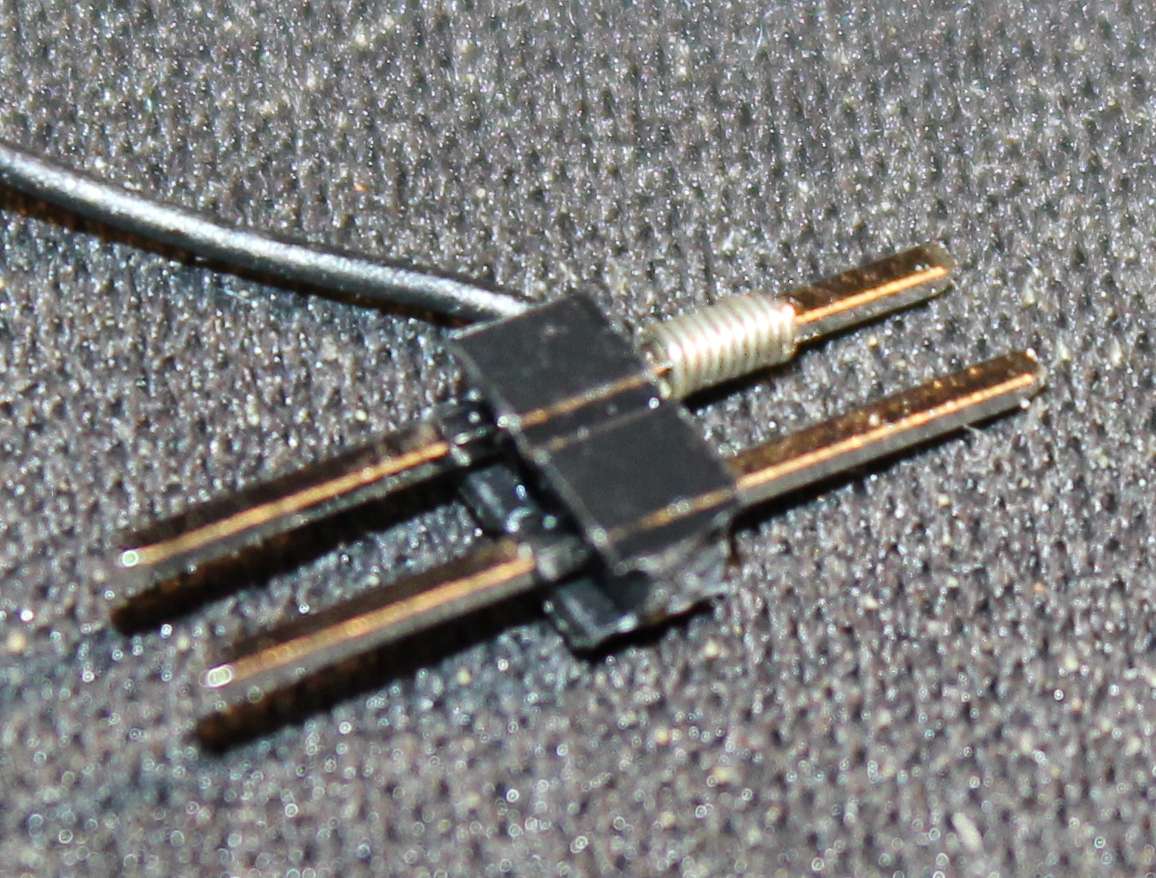
                              If anyone is interested, square wire is preferred to round cos’ I is a wire-wrap fanboy.  Avoids soldering, simple tool, though not suitable for everything.

                              Apparently wrapping the wire around a square pin increases contact pressure enough to create tiny cold-welds on the corners, improving reliability.

                              IMG_5388

                              Many thanks one and all.

                              Cheers,

                              Dave

                              #825112
                              JasonB
                              Moderator
                                @jasonb

                                If you are going to separate the tube from the electrics then why not just use a pnumatic push fit connector for the air. The Vacuum bag that I use for veneering uses these type of connectors.

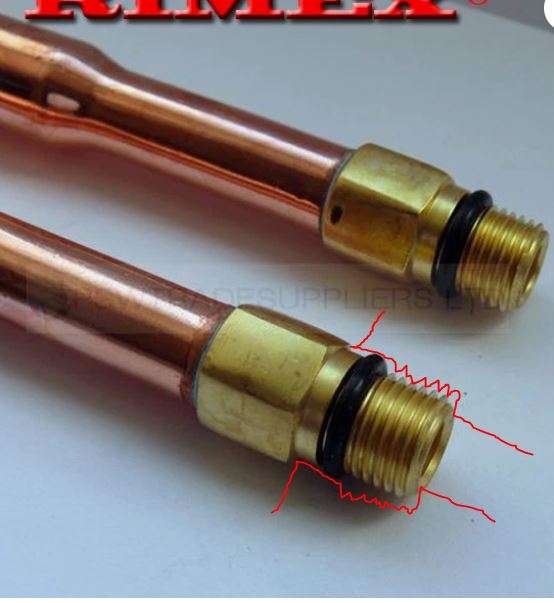
                                You could even rip the guts out of one and use the body for the wire connection. 1/8″ BSP is close to M10 x 1

                                Not really any more expensive than buying the O rings and a lot less work to do.

                                https://www.hps-ltd.co.uk/pneumatic/push-in-fittings/polymer/4mm-m5-straight-male-adaptor-round-body

                                #825113
                                noel shelley
                                Participant
                                  @noelshelley55608

                                  Not heard of wire wrapping for a long time ! Dowty washers, O rings, NO PTFE, Separate evacuation pipe/fitting. What about a fitting for your vacuum gauge ? If using a home made bulkhead fitting then some experiment may be needed, solid pins and then the potting material ? A salvaged commercial unit might be easier ? Glass would be a good one ? Incorporate the base of an old valve ? Octal base.

                                  Good luck , Noel.

                                  #825129
                                  old mart
                                  Participant
                                    @oldmart

                                    Wires should be solid, not stranded and the sealing rings should be greased.

                                    #825130
                                    Macolm
                                    Participant
                                      @macolm

                                      PTFE is tricky (impossible?) to use as a sealing medium because it has a high coifficient of expansion, and anyway a tendancy to dimensional instability. There is a change of state and rapid dimensional change around room temperature, and a linear change of about 1% over the range 0 to 100 degrees C (10 thou per inch!). It needs positive retention rather than a press fit to fix it in place, for example the Oxley bushes where the design of the pressed through metal pin expands the PTFE to provide this positive retention.

                                      #825145
                                      old mart
                                      Participant
                                        @oldmart

                                        PTFE makes good seals if it is allowed to tighten up with the pressure or vacuum using a conical section facing the correct way. It is used for sealing shafts which have to turn or move axially with lower friction as well as bulkhead fittings.

                                        #825148
                                        blowlamp
                                        Participant
                                          @blowlamp

                                          I haven’t read all responses, but has a compression gland been suggested?


                                          Martin.

                                          #825149
                                          SillyOldDuffer
                                          Moderator
                                            @sillyoldduffer
                                            On JasonB Said:

                                            If you are going to separate the tube from the electrics then why not just use a pnumatic push fit connector for the air. The Vacuum bag that I use for veneering uses these type of connectors.

                                            https://www.hps-ltd.co.uk/pneumatic/push-in-fittings/polymer/4mm-m5-straight-male-adaptor-round-body

                                            Got to be worth testing, neat and simple. And there’s already one in the design!    Until today I was fixated on a combined pipe & wire feed-through, and hadn’t thought of that.   Proves the value of a second opinion, ta.

                                            I associate them with compressed air.  A quick look at some specs suggests they’re ‘only’ OK down to 100mb.  Good enough because my current target is 300 to 400mb due to pump and sensor limitations.

                                            Dave

                                            #825152
                                            Macolm
                                            Participant
                                              @macolm

                                              PTFE needs positive location design features, or a configuration which provides the elasticity or compensation to take up the dimensional uncertainty. For example, one way pressure as above, or as an anti extrusion ring where a separate rubber ring provides for slack. It is a very useful material provided the limitations are countered in the detail design. Just don’t expect an ordinary press fit to work long term.

                                              #825156
                                              SillyOldDuffer
                                              Moderator
                                                @sillyoldduffer
                                                On noel shelley Said:

                                                … NO PTFE, …

                                                Good luck , Noel.

                                                On Macolm Said:

                                                PTFE is tricky (impossible?) to use as a sealing medium because it has a high coifficient of expansion, and …

                                                On old mart Said:

                                                PTFE makes good seals if it is allowed to tighten up with the pressure or vacuum using a conical section facing the correct way…

                                                There’s a strong case building against PTFE!  I thought old-mart was disagreeing, but he’s not, I’d be hard put to provide a conical section facing the correct way.

                                                At the moment the design calls for a solid PTFE pipe passing through potting compound.  Why PTFE? Only because I have some and it fits a stud connector I already have, and it can be routed as ordinary flexible tube.

                                                What do you think of Jason’s pneumatic stud suggestion?  Especially if the vacuum is partial, say 300mb.

                                                Dave

                                                #825158
                                                SillyOldDuffer
                                                Moderator
                                                  @sillyoldduffer
                                                  On noel shelley Said:

                                                  What about a fitting for your vacuum gauge ?

                                                  No need, it’s an electronic sensor, an automotive Bosch BME280.  It reports temperature, pressure and humidity through the wires, whenever the microcontroller asks.

                                                  …Glass would be a good one ? Incorporate the base of an old valve ? Octal base.Good luck , Noel.

                                                  I have plenty of valves. The glass to cast-iron interface would tricky unless I got into glass-blowing, another skill I don’t have!  The idea had me wondering about potting the wires with molten glass.  Glass and Copper have very different coefficients of expansion, which breaks the glass.  I think valve pins are a special Nickel/Iron alloy.  Platinum wire works too!

                                                  Surprising how much thought and ingenuity is going into in what seems a simple part.

                                                  Ta,

                                                  Dave

                                                  #825160
                                                  noel shelley
                                                  Participant
                                                    @noelshelley55608

                                                    Careful salvaging of the valve base with a diamond disc and dremel type tool. Pot this into a fitting made for the job, cone shaped so as to pull the potting into the fitting. Male thread and nut with dowty washer to seal. Solder your electronics to the inside and use a valve socket for the external connection ? Noel.

                                                    #825161
                                                    blowlamp
                                                    Participant
                                                      @blowlamp

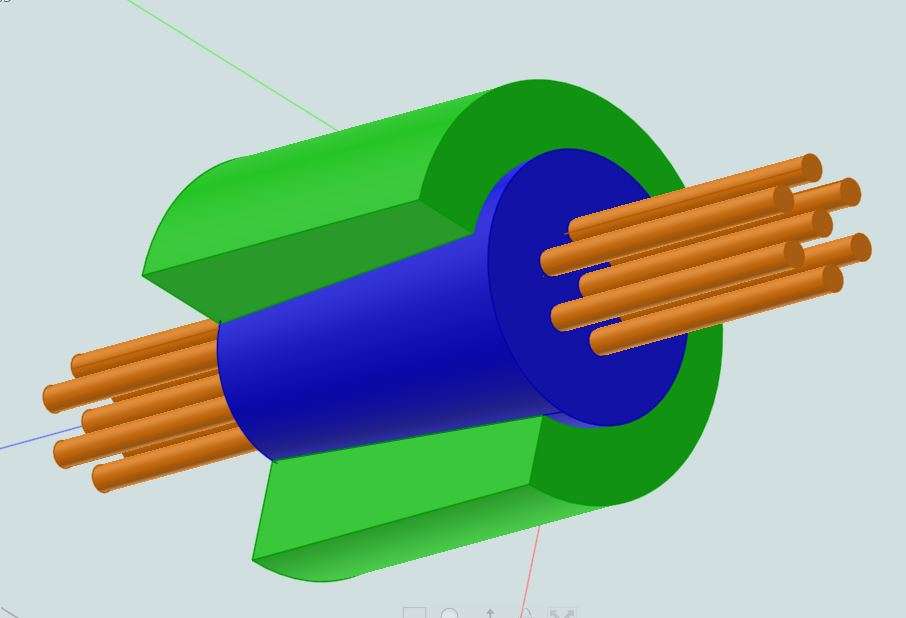
                                                      Squish the blue bit into the green bit with a nut or plate.

                                                      Martin.

                                                      Capture

                                                    Viewing 25 posts - 1 through 25 (of 25 total)
                                                    • Please log in to reply to this topic. Registering is free and easy using the links on the menu at the top of this page.

                                                    Latest Replies

                                                    Viewing 25 topics - 1 through 25 (of 25 total)
                                                    Viewing 25 topics - 1 through 25 (of 25 total)

                                                    View full reply list.