saving money at the pump

saving money at the pump

Home Forums The Tea Room saving money at the pump

Viewing 25 posts - 26 through 50 (of 83 total)
  • Author
    Posts
  • #846534
    Howard Lewis
    Participant
      @howardlewis46836

      Driving technique greatly affects energy consunption, whetehr it enters th vehicle via hose or a cable.

      In all caes (Of electric, hybrid, or fuel injected engines) lifting off the throttle early (aided by looking, and reacting, well ahead) cuts off the fuel to the power unit.

      Harsh acceleration consumes fuel rapidly, since the prime mover is required to deliver maximum power, which consumes energy.

      Similarly, higher driving speeds consume more energy. Air resistance increases as the cube of speed, so driving at 60 mph, uses a lot less than doing 70 mph.

      My little naturally aspirated 1 litre, low emission, petrol fuelled car returned over 70 mpg keeping below 60 mph for most of the time, aided by the 50 mph speed limits on M5, between Devon and East Anglia.

      (When I drive to the west midlands, or to the west country, my journeys would be longer in duration because of the need to recharge en route, so an EV is not suitable for those journeys).

      It may not be WHAT you drive, but HOW you drive that affects fuel or energy consunption.

      Now we need to pray for fine weather to dry the laundry, rather than the tumble drier. But never mind the loss of crops and agricultural land. We can import, so that the emissions are elsewhere!

      Bring on net zero?

      Howard

      #846550
      duncan webster 1
      Participant
        @duncanwebster1
        On Howard Lewis Said:

        Driving technique greatly affects energy consunption, whetehr it enters th vehicle via hose or a cable.

        In all caes (Of electric, hybrid, or fuel injected engines) lifting off the throttle early (aided by looking, and reacting, well ahead) cuts off the fuel to the power unit.

        Harsh acceleration consumes fuel rapidly, since the prime mover is required to deliver maximum power, which consumes energy.

        Similarly, higher driving speeds consume more energy. Air resistance increases as the cube of speed, so driving at 60 mph, uses a lot less than doing 70 mph.

        My little naturally aspirated 1 litre, low emission, petrol fuelled car returned over 70 mpg keeping below 60 mph for most of the time, aided by the 50 mph speed limits on M5, between Devon and East Anglia.

        (When I drive to the west midlands, or to the west country, my journeys would be longer in duration because of the need to recharge en route, so an EV is not suitable for those journeys).

        It may not be WHAT you drive, but HOW you drive that affects fuel or energy consunption.

        Now we need to pray for fine weather to dry the laundry, rather than the tumble drier. But never mind the loss of crops and agricultural land. We can import, so that the emissions are elsewhere!

        Bring on net zero?

        Howard

        Pedant alert, air resistance increases as square of speed, but power required increases as the cube.  Having said that, Howard is generally correct, with a petrol car avoid using the brakes as much as possible. On my long commute to North Wales with little motorway or dual carriageway I once managed 90 miles without using brakes. Anticipation and luck with the very few traffic lights.  People following must have wondered what I was up to. I’m not sure with an all electric, as much braking is regenerative, pumping electrons back into the battery. As nothing is 100% efficient I guess the same applies but to a lesser extent

        #846561
        Dave Halford
        Participant
          @davehalford22513

          Has anyone compared the insurance costs?

          Purely comparing insurance groups and towing weights (I tow) a Merc EQC comes out higher than the jeep 6.4 litre SRT cost new is roughly comparable

          Range seems to halve when towing EV, an IC drops nearly a quarter.

          #846608
          not done it yet
          Participant
            @notdoneityet

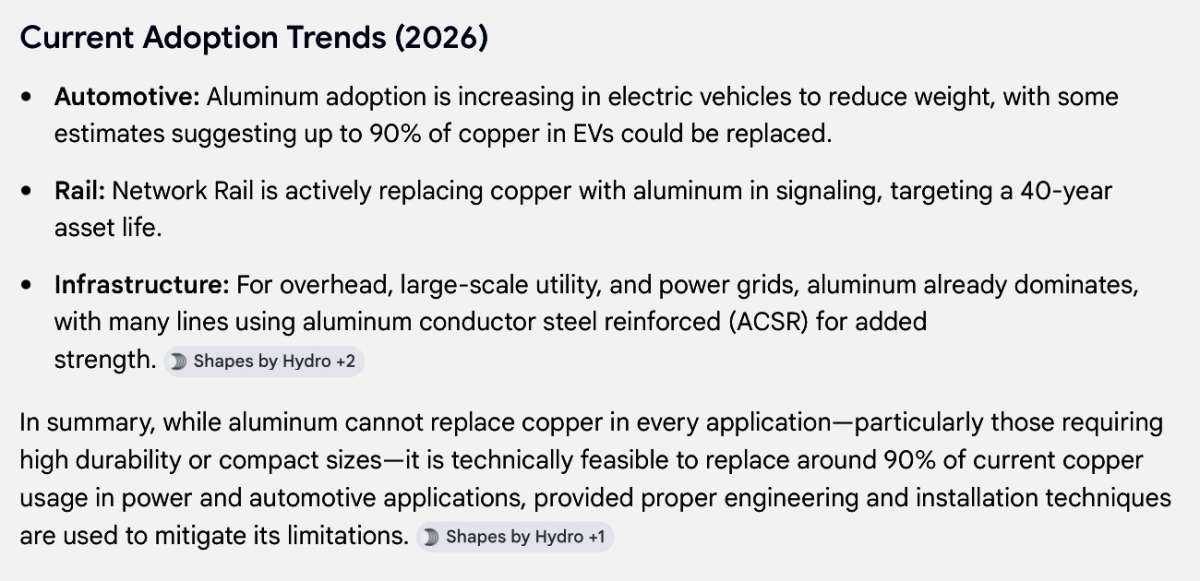
            I just love the claim that the grid needs lots of copper to up grade it.

            Just an unsubstantiated guess, IMO.

            Is that for conductors, transformers or what?

            Maybe he is unaware that many transmission lines are not copper, but Aluminium?

            Maybe he is unaware that the voltages of upgrades may be substantially higher than at present?

            Maybe he is unaware that HVDC transmission is more efficient than HVAC?

            Let’s have some clear facts, not uncorroborated guesses!

            Thread is about rising cost of fossil fuels.  Replacing those fuels with electrical energy is so much more energy efficient – nothing to do with insurance, either (my car is more to insure than my old diesel – but not if one considers the difference in performance, for instance).

            As I said at the outset, bite the bullet and pay more for the fuel – or change to a far more efficient drive system.  Electric drives win every time.  Nobody would choose to drive their lathe and mill by an ICE, would they?  Even if they were to use a fossil-fuelled generator, the efficient drive is still by an electric motor.

            #846619
            John Haine
            Participant
              @johnhaine32865

              PEDANT ALERT!

              I’m sure that tongues are slightly in cheeks but…

              For the avoidance of doubt, when you charge a battery by feeding electrons into one terminal, exactly as many flow out of the other! Otherwise the charger would accumulate a very high positive voltage…

              #846643
              Robert Atkinson 2
              Participant
                @robertatkinson2
                On not done it yet Said:

                I just love the claim that the grid needs lots of copper to up grade it.

                Just an unsubstantiated guess, IMO.

                Is that for conductors, transformers or what?

                Maybe he is unaware that many transmission lines are not copper, but Aluminium?

                Maybe he is unaware that the voltages of upgrades may be substantially higher than at present?

                Maybe he is unaware that HVDC transmission is more efficient than HVAC?

                Let’s have some clear facts, not uncorroborated guesses!

                Thread is about rising cost of fossil fuels.  Replacing those fuels with electrical energy is so much more energy efficient – nothing to do with insurance, either (my car is more to insure than my old diesel – but not if one considers the difference in performance, for instance).

                As I said at the outset, bite the bullet and pay more for the fuel – or change to a far more efficient drive system.  Electric drives win every time.  Nobody would choose to drive their lathe and mill by an ICE, would they?  Even if they were to use a fossil-fuelled generator, the efficient drive is still by an electric motor.

                A reference would be helpful. If you are talking about post #845920 then read it and the linked article properly. While it mentions power transmission upgrades as another use of copper the paper referred to is mainly about the amount of copper used to make EVs. This is substanstally higher due to windings, cables, PCBs and heat spreaders in semiconductor packages.
                It does appear to be an issue and not one I was aware of. Auminium is used for some power systems but it’s not a ersy replacement for copper. Making connections is difficult, it is  poor for flexible cables and suffers from corrosion. And yes I have had direct experience of using aluminium cables. On aircraft and issues with telecom systems.
                Not sure about DC transmission being more efficent than AC, they both have advantages and disadvantages. For example skin effect for AC and electrolytic corrosion for DC.

                I try not to get personal but you seem to assume anyone who does  does not actively support EVs had some kind of agenda against them. This is not the case, others may just have a different viewpoint..

                Robert

                #846647
                Dave Halford
                Participant
                  @davehalford22513
                  On not done it yet Said:

                  I just love the claim that the grid needs lots of copper to up grade it.

                  Just an unsubstantiated guess, IMO. Which it’s self is a an unsubstantiated guess.

                  Is that for conductors, transformers or what?

                  Maybe he is unaware that many transmission lines are not copper, but Aluminium?

                  Maybe he is unaware that the voltages of upgrades may be substantially higher than at present?

                  Maybe he is unaware that HVDC transmission is more efficient than HVAC? What transmission is this? Dc power stations died out around 100 years ago more due transmission losses than the safety issues.

                  Let’s have some clear facts, not uncorroborated guesses!

                  Thread is about rising cost of fossil fuels.  Replacing those fuels with electrical energy is so much more energy efficient – nothing to do with insurance, either (my car is more to insure than my old diesel – but not if one considers the difference in performance, for instance). It’s not the performance it’s the fact that the EV right off rate is much higher.

                  As I said at the outset, bite the bullet and pay more for the fuel – or change to a far more efficient drive system.  Electric drives win every time.  Nobody would choose to drive their lathe and mill by an ICE, would they?  Even if they were to use a fossil-fuelled generator, the efficient drive is still by an electric motor.

                  I don’t see why this thread had to turn into an EV lobby political event.

                  #846654
                  duncan webster 1
                  Participant
                    @duncanwebster1

                    High voltage dc transmission does not imply dc generation. It gets away from capacitance losses,  and according to a cable engineer I knew, is the only way to go for long distance underground and underwater cables

                    #846655
                    Robert Atkinson 2
                    Participant
                      @robertatkinson2

                      Underground is less of an issue than underwater as the larger size of thicker insulation and thus less capacitance is not such an issue. But it’a a bit of a niche case. I don’t see DC for primary distribution in the near future.

                      #846668
                      Nealeb
                      Participant
                        @nealeb

                        This thread started off talking about saving money at the pump and a recent post talked about reducing fuel/energy consumption by gentle acceleration and avoiding braking. Broadly speaking, sound advice but I think that it is a bit more complicated than that. Most obvious issue is that EVs recover quite a lot of the vehicle’s kinetic energy when “braking”, which explains why I keep seeing my own EV deliver more miles per kWh in town than when driving at steady speed, in contrast to IC cars which throw away all that KE in heating the brakes (or engine frictional losses, or whatever). The other point which has puzzled me for a long while now, as someone who thinks more about efficient than fast driving, is just what is the most economical rate of acceleration? Slow acceleration and waste fuel spending too long at inefficient speeds and at the other extreme rapid energy-wasting acceleration. So where’s the sweet spot in the middle to save most money at the pump? I don’t know, for example, whether my EV is more effective at recuperation when braking harder or more gently, although I suspect that there is a difference.

                        Given that there are so many variables associated with actual vehicle use outside our control (thus making all this nonsense about publishing “real-world” fuel economy numbers just that – nonsense) I’m not even sure how, as scientists and engineers, we can actually find the sweet spot. Would anyone like to suggest an answer to what seems an insoluble problem?

                        #846669
                        blowlamp
                        Participant
                          @blowlamp
                          On not done it yet Said:


                          As I said at the outset, bite the bullet and pay more for the fuel – or change to a far more efficient drive system.  Electric drives win every time.  Nobody would choose to drive their lathe and mill by an ICE, would they?  Even if they were to use a fossil-fuelled generator, the efficient drive is still by an electric motor.

                          Maybe, but is your lathe and milling machine battery powered?

                          Martin

                          #846680
                          Wink Hackman
                          Participant
                            @winkhackman25989
                            On Andrew Tinsley Said:

                            So why on earth would I want to swop? I much prefer smelly polluting ICE cars.


                            Have you actually driven an electric car? Seriously, that’s what convinced me – they’re fast, so easy to live with and they just make an ICE car feel clumsy and fiddly. I don’t miss the petrol station at all.  I suppose you could always carry a diesel-soaked rag in the glovebox if you need the smell.

                            #846682
                            Robert Atkinson 2
                            Participant
                              @robertatkinson2
                              On Nealeb Said:

                              This thread started off talking about saving money at the pump and a recent post talked about reducing fuel/energy consumption by gentle acceleration and avoiding braking. Broadly speaking, sound advice but I think that it is a bit more complicated than that. Most obvious issue is that EVs recover quite a lot of the vehicle’s kinetic energy when “braking”, which explains why I keep seeing my own EV deliver more miles per kWh in town than when driving at steady speed, in contrast to IC cars which throw away all that KE in heating the brakes (or engine frictional losses, or whatever). The other point which has puzzled me for a long while now, as someone who thinks more about efficient than fast driving, is just what is the most economical rate of acceleration? Slow acceleration and waste fuel spending too long at inefficient speeds and at the other extreme rapid energy-wasting acceleration. So where’s the sweet spot in the middle to save most money at the pump? I don’t know, for example, whether my EV is more effective at recuperation when braking harder or more gently, although I suspect that there is a difference.

                              Given that there are so many variables associated with actual vehicle use outside our control (thus making all this nonsense about publishing “real-world” fuel economy numbers just that – nonsense) I’m not even sure how, as scientists and engineers, we can actually find the sweet spot. Would anyone like to suggest an answer to what seems an insoluble problem?

                              This is one reason I bought a plug in hybrid. The work commute can be done on a singel charge (free at work) and on open roads the ICE runs at a constant optimum power point with any excess going into the battery and short term deficit coming from the battery. At motorway speeds it will charge the battery enough to turn the ICE off and run on battery for some distance. It is a fairly sophisticated drive train though with ICE, CVT, generator and two motors.

                              Robert.

                              #846689
                              Mark Rand
                              Participant
                                @markrand96270
                                On blowlamp Said:Maybe, but is your lathe and milling machine battery powered?Martin

                                Mine are. Sort of. There’s 5.5kWp of solar panels on the shed roof with an inverter and battery inside it. The house benefits as well though…

                                #846751
                                Russell Eberhardt
                                Participant
                                  @russelleberhardt48058
                                  On John Haine Said:

                                  But I’m a bit biased – I feed electrons to my vehicle.🙂  240 miles tomorrow and it’ll cost me less than £4.50 for electrons.  That will increase to £6, next month, but I’ll still get the same quality electrons.

                                  Trouble is they come out as fast as you feed ’em in!

                                  Quite right, but they only get fed in very slowly, of the order of 1 mm/s.  An AC charger will only shake them about a little 🙂

                                  Russell

                                  #846858
                                  not done it yet
                                  Participant
                                    @notdoneityet
                                    On Russell Eberhardt Said:
                                    Quite right, but they only get fed in very slowly, of the order of 1 mm/s.  An AC charger will only shake them about a little 🙂

                                    Russell

                                    Agreed, Russell.  But one hell of a lot can get shoved in each second.🙂  My car can charge on the cheap rate for 18,000 seconds every night.  That is along with anything else that consumes electricity during  theat time.🙂

                                    I basically used less than two nights worth of cheap energy for my recent 250 mile trip.

                                    Everyone, filling up at the pump, is free to continue at whatever it costs.

                                    #846862
                                    Nealeb
                                    Participant
                                      @nealeb

                                      …and a look at Zapmap in preparation for a trip from Devon to Scotland later this year suggests that recharging prices on the motorway are pretty much in line with prices elsewhere, unlike fossil fuel prices. Still puts the per-mile cost roughly on a par with what I used to pay for diesel but as 75-80% of my miles allow me to charge at home, overall costs are way down. Especially as the EV is so much more economical round-town than a big diesel that was still warming up by the time I was home.

                                      As for electrons (now consider to be my friends), I assume that 1mm/sec is an average drift rate and they buzz around a bit in all directions? I understand that they might give a wave to other particles on the way but I’m uncertain about the principle of that.

                                      #846867
                                      Vic
                                      Participant
                                        @vic
                                        On howardb Said:


                                        Taking your comment and rewriting it to reflect reality:-

                                        “Some need to get used to the fact that there is not enough copper being mined or produced to support the so-called EV revolution and not bury their head in the sand (or a copper mine!)”

                                        That’s in addition to the copper required to upgrade power grids.

                                        An EV requires three to five times more copper than petrol or diesel cars, not to mention the copper required for upgrades to the electricity grid.

                                        “A normal Honda Accord needs about 40 pounds of copper. The same battery electric Honda Accord needs almost 200 pounds of copper,” said Adam Simon, professor of earth and environmental studies at the University of Michigan.

                                        “We show in the paper that the amount of copper needed is essentially impossible for mining companies to produce.”

                                        https://engineers.scot/news/2024-07-14-the-amount-of-copper-needed-to-build-evs-is-impossible-for-mining-companies-to-produce


                                        IMG_0776

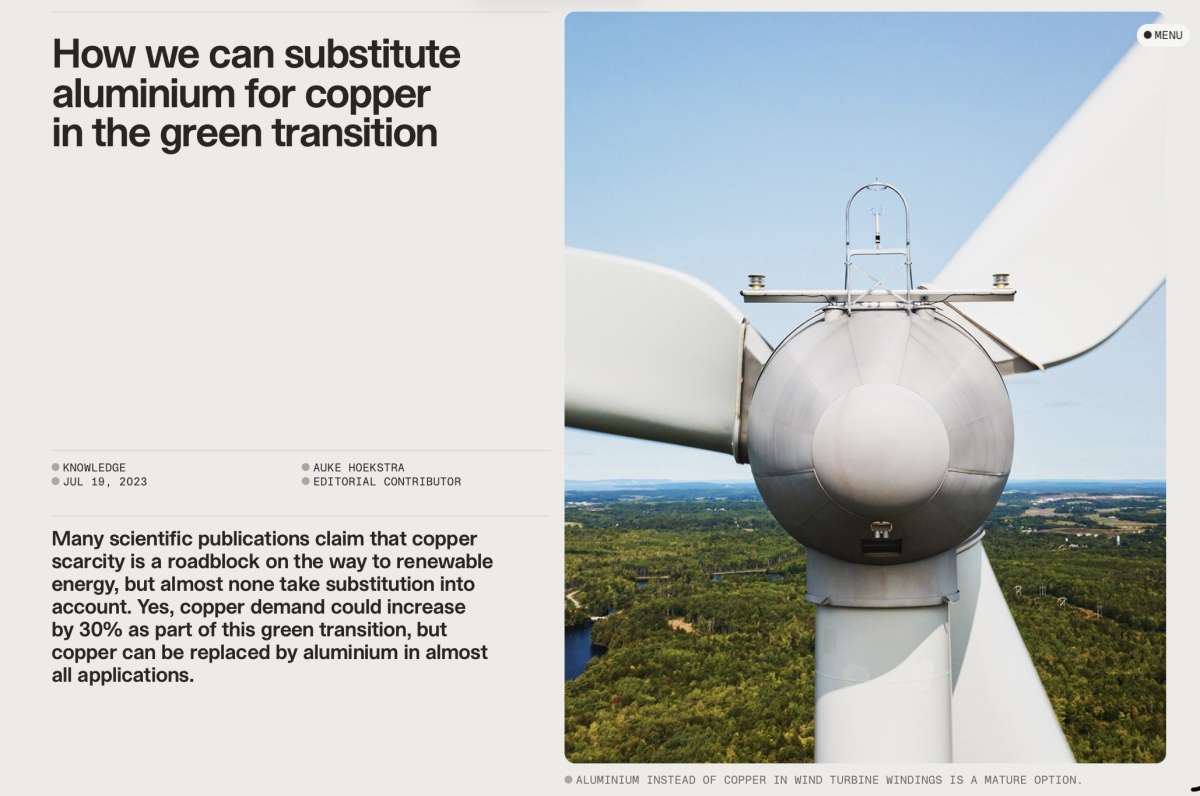
                                        https://www.shapesbyhydro.com/en/knowledge/how-we-can-substitute-aluminium-for-copper-in-the-green-transition/

                                        IMG_0771


                                        IMG_0774

                                        IMG_0775

                                        #846868
                                        Vic
                                        Participant
                                          @vic

                                          IMG_0770

                                          #846948
                                          not done it yet
                                          Participant
                                            @notdoneityet

                                            Vic,

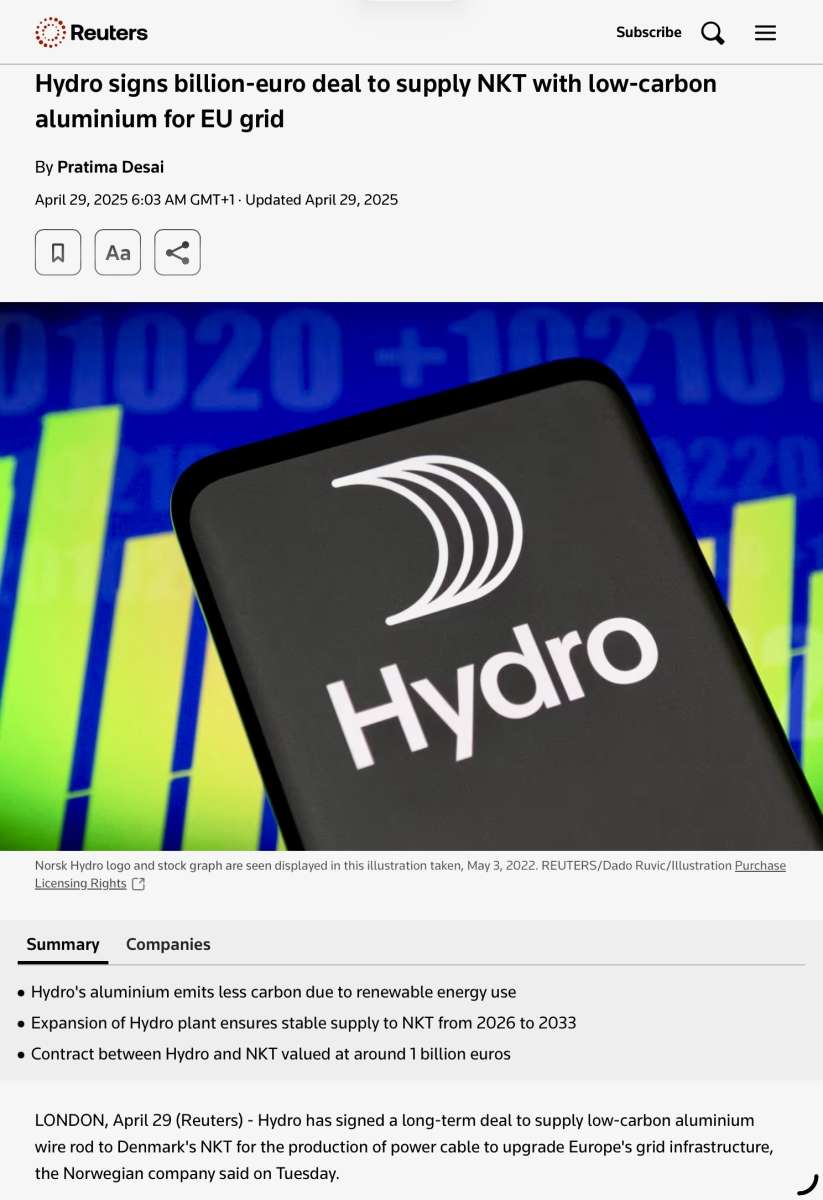
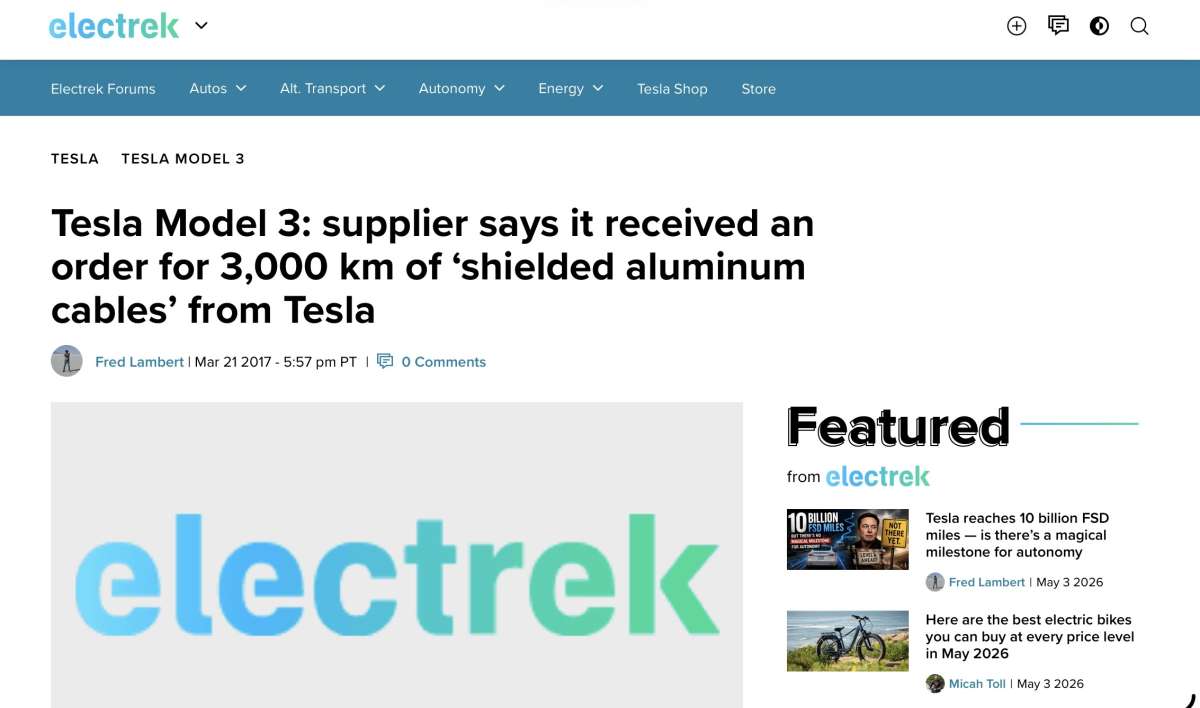
                                            Two good posts for those who appear to know somlittle about Aluminium replacing copper.  They have been making HV conductors with aluminium strands surrounding a steel hawser (for strength) for decades!

                                            Also a good one re the price of fossil extract.🙂🙂

                                            #846975
                                            Vic
                                            Participant
                                              @vic
                                              On not done it yet Said:

                                              Vic,

                                              Two good posts for those who appear to know somlittle about Aluminium replacing copper.  They have been making HV conductors with aluminium strands surrounding a steel hawser (for strength) for decades!

                                              Also a good one re the price of fossil extract.🙂🙂

                                              Thanks. We had Aluminium wiring in the kitchen of our last house. I know this as I replaced a twin oven. There may well have been other circuits in the house with Aluminium Twin & Earth cables. Apparently the high cost of copper some decades ago prompted the production and use of Aluminium cables in the UK.


                                              #846987
                                              Robert Atkinson 2
                                              Participant
                                                @robertatkinson2

                                                And the reason aluminium wasn’t used in the 90s was because of all the issues they had with the stuff they used in the 70’s.

                                                #847004
                                                howardb
                                                Participant
                                                  @howardb

                                                  We have a 400 volt 3P + N overhead line across our land in France which supplies us and the rest of the ville.

                                                  A few years ago our little ville of about 15 houses got rewired, the feed in cable was supported with an additional concrete post on our land as the source of the supply came from a different direction etc.

                                                  The cotton reel with the cable on it was dumped on our land adjacent to the road so I had a look at the ID label. It read  that the cable was 70 Sq mm and AL.

                                                  The four cables were pvc insulated with three twisted around the  central cable.

                                                  The only odd effect I have noticed subsequently is that during hot weather the lowest part of the “droop loop” across our land is a good 12 inches lower than when it’s cold over the  driveway.

                                                  It’s not a problem for us with our vehicles and trailers, except if we have a delivery with a 7.5 tonne box van when the top of the van body and cable comes a bit close. I always advise the driver of this – the reaction is the usual french shrug.


                                                  #847005
                                                  Nealeb
                                                  Participant
                                                    @nealeb

                                                    I used to live in a village in Hampshire where half the village had pretty good broadband – this was soon after it was introduced – and our end, the newer end, didn’t. I was told that it was down to the use of aluminium BT cables for the newer houses which were fine for speech but couldn’t handle the broadband signals. We also had problems with the odd wire break which meant the BT engineer coming out and swapping to another core. Don’t know what they were going to do when they had worked their way through all four cores…

                                                    #847006
                                                    Robert Atkinson 2
                                                    Participant
                                                      @robertatkinson2

                                                      The high thermal expansion coefficient of aluminium, about 30% higher than copper, is an issue. It causes work hardening and fatigue. It is also an issue in motors and transformers as it much higher than iron or steel. High motor efficiency is dependent on small clearances and low resistance. Aluminium is poorer than copper in both respects as you have to allow for expansion / differential movment. Additionally resistance is about 50% higher increasing heating or needing thicker conductors.

                                                      Robert

                                                    Viewing 25 posts - 26 through 50 (of 83 total)
                                                    • Please log in to reply to this topic. Registering is free and easy using the links on the menu at the top of this page.

                                                    Latest Replies

                                                    Home Forums The Tea Room Topics

                                                    Viewing 25 topics - 1 through 25 (of 25 total)
                                                    Viewing 25 topics - 1 through 25 (of 25 total)

                                                    View full reply list.