Parting Off Blues

Parting Off Blues

Home Forums Beginners questions Parting Off Blues

Viewing 25 posts - 26 through 50 (of 54 total)
  • Author
    Posts
  • #332128
    Mick Henshall
    Participant
      @mickhenshall99321

      My best parting tool is made from the old fashioned carbon steel, have quite a few carbon steel tools and actually like them, mostly hss for me though, do not like inserts of any description apart from cost and to me bewildering choice my lathe has a top speed of 450 rpm so doesn't run fast enough, I machine small diameters at this speed,or lower, and get a perfectly acceptable finish using hand feed

      Mick

      #332146
      SillyOldDuffer
      Moderator
        @sillyoldduffer
        Posted by Neil Wyatt on 14/12/2017 16:21:04:

        Should be possible to get uncoated parting tips for Al.

        Neil

        They certainly exist but – so far – I've not found a UK source of GTN-3 inserts for Aluminium. GTN-2 yes; GTN-3 for Stainless Steel yes; GTN-3 general purpose yes; GTN-3 'unsuitable for Aluminium' yes. What I want, no. Well not yet anyway!

        They are available in the US and hence a little expensive to import. I haven't tried ebay or banggood yet, so the Interweb may not have failed completely! I notice a number of tool sellers hide information inside their catalogues such that Google doesn't find individual parts. As I didn't have time to read through pages of inserts, it's likely I've missed a UK seller.

        Dave

        #332152
        Ian S C
        Participant
          @iansc

          Mick, I see you use carbon steel for parting tools, my first parting tool was a modified piece of a broken 12" x 1" flexi back power hacksaw blade with the teeth ground off, this saw me through the first couple of years of using a lathe, and if I want a thin blade I still use it. With the teeth ground off it still has a little bit of HSS and this cuts well, you must have the cutting edge square to the blade, and the blade square to the work or it will wander off and jamb up.

          Ian S C

          #332179
          Mick Henshall
          Participant
            @mickhenshall99321

            Yep Ian  I have some parters made from m/c hacksaw blades its what my Gramps used although I have not tried one yet, I did like the recent post where someone used a slitting saw,might try that later long as I can clear swarf, I think firm but not heavy handed on feed is the order of the day, perhaps grinding every other tooth out on the saw would help

            Mick

            #332180
            Mick Henshall
            Participant
              @mickhenshall99321

              Yep Ian  I have some parters made from m/c hacksaw blades its what my Gramps used although I have not tried one yet, I did like the recent post where someone used a slitting saw,might try that later long as I can clear swarf, I think firm but not heavy handed on feed is the order of the day, perhaps grinding every other tooth out on the saw would help

              Mick

              #332192
              SillyOldDuffer
              Moderator
                @sillyoldduffer

                I've had a most useful phone call from Ketan Swali who knows this type of blade well. He highlighted the importance of maintaining a steady feed and proper lubrication when using them. They're intended for use in a CNC machine rather than being manually driven.

                CNC machines cut at high speed, properly lubricated, with a steady feed-rate. I confess my hand parting-off feed-rate is erratic. And bumping and rubbing are both bad news, particularly with Aluminium. I'm sure I could be more consistent with practice

                Ketan's advice fitted well with my practical experience. Next time I'll be setting up a coolant drip-feed and parting off under power at high speed. While nervous about the result I'm convinced that fortune favours the brave when using carbide! This beginner must become a man of iron in both senses.

                Despite this being an apparent tail of woe, I've had much more success with a blade type holder and insert than any other method I've tried. It has long reach, is easy to set-up, cuts like fury, and – ahem – takes a fair amount of abuse. In comparison I think HSS is more tolerant of mistakes, even though I've broken a few of them too. HSS blades work well at slower speeds but only if kept sharp with correct rake and applied gently. I also have a conventional chip insert parting holder: it doesn't seem to cut as easily as the blade type and has limited reach. Never broken one though!

                None of the parting tools work properly unless the whole set-up is rigid. Cut close to the chuck; tight slides; locked saddle; rear-tool posts etc. – it all helps.

                Dave

                #332820
                choochoo_baloo
                Participant
                  @choochoo_baloo
                  Posted by Vic on 13/12/2017 23:06:20:

                  Posted by choochoo_baloo on 13/12/2017 20:59:57:

                  Dave, I was told recently by machining researchers at major engineering research centre (in other words it's on very good authority!) that indexable tip tools are actually overkill for virtually all amateur lathes.

                  I think many on here would actually agree with this but that’s not to say insert tooling can’t be used to good effect on small Lathes.

                  Whilst industrial inserts really don’t work very well on small machines there are lots of inserts now available that are aimed at the home user. I particularly like using the polished carbide inserts on my modest 8” Lathe. Time and time again though new users asking for advice are here are directed to using HSS tooling before trying anything else.

                  Sadly some have chosen to miss read what you’ve said and even resorted to making stupid petty comments as usual.

                  Yeah thanks Vic. I was just trying to be helpful.

                  Neil, for the record these industrial/academic researchers are improving methods across all machining scales. I hope other hobbyists will take direct over circumstantial evidence.

                  #332859
                  John Reese
                  Participant
                    @johnreese12848

                    A few observations:

                    If the insert doesn't seat fully in the blade the height of the tip will become lower as the insert pushes back in the blade. I have seen tools made to properly seat the inserts. It was a bar with 2 pins protruding. One pin engaged the hole in the blade. The other pin would bear end of the insert. It was used to lever the insert into place.

                    On a deep parting cut it is difficult to get lubricant to tip of the tool. Lube is essential to prevent chip welding to the insert. It also keeps the chips from welding to the sides of the cut.

                    I have found it useful to cut as deep as I can without difficulty. Then I offset the tool and cut the groove wider. That prevents chips binding in the kerf. After that I can resume cutting from the bottom of the kerf.

                    I have both carbide insert parting tools and HSS parting tools. On aluminum I prefer the HSS because I can get a dead sharp edge and I can grind in back rake.

                    #835177
                    Mark Hall
                    Participant
                      @markhall37441

                      On smaller lathes insert diameter can play a huge roll, many years ago i once had one lathe that would just not part off with a 3mm insert PERIOD, throw in a 2mm blade & 2mm insert & the 55mm stainless steel bar would part off beautifully into perfect coiled springs.

                      2mm insert have far less surface area in contact with the workpiece

                      #835178
                      roy entwistle
                      Participant
                        @royentwistle24699

                        Mark the original post is 7 years old

                        Roy

                        #835186
                        Tony Pratt 1
                        Participant
                          @tonypratt1

                          Perhaps Dave the OP could kindly bring us up to date.

                          Tony

                          #835363
                          vintagengineer
                          Participant
                            @vintagengineer

                            I’ve been using them since the 70’s. No problems once you get the feed and speeds right. Don’t hand feed as they are not designed for that.

                            #835417
                            larry phelan 1
                            Participant
                              @larryphelan1

                              Hi Dave,

                              Did you manage to part off that piece of 5″ round ??

                              Just asking .

                              #835444
                              SillyOldDuffer
                              Moderator
                                @sillyoldduffer
                                On Tony Pratt 1 Said:

                                Perhaps Dave the OP could kindly bring us up to date.

                                Tony

                                On larry phelan 1 Said:

                                Hi Dave,

                                Did you manage to part off that piece of 5″ round ??

                                Just asking .

                                I did.  Followed the advice given!  This happened in 2007 and bear in mind I can’t remember what I had for breakfast today:

                                • The 5″ diameter was the largest I’d parted off at that time, and this was first attempt.
                                • I’d previously parted-off many smaller diameters with the same blade holder.

                                In summary:

                                • 5″ required the blade to be fully extended, beyond maximum.
                                • Deep cuts tend to trap swarf and make it hard to get lubrication in.  Rubbing likely,
                                • Though the edge looked OK, the insert wasn’t new.
                                • The blade holder had done a lot of work.  Neil commenting:  The holders do wear/distort gradually.

                                I found that the insert had forced the mounting gap open, so the cutting edge dipped below centre, putting more pressure on the blade at the insert notch, and causing the edge to drop progressively lower, rubbing replacing cutting.  Hot enough to weld a blob of Aluminium to to the insert.

                                Cure: new insert, new holder, more lube, and making sure the slot wasn’t choked by swarf.  I successfully parted off 4 slices.

                                Curious coincidence.  I needed Paraffin in 2017 to lube this job and bought 5l.  All gone now, and I tried to replace it on Saturday only to find my DIY store has stopped selling it.  Why is nothing ever easy?

                                Wonder how much Aluminium I’ve turned into swarf since 2017? I put paraffin on sparingly, and often use CT90 on small parts.   About a litre per year. (7 years less 20 months, cos I’m ill.  Outright ban on power-tools during the painkiller phase.)

                                Dave

                                #835989
                                Brian John
                                Participant
                                  @brianjohn93961

                                  If you had both an indexable parting tool and a HSS parting tool on hand, which would you use to part off on a Chinese mini lathe (14X7) :

                                  1. Aluminium

                                  2. Brass

                                  3. Steel


                                  #836067
                                  bernard towers
                                  Participant
                                    @bernardtowers37738

                                    I don’t think it’s quite so important whether it’s indexable or has, the width has a large bearing on performance and the deeper the tool the more strength so less likely to drop. Parting tools of less than 1/2” depth are asking for trouble IMHO. I use 1/2 depth on my Taig! and 26mm on the myford.

                                    #836179
                                    Russell Eberhardt
                                    Participant
                                      @russelleberhardt48058

                                      I seem to remember that, back in the 1980s, George Thomas came up with the idea that a parting blade with a V groove along the top edge would cause the swarf to  fold slightly inwards, thus narrowing it so that it would not jam.  Chronos supply what they call a chip breaker blade with such a groove.  I wonder if any insert tools are available with such a grooved top face?

                                      Russell


                                      #836191
                                      JasonB
                                      Moderator
                                        @jasonb

                                        Just about all the GTN type inserts which are the most common will put a curl in teh swarf so it becomes narrower than width of the cut.

                                        #836195
                                        Julie Ann
                                        Participant
                                          @julieann
                                          On JasonB Said:

                                          Just about all the GTN type inserts which are the most common will put a curl in teh swarf so it becomes narrower than width of the cut.

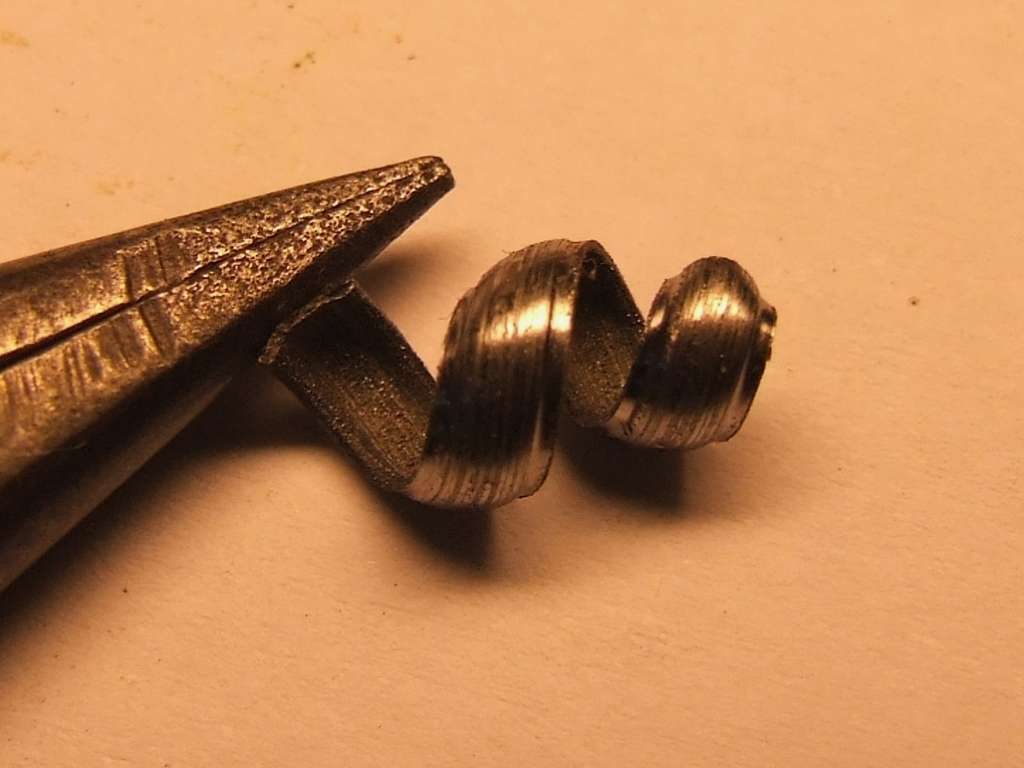
                                          Like this, although a bit more than just a curl:

                                          Parting_Off_Swarf

                                          Julie

                                          #836202
                                          JasonB
                                          Moderator
                                            @jasonb
                                            On Brian John Said:

                                            If you had both an indexable parting tool and a HSS parting tool on hand, which would you use to part off on a Chinese mini lathe (14X7) :

                                            1. Aluminium

                                            2. Brass

                                            3. Steel


                                            That would really depend on what HSS or Insert you have to hand as well as the diameter of the work.

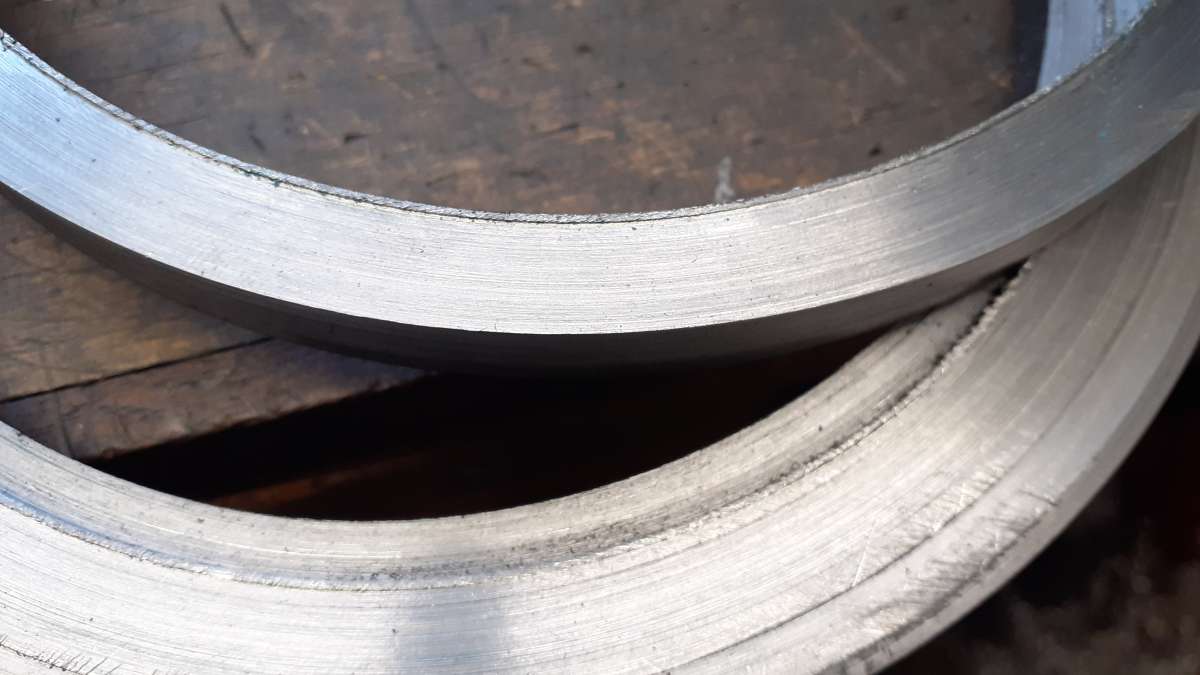
                                            Large diameters tend to cause the electronic variable speed machines to suffer so a narrower tool would be better, for instance I have a 1.2mm wide HSS blade and a 1mm wide Insert. Both would put minimal load on the machine but the insert would allow me to run faster so the machine would be less likely to stall, or cook the motor or board. The downsid eif the tools can be flexible and you can’t reach as far, sometimes doing two cuts side by side first and then carrying on in themiddle of the two will get you there with a narrower tool and also give swarf clearance.

                                            An example here 200mm diameter thick wall steel tube cut with a 1.2mm x 6mm HSS blade as it was the best compromise between depth and not getting chatter/stalling had I used a wider insert that would also have got the depth I needed

                                            20230112_145504

                                            On smaller diameter work I could use my GTN-2 insert at 2.2mm wide or my 3/32″ wide HSS as the cutting speed on the smaller diameter won’t give the lathe problems. But if I were making a lot of small brass fittings why waste more than twice the amount of expensive brass when a narrower cut would do so I would opt for the 1mm insert.

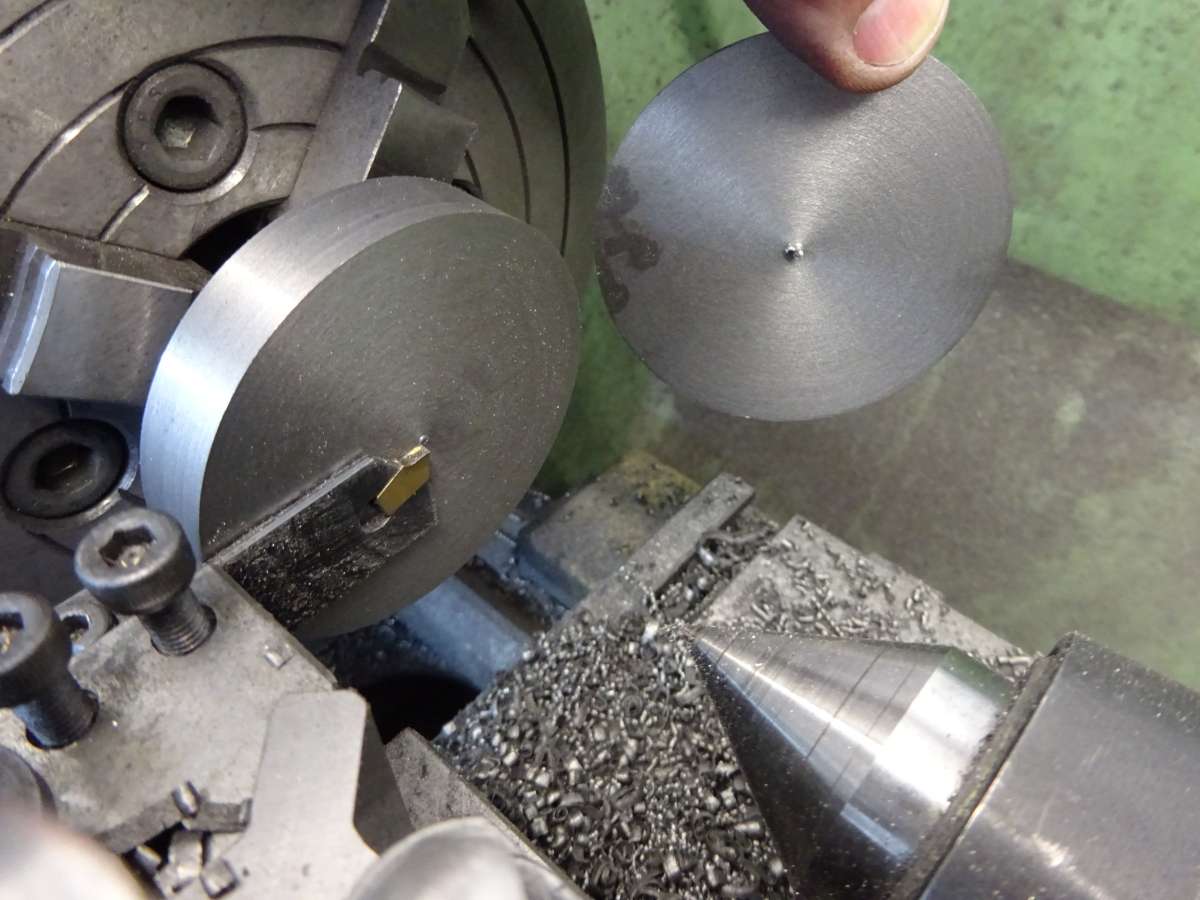
                                            This smaller 75mm dia piece of cast iron allowed a wider insert to be used as the motor was able to run faster and therefore more in it’s “happy band”. Neither of the narrower tools would have reached.

                                            DSC02442


                                            #836234
                                            IanT
                                            Participant
                                              @iant
                                              On Brian John Said:

                                              If you had both an indexable parting tool and a HSS parting tool on hand, which would you use to part off on a Chinese mini lathe (14X7) :

                                              1. Aluminium

                                              2. Brass

                                              3. Steel


                                              I can’t claim to be a ‘Parting’ expert I’m afraid BJ but I generally use HSS on brass (as I’m often working with small brass parts) and use (hand-ground) HSS tools with very narrow (<1mm) blades, although of course they are not cutting very deep (2-3mm). I use proprietary (tapered) HSS parting blades for my larger non-ferrous (and medium ferrous) work, set-up in an appropriate holder (all being front mounting). I’ve also ground these blades with different back-rake angles for brass and steel. I don’t turn very much aluminium in my work.

                                              For larger ferrous parts, I have a rear mounted insert tool that I’ve cut 3″ dia (free cutting) steel with relative ease (but not without a degree of ‘nerves’). I also often cheat and will just cut a ‘groove’ and then finish the cut with a hack-saw – and of course (for just cutting/sizing stock to workable size) I have both a power hacksaw and a small bandsaw.

                                              So in summary, the size of work is a factor, as is the material and at what stage of the work you are at – for instance how much stock you have to ‘hang-on’ to.  In my experience, there’s no one single ‘best’ parting solution, so the answer I think, is that “it depends”…  🙂

                                              Regards,


                                              IanT


                                              #836252
                                              Neil Wyatt
                                              Moderator
                                                @neilwyatt
                                                On Brian John Said:

                                                If you had both an indexable parting tool and a HSS parting tool on hand, which would you use to part off on a Chinese mini lathe (14X7) :

                                                1. Aluminium

                                                2. Brass

                                                3. Steel


                                                It depends on many factors. I have tiny hand-ground HSS tools for delicate work and ones with shaped ends for grooves. An assortment of indexable and HSS that I choose according to the job in hand. I’ve even used my brazed carbide parting tool once or twice!

                                                #836263
                                                SillyOldDuffer
                                                Moderator
                                                  @sillyoldduffer
                                                  On Brian John Said:

                                                  If you had both an indexable parting tool and a HSS parting tool on hand, which would you use to part off on a Chinese mini lathe (14X7) :

                                                  Neither, though I exaggerate for effect!  On my mini-lathe I preferred to hacksaw and face-off.  Wastes a little time and material but is reliable.

                                                  Trouble is parting off puts a lot of pressure on the tool, which bends and levers the tool-post and saddle, causing the cutting edge to dip into the part, where it can dig in.   Lack of rigidity is a fundamental problem on small lathes because they, and the cutters, are relatively lightly built – not enough mass.  Parting-off on a small machine requires a skilled operator, sharp narrow tool, a steady feed-rate, setting up to minimise unwanted movement in the gibs and elsewhere, plus careful management of swarf and cutting fluid.  Tricky!

                                                  A solid rear-tool post helps enormously, but mini-lathes don’t come with a slotted saddles.  Also, mine didn’t have a good saddle lock.  The front tool-post is bendy – put a DTI on it, and push the tool to see how much it moves!

                                                  On my mini-lathe, I parted-off Aluminium, Brass and Steel with the same small HSS blade.  Main reason being the blade was narrower than the insert I had, and less force is needed to cut narrow slots.  Not because HSS is better than carbide.  But I only parted-off if I had to!  Sawing avoided hassle.

                                                  Learned loads from my mini-lathe, the most important lesson being it was too small for what I wanted to do.  I upgraded to a WM280 which is rather bigger than a Super7.  Parting-off on a WM280 is a doddle.  Even in my clumsy paws parting manually from the front  almost always works.  Parting-off from the rear under power with wide carbide inserts, is bet money reliable, apart from when I wedged a blade holder open and didn’t notice…   A WM280 can part off at high-speed with carbide – big motor, automatic feed, heavy saddle, and a chunky Gibraltar tool-post.  Hardly any skill needed.  A friend’s Harrison, similar bed and swing to the WM280, but at least twice the weight with a 5HP motor, parts off like a hot knife through butter, super easy to drive. Takes a real man to part-off on a mini-lathe!

                                                  🙂

                                                  Dave

                                                  #836280
                                                  Julie Ann
                                                  Participant
                                                    @julieann
                                                    On SillyOldDuffer Said:

                                                    …Takes a real man to part-off on a mini-lathe!

                                                    Oh dear, just as well I don’t have a mini-lathe then.

                                                    Julie

                                                    #836284
                                                    JasonB
                                                    Moderator
                                                      @jasonb

                                                      Don’t know what it makes me when I part on in the Unimat3 Micro-lathe but you won’t see me with my pants outside my tights.

                                                      But it’s all relative as a smaller machine is generally not going to be parting off as large an item as you may find being turned on a larger lathe.

                                                      As for sawing off, yes I do that a lot but it does depend again on the part, take that 1.5mm thick slice of cast iron in my earlier post, had I sawn it off it would not be so easy to face the sawn side even making use of my soft jaws so that is why the option to part it off was used, once the pip was filled off it was good enough for paint.

                                                    Viewing 25 posts - 26 through 50 (of 54 total)
                                                    • Please log in to reply to this topic. Registering is free and easy using the links on the menu at the top of this page.

                                                    Latest Replies

                                                    Home Forums Beginners questions Topics

                                                    Viewing 25 topics - 1 through 25 (of 25 total)
                                                    Viewing 25 topics - 1 through 25 (of 25 total)

                                                    View full reply list.