Flycutting

Flycutting

Home Forums General Questions Flycutting

Viewing 12 posts - 1 through 12 (of 12 total)
  • Author
    Posts
  • #621564
    peter spain
    Participant
      @peterspain73968

      Hi All

      Thanks to all for the kind responses to my scaling question.All very helpful.

      Recently i have been trying out fly cutting mainly to try to reduce the expense of having to buy milling cutters. I made a tramming bar for my Axminster mill and set the mill up to within a .001.I have an understanding of the tool geometry but still have this problem of cutting on the backstroke if that makes sense.All ok on ally or brass but it doesnt like steel.Also i can only use very fine cuts which is time consuming.

      Any ideas ?

      #28926
      peter spain
      Participant
        @peterspain73968
        #621566
        Nigel Graham 2
        Participant
          @nigelgraham2

          Even 0.001" out of perpendicular is still enough to cut on the "backstroke", if the head is angled "backwards" relatively to the table travel, and to produce a concave result up to 0.001" deep.

          I do use fly-cutting, sometimes, but don't really like doing so as it hammers the machine very heavily. It is all right for very fine finishing work but not bulk metal removal, except perhaps on a hefty great industrial machine with power-feeds, and made to handle such arduous duty.

          My preference is to use fluted cutters… and re-sharpen them!

          #621568
          Hopper
          Participant
            @hopper

            Milling cutters are so cheap from Aliexpress.com why bother with flycutting in this day and age? I don't even bother to sharpen them. Regard them as consumables at today's prices.

            Edited By Hopper on 18/11/2022 01:10:01

            #621577
            JasonB
            Moderator
              @jasonb

              What mill do you have? On the smaller benchtop mills you are only likely to take off say 1mm on the non ferrous metals and up to 0.5mm on steel depending on diameter of the swept circle.

              Correct geometry of the cutter also plays a part, often those not use dto grinding a tool will end up with little or no clearance so the edge of teh tool rubs rather than cuts and it will tend to get pushed away particularly by harder material rather than cut.

              I used to flycut quite a lot but now tend to reach for an insert shell or face mill. Apart from not needing sharpening as much as HSS you can run them faster and feed 4-6 times faster than a single point tool which makes it easier to keep a constant feed.

              Bit of flycutting on the SX2.7, EN3 steel

              #621582
              Ramon Wilson
              Participant
                @ramonwilson3

                Unless a flycutter is set such that it cuts only on the front stroke you will get this situation. Doing that increases the other problem with flycutting, that of a concave surface.

                There is also the temptation to make the fly cutter as large as possible to cover the area machined in one sweep. This in itself slows things down as the diameter requires a slow rotational speed which in turn has an effect on surface speed. Depth of cut is also minimal.

                It is much better to mill a flat surface with smaller cutters but I appreciate your concern regarding the cost. Making a much smaller diameter fly cutter is one answer – you can convert an old, say 1/2 end mill or slot drill by grinding the teeth, save one, back and sharpening the remaining tooth much like you would a flycutter tool. This works but of course again only for shallow depths but everything speeds up considerably. Yes the surface finish doesn't not look so nice to some eyes but it will be much flatter and achieved far quicker.

                I'm fortunate enough to have a variety of cutters to call on but personally I mostly use HSS 6mm FC3 'Throw Away' cutters for this type of operation, reasonably cheap and readily available compared with standard end mills/slot drills.

                Carbide cutters will give you a longer life but are easily chipped/shattered and not likely to be reclaimed by the kit in the average workshop so I avoid them save for when a situation calls for it.

                There is nothing wrong in flycutting but it's not the easy alternative that it's sometimes seen as.

                Best – Tug


                PS I am not suggesting by my first statement above that this is how a fly cutting operation should be set up – merely pointing out that this is the only way to eliminate cutting on the backstroke which, due to the nature of the operation, even with perfectly trammed mill, will occur – the larger the diameter the more it will do so.

                Edited By Ramon Wilson on 18/11/2022 08:42:51

                #621590
                JasonB
                Moderator
                  @jasonb

                  It is possible to tram a mill so that leading and trailing edges cut equally which gives an almost holographic effect but it is very hard to get right.

                  flycut.jpg

                  So if you do find one one side cuts deeper than the other you can make use of that by feeding so that the trailing edge takes a fine finish cut after the leading edge has removed the bulk.

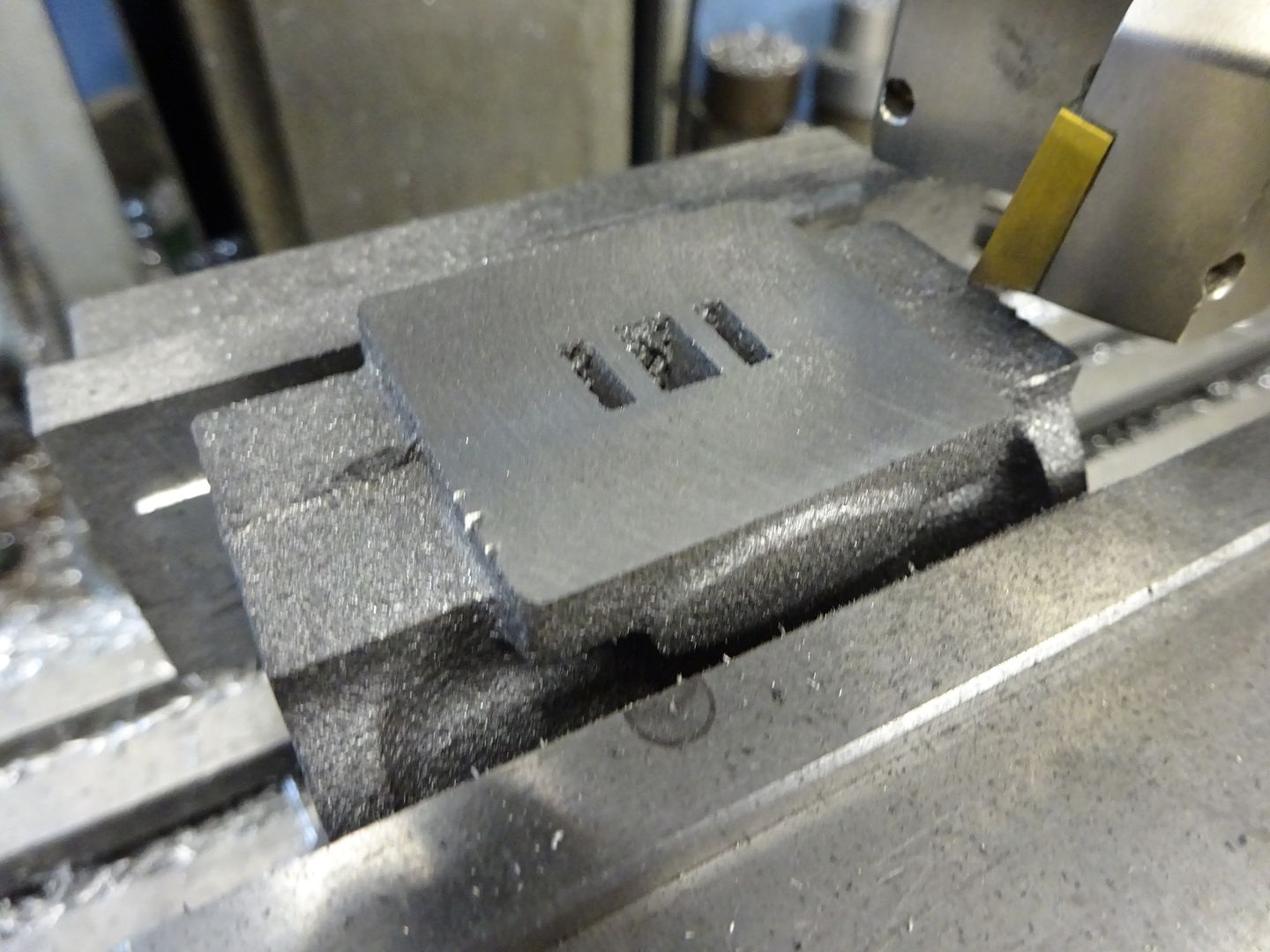
                  Though as Ramon says this can leave a very minute concave surface which is why I mostly use the flycutter or insert head to get rough sawn blocks down to a usable and square size then where a very flat surface is needed change to a SHARP milling cutter and make a series of passes, typical would be this Stuart cylinder where it was roughed out with inserts which will not get blunted by any skin or chilled areas, then finished with a 6mm 3-flute cutter which will have less work to do and keep replacement costs down


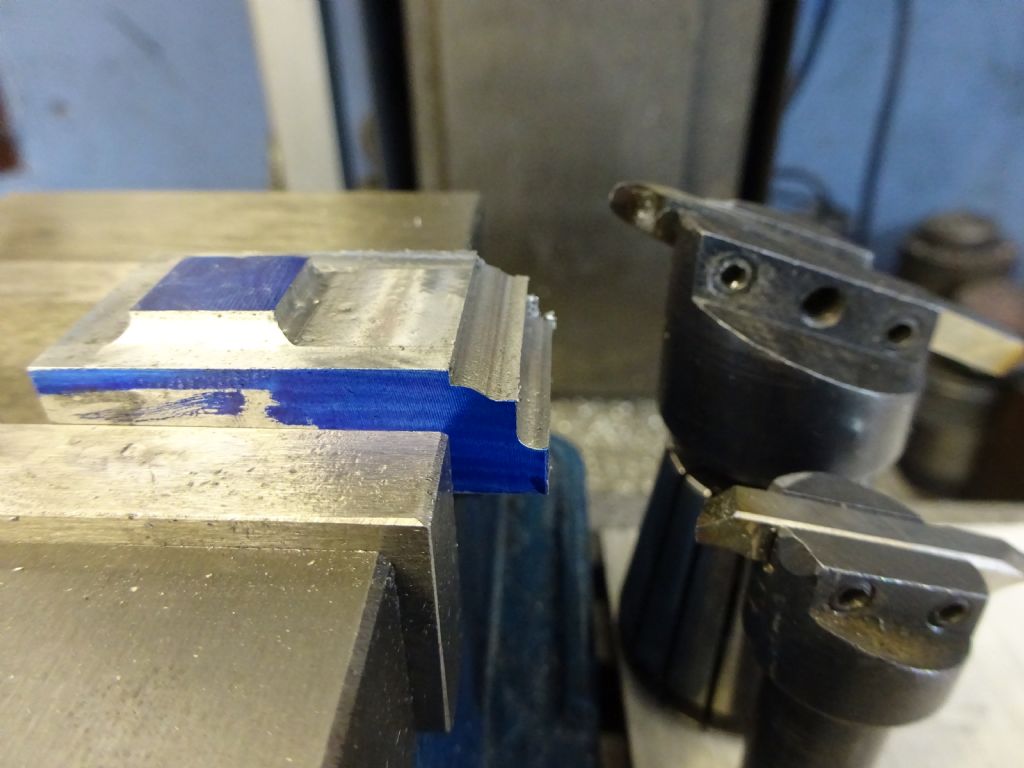
                  Although I showed quite a large flycutter in the earlier video my usual weapons of choice are from a set of three which I think have heads of approx 20, 30 and 40mm. the 30 get used the most with 6mm HSS shown here being used as a single point tool to cut moulded profiles and fillets. You can spin these faster than a large one without over speeding the cutting tip so feed as also faster

                  photo 89.jpg

                  Edited By JasonB on 18/11/2022 09:22:27

                  #621599
                  bernard towers
                  Participant
                    @bernardtowers37738

                    Now who said shapers were out of date?

                    #621613
                    noel shelley
                    Participant
                      @noelshelley55608

                      Well done Bernard , you read my thoughts and beat me to it ! Noel.

                      #621616
                      Anonymous

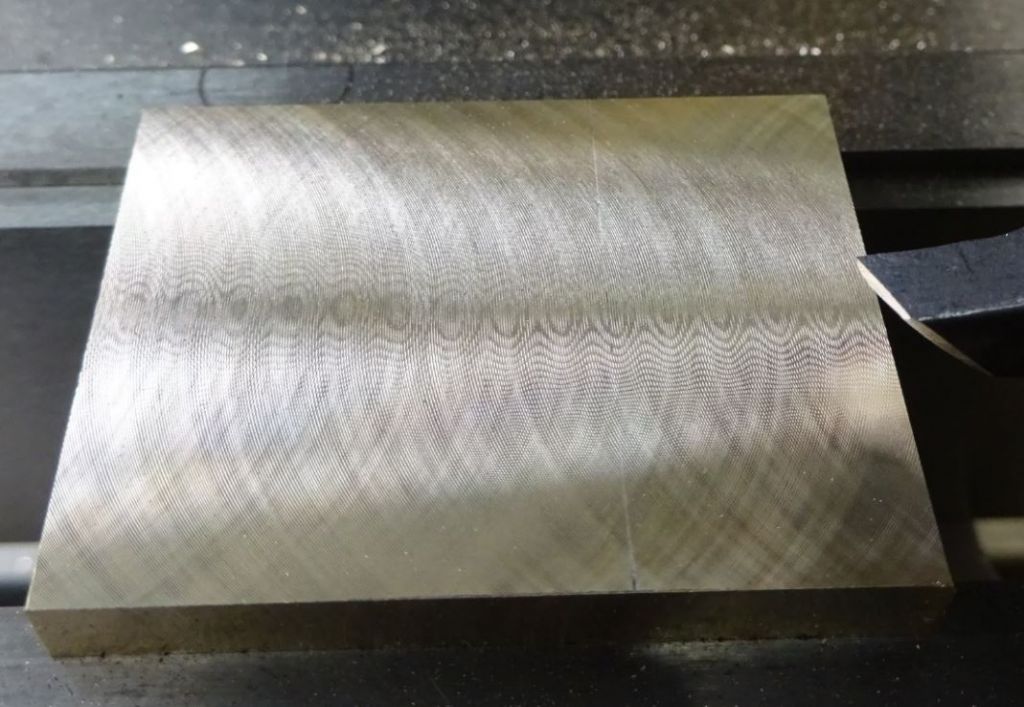
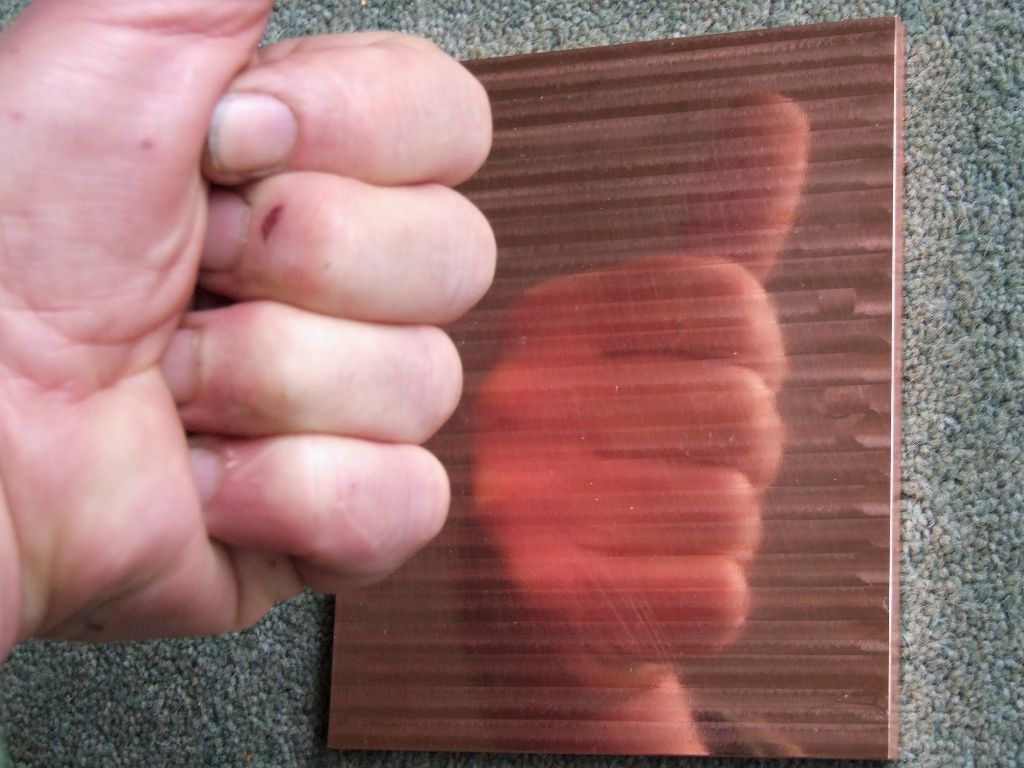
                        I don't bother with flycutting flat surfaces for the reasons given above. I find that milling cutters give flatter, and better finished, surfaces:

                        mirror finish.jpg

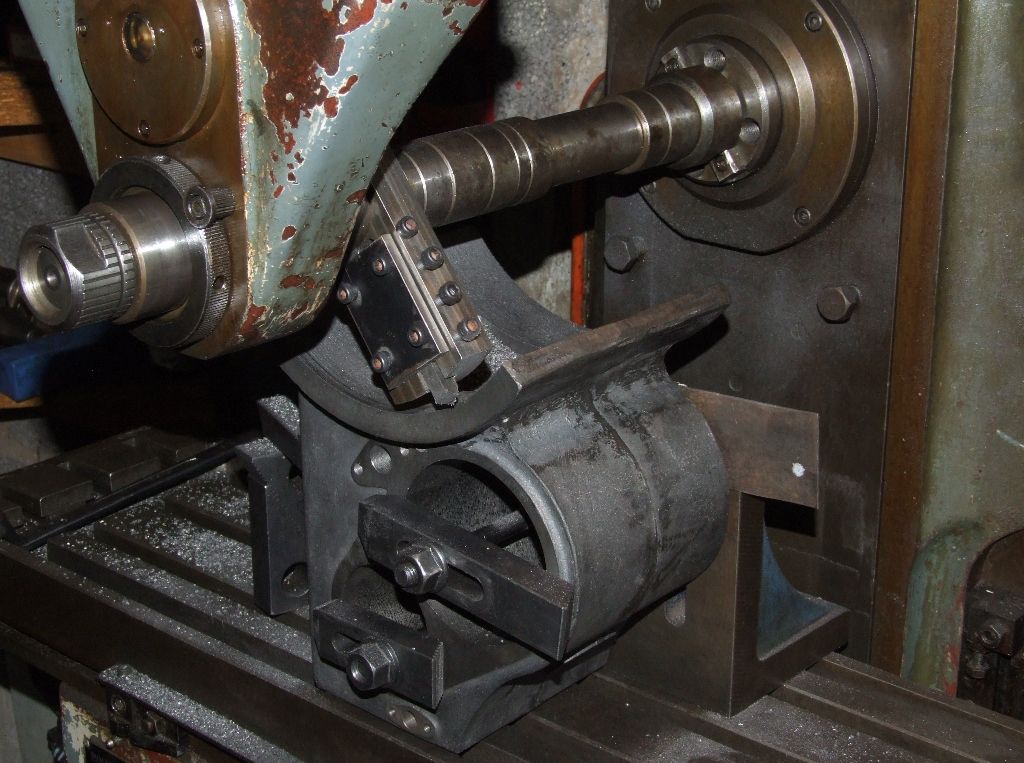
                        I only use flycutting when I need a large curved surface:

                        cylinder_flange_me.jpg

                        In the above the DOC was 40 thou and feed was 8 thou per rev. The flycutter is homemade with a HSS toolbit.

                        Andrew

                        #621622
                        Ramon Wilson
                        Participant
                          @ramonwilson3

                          Well what's a milling machine if it isn't a shaper Bernie wink the only difference is the cutters rotate laugh

                          Lovely finish on that example Andrew – is that copper or phosphor bronze?

                          Nice set up in that last pic too but you have to admit you have a very sturdy machine there with plenty of power to boot for a good cut like that


                          Tug

                          Edited By Ramon Wilson on 18/11/2022 11:34:15

                          #621649
                          Bazyle
                          Participant
                            @bazyle

                            Do you get the problem left to right and right to left? If so it is not the tramming (not all) and indicates flexing in the mill owing to too deep a cut or incorrectly sharpened tool.
                            Instead of using an endmill just make a small diameter flycutter. They do not have to be six inches wide. You can make one half an inch wide and take multiple passes just like an endmill.

                          Viewing 12 posts - 1 through 12 (of 12 total)
                          • Please log in to reply to this topic. Registering is free and easy using the links on the menu at the top of this page.

                          Latest Replies

                          Home Forums General Questions Topics

                          Viewing 25 topics - 1 through 25 (of 25 total)
                          Viewing 25 topics - 1 through 25 (of 25 total)

                          View full reply list.