first cut problem

first cut problem

Home Forums Beginners questions first cut problem

Viewing 18 posts - 26 through 43 (of 43 total)
  • Author
    Posts
  • #824435
    cedric 1
    Participant
      @cedric
      On SillyOldDuffer Said:
      On Roderick Jenkins Said:
      On SillyOldDuffer Said:

      …  One caveat: Andy’s Myford was designed when HSS was king, and the machine is a bit slow and underpowered for carbide.   Jason and I have Chinese WM280’s; they’re heavier, faster and more powerful than a Super 7, making it easier for us to get good results from inserts.  Carbide performs best when driven hard and deep with gusto!  Something else to explore.

      Dave


      Really Dave!  You spoilt a good reply by tacking on some outdated generic drivel about Myfords and carbide tooling.  Myford 7 series lathes are perfectly happy with carbide insert tools.  I never go above 700 rpm for general turning and am very happy with the results I get on all metals.  CCGT tips are excellent for a good finish.  They do not need to be driven hard and deep, that will break the very sharp cutting edge.

      all the best😊

      Rod

      Sorry Rod, not true.  Well known that carbide inserts perform best when driven hard and deep at high-speed: read the specs. That one hobbyist with a slow lathe doesn’t go above 700rpm isn’t best practice.

      If it softens the blow, whilst a WM280 is faster and more powerful than a Myford, it too is slow and weak by carbide insert standards.  Nonetheless I get good results from them.  I didn’t rubbish Myfords, I said carbide is easier on my machine.

      Point is it’s easier to get good results from carbide with a fast lathe than a slow one, and that a beginner might be disappointed by inserts on a slow machine.

      Plenty of lathes inferior to Myfords: pre-war machines designed for HSS don’t work well with inserts because they’re too slow.  Chaps occasionally pop up claiming HSS works better than carbide: one explanation is their lathe isn’t fast enough.

      To me lathes are just tools, and I shine a cold hard light on them.  No emotion.  Myfords have many good features, but they are far from perfect.  May be shocking to be told they have shortcomings, but it is obviously so.  So do all the others!

      Ever thought loyalty to the Myford brand might be “outdated generic drivel”?  In 2025 there are many better alternatives.   Chinese hobby lathes offer more choice and are cheaper.  Second-hand industrial lathes are better specified and affordable due to CNC and industry moving abroad.  Myford sit between.  Though they have technical issues, I’d say their main fault is “too expensive for what you get”.

      🙂

      Dave


      Nice way for a moderator to alienate 50 per cent or so of of your forum’s demographic , calling their preference in lathes “outdated generic drivel”,  whatever that nonsensical phrase may mean.

      Like Rod , my lived experience is that the Myford ML7 cuts beautifully with carbide tooling. How you can say Rod’s lived experience of the same is “not true” is beyond me. It just seems rude, and your non sequitur arguments fail to offer any justification for your obtuse premise.

      Earlier pre-war Brit lathes such as the Drummond M Type do struggle a bit with carbide tooling not because of speed — they all do about the same rpm as the ML7 — but in one part due to less rigid construction in the area of spindle diameter and headstock bearings and mounts, and inthe other part due to the old flat belts slipping under the increased cutting loads of carbide especially under heavy cuts or with “blunt” MT inserts. Those old ladies really do like a razor sharp HSS knife tool for best results, in my lived experience, having also owned a Drummond for many years in the past.


      #824437
      Fulmen
      Participant
        @fulmen
        Wow, who knew this would cause such a commotion?   🙂
        On SillyOldDuffer Said:

        Well known that carbide inserts perform best when driven hard and deep at high-speed

        Sure, but that does not mean it doesn’t work fine at lower loads as well. Running carbide slow on a flimsy machine might not give you the best utilization of the cutters, but you might still work faster than with HSS.

        On the other hand, most of the inserts sold with/to cheap tooling isn’t the sharpest type. And yes you can get them for most shapes, but it’s expensive to stock up on a lot of different types. So if you want a sharp cutter for finishing work HSS is still a good bet.


        #824461
        Roderick Jenkins
        Participant
          @roderickjenkins93242
          On SillyOldDuffer Said:

          …Ever thought loyalty to the Myford brand might be “outdated generic drivel”?  In 2025 there are many better alternatives.   Chinese hobby lathes offer more choice and are cheaper.  Second-hand industrial lathes are better specified and affordable due to CNC and industry moving abroad.  Myford sit between.  Though they have technical issues, I’d say their main fault is “too expensive for what you get”.

          🙂

          Dave


          Oh dear, did I say my Myford lathes were the best thing since sliced bread?  I just pointed out that your comment about the 7 series lathes being unable to use carbide tooling efficiently was a cliché.  The OP has a Myford and is clearly unused to turning so your comment was simply bad advice.  Moreover, it also suggests that he had not “… been fortunate and landed myself with a myford lathe and a milling machine”.

          Again,

          all the best,

          Rod

          #824475
          Andrew Crow
          Participant
            @andrewcrow91475

            I think this to-ing and fro-ing could go on for ever and still never suit everyone, let’s say that most tools will work on most machines, some combinations maybe better than others.

            At end of the day most of us are doing this for a relaxing hobby so what tools or machines we use is a personal choice developed by experience and what suits our pockets.

            Perhaps the OP could firstly let us know if his problem has been resolved or exactly what further advice he needs.

            Andy


            #824499
            Martin Connelly
            Participant
              @martinconnelly55370

              Don’t have a Myford or a small cheap Chinese lathe but I do use carbide threading inserts and I never run them at anything near 700rpm. I do use back gear for higher torque and low rpm and my highest rpm in back gear is 183rpm.

              Martin C

              #824506
              Peter Cook 6
              Participant
                @petercook6

                Like Martin, I don’t have a Myford or a cheap Chinese lathe. Mine is a very small Taig, limited in cut depth but capable of high speeds (it will go up to 10,000rpm). The advice to use CG** series inserts, which JasonB gave me just after I got it,  was by far the most useful general advice I have got. The little super sharp inserts work very well on all materials, give a nice surface finish, and mean that my limited HSS grinding skills are not a barrier to getting on with things. If it’s not cutting well its the operator not the tool grinder!

                I have passed his advice on to other micro late users

                #824508
                not done it yet
                Participant
                  @notdoneityet

                  I both agree with Dave S and Jason B.

                  I’m not an expert, like them – by any means – but I just go the way I feel appropriate for me.  Like part of my purchases, at the recent Midlands Exhibition, was for a pack of CCGT inserts from Jenny at the JB Cutting stand.

                  Relatively expensive for the hobbyist, if easily damaged by inexperience, but I’ve found them a good investment.   To say carbide is not sharp is totally out-dated, with these inserts.

                  As far as machining and cutters go, there are recommended surface cutting speeds for all sorts of cutter/material combinations.  My lathe can be wound up to about 2000rpm, but that would be totally inappropriate for something of 100mm diameter!  I’ve only got about 750W to play with, for a start!

                  #824511
                  David George 1
                  Participant
                    @davidgeorge1

                    I have an M Type Myford Drummond lathe with a top speed of 800 RPM and I use mainly HSS tooling but also use carbide tiped tooling for tough material and hardened material. Here is my lathe taking a nice cut of about 0.100″ depth in stainless.    https://youtu.be/vzrhyDr4JBM?si=BDcXeEjd-MYK1TXG for

                    David

                    #824545
                    old mart
                    Participant
                      @oldmart

                      For smaller lathe owners who would like to try carbide inserts, I recommend DCGT 07 intended for aluminium and CCGT 06 also for aluminium. They can be used on steel also with small depths of cut up to 0.002″ and work with slower machines. Care has to be taken with them or the edges will get chipped, and in these sizes the DCMT 07 and CCMT 06 intended for steel are also sharp edged enough because of their small size to work well with older machines. Check out ebay, since the Chinese inserts are better than they used to be and still very cheap. Both types have two cutting edges.

                      #824549
                      andyp123
                      Participant
                        @andyp123

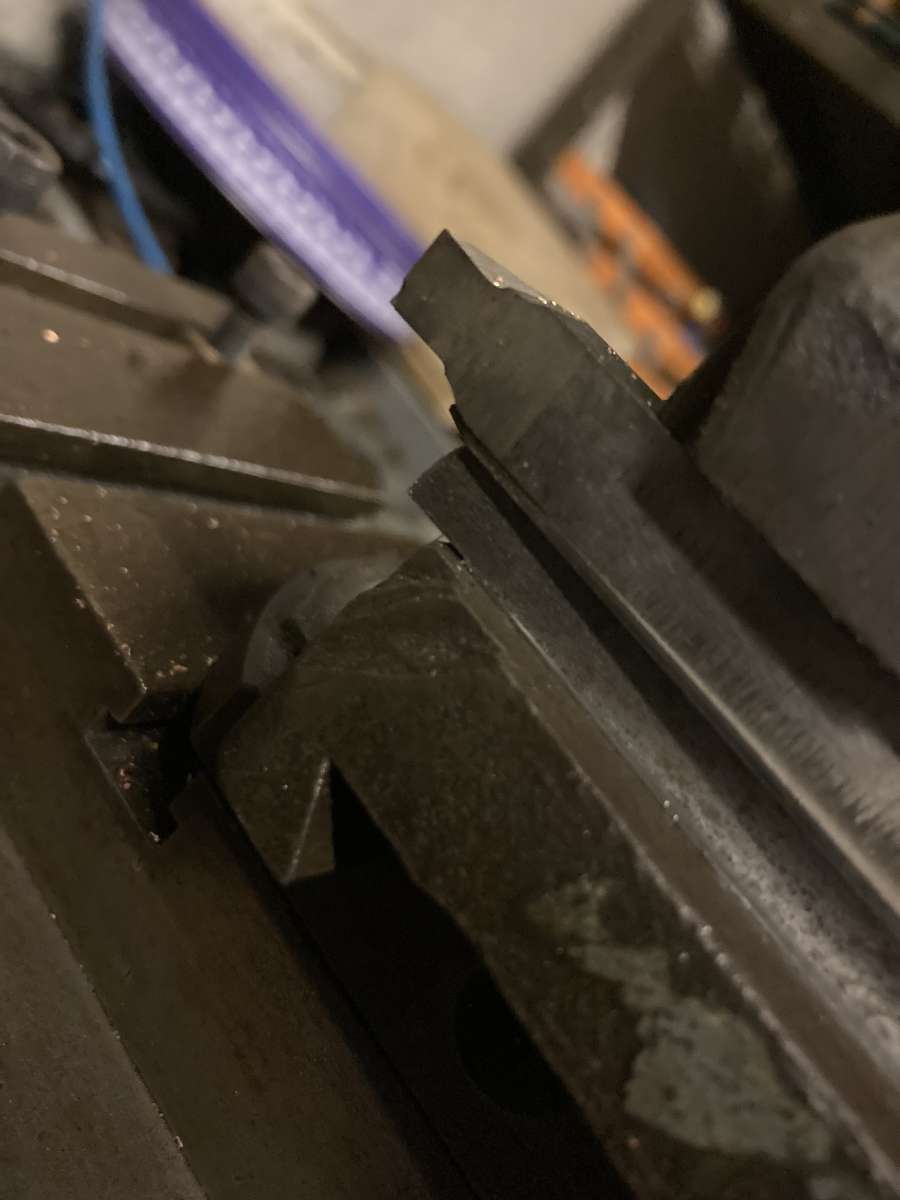
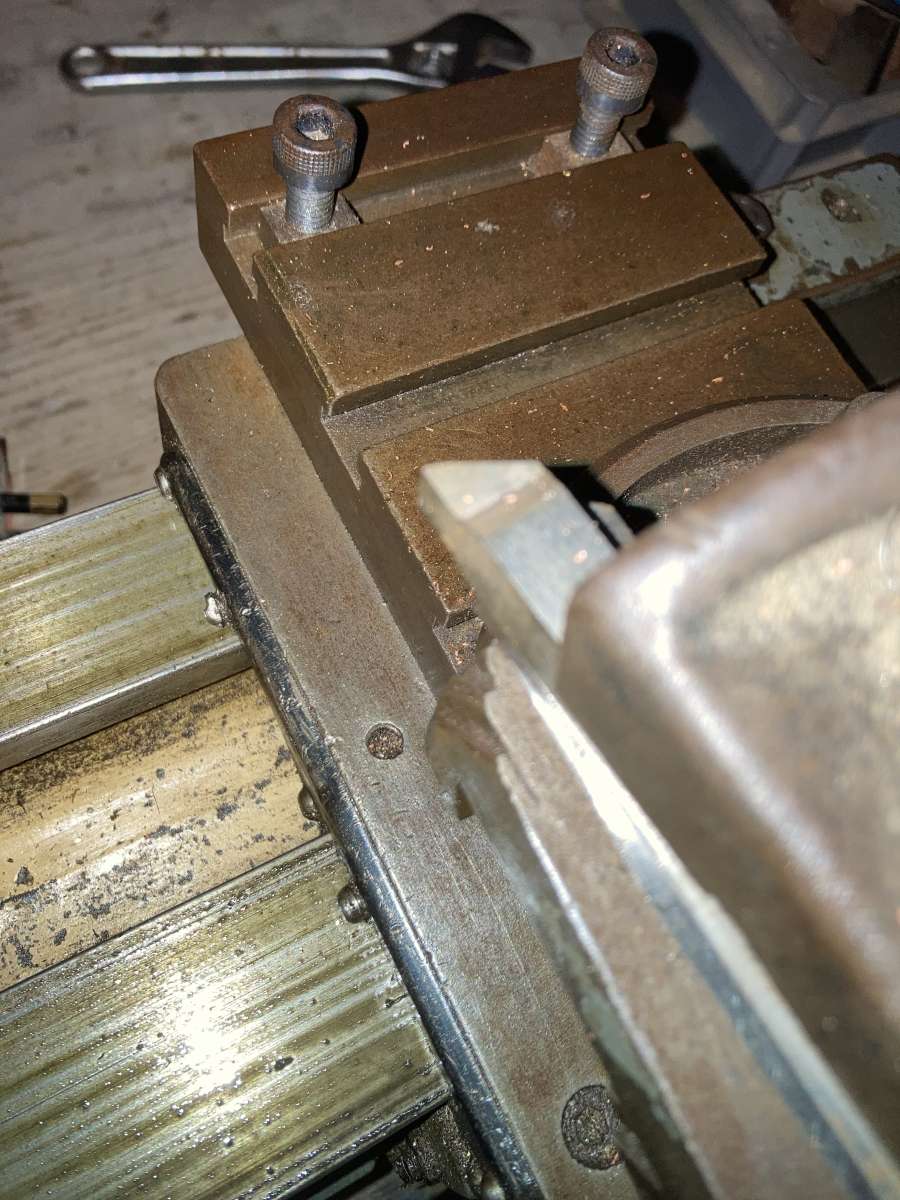
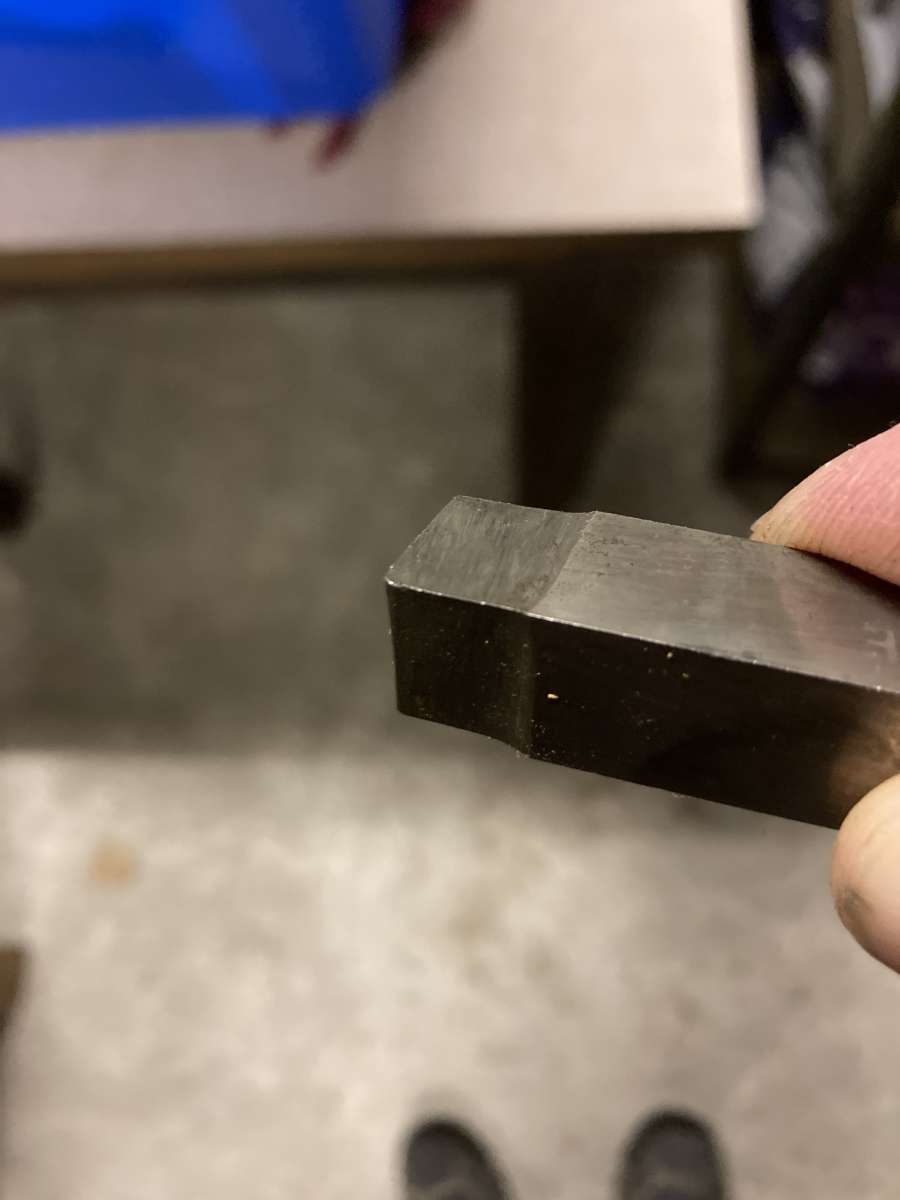
                        I’ve followed the thread with interest and slightly daunted by the differing advice. Anyhow, there was a request for a photo of the cutter – the 1st and 2nd photo is the cutter in the tool holder which was the second one i used after i wasn’t getting good results with the first cutter (3rd photo held in my hand).

                        Tomorrow i am going to try get some mild steel – i think i started off on difficult material.

                        Once again, many thanks and it is a steep learning curve.

                        Andy


                        IMG_5518IMG_5517IMG_5522

                        #824556
                        Dave Halford
                        Participant
                          @davehalford22513

                          The last one is blunt, you should be able to shave your nails.

                          #824562
                          cedric 1
                          Participant
                            @cedric

                            And the first one looks like it is laid over sideways. Needs rotating 90 degrees to bring the cutting edge up to the top left hand edge.


                            #824568
                            JasonB
                            Moderator
                              @jasonb

                              I’d agree with cedric, the one that did not cut has been ground to cut a groove and is mounted on it’s side.

                              The last is the right way round but not the sharpest, you should not be able to see that slightly shiny corner where the horizontal and vertical faces meet. A rub on an oil or diamons stone will help it no end.

                              Both tools also look to have a near flat top face which is more suitable for brass, the bronze you were cutting really needs more “top rake” that is where the top face slops downwards from the cutting edge. 5-7degrees would be a good general angle without having to grind specific tools for each type of metal. You will need to grind that amount of material away not something you can do with just a stone.

                              #824570
                              JasonB
                              Moderator
                                @jasonb

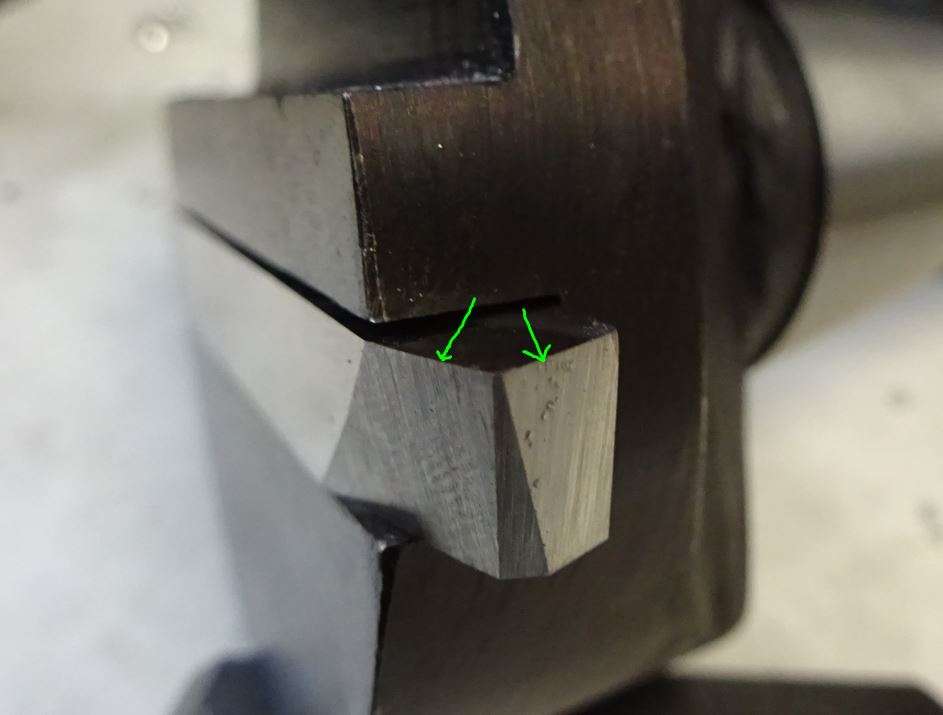
                                Here is a photo I had on file, where the top meets the sides there is no shiny “blunt” area, it should be a clean crisp junction.

                                crisp

                                Shaped on a belt sander for those interested.

                                #824572
                                Dave S
                                Participant
                                  @daves59043

                                  I found this pdf from Sherline very useful when I started:

                                  https://www.sherline.com/wp-content/uploads/2015/01/grinding.pdf

                                  Dave

                                  #824577
                                  Andrew Crow
                                  Participant
                                    @andrewcrow91475
                                    On Dave S Said:

                                    I found this pdf from Sherline very useful when I started:

                                    https://www.sherline.com/wp-content/uploads/2015/01/grinding.pdf

                                    Dave

                                    What an excellent piece of information for any beginner, the details apply regardless of lathe size.

                                    Andy

                                    #824585
                                    Mark Easingwood
                                    Participant
                                      @markeasingwood33578

                                      Here are a couple of YouTube videos showing how to grind a knife tool, (the most used tool), just click on the links, or right click and open in a new tab.

                                      Joe Pie

                                      This Old Tony

                                      Hope these help.

                                      Mark.

                                      #824736
                                      Howard Lewis
                                      Participant
                                        @howardlewis46836

                                        Echoing what has already been said, learn on free cutting mild steel (copper based alloys can be difficult)

                                        Carbide will work well on older machines at low speeds, and produce good finishes, but usually needs a little experience to do that. (I use moulded carbide for roughing and boring, HSS for finishing, but that’s just my method of working. Either produce acceptable finishes).

                                        The swarf doesn’t have to come off thick and blue, although that is why industry, with heavy high speed machines use it. Hobby machines lack the rigidity and speed for those sorts of metal removal rates.)

                                        Carbide tips with a M in the code (Such as CCMT0604) are moulded and have rounded rather than sharp edges, The G on a code signifies a ground, and therefore sharp edge.

                                        As a learner, FWIW, grind HSS, with clearance angle of about 5 degrees (Don’t be excessive, that weakens the cutting edge and encourages rapid wear)  It will work and you will learn.

                                        The tool must be sharp, and set on centre height.

                                        For a good finish, light cuts and slow feed. 0.002″ per rev feed will produce a 1250 tpi helix. The depth will depend on what cut you have put on. With a properly ground tool, on centre height, you could take just 0.0005″ a side, that combination should produce a good surface finish.

                                        If it doesn’t examine everything carefully.

                                        Deep cuts and high feeds are for roughing, at the expense of tool life.

                                        Surface finish can be improved by stoning a SMALL radius onto the tool edge

                                        Part of the learning curve is to become adept at rotating handwheels slowly and steadily (The chances are that you can only arrange a power feed on your Myford for turning but not facing; so you need that skill anyway.

                                        Setting up a power feed entails more learning, to work out the ratio between chuck and leadscrew.

                                        Best left until you have become a little more skilled in lathe operation.

                                        But do buy some books on lathework. Stan Bray, Harold Hall, or L H Sparey are suitable authors for a Myford owner. They are useful references. A set of Zeus charts will be useful in the future. Mine are over 60 years old, and still consulted regularly

                                        Howard

                                      Viewing 18 posts - 26 through 43 (of 43 total)
                                      • Please log in to reply to this topic. Registering is free and easy using the links on the menu at the top of this page.

                                      Latest Replies

                                      Home Forums Beginners questions Topics

                                      Viewing 25 topics - 1 through 25 (of 25 total)
                                      Viewing 25 topics - 1 through 25 (of 25 total)

                                      View full reply list.