Electric motor help needed

Electric motor help needed

Home Forums General Questions Electric motor help needed

Viewing 19 posts - 1 through 19 (of 19 total)
  • Author
    Posts
  • #228694
    ANDY CAWLEY
    Participant
      @andycawley24921


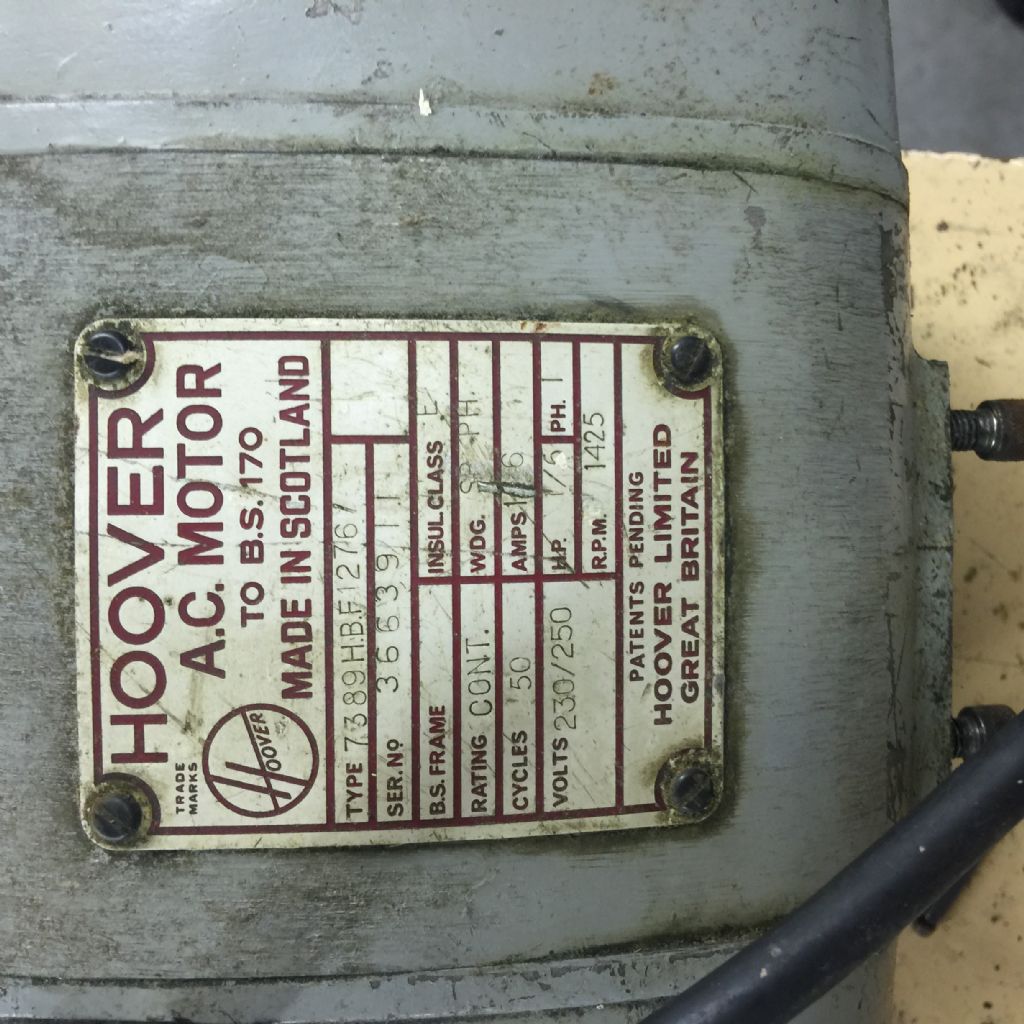
      This electric motor is fitted to my Kennedy power saw

      .image.jpeg

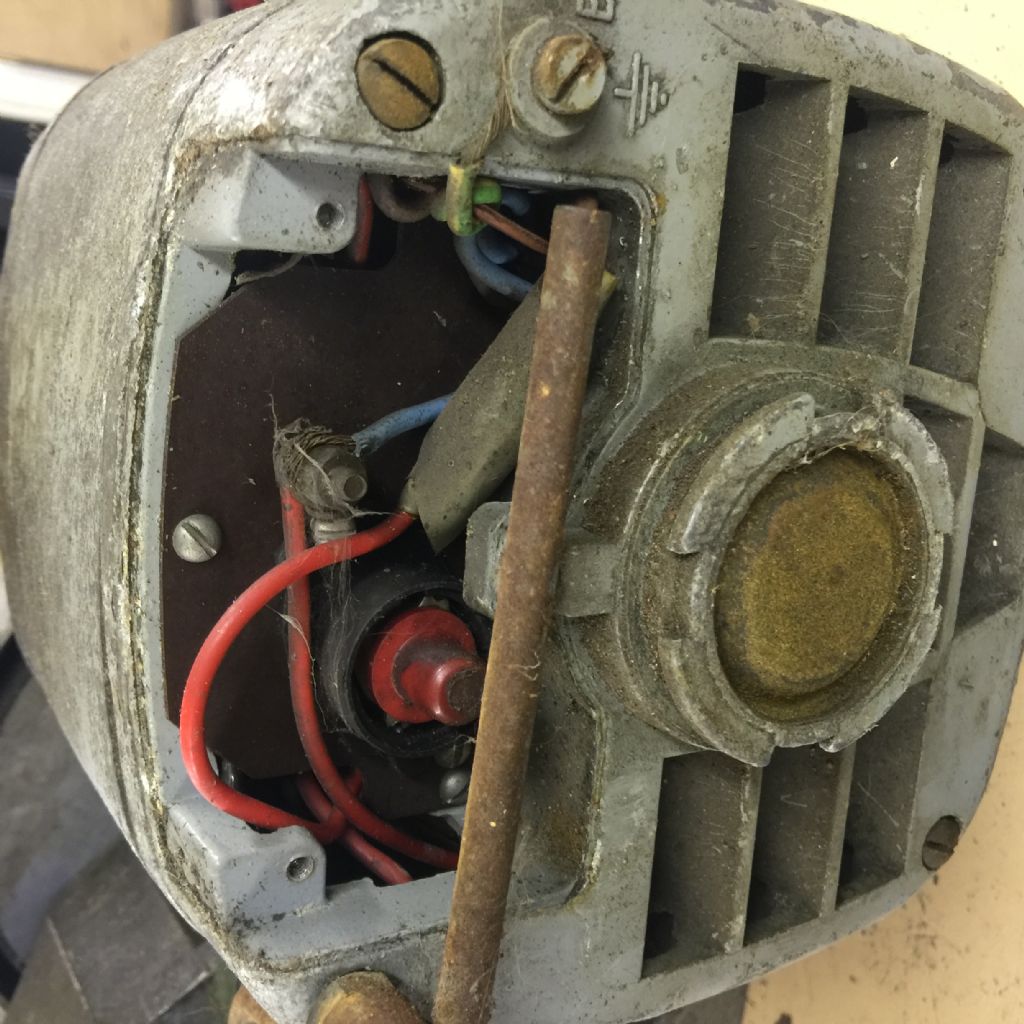
      It only runs for a few seconds then it trips out. It can be reset by pressing the red button.

      image.jpeg

      On resetting it only runs for a few seconds  

      Is it something that can be fixed, if so what do I do. I am a complete electrical novice so will need sympathetic guidance!!!


      Edited By ANDY CAWLEY on 07/03/2016 00:08:18

      Edited By ANDY CAWLEY on 07/03/2016 00:10:40

      Edited By ANDY CAWLEY on 07/03/2016 00:14:00

      Edited By ANDY CAWLEY on 07/03/2016 00:16:42

      #24424
      ANDY CAWLEY
      Participant
        @andycawley24921
        #228695
        Emgee
        Participant
          @emgee

          Andy, the red button is re-setting a thermal overload, this indicates more current is being used than the motor is rated at. Could be bearings need some lube or perhaps your saw is creating additional load, at worst the windings are damaged by overload and are shorting to earth or between the winding to reduce resistance and thus increase the current drawn.

          Best to disconnect the drive and turn the saw pulley by hand to see how much load is required as the motor is pretty small.

          Emgee

          #228699
          ANDY CAWLEY
          Participant
            @andycawley24921

            Thanks Emgee, I'd thought of that and the motor ran without being connected to the saw then tripped after a few seconds. I hadn't thought of the windings shorting to earth. How would I test for that? I have a multi meter but haven't a clue where to connect itsad

            #228700
            John Fielding
            Participant
              @johnfielding34086

              A possibility is that the centrifugal switch is not opening when the motor spins up. If so then the windings will overheat and trip the thermal breaker. Check the centrifugal switch is working correctly, the motor looks rather gungy and wood dust tends to get in an form a nice corrosive mixture.

              The motor is a split phase type, the name plate shows the type, "SP PH" so where is the starting capacitor, perhaps inside the motor casing?

              But my money is on a sticking centrifugal switch. Let us see how good my assumptions is!

              #228710
              korby
              Participant
                @korby

                Split phase motors do not have a starting cap the phase shift is provided by the higher resistance of the start winding.

                Starting torque is a lot less than cap start motors so not suitable for stuff like air compressors.

                The centrifigle switch may well be stuck or the thermal switch has got weak with old age don,t poke around with a test meter unless you know what you are doing better to buy a new motor than electrocute your self.

                Sorry about dud spalling blame Apple predictive text

                #228720
                Simon Williams 3
                Participant
                  @simonwilliams3

                  Couple of things you can do.

                  Dismantle the motor, clean out the dust, muck, whatever, check the centrifugal switch is freely operating. Be sure to take notes of which wire goes where on the terminal board when you disconnect. Now reassemble and power it up but be sure you've got an earth leakage trip upstream of the supply when you test it for your own safety.

                  If it still blows the motor trip it's most likely a winding fault. If it now blows the earth trip it's also a wiring or a winding fault. In either case discard it. If you want to know more take it to a motor rewind house and ask them to test it for you. There's not much you can do with a standard multimeter, you need some more specialist test equipment (at least an insulation tester) and the expert knowledge to use it.

                  It will be cheaper to buy a new motor than have this one rewound, unless you've got a.friend down the pub who can do it for a favour. As above, it could be the trip in the motor is faulty, but you then need some specialist expertise to replace it with an external one, as you'll never find a spare trip, this motor is old as the hills.

                  If it now runs OK put the machine drive back together and pat yourself on the back.

                  Best rgds and be careful of that nasty electric, it bites! Simon

                  #228723
                  Emgee
                  Participant
                    @emgee

                    Andy

                    May I suggest you take the motor (including supply cable still connected to the motor) to your closest Electrical Contractor for an Insulation resistance test using a 500v tester (Megger), you should be able to find one close to you in the local telephone or yellow pages directory, the test will take about 2 mins.

                    Like what others have said the thermal switch could have weakened, the CS is not opening or closing correctly, (you should hear a click when it opens and closes) the inside of the motor may be encrusted with dust after many years use in a dusty place.

                    My best guess is the windings have broken down, you could check the resistance of the windings with your multimeter set to Ohms low range which would also prove the thermal switch and CS are making good contact, remove the plug and connect your leads between the live and neutral conductors, this will give you the resistance of windings at start-up so you can calculate current demand before the CS opens.

                    Emgee

                    Edited By Emgee on 07/03/2016 09:16:21

                    #228729
                    Ajohnw
                    Participant
                      @ajohnw51620
                      Posted by Simon Williams 3 on 07/03/2016 08:58:24:

                      Couple of things you can do.

                      Dismantle the motor, clean out the dust, muck, whatever, check the centrifugal switch is freely operating. Be sure to take notes of which wire goes where on the terminal board when you disconnect. Now reassemble and power it up but be sure you've got an earth leakage trip upstream of the supply when you test it for your own safety.

                      If it still blows the motor trip it's most likely a winding fault. If it now blows the earth trip it's also a wiring or a winding fault. In either case discard it. If you want to know more take it to a motor rewind house and ask them to test it for you. There's not much you can do with a standard multimeter, you need some more specialist test equipment (at least an insulation tester) and the expert knowledge to use it.

                      It will be cheaper to buy a new motor than have this one rewound, unless you've got a.friend down the pub who can do it for a favour. As above, it could be the trip in the motor is faulty, but you then need some specialist expertise to replace it with an external one, as you'll never find a spare trip, this motor is old as the hills.

                      If it now runs OK put the machine drive back together and pat yourself on the back.

                      Best rgds and be careful of that nasty electric, it bites! Simon

                      yes If it doesn't work after cleaning it out throw it away. In the state it's in it's likely for fail a megger test anyway.

                      John

                      #228747
                      john fletcher 1
                      Participant
                        @johnfletcher1

                        Split phase motors don't have a capacitor. Take some photos of the terminal box and make a note of where each wire is located. If you have an electrician friend then get him to carryout an insulation test for you, that will determine if the motor has an earth fault. If the motor is free of earth faults, carefully dismantle the motor, noting where every connection goes. Carefully withdraw the rotor make sure you don't scratch the winding in doing so. Once the rotor is out, check the centrifugal switch mechanism which is attached to the rotor shaft, make sure they are not stuck or jammed in anyway, free to move. The actual contacts are attached to the no drive end shield, make sure the contacts are not welded together, if they are care prise them apart and clean them using fine wet and dry folded on itself. DON'T lay the motor on your bench with the weight of the motor on the windings. Clean out all the gunge using a clean paint brush and vacuum cleaner, not compressed air ,it will drive the rubbish further in. Using a multimeter on the lowest OHMS range measure the resistance of both windings. These single phase motors have two windings, the start which will have the highest resistance maybe 20 ohms or even more resistance and the run which will be around 6 ohms.On some of these cheap motors there are only three leads out, one being common to both windings. The overload is connected to the live of the main incoming leads, if its causing the problem simply remove it or bypass it, I'm pretty sure you won't be able to buy a new one and you have little to loose. Careful how you reassemble the motor, don't trap any leads, and carry out an insulation test before connecting the motor to the mains,make sure you have a good sound earth lead before connecting to the mains. Let me know if you need any more advice.John

                        #228752
                        Ajohnw
                        Participant
                          @ajohnw51620

                          I'm amazed that people seem to think that muck that has got into the motor can't cause an earth fault all on it's own.

                          LOL. It's on a power saw as well.

                          A simple way for people to check for an earth fault at home is an ammeter in the earth lead and look at the regs. There are 2 figures if I remember correctly. One for a fixed installation and another for things with a plug.

                          frownMaybe I am going senile – I did just that a while ago and can't remember the figures.

                          John

                          #228771
                          Simon Williams 3
                          Participant
                            @simonwilliams3

                            Sorry John to disagree, but NEVER NEVER NEVER NEVER interrupt the earth connection. A clip on ammeter won't be sensitive enough to detect the leakage current and an inline ammeter has a fuse in it which could blow. It's against all the IEE regs and for someone like the OP who professes to little or no knowledge of sparky stuff, this is just a disaster waiting to happen.

                            I repeat DON'T PUT AN AMMETER IN THE EARTH.

                            The earth connection must be solid, and bolted to the frame of the machine, and connected to the supply incoming earth with continuous copper. And that's with a motor you DON'T think is faulty!!!!

                            Testing equipment that might become "chassis live" is a whole can of worms, and shouldn't be attempted at home.

                            Best rgds all, lecture over!

                            Simon (I do this stuff for a living!)

                            #228783
                            Simon Williams 3
                            Participant
                              @simonwilliams3

                              The thing that none of us have put into words so far is that this is probably a shorted turn sort of a fault, rather than an earth fault. A shorted turn will give a pretty much instantaneous overheating which is consistent with the "it runs for a few seconds then the trip pops" of the OP. An earth fault wouldn't trip the trip, unless it was a gross fault in which case you might expect a fuse to blow somewhere sooner or later. The possibility of a gross earth fault is why I'm dead against (no pun intended!) running this without being absolutely sure the earth is 100% reliable.

                              Does anyone have a view on whether the trip is sensing over temperature or over current – or possibly both?

                              Having the starter winding left energised won't (I think) trip the trip as quickly as is described – the excess current is pretty marginal, and while there is a heating effect it is going to take a little while before the trip heats up enough to pop.

                              The motor rating plate says it is only 1/6 HP, so it's a pretty small motor and is probably susceptible to having been overloaded for much of its life. (What sort of saw is this?). Chronic overheating, humidity and what we'll politely call "foreign matter" for a long time will take their toll on the insulation of the windings.

                              Detecting a shorted turn with a multimeter isn't something I can explain to the OP – and probably isn't do-able anyway. Hence I think the best advice we can give is to strip and clean it, try it for size, then throw it away if no success.

                              HTH Simon

                              #228786
                              Ajohnw
                              Participant
                                @ajohnw51620
                                Posted by Simon Williams 3 on 07/03/2016 12:48:43:

                                Sorry John to disagree, but NEVER NEVER NEVER NEVER interrupt the earth connection. A clip on ammeter won't be sensitive enough to detect the leakage current and an inline ammeter has a fuse in it which could blow. It's against all the IEE regs and for someone like the OP who professes to little or no knowledge of sparky stuff, this is just a disaster waiting to happen.

                                I repeat DON'T PUT AN AMMETER IN THE EARTH.

                                The earth connection must be solid, and bolted to the frame of the machine, and connected to the supply incoming earth with continuous copper. And that's with a motor you DON'T think is faulty!!!!

                                Testing equipment that might become "chassis live" is a whole can of worms, and shouldn't be attempted at home.


                                Best rgds all, lecture over!

                                Simon (I do this stuff for a living!)

                                I do expect a certain amount of sanity when suggesting things like that. It might be worth pointing out though that the typical fuse in a multimeter wont protect it against currents that are well over it's ratings. If the motor was that bad I think it would have shown up already in other ways.

                                I'd hope that people who live in more modern or even more recently rewired homes are a lot safer. Part of the circuitry they are connected to ought to have a device which compares the current flow and return through live and neutral and if unbalanced by a certain amount it will trip out. I've never had anything to do with them in homes only factories. They detect current differences in the low milliamp range that are more than high enough to light up a neon test screwdriver if volts are high enough which they wont be if earth is connected.

                                Simon has a point but it's a question of what people feel comfortable doing and also being aware of what can happen. Fortunately 240 and even 440 isn't like dealing with several Kv which can jump out and bite. A lot of the legislation is down to idiots. Rather strong way of putting it but true after a fashion. If I ever buy something used with a plug on it I check it. Even a simple thing like the mess in the plug can be amazing at times. In some ways it's better if what ever it is does have obvious problems as then there is less risk of what might happen at some point if some one continues to use something that has a less prominent fault.

                                I suppose some one could book a PAT test but it might be out of the "competenr" persons scope and might even be cheaper to spend £239 on a tester, a course and a certificate to allow it to be used. The problem really is put it all together and many people will just use what ever it is if they can.

                                John

                                Edited By Ajohnw on 07/03/2016 14:48:15

                                #228789
                                Phil Whitley
                                Participant
                                  @philwhitley94135

                                  the only way to effectively test this motor insulation is with a megger tester, as has been said above. an ammeter in the earth wire will work, and is perfectly safe as long as it is the old fashioned type of ammeter which has a solid coil of copper wire between its terminals anyway, so will not break earth continuity. It must be 240v rated though, NOT a car type!!! If there is sufficient current flowing to trip the internal trip, which is current operated, not thermal, then a clip on ammeter on the eart w. ire would also work, as there should be no current at all in the earth wire. My feeling is that if this motor was down to earth, it would be blowing the fuse in the plug, and the most likely cause is that the trip itself is faulty. these motors are fairly bulletproof, I have one on a pressure pump that is identical. see if you can source a replacement trip and fit it. If not, check the full load amps on the motor plate, fit a fuse just larger than this rating, and take the trip out and connect the trip cables together, and retest. If it runs reliably without overheating or blowing the fuse then you are good to go. If this saw has been used to the capacity of the motor for a long time, it will have cooked the trip. The problem with buying a new motor is that it will be chinese (really crap) or italian (fairly crap) or VERY expensive. Go with what you have till it is proven to be a winding fault.

                                  Phil

                                  #228804
                                  Simon Williams 3
                                  Participant
                                    @simonwilliams3

                                    My apologies gents.if I came on a bit too strong, but the OP said he was a complete novice when it came to sparky stuff, and we are trying to deal with some quite clever measurements here, with nasty potential consequences like fire and death. Nothing to worry about…. I just don't like the thought of the case of the motor going live and the OP not being aware of the risks this presents.

                                    I've got no problem with bypassing the trip, provided we also know that the motor is OK to ground and safe to energise. I know I said earlier that the trip won't catch an earth fault, but the user needs to be sure that this kit is safe to use for all the other tests it should have.had every 12 months for the last umpty-um years. Yes, we're talking PAT testing.

                                    No the regs won't let an untrained tech do a PAT test, unless the tester is automated and the test procedure is set up by someone competent to do so. Quite right too.

                                    Clean it and try it. Good luck.

                                    Simon

                                    #228807
                                    Phil Whitley
                                    Participant
                                      @philwhitley94135

                                      Just to add to my last post, usually faults on single phase motors are more common on the start winding than the run, If the motor runs up to speed, and you can hear the centrifugal switch open, then the start winding is out of circuit. If the problem is a shorted winding it need not be down to earth so will not show up with an ammeter, and is difficult to trace unless you know what the resistance of the windings is supposed to be. I still think it is the trip itself that is faulty, I have known many fail, far more than motors in fact.

                                      Phil

                                      #228908
                                      ANDY CAWLEY
                                      Participant
                                        @andycawley24921

                                        Gosh what a helpful lot you all are, I've just got to my emails and seen how many replies there are. I appreciate everyone's concern for my safety, thank you.

                                        The dismantle and check the centrifugal switch appeals to me as a first off. I certainly have not heard any clicking of a centrifugal switch and anyway I am the eternal optimist. I'll report back in due course.

                                        By the way John Fletcher, are you the Riley man from Lincolnshire?

                                        #229075
                                        Phil Whitley
                                        Participant
                                          @philwhitley94135

                                          "No the regs won't let an untrained tech do a PAT test, unless the tester is automated and the test procedure is set up by someone competent to do so. Quite right too."

                                          Sorry Simon, but PAT is a complete farce, an industry created by introduction of legislation from zero need, no evidence that it has saved one single electrical accident as electrical accidents in the home and workplace have been falling for years. If this hacksaw is in a home workshop with only the owner using it there is no requirement in the Regs for it to be tested, and the "competent person could well be an ex Macdonalds employee who has done the two day PAT course at a local college, and most of the first day is Elf and safety. During the days of the "back to work" grant, my local dole office was offering a package consisting of a pair of overalls, a pair of safety shoes, a basic PAT machine, and a two day training course to anyone! No requirement for any previous experience whatever. That is how competent your local PAT man may actually be!

                                          Phil

                                        Viewing 19 posts - 1 through 19 (of 19 total)
                                        • Please log in to reply to this topic. Registering is free and easy using the links on the menu at the top of this page.

                                        Latest Replies

                                        Home Forums General Questions Topics

                                        Viewing 25 topics - 1 through 25 (of 25 total)
                                        Viewing 25 topics - 1 through 25 (of 25 total)

                                        View full reply list.