DIY Large Thread Tap

DIY Large Thread Tap

Home Forums Workshop Tools and Tooling DIY Large Thread Tap

Viewing 11 posts - 51 through 61 (of 61 total)
  • Author
    Posts
  • #838176
    duncan webster 1
    Participant
      @duncanwebster1

      I’m afraid I can’t remember the manufacturer (it’s 12 years since I finally retired), but it came as a unit in 2 IP whatever box (one send, one receive), just connect it up and go. No doubt some of the electronics/control chaps on here will chip in with a manufacturer.

      #838180
      Stuart Smith 5
      Participant
        @stuartsmith5

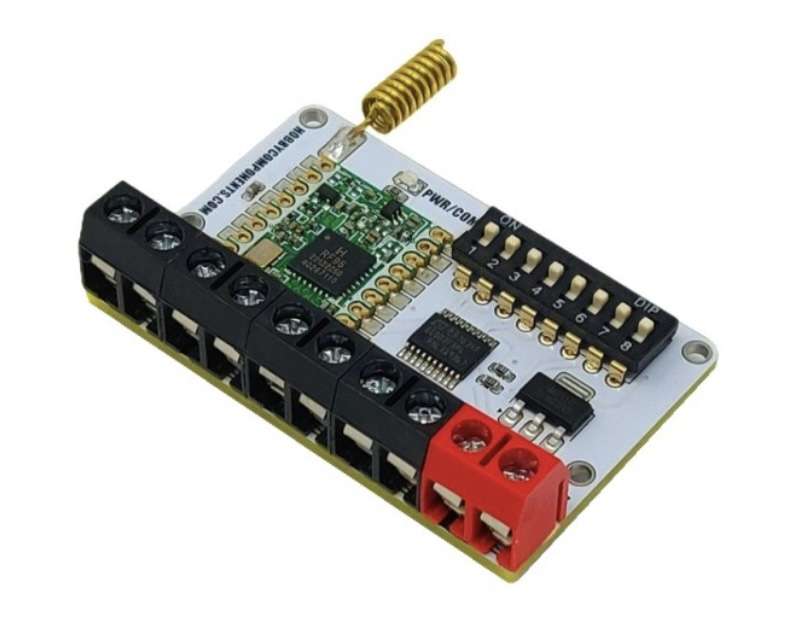
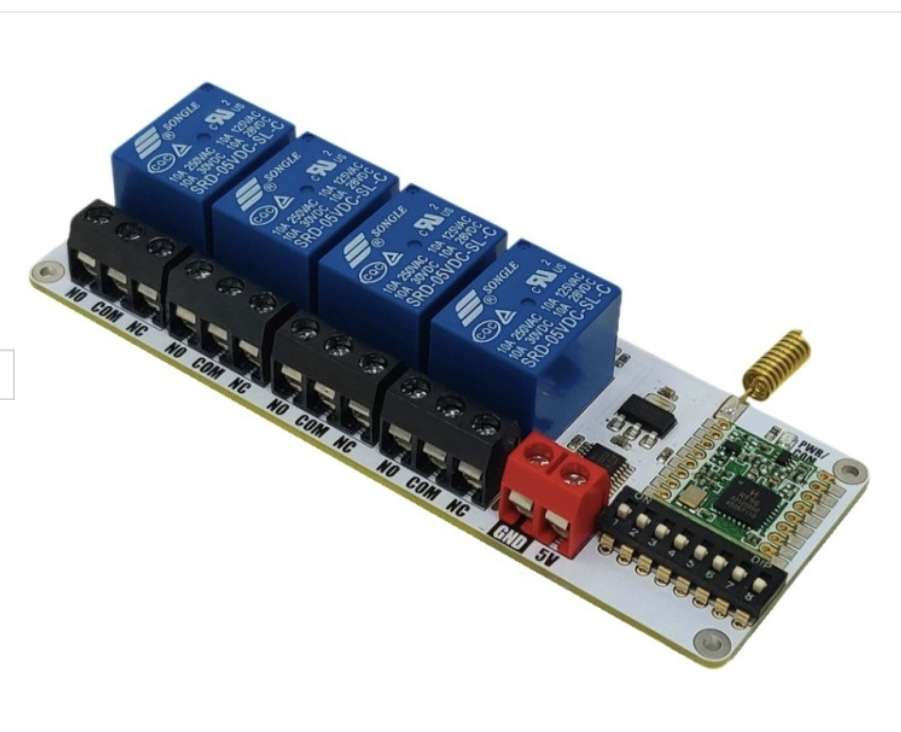
        Depending on the distance between tank and pump, a LORA (long reach radio) system might be a good solution.

        I have tried some of these low cost modules and they seem to work well. I bought mine from Hobby Components, link below:

        https://hobbycomponents.com/lora/1190-longreach-lora-4-channel-digital-tx

        and

        https://hobbycomponents.com/lora/1191-longreach-lora-4-channel-relay

        The first one is a 4 channel transmitter and the second is a receiver with 4 relays. There is a DIP switch on each to set matching addresses for the modules.

        Stuart

        IMG_2637
        IMG_2636

        #838182
        JasonB
        Moderator
          @jasonb

          Although “wireless” you will likely need power at both locations or have to do regular battery changes before omne goes flat and leaves the pump running.

          The diamond core drills don’t need a great deal of power, I have drilled stone and glass with then at the sort of diameters you are looking at using a cordless. When doing deeper I tend to use a SDS+ type drill of 4kg size as it has a clutch which will slip rather than snap your wrist. Only used these upto 110mm on brick and block for waste pipes and extractors.

          Been involved with a lot of diamond drilling and sawing of concrete via work but we always got specialists in. For a one off you can hire a rig here that gets bolted to the concrete and has a slow quill type feed and built in pumbing for cooling/washing out the dust. Usually charged as a days hire plus tip wear


          #838184
          Stuart Smith 5
          Participant
            @stuartsmith5

            As Jason says you would need a battery at the tank end. Probably a battery and solar panel setup.

            The transmitter only takes 9mA at idle and 120mA when transmitting, so a reasonable sized battery would last a long time even without a solar panel to keep it topped up.

            Stuart

            #838196
            duncan webster 1
            Participant
              @duncanwebster1

              It’s not clear to me from the links above, but a well designed system would have the pump off if the sender battery went flat. One of our solar/battery systems on the signals has worked faultlessly for years.

              These modules look like just the ticket for my master clock project, I actually only need one but at a tenner a pop it’s hardly worth making something up

              #838215
              Nicholas Farr
              Participant
                @nicholasfarr14254

                Hi, if you intend to drill a hole with a diamond hole saw, you should really use a drill with an active torque control (ATC) built in, as a snag-up can cause damage to your drill and or your set-up, if you are using a hand held drill, ATC is essential, to prevent a serious accident to yourself and others, in the event of a snag-up.

                Regards Nick.

                #838868
                Phillip Allen
                Participant
                  @phillipallen34597

                  Thank you, Nick, for the diamond hole saw info. I think my Makita drill has ATC, so I can use that.

                  To others, I have 240V power available at the tank, so no problem powering a float switch and electronics.

                  Duncan, these devices from Hobby Components have really got me interested. I have been trying to understand how a motor contactor works and the 3-phase circuitry involved, through Internet searches. Thinking the potential circuit through, I presume that the Lora wireless connection would have to be maintained for as long as the pump needs to run (to fill the tank, in other words). If the wireless connection falters, then the relay(s) would drop out and reconnect again once the wireless signal is reapplied. Could some sort of latch relay be employed if this is an issue? The Longreach Lora 4-channel-relay board appears to have 10A 250VAC relays, so I presume could be wired directly into a circuit involving the 3-phase motor contactor (from what I have found and understand, only one phase provides the power to the contactor’s electromagnet, or an independent single-phase source is used). I will have to determine if the 250V components are approved under Australian standards. If not, could another set of approved 250V relays be used operated by low voltage through the relays on the Longreach board? Ultimately, these questions are for my electrician, if only I can find a decent one!  – willing to put some thought into a solution, that is.

                  The Longreach electronics will need to be protected from the weather and possibly external, weather-proof antenna used. The receiver end will be inside a metal-clad enclosure, built to protect the electrical sub-board and pump control gear.

                  Thanks everyone, for your contributions.

                  Phillip

                  #838886
                  Michael Gilligan
                  Participant
                    @michaelgilligan61133
                    On Stuart Smith 5 Said:

                    Depending on the distance between tank and pump, a LORA (long reach radio) system might be a good solution.

                    I have tried some of these low cost modules and they seem to work well.

                    […]

                    Thanks for posting those links, Stuart

                    The system looks very useful indeed !

                    MichaelG.

                    #838933
                    John Haine
                    Participant
                      @johnhaine32865

                      Duncan, beware of LoRa in a timing application. The reason for long range is in effect using  a very narrow bandwidth so there could be a significant and variable delay depending on link conditions.

                      It’s interesting that there are frequency bands allocated for basic mains communication in the sub 100khz region. I’ve wondered if one could distribute time on your ring main using essentially a protocol like MSF or DCF77 at a different frequency. Then you could use the dead cheap receiver chips to demodulate the carrier. Generating and decoding DCF77 is easy, in fact there’s a design on GitHub for  DCF transmitter made with Arduino. Of course if you put the carrier on your ring main using a legal frequency it’s pretty likely that you could pick it up in your house just by induction using a ferrite rod…

                      #838972
                      duncan webster 1
                      Participant
                        @duncanwebster1

                        <p style=”text-align: left;”>I’m not after transmitting the actual time, just a pulse or change of state every 30 seconds as traditional master clocks did. It wouldn’t matter if there was a few seconds delay, I’m not a pendulista looking for the last picosecond.  If doing it by radio I suppose sending a short message would be needed so that it didn’t react to random interference. I tried radio comms from an arduino some years ago, but range was poor especially if there was a brick wall in the way.  However I’ve got too many unfinished projects as it is, so won’t be starting on this and time soon</p>

                        #838978
                        duncan webster 1
                        Participant
                          @duncanwebster1

                          <p style=”text-align: left;”>Phillip, I think what you would need is similar to a switch de-bouncer. This notices when the switch output changes state, but then repeatedly checks that it hasn’t changed back for a set time before it acts. This gets away from problems of short-term spurious signals of loss of signal. Whether you can buy such a device ready made I don’t know. In your case of tank  filling I don’t suppose it would matter if the pump ran on for quite a few seconds, just set the switch level a bit lower</p>

                        Viewing 11 posts - 51 through 61 (of 61 total)
                        • Please log in to reply to this topic. Registering is free and easy using the links on the menu at the top of this page.

                        Latest Replies

                        Viewing 25 topics - 1 through 25 (of 25 total)
                        Viewing 25 topics - 1 through 25 (of 25 total)

                        View full reply list.