Brazing job assistance required

Brazing job assistance required

Home Forums Help and Assistance! (Offered or Wanted) Brazing job assistance required

Viewing 25 posts - 1 through 25 (of 32 total)
  • Author
    Posts
  • #818063
    Derek McCallum
    Participant
      @derekmccallum74709

      Hello,

      I have a job that I’m hoping someone can help with or perhaps direct me to someone who can?

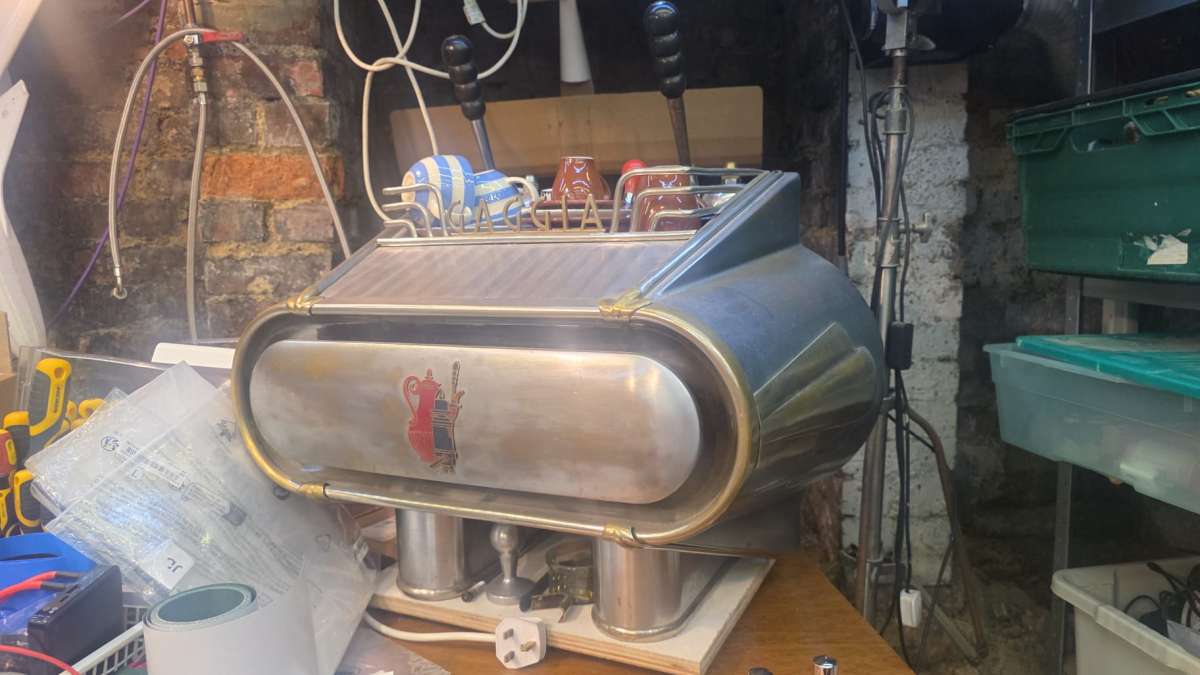
      This is a 1955 Gaggia Internazionale espresso machine which I am restoring.

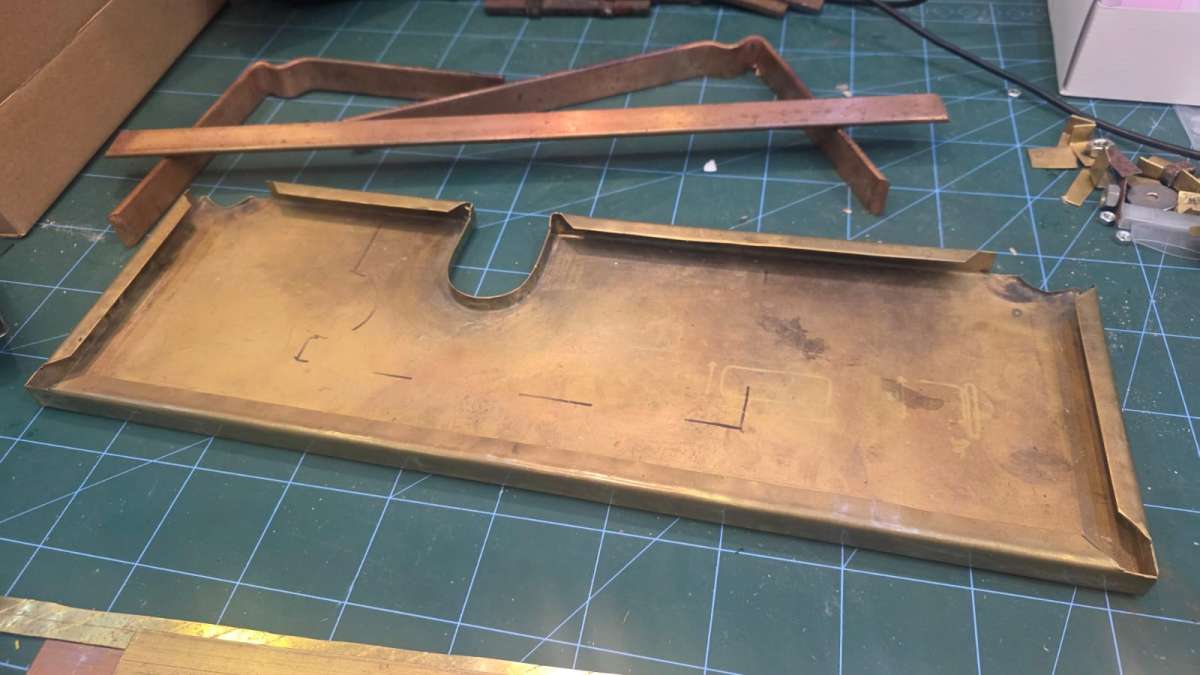
      At the rear of the machine should be a cup tray which I am part way through fabricating a replacement.
      The forming has been done, but it’s the brazing together that I need some assistance with.


      I have sievert torches and did the anealing on the 1×1/4 copper bar below, but I am nervous about doing the actual brazing job as it’s bigger than anything I have done before. The risk of getting it wrong would be a bit tragic given the effort that’s gone into it.

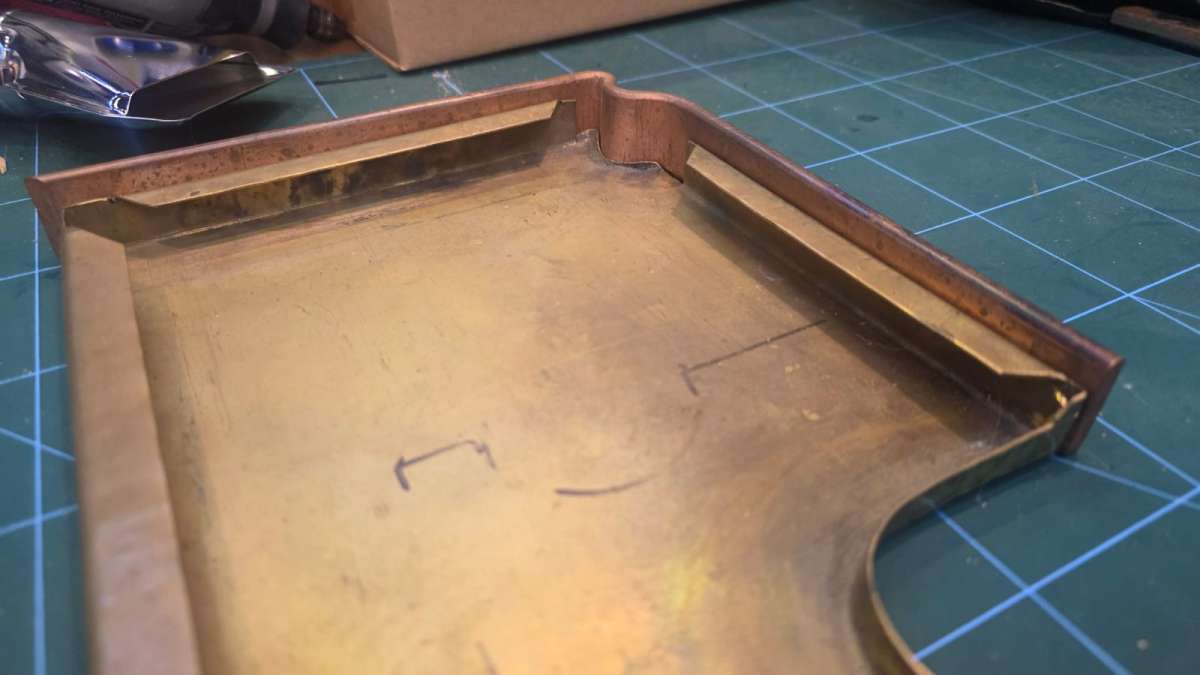
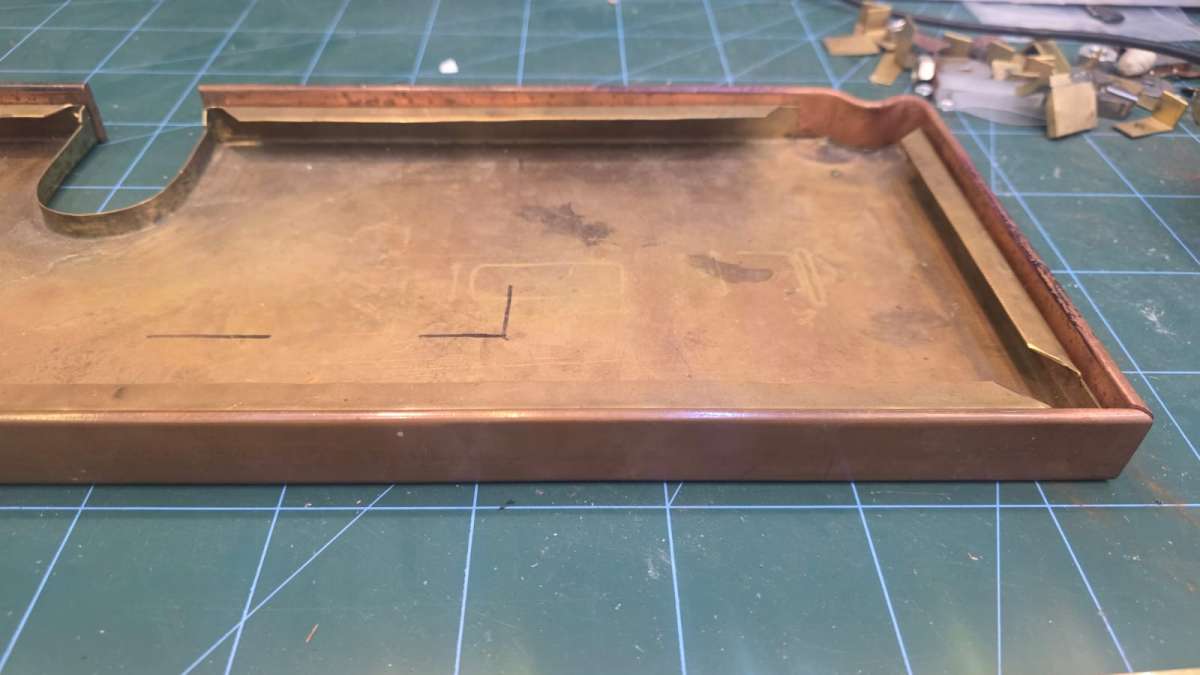
      Essentially the copper bars need to be positioned flush with the bottom of the brass tray as shown and brazed together. You would need to prevent any shifting of the parts (tray especially) during the process. I don’t have a brazing hearth, hence my hesitation.

      WhatsApp Image 2025-08-19 at 20.02.23


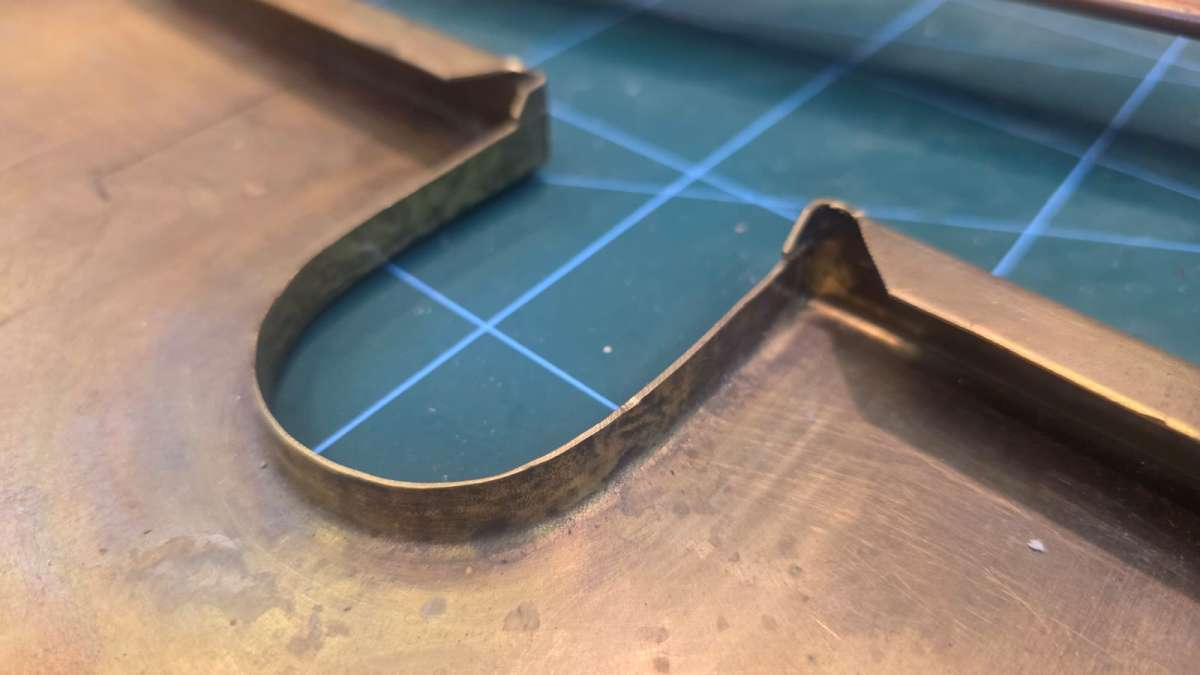
      Here are the peices: the copper lengths are 1″ x 1/4″, and the brass tray is 1mm.
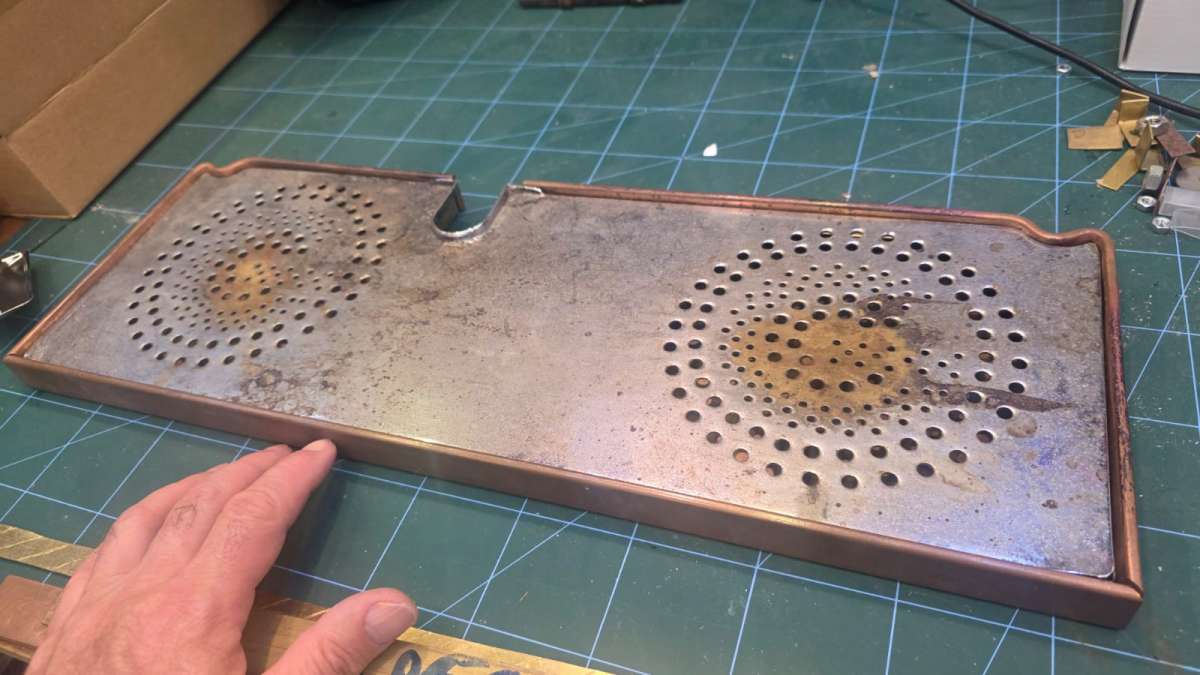
      The photos show how they would fit together. The chrome cup tray would sit in place once complete.

      WhatsApp Image 2025-08-19 at 19.59.02

      WhatsApp Image 2025-08-19 at 19.59.02 (1)

      WhatsApp Image 2025-08-19 at 19.59.02 (2)

      WhatsApp Image 2025-08-19 at 19.59.02 (3)

      WhatsApp Image 2025-08-19 at 19.59.02 (4)


      The finished assembly will then recieve the cup tray which would just rest inside.

      WhatsApp Image 2025-08-19 at 19.59.02 (5)

      Would anyone be able to undertake this for a fee?

      Drop me a message and or let me know who might be able to help.

      Appreciate any help.


      Derek


      #818068
      roy entwistle
      Participant
        @royentwistle24699

        Whereabouts you are might help

        #818070
        DC31k
        Participant
          @dc31k

          Could you perhaps write something small on why it needs brazing at all, as opposed to soft soldering.

          To my untrained eye, something that cups rest on will never get hot enough to worry solder.

          #818075
          noel shelley
          Participant
            @noelshelley55608

            Why can it NOT be soft soldered ? The material is quite thin so it should be easy enough to do with a sievert  torch and silver solder or even brazing (brass ). It could also be TIGed up.

            Where abouts are you ? I have the gear to use any of the processes. Noel.

            #818077
            Brian Merrifield
            Participant
              @brianmerrifield92050

              Hi Derek, I agree soft soldier sounds a good way to go. You could also consider holding the brass bars in place by drilling and tapping them say M2 or 8ba and fixing them with brass countersunk screws. If you tin the brass once it is screwed in place with some flux it can be heated and soldered as well.

              I can see why you are concerned not to spoil the tray, that looks an excellent job.

              #818078
              Bill Phinn
              Participant
                @billphinn90025

                Derek, what do the photos you say, ten years ago on home-barista.com, you obtained from Gyro and Olivier show regarding the attachment of the copper rim to the brass tray? (I’m assuming you want to replicate the original tray as faithfully as possible.) How were the brass and copper joined? My guess would be with soft solder, and only in places not all round.

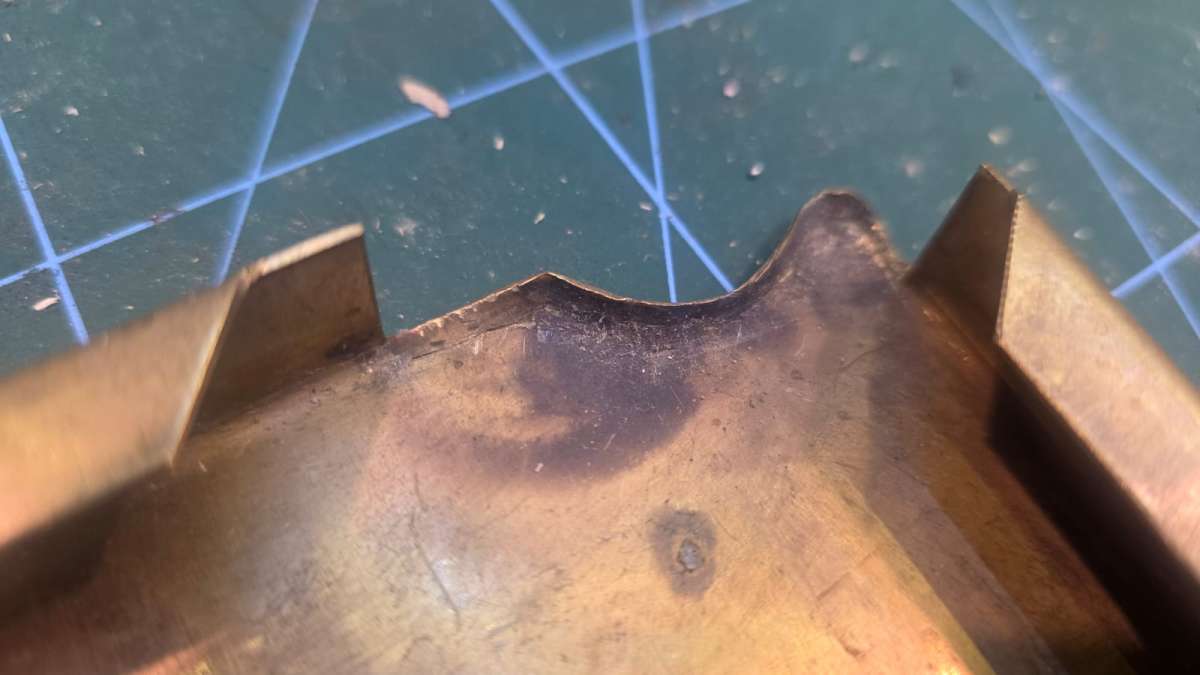
                While we’re on the topic, if you made the brass tray yourself, how have you sealed the folds at the corners/intersections?

                #818080
                Nicholas Farr
                Participant
                  @nicholasfarr14254

                  Hi, I think your biggest problem with brazing, is you might easily melt the brass before you get the copper hot enough, so soft soldering would be safer. You might be able to silver solder it with the lowest melting point rods, but you could braze the corners of the copper before fitting it to the tray.

                  Regards Nick.

                  #818082
                  Macolm
                  Participant
                    @macolm

                    There is always copper-phosphorus brazing (which may need a flux for brass), and which is similar to silver solder temperatures. I have no idea whether it can be burnished to match copper, it is usually a dull colouration. It is self fluxing for copper, and quite easy to use.

                    #818086
                    David George 1
                    Participant
                      @davidgeorge1

                      Have a talk to Cup Alloys they supply all the correct solders and fluxes etc and are very helpful. From brazing, silver soldering to soft soldering they will tel you the best combination for your job.

                      http://www.cupalloys.co.uk

                      Tel 01623 707055

                      David

                      #818091
                      noel shelley
                      Participant
                        @noelshelley55608

                        silver solder melts at about 650C Sif bronze at about 850, brass at about 950 and copper 1050ish ,so looks OK to me ! noel.

                        #818100
                        Bill Phinn
                        Participant
                          @billphinn90025

                          As a bit of an aside while we’re on the subject of melting points, has anyone else ever de-soldered the joints on a Sievert neck tube?

                          I’ve done this a couple of times. The brazing alloy Sievert have employed on these joints has an incredibly high flow temperature very close to the melting point of brass. I’m impressed Sievert chose to make their joints so heat proof.

                          #818120
                          MichaelR
                          Participant
                            @michaelr

                            In my opinion it’s a job for soft solder, as the heat required for any brazing or silver soldering is going to warp/distort the brass tray.

                            I stand to be corrected but that’s my thought

                            MichaelR

                            #818122
                            duncan webster 1
                            Participant
                              @duncanwebster1

                              I agree with MichaelR

                              #818138
                              Derek McCallum
                              Participant
                                @derekmccallum74709

                                Thank you for all the input.
                                Yes, so some further information is required:

                                1. I am based in London, but could send it wherever it needs to go.

                                2. Why it needs brazing at all, as opposed to soft soldering.
                                Good question – I intend getting the piece chrome plated once complete, and assumed chroming over soft solder would be problematic. But maybe not?

                                3. Bill – you’re right. I have a thread on its restore at Home-Barista. The original tray was folded out of sheet. I fudged it by selecting 1×1/4″ bar against the inner tray as it would represent the form of the original. I was not able to fold sheet metal to that degree/complexity.
                                I have not sealed the corners of the tray yet. Had intended to braze them.

                                4 Re brass melting point. Hadn’t considered that or just felt that being careful with the torch would suffice. The brass tray has already been anealed numerous times with the torch as the rounded section was raised from the single piece using the process of wooden formers and anealing, working, reapeating etc. Wrt to warping, I found that just working/beating the flat surfaces would relieve any, but was a bit of a task.

                                5. Cup Alloys – yes thx, I have thier stuff.

                                6. TIG – I can do mild and stainless up to 6mm. I really thought it wouldn’t be possible to do 1mm brass sheet to 1/4″ copper bar?

                                Any further thoughts on that?

                                #818148
                                Nicholas Farr
                                Participant
                                  @nicholasfarr14254

                                  Hi Derek, you may need a good degree of skill to do 1mm brass against 1/4″ copper with TIG. The problem being is the 1mm brass will heat up much faster than the 1/4″ copper as you’ll have close to a 6 to 1 ratio in thickness, despite the copper being more conductive. I’ve seen this before where people have tried a similar situation, and the brass just disappears. If you had someone pre-heating the areas of the copper where you are using TIG, you may have a good chance, but you’ll probably have to be quick.

                                  Regards Nick.

                                  #818166
                                  cogdobbler
                                  Participant
                                    @cogdobbler
                                    • If it’s going to be chromed , I would make it out of steel and MIG or TIG weld it.

                                    But as it’s already made in brass I would silver braze it (what used to be called silver solder). The fellows at CupAlloy will give you the best advice on that, including how Chrome will go with silver etc.

                                    #818169
                                    Bill Phinn
                                    Participant
                                      @billphinn90025
                                      On Derek McCallum Said:


                                      Any further thoughts on that?

                                      Whether you use soft or hard (i.e. silver) solder, the brass corner folds will need to be opened up first and prepped (i.e. cleaned, fluxed and re-closed) to ensure the solder flows well into the joints.

                                      If you opt for silver solder, bear in mind that whilst annealing the folded sheet on its own with a propane torch isn’t ever likely to risk melting the brass, silver soldering a 1/4” thick copper band to it will require you to play the torch flame very judiciously so as to heat the thick copper sufficiently whilst ensuring the thin brass sheet doesn’t overheat. It’s not undoable, but it will need care.

                                      Given that you’ve already departed from the original tray construction method by having a separate copper band around the outside, would you consider soldering just the folds in the brass and the corners of the copper, and then connecting the tray to the copper band by tapping blind holes (say M2.5 or M3) in the copper from the inside and joining the brass sheet to it with button head screws? You wouldn’t see any screws from the outside of the tray once the drip plate is installed.

                                      This method would give you plenty of wiggle room to ensure the brass and the copper line up well enough to allow the completed tray to sit perfectly flat on a flat surface.

                                      If you choose to solder the copper to the brass I can foresee potential at least for some misalignment and rocking once the soldering is complete.

                                      The only caveats with the screws method are you’ll need to drill the copper using an accurate depth stop that ensures you don’t break through to the outside, and finish the tapping with a blunt-nosed plug tap.

                                      #818186
                                      Macolm
                                      Participant
                                        @macolm

                                        Having refreshed my mind with the design detail, I think there is negligible prospect of success if heated for brazing, and little more hope for soft soldering. As soon as any local source of heat is applied to thin and thermally conductive flat sheet, it necessarily forms a carbuncle dome due to expansion of the hot area and constraint by the colder surrounding material. It may be possible to prod to maintain the necessary contact between the parts to allow filler material to bridge, but once things have cooled down the inevitable distortion will likely be too bad to have any hope of straightening.

                                        If in industry it really needed to be these dimensions, brazing would be done in an oven (an expensive furnace) to maintain a very uniform temperature, but more likely it would be redesigned to avoid the problems.

                                        Did the original have as thick a rim? A likely construction technique might have been to use a tin can seamer, but that would need similar thickness of the two parts. The rim parts could be a folded U section to achieve this.

                                        Either use screws as already suggested, or copper rivets might well look in keeping, and can be fitted a section at a time to maintain the flatness. If water tightness is required, a capillary sealant over most of the periphery would be a good start.

                                        #818214
                                        bernard towers
                                        Participant
                                          @bernardtowers37738

                                          Surely if you soft solder with an iron distortion will not occur?

                                          #818228
                                          Macolm
                                          Participant
                                            @macolm

                                            Indeed, but the heavy copper edge strip will be too much for a standard electric iron. Heating a large plain copper iron with a flame until there is green colouration is the traditional way to do this sort of work. Do remember soft solder precludes subsequent brazing, and probably adhesive bonding.

                                            #818246
                                            Bill Phinn
                                            Participant
                                              @billphinn90025
                                              On bernard towers Said:

                                              Surely if you soft solder with an iron distortion will not occur?

                                              It’s not just distortion (through heat, you mean, presumably) that’s a potential problem with soldering or brazing; it’s the copper and the brass moving slightly during heating and producing a tray that doesn’t sit perfectly flat.

                                              #818264
                                              Speedy Builder5
                                              Participant
                                                @speedybuilder5

                                                I think I would shape the end of the rods/strips to form a shoulder just a little deeper than the thickness of the tray. Pierce the tray for the rods and slightly peen the ends over once assembled through the tray to hold them in place.  Then with oxygen/acetelene silver solder from the rear of the tray. Keep the effected zone of heat as small as possible using heat absorbing “putty”.

                                                Once “soldered”, clean/abrade off the joint under the tray.

                                                Bob

                                                #818337
                                                Derek McCallum
                                                Participant
                                                  @derekmccallum74709

                                                  Thanks everyone for your input. I have grappled with the what if’s and risks for a while.

                                                  I think I will proceed as follows:

                                                  1. Fit up the copper bars and braze the corners

                                                  2. Braze corners of the drip tray

                                                  3. Mount the tray to the copper band by tapping blind holes

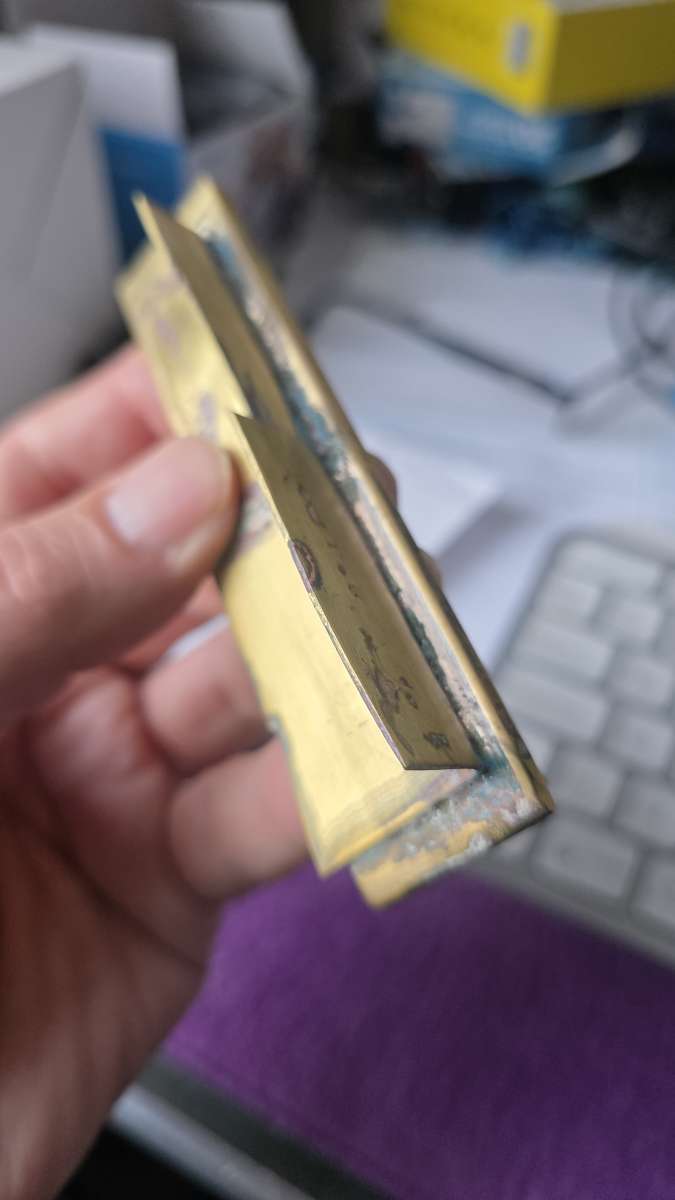
                                                  Before this however I could do a few more test joins. I achieved this brazed joint with some 1×1/4″ brass bar and 1mm brass sheet. Even if I just brazed four sections that would be sufficient. Better chance of keeping the risk of missalignment to a minimum as well.
                                                  20251002_134610


                                                  Any thoughts on that approach? It’s just that I’ve not done a piece this big before.


                                                  #818340
                                                  noel shelley
                                                  Participant
                                                    @noelshelley55608

                                                    Looks good enough to me – are you happy with it ? There is so much confusion about the term “brazing” ! To me there is soft solder, hard or silver solder and sifbronze , only the last one is brazing in my book. Good Luck. Noel.

                                                    #818428
                                                    vintagengineer
                                                    Participant
                                                      @vintagengineer

                                                      Soft solder will be strong enough. Bugatti used soft solder on their propshafts!

                                                    Viewing 25 posts - 1 through 25 (of 32 total)
                                                    • Please log in to reply to this topic. Registering is free and easy using the links on the menu at the top of this page.

                                                    Latest Replies

                                                    Viewing 25 topics - 1 through 25 (of 25 total)
                                                    Viewing 25 topics - 1 through 25 (of 25 total)

                                                    View full reply list.