Linear encoders

Linear encoders

Home Forums Electronics in the Workshop Linear encoders

Viewing 25 posts - 1 through 25 (of 26 total)
  • Author
    Posts
  • #852335
    Speedy Builder5
    Participant
      @speedybuilder5

      A few years ago I made a DRO for Cross Slide of my Boxford AUD lathe. It uses a rotary encoder attached to the cross feed screw and as other authors have said, it takes no account of backlash on the screw.

      As far as Arduino code goes, I am not that bright and have been grateful to other’s contributions – albeit modified as required.

      I am now re-visiting the project and thinking of using a draw wire encoder attached to the cross slide.  I don’t want to use typical glass / magnetic slides as they are “bulky” and what is the fun in doing what is accepted practice ??

      What are your comments ?

      Bob

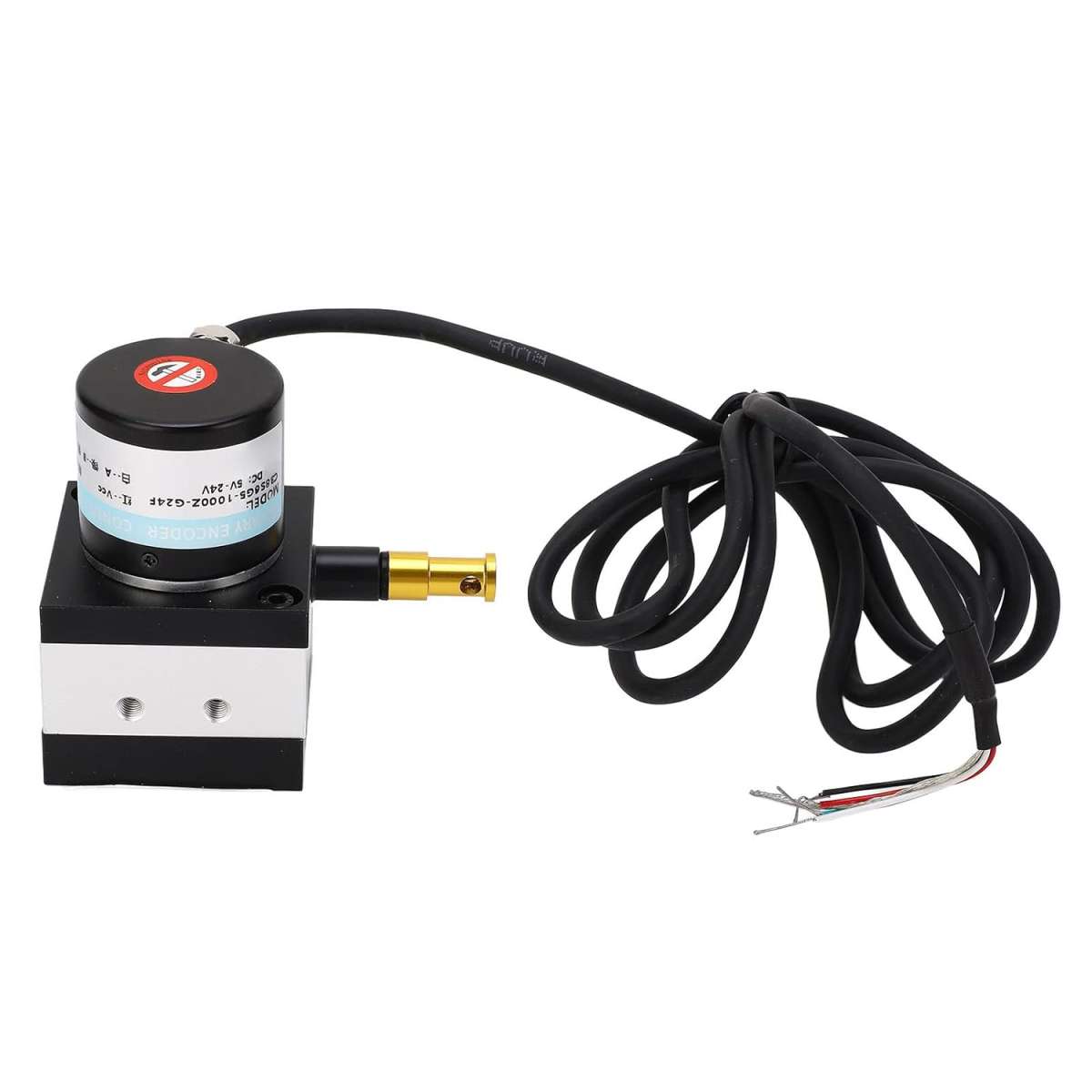
      This is the sort of encoder :-

      https://www.amazon.co.uk/Encoder-10-1200mm-Displacement-Industrial-Automation/dp/B0FYQTSW8H/ref=sr_1_11_sspa?crid=1NY8028XGF12R&dib=eyJ2IjoiMSJ9.QJMNxPQkY5suRr3lpL9zbtfYgD2bosajjgBH-kNQCHexRZX7aBX_kc6hVyYGQ8KGUBQFWf3GmtEG6RCGAZszurmiGHA-gCV3Cjtl8eEvFn0p3CKpA9wCWBXcPB0UbdOgjAPN7QrUSJ2GaM3HbcjrPSGzBbSOBC0VdXMjP90Nwr5dP85r6jCQNPgTshIVzvJFrXi_5ZU5K06F9nZz_ES1_hkZkOGKUfBKWdu9QImJAafTfp1nezVNmJdNiRgBHK27rk6ksPOESYJvjMCfb84WSgFavAUVRB2VgP6QhTfALUc.gduOE3qc0usmefv7AlR_lk9l6omqYBRsPNt2ZiaTGXk&dib_tag=se&keywords=linear+encoder&qid=1781622039&sprefix=linear+encoder%2Caps%2C126&sr=8-11-spons&aref=gmANk7Dwfa&sp_csd=d2lkZ2V0TmFtZT1zcF9tdGY&psc=1

      61LYoB9wjlL._SL1500_

      #852343
      DC31k
      Participant
        @dc31k
        On Speedy Builder5 Said:

        What are your comments?

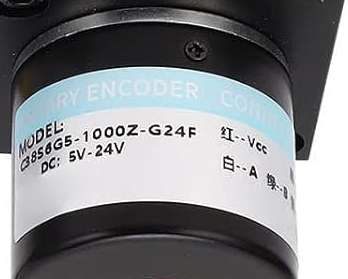
        The listing says 5v minimum but the sticker on that particular item says 8v minimum.

        Can you find a data sheet for a brand name version of it? That would give you an idea of how it would interface with the Arduino (how to convert the pulses per revolution to a distance).

        Similar items are available for less money from AliExpress (including a 500mm travel item, search “Cable Encoder E6B2″), and the page includes a table showing resolution.

        Saying that, you could probably calibrate it with a 1” travel dial indicator.

        A similar idea appeared a long time ago in the model engineering world. Maybe someone will remember who sold it.

        #852344
        duncan webster 1
        Participant
          @duncanwebster1

          These were produced commercially at one time to fit hobby lathes. They were nothing like as accurate as linear. Someone described in ME I think a way of fitting tape for a magnetic sensor underneath the cross slide which was extremely neat. One of our search engine gurus will no doubt come up with the reference.

          Edit: for some reason I think the draw string version was produced by z chap in the channel islands, but I might be hallucinating

          #852345
          JasonB
          Moderator
            @jasonb

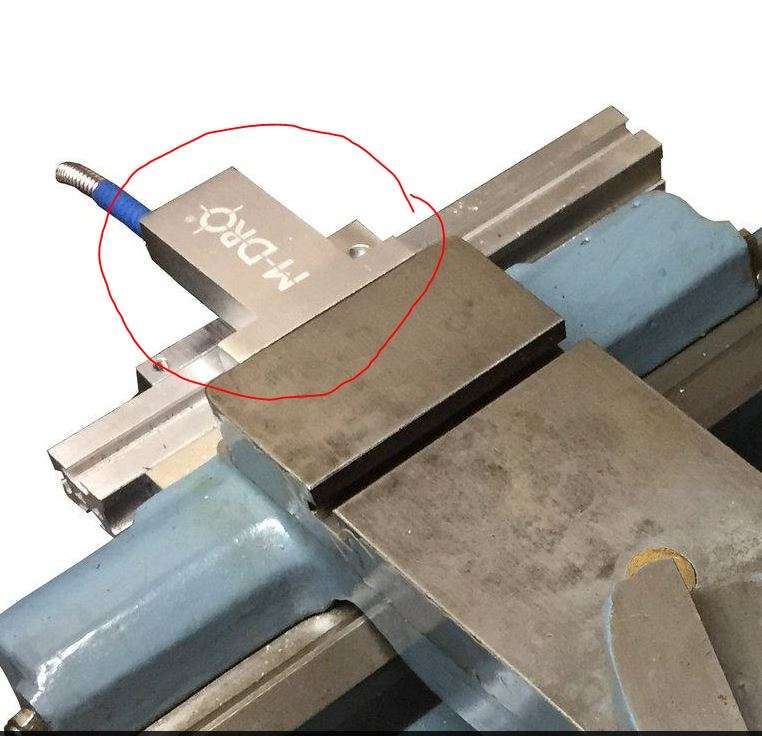
            Typical scales do not have to be bulky. A magnetic strip is typically 10mm wide and 2mm thick. A typical compact read head 35mm x 10mm x 15mm though you can get smaller. Suitably fitted under the cross slide they should not get in the way of anything.

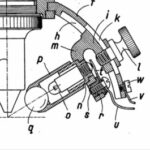
            The cross slide part is just that tee-shaped bracket on the back of the topslide that houses the encoder. The other extrusion is prt of the other axis

            bulky


            #852348
            DC31k
            Participant
              @dc31k
              On duncan webster 1 Said:

              These were produced commercially at one time to fit hobby lathes. They were nothing like as accurate as linear.

              Your comments are written in the past tense. It might be helpful to the OP if you could review what is proposed today and assess whether they would still be relevant.

              In the past, high pulse-per-revoution encoders were prohibitively expensive, hence the reason for the shortcomings in yesterday’s offerings will not necessarily carry over into something you buy today.

              The data in the AliExpress one gives the pulse count of the encoder and the circumference of the drum around which the string is wound. From that, the resolution can be worked out.

              #852349
              Robert Atkinson 2
              Participant
                @robertatkinson2

                That particular unit only has a resolution of 0.3mm but a long travel of 1.2m. A shorter one might be a better choice.
                These are not high precision sensors.

                Robert.

                #852350
                Speedy Builder5
                Participant
                  @speedybuilder5

                  DC31k – I think the label says 5v (not 8v)

                  Jason – There is this video on doing that – a lot of talk but by Video 4, I could see how it was installed.

                  I would still like to have a go at the wire job unless others think its a non starter.

                  Bob

                  #852351
                  SillyOldDuffer
                  Moderator
                    @sillyoldduffer

                    The label reveals a bog-standard rotary encoder, presumably pulled round by a wire on a spring-loaded drum.

                    Link to datasheet.

                    relabel

                    It’s a 5-24V device emitting 1000 pulses per revolution.  How that translates to linear accuracy depends on the wire-drum’s diameter and whether or not a gearbox is present.  I can’t see anything in the advert giving the accuracy.

                    Several Rotary Encoder libraries available for the Arduino – this one might do.

                    Dave


                    #852357
                    Bazyle
                    Participant
                      @bazyle

                      If there isn’t one that gives the required resolution perhaps just the rotary encoder of 200+ ppr and your own drum/wire is the way to go. As above part of the modern way (like for 40 years) has been to use a microprocessor to calibrate and compensate. Sounds like it could be a fun project.

                      edit. By the way have you calibrated the current design relying on the perhaps worn leadscrew to compensate readings?

                      #852365
                      duncan webster 1
                      Participant
                        @duncanwebster1

                        If 1000 ppr means from each channel, that is 4000 edges per rev  and quadrature encoders read edges. If the quoted 38mm diameter is the drum, that is 119.4mm circumference. You might have to add the wire diameter to be strictly accurate. Anyway, 119.4/4000 = 0.03mm resolution. Linear scales are 0.005mm. Or 0.0001 if you pay more, but that is getting silly.

                        The rotary encoders I have used had a 5v regulator built in, so you had to supply at least 6.5 to 7v to get them to work. If you want them to work off 5v you had to perform surgery and bypass the regulator. Of course that might not apply to these.

                        I built a DRO for the saddle on my Cowells which used a rotary encoder and Arduino, backlash doesn’t matter all that much on a lathe as long as you remember to always approach from the same direction. I think it was written up in ME. If anyone is interested I’ve probably got the original text, just whizz me a PM

                        #852366
                        Nigel Graham 2
                        Participant
                          @nigelgraham2

                          Rotary encoders….

                          I wonder if anyone has experimented with the very compact ones in a mouse? They are quite fragile and obviously not suitable for mounting on a machine-tool as they are, but placed within a suitable housing might they work for such applications?

                          I don’t know their definition, but it must be quite fine.

                          #852441
                          Speedy Builder5
                          Participant
                            @speedybuilder5

                            Looking and understanding the accuracy of this particular offering:- Designed with 0.25%FS linearity

                            If I have 9″ of cross slide travel, then (9 x 0.25) / 100 =0.0225″ possible error over the full travel ??  Or have I got it wrong.  OK, we don’t often need that sort of cross travel but even at 1″ its about 0.002″ possible error.

                            As Duncan says, backlash shouldn’t be a problem as we normally cut in one direction…But!

                            Bob

                            #852442
                            Robert Atkinson 2
                            Participant
                              @robertatkinson2

                              I used the “designed for” linearity “specification. to come up with the 0.3mm resolution. I was wrong!

                              Note that the “FS” is Full Scale so relates to the full length of the “string”. The model shown is 1.2m maximum so linearity target is 0.25% of 1200mm = 3mm So useless for this application.It’s safe to assume resolution is no better.
                              I’t not much but as it the only data given we have to use it. And it just what they designed it to meet. Actual performance could be vary different.

                              Not sure how I got my math wrong. I was expecting something in the sub-mm range.

                              Robert.

                              #852444
                              Michael Gilligan
                              Participant
                                @michaelgilligan61133
                                On SillyOldDuffer Said:

                                The label reveals a bog-standard rotary encoder, presumably pulled round by a wire on a spring-loaded drum.

                                Link to datasheet.

                                relabel

                                It’s a 5-24V device emitting 1000 pulses per revolution.  How that translates to linear accuracy depends on the wire-drum’s diameter and whether or not a gearbox is present.  I can’t see anything in the advert giving the accuracy.

                                Several Rotary Encoder libraries available for the Arduino – this one might do.

                                Dave


                                Given that the shafts are arranged at 90° … it seems very likely that a gearbox of some sort is present … The mechanical side is likely to introduce bigger errors than the encoder itself.

                                MichaelG.

                                #852445
                                John Haine
                                Participant
                                  @johnhaine32865
                                  On Speedy Builder5 Said:

                                  Looking and understanding the accuracy of this particular offering:- Designed with 0.25%FS linearity

                                  If I have 9″ of cross slide travel, then (9 x 0.25) / 100 =0.0225″ possible error over the full travel ??  Or have I got it wrong.  OK, we don’t often need that sort of cross travel but even at 1″ its about 0.002″ possible error.

                                  As Duncan says, backlash shouldn’t be a problem as we normally cut in one direction…But!

                                  Bob

                                  On Nigel Graham 2 Said:

                                  Rotary encoders….

                                  I wonder if anyone has experimented with the very compact ones in a mouse? They are quite fragile and obviously not suitable for mounting on a machine-tool as they are, but placed within a suitable housing might they work for such applications?

                                  I don’t know their definition, but it must be quite fine.

                                  I’ve often wondered about this. See https://www.pixart.com/products-detail/140/PAT9136E1-TXQT for information on the sensors.

                                  #852446
                                  Michael Gilligan
                                  Participant
                                    @michaelgilligan61133

                                    Please ignore my silly mistake ^^^

                                    The brass bit is not a rotating shaft !

                                    MichaelG.

                                    #852449
                                    John MC
                                    Participant
                                      @johnmc39344
                                      On duncan webster 1 Said:


                                      Edit: for some reason I think the draw string version was produced by z chap in the channel islands, but I might be hallucinating

                                      I think that may have been the “Ortec” DRO?   I still have a couple of those in use, reliable and accurate.  One advantage of the Ortec was the size of the mylar(?) linear encoders, compact in cross-section compared with some of the more modern devices.   It was also there disadvantage, reading length was limited by what was available.

                                      At the time, early 90’s(?), the competition was the draw wire encoder and a mechanical counter.  The draw wire type had a reputation for inconsistency.


                                      #852452
                                      Bob Worsley
                                      Participant
                                        @bobworsley31976

                                        As BW Electronics I designed and manufactured a range of draw wire sensors for use on machine tools, I sold thousands all around the world. No one has ever complained to me about inconsistency.

                                        The Oetec DRO used plastic linear encoder strips as used in printers, hence length limitation.

                                        My sensors used a home made encoder, using 120 slots over 30mm diameter with a times 96 interpolation to give about 6 microns resolution. Every sensor was calibrated to ensure accuracy was better +/-2 thou.

                                        The killer with rotary is the drum, it has to be concentric and parallel with suitable bearings, good luck!

                                        As a matter of interest my first DRO was sold in 1992, two axis system for £390. My last two axis system was sold about 2022, for £390. So if anyone wants to complain about inflation then I am not the right person to complain to.

                                        I will still repair my sensors, even after all these years.


                                        #852453
                                        John Haine
                                        Participant
                                          @johnhaine32865

                                          If you want to make chips rather than DROs I’d suggest just going with a linear encoder from the likes of Machine DRO.  Fitted to my mill, they just work.

                                          #852456
                                          Phil P
                                          Participant
                                            @philp
                                            On John Haine Said:

                                            If you want to make chips rather than DROs I’d suggest just going with a linear encoder from the likes of Machine DRO.  Fitted to my mill, they just work.

                                            I am still using a BW encoder on the saddle of my Myford S7, it has been in regular use for about 30 years and I would not be without it, lovely bit of kit.

                                            #852457
                                            John Haine
                                            Participant
                                              @johnhaine32865

                                              I’m not saying they aren’t but if not available new and if you don’t want to kake your own then a modern mag scale just works.

                                              #852464
                                              Robert Atkinson 2
                                              Participant
                                                @robertatkinson2

                                                Draw wire encoders (and potentiometers) inconsistency is almost always caused by poor wire management. If the lay of the wire on the drum is not level the cross overs or layering change the effective diameter of the drum. Kinks in the wire are also a problem and the only real solution is a new wire.

                                                Robert.

                                                #852471
                                                duncan webster 1
                                                Participant
                                                  @duncanwebster1

                                                  Plus minus 2 thou is not very good when compared with 0.005 mm from a magnetic or glass DRO

                                                  #852475
                                                  John MC
                                                  Participant
                                                    @johnmc39344
                                                    On duncan webster 1 Said:

                                                    Plus minus 2 thou is not very good when compared with 0.005 mm from a magnetic or glass DRO

                                                    I agree, not that accurate compared with the low cost DRO kit available now.  My old Ortec’s are better than that, +/- 0.001″.  The other DRO’s I have are even better.

                                                    So, just how accurate is a modern rotary encoder, attached to a bit of wire to create a linear encoder?

                                                    #852479
                                                    Speedy Builder5
                                                    Participant
                                                      @speedybuilder5

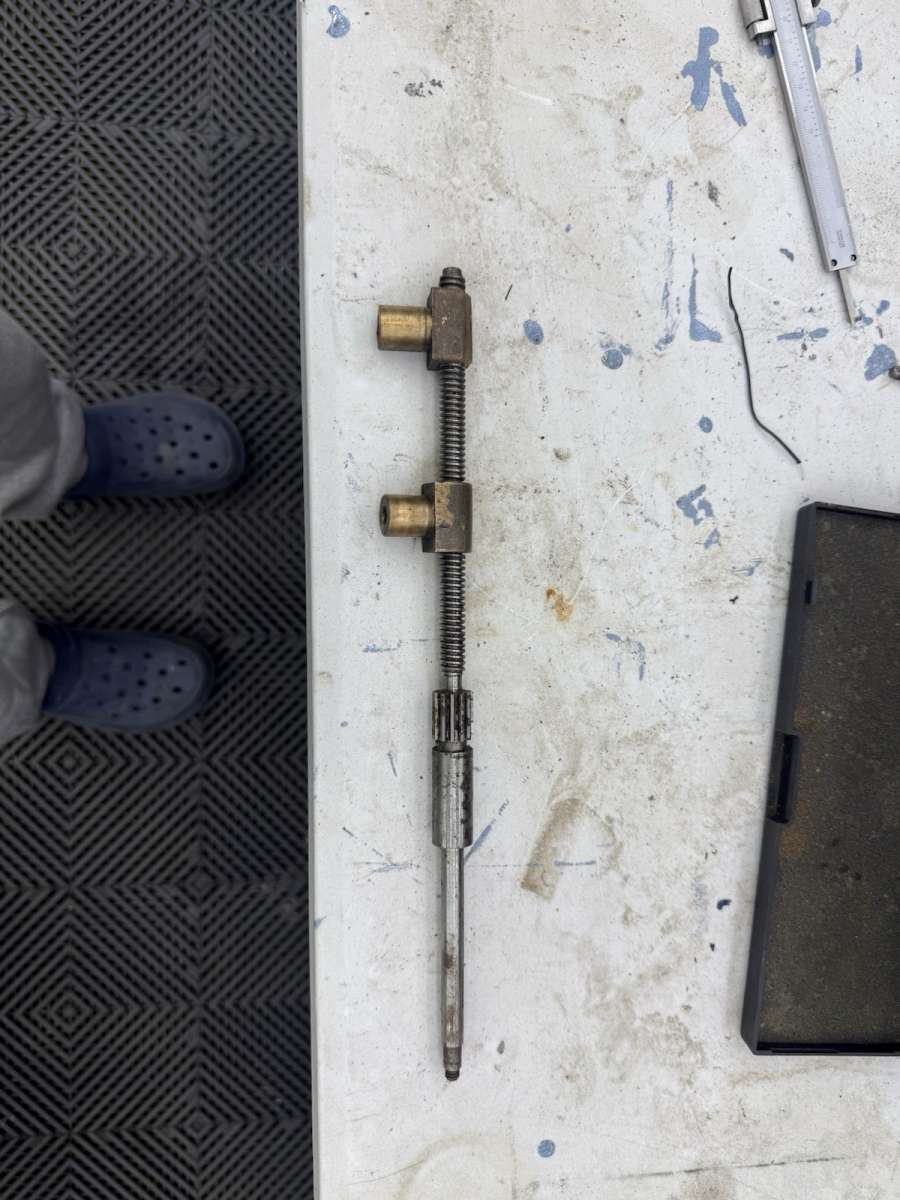
                                                      Perhaps I should look out for a New Cross feed screw for a BOXFORD Imperial lathe – mine has at least 0.065″ end float. If I can’t find one for a reasonable price, thinking of just replacing the screwed bit by grafting it onto the “non screwed” end. Ps, I don’t know why this photo has 2 nuts !!

                                                      Cross Slide Screw

                                                    Viewing 25 posts - 1 through 25 (of 26 total)
                                                    • Please log in to reply to this topic. Registering is free and easy using the links on the menu at the top of this page.

                                                    Latest Replies

                                                    Viewing 25 topics - 1 through 25 (of 25 total)
                                                    Viewing 25 topics - 1 through 25 (of 25 total)

                                                    View full reply list.