Slideway locking screw bottoms out

Slideway locking screw bottoms out

Home Forums Help and Assistance! (Offered or Wanted) Slideway locking screw bottoms out

Viewing 25 posts - 1 through 25 (of 26 total)
  • Author
    Posts
  • #452393
    Bill Phinn
    Participant
      @billphinn90025

      I've recently bought a Warco WM18 and am still in the process of checking things over.

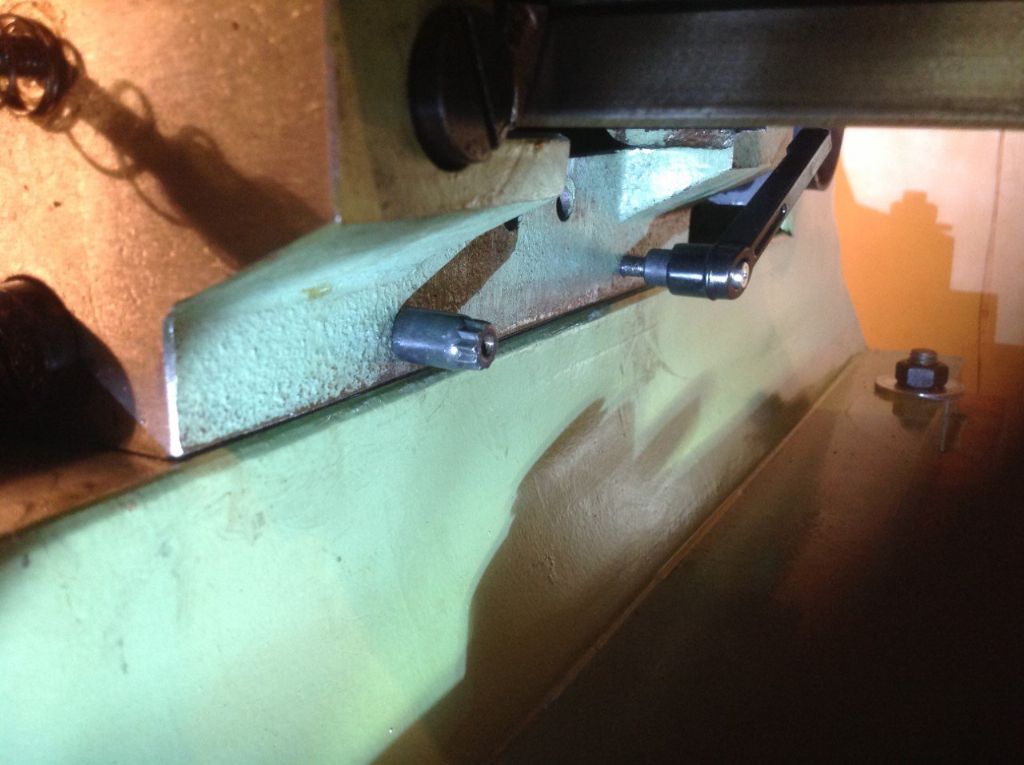
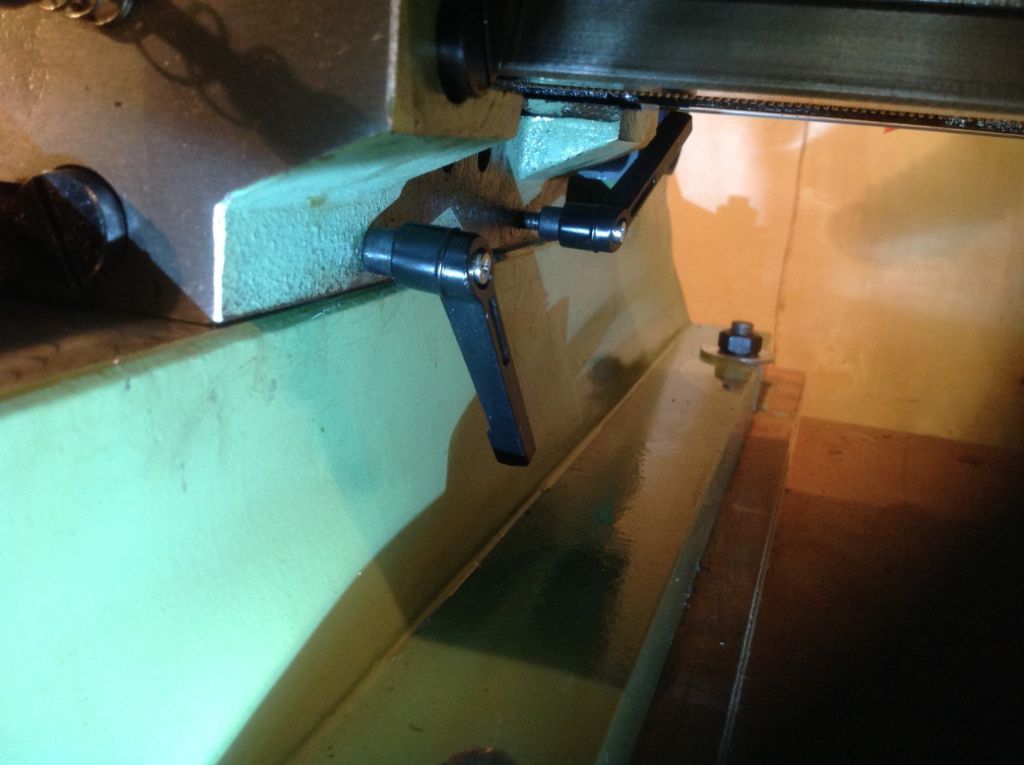
      I've met with a bit of a puzzle in the Y axis locking screws. Basically the locking screw nearer the front of the table bottoms out (i.e. goes all the way in) but even then doesn't actually lock the table. I've put a longer M6 screw in just to test how far down you need to go to reach a stop, and it is the full length of the supplied screw plus about 5mm. The female threads in the hole in question are in good condition.

      I feel sure there is a simple explanation for this, but it eludes me at the moment. Any help would be much appreciated.

      ETA: I should mention that even when a longer screw is inserted and it reaches a stop it doesn't very effectively lock the table.

      y axis locks 2.jpg

      y axis locking screws.jpg

      Edited By Bill Phinn on 15/02/2020 20:14:14

      #33531
      Bill Phinn
      Participant
        @billphinn90025
        #452394
        JasonB
        Moderator
          @jasonb

          If they are like some of the sieg machines then there is a small round slug that goes into the hole before the screw you may be missing it in that hole, what do the parts drawings show?

          #452395
          Clive Foster
          Participant
            @clivefoster55965

            If the locking screw pushes on the gib strip there ought to be an intermediate "pusher" rod with one end angled to match the gib strip and the other flat for the screw to push on. Around 10 – 12 mm overall length sounds about right as the length of such devices usually seem to be about twice the screw diameter.

            Easy to make one if need be.

            If the manual has a parts diagram its worth looking at to confirm or deny the supposition.

            Clive

            Jason keyboards faster!

            Edited By Clive Foster on 15/02/2020 20:19:51

            #452403
            old mart
            Participant
              @oldmart

              They usually have a tiny brass cylinder down the hole. Remove both screws and check the depth of the holes, you will then know how long the cylinder should be that just goes down the hole.

              #452405
              Bill Phinn
              Participant
                @billphinn90025

                Thanks for your answers.

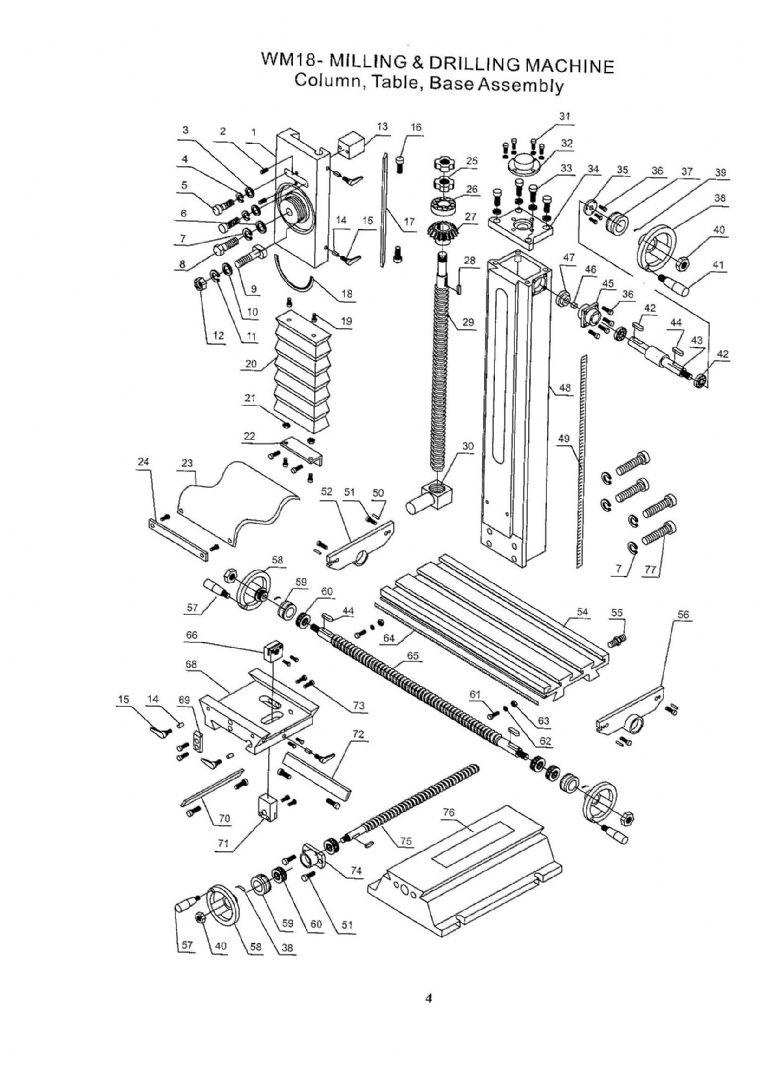
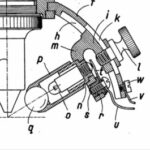
                I've attached a scan of the relevant page. Slightly unhelpfully, it appears to depict an older version of the WM18 but I think it does show the presence of a brass pin; at least that is what part no. 14 is described as so I'm assuming the y axis is the same.

                Is it possible the brass pin is in there but has dislodged from its correct position? If so, how would I go about getting it back into position and having an operable slidelock?

                wm18 table etc. parts diagram.jpg

                #452407
                old mart
                Participant
                  @oldmart

                  14 it is, you could make one out of a brass woodscrew in five minutes with a hacksaw and a file.

                  #452409
                  Stuart Smith 5
                  Participant
                    @stuartsmith5

                    Bill

                    I have a WM16 and it has a brass plunger which the locking screw presses on.

                    I have just had a look at mine and I can see it when I remove the locking arm. It’s about 10mm in from the end.

                    Perhaps yours is missing this part.

                    Stuart

                    #452414
                    Bill Phinn
                    Participant
                      @billphinn90025

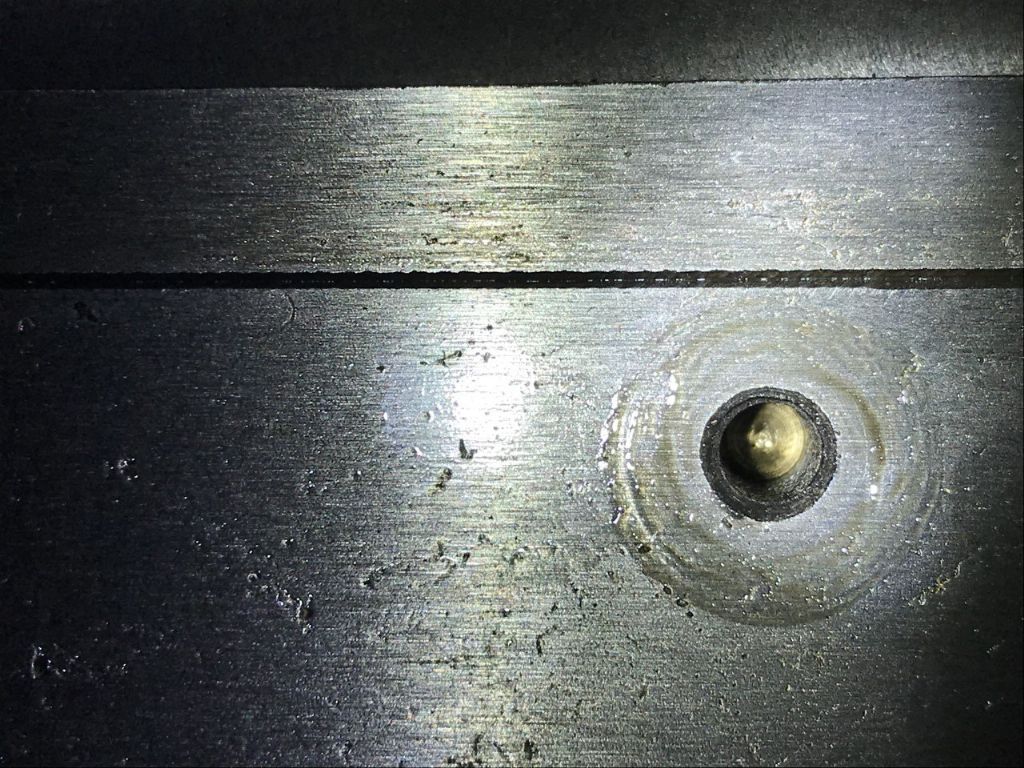
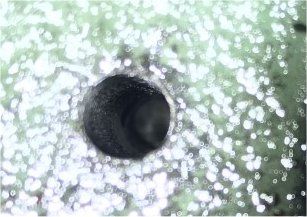
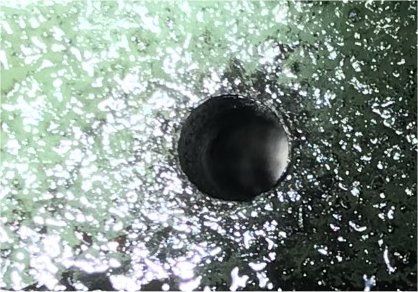
                      I've uploaded one photo of one of the x axis holes with the screw removed clearly showing the brass pin, and two photos of the y axis hole not apparently showing a brass pin. I couldn't swear to not being able to see it, mind you; my eyes are not that good down holes.

                      Obviously making a brass pin is not going to be any problem. An ongoing concern though is whether there is a brass pin in there somewhere but it has got dislodged sideways somehow only to jam up the y axis at some critical moment. Is this possible, or is there nowhere a brass pin could be hiding other than down that hole?

                      ix axis brass pin.jpg

                      pinless hole 2.jpg

                      pinless hole.jpg

                      #452417
                      DMB
                      Participant
                        @dmb

                        Bill,

                        I would think that all there is, is a drilled and tapped hole. Why would the maker create a cavity at the bottom and what for? Cannot think of any logical reason for an apparently useless cavity. Suggest you go ahead with making a brass slug and follow it up with the locking handle. Should work OK, at least I hope so. Just seems like an omission during assembly. Good luck, hope all goes well.

                        John

                        #452424
                        Bill Phinn
                        Participant
                          @billphinn90025

                          There does after all appear to be a brass pin in there, only it's very deep in the hole, so deep that it has apparently fallen into a recess in the gib strip. Not sure how to proceed.

                          #452433
                          Mark Rand
                          Participant
                            @markrand96270

                            it would be almost impossible for the pin to escape from the machine side of the hole, since the gib is in the way. your options are:-

                            1. Have a shout at Warco and demand a prompt supplie of the missing pin.
                            2. pull the saddle off the base, push out the pin that's there and manufacture an additional one out of whatever brass/bronze you can find.
                            3. turn a brass pin of the right diameter to fit (use a drill or similar to find diameter), file to match the dovetail angle and live with it.
                            4. poke a drill down the hole to cut a conical face on the corresponding bitof the gib and use a longer screw fronted by a bearing ball of suitable diameter or a conical point to match the crater in the gib.

                            All of the above are valid methods, and there will be others. If the machine is brand new, No1 is the approved answer. If the machine is "pre-loved", then 2 followed by 3 followed by 4 would by my choices. I have used all except No1 (new machine, What's one of those?).

                            In the meantime, just use the locking screw that does work. If the gib is adjusted with minimal clearance it should be sufficient for locking the slide without any problems.

                            #452436
                            Pete Rimmer
                            Participant
                              @peterimmer30576

                              IMO the pin is (supposed to be) there to present a flat face to the gib so that no burr is ever raised. Being a tapered gib if you use a screw with any kind of point it might raise a spot on the gib which will get lifted on the edge of the hole when later you come to adjust the gib for wear. I'd re-make the brass peg or even perhaps use some lead shot in the hole so the gib remains un-marred.

                              #452441
                              Clive Foster
                              Participant
                                @clivefoster55965

                                Warco site says the WM18 has taper gibs. If so the pusher must have an angled end matching the gib & dovetail angles.

                                Flat ended pusher or intermediate ball will distort the gib.

                                Obviously you cant have a hole or recess for the pusher to work in because that will prevent gib adjustment.

                                Best to strip it all out and look. More tedious and heavy than difficult.

                                Clive

                                #452444
                                Bill Phinn
                                Participant
                                  @billphinn90025

                                  Many thanks to everyone for your replies.

                                  A short while ago I managed to persuade a much younger pair of eyes than mine to peer down the hole – the conclusion: I'm imagining the presence of anything brassy down that hole. Since, also, a long thin drill bit inserted into the hole appears to reach all the way to the near side of the gib, it's difficult to imagine where any brass pusher that may have been in there could have disappeared to, unless the pusher was for some reason ludicrously short.

                                  I'm going to try and get hold of the appropriate pusher from the retailer (sorry, Mark, I did buy new) and hopefully just get on with using the machine.

                                  #452446
                                  Kiwi Bloke
                                  Participant
                                    @kiwibloke62605

                                    Getting the angle of a push rod absolutely correct is made a bit tricky by the taper of the gib. However, many well-respected machines get around this problem by interposing a ball bearing between a flat-ended push rod and the gib strip. Of course, point contact is not ideal, but, in practice, taper gibs are stout enough not to be distorted (and there's nowhere for them to bend), in spite of Clive Foster's warning. At worst, a small dimple will be produced on the 'back' face of the strip, and it will take a lot of gib strip longitudinal adjustment before any raised lip of the dimple bears on the slide's gib-strip-bearing surface.

                                    #452447
                                    Hopper
                                    Participant
                                      @hopper

                                      Posted by Bill Phinn on 16/02/2020 00:46:10:…

                                      …, it's difficult to imagine where any brass pusher that may have been in there could have disappeared to, unless the pusher was for some reason ludicrously short.

                                      Most likely was never put in there at the factory. Would not be entirely unheard of with Chinese machinery. Or possibly fell out during shipping due to vibration etc and some Helpful Harry put the screw back in place but left the pusher on the floor where it lay.

                                      #452453
                                      Michael Gilligan
                                      Participant
                                        @michaelgilligan61133
                                        Posted by Hopper on 16/02/2020 04:39:31:

                                        Posted by Bill Phinn on 16/02/2020 00:46:10:…

                                        …, it's difficult to imagine where any brass pusher that may have been in there could have disappeared to, unless the pusher was for some reason ludicrously short.


                                        Most likely was never put in there at the factory. Would not be entirely unheard of with Chinese machinery. Or possibly fell out during shipping due to vibration etc and some Helpful Harry put the screw back in place but left the pusher on the floor where it lay.

                                        .

                                        Possibly an innovative ‘cost reduction’ exercise at the factory devil

                                        MichaelG.

                                        .

                                        .

                                        To quote from your recent post on the ‘Screwcutting’ thread:

                                        But I always bear in mind the words of Nevil Shute, […]

                                        'An engineer is a man who can do for five bob what any bloody fool can do for a quid'.

                                        Edited By Michael Gilligan on 16/02/2020 07:54:24

                                        #452462
                                        Pete Rimmer
                                        Participant
                                          @peterimmer30576
                                          Posted by Clive Foster on 16/02/2020 00:30:38:

                                          Warco site says the WM18 has taper gibs. If so the pusher must have an angled end matching the gib & dovetail angles.

                                          Flat ended pusher or intermediate ball will distort the gib.

                                          Obviously you cant have a hole or recess for the pusher to work in because that will prevent gib adjustment.

                                          Best to strip it all out and look. More tedious and heavy than difficult.

                                          Clive

                                          The angle presented is only roughly 1 degree. Simply putting a very shallow concave on the end of the brass pin would be adequate, and you wouldn't need to orientate it.

                                          #452473
                                          Hopper
                                          Participant
                                            @hopper
                                            Posted by Michael Gilligan on 16/02/2020 07:52:53:

                                            Posted by Hopper on 16/02/2020 04:39:31:

                                            Posted by Bill Phinn on 16/02/2020 00:46:10:…

                                            …, it's difficult to imagine where any brass pusher that may have been in there could have disappeared to, unless the pusher was for some reason ludicrously short.

                                            Most likely was never put in there at the factory. Would not be entirely unheard of with Chinese machinery. Or possibly fell out during shipping due to vibration etc and some Helpful Harry put the screw back in place but left the pusher on the floor where it lay.

                                            .

                                            Possibly an innovative ‘cost reduction’ exercise at the factory devil

                                            MichaelG.

                                            .

                                            .

                                            To quote from your recent post on the ‘Screwcutting’ thread:

                                            But I always bear in mind the words of Nevil Shute, […]

                                            'An engineer is a man who can do for five bob what any bloody fool can do for a quid'.

                                            Edited By Michael Gilligan on 16/02/2020 07:54:24

                                            Or maybe the brass mine is shut down due to coronavirus.

                                            #452477
                                            Journeyman
                                            Participant
                                              @journeyman
                                              Posted by Bill Phinn on 15/02/2020 22:16:29:

                                              There does after all appear to be a brass pin in there, only it's very deep in the hole, so deep that it has apparently fallen into a recess in the gib strip. Not sure how to proceed.

                                              This is similar to an experience I had when working on my WM14 mill, much smaller than the WM18 but from the same family. A quote from my website

                                              "When adjusting the gibs and clamping screws I had an interesting problem trying to get one of the brass pads in place behind the clamp screw. Every time I pushed the pad into the hole as it approached the gib strip it would tumble through 90° and disappear. Investigation revealed that the tapped hole for the adjustable gib screw had been drilled way too deep and had intersected the bottom of the clamp screw hole. After a bit of head scratching I overcame this by blanking off the gib adjuster screw hole with a short grub screw screwed in tight and then re-drilling and tapping the clamp screw hole."

                                              Don't know if this helps with your particular problem but may throw a little light.

                                              John

                                              Edited By Journeyman on 16/02/2020 10:18:11

                                              #452478
                                              Clive Foster
                                              Participant
                                                @clivefoster55965

                                                Concerning the risk of gib distortion it depends on the style of gib.

                                                A conventional thin gib can and will distort if the locking force is applied over a small area such as by ball or radius end. The action is also poor as not only do the very localised locking forces tend to pick up on minor imperfections in the machined surface but the whole action is inefficient. With a tapered end to the pusher the gib the gib should be firmly pushed up into the top of the female dovetail as well as against the male dovetail on the slide. Mechanically much firmer and the locking action needs much less force on the screw.

                                                Not theory. I have seen and replaced gibs that sprung into a visible bend when removed due to small area locking. I have also re-worked gib systems so the locking screw, and adjustment screws in the case of ordinary plain gibs, act to push the gib up into the top of the dovetail recess. After such effort everything works much better with reduced working clearances and the slides lock more firmly with less force. Considerable effort needed to get things right but, I felt the improved performance well worth it when re-furbishing an older lathe or one where affordability to the first buyer meant some engineering infelicities had to be accepted.

                                                Pete says that the angle presented by the outside of the gib is only 1 degree, much less than the dovetail angle. This can only be so if the gib is much thicker. Obviously a thicker gib is far less likely to bend but pushing on a reasonable area seems a much beter way of going about things.

                                                Clive

                                                #452480
                                                Pete Rimmer
                                                Participant
                                                  @peterimmer30576

                                                  I beg your pardon Clive you are quite right. The 1 degree is the (approximate) taper angle of the gib, not the dovetail angle.

                                                  I should allow more wake-up time on a Sunday morning before punching the keys.

                                                  #452516
                                                  old mart
                                                  Participant
                                                    @oldmart

                                                    A plain brass cylinder is all that you want, it pushes against a flat surface in this type of mill.

                                                    #452549
                                                    Bill Phinn
                                                    Participant
                                                      @billphinn90025

                                                      Thanks a lot for everyone's further replies.

                                                      John [Journeyman], your experience of things is pertinent in my case.

                                                      The M8 hole for the front gib adjusting screw penetrates about 25mm beyond its meeting point with the anterior y-axis locking screw hole coming in at right angles to it, and the locking screw hole is M6. This means that if the brass pusher is, say, 2cm long, the 8mm of empty space [at least] that it has to bridge unsupported before it contacts the gib strip leaves at best only 12mm of the pusher supported in the M6 hole. The chance of the tip flipping left or right and the whole pusher dropping into the M8 channel perpendicular to it seems a distinct possibility.

                                                      If this were to happen, hopefully the pusher is slim enough to enable a pick to be inserted down the M8 hole that can then hook the pusher out for reinsertion.

                                                      The positive news from my point of view is that peering down the gib adjuster hole reveals no sign of a displaced brass pusher, so we can, I believe, safely assume the pusher is simply missing.

                                                    Viewing 25 posts - 1 through 25 (of 26 total)
                                                    • Please log in to reply to this topic. Registering is free and easy using the links on the menu at the top of this page.

                                                    Latest Replies

                                                    Viewing 25 topics - 1 through 25 (of 25 total)
                                                    Viewing 25 topics - 1 through 25 (of 25 total)

                                                    View full reply list.