Workbench

Workbench

Home Forums Workshop Tools and Tooling Workbench

  • This topic has 12 replies, 6 voices, and was last updated 3 May 2019 at 19:23 by Nicholas Farr.
Viewing 13 posts - 1 through 13 (of 13 total)
  • Author
    Posts
  • #407304
    Nicholas Farr
    Participant
      @nicholasfarr14254

      Hi, "Don't try this at home" as they say on TV, unless you have good experience of moving heavy metal where using conventional lifting equipment is prohibitive.

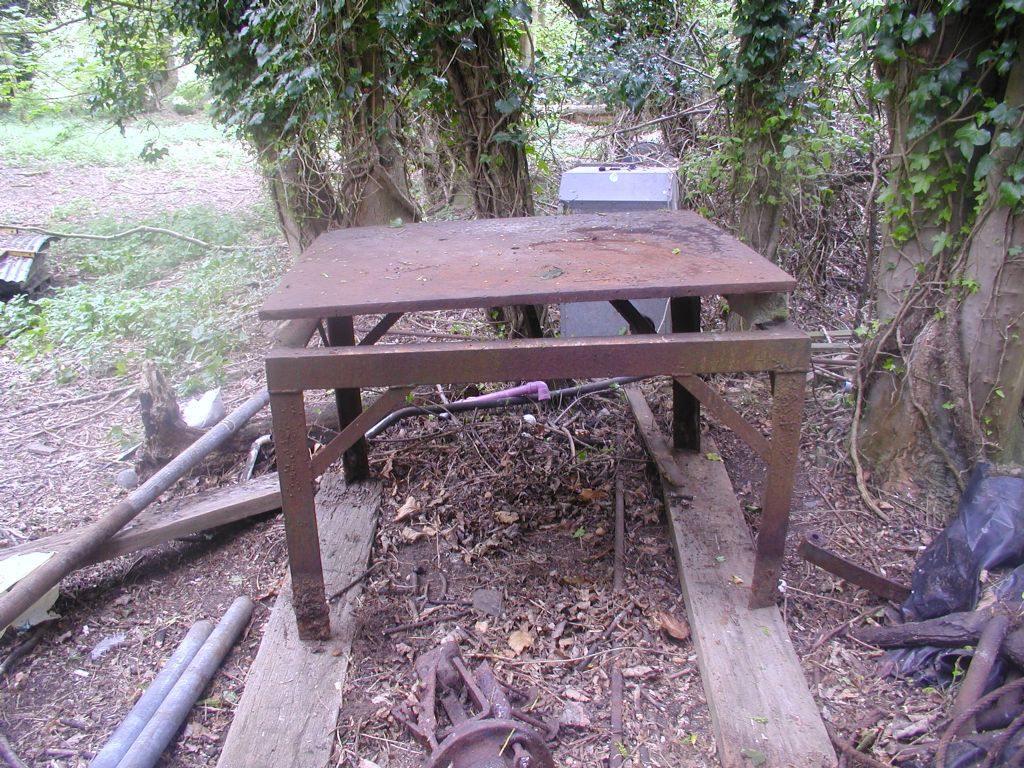
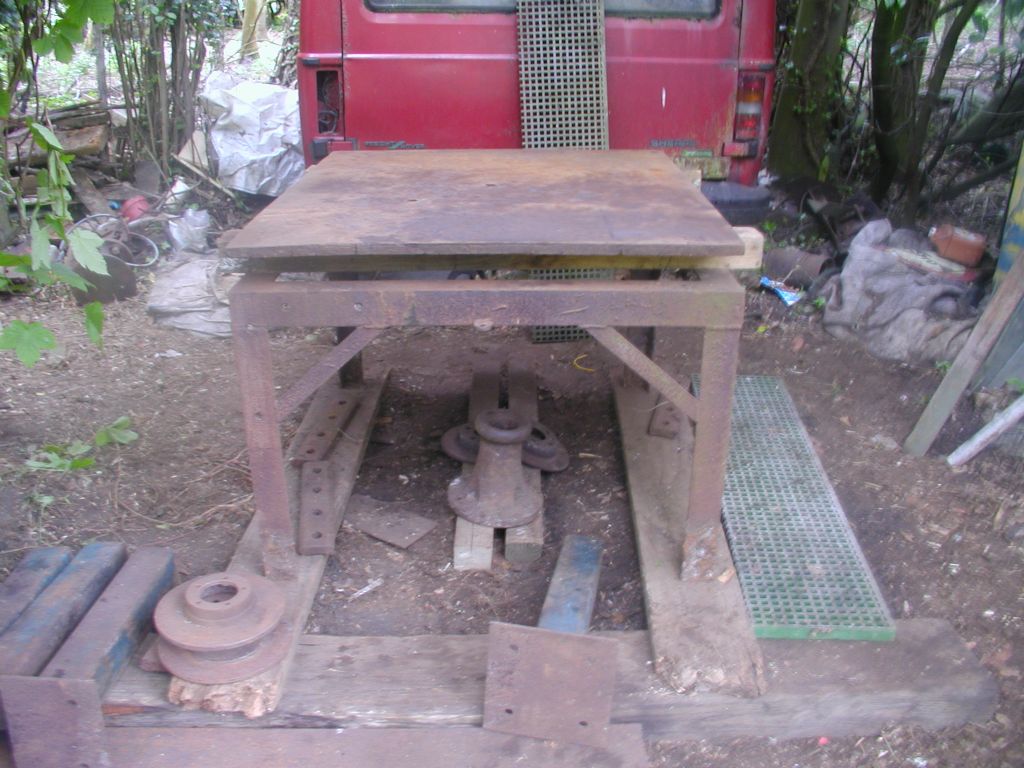
      I needed to move this bench that has been sitting among the trees behind my garage. I put it there about 15 or so years ago with a teleporter that I had use of when working for them at that time, but now don't have such. Short of hiring a crane, at this point in time there is no way of using lifting gear. I had removed the top from its support frame yonks ago with the intent of modifying the frame, but there it sat forevermore since then.

      p4290691.jpg

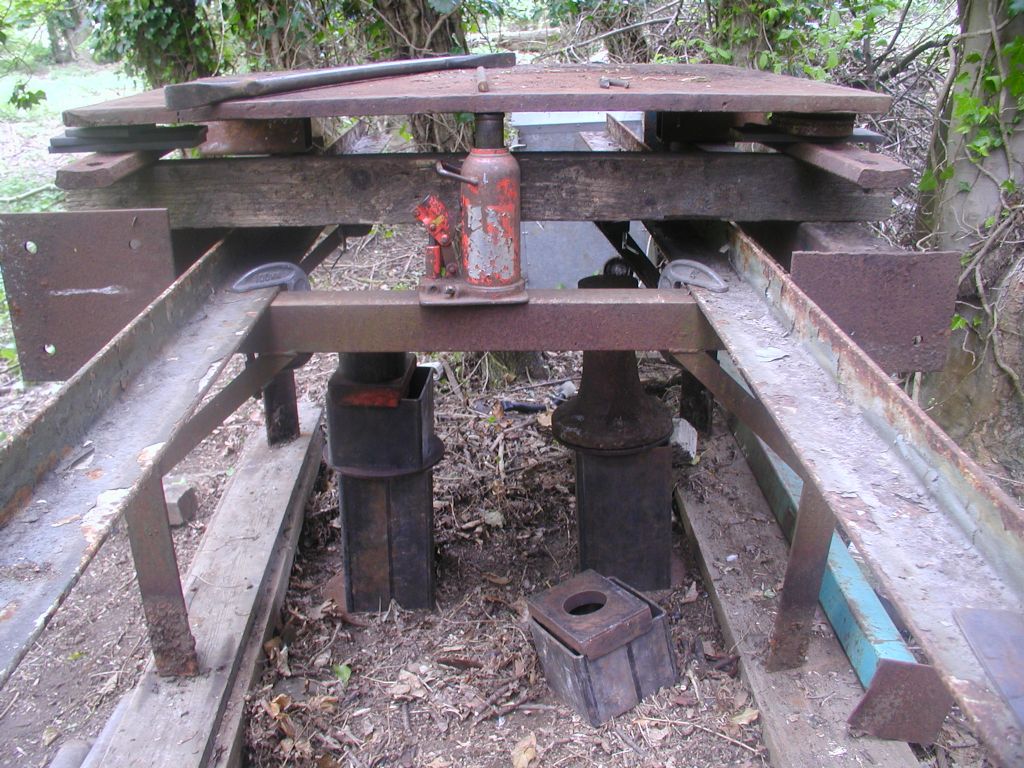
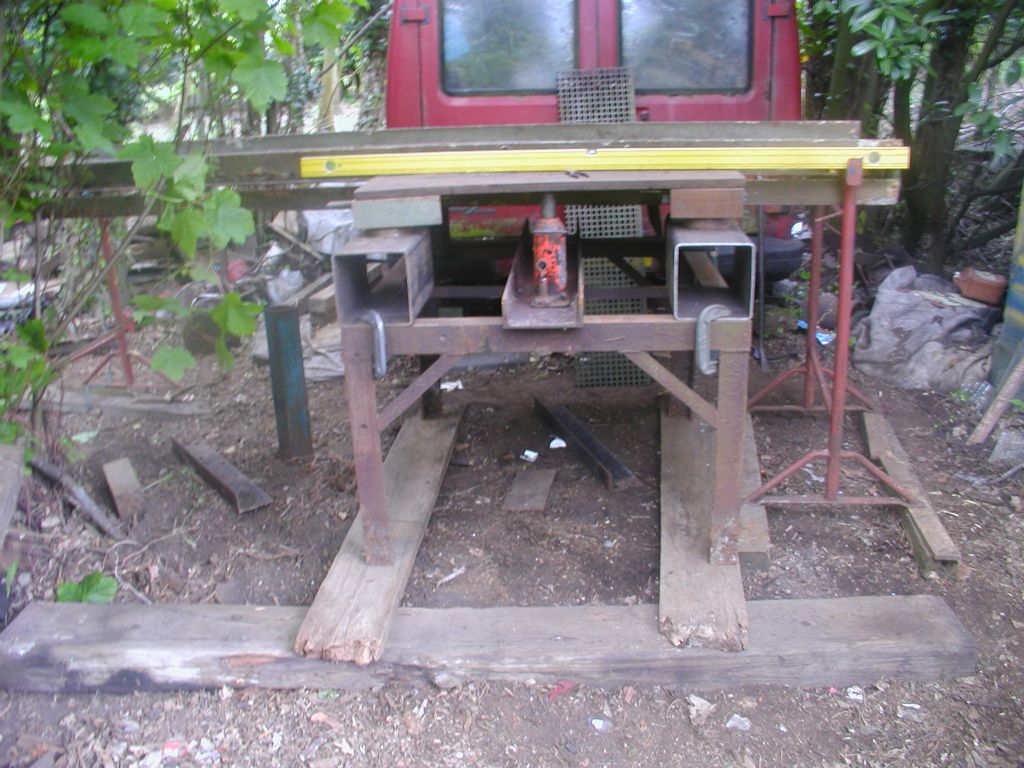
      First of all I had to level it up a bit as the legs had sunk into the ground. My plan then was to use lengths of heavy angle iron and builders work trestles to move the top first, as this weighs in the region of 400Kgs as it is 1065 x 1230 x 25mm thick. The top had to be lifted about 300mm higher to get the angle iron in. I raised it up by jacking and packing each side a little at a time to get the required height.


      p4290693.jpg

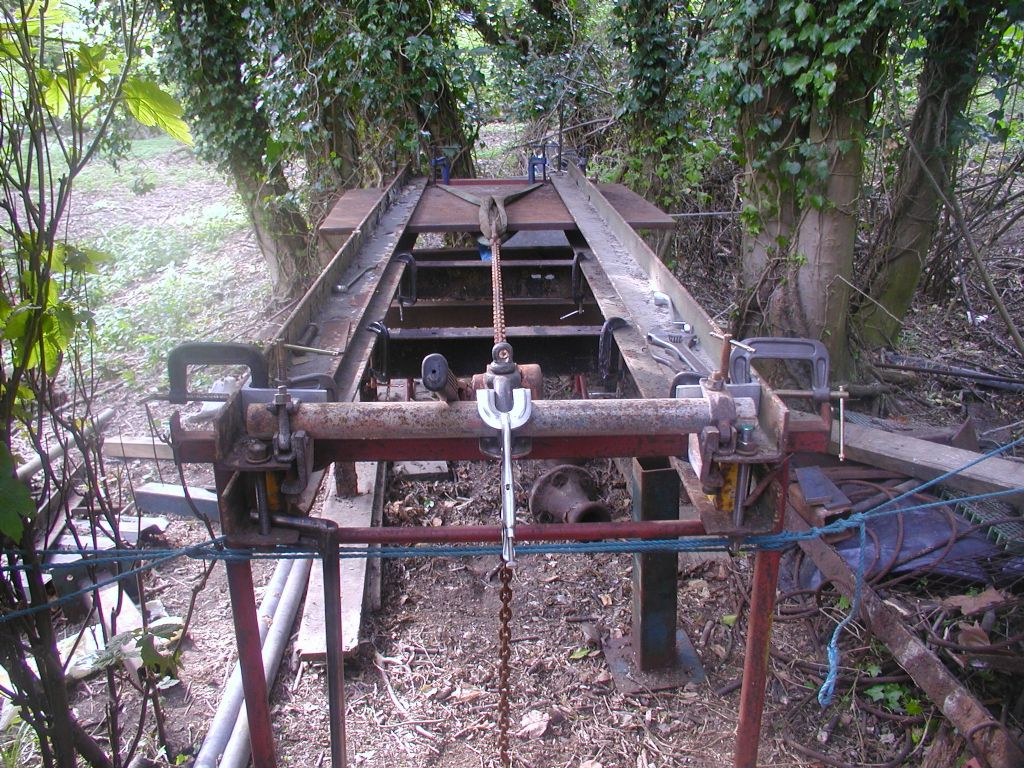
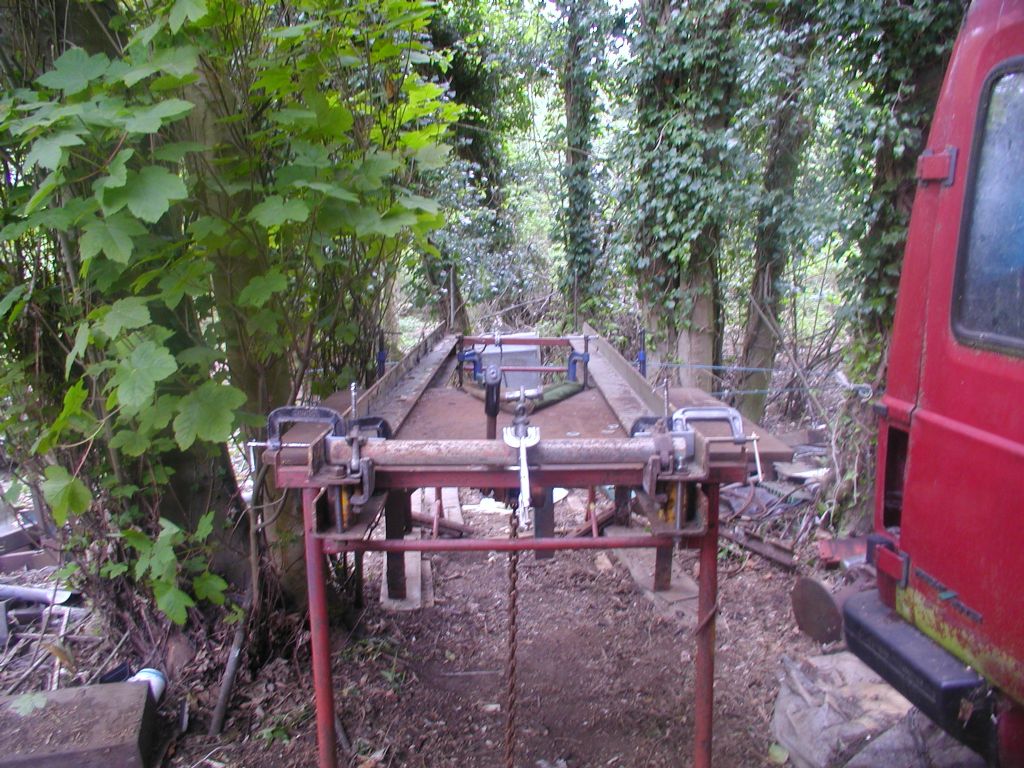
      Once the top was high enough, the angle irons and the trestles were set up and the top was pulled along with a chain Pull-Lift. The set up is shown below, ready for the pull. This is an operation where you keep yourself out of the danger zone should it all go pear-shaped.

      p4300694.jpg

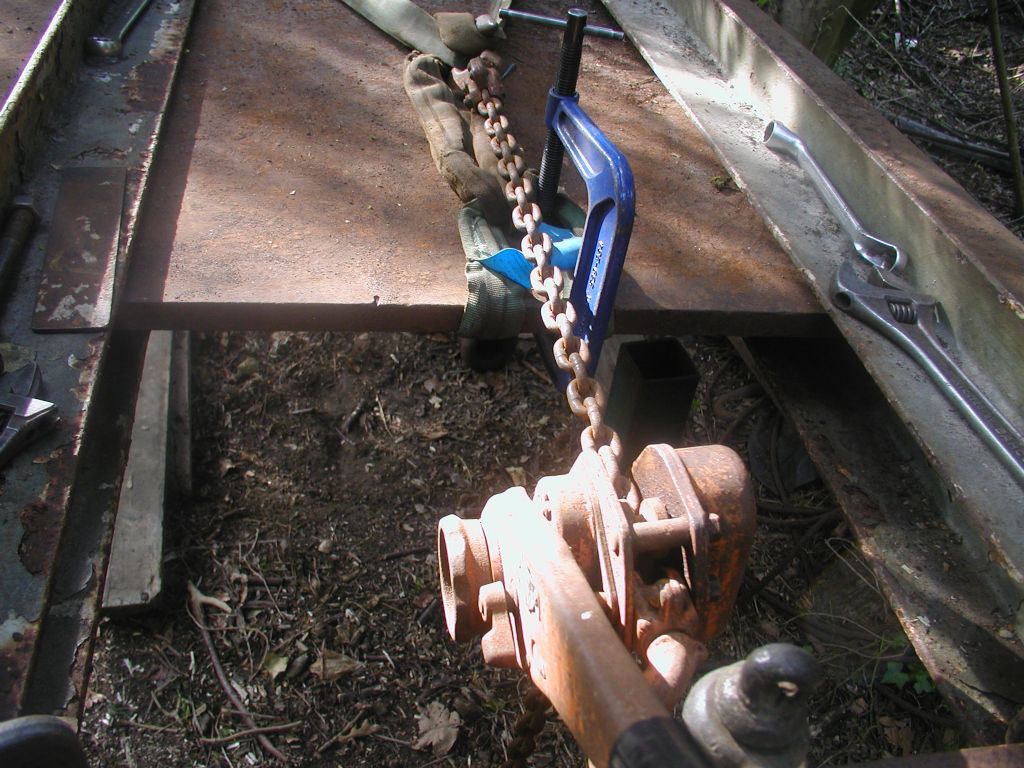
      Pulling as you may observe its only done on the angle irons that the plate is sliding on and not on the trestles. This setup is very stable even though it may not seem so. So I was now confident to commence with the pull after checking everything was OK.

      p4300695.jpg

      The top was successfully slide along the angle irons with no hint of been unstable or danger of collapse. I reconfigured the slings to get the last 150mm or so gap that can be seen between the top and the Pull-Lift.

      Today I have to move the support frame, transfer the weight of the top back onto it and then move the setup forward to get the next move.

      Regards Nick.

      Edited By Nicholas Farr on 01/05/2019 10:47:56

      #19326
      Nicholas Farr
      Participant
        @nicholasfarr14254

        Moving a large heavy fabrication bence.

        #407316
        not done it yet
        Participant
          @notdoneityet

          What was the bench top made from? Should only be about a quarter of a tonne, if steel.

          Pieces of pipe under heavy objects can make the job easier as long as the surface is relatively smooth (and level).

          #407327
          Ian S C
          Participant
            @iansc

            My calculator says .1 eliphant = 400 Kg

            Ian S C

            #407412
            Nicholas Farr
            Participant
              @nicholasfarr14254

              Hi NDIY, bit of a typo there, I'd estimated around 300Kgs erring on the heavy side. According to my old ASD buyers guide, it is 258Kgs give or take a couple of Kgs. so yes close to quarter of a tonne. I am well aware about the use of tubes as rollers and have done that many times in my day jobs that I've had, but I'm sure you realise that the terrain that I'm moving it over is not suitable for that idea, nor can I get it down or lift it up again in a safe manner to use such an option.

              However, the second move today went equally as well as the one yesterday, it also had to veer to the left a little, to miss the old van that can just be seen on the right.

              p5010696.jpg

              Regards Nick.

              #407441
              not done it yet
              Participant
                @notdoneityet

                Nick, you are clearly moving it on the level. My point was that pipe rollers would do away with any heaving on a chain block. I wasn’t suggesting the pipes were laid on the ground!

                #407448
                Chris Evans 6
                Participant
                  @chrisevans6

                  I concur re the 258kg. I always multiply to get cubic inches then multiply by 0.28 then divide answer by 2.2 Whichever way you do it that is a heavy old lump.

                  #407451
                  Nicholas Farr
                  Participant
                    @nicholasfarr14254

                    Hi NDIY, with all due respects I disagree with you. To start with it is only reasonably level and end for end there is a slight twist, but within a safe tolerance, it is also coming slightly uphill, furthermore I would have to lift the plate around 200mm or so higher depending on the size of rollers, this would in my view bring the height to base ratio close to an unstable state. You then have the problem of controlling skewing of the rollers and once gravity takes over, it will run away with acceleration. It is a lever operated Pull-Lift not a conventional chain block and is virtually effortless although slow to use, but the control of movement is total and can be operated from a point where if it where to collapse, it would fall away from me. The fact that I have the chain pulling underneath the plate and from the back end and the anchorage point slightly above the plate, lifts a small amount of weight off the front end, which stops it digging in and there is no twisting of the plate during the pull. The most important thing about moving heavy metal is; don't put yourself in a danger zone.

                    Regards Nick.

                    #407452
                    vintage engineer
                    Participant
                      @vintageengineer

                      I have a 8 x 4 x 1" of road plate steel on my fabrication bench and that weighs 800kg

                      #407517
                      Bazyle
                      Participant
                        @bazyle

                        I'm a bit confused, the angle iron seemed to start off underneath then appeared on top. Clever trick. where exactly are you moving it? into the workshop?

                        #407527
                        Nicholas Farr
                        Participant
                          @nicholasfarr14254

                          Hi Bazyle, no trick, there are two lengths of angle iron on each side, one above and one below. They have two 16mm holes in each end where they were bolted to a structure some 15 or so metres above ground for 40 odd years. At the moment they are bolted the same way up with a short piece of SHS between them with one bolt passing though it, each at end and just nip the top rail of the trestles, the other holes have a bolt through them without SHS and are just for good measure. I'm only moving it closer to my garage, to a space where it can be used and where my stick welder can reach. It would take up too much room in the garage for the amount of times it is likely to get used. In the longer term, I plan to put up an open front shelter for it.

                          Regards Nick.

                          Edited By Nicholas Farr on 02/05/2019 19:31:51

                          #407546
                          not done it yet
                          Participant
                            @notdoneityet
                            Posted by vintage engineer on 02/05/2019 09:35:46:

                            I have a 8 x 4 x 1" of road plate steel on my fabrication bench and that weighs 800kg

                            Is that the weight of the bench? ‘Cos a 8 x 4 x 1” sheet of steel would weigh only 600kg.

                            (244cm*122cm*2.54cm*7.85g/cm^3)/ 1000g/kg works out to only about 600kg?

                            Nick,

                            I’ve seen a lot worse terrain, but if you only levelled it ‘a bit’, I can understand your caution.smiley

                            #407640
                            Nicholas Farr
                            Participant
                              @nicholasfarr14254

                              Hi, this evening I completed my task successfully with out a hitch.

                              p5030699.jpg

                              Yesterday I reset my pulling frame and this morning did the final pull to the intended location. After doing a bit of groundwork, the frame was set level on a couple of timbers and then the plate was lowered back onto the packing to allow the pulling frame to be dismantled and cleared away. The plate was then lowered a little at a time each side and is now sitting on a couple of timbers on top of the frame, this gives it a comfortable working height until I build a new frame.

                              p5030703.jpg

                              All ready to start fabricating on.

                              Regards Nick.

                              Edited By Nicholas Farr on 03/05/2019 19:24:28

                            Viewing 13 posts - 1 through 13 (of 13 total)
                            • Please log in to reply to this topic. Registering is free and easy using the links on the menu at the top of this page.

                            Latest Replies

                            Viewing 25 topics - 1 through 25 (of 25 total)
                            Viewing 25 topics - 1 through 25 (of 25 total)

                            View full reply list.