What Did You Do Today 2019

What Did You Do Today 2019

Home Forums The Tea Room What Did You Do Today 2019

Viewing 25 posts - 576 through 600 (of 1,046 total)
  • Author
    Posts
  • #418551
    Nigel Graham 2
    Participant
      @nigelgraham2

      Blasted silly-face symbol! Sorry, I forgot the space before the quote mark.

      #418576
      Bazyle
      Participant
        @bazyle

        Just back from the EDMES club meeting. The boys have made a lot of progress with the track bed, worked out that the embankments are going to need a heck of a lot of fill material, but have reduced the gradients to 1 in 100. The steel for the actual track has arrived, some of it, and so some real track should appear soon.
        Fitted new gears to the cricket club lawnmower earlier, fixed their 'new' strimmer, drained diesel from the expensive but defunct new generator that has to go back after 3 failures in its first 4 hours use. Couldn't drain the oil as the ridiculous design has the drain bolt with no access hole or any provision for catching the oil.

        #418634
        Boiler Bri
        Participant
          @boilerbri

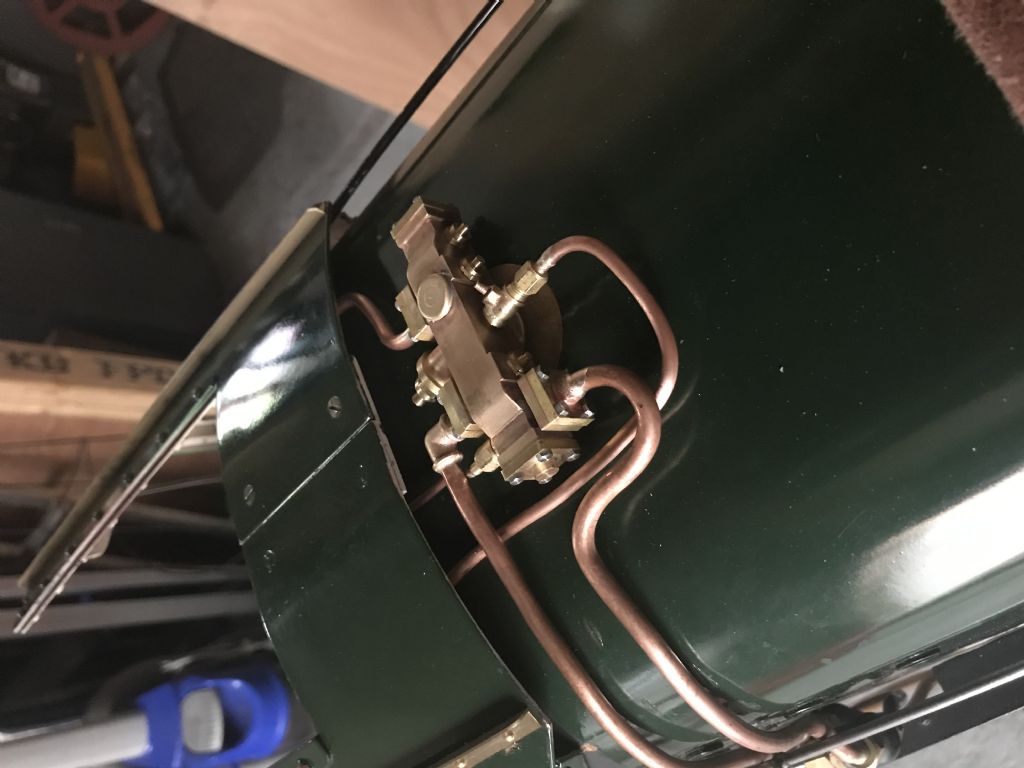
          Started to fit the new steam header and pipe it up to all the points

          It looks a lot better than the 16mm square bar it replaces

          Header1.jpeg

          #418951
          Nigel Graham 2
          Participant
            @nigelgraham2

            Well, yesterday really, but never mind…

            Completed modifying the unknown-make but right height fixed steady to fit the Harrison lathe.

            It needed a new V-groove cutting, encroaching on both the original, shallower groove and the relief in the sole of the steady's foot.

            My original idea had been to square it to the sole and machine the casting's vertical face to give me a clamping-surface on the angle-box. Then I realised I could use the set-bolts holding the fingers as adjustable spacers, with lock-nuts on them. Squared the assembly using the bench-drill's wide base (a Meddings, without separate table) and drilled a pilot hole on the marked-out new apex.

            The groove-cutting went reasonably well, using an end-mill, though the side-cut portion ended up a bit lumpy and I had to dress it a bit with a file.

            I found I'd cut it a fraction deeper than necessary. Now that might not have mattered in practice because I'd simply align the steady to the sloping face of the ways, but I wanted as much contact surface as possible. Tried to face-mill the sole down but after a couple of near -disasters as the set-up was not rigid enough for that, I completed the task by careful filing and a finishing rub on emery-paper with a squirt of WD-40, to gain a satisfactorily close sliding fit.

            Took a while to clear the embedded graphite / WD-40 / marking-fluid mix from my hands!

            I've still to make the clamping-plate, replacing the lost original.

            #418964
            Howi
            Participant
              @howi

              completed a simple electronic leadscrew (gearbox) using an arduino UNO, found details on web and moddified to suit my lathe. probably not going to do much thread cutting on the lathe but usefull for selecting different feed rates. can now do away with the change gears, what a pain they are (were?).

              no more noise from the gears, or getting covered in grease when they needed changing – anyone want a set of change gears? (only joking!)

              lots of ideas for ELS on web but most are trending towards CNC, very little for inbetweeners like me who just want something simple.

              If trending to CNC why not go the whole hog?

              #418976
              Dalboy
              Participant
                @dalboy
                Posted by geoff walker 1 on 12/07/2019 11:57:53:


                Just need to apply a sealing finish to the oak. I thought perhaps briwax applied with wire wool.

                Geoff


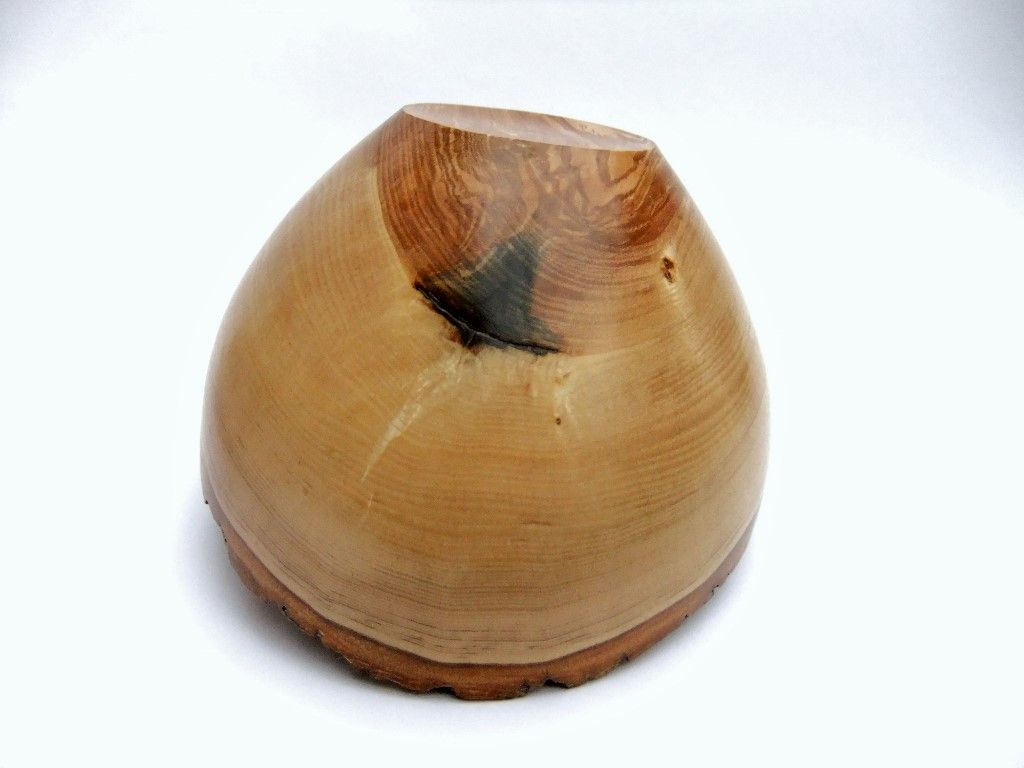
                I know a couple of days late but I turned this yesterday to only find a couple of nails in it and as you can see the black area is what they have caused. The wood for this is Ash had it been Oak the effect would have been a lot worse as it contains a lot of tannin which reacts with metal.

                To give another example if I want to turn Oak black I take wire wool and let it steep in vinegar for a while and when rubbed on the Oak will turn it instantly black, so avoid rubbing it with wire wool

                dscf1487 (1024x768).jpg


                As for using Oak on a nicely made scale model the grain is of the open type and can look wrong on a small scaled model, personally I would have used a closer grained wood for appearances and then stain it Oak coloured.

                Edited By Derek Lane 2 on 15/07/2019 10:43:17

                #418986
                Martin Kyte
                Participant
                  @martinkyte99762

                  Finished a John Wilding Scroll clock (currently ticking away beneath it's dome in the atrium at work as part of our LabArt show, and paid the final installment on the 5" GWR KING boiler.

                  regards Martin

                  #418994
                  derek hall 1
                  Participant
                    @derekhall1

                    Hi,

                    This weekend I have been boring…….boring the two castings LH and RH for the Quorn I am making.

                    BTW in another thread regarding boring holes, I had no problems at all in managing to bore 4 off 1 inch dia holes within a thou of nominal diameter and two pairs of these holes at 3.5 inches +/- 0.000 apart on my old circa 1962/3 Myford.

                    It took a couple of days though and I had to put up with "jokes" from my other half about me boring…..sigh…

                    I used a between centres boring bar made from a kit from Hemingway Tools.

                    Regards

                    Derek

                    #418996
                    Phil P
                    Participant
                      @philp

                      My wife always passes comment when I mention boring heads !!

                      Good result on those castings.

                      Phil

                      Edited By Phil P on 15/07/2019 12:51:07

                      #419008
                      Swarf, Mostly!
                      Participant
                        @swarfmostly
                        SNIP

                        As for using Oak on a nicely made scale model the grain is of the open type and can look wrong on a small scaled model, personally I would have used a closer grained wood for appearances and then stain it Oak coloured.

                        Edited By Derek Lane 2 on 15/07/2019 10:43:17

                        I hope the following won't be considered Off-Topic:

                        When I lived in Essex, one of my regular Saturday morning errands used to be a visit to Brown's Corner in Loughton. They had a large room full of ex-Government surplus tools for all trades, including plumbers. They often had the egg-shaped wooden tool that plumbers use (used) to flare the end of lead pipe. These were usually of box wood, occasionally of lignum vitae. I used to buy the box wood ones for a work colleague whose hobby was making detailed scale models of the ships of Nelson's Navy, he used them as a source of material for making the blocks for his rigging.

                        I fear it is a forlorn hope but maybe, just maybe, there might still be some of that sort of stuff about, if only one knows where to look!

                        Best regards,

                        Swarf, Mostly!

                        #419011
                        Martin Kyte
                        Participant
                          @martinkyte99762

                          Hi Swarf

                          You don't need to chop old tools (or even new ones) about to get hold of boxwood. Any decent woodturners supplyer will sort you out. For example

                          **LINK**

                          regards Martin

                          #419014
                          Dalboy
                          Participant
                            @dalboy

                            As Martin Kyte stated woodturning supplies for box wood as for Lignum Vitae if only very short pieces are required IE less than 4" then look for old bowls balls and cut them up they can be expensive you can pay £10 upwards for one in some places. I am fortunate in that I managed to pick up 18 for nothing.

                            #419016
                            geoff walker 1
                            Participant
                              @geoffwalker1

                              As for using Oak on a nicely made scale model the grain is of the open type and can look wrong on a small scaled model, personally I would have used a closer grained wood for appearances and then stain it Oak coloured.

                              Hi Derek,

                              Well I live and learn, I always believed oak, being a hardwood, was a close grained wood.

                              A quick internet search and I find it is the opposite, open grain as you said in your post.

                              Having said that I am happy with how it looks and it should blend in well with the colour scheme, dark grey and dark green. I just need to be careful in how I treat it!

                              Thanks for your comments

                              Geoff

                              #419021
                              Martin Kyte
                              Participant
                                @martinkyte99762

                                Some comments on hardwood and softwood.

                                Wood is a little wierd when it comes to hardwood/softwood classification. Hardwoods are all angiospems (flowering and seed bearing) and softwoods which are gymnosperms, generally producing seed bearing cones or seeds with no covering. So loosely there are fir trees (softwood) and deciduous (hardwoods).

                                This classification makes balsa which is a hardwood but physically softer than the softwoods. Conversely Yew is a softwood which is considerably harder than many hardwoods.

                                Softwoods have long cell structures compared to cell width and hardwoods have shorter cell structures. If a tree is fast growing it's grain structure tends to be more coarse whilst slower growing trees tend to be finer grained.

                                Confused?

                                A good place to start is to google woodcarvers and woodturners favourite materials. If you can carve it or turn it it's usually fine grained, easy to work, will hold detail and take a finish well.

                                regards Martin

                                #419041
                                Bazyle
                                Participant
                                  @bazyle

                                  You can often find some nice wood around the garden in small sizes. Pyracantha and hawthorne being shrub sized are not in a tearing hurry to grow big like a tree so have fine grain.

                                  #419052
                                  Martin King 2
                                  Participant
                                    @martinking2

                                    Old broken chisel handles are a good source of small pieces of boxwood.

                                    Perfect for the model ship purpose above and can be picked up at car boots for peanuts!

                                    We use LV bowls for making mallets, hardly any waste that way! They have got harder to find and therefore more expensive but I never pay more than a fiver for one.

                                    We remove a LOT of broken boxwood handles and keep the best ones for using to replace bits of lost "boxing" on antique fillester or rebate planes. Fiddly work to get the end grain right but worth doing on some of the more valuable planes.

                                    Cheers,Martin

                                    #419244
                                    mechman48
                                    Participant
                                      @mechman48

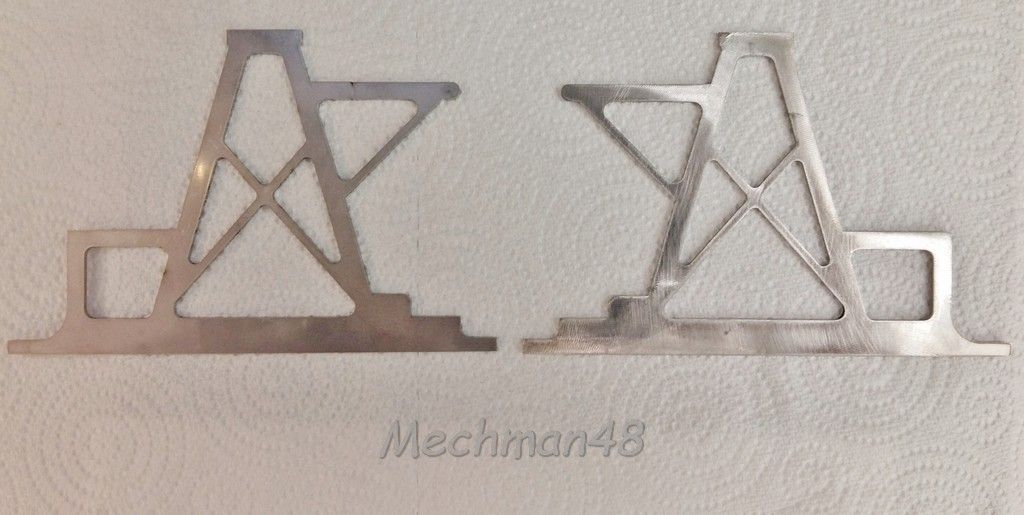
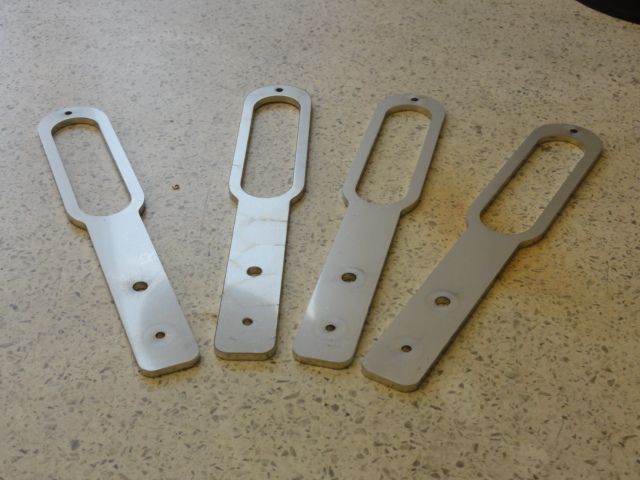
                                      Picked up a set of side frames for my present project that were laser cut at a friends ex workplace ( he's now retired but is called in occasionally ), superb results I must say…

                                      2.balance beam engine frames.jpg

                                      George.

                                      #419311
                                      Jim Nic
                                      Participant
                                        @jimnic

                                        That's cheating George. (Says I with tongue firmly in cheek having had these parts laser cut myself.)

                                        return conn rods.jpg

                                        You certainly got a good looking result which has probably saved you a whole lot of tedious work with fretsaw and file.

                                        Jim

                                        #419332
                                        Colin Heseltine
                                        Participant
                                          @colinheseltine48622

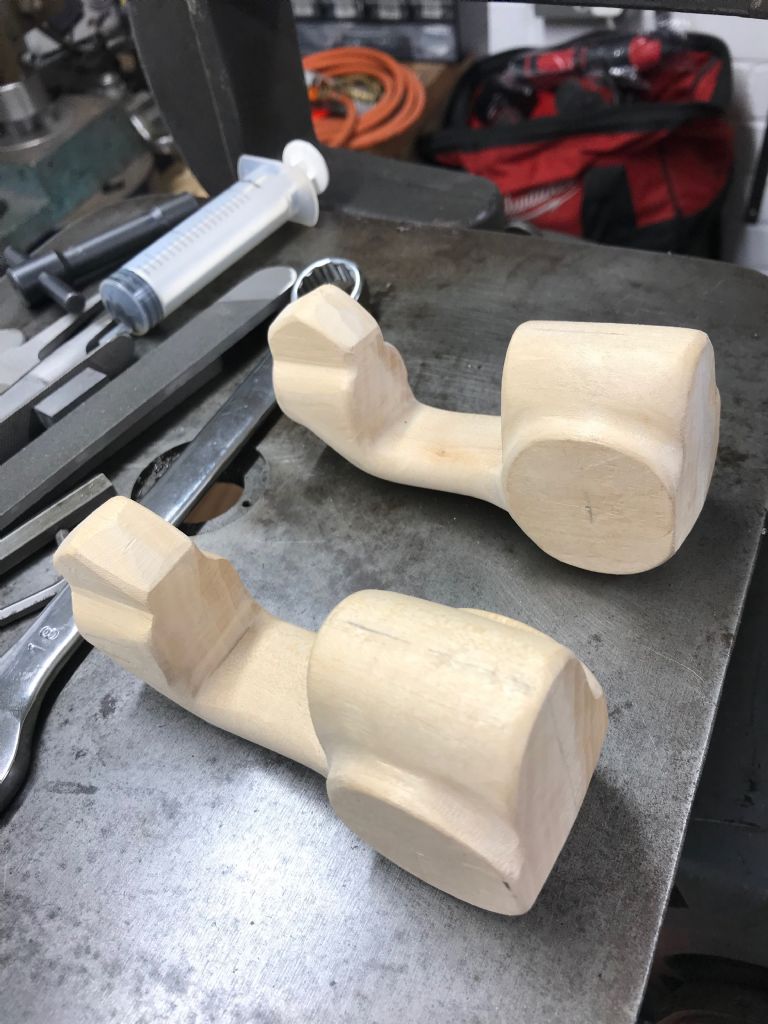
                                          Basswood is a fine grained wood which is lovely to carve and has a fine grain. Blocks of this are available from places such as hobbycraft.

                                          I have recently used it to make a couple of patterns which go off to the foundry to make some parts for my Excel Die Grinder.

                                          img_5093.jpg

                                          Colin

                                          #419444
                                          mechman48
                                          Participant
                                            @mechman48

                                            Earlier in the week actually; received via courier delivery my belated birthday gift from 2nd daughter, what she actually said was 'get some metal bits for the garage for your birthday & I'll pay for it' so, as I was in the process of setting up to make a sensitive drilling attachment for my lathe from some drawings & getting together the material this offer to get 'some metal bits' changed the plans so to speak so I ordered one of these off eBay, at a very reasonable price I thought, anyhow it arrived a couple of days ago… nice piece of kit, looks & feels reasonably well made & lubricated ( for Indian made ), not as precision ground on the yoke as I expected but everything has been through a grinding process, & the sliding operation feels smooth without any noticeable play, so we'll see how it preforms at a later date…

                                            Sensitive drill attachment (3).jpg

                                            Sensitive drill attachment (4).jpg

                                            So a nice thanks to daughter # 2 was duly proffered, a neat birthday gift at the price never the less.

                                            George.

                                            #419469
                                            Boiler Bri
                                            Participant
                                              @boilerbri

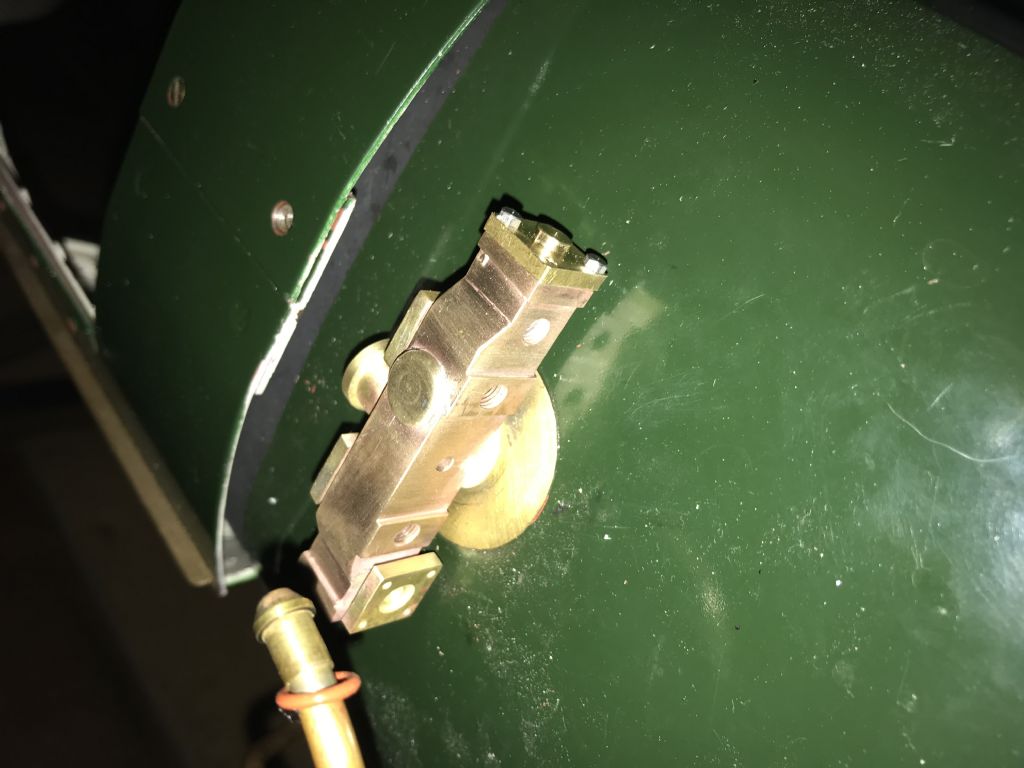
                                              I have now finished fitting and piping the steam header that i made. Its a lot better looking than the old 16mm square one that the engine came with.

                                              Header 2 .jpeg

                                              #419547
                                              Anonymous

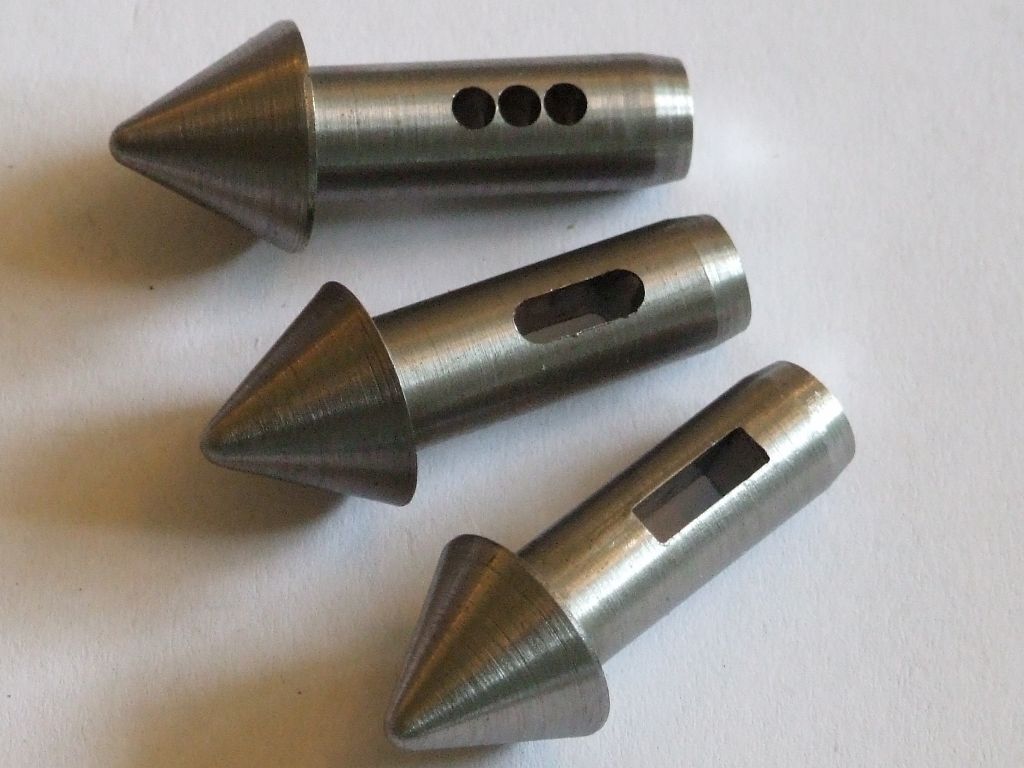
                                                I have now finished forming the rectangular slots in the anchor bolts and frost spikes for my traction engines. To summarise the sequence:

                                                frost_spikes_me.jpg

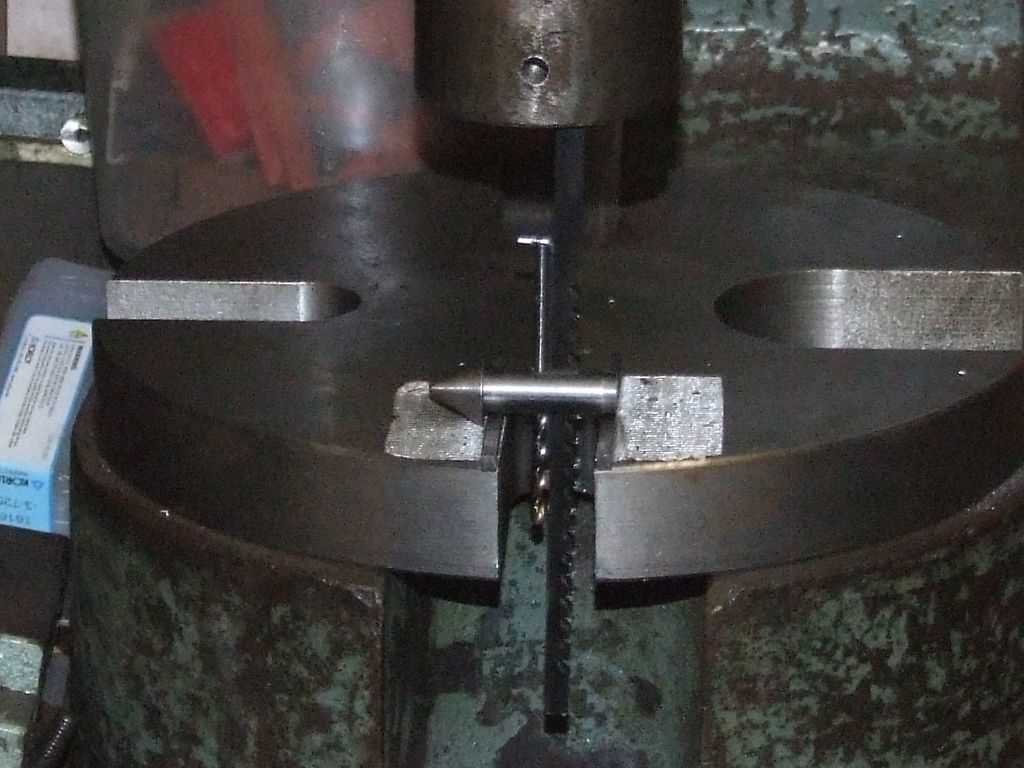
                                                Three holes drilled and then the slot milled to size with a slotdrill, both on the CNC mill. Finally the square ends were done with a keyway broach, thinned on the surface grinder to be a snug fit, using an arbor press, with a drill and shims as required:

                                                broaching.jpg

                                                Andrew

                                                #419577
                                                Ian P
                                                Participant
                                                  @ianp

                                                  Andrew, what is the material or method you used to hold the spikes whilst you were slotting them, and were they hand-held?

                                                  Nothing appears to be clamped down.

                                                  Ian P

                                                  #419584
                                                  Anonymous

                                                    The spikes are resting on two lengths of nominally 1/8" keysteel, held in place with double-sided tape. Keysteel is normally a few thou over nominal size so gives just enough clearance as the stock material was 5/8" and the machined shank is 3/8".

                                                    The spikes were hand held during broaching. Once pressure was applied the down force kept everything in place. The biggest problem I had was maintaining the broach vertical. The relatively small diameter of the shank meant that at best only two teeth were engaged at a time. Sometimes the broach went straight through with ease, other times it jammed. A jam simply required the broach to be twisted slightly back towards vertical and then it went as normal.

                                                    Not ideal, but I suspect the original spikes and rectangular holes would have been made by the blacksmith, so at least I'm better than that.

                                                    Andrew

                                                    #419594
                                                    Nigel Graham 2
                                                    Participant
                                                      @nigelgraham2

                                                      Andrew –

                                                      Quite possibly forged originals, but very likely drop-forged, not hand-made. The technique was well-established by the end of the 19C.

                                                      Alternatively your method was rather closer to the original than you suggest, because that's a large amount of steel to remove compared to the total, by forging. Also of course, the factory needed to make a lot of these components! So forged to form the head, then the shank drilled, and not broached but machine-slotted. (Dedicated slotting-machines were common then, especially good for cutting internal splines and keyways.)

                                                    Viewing 25 posts - 576 through 600 (of 1,046 total)
                                                    • Please log in to reply to this topic. Registering is free and easy using the links on the menu at the top of this page.

                                                    Latest Replies

                                                    Home Forums The Tea Room Topics

                                                    Viewing 25 topics - 1 through 25 (of 25 total)
                                                    Viewing 25 topics - 1 through 25 (of 25 total)

                                                    View full reply list.