Making High Speed Steel Injector D Bits

Making High Speed Steel Injector D Bits

Home Forums Workshop Tools and Tooling Making High Speed Steel Injector D Bits

Viewing 25 posts - 1 through 25 (of 26 total)
  • Author
    Posts
  • #414342
    Stewart Hart
    Participant
      @stewarthart90345

      Its usual to make Injector D bits from silver steel by machining the taper on the lathe then sectioning with a file or mill then to heat treat, whilst this method can produce a perfectly functional D bit there are a number of draw backs:- you need a razor sharp turning tool to machine the taper to avoid distortion like wise when it comes to sectioning and heat treating can be a bit hit and miss.

      This got me to wondering if it was possible to make some D bits from High Speed Tool Steel in a home workshop.

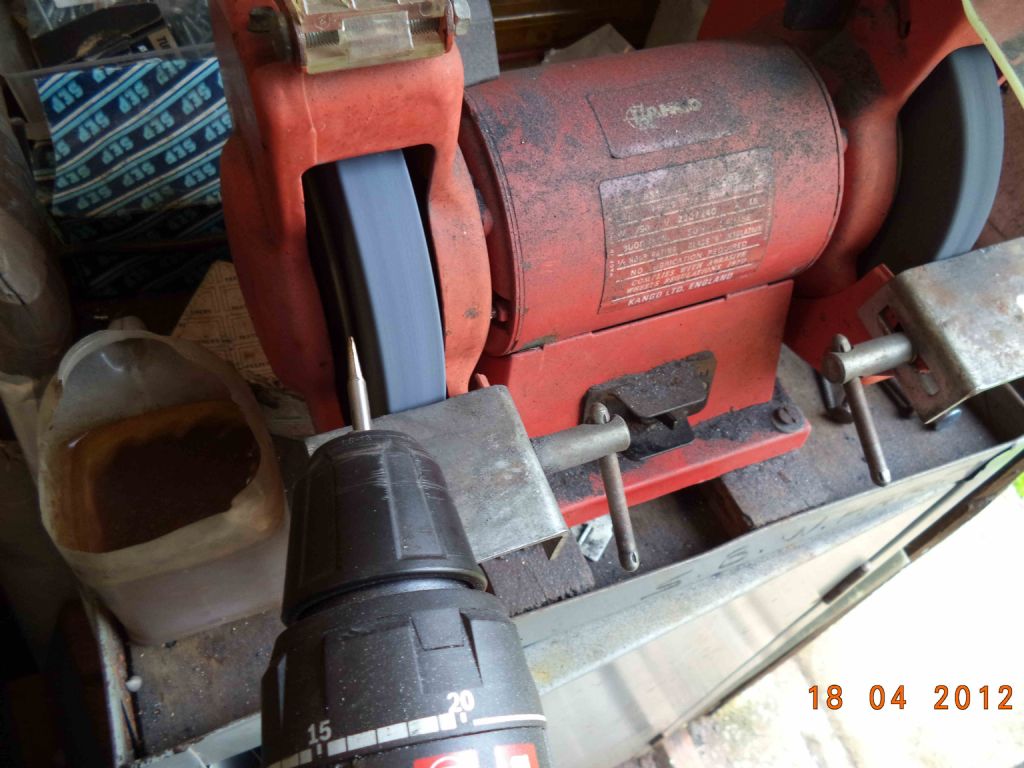
      The starting point was to buy some 5mm Dia HSS tool blanks these were 4" long so I cut them in half then using the hand drill I roughed them out on the bench grinder.

      dsc03607.jpg

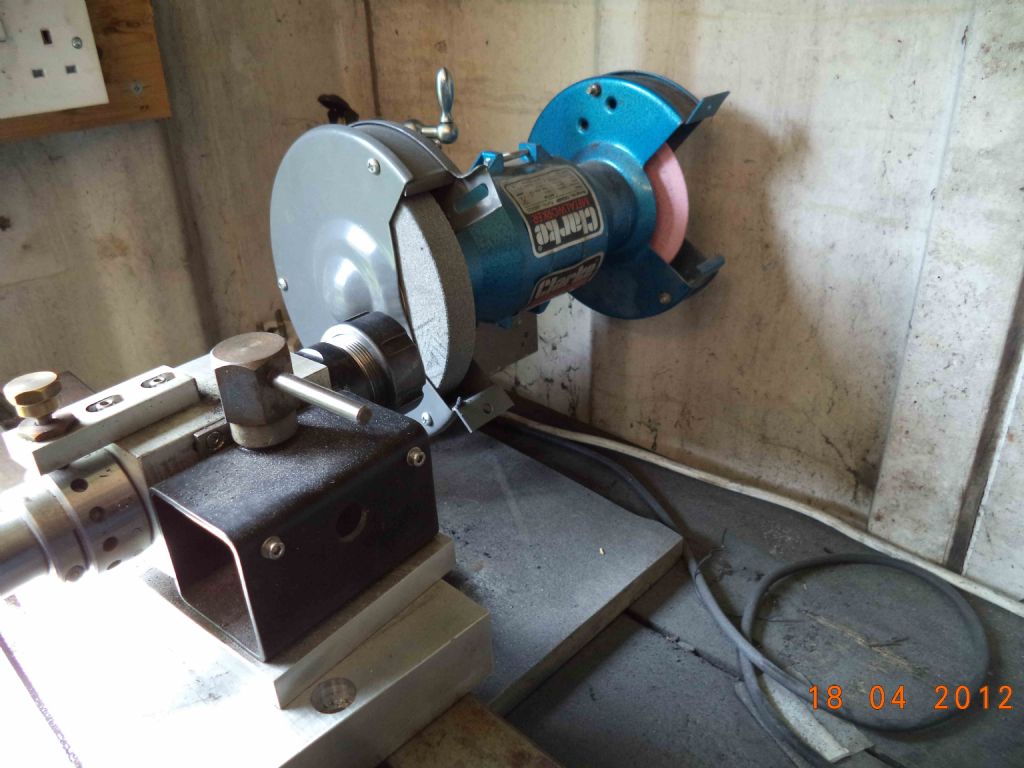
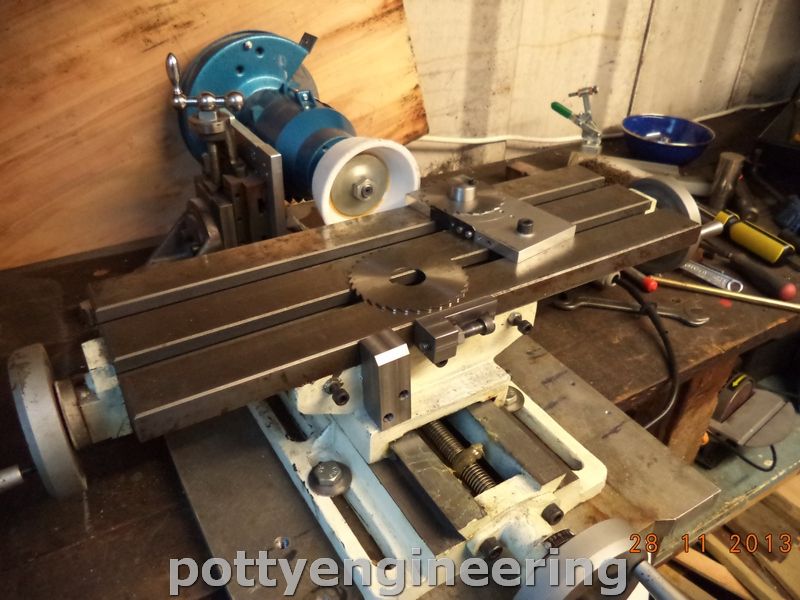
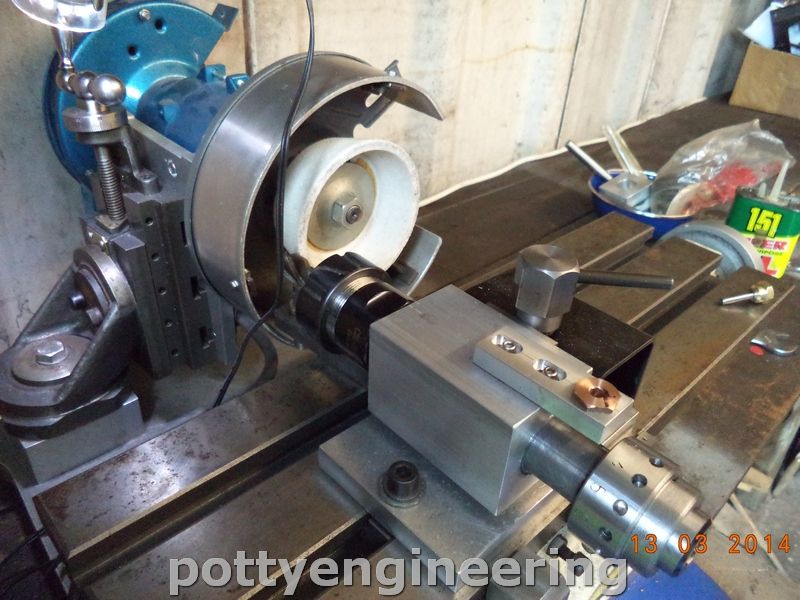
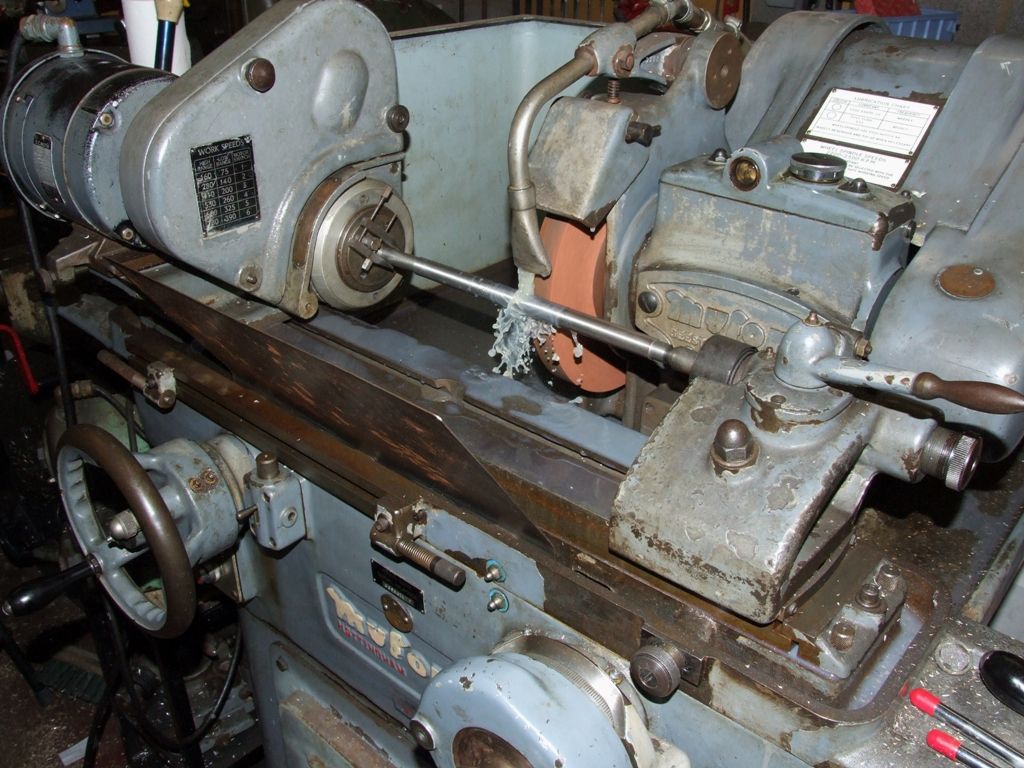
      I have a "home Brew" cutter grinder that I put together using commercially avaiable parts:- Grinder, an X,Y Table and a Myford vertical Milling attachment

      dsc03608.jpg

      The first job was to dress the wheel up square to the table, using a diamond.

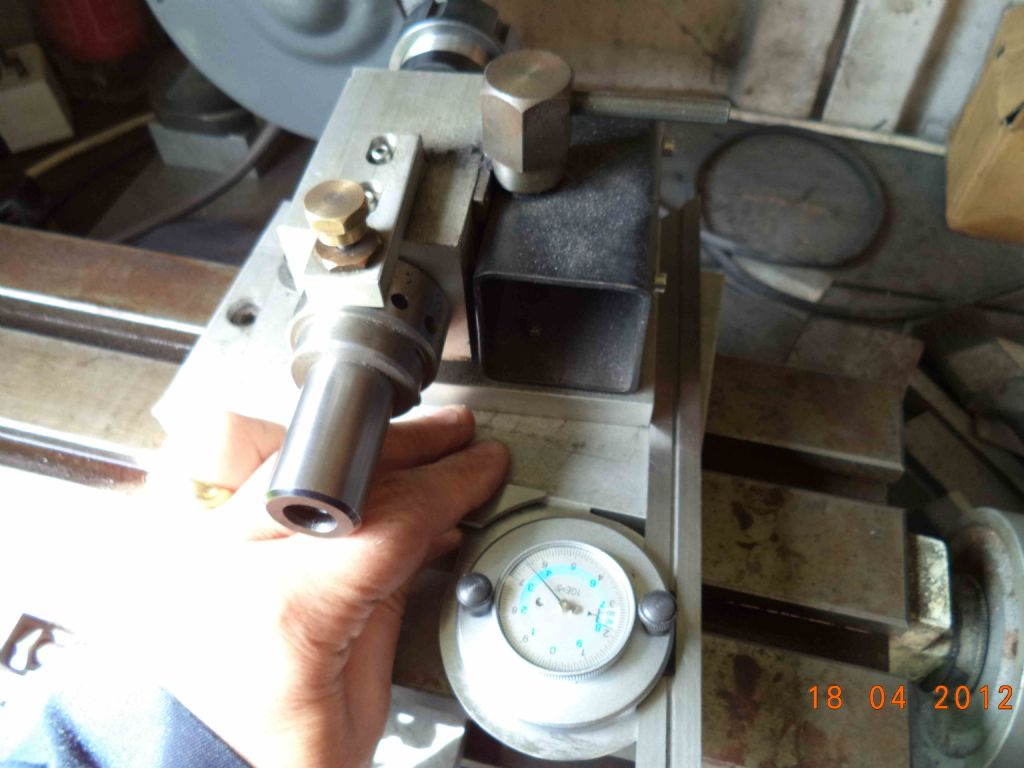
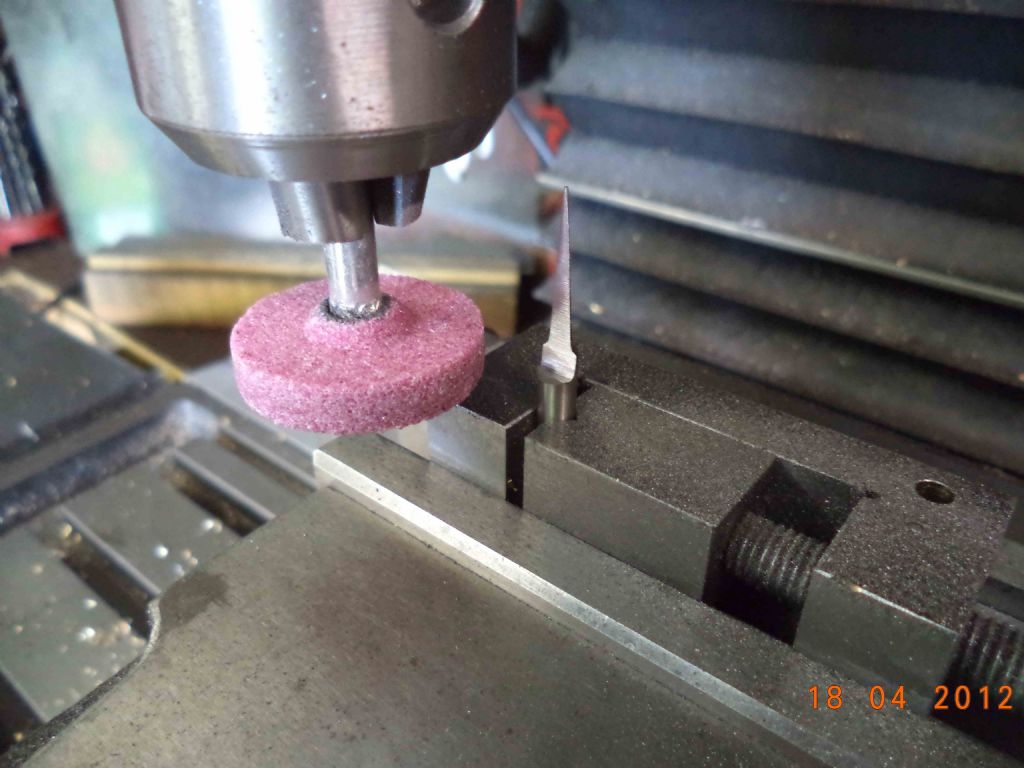
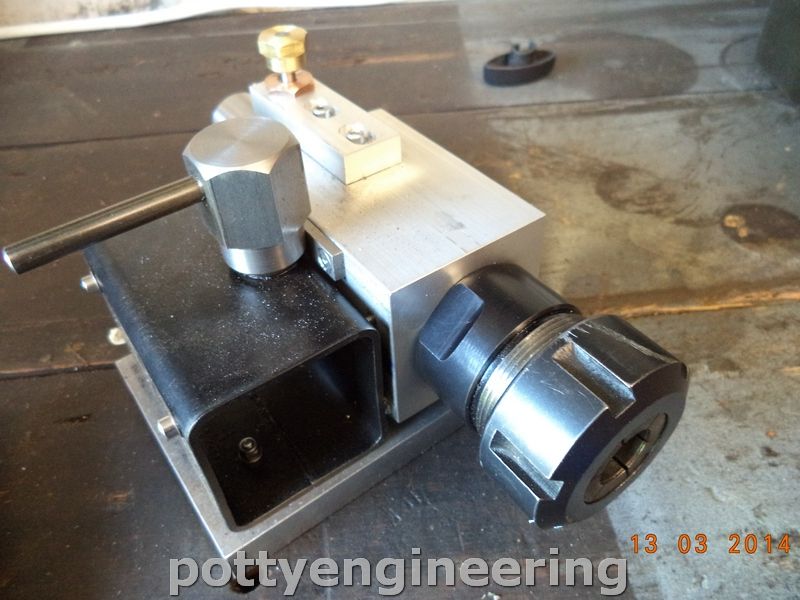
      I have a home made grinding attachment that uses a Er32 collet and an index plate for sharpening end mills by taking the pin out of the index plate I could rotate it by hand. The attachment was set over at the required angle

      dsc03609.jpg

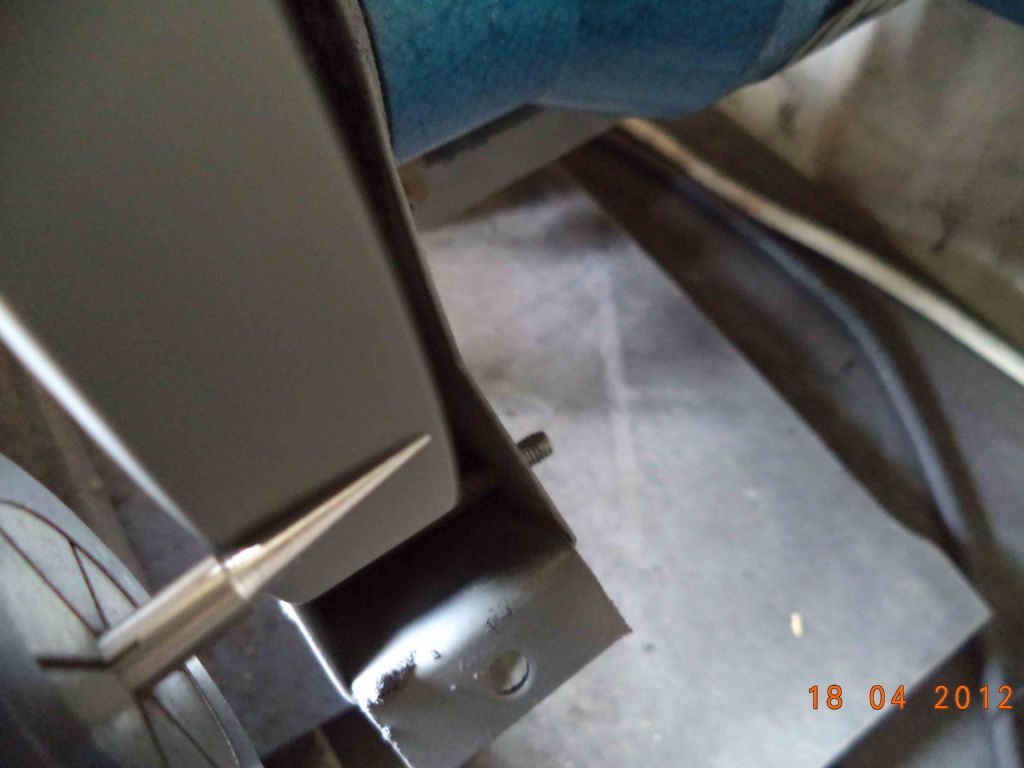
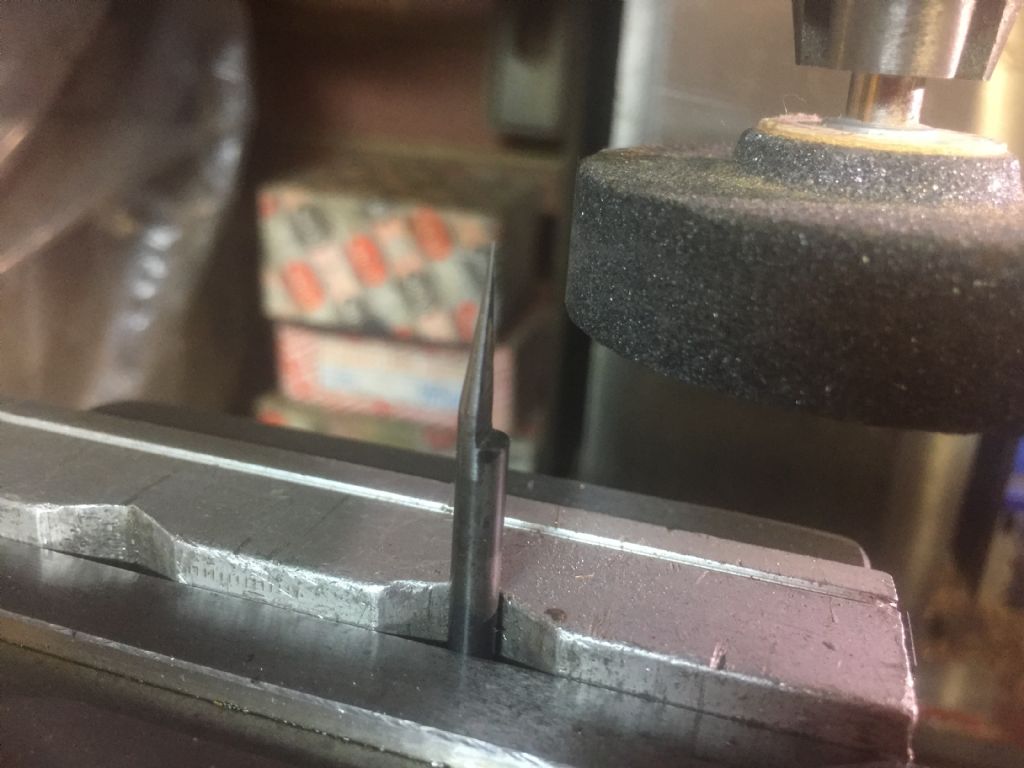
      And the D bit ground to the required angle

      dsc03610.jpg

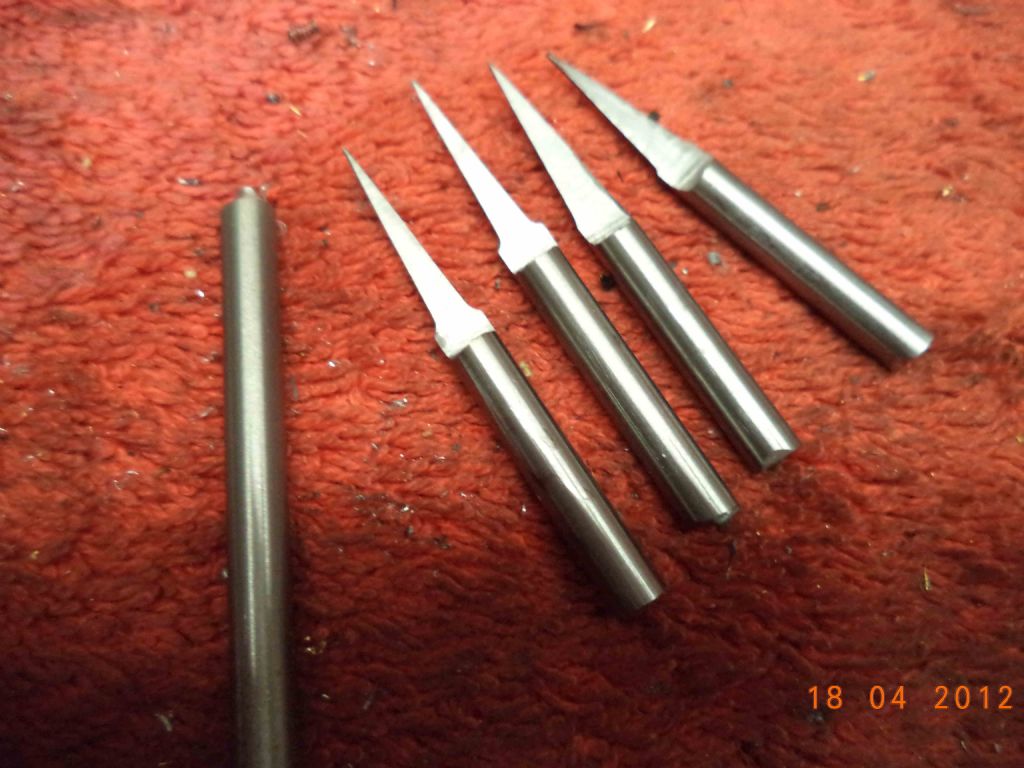
      To section the bits I first roughed them out on the bench grinder then with a grinding point in the mill set a max speed the Bits were sectioned off to size

      dsc03603.jpg

      dsc03605.jpg

      I've just used them to make some injector cones and they cut far better than the silver steel bits and it looks like they are keeping their edge well.

      Stew

      Edited By Stewart Hart on 15/06/2019 10:04:07

      #19373
      Stewart Hart
      Participant
        @stewarthart90345
        #414352
        Harry Wilkes
        Participant
          @harrywilkes58467

          Interesting rig you have there yes

          H

          #414450
          Simon Collier
          Participant
            @simoncollier74340

            I tried something similar a couple of months back69752a73-45e7-4dd1-890c-7a3c0b3b6fac.jpeg

            #414451
            David Wasson
            Participant
              @davidwasson11489

              Excellent idea! Injector D bits from solid HSS.

              #414464
              Stewart Hart
              Participant
                @stewarthart90345
                Posted by Harry Wilkes on 15/06/2019 10:58:02:

                Interesting rig you have there yes

                H

                Thanks for your interest Harry

                Here are some more pictures of the set up.

                dsc00694.jpg

                dsc01012.jpg

                dsc01029.jpg

                The grinder it self was quite easy to put together Its just a Myford vertical slide with an ordinary bench grinder mounted on it you have to remove the base of the grinder and do a little rewiring to mount it securely and a X,Y table mine came from axminster but there are plenty of other suppliers of these tables out there. and it all mounted on a bit of ally plate but a friend made one and mounted his on a kitchen work top off cut.

                As well as the end mill grinding jig I've also made jig for sharpening slitling saw and lathe tools.

                Its far easier to put together than a Quorn cutter grinder or one of the other home built cutter grinders designs around.

                Stew

                #414466
                Boiler Bri
                Participant
                  @boilerbri

                  Thats great. I am just in the process of drawing up LBSC injectors to have a bash at making some. I was going to ask how to make the reamers.

                  They will be slightly hollow grinding them on the face of the wheel. They look like they will be sharp.

                  Cheers

                  Brian

                  #414471
                  Stewart Hart
                  Participant
                    @stewarthart90345
                    Posted by Boiler Bri on 16/06/2019 08:09:01:

                    Thats great. I am just in the process of drawing up LBSC injectors to have a bash at making some. I was going to ask how to make the reamers.

                    They will be slightly hollow grinding them on the face of the wheel. They look like they will be sharp.

                    Cheers

                    Brian

                    If your going to try and make an LBSC injector "good luck", I've no doubts that his worked but many have tried and many failed the trouble is that LBSC doesn't tell you exactly how to make them he has had many rants at people who couldn't make them:- all he said if you make them EXACTLY to the drawing and they will work but he doesn't say how to achieve this. Also he published quite a few different design that suggests that he was doing quite a bit of development work.

                    Can I suggest that you get a copy of Dag Browns Book "Miniature Injectors Inside and Out" its very comprehensive and is a good starting point for any one wanting to make there own injectors, but I find some of Dags, methods long winded and the bodies of his injectors are far to complicated there are other simpler designs around.

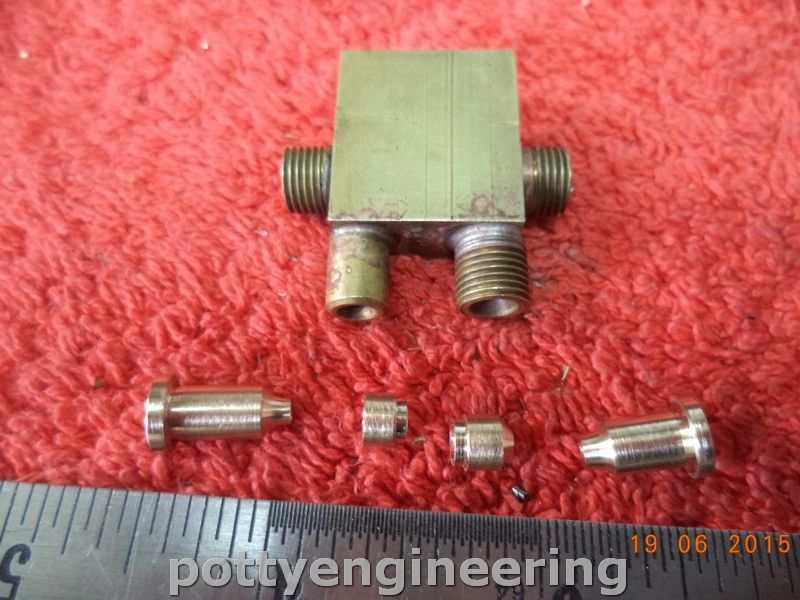
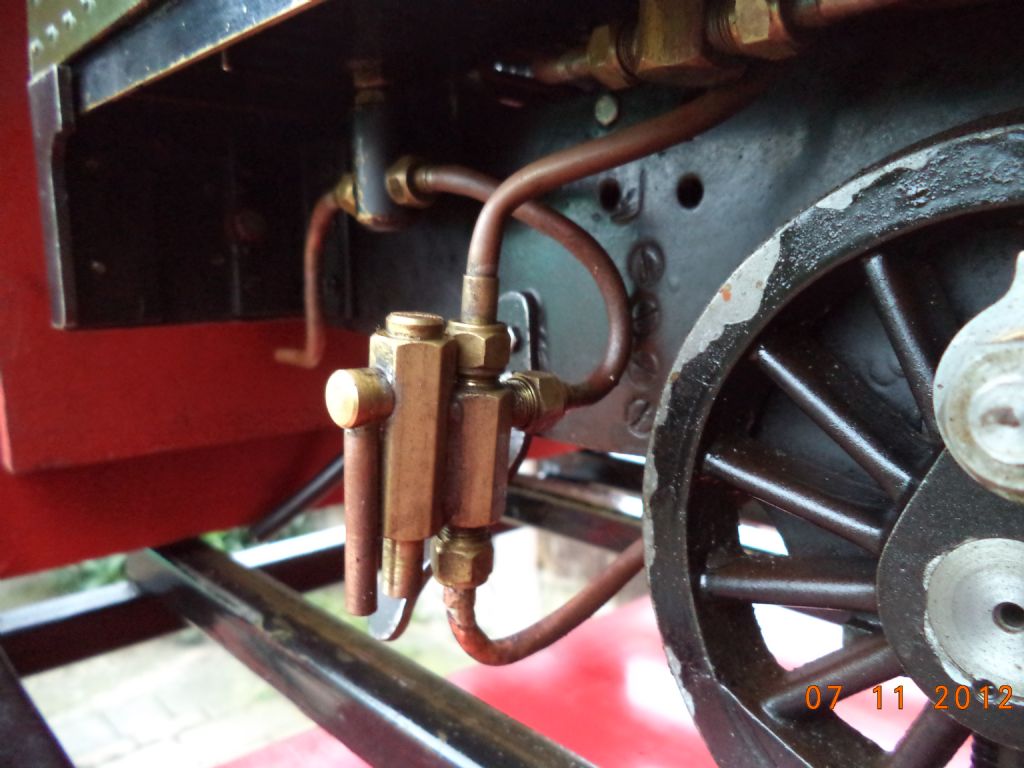
                    These are mine

                    dsc02281.jpg

                    and a vertical one

                    dsc03519.jpg

                    Stew

                    #414559
                    Boiler Bri
                    Participant
                      @boilerbri

                      Did i rattle your cage or something? I thought i had complimented you?

                      The drawings in his book, shop shed and road look pretty comprehensive to me, or maybe i have missed something?

                      Bri

                      #414571
                      Stewart Hart
                      Participant
                        @stewarthart90345

                        Sorry if I gave the wrong impression. But I had a few frustrating days trying to get a lbsc injector working it was only when a friend pointed me in the right direction and gave me some coaching on the subtleties involved did I have some success, there are a number of not obvious features that are critical to function and the only place I’ve seen them dealt with is in Dags book

                        Stew

                        #414575
                        Clive Brown 1
                        Participant
                          @clivebrown1

                          Laurie Lawence, in his fairly comprehensive series of articles in ME of 1986, suggested that making an LBSC injector that worked was mainly a matter of luck. He saw the design proportions as being satisfactory, but the simplified manufacturing description did not allow consistency.

                          The DAG Brown book builds on the Laurie Lawrence methods.

                          #414576
                          Nigel Graham 2
                          Participant
                            @nigelgraham2

                            I do like that tool-grinder set-up.

                            Ideal for making D-bits and engraving-cutters, too.

                            Looks as if would not take much to adapt, by suitable interchangeable brackets etc, to a simple surface- and cylindrical- grinder.

                            One suggestion I'd make is using thin rubber sheet to make covers for the slide-ways. Garden pond liner off-cuts perhaps: having given my resident frogs a nice comfy home I used some of the surplus butyl liner for a cover to replace that missing from my (2nd-hand) Myford milling-machine.

                            If I understand his book aright, DAG Brown suggests fitting a miniature loco with two injectors: the usual fairly large one for rapid filling, and a smaller one in place of the axle-pump.

                            #414620
                            Stewart Hart
                            Participant
                              @stewarthart90345

                              I'm pleased you like my grinder set up Nigel.

                              I have covered the slide ways some time back, I used the lorry curtain side material its ideal for the job.

                              I've only ever used it for cutter grinding but yes it would be possible to adapt it for surface/cylindrical grinding but just how accurate it would be would be the ?.

                              The injectors I make have quite a large delivery rate about 24oz. I run my simplex with one of them along with the axle pump the axle pump does the job of a small injector. I'm planning on using two injectors on the Crab I'm building along the lines of Dags suggestion one large one small. I've tried making a 12oz delivery injector using the sizes from Dags book but failed miserably.

                              I think I failed on a number of accounts, I was far from happy with the reduced size turned D bits, and I used the body and basic cone sizes as for the 24oz injectors and just changed the hole sizes. At some point in the future I will have another go with ground D bits with a smaller body and cones.

                              Cheers

                              Stew

                              #414622
                              Nigel Graham 2
                              Participant
                                @nigelgraham2

                                The accuracy of your grinder for surface and cylindrical grinding would depend a lot on the rigidity and alignments of the mounting-arrangements, but with the wheel dressed I'd have thought it would be possible to grind to one or two tenths of a thou., and enough for bearing and press fits.

                                Accuracy in cylindrical grinding might be easier than in surface grinding, but the work would have to be supported and rotated between centres. An area for experimenting anyway.

                                Regarding scaling down the injectors, I am not a hydrodynamicist but I wonder if the problem is not the body size, just the cone sizes and the cross-sectional areas of the water-ways. I'd look at the dimensions of the ball-valve carefully too, for lift as well as annular area.

                                Also, does the surface finish within the cones matter? Would the smaller cutters need a lapped rather that simply ground finish?

                                #414629
                                Anonymous
                                  Posted by Nigel Graham 2 on 17/06/2019 08:53:12:

                                  Accuracy in cylindrical grinding might be easier than in surface grinding, but the work would have to be supported and rotated between centres.

                                  Like this:

                                  grinding water pump rams.jpg

                                  It's interesting to note that the tables on my grinders are not constrained, just resting on the ways. So in that sense they're not particularly rigid. Grinding forces are low and accuracy comes from the geometry and linearity of the ways and the runout of the spindle bearings.

                                  I don't think the surface finish on the cones is critical. For the convergent part of the steam cone the shape is unimportant anyway. For the combining cones some turbulence would be good to help mixing. The delivery cone finish isn't too critical as the flow is slowing down.

                                  Back when I was working on racing cars the engine manufacturers spent hours smoothing and polishing the inlet manifolds with die grinders. Then it was discovered that a slightly dimpled surface, that caused some turbulence, was better.

                                  Andrew

                                  #414637
                                  John Hinkley
                                  Participant
                                    @johnhinkley26699

                                    As an aside:

                                    Posted by Andrew Johnston on 17/06/2019 09:30:28:

                                    Back when I was working on racing cars the engine manufacturers spent hours smoothing and polishing the inlet manifolds with die grinders. Then it was discovered that a slightly dimpled surface, that caused some turbulence, was better.

                                    Isn't this why golfer's balls have dimples? Makes them go further and faster, I think. I would have though it might be interesting to experiment with dimpled upper surfaces of aircraft wings to speed airflow and therefore increase lift. And the reverse for racing car wings. But then, I failed aerodynamics at college – maybe that's why!

                                    John

                                    #414658
                                    Nigel Bennett
                                    Participant
                                      @nigelbennett69913

                                      Hardening D-bit reamers usually resulted in banana-shaped curiosities for me. So having been inspired by an article about injectors by Basil Palmer, I ground some HSS injector reamers using his idea of triangular section. (Would be likely to give more even results in silver steel as the section is more uniform and symmetrical, so less prone to distort.)

                                      I mounted a Quorn head on my Boxford 280 to grind some HSS and it worked out quite well. Note that if you want a 9 degree included angle, you DON'T grind the faces with the top slide at 4.5 degrees but at about 2.2 degrees – it depends on the diameter of the grinding wheel.

                                      I made the mistake of grinding some Chinese-sourced HSS 6mm dia, only to find out when I tried to use one for reaming an injector cone that the stuff wasn't hardened. After trying it, the pointy end of the reamer came out looking like an oliver off a Showman's engine! I then dug out an old HSS tap and ground that instead. I did get a working injector, but it needs more time and attention than I have at present to get the working pressure range I want.

                                      Despite covering up all of the lathe I could with newspaper, it still took ages to clear up all the horrid mess after grinding – so take care!

                                      #414670
                                      Nigel Graham 2
                                      Participant
                                        @nigelgraham2

                                        To clarify, by triangular section, an equilateral triangle so giving a 30º negative rake on each cutting edge? (Ignoring any effect given by hollow-grinding.)

                                        This would have a scraping action in brass, of course. I'm not sure if it could cut other metals like bronze.

                                        '

                                        Making miniature injectors that do inject seems as much black art as science and engineering, with people reporting very varying results – and assuming equivalent standards of workmanship.

                                        Mr. Brown's book gives several reason why injectors get all upset and sulk, but I wonder if there are sometimes more subtle influences at play which become proportionally more severe inversely to injector size .

                                        Of the obvious factors, he mentions one that can affect any injector whether own-make or bought-in: tiny air-leaks that are by no means obvious. A common one is where a short flexible hose is simply pushed onto the copper pipe.

                                        Another I can suggest, is slight misalignment of the suction-side connections on the injector itself. Commonly these use flat metal-to-metal flanges, but could a tiny angularity there be just enough to draw in air? This would be exacerbated by frequent removal of the injector to clean or descale it, as the copper pipes slowly work-harden and no longer adapt themselves to the injector. One solution there might be to use a connector in which the pipe extends slightly into a counter-bore, and is surrounded by a rubber washer or O-ring.

                                        One I've found in practice, is the cumulative result of over-rich water-treatment in the tank that feeds the injector. Over time it coats the cone and ball-valve surfaces.

                                        Are there though other things at play, where the poor little injector is blamed whether own-made or bought? What of steam pressure and dryness at inlet, for example? Can that be affected, hence affecting the injector, inversely to pipe sizes etc., despite the much shorter pipe from turret to injector on the miniature compared to full-size? One might expect the larger the pipe and turret-height above water, the less the carry-over, and the less atmospheric condenser effect (an area-ratio result), so the hotter and drier the steam stays.

                                        Now, the injector wants the steam to condense almost entirely in the combining-cone, so it can convert as much of the heat as possible into mechanical energy. So does it want the inlet steam to match that in the boiler as far as possible? If half the steam entering the injector is already wet fluff significantly cooler and wetter than what entered the manifold; can we expect the injector to work properly?

                                        What might remove too much energy from the steam, which is already saturated at the manifold? Chilling by the air around the pipe, obviously, but a big factor I expect again to be inverse, is the nature of the steam's route. Sharp bends such as elbows and in valves, are especially frictional.

                                        '

                                        One curious effect I have often seen, on a Ken Swan 7-1/4"g version of the Kerr-Stuart 'Wren', is that the commercial injector fitted usually demands the water throttled back almost to 'Off'. In action, the injector seems to want the water full on, steam on very rapidly to full flow, then the water valve ( a standard plumbing ball-valve on the driving-truck/tender) carefully notched back until the device picks up – then left at that setting, almost closed.

                                        Analysing this in the light of the above, a new tender water-hose certainly improved it; but there is a significant difference between ours, and the prototype faithfully reproduced by Ken Swan's drawings. The injector steam-valve was on the dome, disproportionately higher above the water than in standard-gauge. For ground-level portable-track operation, we fitted a manifold in the cab, though that manifold is T-shaped with a column bringing the take-offs (takes-off?) near the dome level. So assuming similar dryness fractions at dome or manifold height, might the steam be "damaged" by the extra bends introducing more wire-drawing, and more metal exposed to the air?. The brake ejector is fed from the same manifold and works well, but perhaps an ejector is less fussy than an injector.

                                        Can anyone suggest other reasons for this odd behaviour?

                                        '

                                        To sum up, assuming high-quality workmanship throughout, are injectors often blamed unfairly? They work in a very critical range of conditions, so are easily stopped by external influences of which some are fairly obvious and easily remedied, while others may be much more subtle and difficult to pin down.

                                        Food for thought _ I may be wrong in some of my suggestions, I have not yet tried making an injector; but I have driven miniature locomotives for long enough to think injectors are too easily blamed for not injecting; but when not blamed the real problem is too easy to miss!

                                        #414683
                                        Anonymous

                                          Posted by Nigel Graham 2 on 17/06/2019 13:09:52:

                                          Now, the injector wants the steam to condense almost entirely in the combining-cone, so it can convert as much of the heat as possible into mechanical energy.

                                          Errr, that's not how the combining cone works. The steam is condensed by the water and the latent heat of evaporation released as the steam condenses goes to heat the water, but it doesn't add to the kinetic energy. The key to understanding the operation of the combining cone is conservation of momentum.

                                          The release of the heat in the steam determines the maximum inlet water temperature at which the injector will work, and is dependent upon the inlet steam pressure.

                                          Andrew

                                          #414697
                                          Nigel Graham 2
                                          Participant
                                            @nigelgraham2

                                            Thank you for the correction, Andrew, but you still make the points that hint the "quality" of the steam is critical. If the steam has lost a lot of energy before it reaches the injector, it's not going to be very useful. The steam cone is convergent so will trade pressure for velocity, but the pressure at its inlet is already lower than the pressure-gauge reads, and if that drop is too great the velocity won't be up to the job.

                                            The point about heat transfer may explain why injectors often seem to gulp steam faster that it's being generated. Even if feeding, the injector might not be heating the water very much at all because the quantity of heat available at the combining-cone is low. So it's not so much a matter of being greedy for steam, then pushing unduly cool water into the boiler. It will naturally have some cooling effect anyway, but I've seen an injector supposedly appropriate for the boiler, commonly drop the boiler pressure so rapidly that it becomes difficult to raise the water-level.

                                            Though quite how you match the two is another matter. Mere physical size of boiler is only one of too many variables involved, and it may well be that with bought-in or owner-designed injectors, it will always be a compromise.

                                            #414724
                                            Steamer1915
                                            Participant
                                              @steamer1915
                                              Posted by Andrew Johnston on 17/06/2019 09:30:28:

                                              It's interesting to note that the tables on my grinders are not constrained, just resting on the ways. So in that sense they're not particularly rigid. Grinding forces are low and accuracy comes from the geometry and linearity of the ways and the runout of the spindle bearings.

                                              .

                                              Andrew.

                                              If you are grinding between centres, the centres should not rotate. This removes any inaccuracy created by the spindle bearings.

                                              Steve.

                                              #414751
                                              julian atkins
                                              Participant
                                                @julianatkins58923

                                                My own experience is that silver steel injector 'D' bits, especially the 9 degree taper ones, last about 5 injector cones then become useless and blunt. The 13 or 12 degree ones are somewhat more durable.

                                                I have proved that the 6 degree taper is not required on small injectors of 12 oz per minute delivery on the delivery cone, and 9 degrees will do the necessary, contrary to what has been written.

                                                HSS reamers are the way to go if you want to make lots of these gadgets.

                                                Boiler Bri (Brian) must dismiss any thought that the LBSC drawings and descriptions will produce a working miniature injector except by luck.

                                                It is not a black art. Eric Rowbottham described via Basil Palmer the smaller injectors in ME around 1976, and Laurie Lawrence described his own 'standard' design was it 1977? The Laurie Lawrence articles were repeated around 1982. Derek Brown's book is indispensable and available via TEE publishing.

                                                Cheers,

                                                Julian

                                                #414779
                                                Nigel Graham 2
                                                Participant
                                                  @nigelgraham2

                                                  It should not be a "black art", no; but over the years I have heard or read of so many people finding injectors so problematical that there must be surely be a lot more to making and fitting them than meets the eye.

                                                  They do seem one of those fittings people prefer to buy than try making, along with pressure-gauges. Possibly, DAG brown's book will lift some of the mystique – I have a copy and he does go into detail on the plumbing as well as the injector itself.

                                                  As I say though, I suspect there are other, unquantifiable influences at play, making the device work in a much more critical range than it will anyway.

                                                  I have a copy of a heat-engine designer's text-book published in the 1930s, and although it does not go into much detail it does say the injector's team demand rises as pressure reduces, and as a pump it is inefficient although that is balanced by it heating the feed-water. The particular injector it describes was a Holden & Brookes lifting type with a single control. It put the steam on before the water, presumably to draw the water up first.

                                                  #414785
                                                  Stewart Hart
                                                  Participant
                                                    @stewarthart90345

                                                    Thanks for your valuable input again Juilian

                                                    When I attempted to make a 12oz injector I wondered about the need for the 6 deg reamer for the delivery cone at some point in the future I'll have another go at making a 12 oz. For my first attempt I used the 24 oz basic cone sizes one of the difficulties with this was the hole depths its bad enough drilling a No 70 hole but when your trying to drill it nearly 1/2" deep is a bit tacking. Especially with dodgy quality drills I got some of flea bay supposedly German Manufacture of a make I'd not heard of 50% were next to useless with the point not ground correctly or not at all. When I worked for a living we use to swear by Titex small drills but these are eye watering expensive unless I can drop on a good supply of cheaper drill I'm going to have to bite the bullet and buy some.

                                                    For my next 12oz attempt I'm going to reduce the length of the cones to give myself a fighting chance of drilling the holes.

                                                    I would agree with Julian and Nigel its not a Black Art its just a matter of gaining an understanding of how they work and how to make them (I have a good coach) and this only comes with having a go, being patient and persistent learning by your mistakes and not giving up and taking the easy rout and resorting to cheque book engineering and buying one.

                                                    As an aside I've just tested the second vertical injector to my own design, and it worked though we did have to reseat the ball to get it to work. The test boiler is electrically heated so when we got it to 90psi we turned the electric off started the injector and watched the pressure drop as it put water into the boiler:- when it got to about 55 psi it started to splutter (stop and start) but it didn't stop completely until it got to 45 psi.

                                                    The design for this vertical injector is very much in the development stage I want to try refine it further.

                                                    Stew

                                                    #414801
                                                    Nigel Graham 2
                                                    Participant
                                                      @nigelgraham2

                                                      I did stress I assume the injector is correctly and well made, but though my remark about "black art" was a bit tongue-in-cheek injectors in general do seem to have a certain reputation.

                                                      I expect you have seen the satirical poster about injectors having very wilful minds of their own, sold I think by Walker Midgely on their exhibition stands – I know many who would agree with it!

                                                      I think most model-engineers prefer to buy rather try making the things, but why must be a matter of personal choice. For me, though I might be tempted to try it to see if I can, I do not feel able to make one well enough to replace having to buy one.

                                                      My main point though was that I think many who blame the injector might be overlooking the rest of its system – an aspect DAG Brown covers well in his book, but which I have not seen so well considered elsewhere.

                                                      '

                                                      I mentioned for example the commercially-made injector on a Ken Swan " Wren ": it needs the water on full, then the steam on full, and rapidly, then easing the water back almost to off. I might unwittingly have solved it in my further remarks from a 1930s book, that the steam: water ratio increases with falling pressure. So, by revering the logic, could the Wren's injector actually have been designed for a higher pressure than the loco's 90psi? Once started, with sensitive water control it will operate down to about 40psi, just.

                                                      If so, then is an example of what I mean: don't just jump to conclusions and blaming the device itself!

                                                      '

                                                      Your test boiler: interesting idea, using electric heating. I can see this would lend itself to automatic pressure control from anything up to W.P.

                                                      You may recall Ron Jarvis' precious-metal-winning miniatures of various historically-significant engines. He was a fellow-member of my own society, whom he delighted in telling us of the secret of the boiler on his fully-operational Newcomen Engine. The boiler is about the size of an orange – complete with the "orange-peel" forged texture – and as per prototype, has a WP of only 2psi. Ron had to use electric heating to attain this successfully, and joked that with its electronic sensor and microprocessor discreetly hidden in the base, the machine was the world's only 18-Century CNC steam-engine!

                                                    Viewing 25 posts - 1 through 25 (of 26 total)
                                                    • Please log in to reply to this topic. Registering is free and easy using the links on the menu at the top of this page.

                                                    Latest Replies

                                                    Viewing 25 topics - 1 through 25 (of 25 total)
                                                    Viewing 25 topics - 1 through 25 (of 25 total)

                                                    View full reply list.