Interfering with fits?

Interfering with fits?

Home Forums Help and Assistance! (Offered or Wanted) Interfering with fits?

Viewing 25 posts - 26 through 50 (of 52 total)
  • Author
    Posts
  • #558569
    Richard Kirkman 1
    Participant
      @richardkirkman1
      Posted by Cabinet Enforcer on 17/08/2021 09:00:07:

      The domestic oven is a fine device for gently and controllably heating a part for shrink fitting purposes, and is usually conveniently located near the freezer nerd Just remember to clean any oil off first.

      Nice belt sander, is it Jeremy Schmidt's design?

      Ah yeah that's a good idea too. It's made me think, I have a small electric oven in the workshop which I usually use to temper metal. That should get hot enough and have enough space for the wheel.

      Thank you, no it's not Jeremy Schmidt's design, its my own design of an amalgamation of my favorite features of ones I've seen. Plus a few different choices to make it easier for me to make with the tools I have available. I have the Solidworks design if anyone wants it, but it's relatively specific to the motor I had already, and uses the metal sizes my local metal place has.

      #558575
      martin haysom
      Participant
        @martinhaysom48469
        Posted by Cabinet Enforcer on 17/08/2021 09:00:07:

        The domestic oven is a fine device for gently and controllably heating a part for shrink fitting purposes, and is usually conveniently located near the freezer nerd Just remember to clean any oil off first.

        Nice belt sander, is it Jeremy Schmidt's design?

        and most inportantly wait till SHMBO has gone out

        #558594
        Circlip
        Participant
          @circlip

          "and most importantly wait till SWTSMBO has gone out"

          WHY?

          Bits tempered or "Blued" in domestic oven, usually on a Sunday AFTER roast done when oven is already hot (Yorkshire cost saving trait). Do you put greasy parts In? Can't think of ANY oven usage that would cause "Contamination" My bits are ALWAYS clean before loading. Do you wait before using the big cooling box?

          Regards Ian.

          #558645
          Howard Lewis
          Participant
            @howardlewis46836

            Not Aluminium into steel, but when I wanted to shrink fit a steel shaftv into a cast iron base, I chose 0.001" (0.0254 mm ) interference.

            cast Iron base was reamed to 1", and measured.

            Steel shaft was turned own to measured diameter+0.001"

            The shaft spent the night in the freezer, and the 6" diameter x 1.25" thick cast iron was cleaned and with permission heated in the oven at gas mark 6.

            The shaft was removed from the freezer and wrapped in a towel, while thge base was moved from the oven onto a piece of 10 mm ply on the kitchen floor.

            Shaft unwrapped and was a nice fit into the base. The frost on the shaft gradually disappered upwards.

            When cool; a tight fit.

            Based on industrial experience, Loctite usually needs a clearance of 0..002 – 0.003", You are relying on the shear strength of the anaerobic. So choose the correct grade, such as a retaining compound, not one intended to provide a relatively easy disassembly in the future.

            Howard


            Edited By Howard Lewis on 17/08/2021 16:45:45

            #558970
            Richard Kirkman 1
            Participant
              @richardkirkman1

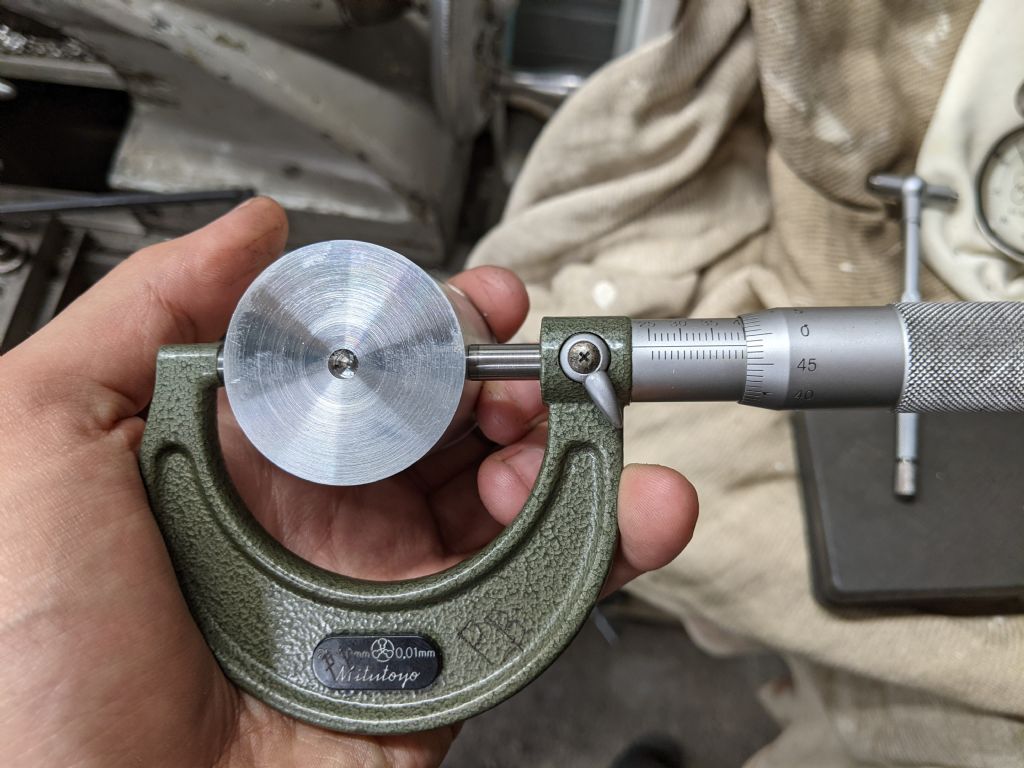
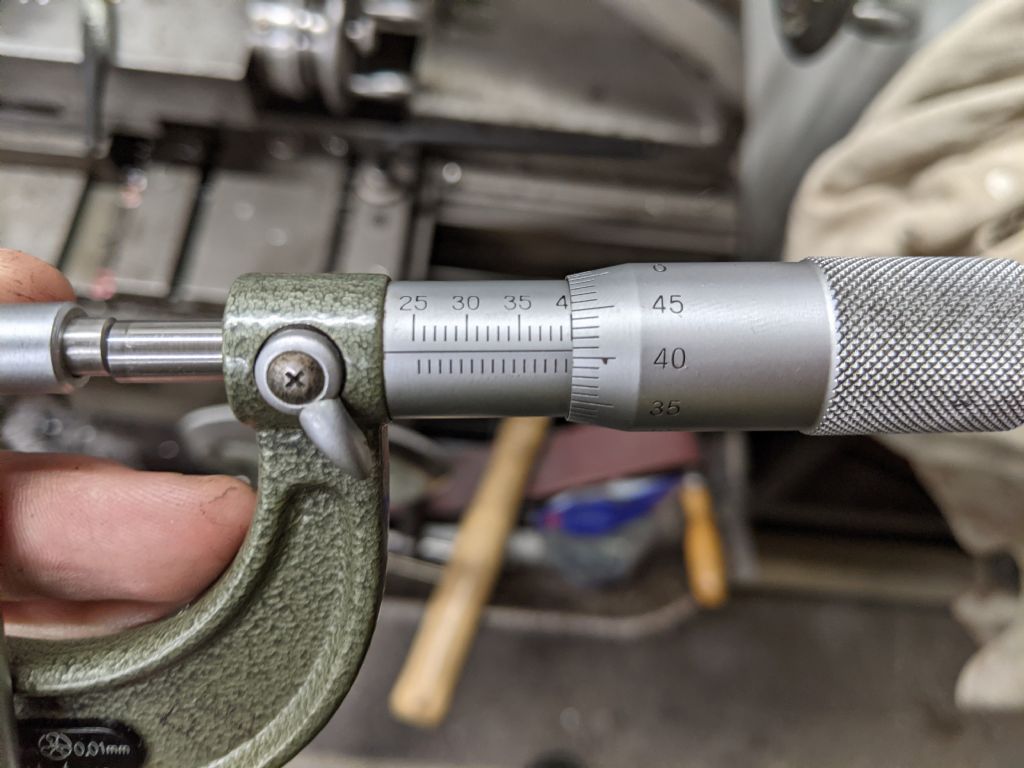
              Progress update, today I managed to turn the plug to size. It ended up at around 39.985mm.

              pxl_20210819_100714981.jpg

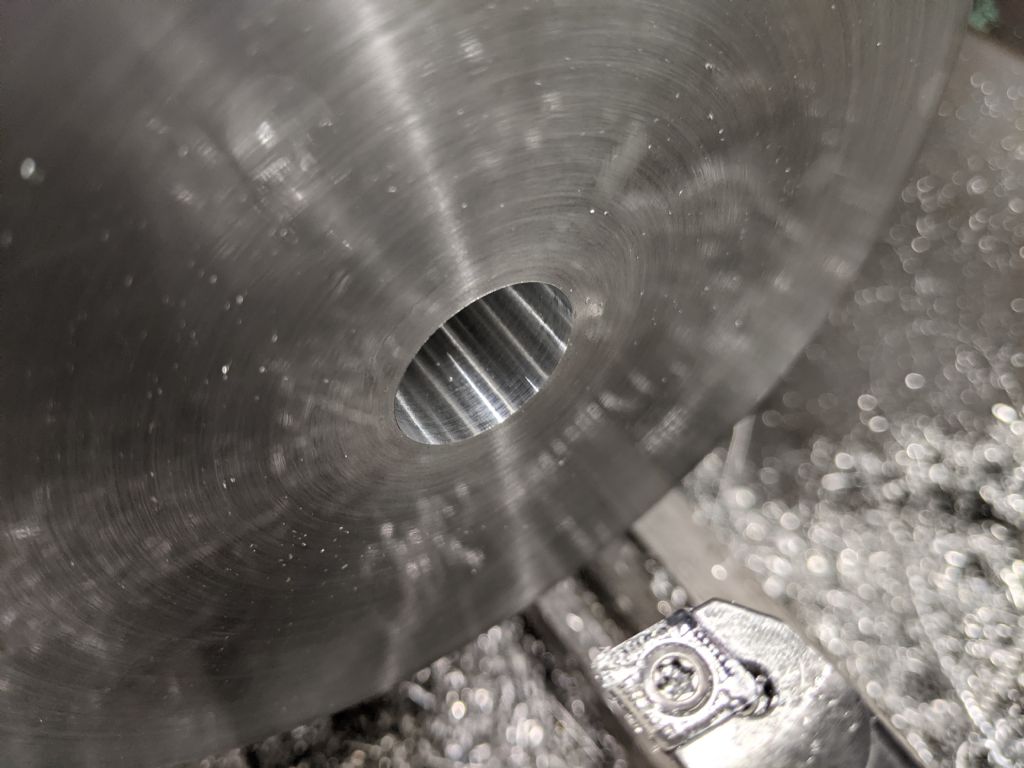
              So I bored the hole out to 39.905mm, somehow it worked out perfectly.

              pxl_20210819_102517208.jpg

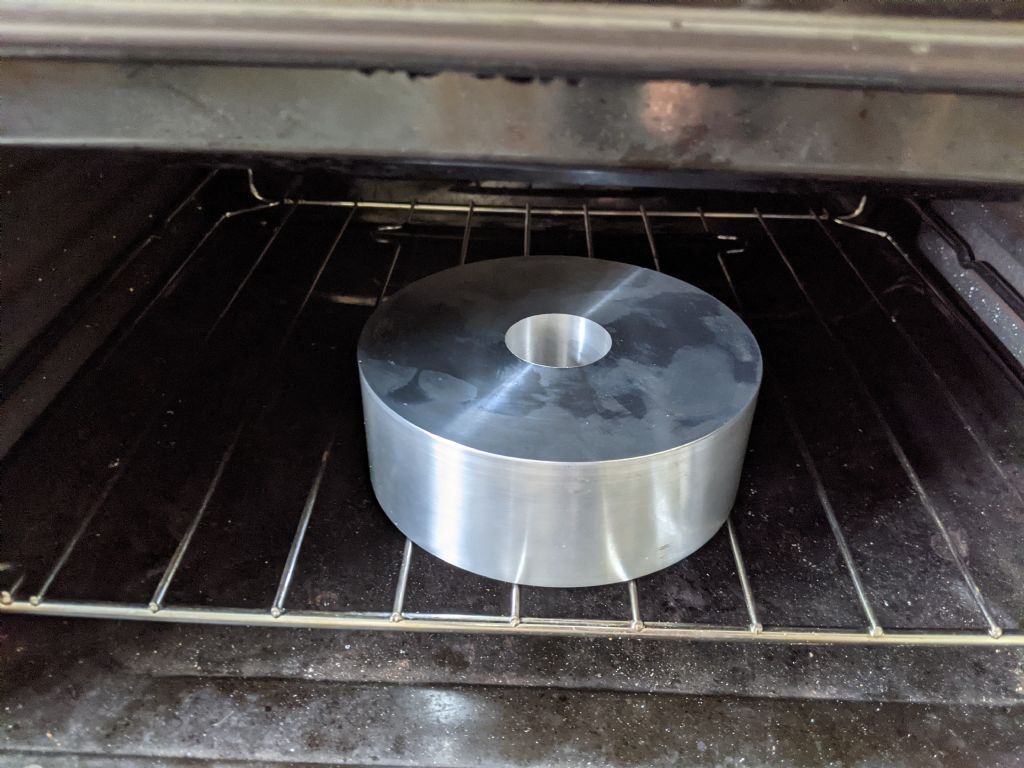
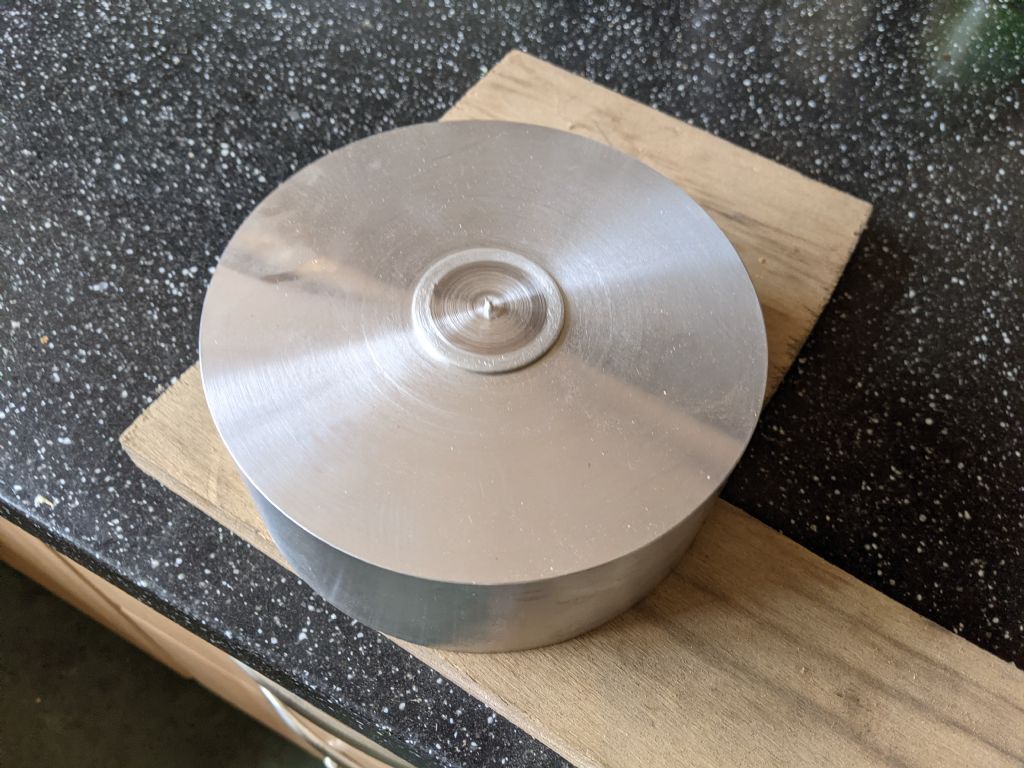
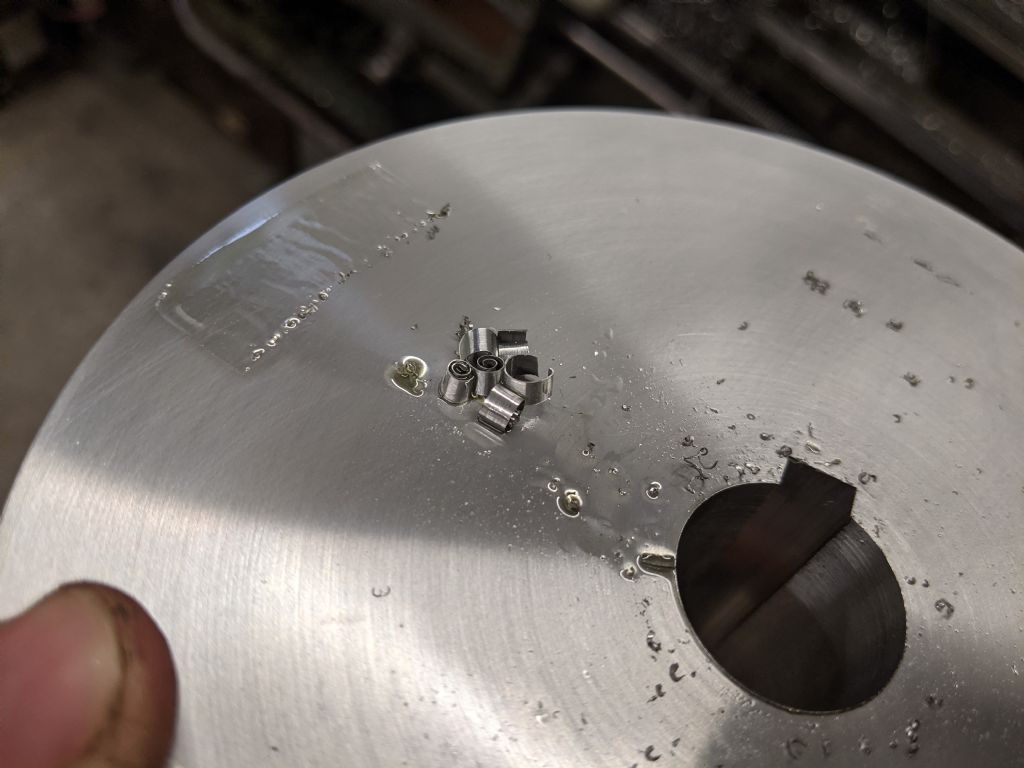
              Then straight off into the oven, and the plug into the freezer. Left them both an hour. Then it slipped right in. Pretty much immediately wouldn't come back out. I left it to cool, then chucked it back up and faced each side. Then on the second face I drilled and bored to 24mm

              pxl_20210819_102935176.jpg

              pxl_20210819_115230161.jpg

              pxl_20210819_131955292.jpg

              It's nice how the plug sort of disappeared when I faced it

              Thanks to everyone for their help so far.

              However, I could do with some advice on the next task.

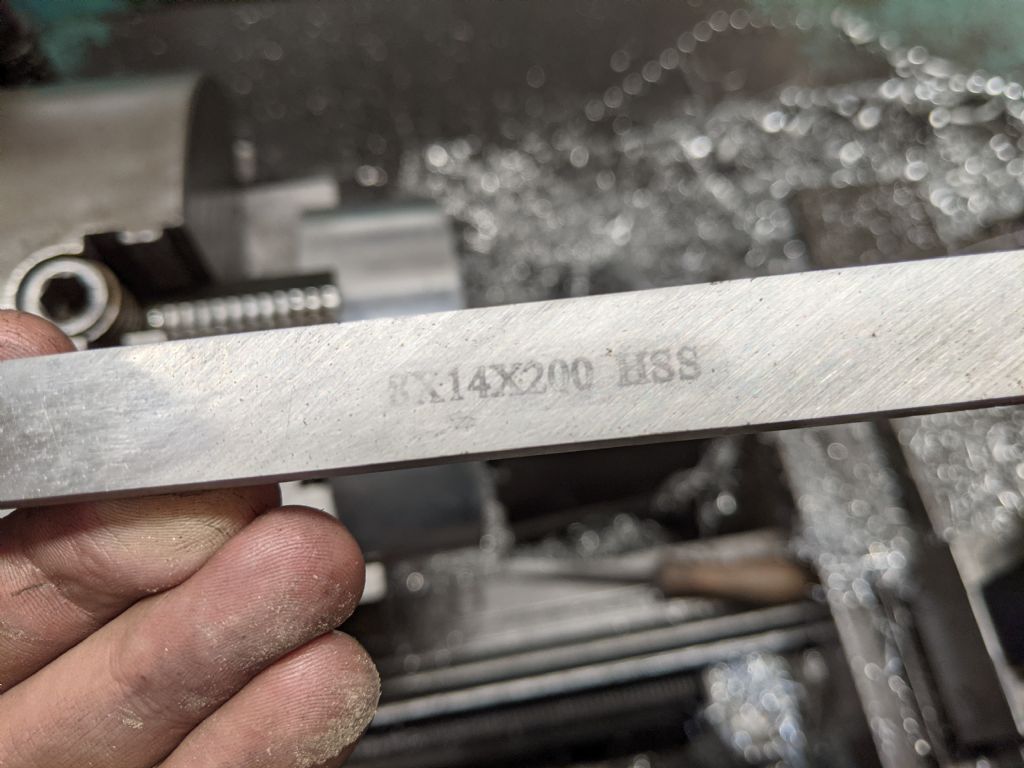
              I now need to cut a keyway in the bore to accept an 8mm key, about 3mm deep. Last time the wheel was made, I managed to cut the keyway in myself using a piece of 8mm hss which I ground a bit of relief on, then i just took passes to shave off bits. This worked with varying success and I ended up having to file the slot a bit more to get it to fit.

              Does anyone have any tips on what sort of angles I should try to grind into the cutting tool or any tips in general for cutting a keyway in a lathe.

              pxl_20210819_132749728.mp.jpg

              #558974
              Phil Whitley
              Participant
                @philwhitley94135

                Looking good Richard!!

                Phil

                #558994
                Michael Gilligan
                Participant
                  @michaelgilligan61133

                  Nicely done, Richard

                  and you’ve saved the price of a bottle of 638

                  MichaelG.

                  #558996
                  not done it yet
                  Participant
                    @notdoneityet

                    Well done. Axles have wheels shrink fitted for railway stock and likely tires are shrink fitted to recondition worn wheels, too. Nearly every starter ring on car flywheels are shrink fitted.

                    Belt and braces for fitting different gear parts together leads me to first fit the parts together (the belt part) and add a couple of threaded holes across the join, then loctite in some threaded rod, bolt or grub screw (the braces). Machine flat if necessary. This lot has left me with a very safe modification, even if tolerances are not quite perfect…

                    If I were to fit the ‘braces part’ in this instance, because the wheel is possibly rotating at 2800rpm, I would be careful to drill the holes to identical depth and insert identical grub screws. They would be close to the axis, but this would minimise any likelihood of altering the balance.

                    #559004
                    DiogenesII
                    Participant
                      @diogenesii

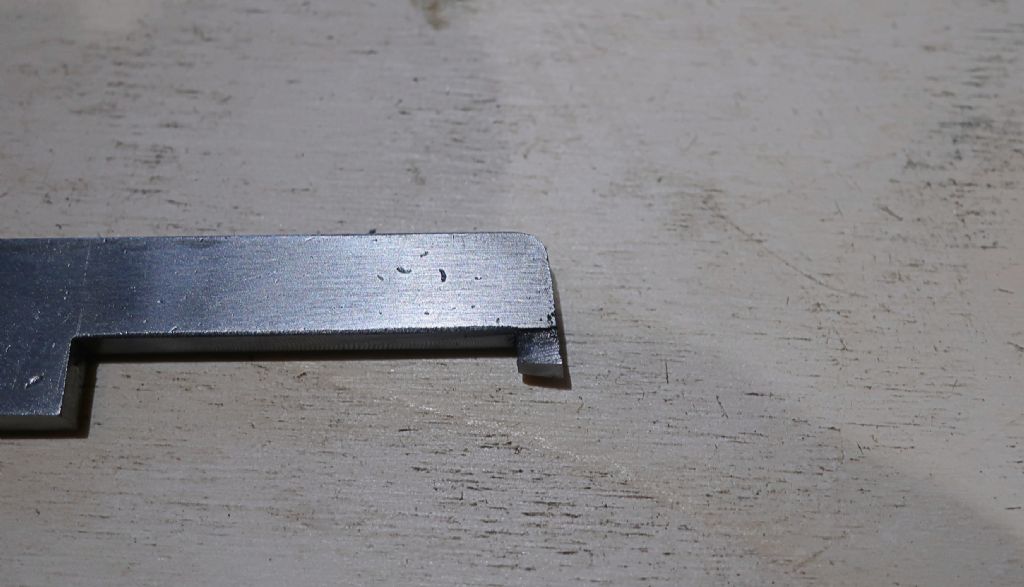
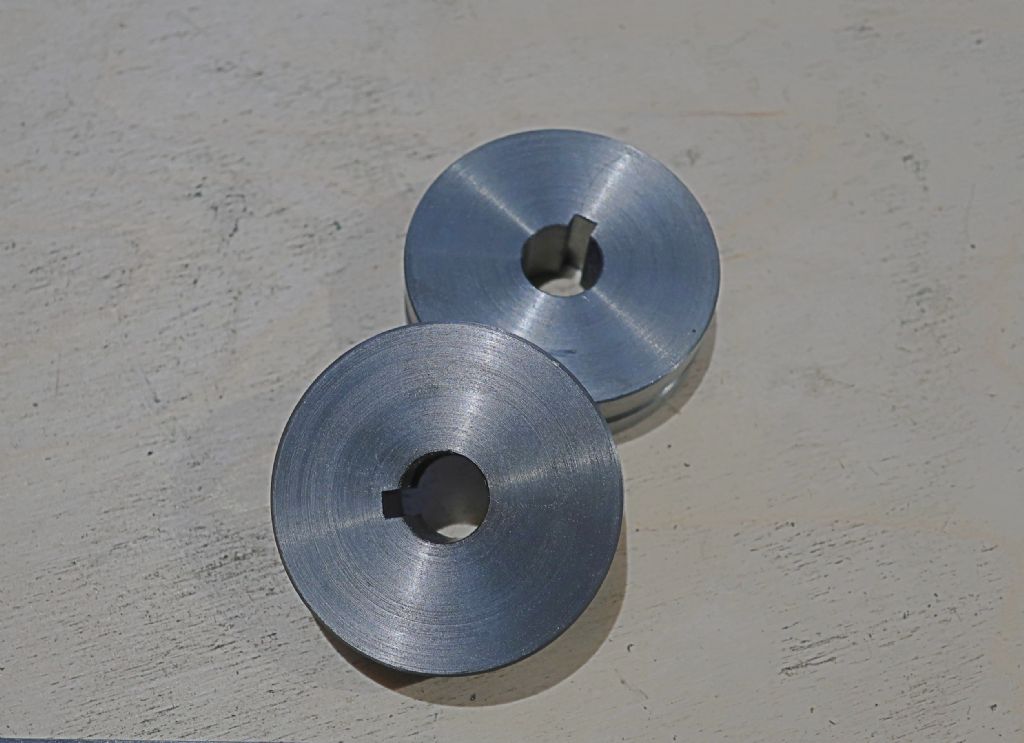
                      When I did the two 4mm keyways in the steel rollers below, I used gauge plate (Ground Flat Stock) simply because it can be milled & filed to an accurate slot 'cutter' shape before hardening with far greater control of the shape (esp. the corners) than can be achieved with HSS offhand on a bench grinder.. ..made for a crisper slot that didn't need any dressing..

                      The 'rake' on the front cutting edge was deliberately left steep to prevent 'digging in'..

                      I gave relief to all sides, only the cutting edge and a short distance above it was at finished dimension, final few licks with a stone after hardening.. ..looks a bit rough, but only the cutting edge on the front corner has to be 'good'..

                      keyway cutter .jpg

                      keyway cutter planform.jpg

                      lower rollers.jpg

                      #559006
                      JasonB
                      Moderator
                        @jasonb

                        I think 8mm is a bit wider than I would like to plane on the lathe all in one width, could probably do it with a tool like you used before say 3mm wide. Set it above ctr height and do one narrow keyway, then same distance below ctr to form as second and then take out the bit between with the tool on ctr height. Doing it in that order is more likely to give a parallel keyway as if you did the middle first the other two cuts would try to wander into the gap.

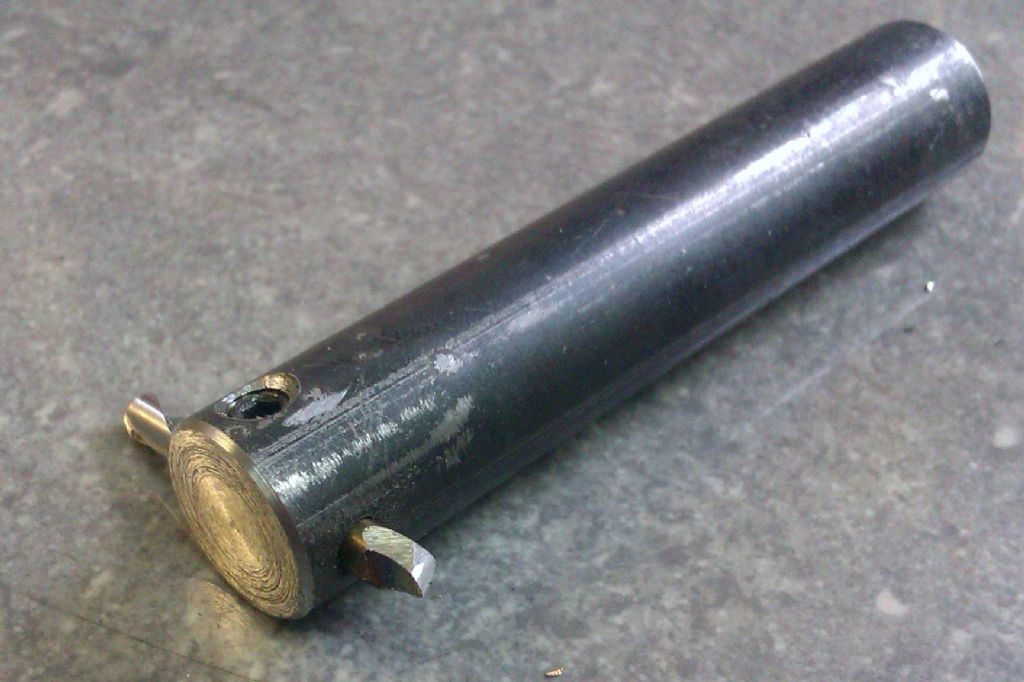
                        If you use a tool holder like a boring bar and a 3mm dia HSS bit ground like a parting tool but on it's side that will work. Similar to this just a square profile to the cutter.

                        #559072
                        DiogenesII
                        Participant
                          @diogenesii

                          Agree that Jason's method seems far more likely to result in success yes

                          #559099
                          Graham Meek
                          Participant
                            @grahammeek88282

                            Hi Richard,

                            I would not recommend pressing aluminium into aluminium. There is too high a tendency for the aluminium insert to pick-up as it is being pressed in. When I have to fit aluminium to aluminium it is usually a light press fit, no more than +0.01 mm with a smear of Loctite to stop the "picking up".

                            Preference would be to go for a mild steel insert. If you are adamant you want to do a press fit then for 38 mm diameter you need to have your insert larger than the H7 bore, (0.0 to +0.25 mm) by +0.034 to +0.050 mm for an r6, or interference fit.

                            You will probably need a good arbor press to get these parts together.

                            If it were me, I would go with Tony, 0.01 mm down on diameter and Loctite 638 and possibly with one band of straight knurl on the last part of the insert to go into the hole. The band of knurl will also need some effort to get the insert into the hole, so be prepared if you do this. The important part is to leave the assembly to cure for 24 hours.

                            Regards

                            Gray,

                            Ignore my post things have moved on since I started typing.

                            Edited By Graham Meek on 20/08/2021 11:19:48

                            #559191
                            Howard Lewis
                            Participant
                              @howardlewis46836

                              To make life easierv on machine, tool ,a nd you.

                              Make a sacrificial plug to go into the bore, and then drill a hole, centred on the boundary between sacrificial plug and bore.. This will remove a lot of the material that needs not to be there.

                              Remove plug and cut keyway.

                              You can either hold the tool in the tailstiock in some way, or in the toolpost, (Obviously equally disposed vertically about the centreline ) and then rack the tool to and fro, using the Saddle or tailstock handwheel..

                              The toolpost method is better since the Cross Slide can be used to control the depth of cut.

                              Once, I did cut a square hole, using a tool in the tailstock, but bit was laborious, since I had virtually no control over depth of cut. The method was to cut as deep as possible, about 0.010", withdraw, rotate chuck by 90 degrees, and repeat. Continue repeating until hole was to completed depth. Crude, and slow, but it produced the desired result. Not that I would want to make a habit of it!

                              With 20/20 hindsight, should have mounted the tool in the Toolpost!being bone idle, the tool was ground on the front face only, so that the swarf had to be cleared on each backstroke. Should have been ground like a small parting tool, with clearance on both sides.

                              Howard

                              #559387
                              Richard Kirkman 1
                              Participant
                                @richardkirkman1

                                Thanks everyone, I'm really happy with the results so far.

                                Not done it yet- That sounds like a good idea, just to go the extra mile and add a bit more. I'll put some m5 set screws along the joint

                                Howard- I've ran out of aluminium so I won't be able to make a plug and drill the bulk out. But that does sound like a good idea for the future. I really should have worked it out and drilled the hole before I bored the center out.

                                I've been away in Ireland this weekend, so I'll attempt to cut the keyway tomorrow afternoon.

                                I think I have a boring bar type tool that would be perfect. The only issue I can think of so far is that I can't use by belt sander to shape any cutters so I'll have to get the bench grinder reassembled.

                                What sort of depth of cut should I look at trying to take?

                                I'll try to make a tool smaller than 8mm, perhaps 4mm then I can do it in two passes. If diogenesII did 4mm in steel then I imagine 4mm in aluminium will be fine

                                #559394
                                Howard Lewis
                                Participant
                                  @howardlewis46836

                                  The sacrificial plug does not have to be Aluminium. It would be better if it was, to lessen the risk of the drill wandering.

                                  The object of drilling is to remove as much metal from what is going to be the keyway, leaving less for the keyway cutting tool to remove.

                                  FWIW, having drilled the hole, when you start to cut the keyway, don't be greedy, better to succeed after lots of 0.005" cuts rather than trying a few 0.050" cuts and failing and possibly damaging tool, set up and workpiece.

                                  A tool 4 mm wide / deep won't be strong, so small cuts have to the order of the day.

                                  Once, I produced a 1/8" square, blind, hole in brass, by drilling a 1/8" hole and then forcing a 1/8" toolbit in for 0.010", withdraw, rotate chuck 90 degrees repeat, and then repeating and repeating until I had the square hole of the depth that was required.

                                  Slow? Yes, but it produced what was required (An extension for a speedometer cable )

                                  I would be thinking in terms of the workpiece in the chuck, and a 4 mm toolbit, mounted in the toolpost, equally about the lathe centreline, with the cut ( 0.050 mm? ) being gradually applied by moving the Cross Slide and racking the Saddle too and fro.

                                  I made a Peter Robinson Slotting Tool, and adapted it to my larger lathe , and have used that to cut keyways quite successfully. But am unsure if College Engineering Supplies still sell the casting.

                                  Howard

                                  #559398
                                  DiogenesII
                                  Participant
                                    @diogenesii

                                    I think Jason's suggestion of making a 3mm wide tool, cutting two separate slots, and then clearing the central 'upstand' is a good one, and more likely to give you a straight-sided slot at the end of the job.. ..if you try to do two 4mm 'bites', the first will be okay, but the tool will want to wander into the 'open' side on the second pass..

                                    The depths of each cut should be shallow – try 0.02mm / .001" and see how it goes, I found the job went quicker taking shallow cuts and just turning the cross-slide round a division or so with one hand whilst racking the saddle with the other – a human approximation to a shaping machine..

                                    In any case you will be able to feel whether you can take a bit more or need to take a bit less, once you get started.

                                    You might be able to grind the necessary reliefs around the end of a small piece of HSS off-hand on a benchgrinder – only the cutting edge itself really has to be straight (-ish), as long as the rest of the tool 'body' has a little clearance so that it doesn't rub on the sides or base, it doesn't have to be particularly accurate or even in this manual operation – a Dremel might do it..

                                    Taking some care to make sure the cutting corner is 'sharp' pays dividends, it becomes tiresomely hard work with a dull cutter.

                                    #559562
                                    Richard Kirkman 1
                                    Participant
                                      @richardkirkman1

                                      Very tired today, but progress has been made and I am very happy once again.

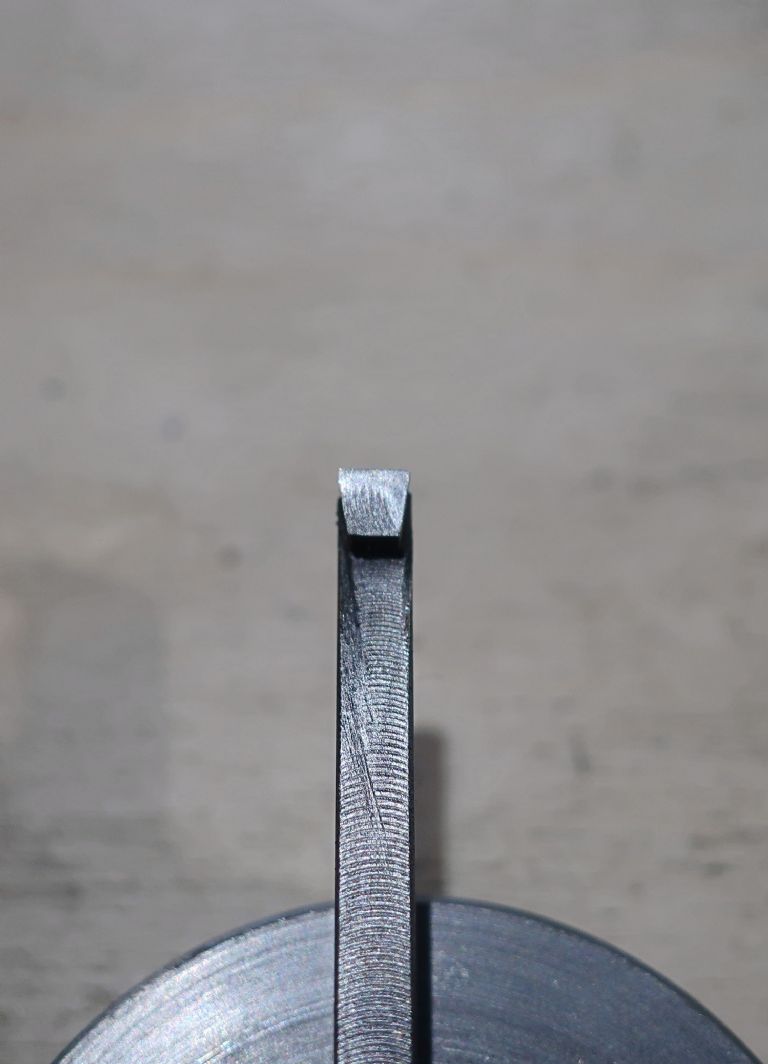
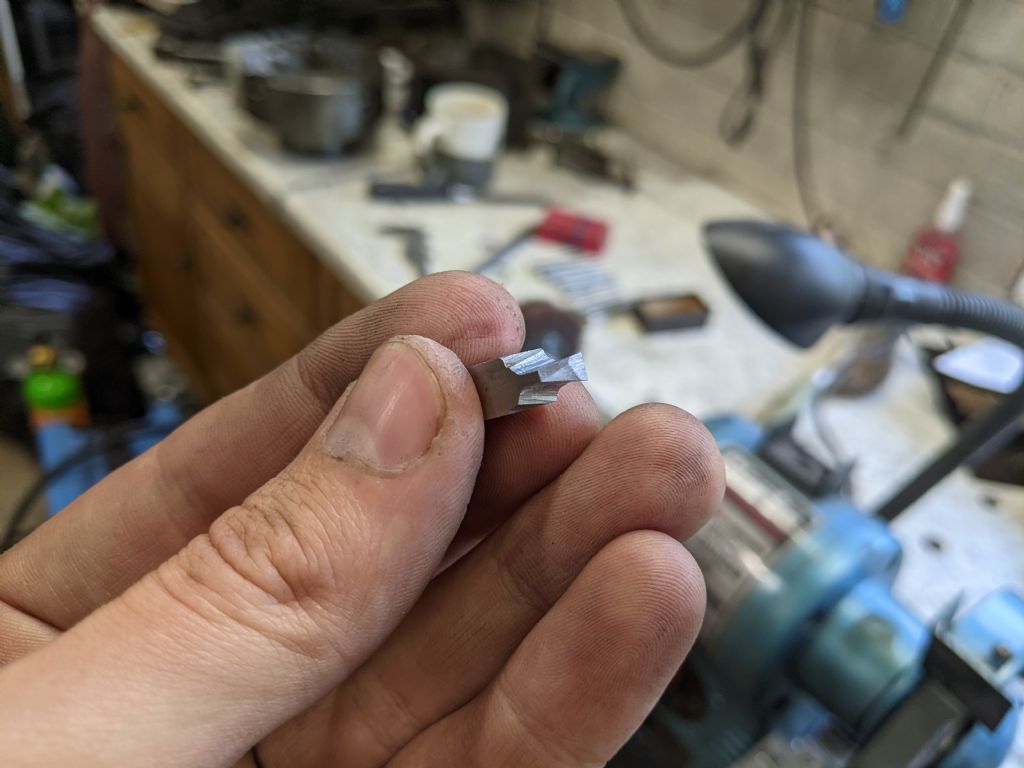
                                      I started off looking at what tools I had already for the lathe. There was a quarter-inch square boring bar/ keyway cutter that I purchased last summer in a job lot, which I had almost forgotten about. There was just enough HSS left to grind down the opposite end of the tool into the 3mm cutter I needed.

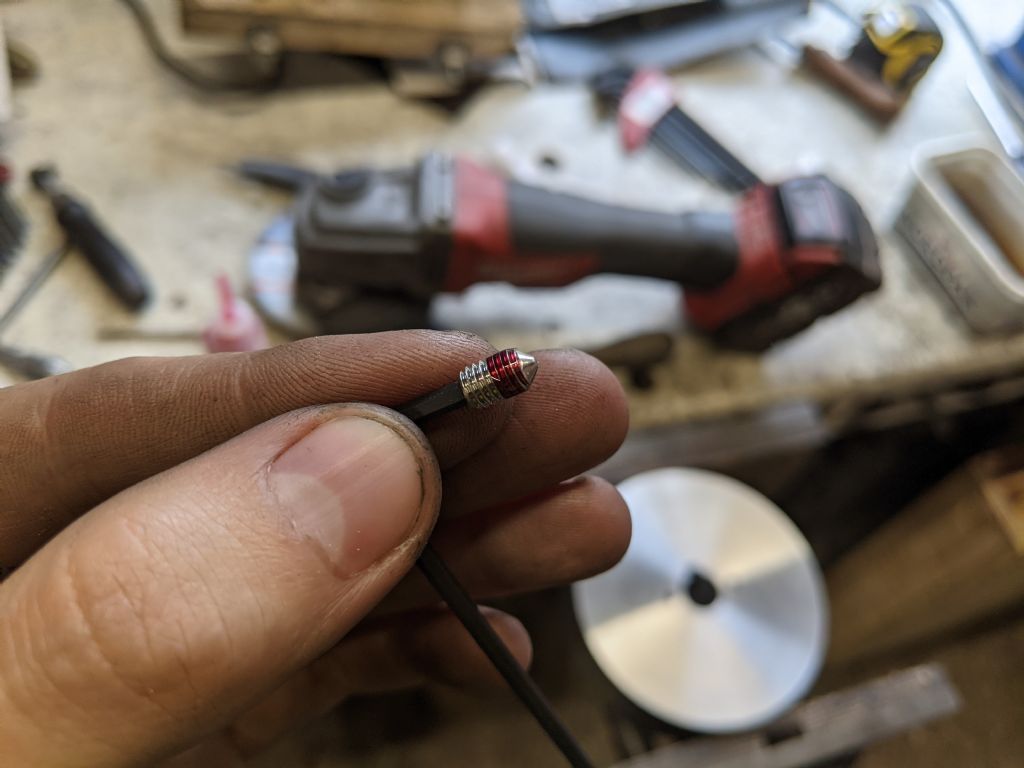
                                      I didn't bother grinding it to exactly 3mm as it was getting hot and I was getting impatient as it had taken a while. Then from the bench grinders fine wheel I took it to my tormek whetstone grinder and finished it off on there. I ended up with a 3.3mm cutter. Not the easiest to take pictures of, The camera makes it look rougher than it was. Most importantly, it was quite sharp and relieved on the front and sides.

                                      pxl_20210823_160206105.jpg

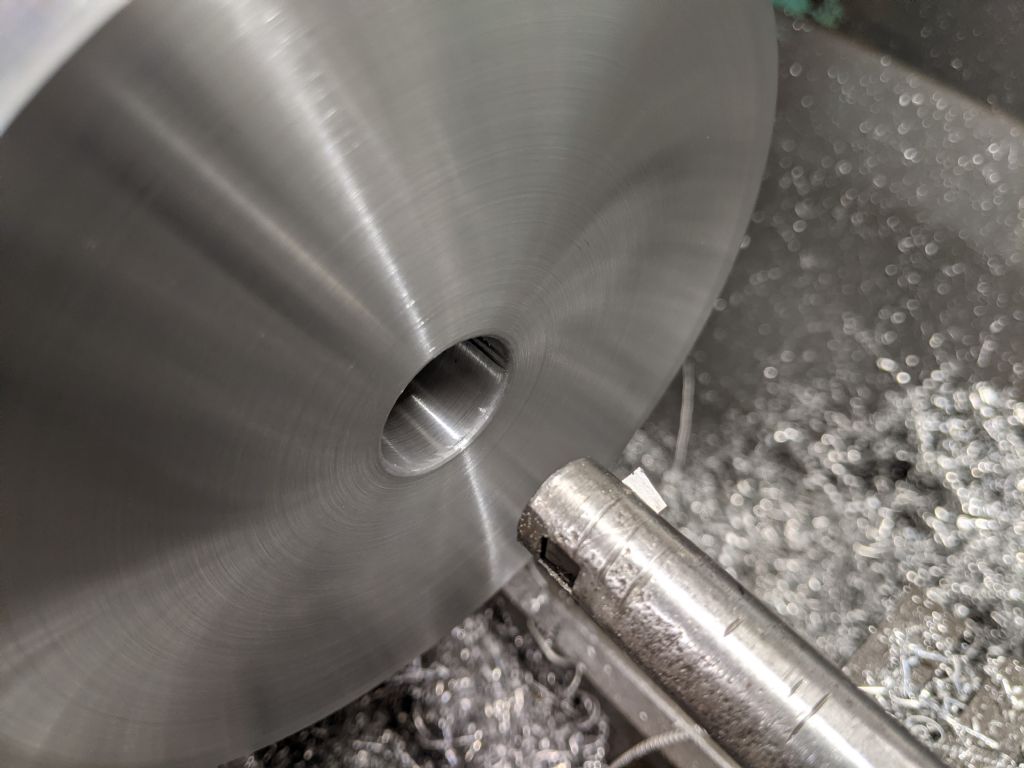
                                      Then I put the tool into a tool holder and set it to close enough to center. I did this by eye and looking at where the scratches were in the bore. Once the scratches were even I stopped.

                                      pxl_20210823_161619034.jpg

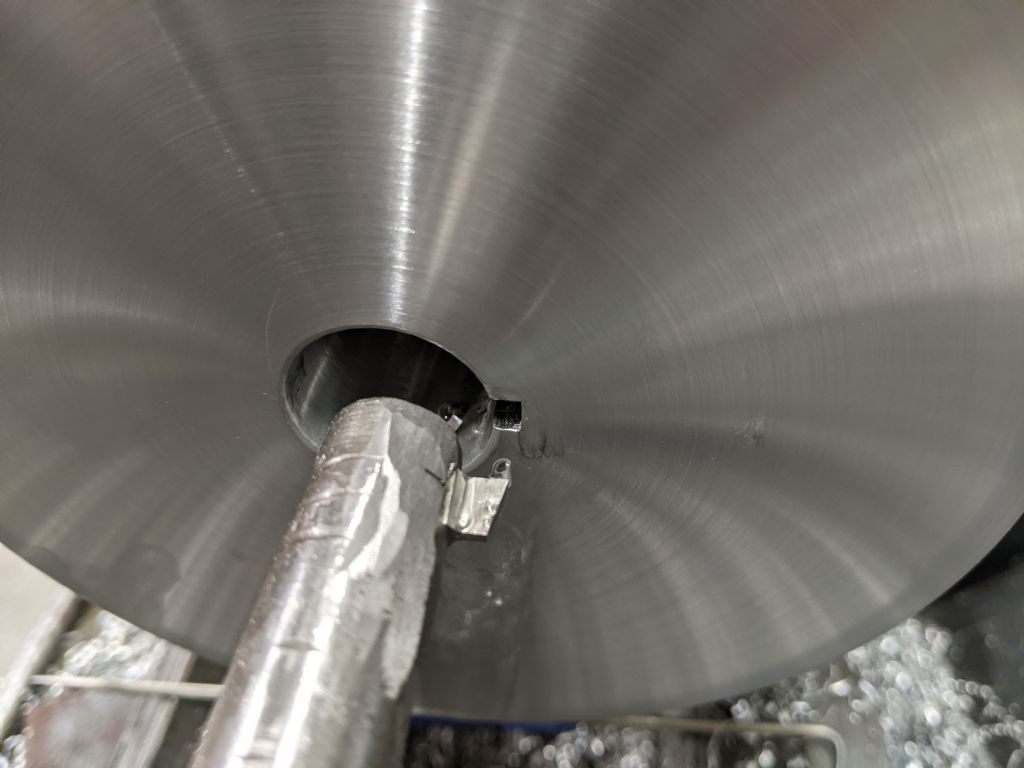
                                      I started off by taking smaller passes, especially since the full cutter was being used in the center pass. Starting with 1 thou depth of cut, although once I was a bit more confident I tried some larger cuts up to around 5 thou.

                                      I did find that I occasionally got a bit of deflection, so I did more than one pass on 1 depth to ensure it was cutting parallel to the bore, this seemed to work fine for me.

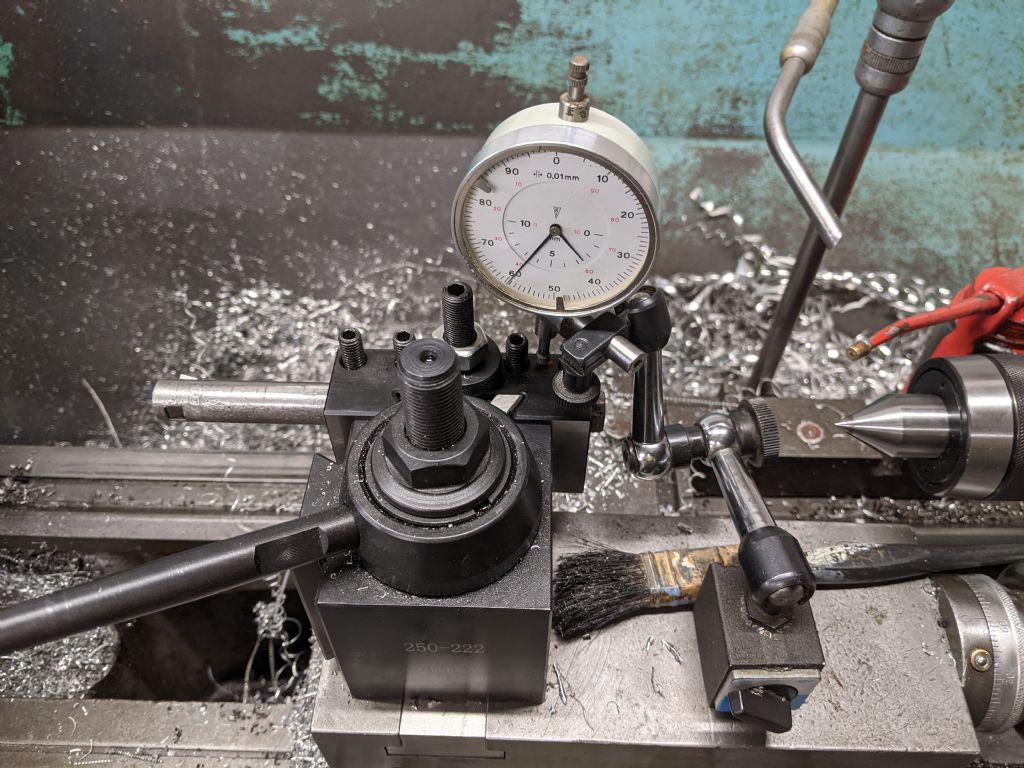
                                      Once the first slot was to depth, I used an indicator to move the tool up 2.4mm from the center. Then I cut another slot. This slot was smaller so I attempted a few heavier cuts of 7 thou or so, but generally, I tried to just do 2.5 thou cuts.

                                      pxl_20210823_164337804.jpg

                                      I then lowered the tool and cut the other path. I found this to be easier than cutting two slots on either side and then taking out the middle. This way I started in the middle, just my preference.

                                      I can't imagine how much I would have struggled if I hadn't upgraded to a QCTP this summer. Thanks again to Phil for his help.

                                      pxl_20210823_170836882.jpg

                                      I found this to be quite enjoyable. Definitely not as quick as broaching the hole, but much lower cost (zero in fact) and the satisfaction of doing it myself.

                                      pxl_20210823_174430235.mp.jpg

                                      I thought the chips pinged off quite nicely.

                                      I deburred everything with a file and deburring tool, then I attempted to fit the wheel. It fit perfectly!

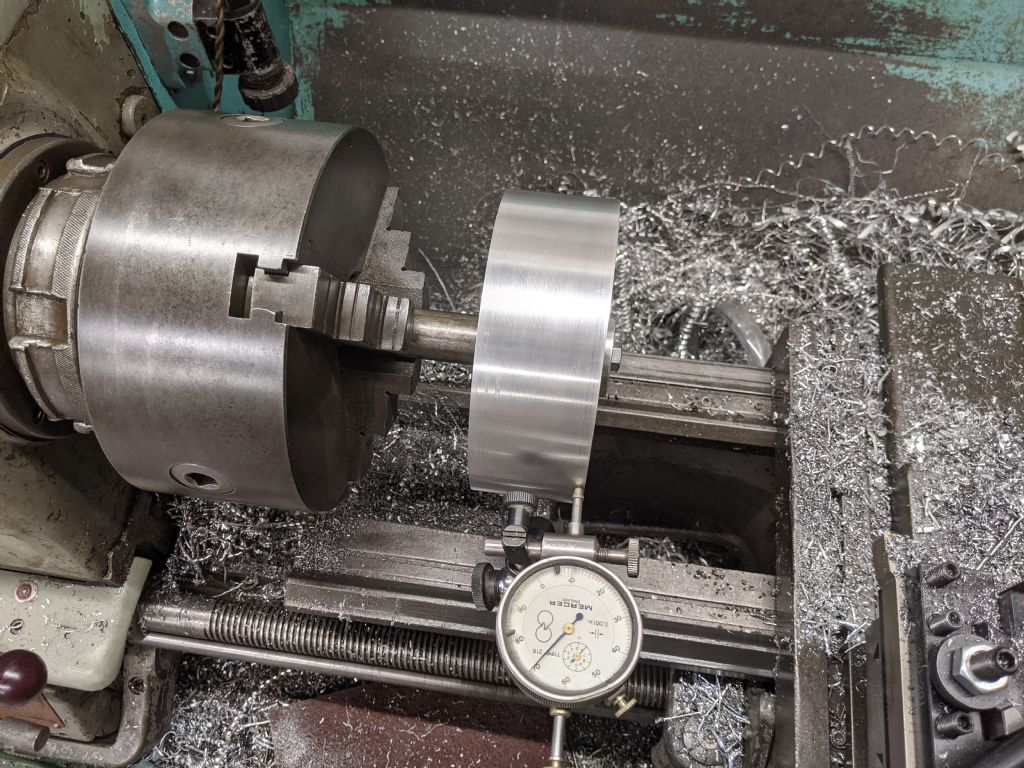
                                      I stuck an indicator on the flat face(about where my thumb is in the picture above) and the runout is now 2 thou, a significant improvement compared to the 10-20 depending on shims before.

                                      The circular face is now 1.5 thou out of round, compared to the 10 thou before. Also a significant improvement.

                                      I turned on the motor and put it up to full speed, the vibration has gone. It's honestly like a new machine, it works a lot better. And the belt seems to wobble a lot less.

                                      Opinion time-

                                      I am tempted to turn a mandrel and remount the wheel and skim the outside face to true it to the bore. Is this likely to make it better, or am I more likely to do worse than the 1.5 thou already achieved?

                                      I am also considering crowning the wheel to the same as my tracking wheel so the belt sander *should* track better.

                                      I will also be adding the "braces" of the grub screws at some point once the tuning is done.

                                      Thank you to everyone so far for your help. If only I had made the wheel myself originally and enquired earlier!

                                      #559663
                                      Howard Lewis
                                      Participant
                                        @howardlewis46836

                                        An alternative to cutting a key way would be to mount the "Wheel" onto the shaft with as close a fit as possible, and then to drill and tap two diametrically opposed holes on the interface between the parts, and screw in grubscrews to act as "dutch" keys. Grubscrew length, ideally should match the thickness of the "Wheel"

                                        For good measure, use Loctite or a similar anaerobic locking agent on the dutch key grubscrews so that they are unlikely to come looses.

                                        Howard

                                        #559666
                                        JasonB
                                        Moderator
                                          @jasonb

                                          That turned out well and a good example to a certain Centec owner on how it should be donewink

                                          #559719
                                          not done it yet
                                          Participant
                                            @notdoneityet
                                            Posted by JasonB on 24/08/2021 14:59:46:

                                            That turned out well and a good example to a certain Centec owner on how it should be donewink

                                            I’m not sure that he will be seeing this!

                                            #559821
                                            Richard Kirkman 1
                                            Participant
                                              @richardkirkman1
                                              Posted by JasonB on 24/08/2021 14:59:46:

                                              That turned out well and a good example to a certain Centec owner on how it should be donewink

                                              No bodging here, and no youtube either… This may have been quite a challenge for me, but that's why I've found it so enjoyable.

                                              Today's progress should finish the job completely (as far as the wheel is concerned. The belt sander still needs fixing up somehow, but that's a problem for another day and thread)

                                              The day commenced with turning a 24mm mandrel to remount the wheel onto. I make sure it was a very tight fit with no slop. Then I double-checked the runout on the outside to make sure it was the same runout that I'd seen on the motor shaft. This meant that it was accurate enough and taking a cut was likely to result in a better concentricity, so I decided to take the plunge and skim the outside.

                                              pxl_20210825_095224858.jpg

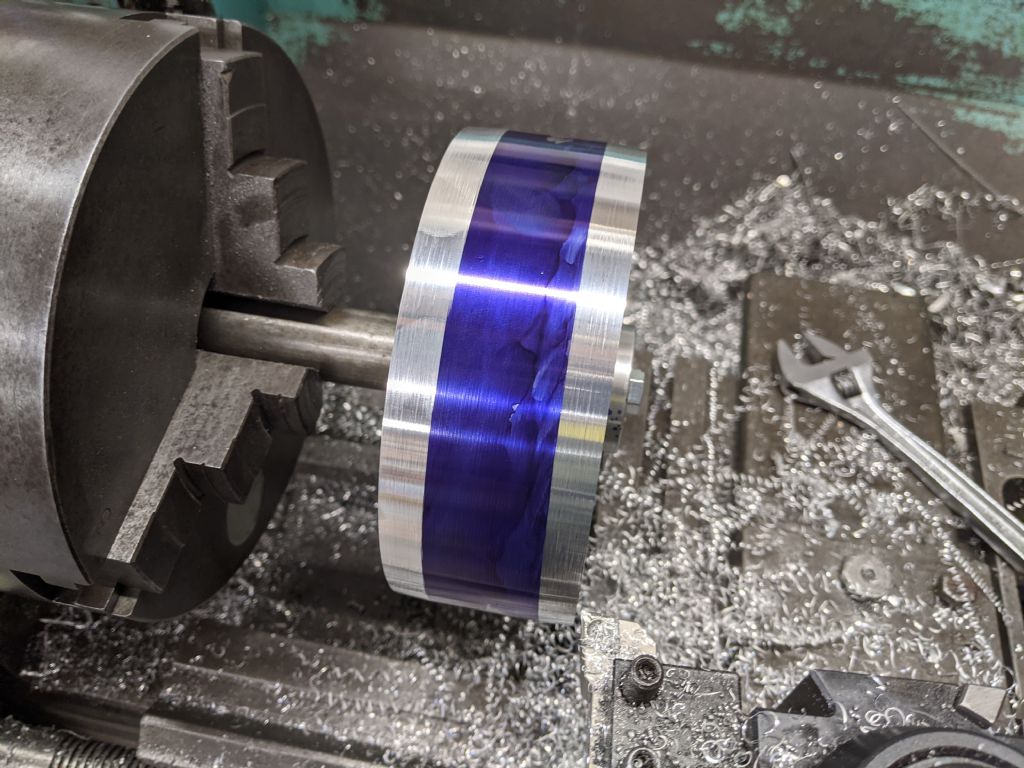
                                              After skimming the outside I decided to put a tapered crown on the wheel to *hopefully* help the belt sander track a bit better. This went quite well, just like when I did the same thing to the tracking wheel.

                                              pxl_20210825_104737632.jpg

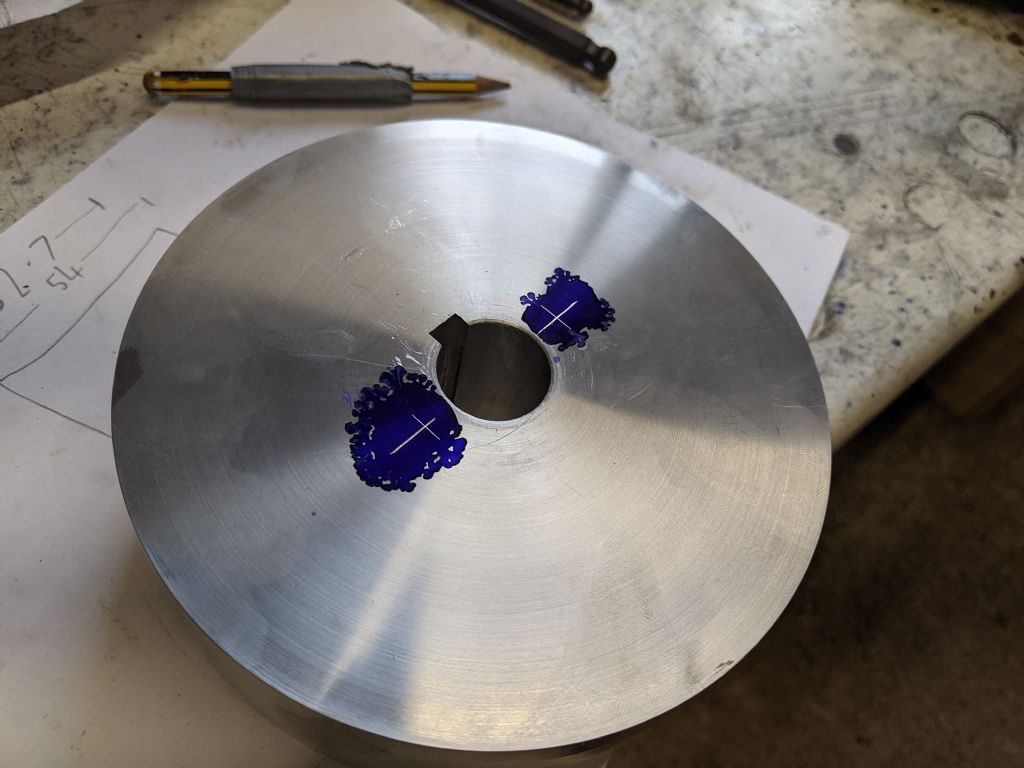
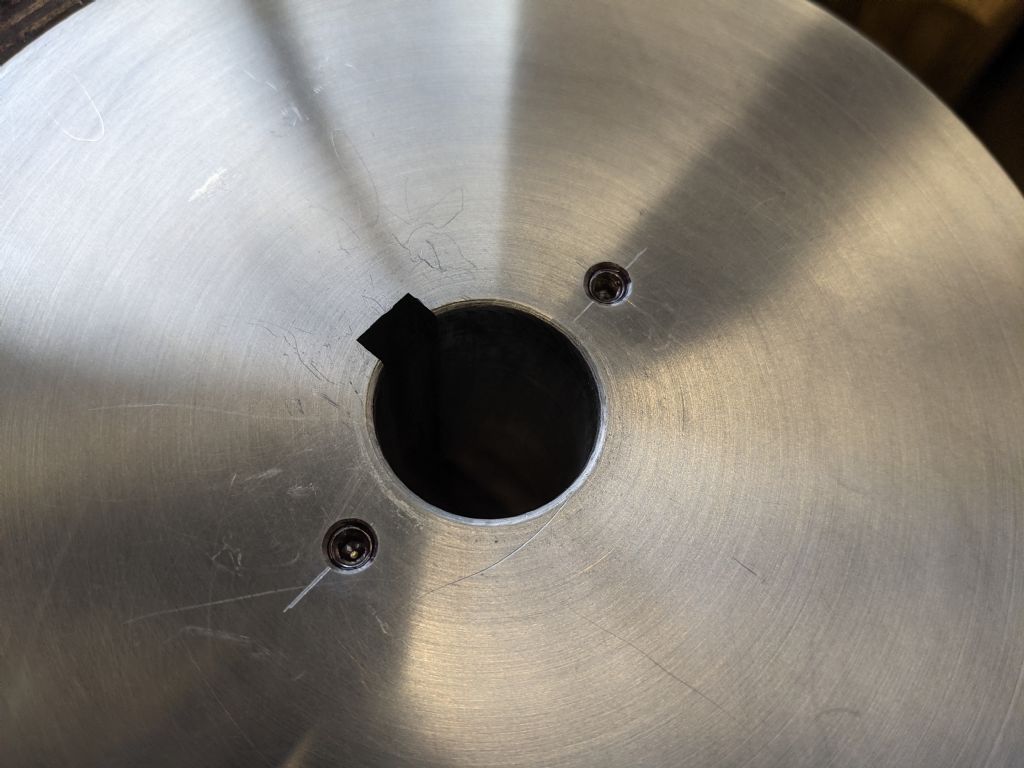
                                              Next step was to create the "dutch keys" for the 'braces' half. I put some layout fluid on the surface where I thought the holes needed to be, then I marked the holes and drilled to 4.2mm, ready to tap to M5.

                                              pxl_20210825_110020460.jpg

                                              Once tapped and deburred, I dropped a blob of locktite 271 onto each of the M5 grub screws then tightened them down.

                                              Howard, I understand you were saying to use long grubscrews or as long as the thickness of the wheel. I just used what I had lying around already, It's better than nothing. I just hope they're not needed at any point. The shrink-fit will hopefully do enough and the belt sander won't have a hard life anyway.

                                              pxl_20210825_111637263.jpg

                                              pxl_20210825_111817501.jpg

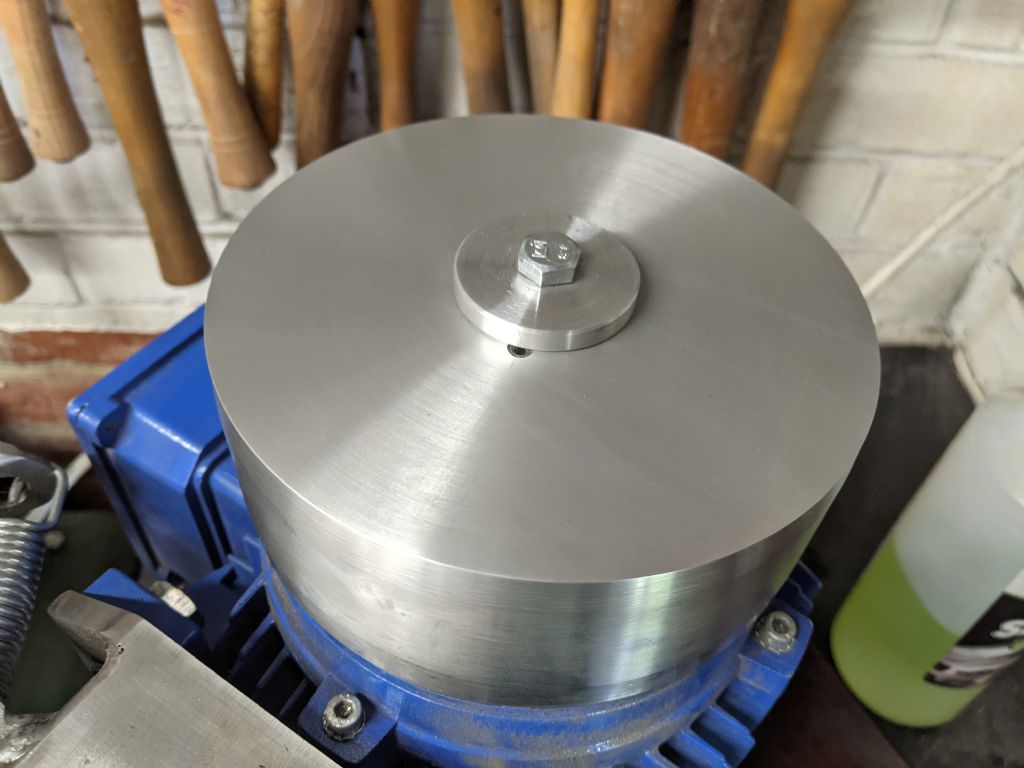
                                              With that completed, the wheel was remounted onto the motor. All finished.

                                              I checked the outside for the concentricity and it looked to be about 1.5 thou out. This may not be perfection, but it is significantly better than before. Plus, the vibration is practically gone, which is exactly what I wanted. No shims are required either…

                                              pxl_20210825_111959499.jpg

                                              Thanks to everyone for their help, I'm very grateful for your knowledge.

                                              Perhaps the centec owner should read this and see how easy the proper fix is!

                                              #559825
                                              Phil Whitley
                                              Participant
                                                @philwhitley94135

                                                Result!!

                                                #559831
                                                Richard Kirkman 1
                                                Participant
                                                  @richardkirkman1
                                                  Posted by Phil Whitley on 25/08/2021 18:31:10:

                                                  Result!!

                                                  Cheers Phil, I hope the tractor restoration is coming along well. I still need to catch up on last week's videos!

                                                  I'm just placing an Arc order since there's 5% off. Just for fun, I looked at the price of the tools to broach an 8mm key in a 24mm bore (not the complete broach kit). It came to a total of £70 or so! I think I'll stick to my current method…

                                                  Meanwhile, I think it's about time I cleaned my lathe. The belt sander build has involved a lot of turning, so it's time to tidy. I suspect I may have another leak in the lathe to solve too…

                                                  #559840
                                                  Pete.
                                                  Participant
                                                    @pete-2

                                                    Hi Richard, sorry for the non subject related question, I had an account with arc for over 2 years, did you receive a 5% off code through email? I can't see anything on their site?

                                                    #559841
                                                    Richard Kirkman 1
                                                    Participant
                                                      @richardkirkman1
                                                      Posted by Pete. on 25/08/2021 22:13:59:

                                                      Hi Richard, sorry for the non subject related question, I had an account with arc for over 2 years, did you receive a 5% off code through email? I can't see anything on their site?

                                                      No worries Pete. Yes, I received it through email. The code is ARC821-5

                                                      It's 5% off all accessories until the 30th of August 2021

                                                      Thanks

                                                    Viewing 25 posts - 26 through 50 (of 52 total)
                                                    • Please log in to reply to this topic. Registering is free and easy using the links on the menu at the top of this page.

                                                    Latest Replies

                                                    Viewing 25 topics - 1 through 25 (of 25 total)
                                                    Viewing 25 topics - 1 through 25 (of 25 total)

                                                    View full reply list.