Best way to re-centre & drill 6BA holes in bms bracket

Best way to re-centre & drill 6BA holes in bms bracket

Home Forums Help and Assistance! (Offered or Wanted) Best way to re-centre & drill 6BA holes in bms bracket

Viewing 18 posts - 1 through 18 (of 18 total)
  • Author
    Posts
  • #817067
    Greensands
    Participant
      @greensands

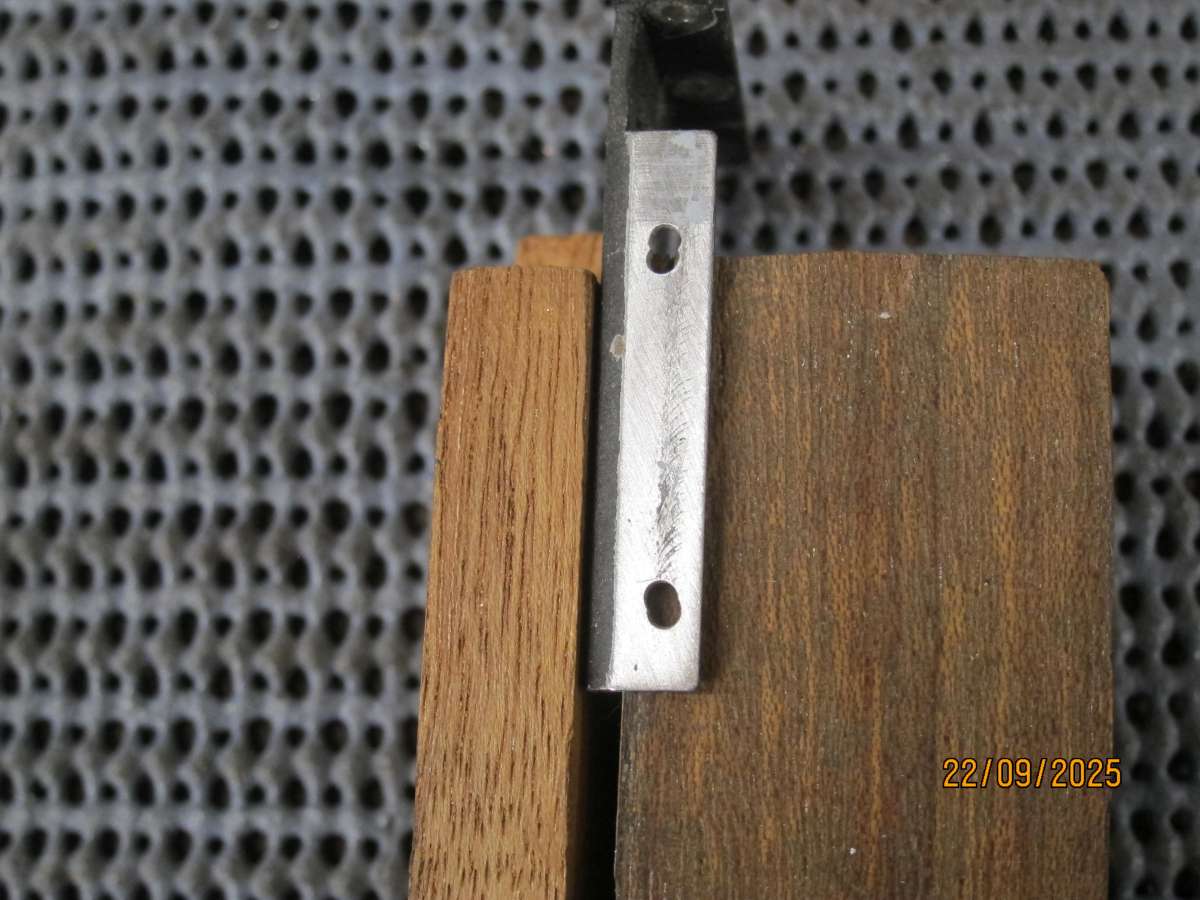
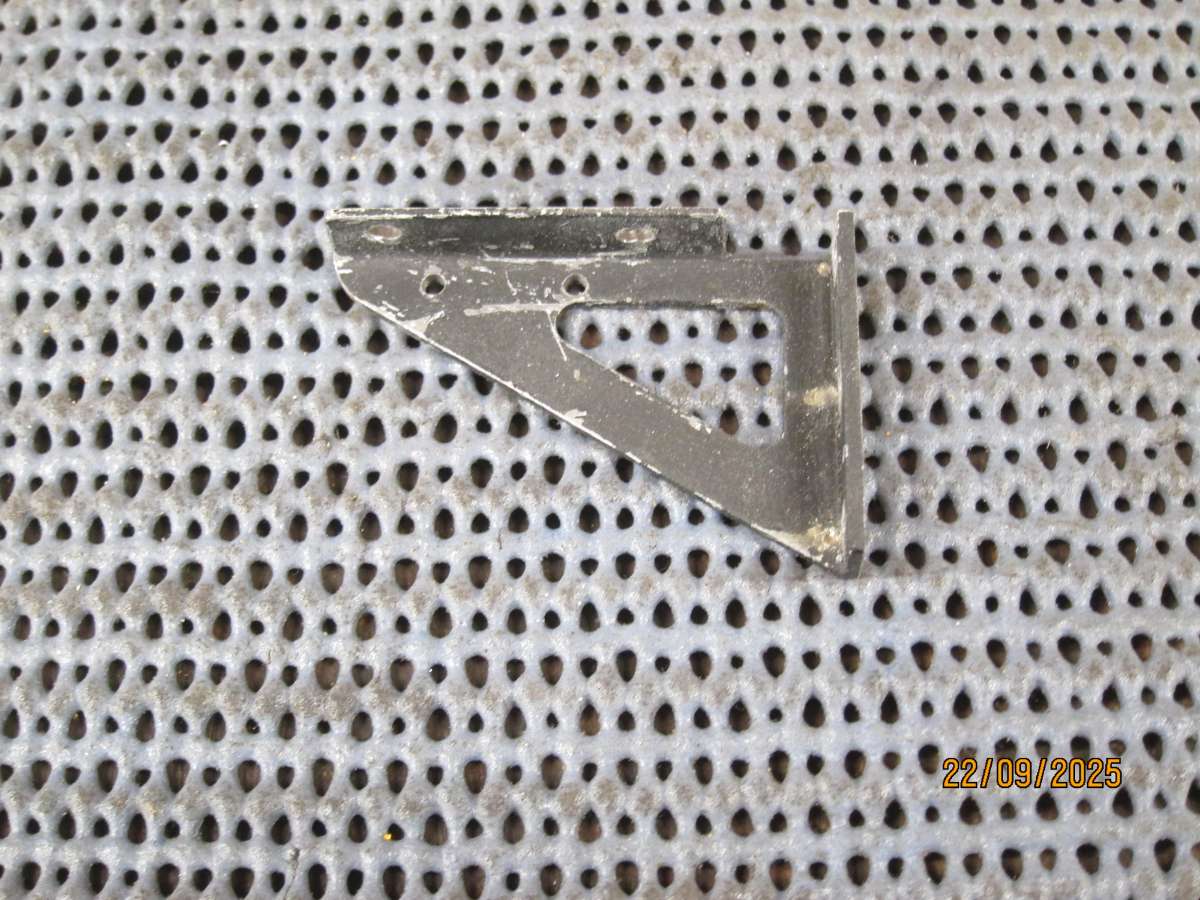
      I am looking for ideas on the best way on how to recover a  loco platform bracket fabricated from bms following a poor (very) effort on my part to re-centre the two of 6BA clearance holes along the top face.  Options are to 1) to remake, 2) drill out the faulty holes and solder a bms plug and re spot or 3) use something like J-B Weld followed by re-spotting.

      Before taking any further decisions I would be very interested to hear how others might proceed.

      Platform Bracket Hole Correction (1)Platform Bracket Hole Correction (2)


      #817070
      JasonB
      Moderator
        @jasonb

        I’d bore out oversize and solder in new metal. Preferably plunge cut with a milling cutter in the right positions to open out the holes. That way any new tapped hole won’t be affected by being partway in a joint but right in the middle of the plug.

        #817071
        Speedy Builder5
        Participant
          @speedybuilder5

          I guess it is not structural and by the time it is in use, any feint marks will be covered by paint.  You could drill out, very lightly countersink both sides and peen a plug in place (Brass if you like). Then gently heat and apply soft solder (Just to make sure it won’t turn during drilling) clean up and drill 6Ba clearance.

          If it were structural, start afresh.

          Bob

          #817072
          bernard towers
          Participant
            @bernardtowers37738

            Ill go with Jason on that one

            #817081
            Martin Connelly
            Participant
              @martinconnelly55370

              I have Rotabroach mini cutters down to 6mm and they would be my choice for cutting over the holes to plug the plate. They are good where there is a risk of existing holes deflecting the cutter and far stiffer than a small diameter cutter as they are mounted on a Ø13mm shank. They are designed for making holes in sheet metal up to 6mm thick. You could probably make your own shank to mount one on but even the smallest ones are not cheap. It depends on how much time you have invested into this part and the risk of further problems if a drill or milling cutter wanders.

              Martin C

              #817086
              JasonB
              Moderator
                @jasonb

                I would think the whole width of that leg is 6mm, if we assume the holes are 2.3mm to suit 6BA.

                #817087
                Diogenes
                Participant
                  @diogenes
                  On bernard towers Said:

                  Ill go with Jason on that one

                  Yes.

                  #817094
                  Clive Foster
                  Participant
                    @clivefoster55965

                    Not a fan of JB Weld, Devcon is vastly stronger. But £££ more.

                    For something like that Devcon would do just fine given a bit of “countersink” round the edges to make sure it didn’t go through.

                    In practice, as it’s steel, if I needed a quick fix I’d hit it with the welder. MiG or Stick depending on what I felt like whilst muttering that I really should have got a TiG years ago.

                    Hafta say that after way too many years, and not telling you how many wasted hours, this ancient penguin is finally realising the best way to fix a reasonably simple job gone wrong is to do over. That looks to be a simple bent bracket so definite do over. After making a former to do the ends round and hold i steady whilst the holes are added.

                    Looking back my life would have been far easier if I’d accepted than disposable tooling, formers et al were worth the effort for even onesie-foursie jobs. Even if making the tooling took longer than the job. Bending something like that bracket round a former is way easier than doing it in mid air. Clamping to the former for drilling, its disposable so who cares about couple of holes, is vastly more reliable than trying to work on the bracket alone.

                    Last job remotely like that was two off on component needing four bends. Two hours to make the former. Maybe 30 seconds each for the job. I’d done similar in mid-air some years ago. Over an hour, considerable verbal encouragement and 50% scrap rate to get a pair near enough to use. Wasn’t going through all that faff again!

                    Clive

                    #817099
                    Chris Gunn
                    Participant
                      @chrisgunn36534

                      Make some big washers and use them to cover up the slots. Unless you need to use the holes for positioning. No one will know!!!

                      Chris Gunn

                      #817109
                      duncan webster 1
                      Participant
                        @duncanwebster1

                        Solder or glue some strips to the inside faces, then redrill with a slot drill in the right place. Just an upmarket version of Chris suggestion

                        #817111
                        Dave Halford
                        Participant
                          @davehalford22513
                          On Clive Foster Said:


                          In practice, as it’s steel, if I needed a quick fix I’d hit it with the welder. MiG or Stick depending on what I felt like

                          Clive

                          Me too, if you have a welder?

                          Or tap and plug with steel and a dab of 603 as I have some.

                          #817118
                          JasonB
                          Moderator
                            @jasonb

                            My thoughts with JBWeld or other epoxy fillers was that due to them being softer than the steel it is quite likely that any drill will want to wander into the softer filler material so you would be back where you started. Possibly plunging with a 3/32″ milling cutter for 6BA clearance would be less likely to wander into the soft stuff.

                            #817120
                            Dave S
                            Participant
                              @daves59043

                              With ateel then as we used to say:

                              ”Measure twice, cut once, weld to fit”

                              That said I think it probably fits into the “do over” category. It’s not large, and the shape is simple. I bet that a new one will take the same time as faffing about to fix the old one, and the end result will be better.


                              Dave

                              #817136
                              Richard Simpson
                              Participant
                                @richardsimpson88330

                                The bottom line is surely simply to estimate how much time and effort would be involved in a repair, to a standard you would be happy with, against how much time and effort would be involved in making a new one.  Sometimes we fall into the trap of coming up with lengthy repair processes and overlook the fact that it would be less effort to make the part from scratch.

                                #817138
                                parovoz
                                Participant
                                  @parovoz

                                  Drill larger, put in a tight threaded plug with a dab of loctite retainer, re-drill on the correct centre.

                                  Or Silver solder in the plug, then re-drill….

                                  #817152
                                  old mart
                                  Participant
                                    @oldmart

                                    I agree with Jason’s first reply, thats exactly how I would do it.

                                    #817163
                                    Clive Foster
                                    Participant
                                      @clivefoster55965

                                      Further to Jasons point about drill wander if using a filler where there is still some overlap between metal and the filled hole.

                                      Realistically it’s best to use an oversize hole so you are only drilling filler.

                                      If overlap is the only way you need a good starter mark and some sort of drill guide.

                                      For the starter mark something better than a pop mark is pretty much essential. For baby stuff I used to like a no 0 centre drill but you have to be very careful of the 1/32″ diameter point. A no 1 is way better but sometimes the 1/8″ point is too big. Nowadays I’ve gone all modern and invested in a couple of spotting drills. Even stiffer than centre drill and much less vulnerable.

                                      Frankly for a job like that I’d not only knock up a bending former but also arrange some form of guide plate for the drill. That sort of narrow flange bend is often not dead flat despite the main shape following the correct bend angle.  The slightly not flat portions are very effective at dragging a small drill off line. Showing it a milling cutter to make the surface flat is always a good idea.

                                      When working on narrow flanges it can be quite difficult to mark hole positions out correctly. I have gear to make it easy but the price performance ratio of mine is such as to be inappropriate for the shopping list until a workshop is well established.

                                      Back in the day making things like ruler holders, scribing blocks et al followed by “finding a nice piece of flat plate glass” to run them on were considered essential ab initio projects for folk just getting started so they could do the necessary marking out.

                                      To be honest in this day and age going direct to a mill fitted with a decent DRO for drilling rather than setting up for traditional making out is probably a better way. Given a bit of thought and engineers low cunning a drill guide can be made in a manner that makes marking out far easier than trying to work direct on the flange.

                                      Those apparently trivial little components can take much more making than it appears at first sight.

                                      Clive

                                      #817280
                                      Greensands
                                      Participant
                                        @greensands

                                        Following the advice provided the problem has now been resolved. The faulty holes were end milled out to 5/32 dia and loosely plugged from the underside with 3/16 dia top hat section brass plugs to give an effective doubling of plate thickness. Plugs silvered soldered into position, new holes spotted through followed by tapping out 6BA. I am very pleased with the end result which was well worth the additional effort. Thanks to all who provided help and assistance.

                                      Viewing 18 posts - 1 through 18 (of 18 total)
                                      • Please log in to reply to this topic. Registering is free and easy using the links on the menu at the top of this page.

                                      Latest Replies

                                      Viewing 25 topics - 1 through 25 (of 25 total)
                                      Viewing 25 topics - 1 through 25 (of 25 total)

                                      View full reply list.