Choosing tool steel and home heat treatment

Choosing tool steel and home heat treatment

Home Forums Materials Choosing tool steel and home heat treatment

Viewing 18 posts - 1 through 18 (of 18 total)
  • Author
    Posts
  • #842115
    jon hill 3
    Participant
      @jonhill3

      Hi

      I wanted to make up some form tools for ornamental turning extruded cast iron.  I have heard of silver steel and ground flat gauge plate.  On looking into gauge plate to make a curved surface on spinning tops and plum bobs I found a bewildering selection of standards eg A1, A2 etc.

      I am not fussy on the tool steel, I would like something that is easy to work with hand tools (files or band saw) and fairly easy to heat treat with not to much equipment.

      Any suggestions?

      #842118
      howardb
      Participant
        @howardb

        Go to https://www.coventry-grinders.co.uk/

        Go to the bottom of the home page – click on FAQ’s

        Click on the first entry ” How do you harden gauge plate?”

        You can then download an office file to libra office or open office which will explain hardening procedures.

        #842119
        Roderick Jenkins
        Participant
          @roderickjenkins93242

          For my own purposes it is fairly simple.  If the item is round then I use silver steel (A1) which is water hardening.  If flat then I use gauge plate (O1) which is oil hardening.  Both are easily torch heated before quenching then tempered to the appropriate colour.  I have successfully made form tools and plane blades from gauge plate and haven’t felt any need to use something else.

          Rod

          #842120
          cedric 1
          Participant
            @cedric

            Unless you have a very robust lathe, larger than most hobby lathes, you may struggle with form tool to machine curves on things like tops and plumb bobs without serious chatter and jamming. The large cutting area will defeat a smaller lathe. Unless the plumb bob or top is tiny.

            The more usual method is to use a pivoting ball-turning tool, commonly available from hobby tooling suppliers. This reduces the cutting area to one point that moves around  the required arc, putting less load on  the machine.

            #842122
            duncan webster 1
            Participant
              @duncanwebster1

              Tubal Cain (the English one, not the US imposter) recommended using old files, softened reshaped and rehardened for cutting tools. This of course requires the kit to achieve the softening,  very slow cooling from red heat

              #842123
              cedric 1
              Participant
                @cedric

                <p style=”text-align: left;”>Bury the red hot file in a bucket of garden lime powder for slow cooling.</p>

                #842133
                JasonB
                Moderator
                  @jasonb

                  Like Rod I just use silver steel or gauge plate depending on what is to hand and what shape I want. I also tend to quench both in water and don’t temper

                  As said wide cuts from a form tool are prone to chatter so you may need to build up the profile with two or more cutters depending on length  of contact area, diameter and lathe.

                  The other option would be some form of copy cutting where a simple filed to shape profile can be followed and a suitable lateh tool does the actual cutting.

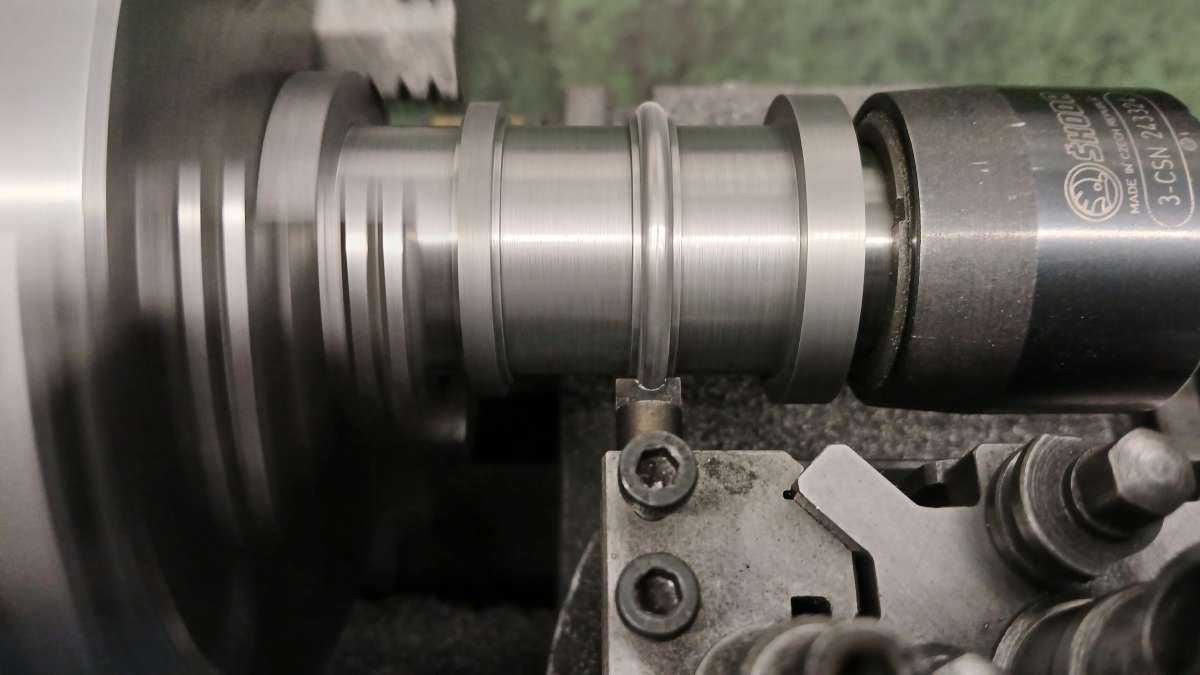
                  Silver steel cutting iron. 2mm radius

                  20250118_141808

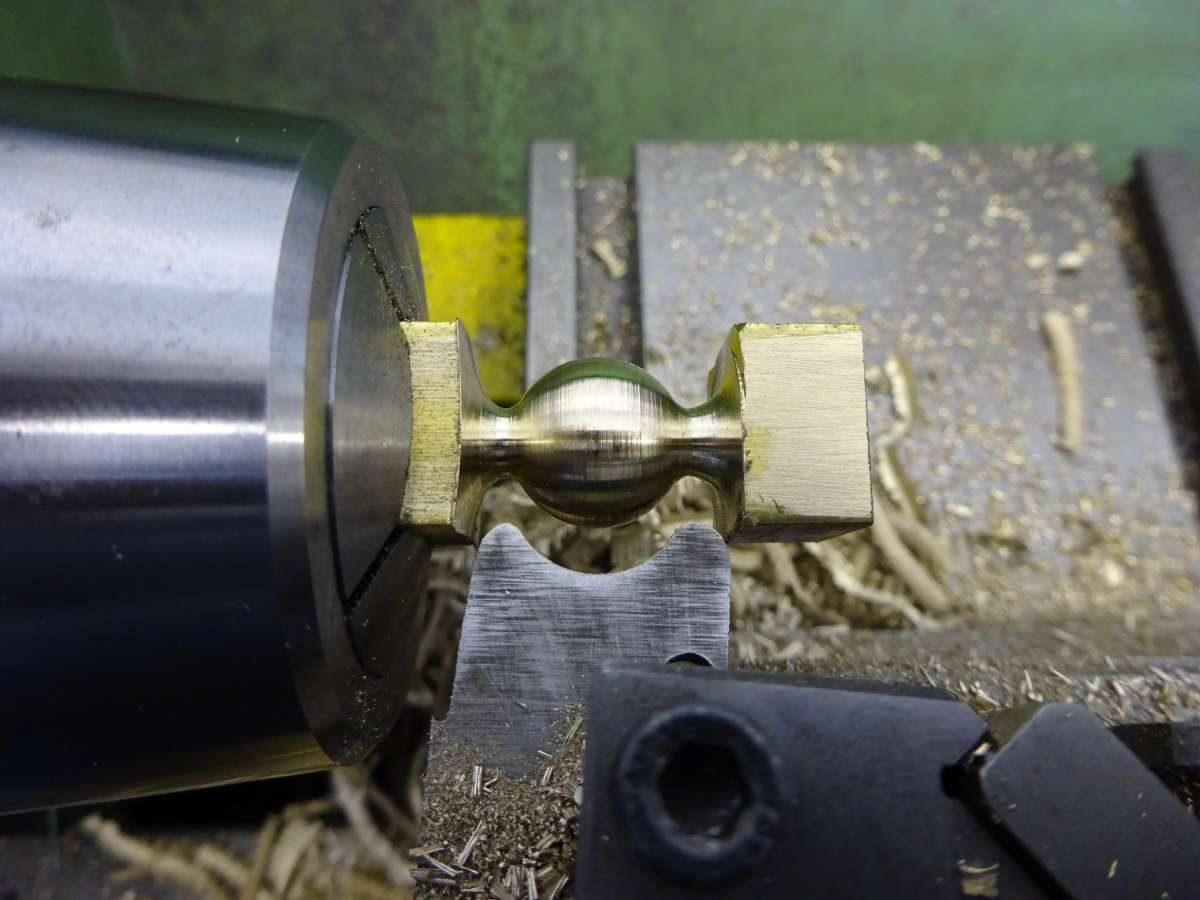
                  Gauge plate cutting brass 9/16″ dia “ball” in brass

                  DSC00496


                  #842156
                  jon hill 3
                  Participant
                    @jonhill3

                    Thanks for the tips guys.

                    Cedric not sure what you mean by garden lime… unless you mean common lime as used in a 6:1:1  mortar mix?

                    When it comes to cutting and shaping gauge plate, can it work harden using say a band saw or in milling?  Also what can be done to prevent this?

                    For me the purpose of using annealed tool steel is to avoid grinding as much as possible especially as I dont have a curved gringing wheel.


                    #842160
                    Andrew Crow
                    Participant
                      @andrewcrow91475
                      On jon hill 3 Said:

                      Cedric not sure what you mean by garden lime… unless you mean common lime as used in a 6:1:1  mortar mix?

                      When it comes to cutting and shaping gauge plate, can it work harden using say a band saw or in milling?  Also what can be done to prevent this?


                      Most steels can develop hard spots when working, usually caused by using tools that are not sharp or allowing the cutter to rub I e inconsistent feed rate.

                      Use sharp cutters and don’t dwell while cutting.

                      Garden Lime is the stuff that gardners and farmers use the neutralise the soil ie make it less acidic, should be available from most garden centres in the small quantities needed. It is probably the same as used in the building industry to make traditional lime mortar.

                      #842162
                      vintagengineer
                      Participant
                        @vintagengineer
                        On Andrew Crow Said:
                        On jon hill 3 Said:

                        Cedric not sure what you mean by garden lime… unless you mean common lime as used in a 6:1:1  mortar mix?

                        When it comes to cutting and shaping gauge plate, can it work harden using say a band saw or in milling?  Also what can be done to prevent this?


                        Most steels can develop hard spots when working, usually caused by using tools that are not sharp or allowing the cutter to rub I e inconsistent feed rate.

                        Use sharp cutters and don’t dwell while cutting.

                        Garden Lime is the stuff that gardners and farmers use the neutralise the soil ie make it less acidic, should be available from most garden centres in the small quantities needed. It is probably the same as used in the building industry to make traditional lime mortar.

                        You can dress your grinding wheel to any shape you need.

                        #842163
                        Andrew Crow
                        Participant
                          @andrewcrow91475

                          Just done a Google on lime, garden lime and builders lime are not the same, but for the purposes of annealing steel they would probably both work as all you are trying to do is slow down the rate of cooling.

                          #842164
                          Charles Lamont
                          Participant
                            @charleslamont71117

                            If looking at the garden centre for an insulating material for annealing or normalising, I would suggest vermiculite.

                            #842165
                            jon hill 3
                            Participant
                              @jonhill3

                              Yes there is quite a variety of lime products on the market hence my confusion, I think hydrated lime is probably the one.  Interestingly I have used this on the trunk of fruit trees to treat minor fungal infection and help stop pests taking hold. quite a versatile material if you have some spare. Not great to breath in or get on your hands though.

                              #842166
                              jon hill 3
                              Participant
                                @jonhill3

                                Jason what thickness of gauge plate would you recommend for say extruded CI, brass and maybe copper? I wouldn’t expect to be turning anyhing greater than 25mm?

                                Also do you have an example of a copy turning setup?

                                Many thanks


                                #842167
                                bernard towers
                                Participant
                                  @bernardtowers37738

                                  Charles is right I just heat and bury in vermiculite and it seems to work well

                                  #842169
                                  Clive Brown 1
                                  Participant
                                    @clivebrown1

                                    For ornamental curves, in addition to form tools, a hand-held graver used on a lathe with a hand tool rest can be quite versatile. They can be readily made from silver steel or from HSS blanks with minimal grinding. Very simple and perhaps worth considering.

                                    #842174
                                    JasonB
                                    Moderator
                                      @jasonb

                                      Is that 25mm diameter or the length of the profile?

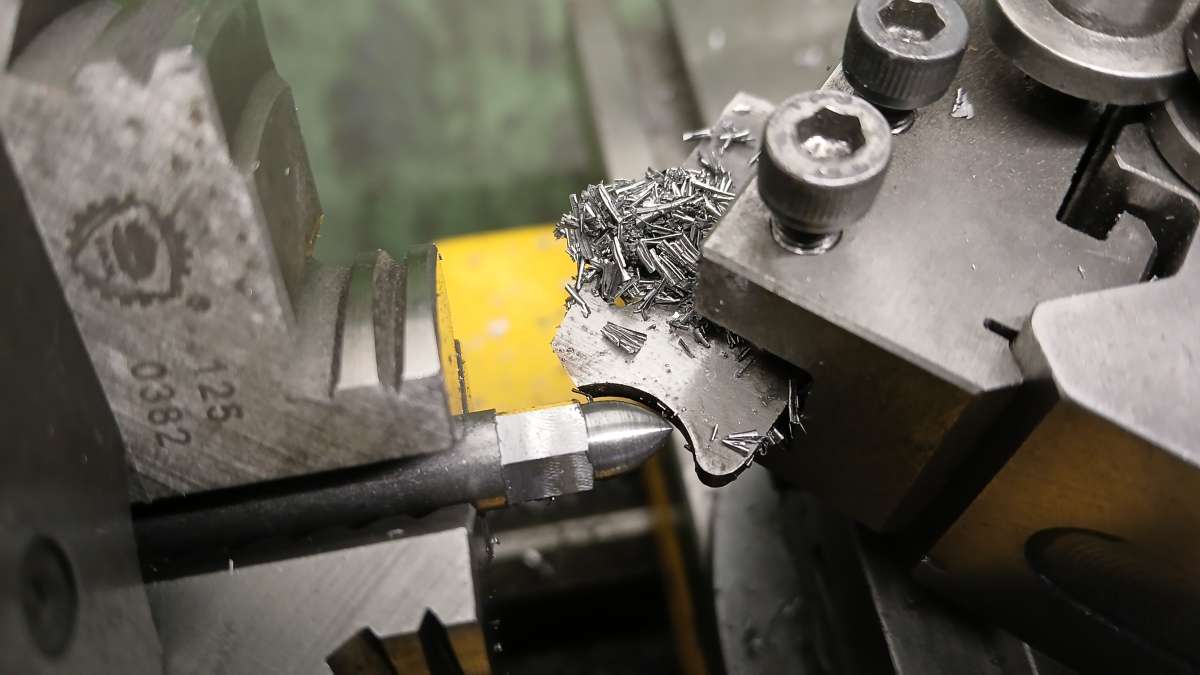
                                      I would say 6mm or 1/4″ thick if that is the diameter and you don’t have too much length sticking out of the toolpost. That one cutting the brass is 1/8″ thick. Also used it on smaller steel parts by repositioning an drunning the lathe backwards.

                                      20250116_143154

                                      There was a thread a week or two ago about large radius turning that had some example sof copy turning. Also showed roughing by co-ordinate turning and then hand finishing which can be quite quick particularly if it is a one off. Will see if I can find the thread.

                                      That was easy enough https://www.model-engineer.co.uk/forums/topic/lathe-set-up-for-machining-large-radii-using-cross-slide-profile-follower/

                                      #842175
                                      Julie Ann
                                      Participant
                                        @julieann
                                        On jon hill 3 Said:

                                        …thickness of gauge plate would you recommend for say extruded CI, brass and maybe copper? I wouldn’t expect to be turning anyhing greater than 25mm? Also do you have an example of a copy turning setup?

                                        Thickness depends upon how far the tool sticks out, ie, how deep the profile needs to be. But I’d suggest thicknesses from 1/8″ to 1/4″ would be a good starting point. Cast iron and brass will work well with zero top rake, ie, the top surface of the tool is flat and parallel with the bottom. Copper is awful to machine, gummy and needs lots of top rake.

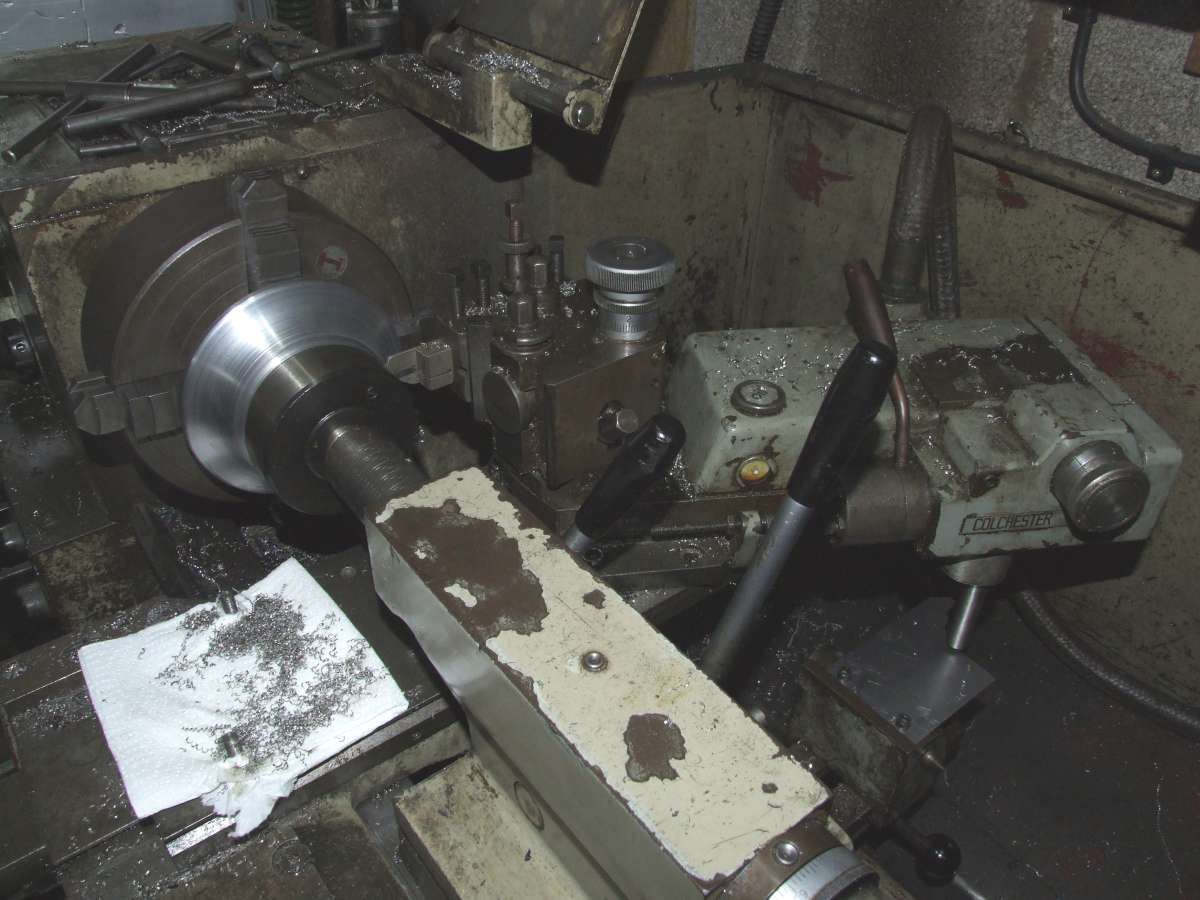
                                        This is a copy turning setup although not, I suspect, what Jason was thinking of:

                                        2022_11080014

                                        Julie

                                      Viewing 18 posts - 1 through 18 (of 18 total)
                                      • Please log in to reply to this topic. Registering is free and easy using the links on the menu at the top of this page.

                                      Latest Replies

                                      Home Forums Materials Topics

                                      Viewing 25 topics - 1 through 25 (of 25 total)
                                      Viewing 25 topics - 1 through 25 (of 25 total)

                                      View full reply list.