What port

What port

Home Forums Beginners questions What port

Viewing 24 posts - 1 through 24 (of 24 total)
  • Author
    Posts
  • #214754
    Mike Brett
    Participant
      @mikebrett89695

      I have a locomotive valve that I am trying to get working on air pressure first.

      The valve chest has three holes in the bottom, the end two go to each end of the cylinder and the middle one goes to the outside. I always understood the middle one to be the exhaust, but the brass valve on top is made so that the middle hole is always open to each end hole in turn. Does this mean the middle hole is the steam entrance hole on my cylinder, and the cylinder cover hole is the exhaust.

      Mike

      #7890
      Mike Brett
      Participant
        @mikebrett89695

        Locomotive valve

        #214759
        Neil Wyatt
        Moderator
          @neilwyatt

          The valve should uncover one of the outer holes letting air/stem into that end of the cylinder, while the hole in the valve joins the other end of the cylinder to the central exhaust hole.

          See here (you need to scroll down a bit):

          **LINK**

          #214760
          Martin Kyte
          Participant
            @martinkyte99762

            The middle is the exhaust. The valve should connect each end of the cylinder connects each end of the cylinder to the exhaust in turn. The Valve should also expose the opposite port to the steam chest at this point. If the centre port was connected to steam pressure then the valve would be forced off its seating.

            Have a look at

            **LINK**

            regards Martin

            #214761
            Martin Connelly
            Participant
              @martinconnelly55370

              I would think the feed in inlet will be into the valve chest chamber so that the pressure pushes the slider down onto the face with the three holes in it. If the holes are A B and C then the slider should move so that in one position it links A to B to exhaust the end of the cylinder connected to A. In this position the inlet pressure in the chamber is linked to the other end of the cylinder at C. This will push the piston from the C end to the A end of the cylinder. The opposite end of the slider travel links C to B to exhaust the C end of the cylinder and at the same time exposes the A opening to the inlet pressure to move the piston from the A end of the cylinder to the C end of the cylinder. B is exhaust to wherever it is meant to go, condenser or atmosphere. The valve gear times the opening and closing of the ports to pressure or exhaust as necessary to create the motion required of the piston.

              Animation

              **LINK**

              This animation shows a slide valve in motion. Inlet is top centre, exhaust is bottom centre.

              Martin

              #214772
              Mike Brett
              Participant
                @mikebrett89695

                Many thanks for the help. I think my problem might be I am moving the valve to far which is opening both ports at the same time. I will try again this afternoon under power, keep you posted.

                Cheers Mike

                #214781
                Mike Brett
                Participant
                  @mikebrett89695

                  There is a large gap around the inside of the valve chamber which is allowing the incoming air to go straight out of the exhaust port with only a little going to the piston. I tried taking the end cap of the piston chamber and with my finger over the exhaust port the piston moved fine, but only one way of course. Should there be some sort of packing around the slide valve. Looking at the animations the exhaust port appears to be open to the chamber all the time so not sure how it should work.

                  Mike

                  #214812
                  Neil Wyatt
                  Moderator
                    @neilwyatt

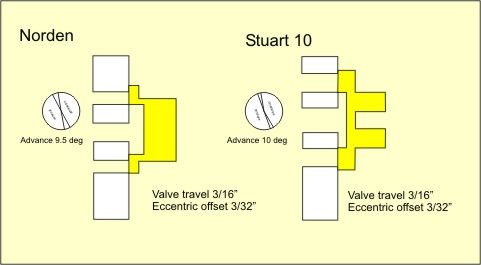
                    Mike, it sounds like your valve may have a hole right through it? It should only have a hollow cut out on the lower face. In these diagrams the valve face is on the left with the cylinder holes at top and bottom, exhaust in the middle. The outside of the valve chest isn't shown, but the steam/air basically surrounds the yellow valve

                    You can see how, if the valve is moved downwards in each case it will allow steam into the upper cylinder and allow the bottom valve to exhaust. When moved upwards the opposite happens.

                    The valve should never move far enough for the central exhaust port to be exposed, only far enough to open one cylinder to exhaust whilst the other is open to steam..

                    valve events.jpg

                    Edit: a photo of your valve would help.

                    Edited By Neil Wyatt on 01/12/2015 20:01:55

                    #214823
                    julian atkins
                    Participant
                      @julianatkins58923

                      hi mike,

                      i have tried to fathom out the problem from your description but as Neil says a picture or two would be of help as im afraid your description is rather vague and imprecise.

                      it is possible that what you are refering to to is what is known as 'exhaust clearance'. on a decent loco this feature is unnecessary, but 1/64" exhaust clearance was often specified by LBSC on his loco designs.

                      i dont think any of the above links are of much use to someone without much knowledge of steam locomotive slide valves and steamchests, and Neil's pic above of the Norden valve is incorrectly drawn.

                      cheers,

                      julian

                      #214830
                      Neil Wyatt
                      Moderator
                        @neilwyatt

                        Posted by julian atkins on 01/12/2015 21:00:21:

                        Neil's pic above of the Norden valve is incorrectly drawn.

                        Out of interest how can you tell?

                        Neil

                        #214832
                        Mike Brett
                        Participant
                          @mikebrett89695

                          My valve looks basically like the one shown , there is no hole right through it. When one port is open the other is basically shut, but as the exhaust is always open any air going into the chamber takes the easiest way out , which is the exhaust. That is what I am getting, air is gushing out of the exhaust instead of pushing the piston first. I will take some pictures and post them tomorrow. I wondered if perhaps I am not using enough air pressure. I have been putting in about 10 lb which is more than enough to run my other engines but this being a locomotive cylinder maybe to little.

                          Cheers Mike

                          #214834
                          julian atkins
                          Participant
                            @julianatkins58923

                            hi Neil,

                            in the Norden drawing the exhaust cavity in the valve is less than the inside edges of the steam ports. this would result in an extremely sluggish and lumpy working engine whether marine, stationary, traction engine, or loco. the exhaust cavity should be 'in line' with these edges. if it is slightly greater this is what is known as exhaust clearance, which was used in some steam loco in fullsize with restricted passages and which were otherwise 'constipated' for fast running.

                            cheers,

                            julian

                            #214851
                            julian atkins
                            Participant
                              @julianatkins58923

                              just an additional possibility…

                              if the valve is moved via a 'square' valve buckle around the valve, it is possible the valve has got turned 90 degrees to it's correct orientation.

                              cheers,

                              julian

                              #214855
                              Neil Wyatt
                              Moderator
                                @neilwyatt

                                Julian, I'm surprised.

                                I designed it that way as it's meant to run very slowly and on air – prototypical speed is no more than about 100rpm. This is a challenge to achieve with a small flywheel and a single cylinder.

                                You rightly point out that exhaust lap is bad for fast running engines, but it is normal to have exhaust lap in slow running engines.

                                Also, my intent was for an engine optimised to run on air, hence the extended admission period, following the thoughts of Tubal Cain on this subject.

                                But the proof of the pudding is in the eating – I have a video of it running very smoothly on air at under 60 rpm, which was the objective. As I'm sure you know, it's much harder to get an engine to run smoothly on air than steam.

                                In short, Norden is designed to run on steam or air are low speeds and to do so optimally it requires a different valve to locos.

                                Neil

                                #214856
                                JasonB
                                Moderator
                                  @jasonb

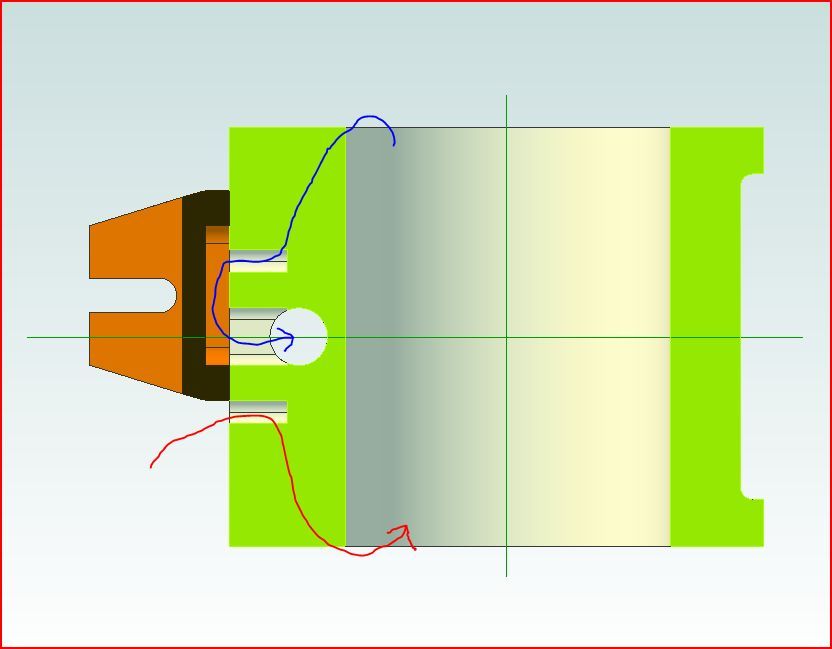
                                  At the extream of the valves movement the steam will enter the cylinder via the exposed bottom port, at the same time the rising piston pushes out the used steam via the top port where it is linked to the exhaust port by the cavity within the valve.

                                  ports.jpg

                                  #214862
                                  Barry Q
                                  Participant
                                    @barryq

                                    Mike,

                                    One way around your problem would be to have some practical help from a forum member who may happen to live nearby and is willing to help. I looked at your details to find you don't have a public profile so anyone clicking on your name has no idea where you live. Just an idea of your geographic position may help.

                                    There are many reasons why members don't give private details. Maybe you could give more details to (say) Neil who could then put interested members in touch with you.

                                    Regards

                                    Barry

                                    who lives near Plymouth if this is a help.

                                    #214867
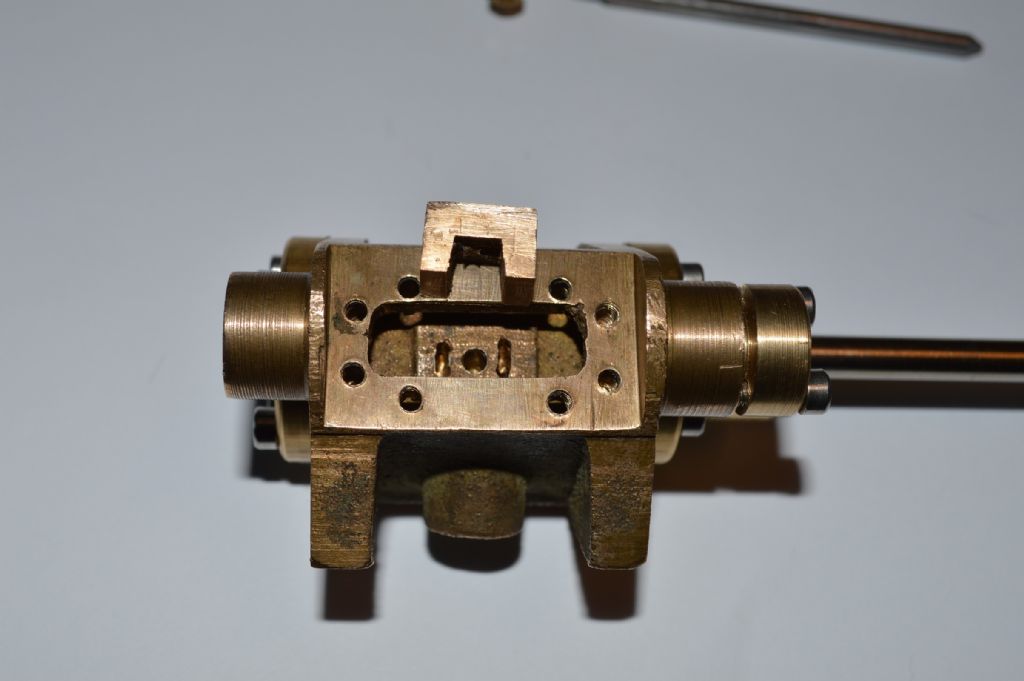
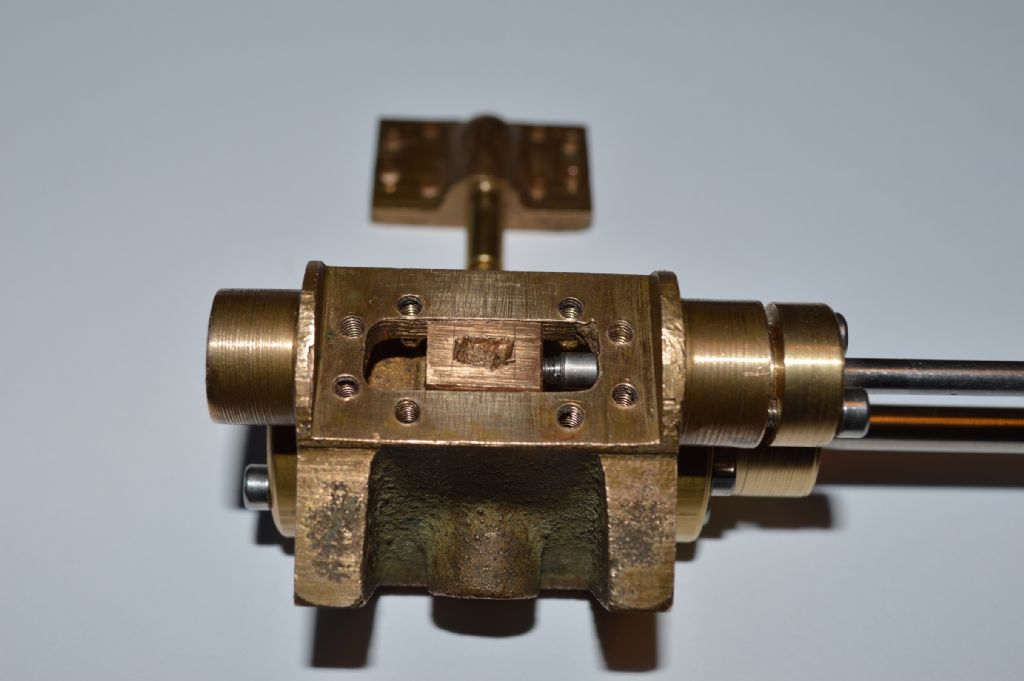
                                    Mike Brett
                                    Participant
                                      @mikebrett89695

                                      3.jpg2.jpg1.jpg

                                      #214868
                                      Mike Brett
                                      Participant
                                        @mikebrett89695

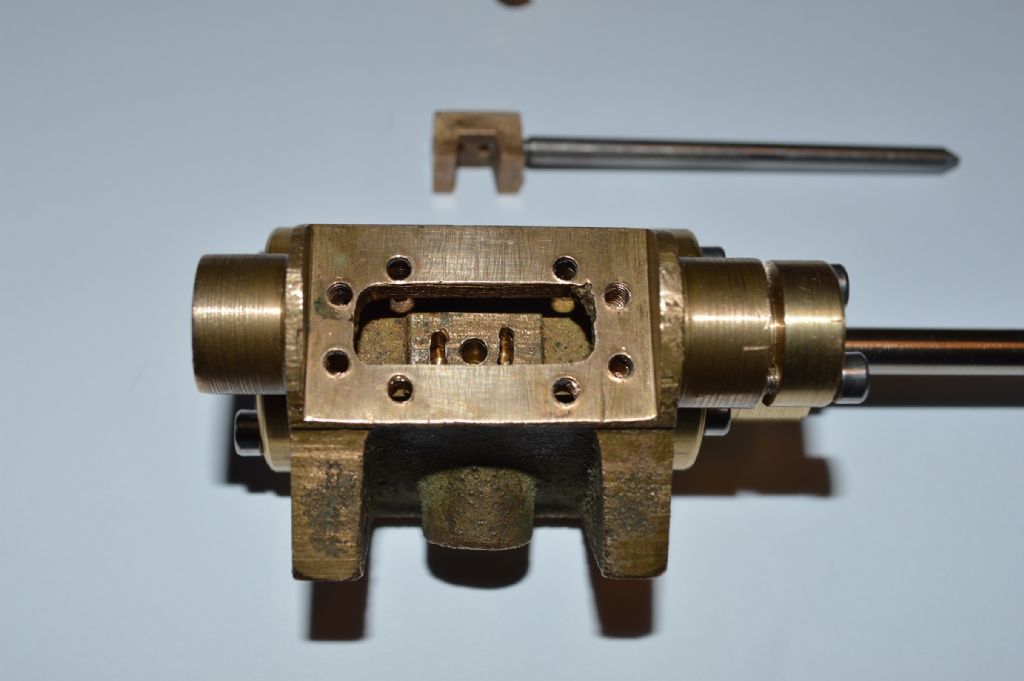
                                        Here are the pictures of my troublesome cylinder.

                                        Cheers.

                                        Mike.

                                        #214869
                                        Martin Kyte
                                        Participant
                                          @martinkyte99762

                                          When the valve is in mid travel and seated (sealed) correctly the exhaust port should be completely closed off to the ends of the cylinders and to the steam chest.

                                          The First thing to do is to ensure that there are no air leaks through to exhaust when the valve is in mid travel. If there are then the valve is not seating properly or it is not made correctly.

                                          Personally I think it sounds like the valve is not making good seal against the face of the cylinder. It does float on the valve stem doesn't it? It has to be free to move towards the cylinder surface in order to create a good seal. The other issue with using air instead of steam is you don't get that nice water/oil film which makes for a better seal.

                                          regards Martin

                                          #214870
                                          Martin Kyte
                                          Participant
                                            @martinkyte99762

                                            Ah, just seen your pics (posted whilst I was composing). You have the valve in upside down. The fully enclosed face should face the cylinder.

                                            Martin

                                            #214873
                                            Mike Brett
                                            Participant
                                              @mikebrett89695

                                              Its so easy when you know, that should be a simple fix then. I will do the alterations and let you know how it goes.

                                              Many thanks to you all.

                                              Mike

                                              #214875
                                              Barry Q
                                              Participant
                                                @barryq

                                                and without appearing to be too critical the sliding faces of both the slide valve and the valve chest need to be flat and smooth to get the seal you need. In the 1st and 2nd picture it looks as if the valve chest seat need some attention – it doesn't look very smooth in the photograph.

                                                Also ensure when the slide valve is in the correct position as suggested by Martin, that the steel slide valve rod isn't stopping the slide valve from making contact with the valve chest surface. This could happen if the steel rod and the gland it runs through are not aligned correctly. 

                                                Barry

                                                Edited By Barry Q on 02/12/2015 10:12:38

                                                #214881
                                                Peter Krogh
                                                Participant
                                                  @peterkrogh76576

                                                  I think Barry hit the other big item, the rod doesn't appear to allow the valve to float so it is likely holding the valve off the seat.

                                                  Pete

                                                  #214895
                                                  Mike Brett
                                                  Participant
                                                    @mikebrett89695

                                                    Thanks guys

                                                    Have fixed the floating issue, still got to smooth out the seating.

                                                    Mike

                                                  Viewing 24 posts - 1 through 24 (of 24 total)
                                                  • Please log in to reply to this topic. Registering is free and easy using the links on the menu at the top of this page.

                                                  Latest Replies

                                                  Home Forums Beginners questions Topics

                                                  Viewing 25 topics - 1 through 25 (of 25 total)
                                                  Viewing 25 topics - 1 through 25 (of 25 total)

                                                  View full reply list.