Warco GH600 Upgrades (DRO and Bed Protection)

Warco GH600 Upgrades (DRO and Bed Protection)

Home Forums Work In Progress and completed items Warco GH600 Upgrades (DRO and Bed Protection)

Viewing 11 posts - 1 through 11 (of 11 total)
  • Author
    Posts
  • #847023
    Richard Kirkman 1
    Participant
      @richardkirkman1

      I’ve begun the process of pimping my lathe. The plan is to mount a DRO to the lathe and thought I would start with designing a linear scale mount for the tailstock.

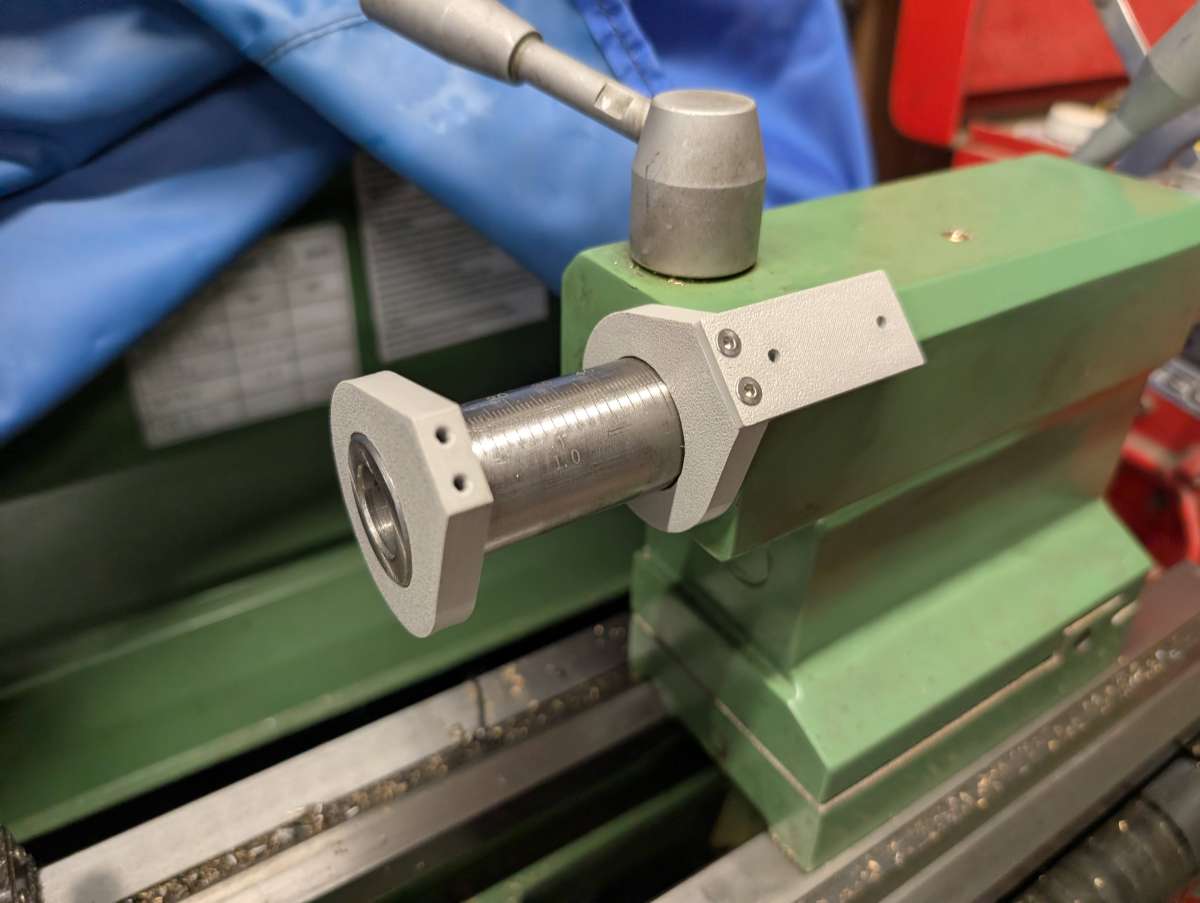
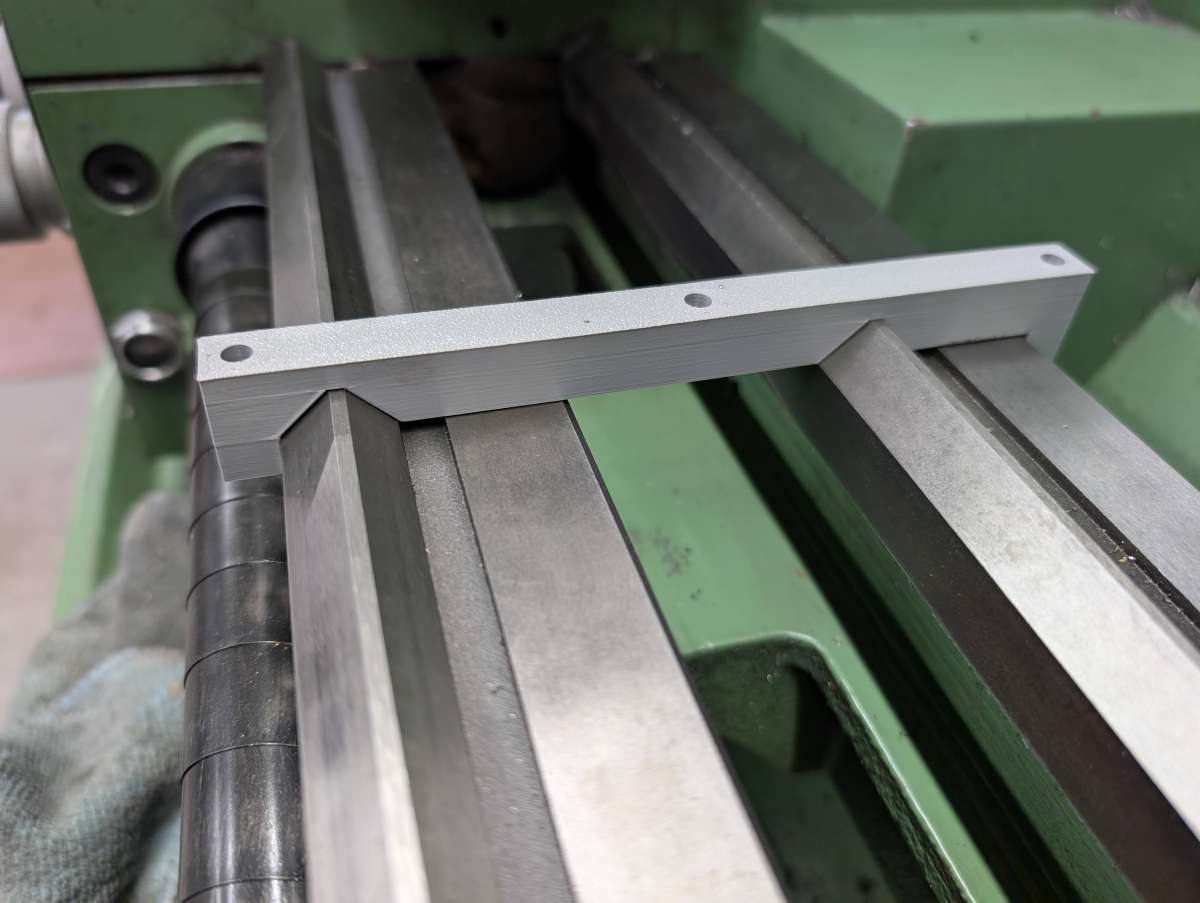
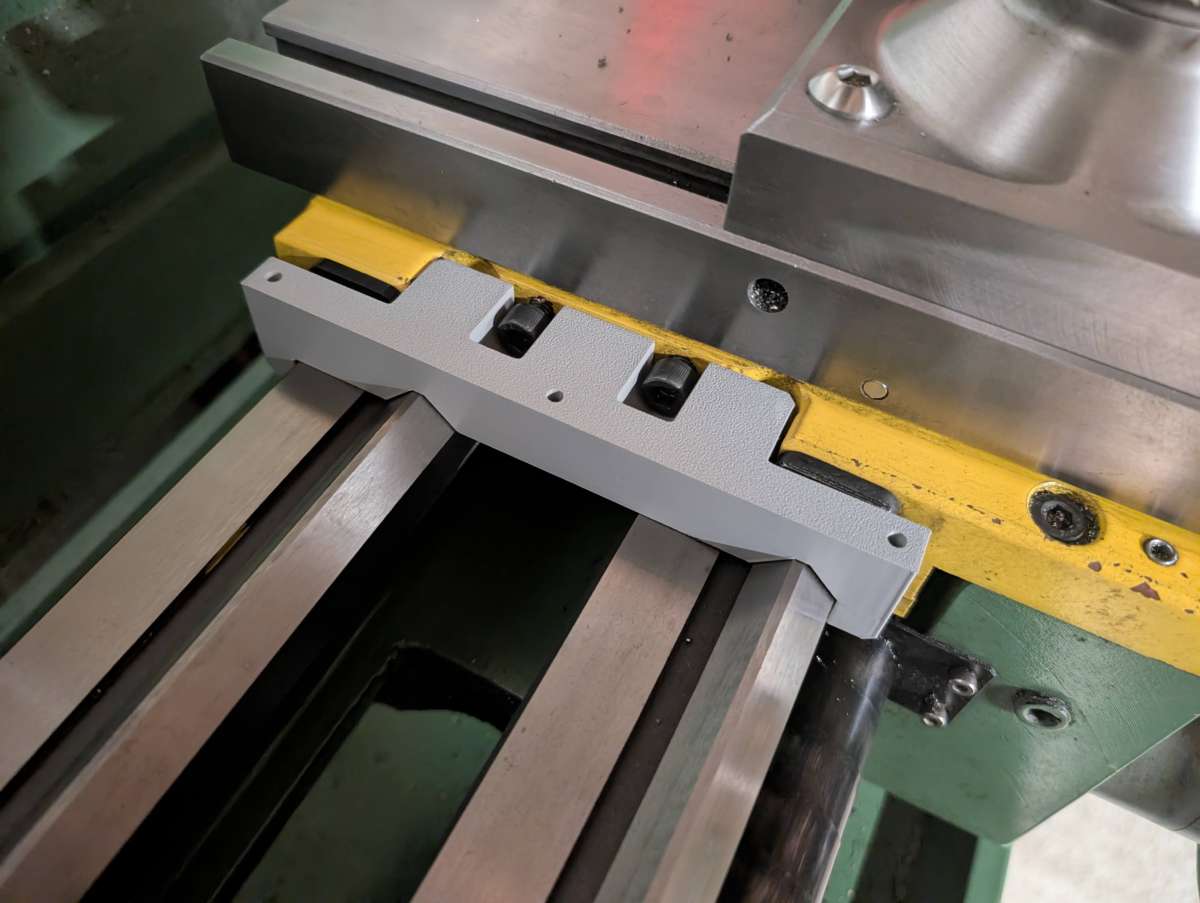
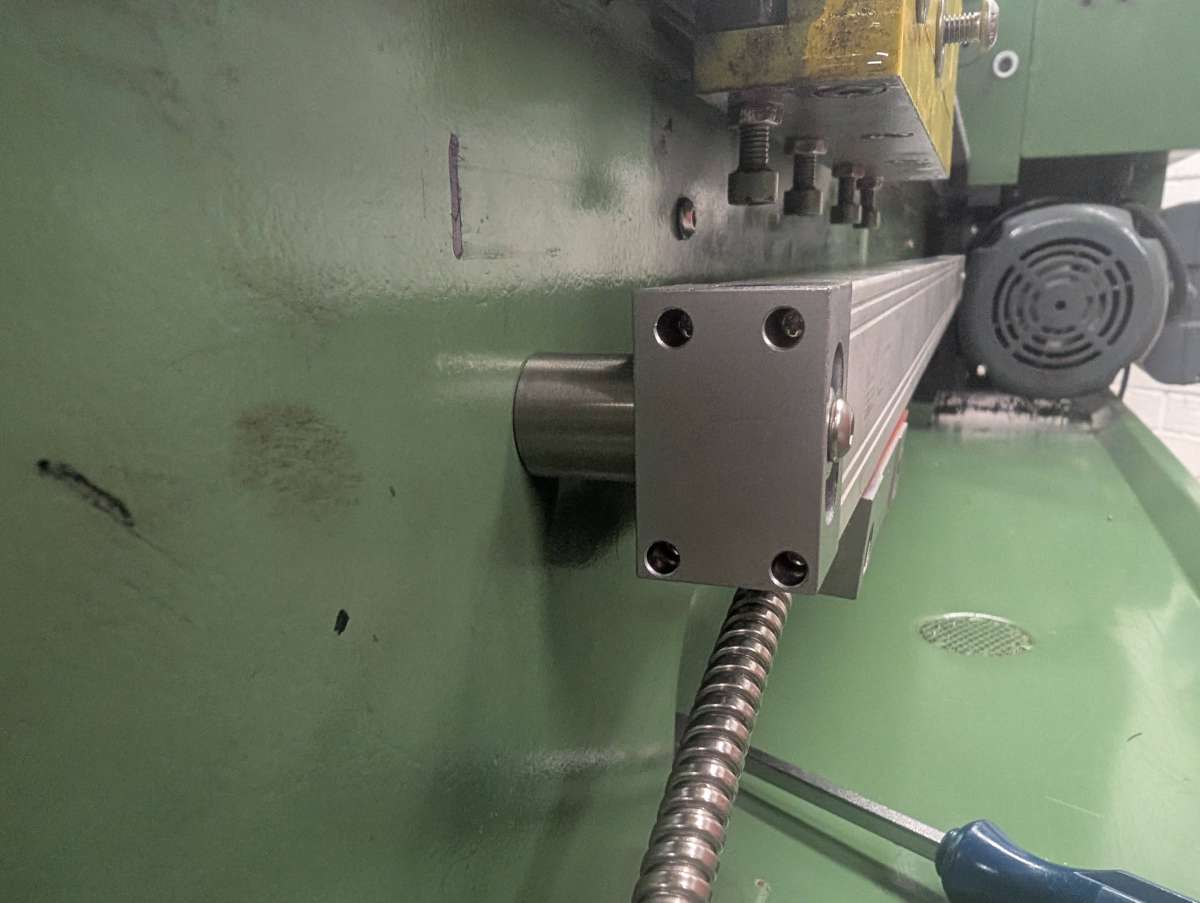
      The original plan was to drill mounting holes into the tailstock itself, but i opted for six 8x3mm magnets glued into the RHS. This also makes it easy to remove and is easy to align. The Barrel is 30mm so the LHS was printed to size and sanded to a perfect fit, the RHS was given 0.5mm clearance so it doesn’t bind.

      Prototyped from PLA, then made the ‘final’ mount from PETG-CF. I have been loving using my 3d printer, it’s making prototyping so much quicker.

      PXL_20260501_142503553

      PLA Prototype

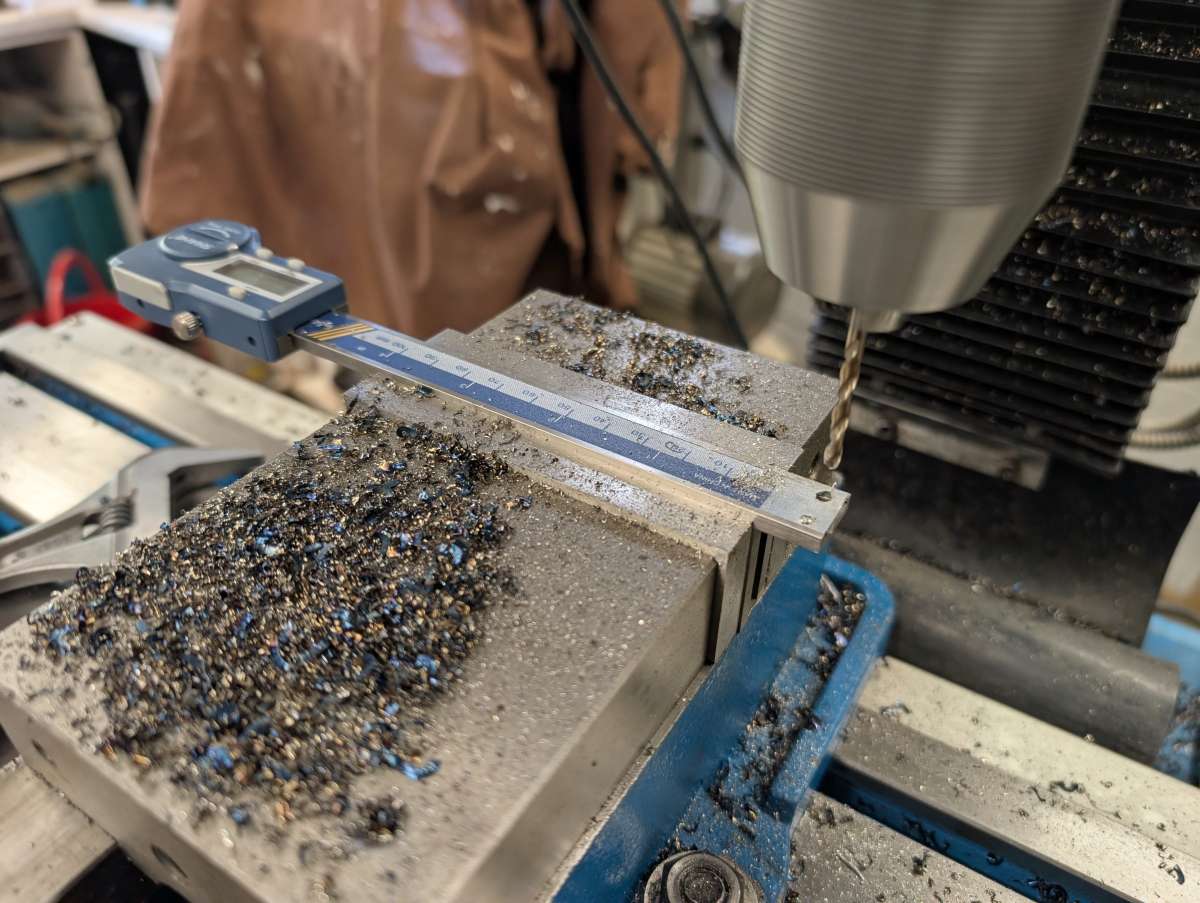
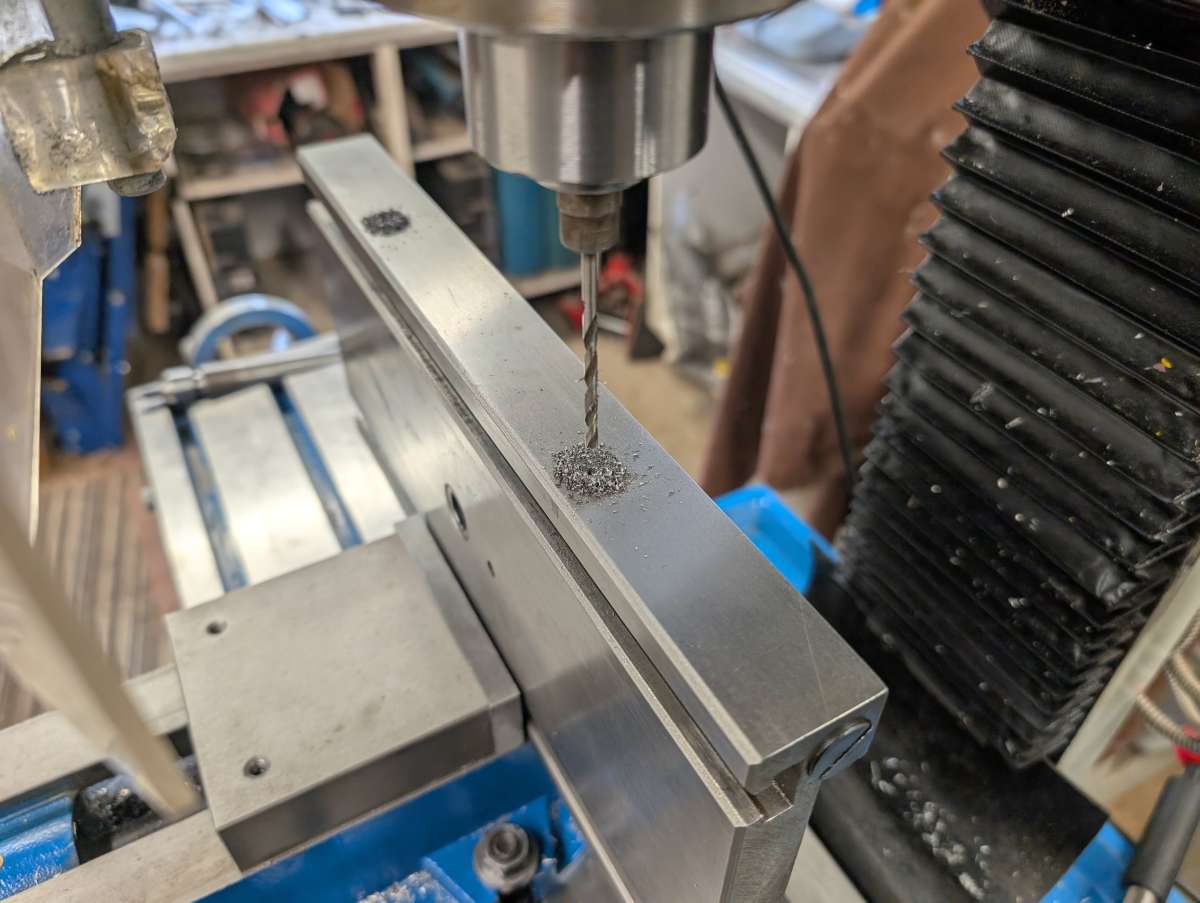
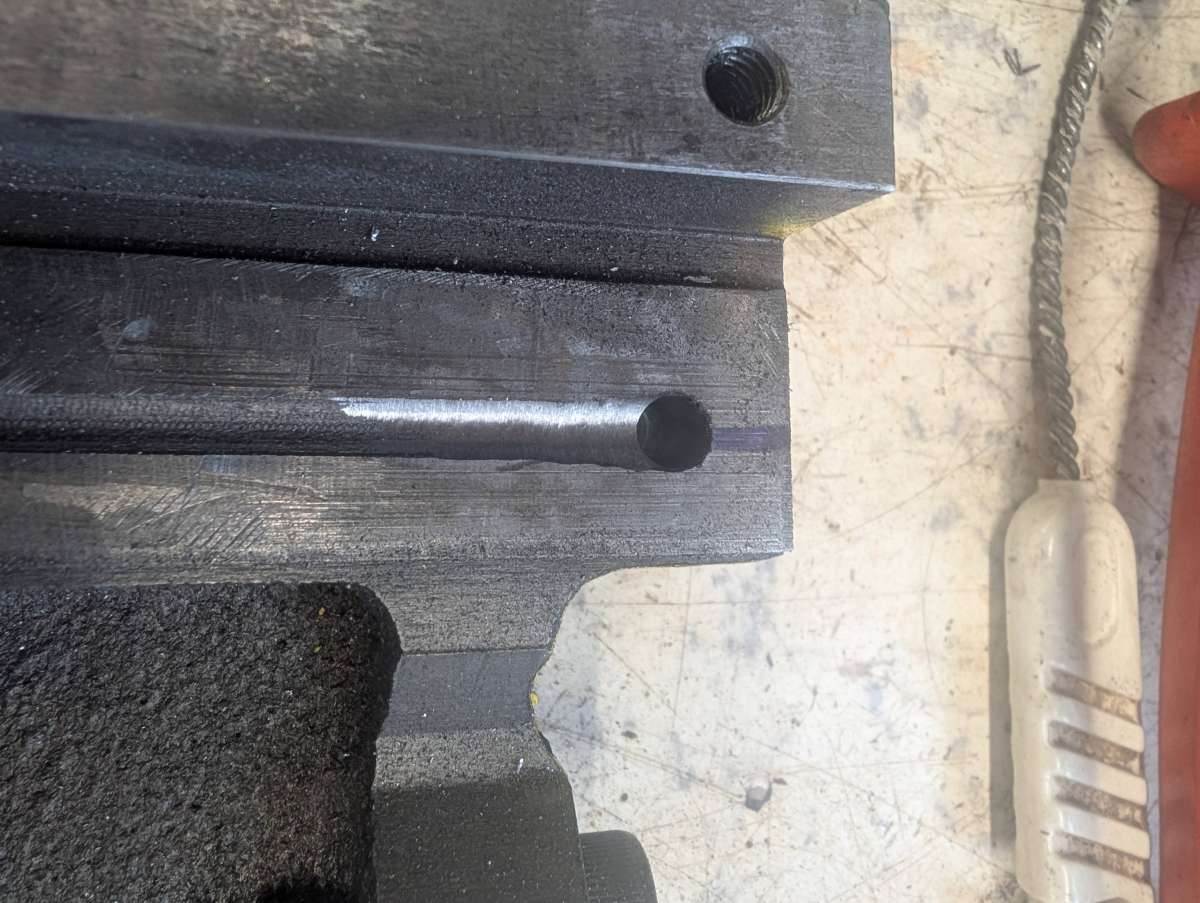
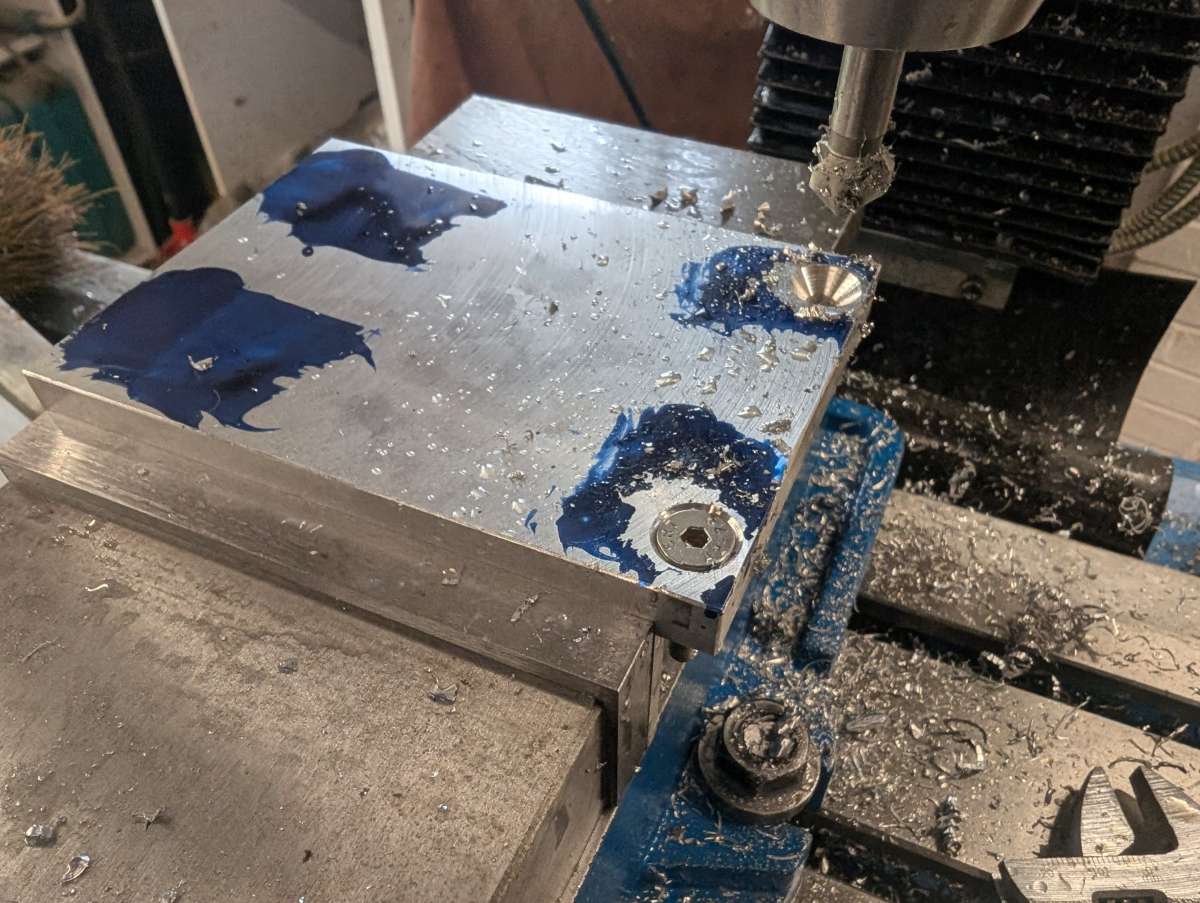
      The trickiest part was drilling through the Linear scale for the mounting holes. I could have some kind of clamping mechanism instead, but that would have increased the size of it. The countersunk holes help to align the linear scale parallel.

      PXL_20260502_105834852.MP

      Drilling the scale- Very tough material, I may have to find some carbide drills and countersinks!

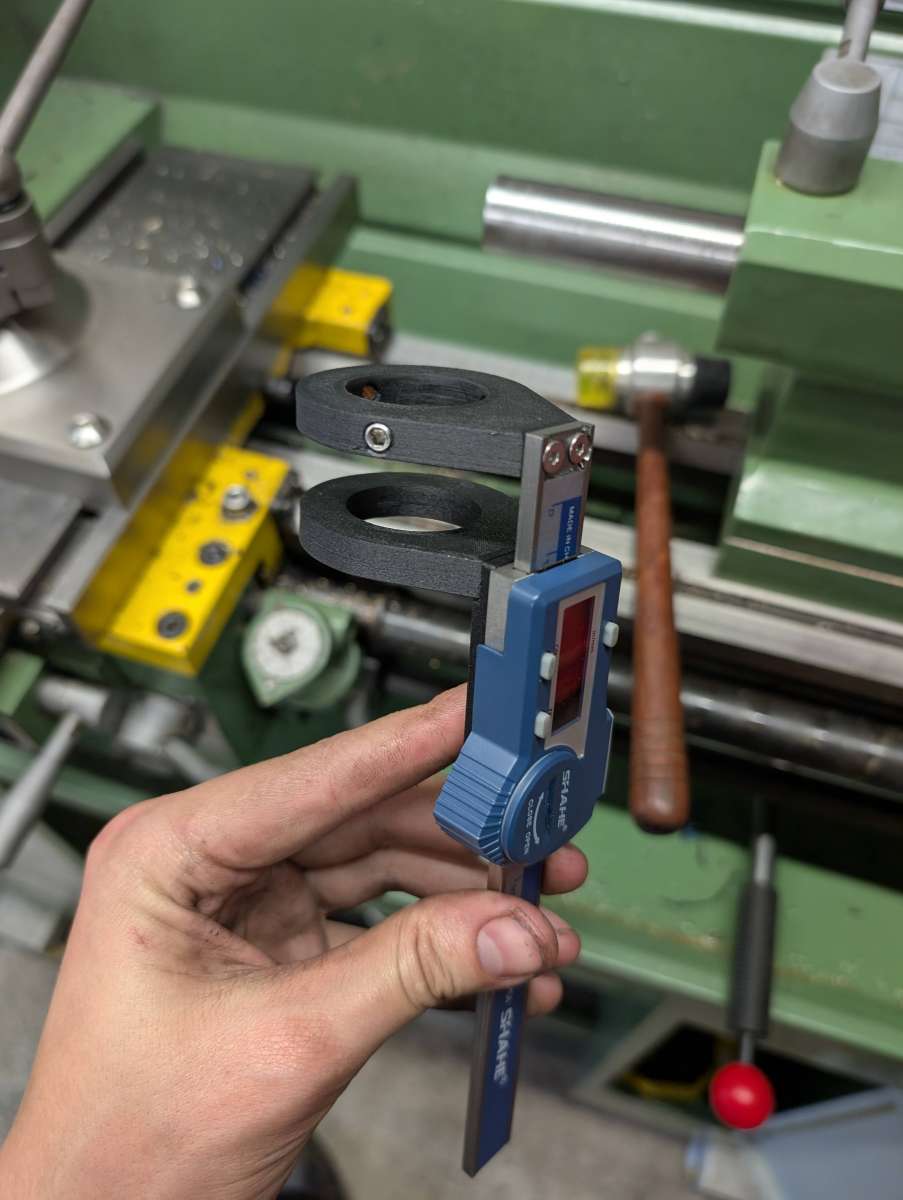
      I have bought some aluminium to remake it from, but with the PETG-CF print being more than strong enough, the printed version may become permanent. I’m short for time so remaking it may not be worth it. Threading the plastic is not desirable, but they shouldn’t be under any load so I’m sure it’ll last a few years

      PXL_20260502_115014873

      Scale with 3x grub screws installed- Brass tipped M6x9mm to not damage the tailstock barrel.

      PXL_20260502_115508400

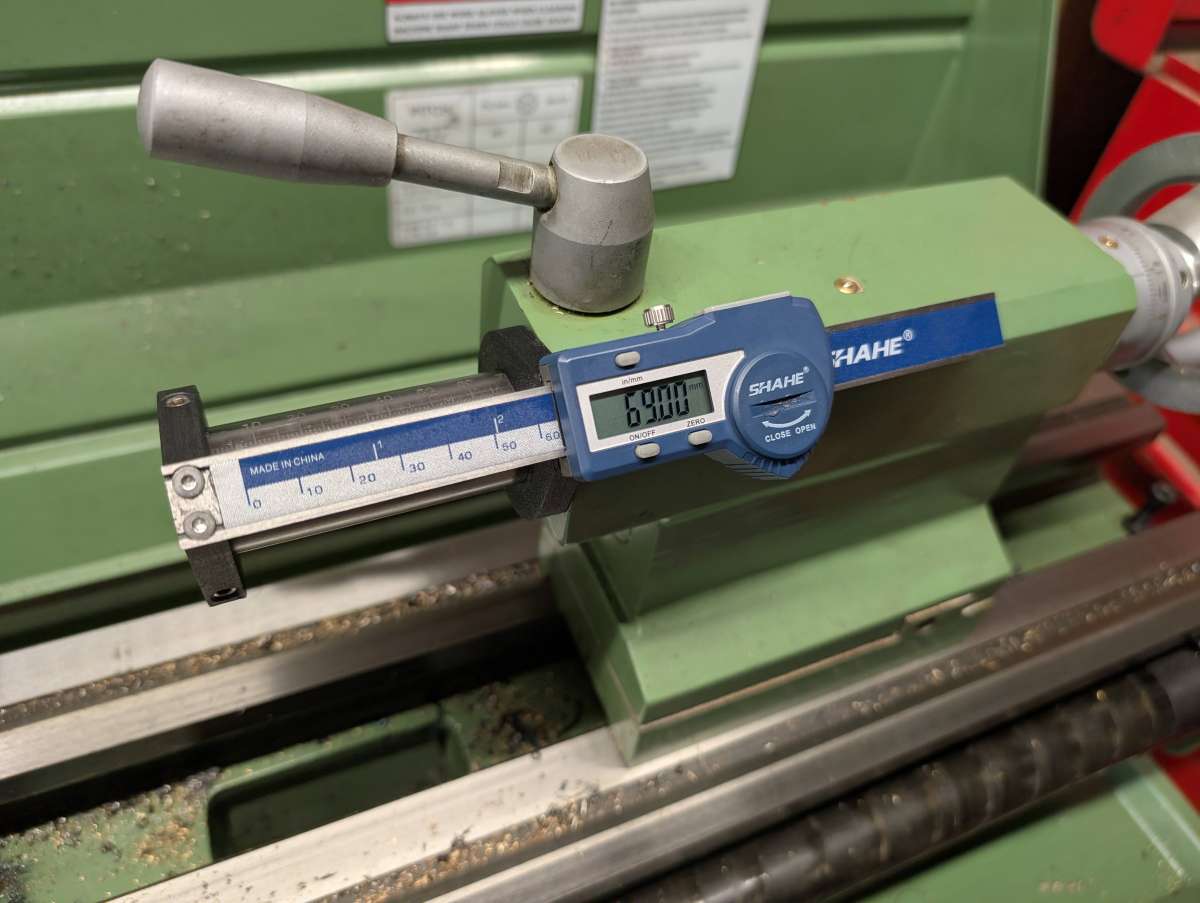
      ‘Finished’ Product (until I find time to remake from aluminium).

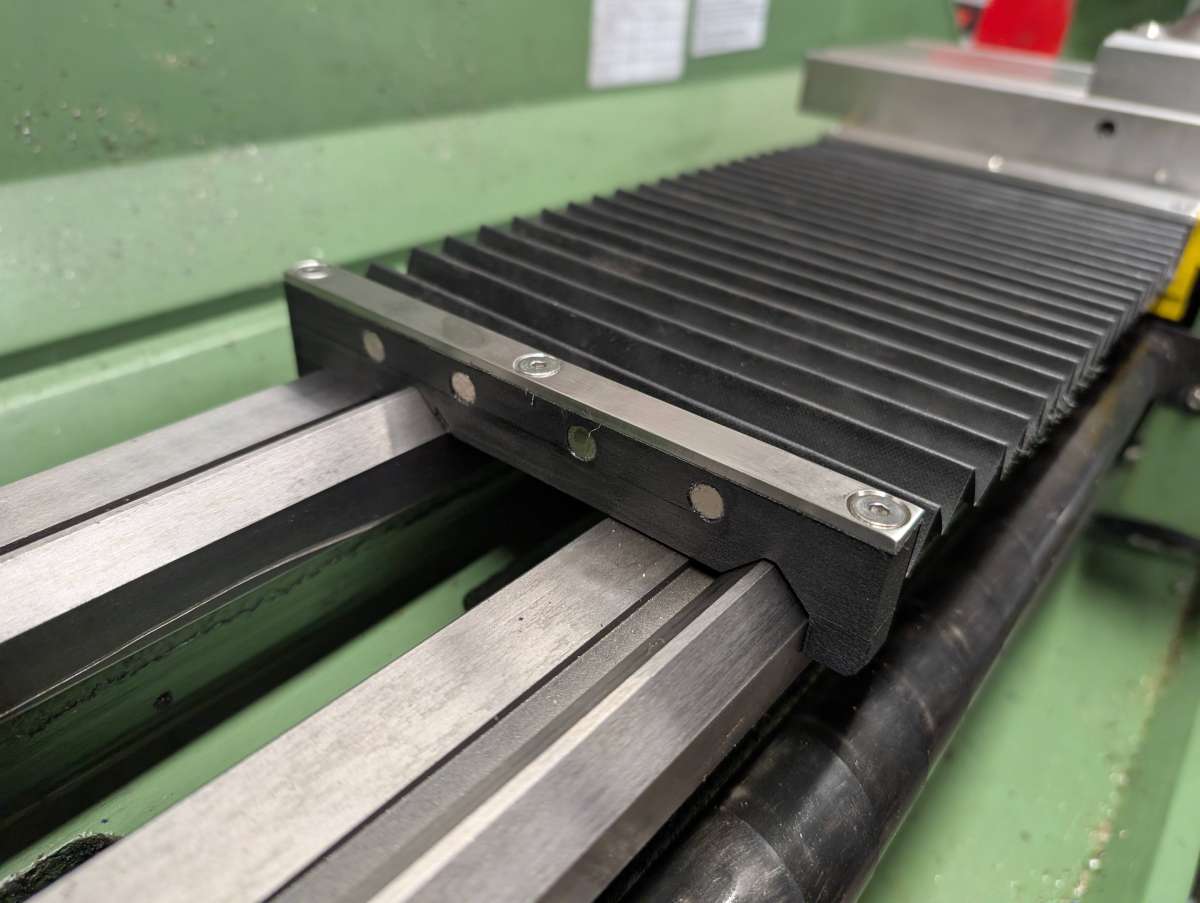
      Next project is to create some bed protection using some bellows. Another 3d print job! Then onto the full DRO (at some point).

      PXL_20260503_100356955PXL_20260504_215518722

      #847030
      Weary
      Participant
        @weary

        Very interested to see what you choose for DRO and how you fit it as I am considering fitting same to my similar lathe.

        I already have a tailstock DRO fitted, though I purchased mine ready-made from Linn.  I can confirm that the magnet and printed plastic combination is very serviceable in the longer-term having had mine for some years.

        Regards,

        Phil

        #847042
        Richard Kirkman 1
        Participant
          @richardkirkman1

          Thanks Phil, glad to hear my thinking was sound (so far). I had seen the Linn ones but wanted to do it myself and use grub screws instead of the clamp system, although I’m sure that works fine too.

          I purchased the lathe 2nd hand about a year ago, it came with a DRO and QCTP that the previous owner had purchased but never installed (SINO i believe?) I haven’t picked it up to take a look in much detail yet.

          When I was fitting the QCTP last year, I mentioned the DRO fitting and a member called Diogenes sent some pics of their GH600 DRO mounts for me to see. Linked below if they are of any interest.

          https://www.model-engineer.co.uk/members/diogenes/mediapress/gh600dro/

          I plan on doing something similar, but to put my cross slide scale on the RHS so I can still have easy access to the traveling steady and make my bed guard a bit easier to make.


          #847064
          Weary
          Participant
            @weary
            Thanks for the link Mr Kirkman – some useful views, and also of course thanks to ‘Diogenes’ for taking the time to take the pics and post them.

            Phil

            #847860
            Richard Kirkman 1
            Participant
              @richardkirkman1

              Next part of the upgrade complete.

              PXL_20260508_133423370PXL_20260508_133358317.MP

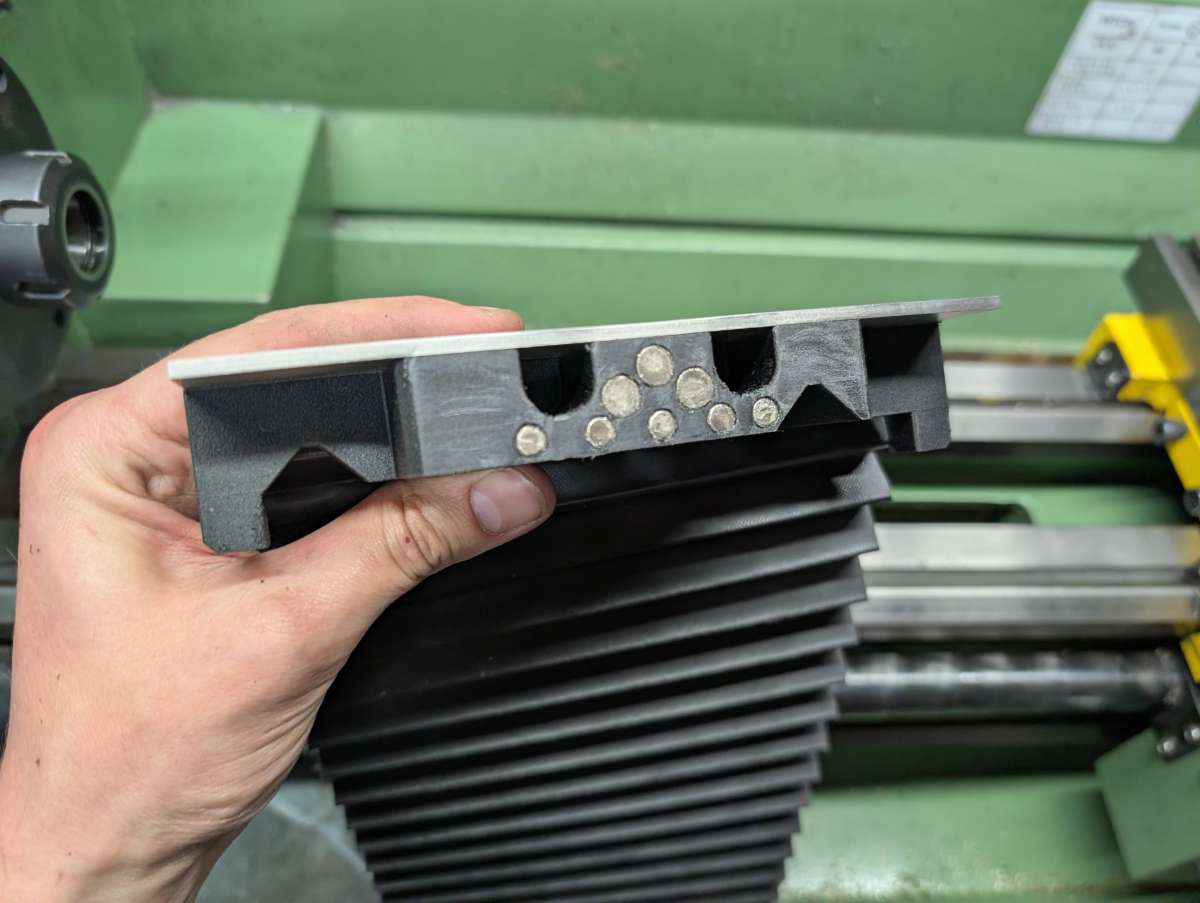
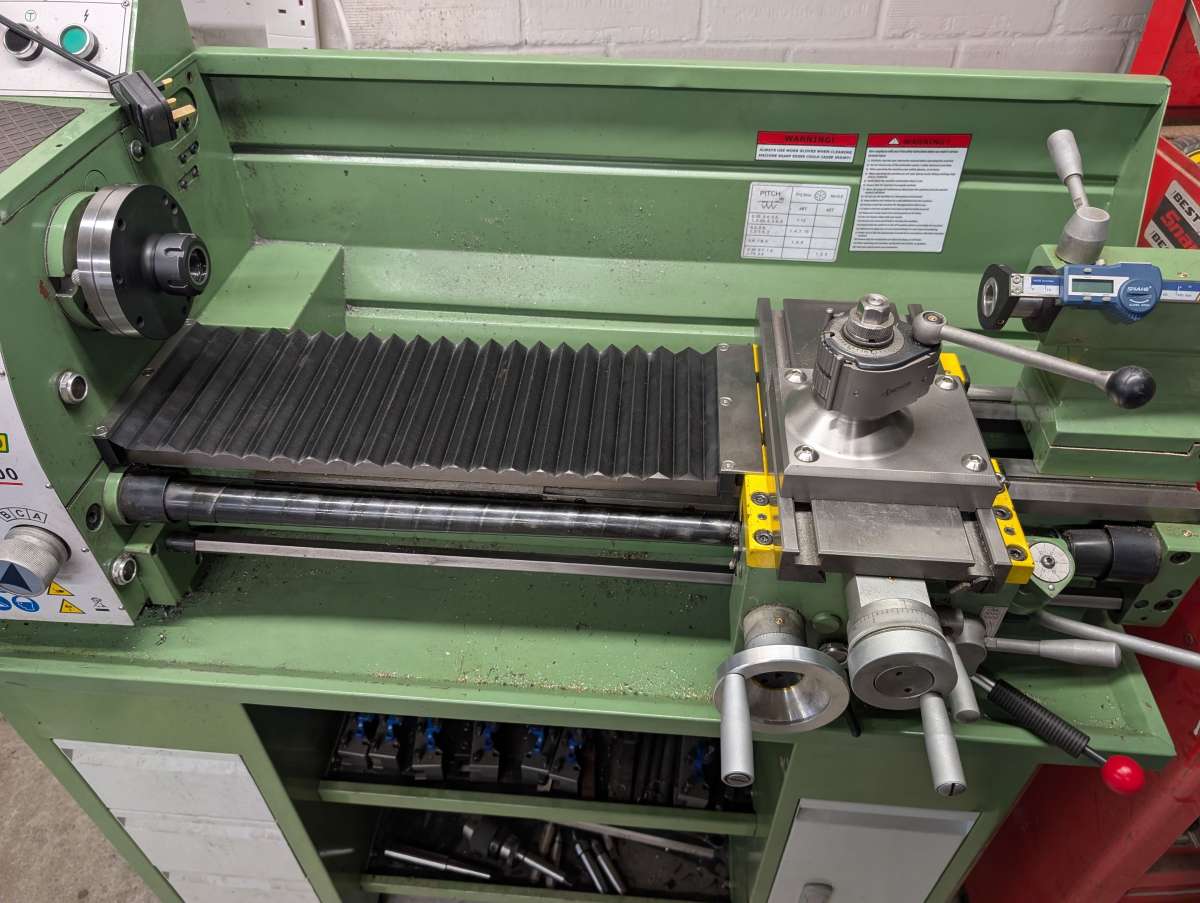
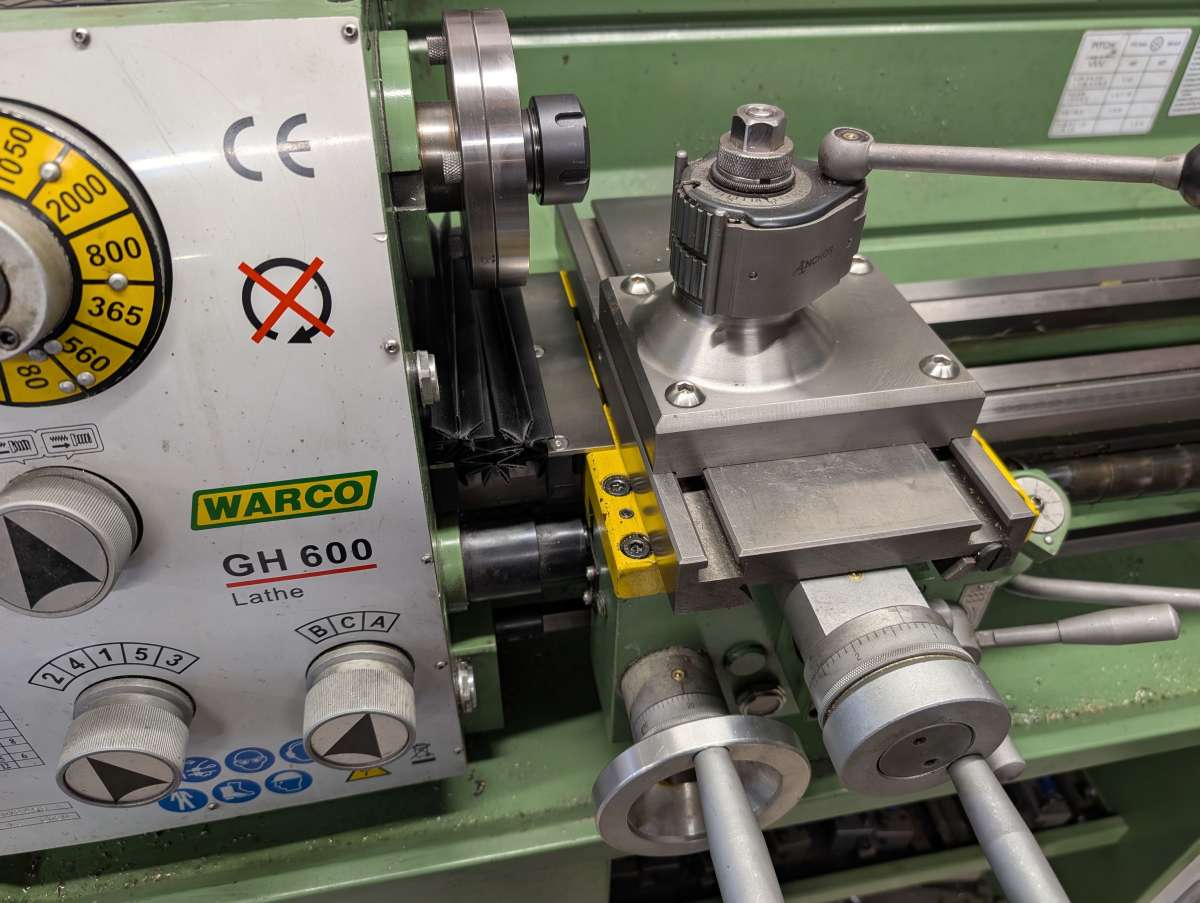
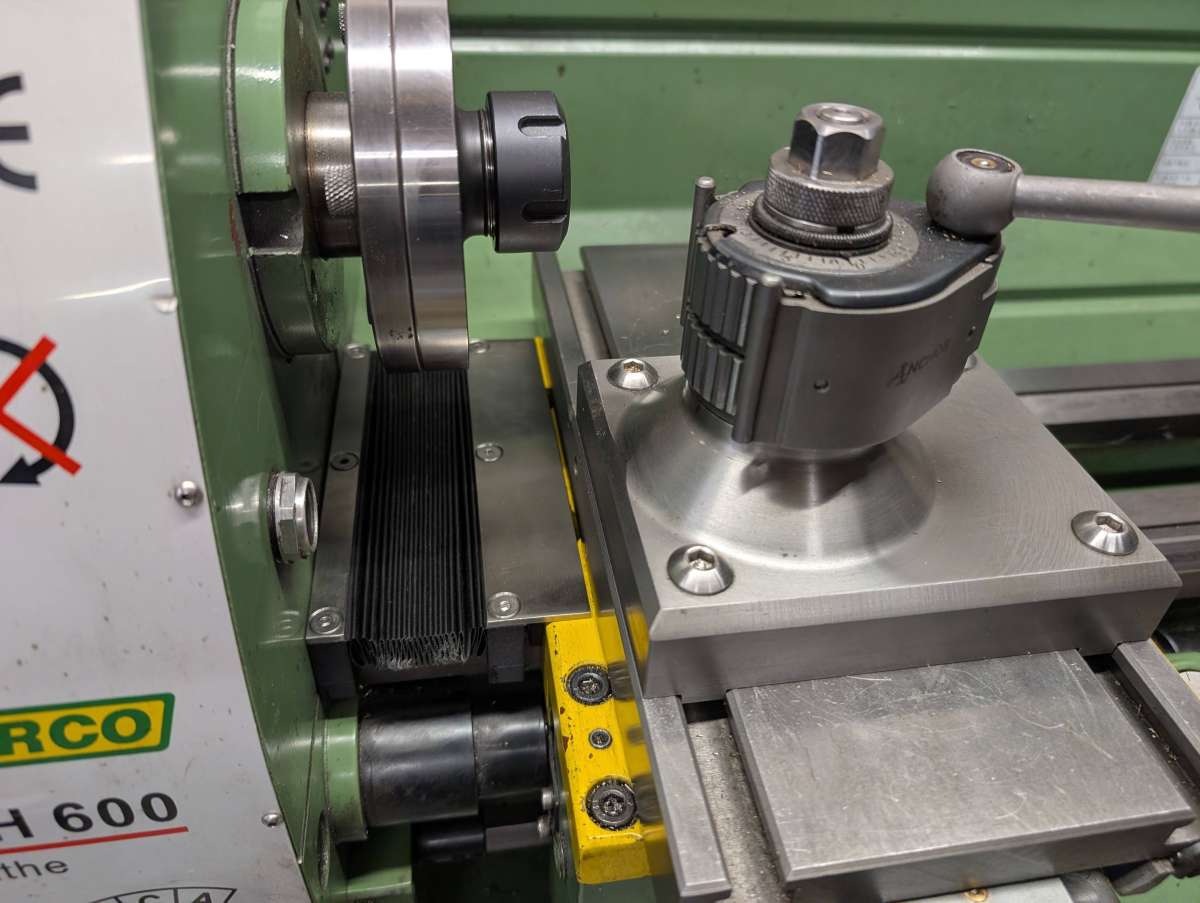
              I’m extremely pleased with how this bed cover came out. It was a little tricky measuring the bed and getting all the saddle components to fit properly, but it only took 1 prototype.

              Cutting the concertina cover material to the correct width was a little sketchy, but I still have all my fingers for now. I’ll leave the method for your imagination.

              PXL_20260508_133432748

              There is a slight gap on the right side, but it is minimal and will be reduced slightly throughout the DRO installation. I may also take some material off the 3d print to close the gap a little more.

              The material does bunch up a bit when the carriage is in the leftmost position, but this isn’t a problem for me. Considering it has not reduced the lathe travel at all. This is also considering It’s got the collet chuck on which is the closest to the headstock.

              VIDEO OF BED COVER

              PXL_20260508_133451960PXL_20260508_133511237

              Due to the mount being magnet based, it still allows for the traveling steady to be easily mounted. And then the cover can stick to the traveling steady, or be removed. I didn’t get any pictures of it on the traveling steady as I became distracted with taking the lathe to pieced to start mounting the DRO!

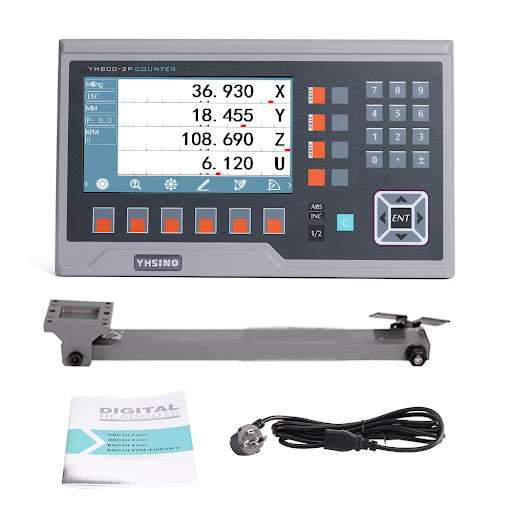
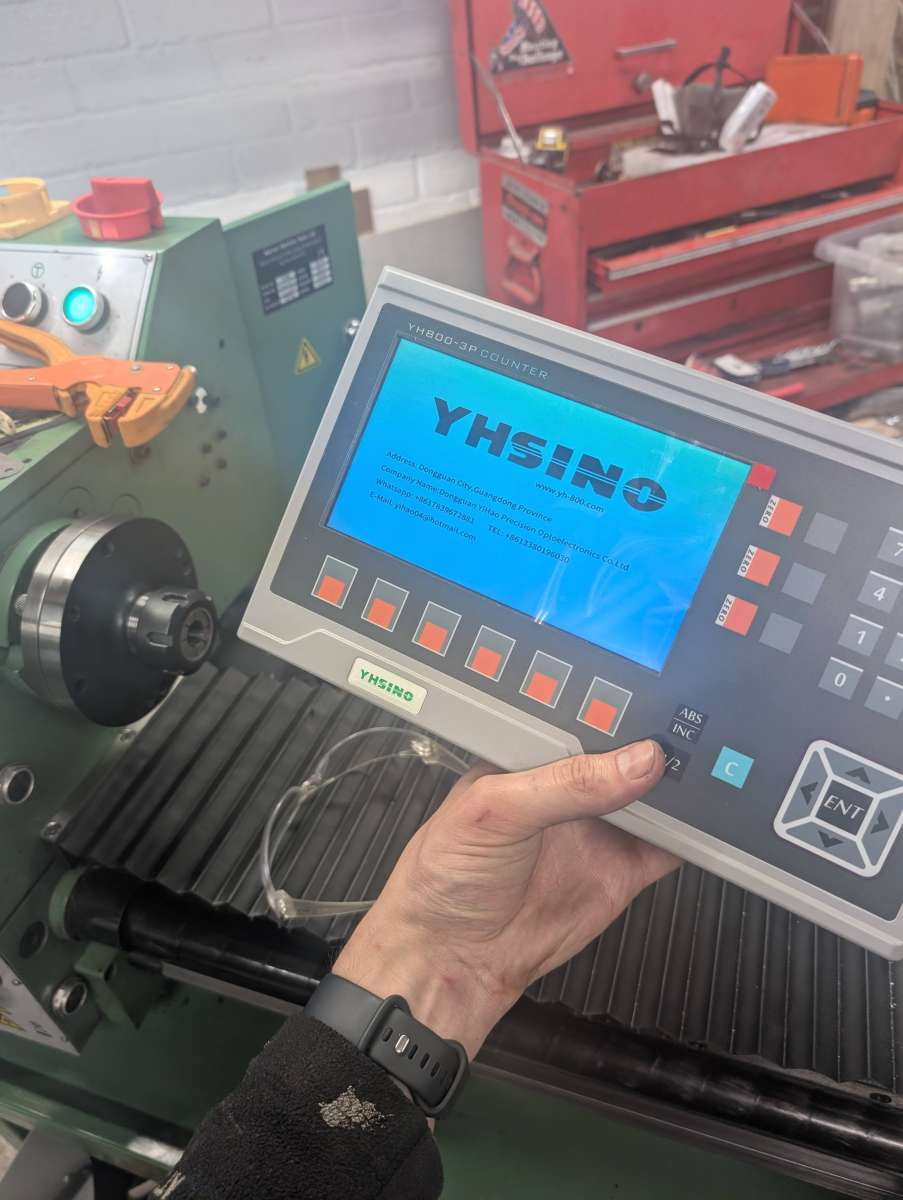
              The DRO appears to be a SINO LCD one, so a little different to my mill. I’m sure it’ll be easy enough to pickup.
              unnamed

              #848059
              Richard Kirkman 1
              Participant
                @richardkirkman1

                Next steps/First DRO steps were to dismantle the lathe and get the saddle by itself so I could ensure the surfaces were flat.

                Taking the saddle off proved to be a bit more difficult than i had imagined due to some pins holding it into the apron, but I managed eventually.

                PXL_20260508_155055903.MP

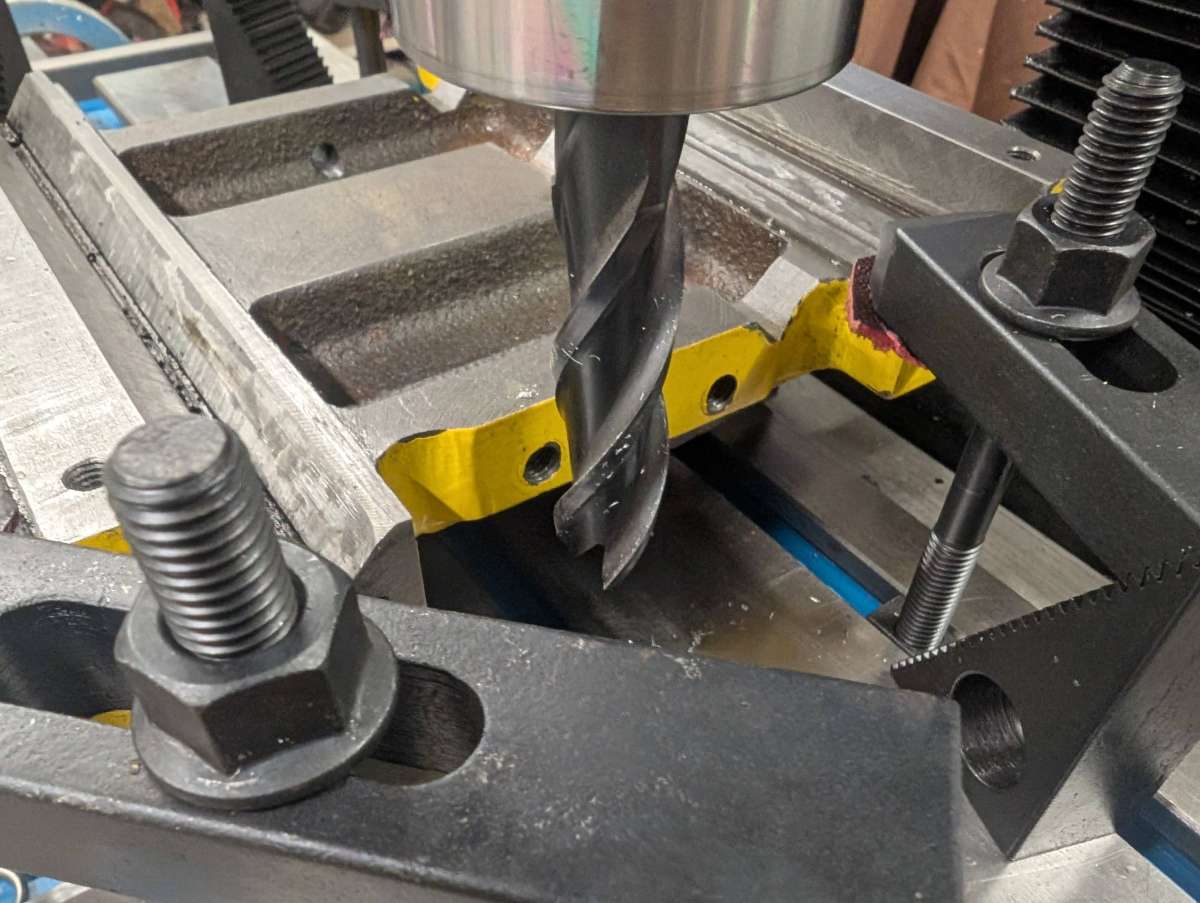
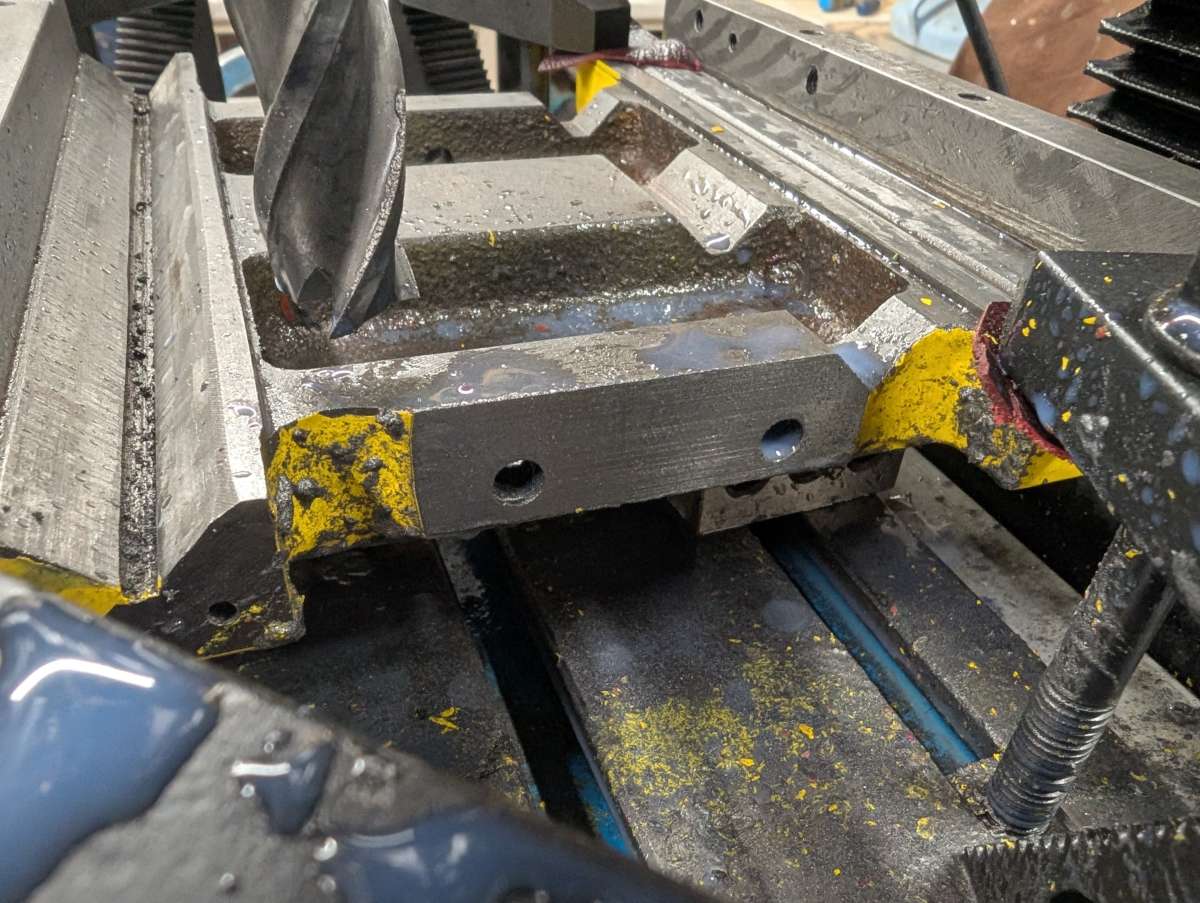
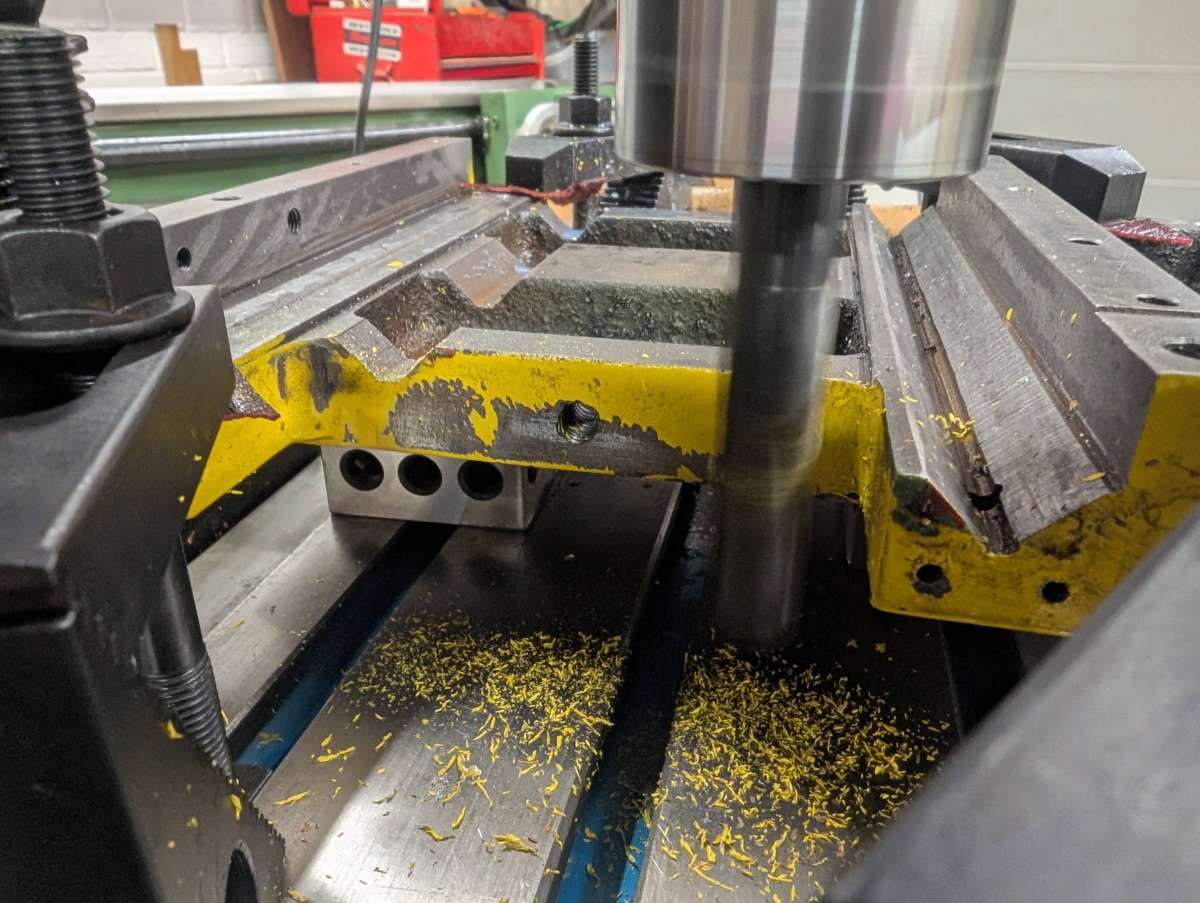
                I mounted the saddle to the mill, trammed it in and then took some very light cuts on both sides until the surfaces cleaned up. This may not be the most precise surface, but it will be good enough to mount things to for my needs.

                PXL_20260508_193133969PXL_20260508_194113193

                With those surfaces clean I could start looking at mounting the DRO.

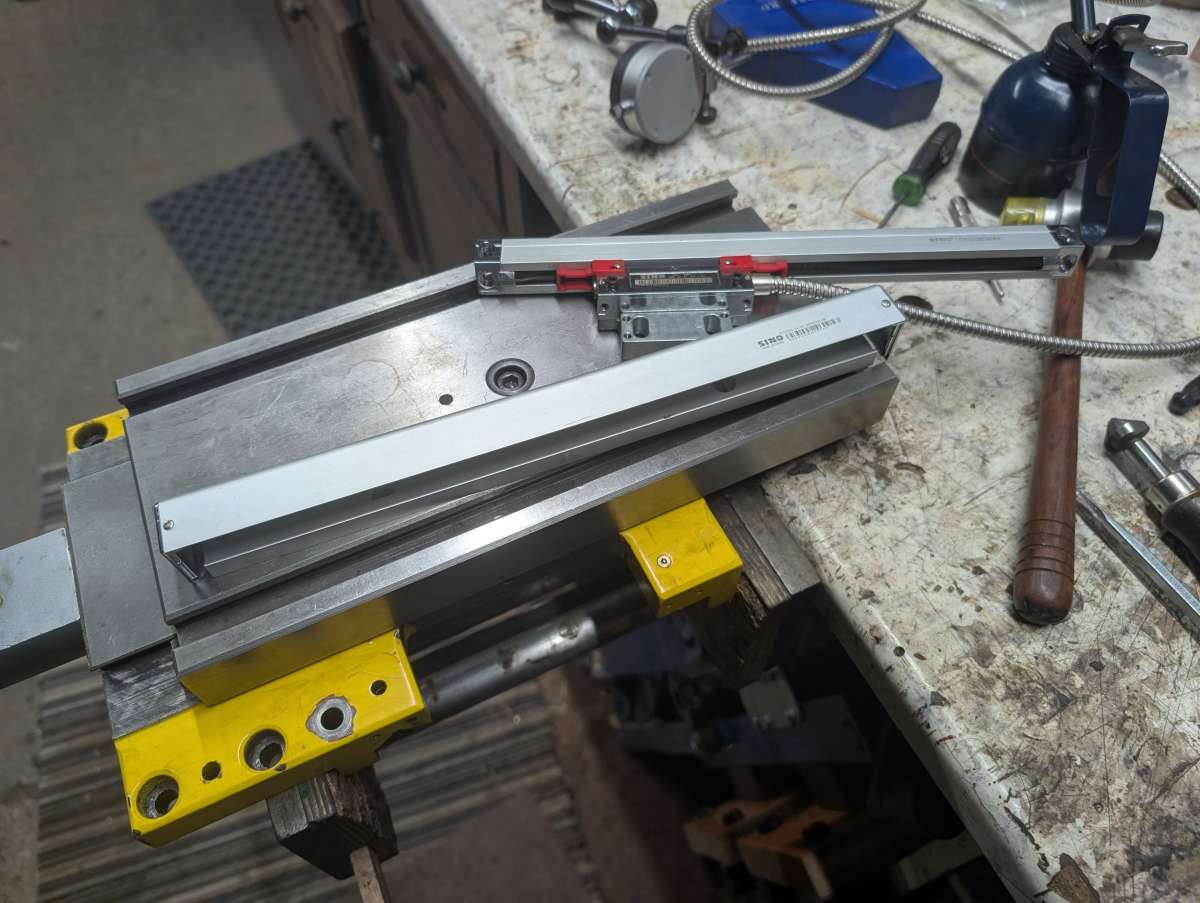
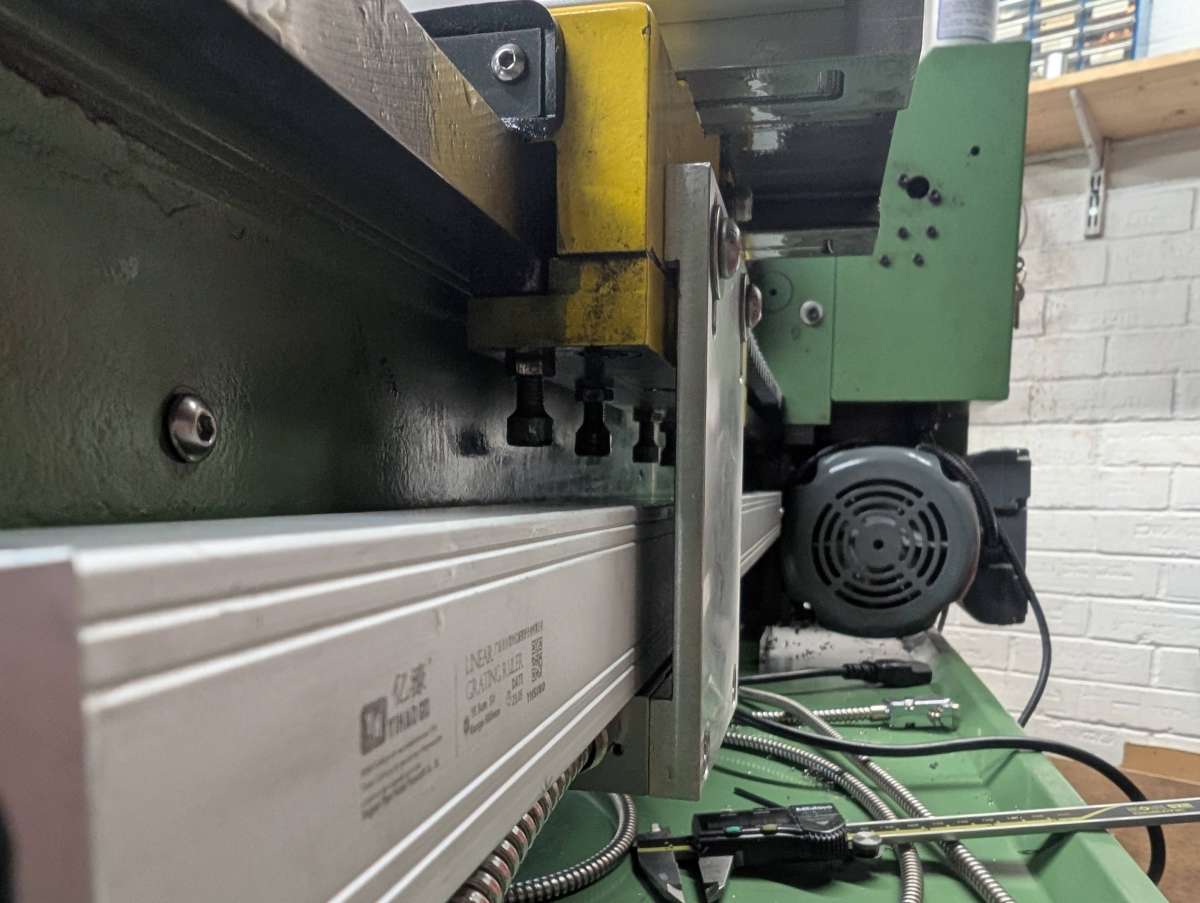
                Thankfully, the DRO seems to have been sized correctly and the X axis scale is perfectly matched to the cross slide.

                PXL_20260508_194510766PXL_20260508_205801708

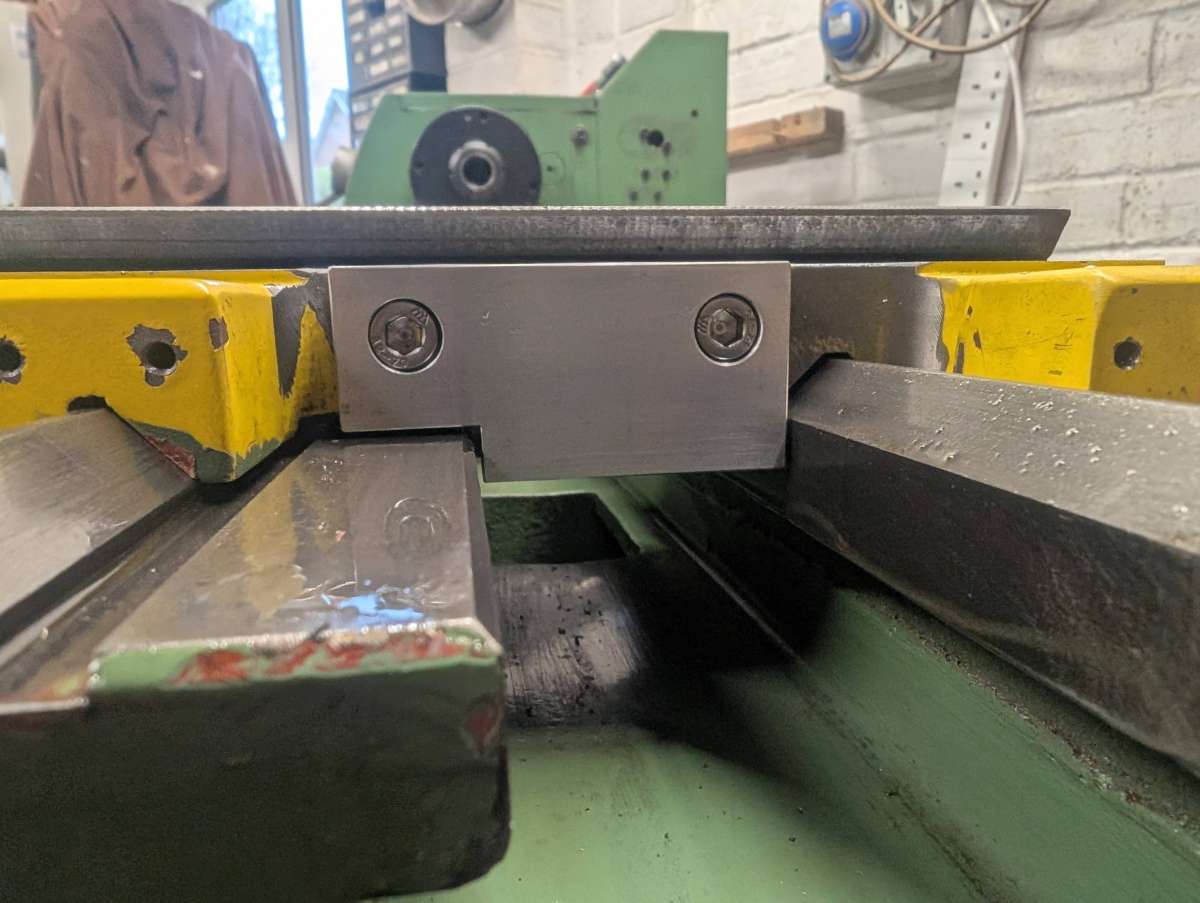
                I started by drilling and tapping the cross slide to accept the scale mount.

                PXL_20260509_101907763PXL_20260509_103201199

                This then allowed me to have a look at what is going to be affected by mounting the scale on the tailstock side.

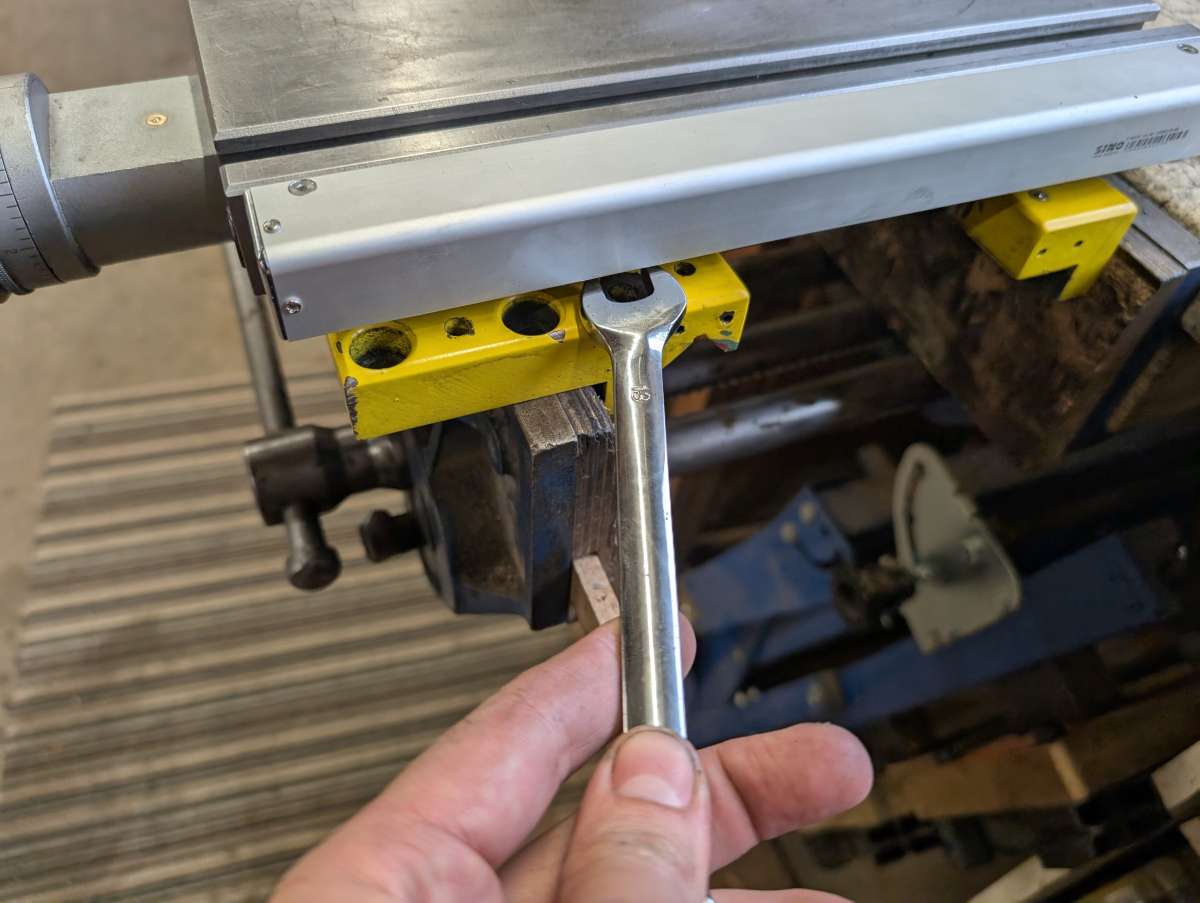
                I’ll lose access to the saddle locking screw, and two ball oilers. There is still around 9.5mm clearance, so I will be able to insert some kind of spanner if I make a custom bolt.

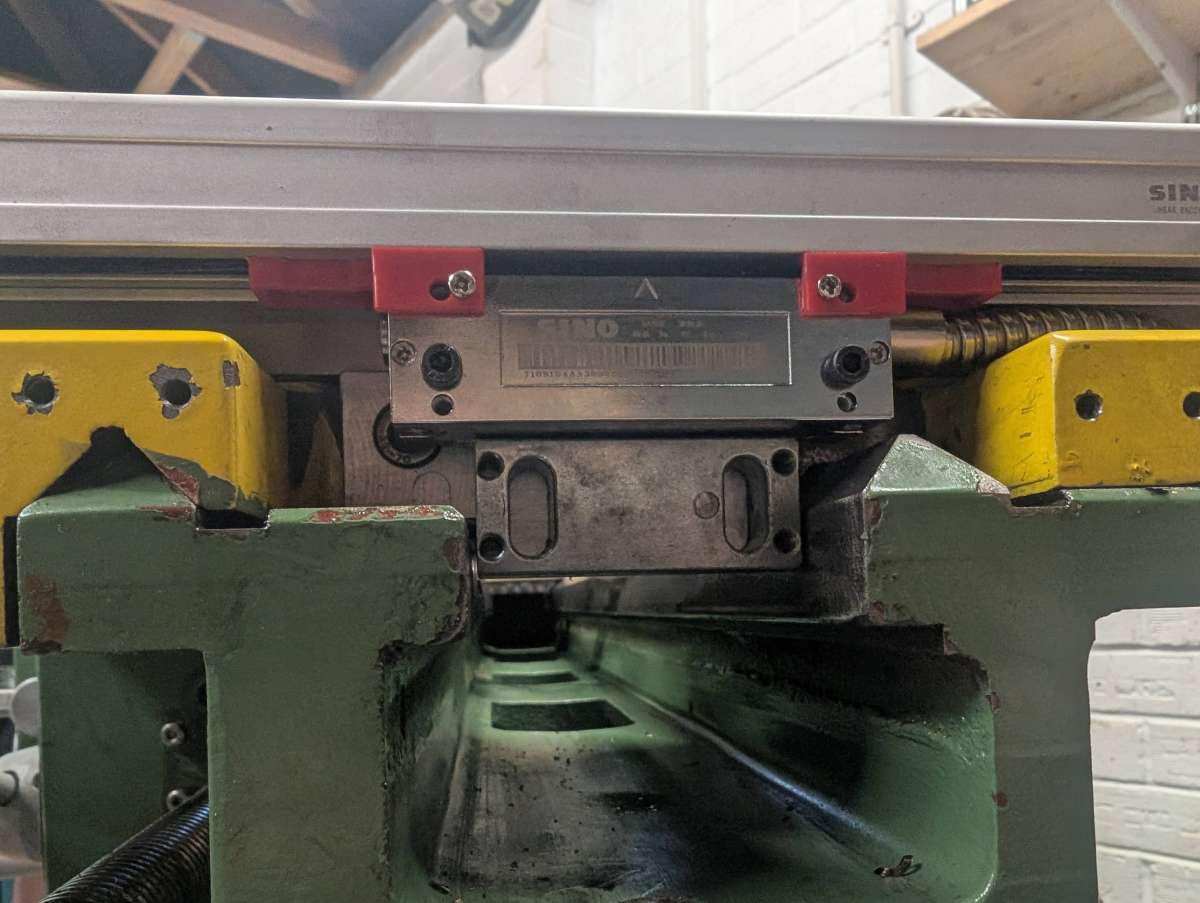
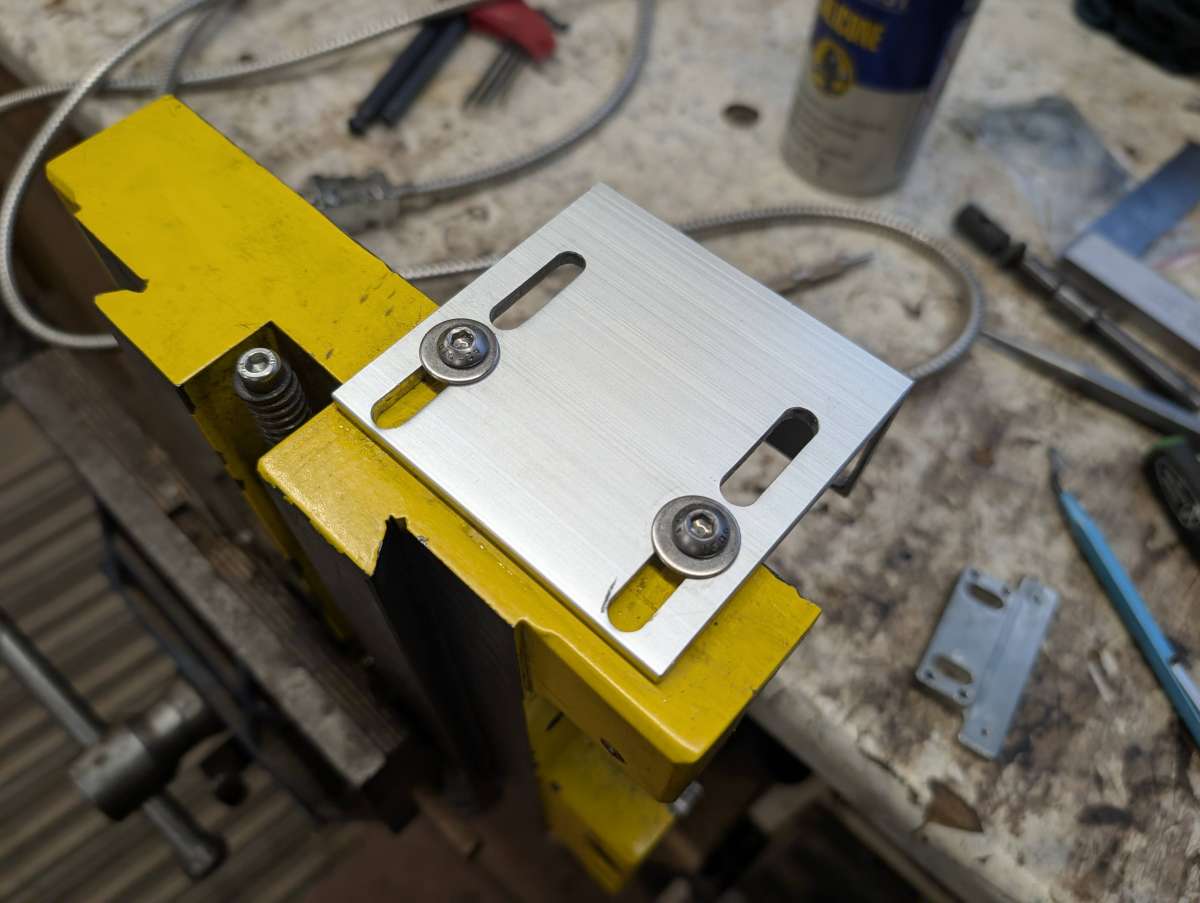
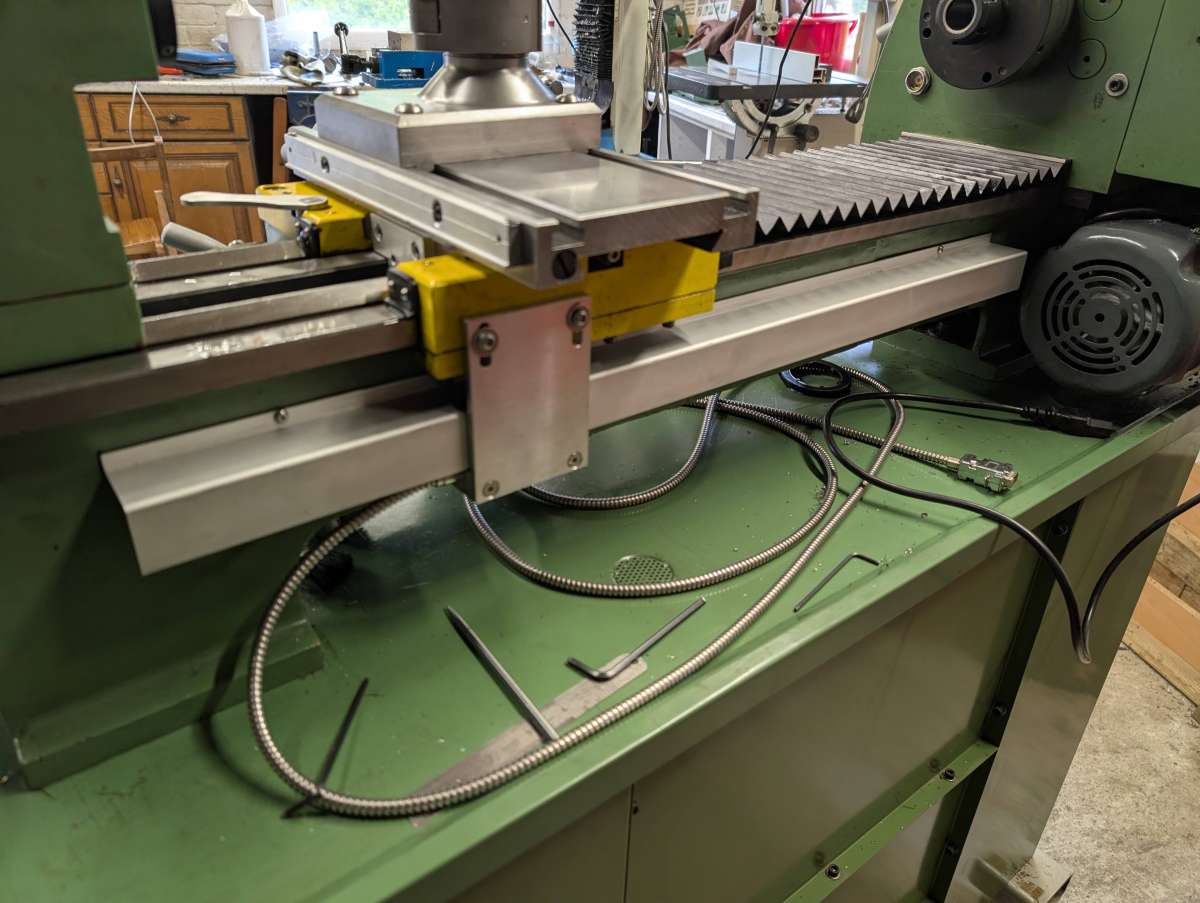
                With the scale mounted i took some measurements for the read head and machined an aluminium plate for it to mount upon at the correct offset.

                PXL_20260509_104551365PXL_20260509_142805156

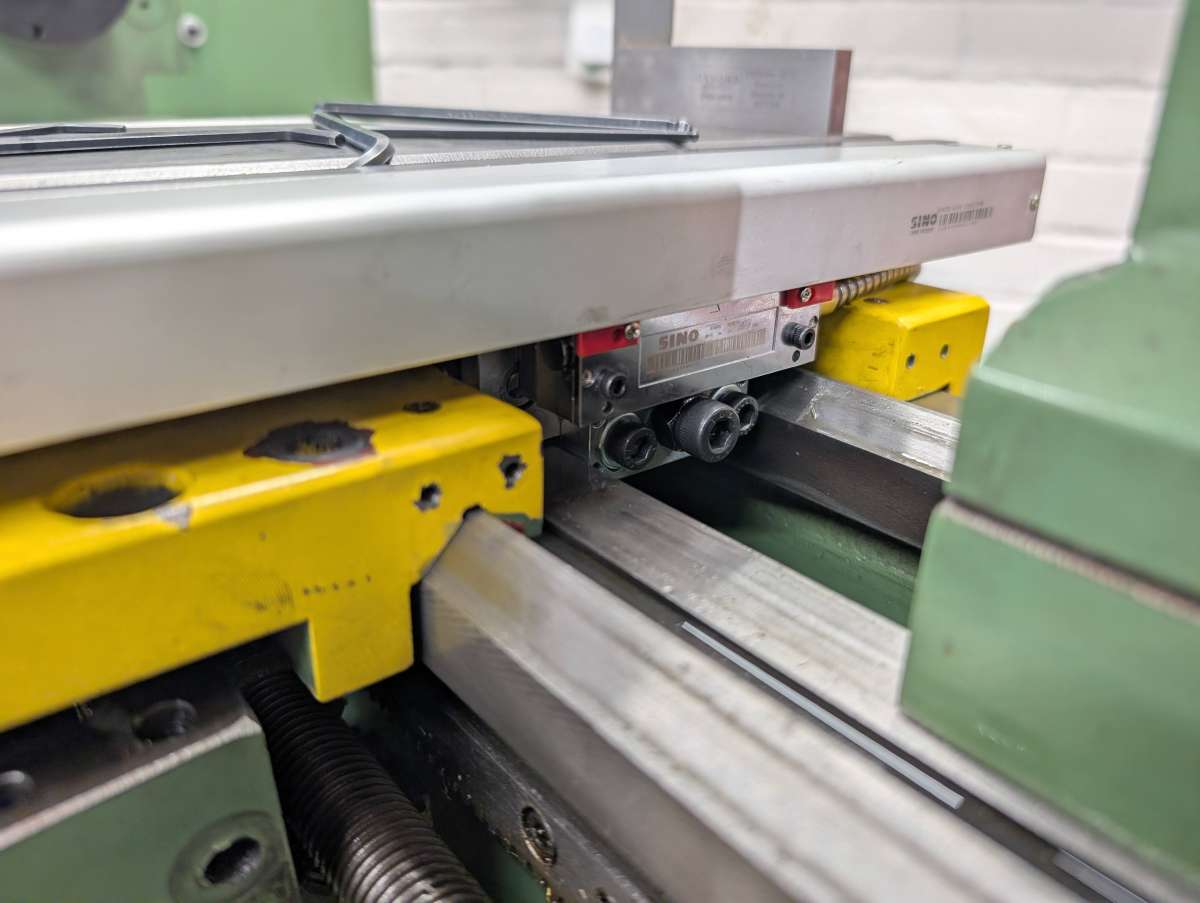
                A few mounting holes later, and a new mounting hole for the tailstock stopper and the X axis is ready to be mounted.

                I am quite impressed with how compact this turned out to be. There was just the right amount of clearance for everything and it came out better than I expected. I had put off this project for a while as I thought this would be much more difficult than it was!

                PXL_20260509_143105135PXL_20260509_160045261

                #848066
                Richard Kirkman 1
                Participant
                  @richardkirkman1

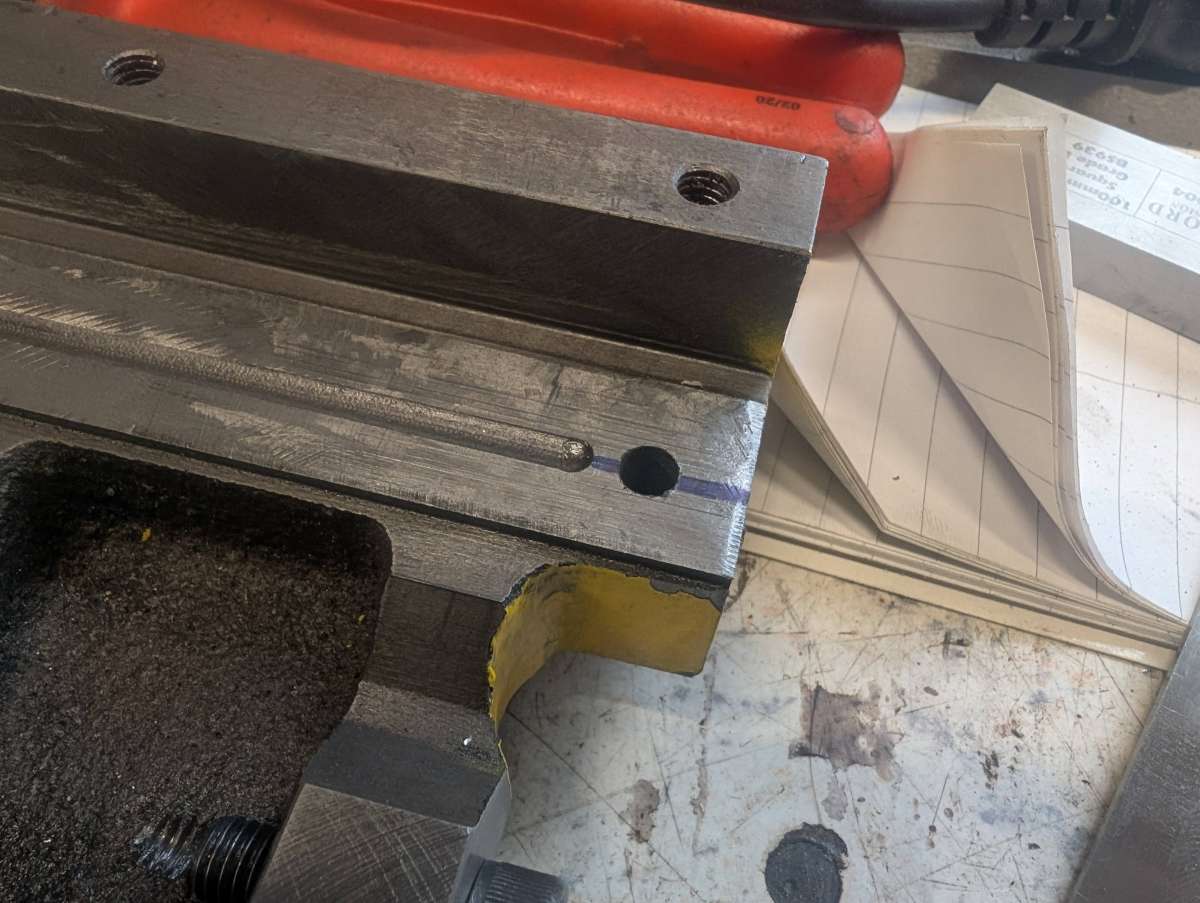
                  To solve the blocked oilers, I decided to add two new oiler locations to the LHS, which can be easily accessed under the magnetic bed cover. The oil lines were not quite long enough, so I joined them up with my rotary tool. Not perfect, but good enough. Awaiting new Ball oilers now!
                  PXL_20260509_163259639PXL_20260509_163446874

                  While the saddle is free, I popped some mounting holes in for the Z axis read head mount. Not very well aligned, but sufficient…
                  PXL_20260508_180530622

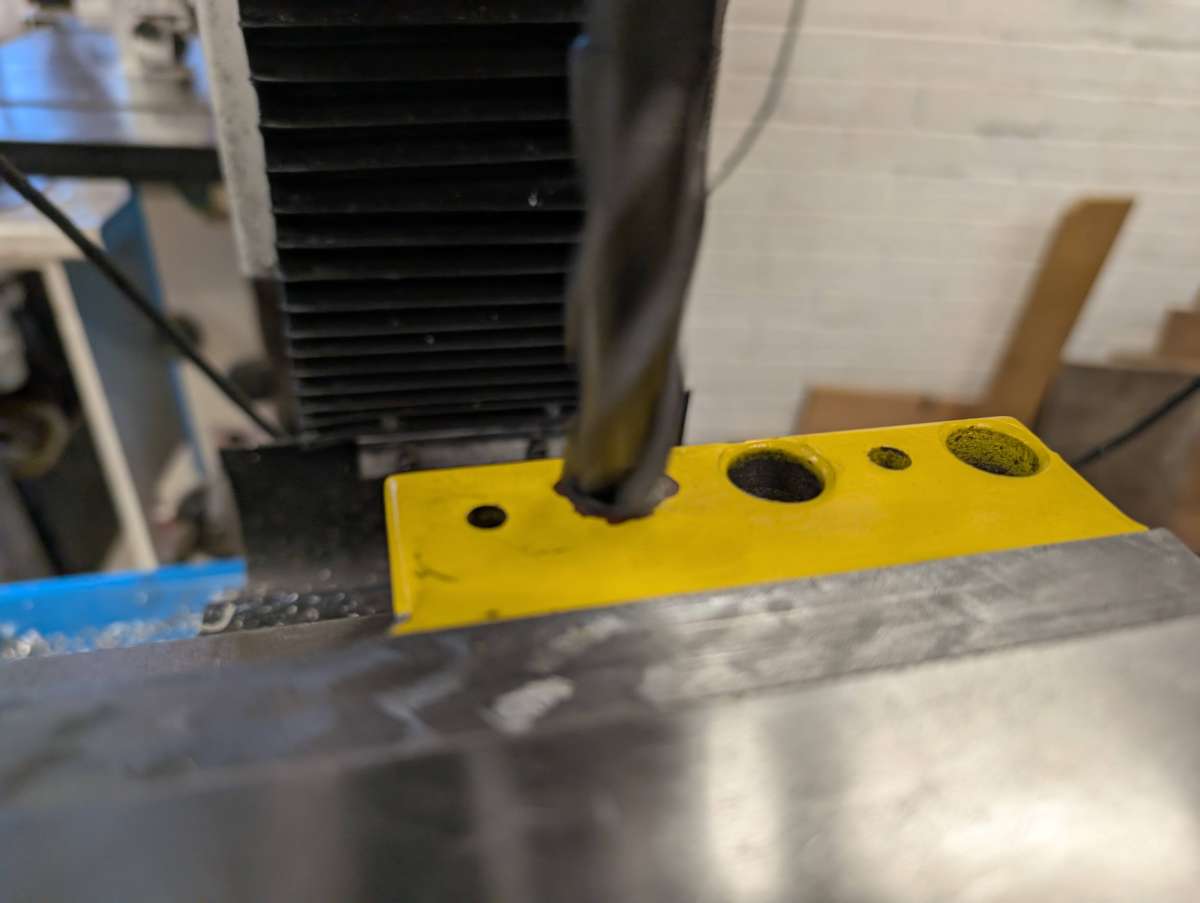
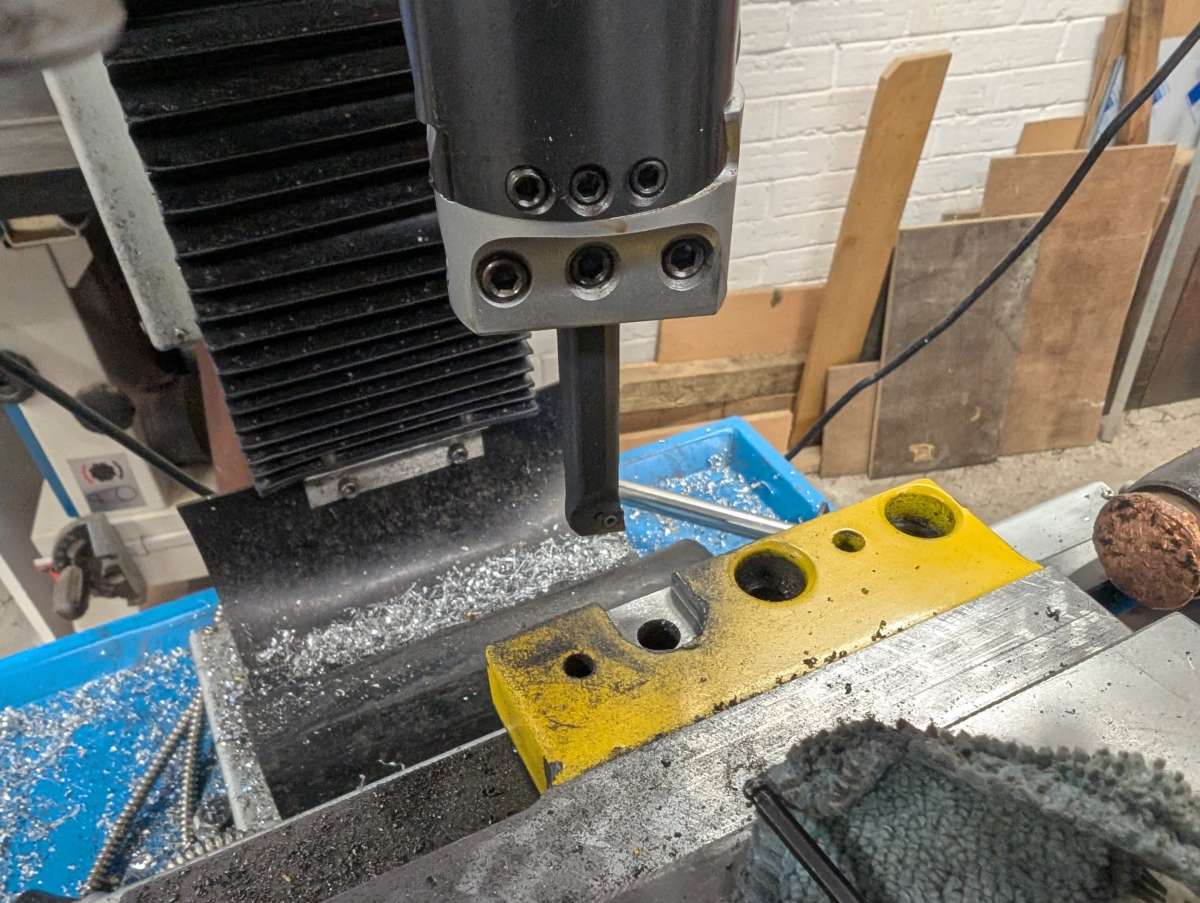
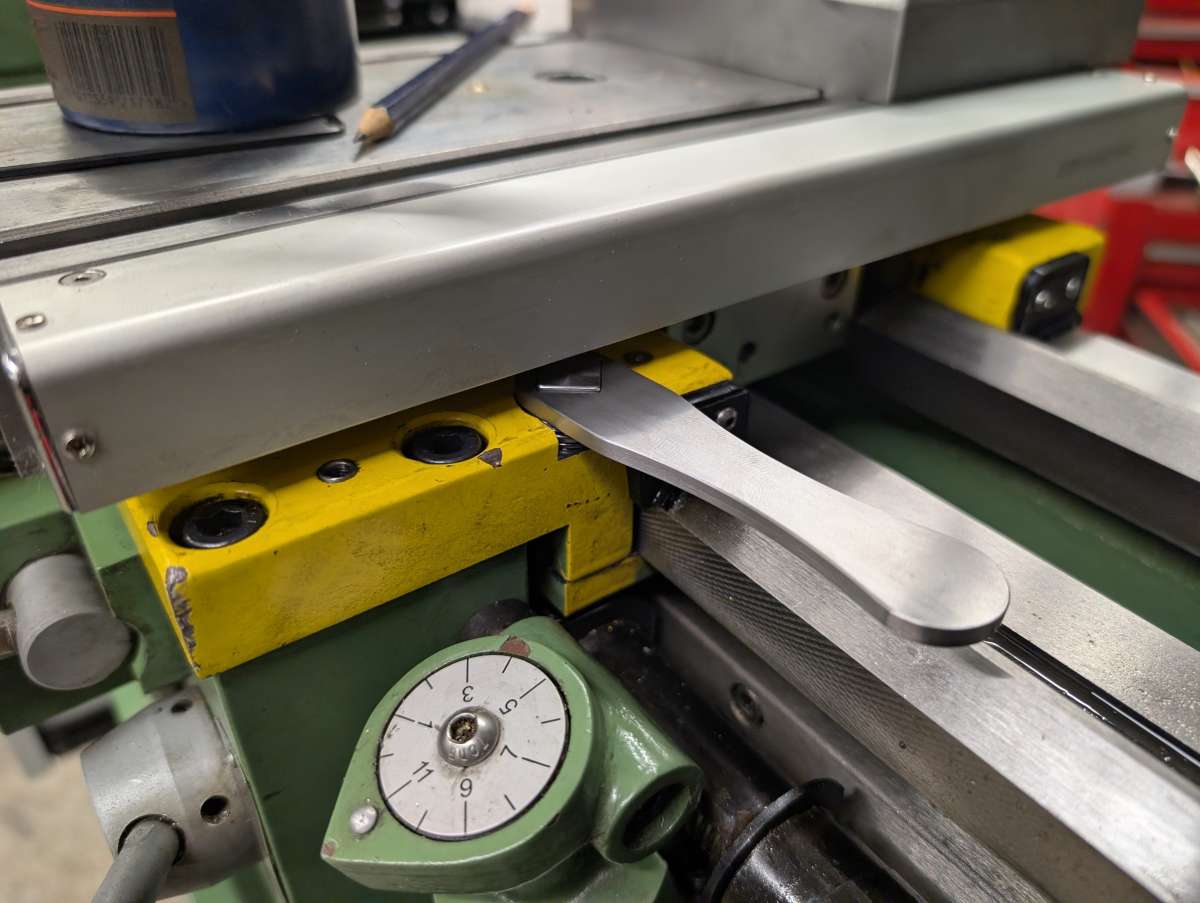
                  I also decided on my carriage lock solution. I am going to create a recess and insert a small needle roller thrust bearing. This will allow me to use a shorter spanner and take up less space. It also gives a good flat surface for contact. Overkill – perhaps, but I wanted to and I like putting thrust washers in places they don’t need to be.
                  18mm endmill to rough out the 6mm deep recess. Then used a boring head to take it to 21mm, coming in from the side to give a flat face on the bottom.

                  PXL_20260511_192410095PXL_20260511_194615635.MP

                  At this point the saddle work was complete so I put the lathe back together (after giving everything a thorough clean and oil).

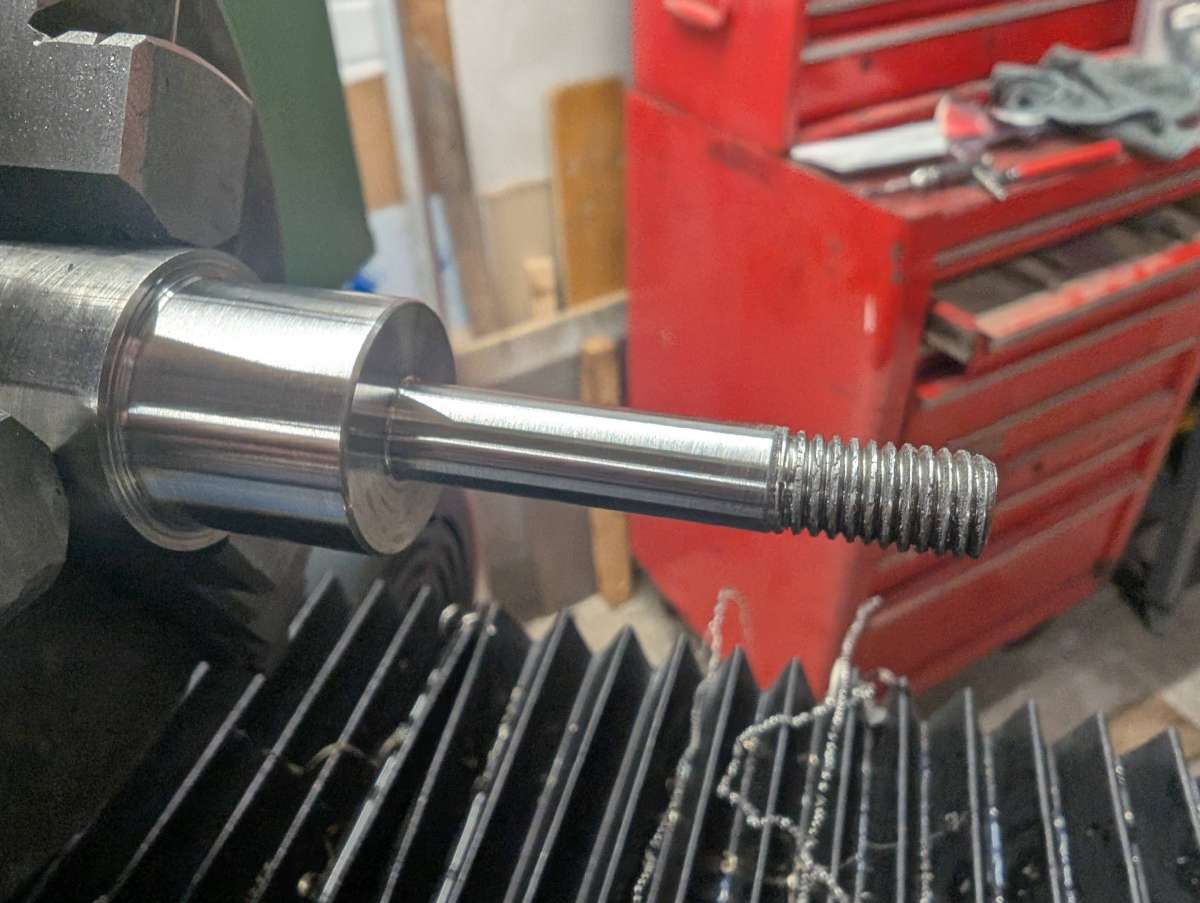
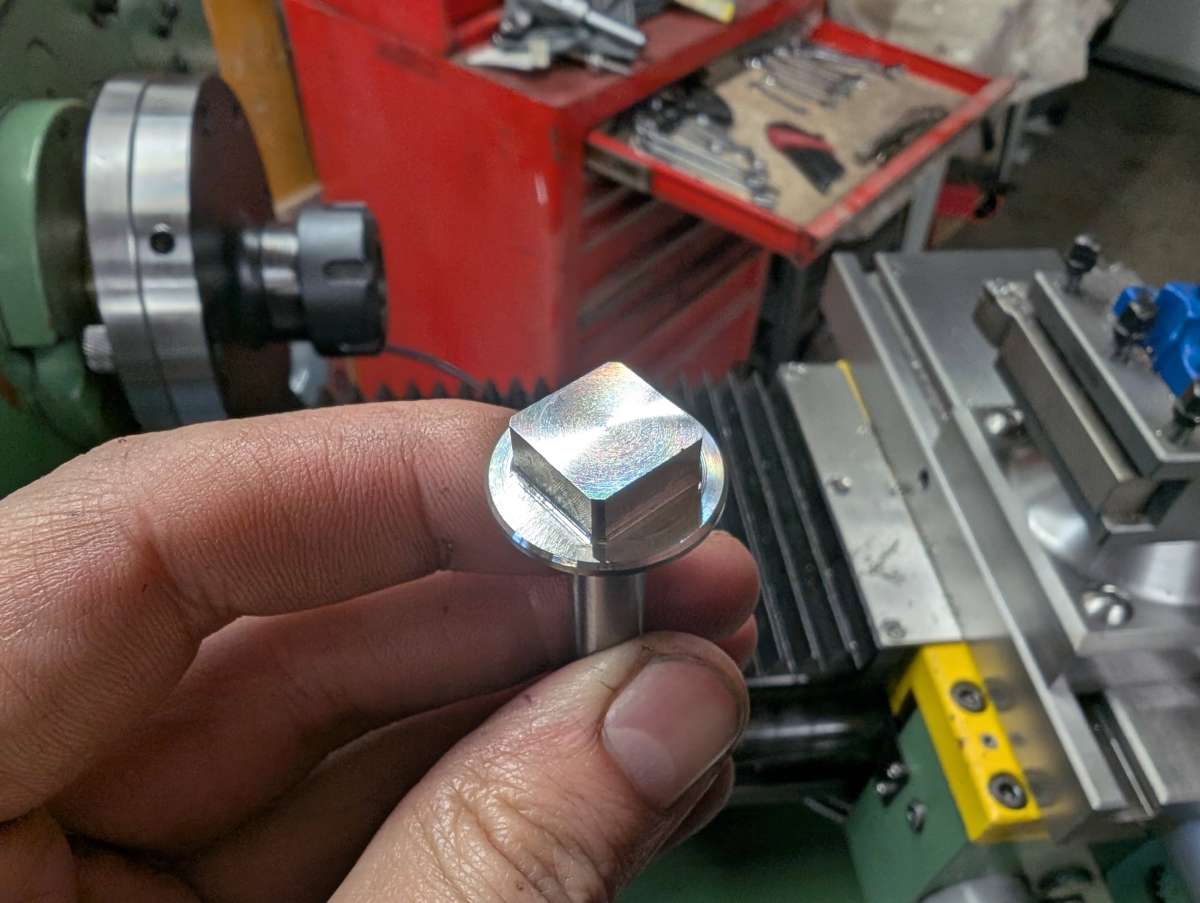
                  Then I began on making my bolt. I decided on a square head as that will be easier for me to make a custom spanner.

                  I’ve used 304 stainless, which i usually find to be very nice to turn. The threads did not come out as nice as usual, but they are functional. The picture makes them look a bit worse, a little fettling after and they were fine.

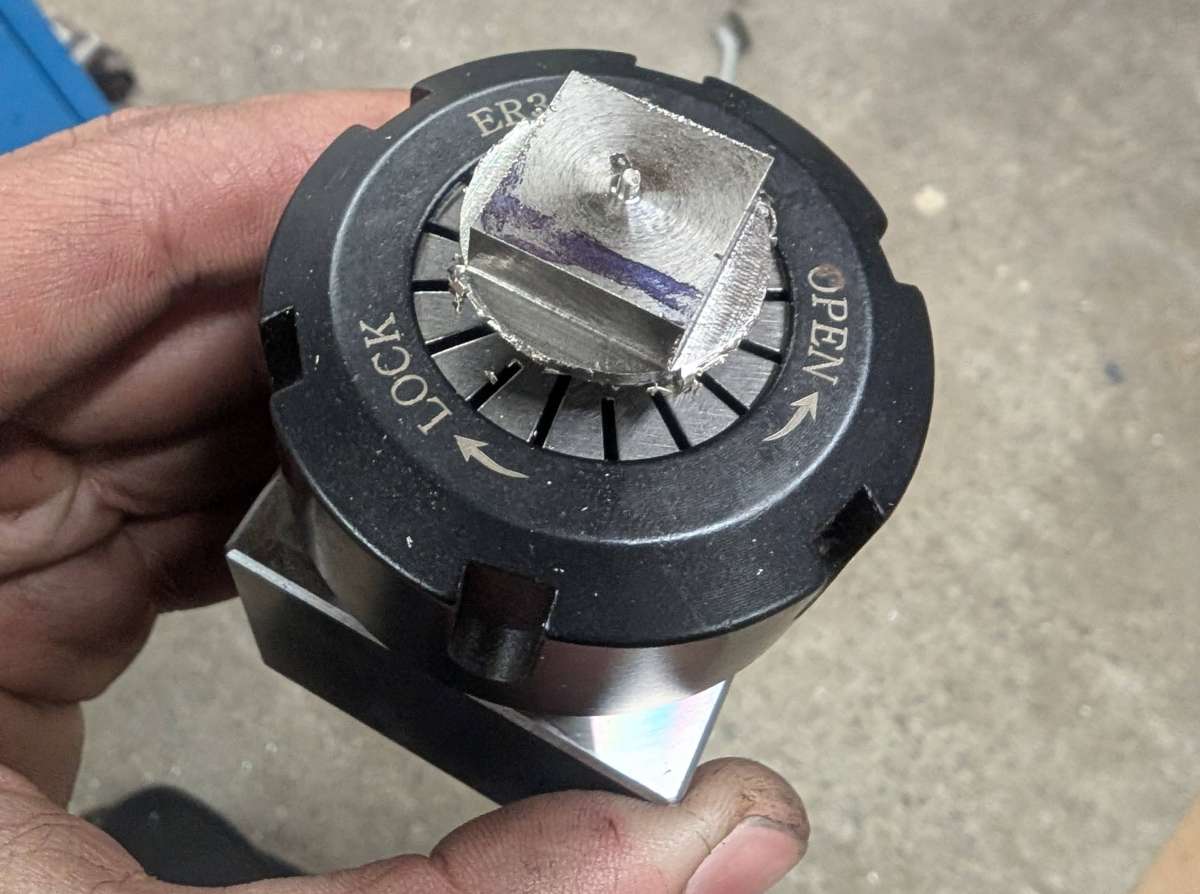
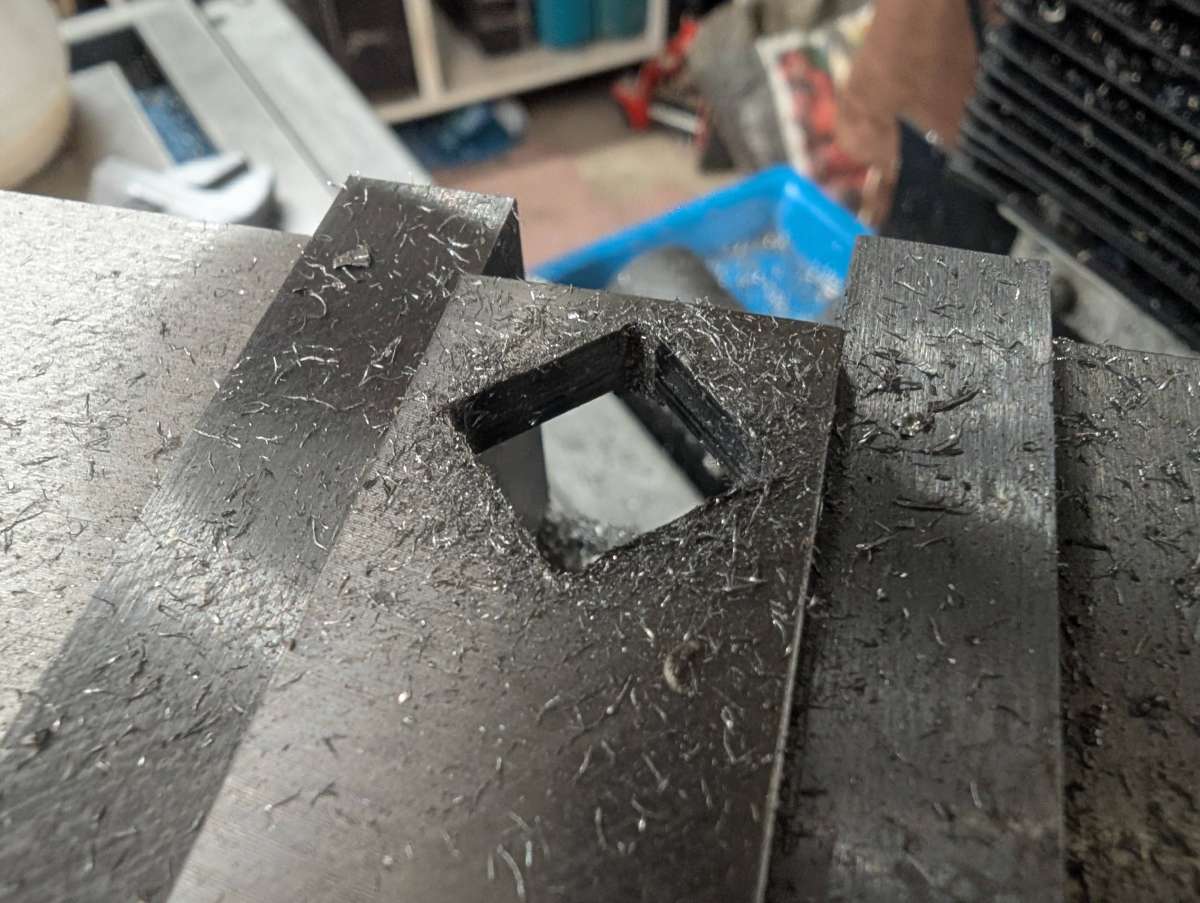
                  Milled a 12mm Square on the top. (pic is unfinished and just roughed in, still around 15mm square)

                  PXL_20260512_201313292PXL_20260512_212001486

                  Then back to the lathe for some finish turning. I positioned the head of the bolt to be in line with where I wanted it to be when it’s secured. But there will be enough space to remove the (soon to be made) square ring spanner that will live on the bolt.

                  (wooden plugs fitted into the oiler holes while new ones arrive. I figured I would replace them all as I had to buy 10 and a few on the lathe were damaged)

                  PXL_20260513_070717144PXL_20260513_071301306

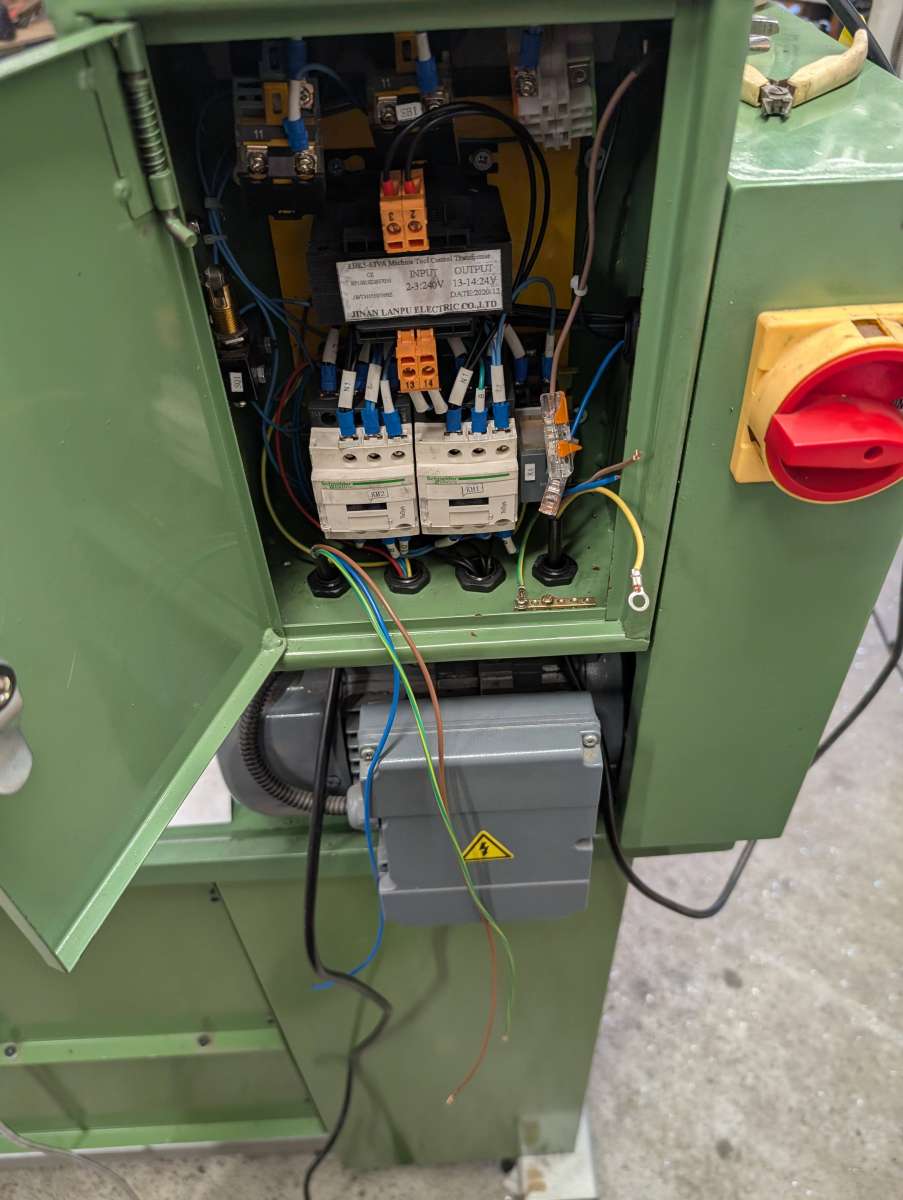
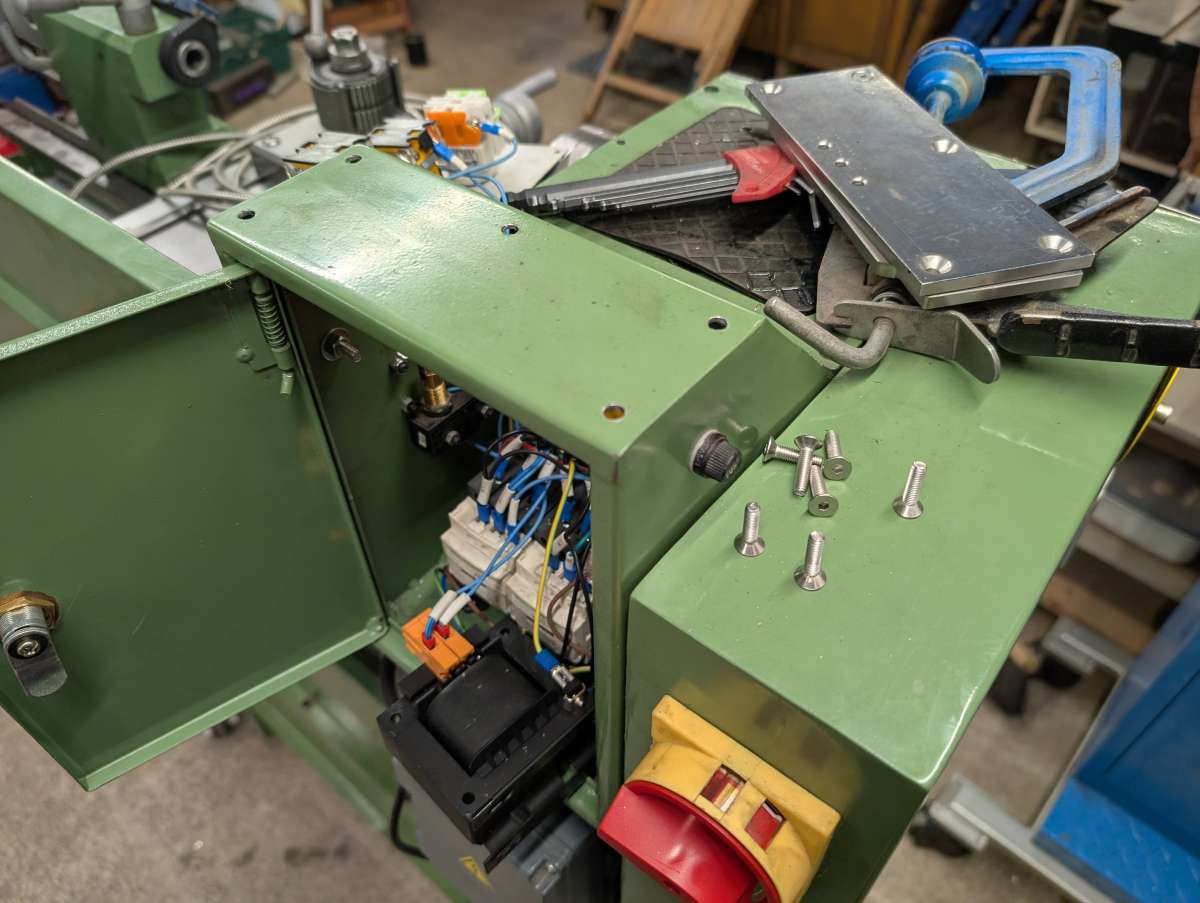
                  With that complete, i thought it would be a good time to have a play with some wires! My milling machine has the DRO hardwired into the machine, and I didn’t really want to have a second plug for the lathe. So following the same method as my mill, I wired the power cable of the DRO into the lathe supply. I added a new cable gland in a pre-existing hole in the electrical box, so it’s more sealed than before.

                  PXL_20260512_162437354PXL_20260512_165820845.MP

                  Next steps, 12mm square ring spanner, DRO screen mounting and then z scale mounting. In no particular order. (Maybe display mounting last so I can get everything back together first?)

                  #848972
                  Richard Kirkman 1
                  Participant
                    @richardkirkman1

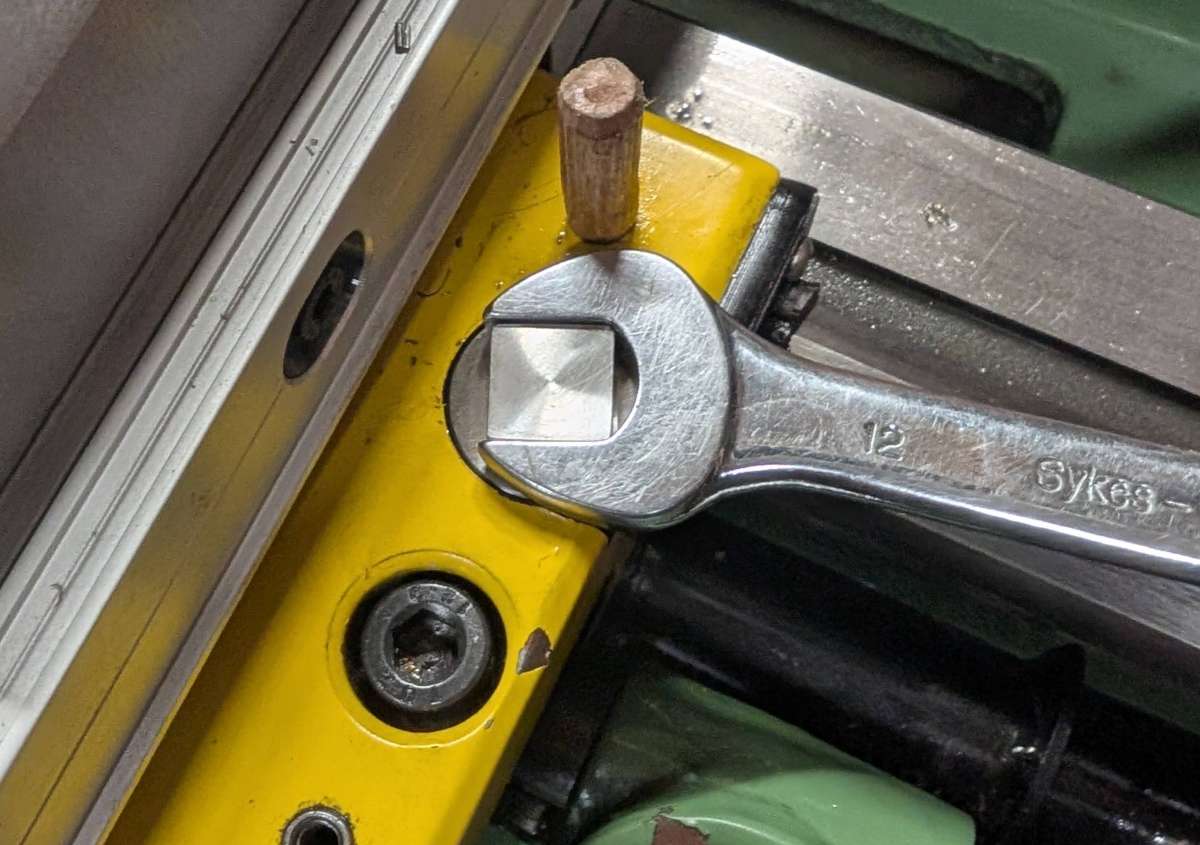
                    I decided on a little break from the scale mounting and got the spanner out of the way.

                    I’ve never cut an internal pocket like this, so it was good fun to try. 2nd attempt was better than the first.

                    The spanner does work nicely, but could do with being an inch longer and have the head offset by 22.5 deg to make it a bit more versatile. It will work for now, but it’s back on the list of jobs to be remade.

                    PXL_20260514_213127994PXL_20260514_234416363

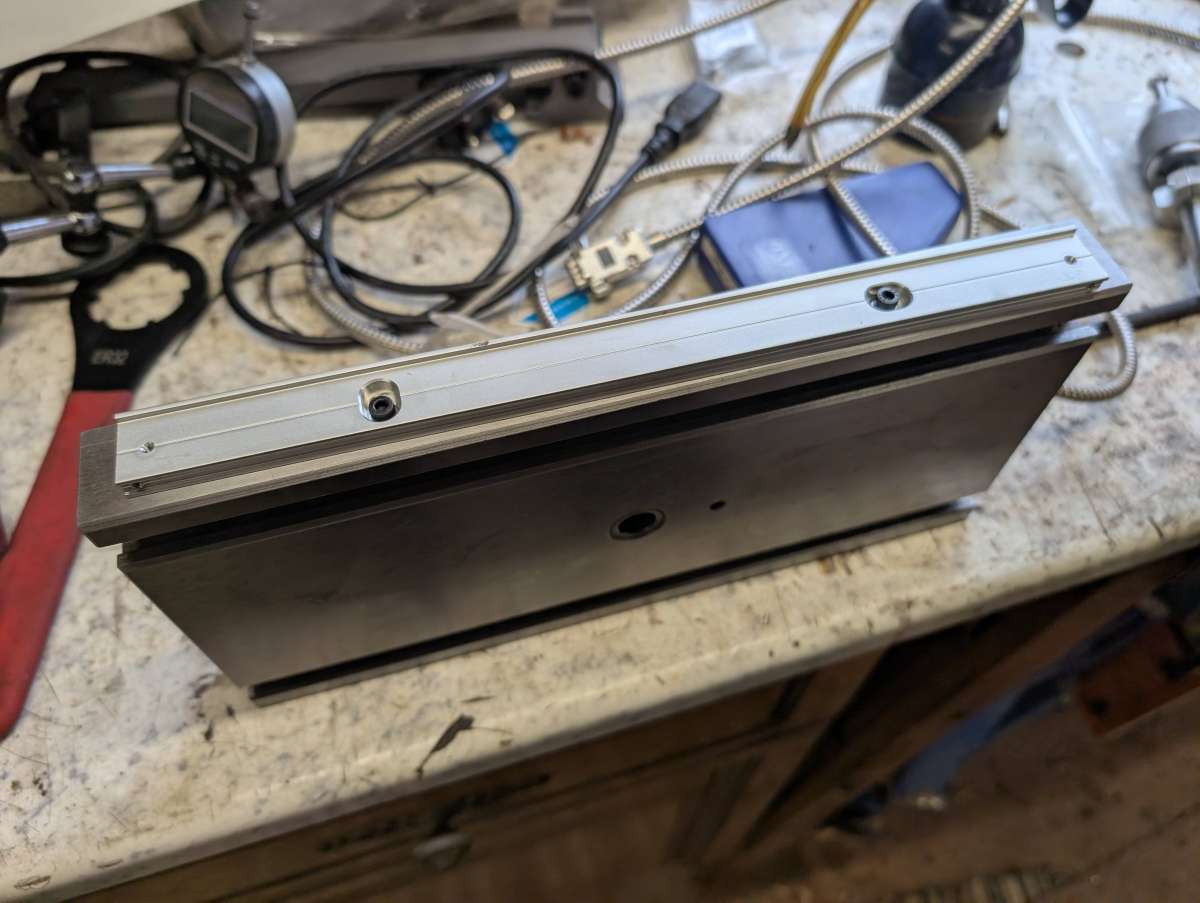
                    To mount the Z scale, I had initially planned on using aluminium box section like Diogenes. When mocking it up, I decided on just turning some spacers.

                    I began with them at 16mm long, then went along the scale using a dial indicator to see how far out of parallel it was.

                    Then I made one spacer slightly shorter until I was content that it was parallel enough<b><i>.</i></b>

                    This may not be extremely precise, but it has worked nicely for me and was simple.

                    PXL_20260512_103203782

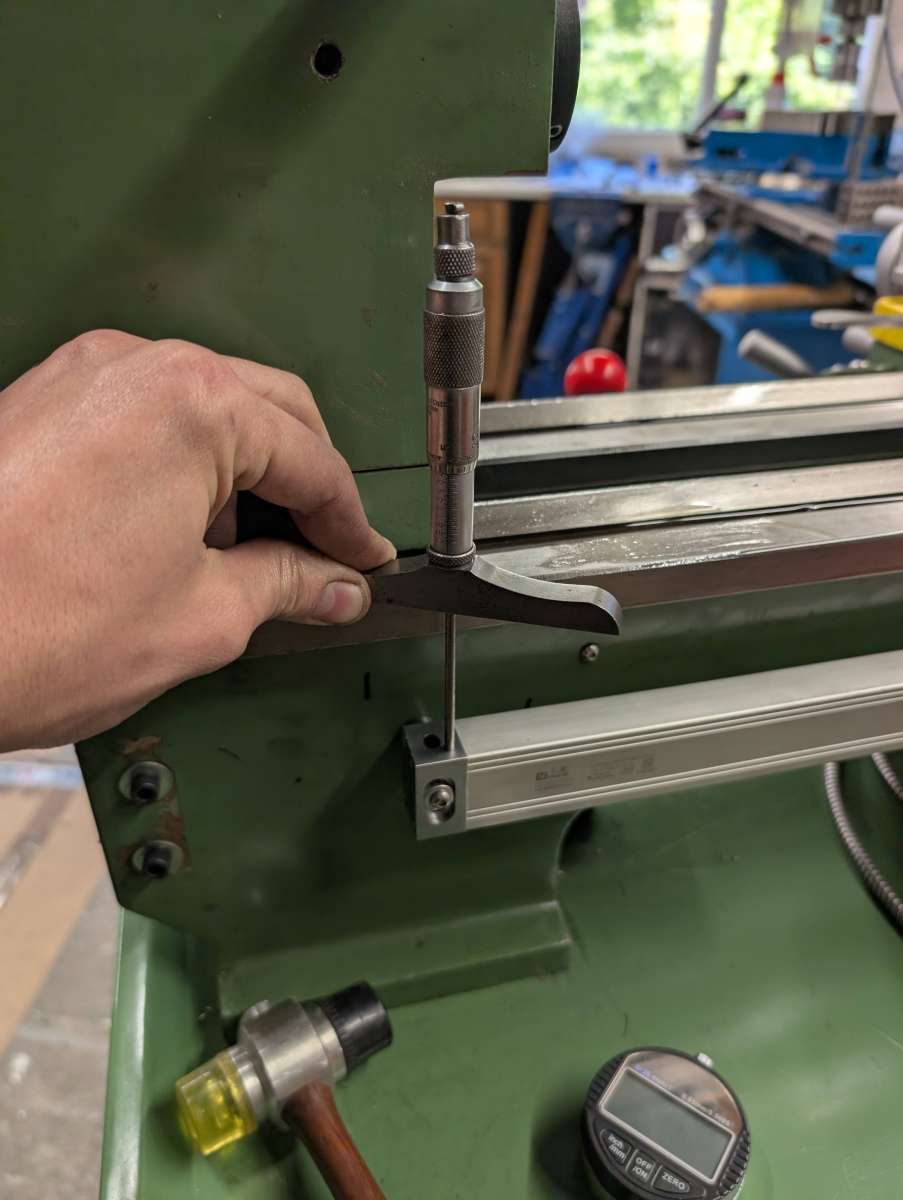
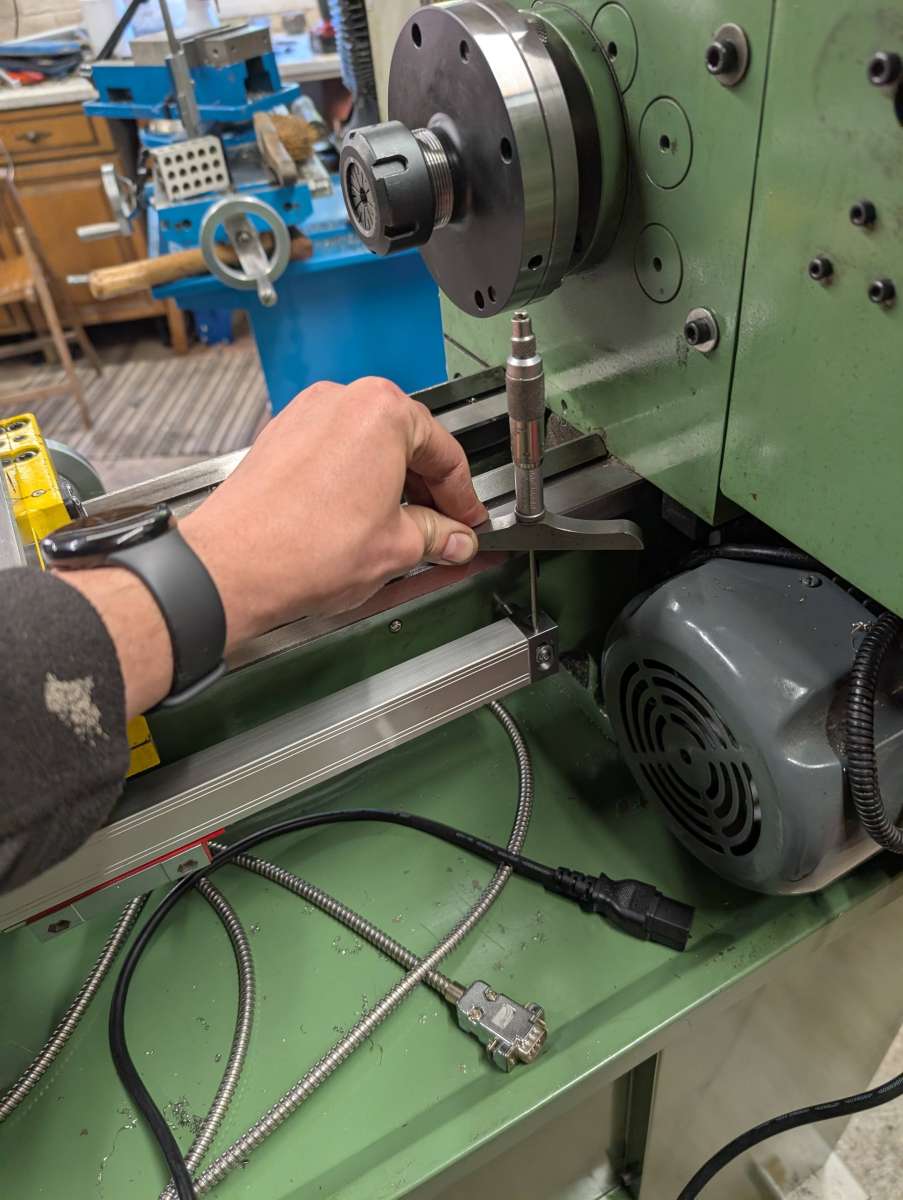
                    Then I aligned the height of the scale using a depth gauge on each end. I did start by traversing the external extrusion of the scale with an indicator, but I found that the extrusion was bowed a bit and i wasn’t able to cover it end to end.

                    Once again, perfect – no, but good enough for me. Within a thou end to end.

                    PXL_20260515_075856276PXL_20260515_075903136

                    Then I had to mount the read head to the saddle. This proved to be a bit of trial and error, but it worked in the end.

                    I machined a flat plate with the correct mounting holes for the scale, then added slots for the saddle mount position to be adjustable.

                    From there, I could loosely bolt them together and see where I needed to add clearance.

                    I added the central clearance to make sure the chip guard could make it through, and then cut down the other areas to the correct offset from saddle to read head

                    PXL_20260515_100516888PXL_20260515_112859247

                    Z scale mounted successfully

                    PXL_20260515_114232876.MP

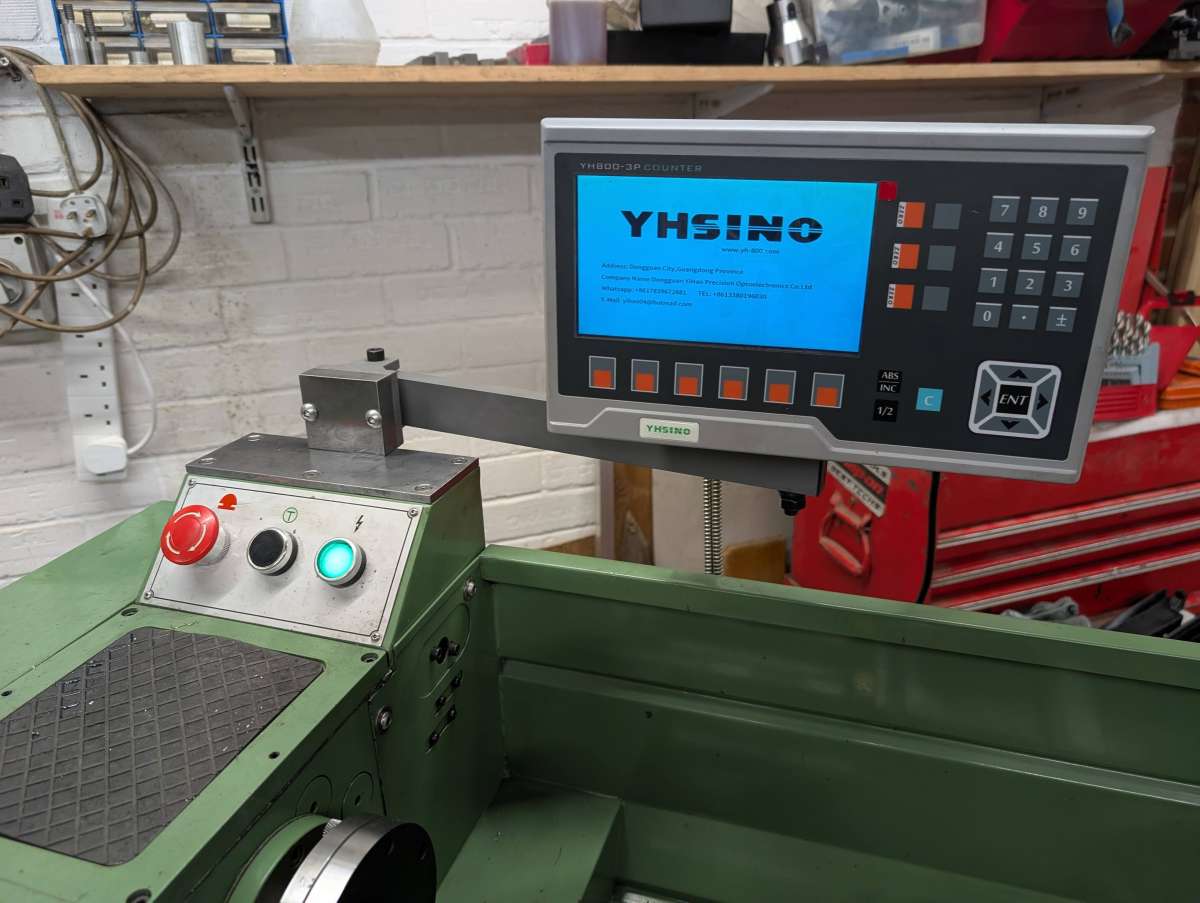
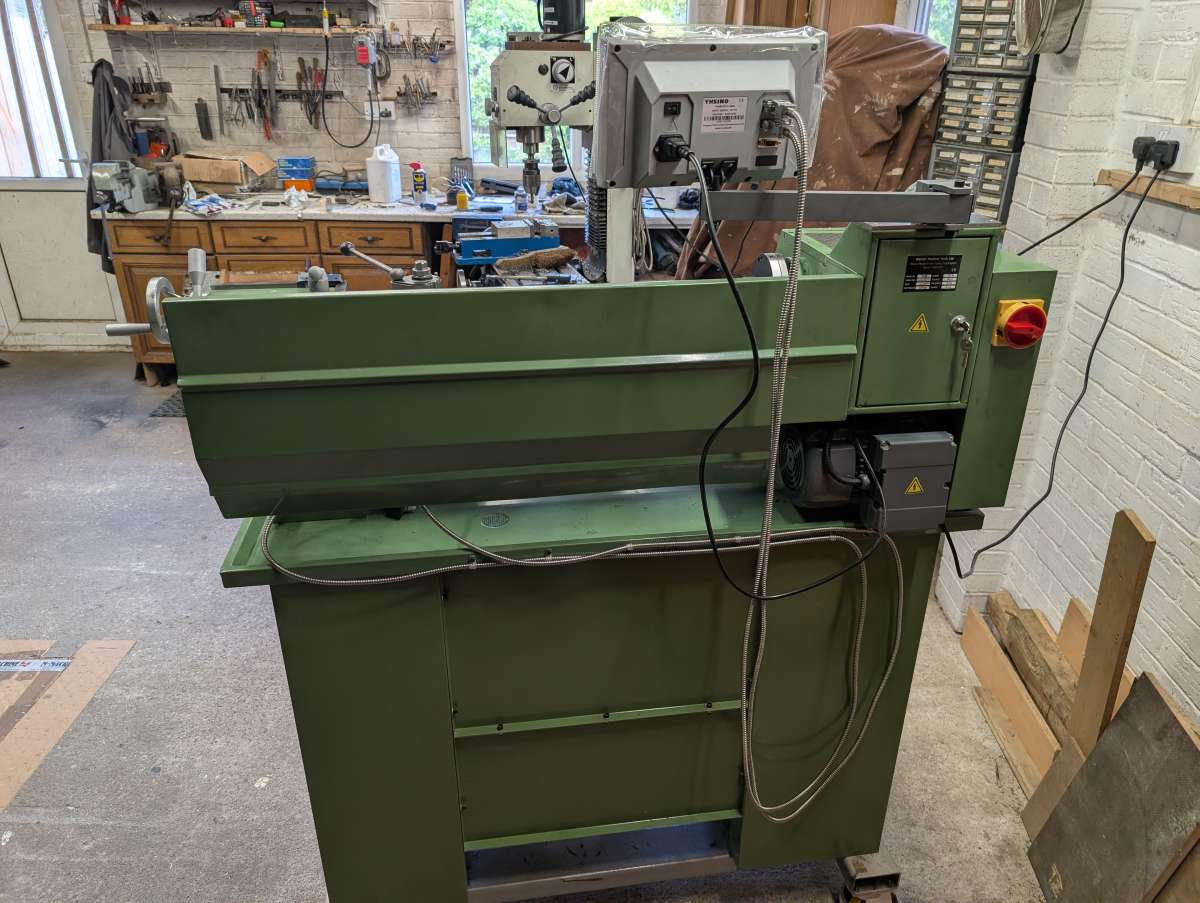
                    From there I mocked up where I wanted the Screen mounted. I settled on making two plates to clamp between the top of the electrical cabinet. This still allows full access to the door and for me to put tools on the top of the lathe (to fall off).

                    6mm thick steel, on both sides, with M5 screws. Mounting into an 18mm thick steel block. This is definitely overkill, but i’m happy for now. If i get any issues with rusting then i’ll remake it from aluminium. I just used material that I had on hand.

                    PXL_20260516_204329572PXL_20260516_225632958

                    Then I tidied the cables up at the back. I did look into shortening the cables, but did not want to risk messing up the connections. I can always add some cable ties if it becomes a problem.

                    PXL_20260517_114301077.MP

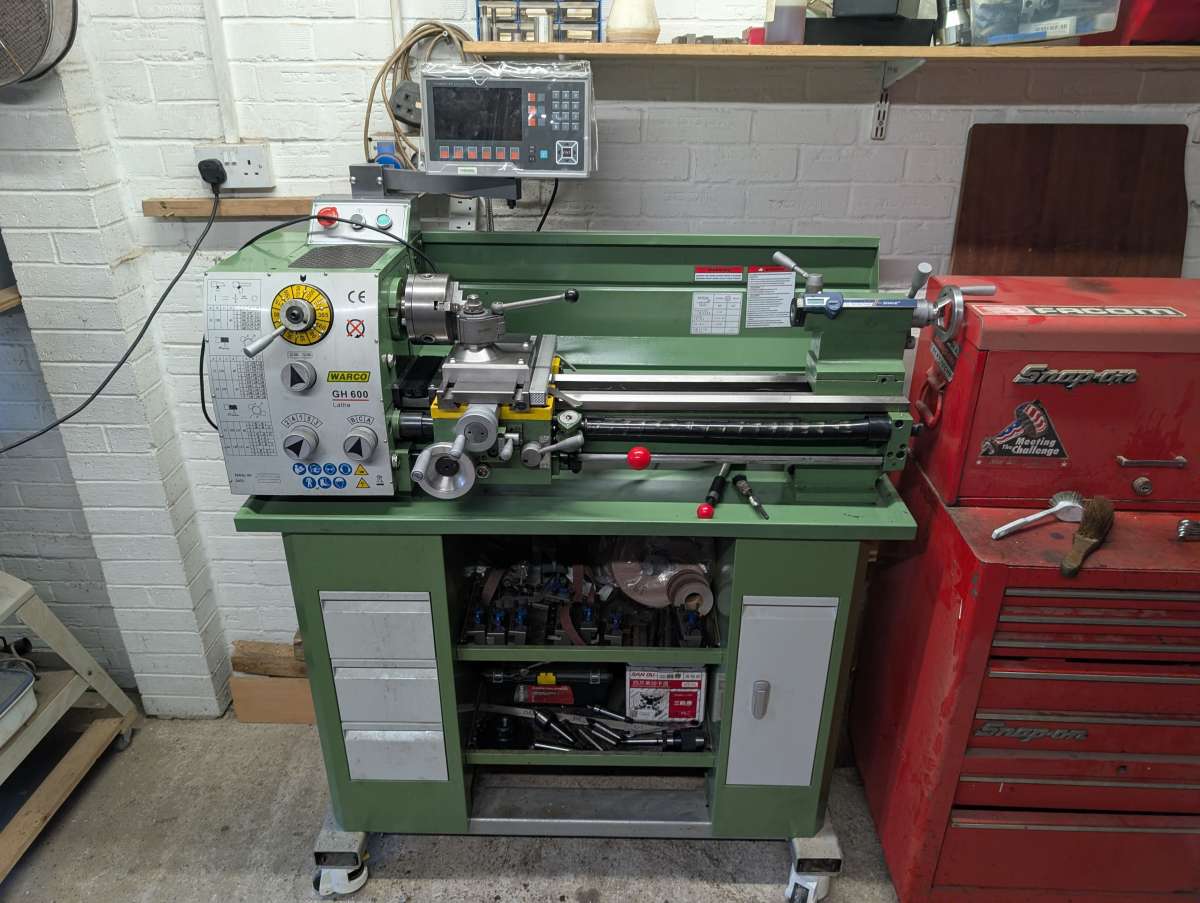
                    Finally all done. I’m very happy with the added function, i won’t have to count the saddle traversing anymore, and will be able to take more precise cuts (due to not having the compound on).

                    I believe I need to make sure the DRO is fully set correctly, but the measurements it was making were all correct as close as I could tell. A problem for another time.

                    PXL_20260517_133316127

                    Still lots of other small lathe projects to get on with, but it’s time for me to put it to use first.

                    #848985
                    Weary
                    Participant
                      @weary

                      Thank-you for taking the time to show your fittings in detail.

                      Very useful indeed.

                      Regards, Phil.

                      #849001
                      Dave Halford
                      Participant
                        @davehalford22513

                        At some point you/someone will need to adjust the rear gib strip on the saddle, they do wear eventually.

                        #849004
                        Diogenes
                        Participant
                          @diogenes

                          Just as a ‘point of interest’ for the sake of completeness; having previously fitted a DRO to a mill with noticeable draft on the castings, I opted for box and ‘flat’ sections to enable the threading-in of grubscrews vertically above and below the single holding screws at either end – in this way the member supporting the scale can be adjusted for ‘roll’ and ‘yaw’ over a limited range should it be necessary – the GH600 bed is pretty flat (were these machines planned to accept a milling head?)

                        Viewing 11 posts - 1 through 11 (of 11 total)
                        • Please log in to reply to this topic. Registering is free and easy using the links on the menu at the top of this page.

                        Latest Replies

                        Viewing 25 topics - 1 through 25 (of 25 total)
                        Viewing 25 topics - 1 through 25 (of 25 total)

                        View full reply list.