My new Flexispeed lathe

My new Flexispeed lathe

Home Forums Beginners questions My new Flexispeed lathe

Viewing 25 posts - 1 through 25 (of 37 total)
  • Author
    Posts
  • #819649
    richard3267
    Participant
      @richardrogalewski21509

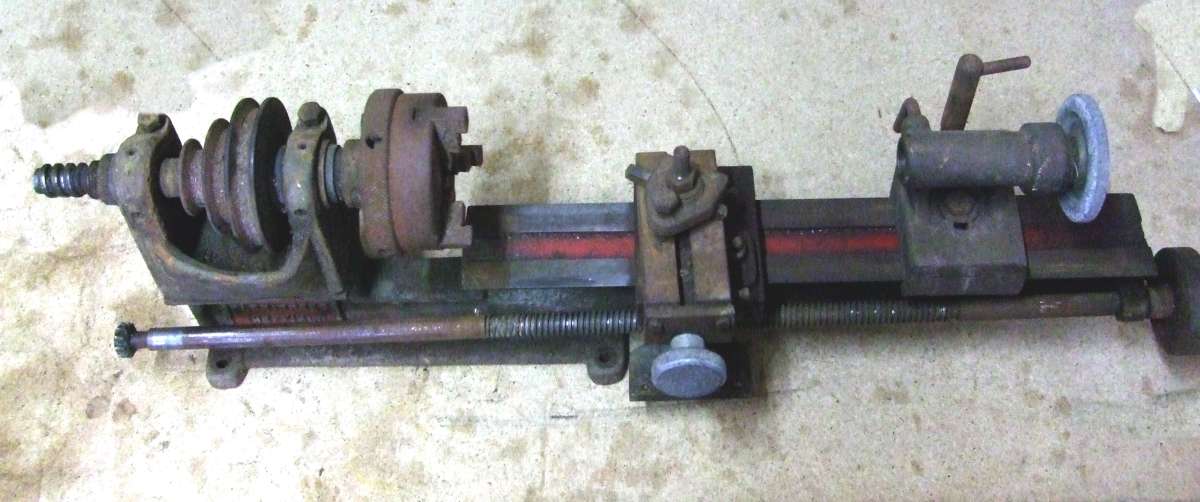
      Hi. Can anyone here identify my newly bought Flexispeed lathe? Thanks.New Flexispeed lathe (3) modified

      #819671
      richard3267
      Participant
        @richardrogalewski21509

        Further. I’m wanting to take off the old original parts that effected the turning of the leadscrew and keep them in a box. Then I want to engineer a new arrangement involving a gear train made of regular spur gears. It would be useful if I knew the TPI of the leadscrew. There might be plans somewhere of such a modification.

        #819672
        Michael Gilligan
        Participant
          @michaelgilligan61133
          On richard3267 Said:

          […] It would be useful if I knew the TPI of the leadscrew. […]

          Not trying to be funny, Richard, but that’s a very simple thing for you to measure.

          MichaelG.

          #819676
          Martin of Wick
          Participant
            @martinofwick

            Why not just measure an inch and count the crests contained. You will probably find it is either 12 tpi or 8 tpi depending on vintage. The later lathes have coarser pitch on leadscrew. See Lathes.co for further information.

            #819677
            Martin of Wick
            Participant
              @martinofwick

              And another thing…. Is it really worth farting about with the expense and aggravation of reinventing a gear driven leadscrew when you could implement an electronic leadscrew for probably less in time cost and effort.

              #819680
              richard3267
              Participant
                @richardrogalewski21509
                On Martin of Wick Said:

                And another thing…. Is it really worth farting about with the expense and aggravation of reinventing a gear driven leadscrew when you could implement an electronic leadscrew for probably less in time cost and effort.

                Oh, maybe that’s the more reasonable thing to do. I’m a beginner and that has not occured to me. Well, actually Copilot said someting about an indepedently driven leadscrew:

                2. Stepper Motor with Controller
                Concept: Drive the leadscrew using a stepper motor controlled by a microcontroller (e.g. Arduino, Mach3).
                Pros:

                Programmable feed rates and threading pitches.
                Can sync with spindle via encoder.
                Cons:

                Requires electronics and tuning.
                Needs shielding from swarf and vibration.

                I suppose there are designs out there. I ought to search. It’s 8 TPI on the leadscrew.

                #819684
                Bazyle
                Participant
                  @bazyle

                  Are you aware of the Lathes.co.uk site that gives lots of details about Flexispeed lathes?

                  You have a lot of work to do cleaning it up first while reading books on basic metalworking lathes. Then do some plain turning after working out a motor arrangement. Since it is a small lathe most threading can be done with dies and the parts you have removed I suspect are the worm arrangement for fine feed and will serve that function well.
                  When you are finally ready for threading look into 3D printed gear sets as buying your own used 3D printer will be cheaper than an Electronic Lead Screw and either item would be more than twice the value of the lathe.

                  #819687
                  richard3267
                  Participant
                    @richardrogalewski21509

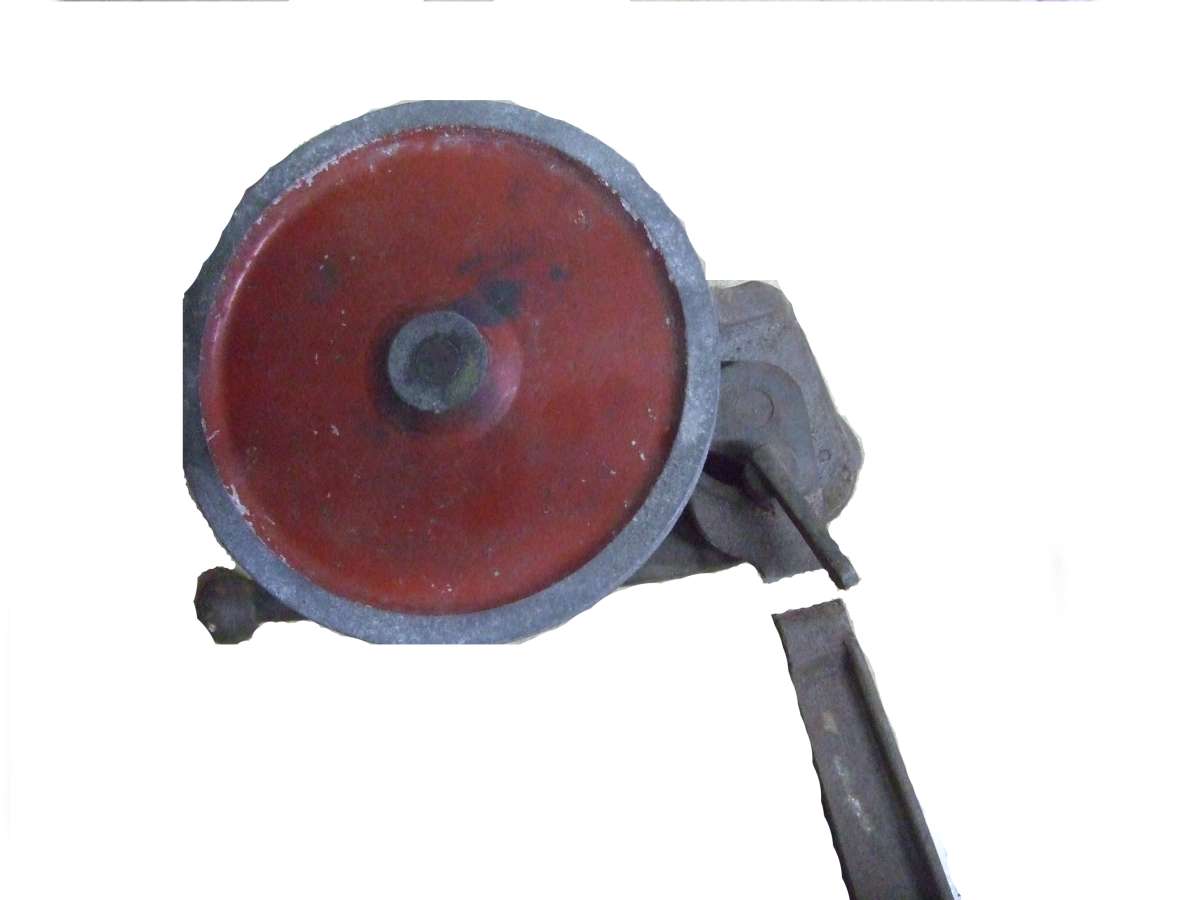
                    New Flexispeed lathe (4) modifiedOK, i think I have a Flexispeed “Major”. Counter shaft is broken.

                    #819688
                    Martin of Wick
                    Participant
                      @martinofwick

                      Wouldn’t mind betting that ELS, purchased s/h gears+DIY banjo, new 3D printer and DIY gears/banjo probably come out at broadly similar costs, probably around the £200 ballpark. If you have a 3D printer already or can borrow/buy second hand it will be only a modest cost to print your own gears. They will be adequate for all but the coarsest threads.

                      But as Bazyle comments, all will cost more than than the current lathe value (noting that the headstock leadscrew support is broken off or missing).

                      You could have a look here for starters https://electronicleadscrew.eu/    some people on this forum have reported positive results.

                      #819690
                      richard3267
                      Participant
                        @richardrogalewski21509

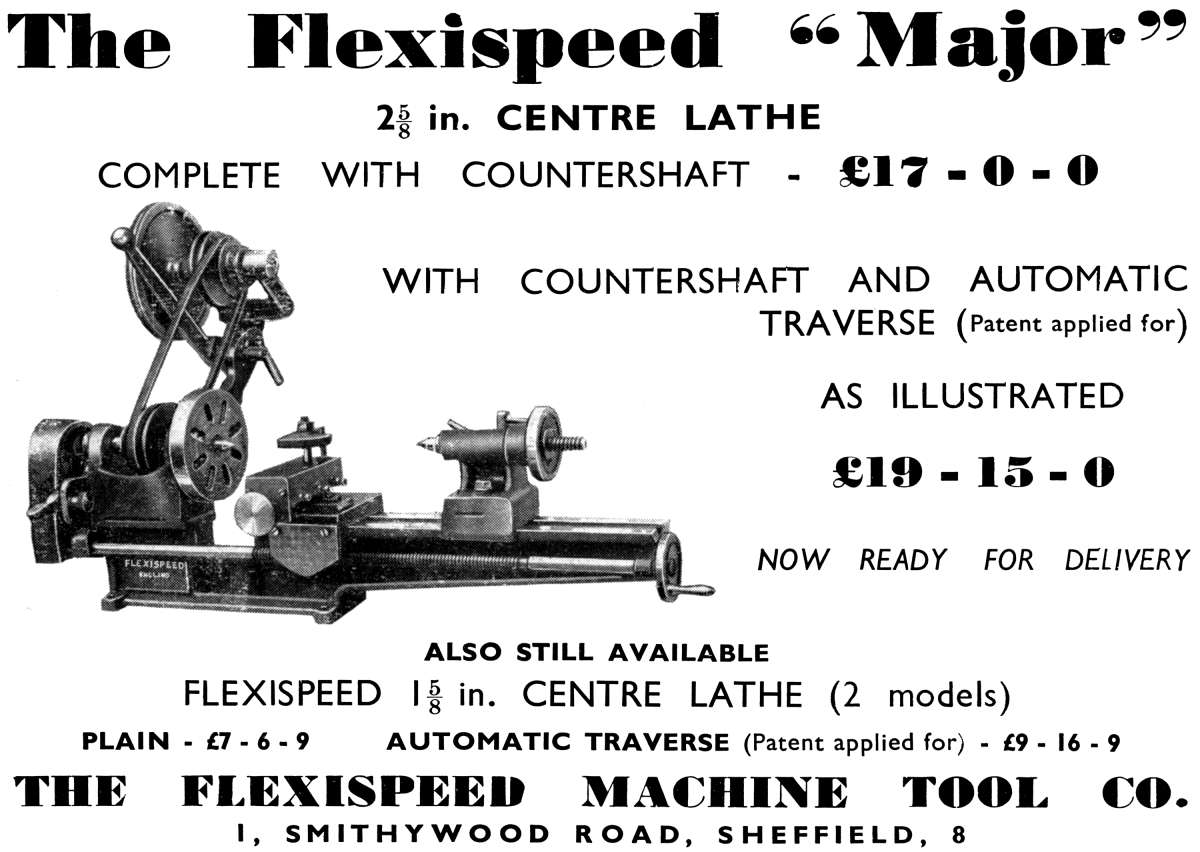
                        I think I have this model.Flexispeed Major Advert

                        #819693
                        duncan webster 1
                        Participant
                          @duncanwebster1

                          I have Clough 42 ELS, but I echo Martin of Wick’s sentiment, is putting that much money into an old lathe worth it?

                          #819699
                          richard3267
                          Participant
                            @richardrogalewski21509

                            I also ask myself, will I ever need to cut a thread. How common is that need.On the other hand is automatic operation of the leadscrew ever used to simply make turning a bit less of an onerous task.

                            #819708
                            Bazyle
                            Participant
                              @bazyle

                              Yes you have a Major with it’s characteristic long foot. The automatic feed is also known as ‘self act’ or just ‘feed’ and because it is continuous it gives a better finish than manual operation so is worth having – hence the provision they made. However it is vital that you don’t lose concentration and let the carriage hit the end or the tool crash into the chuck.

                              Not despite but because I was professionally an electronics engineer I don’t go a bundle on ELS. Although I would find the electronics fun I know it will break down in less than ten years on average. FYI complex electronics like TVs etc is 0.5% dead out of the box which is actually a 4 fold improvement on the situation 20 years ago.

                              #819784
                              duncan webster 1
                              Participant
                                @duncanwebster1

                                Making a saddle traverse is a lot easier than a proper screw cutting ELS as you dont need to synchronise the spindle to the leadscrew. I’d still use a stepper motor, but others have used dc motors, even windscreen wiper motors. You can get a ready made control thing from Ebay for a stepper with a built in speed control pot, ag least you used to. I’d use an Arduino, but then I like messing with Arduinos

                                Another advantage is that with a permanently engaged leadscrew like you have it saves a lot of twiddling when doing a long traverse back to start point

                                #819787
                                Michael Gilligan
                                Participant
                                  @michaelgilligan61133

                                  I agree with Duncan

                                  A simple stepper motor adaptation would be the ‘best value’ … bringing back the functionality of the original patent mechanism, but much easier to build !

                                  MichaelG.

                                  #819803
                                  James A
                                  Participant
                                    @jamesalford67616

                                    I have a Flexispeed with which i am very pleased. Leaving aside adding a drive of some sort to the leadscrew, there are three simple things that will a huge difference to the finish that you can get with the machine.

                                    I found that mine was improved considerably by very careful fettling and adjustment of the gibs, then by fitting little levers to the middle gib screws so that you can lock them quickly when not in use and, finally, using sharp tools.

                                    Being of quite light construction, it does not seem to appreciate any avoidable slack and lacks the drive to overcome blunt tools.

                                    James

                                    #819862
                                    Michael Gilligan
                                    Participant
                                      @michaelgilligan61133

                                      Although I have never owned a Flexispeed … that drive for the feed has always intrigued me.

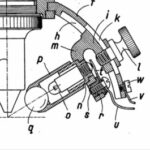
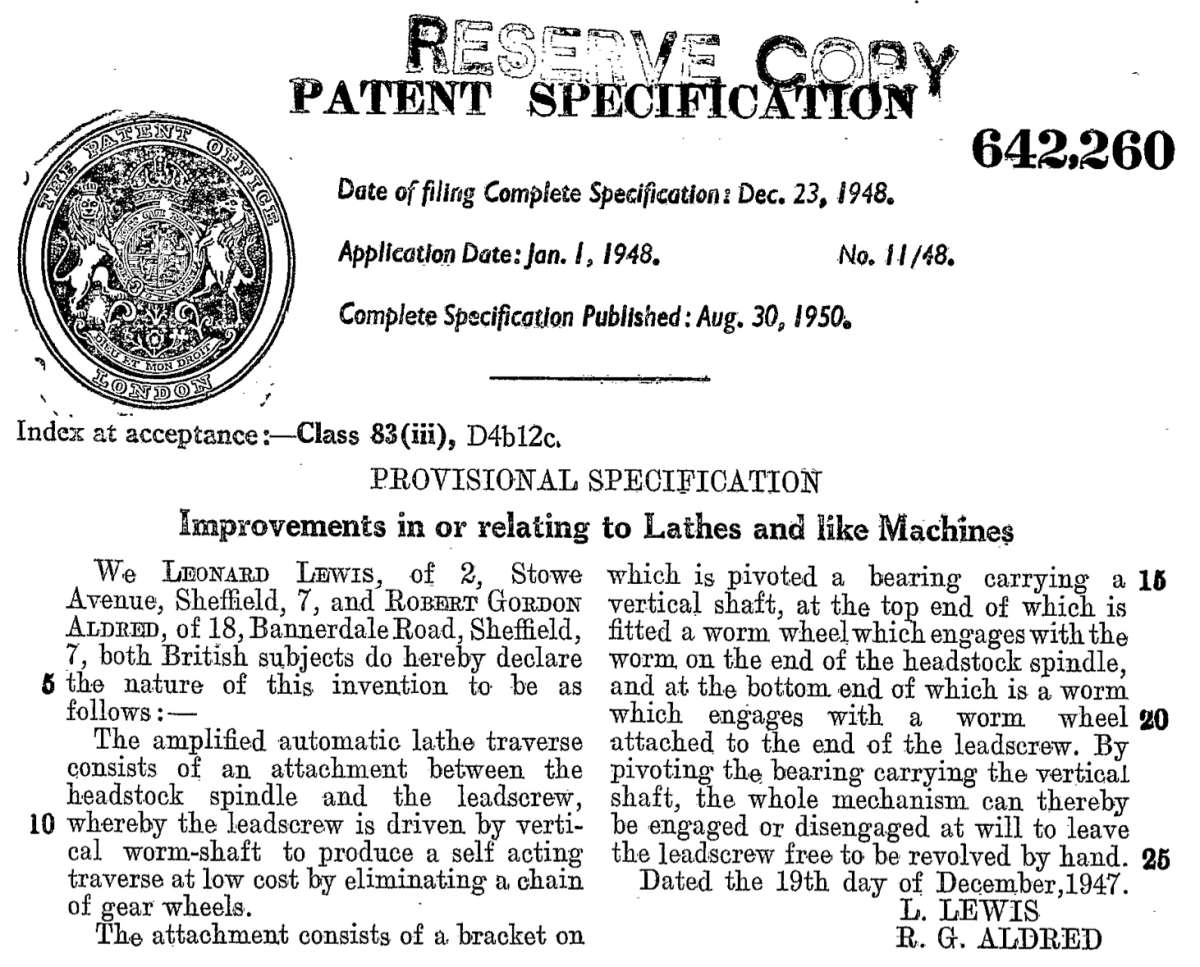
                                      Thanks to lathes.co.uk and to Espacenet … the patent is readily found.

                                      MichaelG.

                                      .

                                      IMG_1140

                                      #819869
                                      richard3267
                                      Participant
                                        @richardrogalewski21509

                                        My “improvement” is actually, to employ gear wheels connecting the spindle with the leadscrew. Or, to drive the leadscrew quite independently of the spindle. Which I suppose might make screw thread cutting problematical for long cuts.

                                        #819873
                                        Michael Gilligan
                                        Participant
                                          @michaelgilligan61133

                                          Yes, I realise that … I was just referencing the patent for general interest.

                                          MichaelG.

                                          #819881
                                          Bazyle
                                          Participant
                                            @bazyle

                                            The key part of the patent is line 11/12 “traverse at low cost” because at the time the two worms and spur gears must have been cheaper than the large gears needed for the same level of reduction.

                                            #819884
                                            bernard towers
                                            Participant
                                              @bernardtowers37738

                                              James A you are absolutely right about sharp tools (very sharp) as diameters go down. I use machines from 13 inch swing downwards and as the size goes down the necessity for sharp honed tools goes up. Been machining 3 step pins today with small dia down to 0.6mm, thats when you know whether your tools are sharp or not. Sad to say I get more fun from that than 25mm dia stuff.

                                              #819899
                                              Howard Lewis
                                              Participant
                                                @howardlewis46836

                                                As Bernard says, tools need to be kept sharp and on centre height.

                                                As a small lathe with simple headstock bearings top speed will be limited to 7-800 rpm at most, and cuts and feeds will need to be light.

                                                But properly set up and sensibly used, good work can be produced.

                                                For most purposes, taps and dies will produce most of the threads that you require.

                                                Once operable, you might find it worthwhile to make yourself a tailstock sliding Die holder (Buy the Die holders and make the body and arbor)

                                                A tailstock sliding tap holder can be just a drill chuck foxed to a body that slides on the same arbor.

                                                Both will be useful for producing small or fine threads , and will reduce the risk of broken taps (ALWAYS lubricate with Trefolex, or ROCOL RTD)

                                                If in doubt use the reaction bar as a tap wrench, rather than under power. The arbor will maintain alignment (Taps don’t bend!)

                                                A fine or small thread will strip rather than drag a tailstock along the lathe bed. If the holder can slide along the arbor, there is almost no load imposed on the thread as it is being cut, so little risk of stripping.

                                                Howard

                                                #819946
                                                SillyOldDuffer
                                                Moderator
                                                  @sillyoldduffer

                                                  Back to Richard’s problem, which is he doesn’t have a functioning lathe yet!

                                                  I’d start with a thorough inspection.  Good to be sure before wasting time and money that there isn’t a sinister reason it’s in that state!  Are the bearings worn or seized?  Does the bed dip near the chuck due to wear?   Are the lead-screw and half-nut in good order?  What’s missing or broken?

                                                  Armed with a full list, try to cost it, time and money.  Severe wear and too many damaged/missing parts is probably a showstopper.  Spares are almost impossible to find, so have to be made.   The broken countershaft is easily fixed by welding, or maybe brazing.  But only if the necessary tools and skills are available!  Likewise, change gears can be 3D-printed, but CAD-skills and a 3D-printer will be needed.  Do you have a workshop or friends?   Watch out for the distinct possibility that the cost of repairing the machine exceeds the cost of a second-hand lathe in good nick or buying a new one.

                                                  Sinister reason: the lathe wore out in the past, was cannibalised for spares, and then left to rust in hope it might be useful.

                                                  Before starting, decide what you want to achieve.  Some possibilities:

                                                  1. You enjoy repairing old gear and see this as a learning opportunity.    That’s OK
                                                  2. You want to become a skilled machinist.  A bad way to start because the lathe has to be fixed first, and it could be “Beyond Economic Repair” or the faults get in the way!  (Much easier to learn on machines in good condition than wonky ones.)
                                                  3. You want to fulfil a project by cutting metal.   Doubly not OK, because nothing happens until the lathe is fixed and you’ve learned how to drive it.   Also, if projects are the goal, make sure the lathe does what’s needed.   For example, threading might be important.  Most model engineers own screw-cutting lathes even though small threads are mostly made with taps and dies.
                                                  4. Trying to save money by fixing up an old banger, DIY.  Not OK if the cost exceeds buying a good one, or restoring it takes too long!

                                                  Picking on threading if it is needed, then an ELS is probably the best answer.  And, in simpler form it will do plain turning too. The Flexispeed had a non-standard substitute for change-gears, and replacing it’s patent mechanism feels tricky unless someone else has plans.   They may not exist.

                                                  Driving the lead-screw with a stepper motor makes good sense, it’s simpler.  I’m not worried about Bazyle’s dislike of ELS on reliability grounds.   His concern doesn’t apply unless you have a strong need for a system that lasts decades, in which case a lathe in this condition doesn’t auger well for reliability!   An ELS may be the quickest and easiest answer, and not difficult to replace if it breaks later.  Ironically, Bazyle worries about the perceived unreliability of electronics when this lathe’s mechanical drive is a dud!  Anyway, Bazyle and I are presenting considerations not black and white alternatives.  It’s down to the owner to decide what’s important to him: reliability or simplicity?

                                                  What sort of work is the lathe for?   Knowing that steers Richard’s approach.  That and the art of the possible!

                                                  Dave

                                                  #819951
                                                  Michael Gilligan
                                                  Participant
                                                    @michaelgilligan61133

                                                    A good analysis, Dave … but just for clarity, I would not expect Richard to find any half-nuts on his lathe, as the [absent] clever worm drive obviates the need for any.

                                                    MichaelG.

                                                    #819957
                                                    Michael Gilligan
                                                    Participant
                                                      @michaelgilligan61133

                                                      I hope that everyone exercising their inventive minds over Richard’s options for his currently  incomplete lathe can take a few minutes to see what Flexispeed offered … a masterpiece in its time, but surely a dinosaur.

                                                      https://www.lathes.co.uk/flexy/page4.html

                                                      MichaelG.


                                                    Viewing 25 posts - 1 through 25 (of 37 total)
                                                    • Please log in to reply to this topic. Registering is free and easy using the links on the menu at the top of this page.

                                                    Latest Replies

                                                    Home Forums Beginners questions Topics

                                                    Viewing 25 topics - 1 through 25 (of 25 total)
                                                    Viewing 25 topics - 1 through 25 (of 25 total)

                                                    View full reply list.