A Simpler Rotation Problem?

A Simpler Rotation Problem?

Home Forums CAD – Technical drawing & design A Simpler Rotation Problem?

Viewing 25 posts - 1 through 25 (of 37 total)
  • Author
    Posts
  • #827587
    Nigel Graham 2
    Participant
      @nigelgraham2

      Sorry, I could not fathom out my previous animation problem: could not follow what I was meant to do, or find the right tools.

      So this might be a simpler exercise because it’s only two components linked by a mortice and tenon.

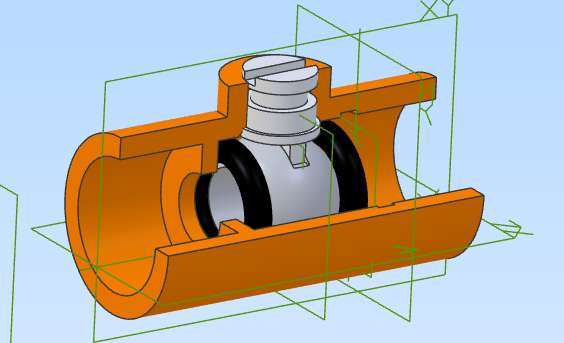
      I dissected an old plumbing valve to find how they “work” and how feasible a larger version, but externally of globe-valve appearance, would be to make. The attached model is copied from that.


      The radial groove in the right-hand end takes a spring-clip that retains the O-rings and ball, and with those removed the spindle drops into the bore and can be winkled out. The groove in the spindle takes another O-ring. The manufacturers must have a special back-facing tool for the chamfer that engages the retaining shoulder on the lower end of the spindle.


      Drawing the parts was not too hard though I don’t suppose in the most efficient ways.

      Assembling was harder with many attempts. Eventually I “fitted” the right-hand O-ring to the auxiliary plane plane by eye as it would not constrain to the correct side. A torus does not have an amenable face!


      Right, the problem….

      The spindle will drag round, but the ball will not turn. The tenon just goes through the ball.

      That does not matter here for any practical purpose but as a drawing exercise, how could I connect them so they do?

      I looked back at your various previous answers but had struggled to apply them there, and could not find anything that might apply for this ball-valve. The ball stays still, the spindle kept wanting to pull out of its housing but seems to rotate in place now – I don’t know how I ensured that.

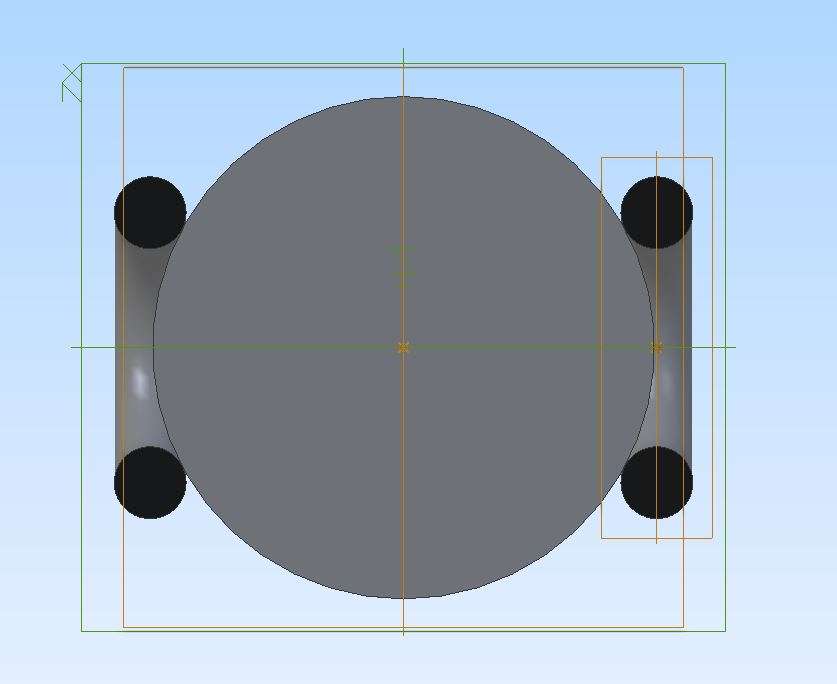
      Screenshot 2025-12-03 185205


      Incidentally, the specimen is a standard, 15mm pipe, plumbing fitting. Calculating showed the area through the ball (8mm hole) is less than a third of the pipe area.  So these things represent a considerable obstruction even when fully open.

      Why my investigation? The regulator on my steam-wagon is meant to be an ordinary screw-down valve, of all things, and very prominent. I think the engine’s two cylinders of 1.5″ bore X 2″ stroke need a 3/8″ supply pipe, so I want a 3/8″ full-flow ball-valve, quick-acting but externally reasonably reflecting the original. Commercial versions are fine in their normal use but would look ‘orrible ‘ere.


      #827588
      JasonB
      Moderator
        @jasonb

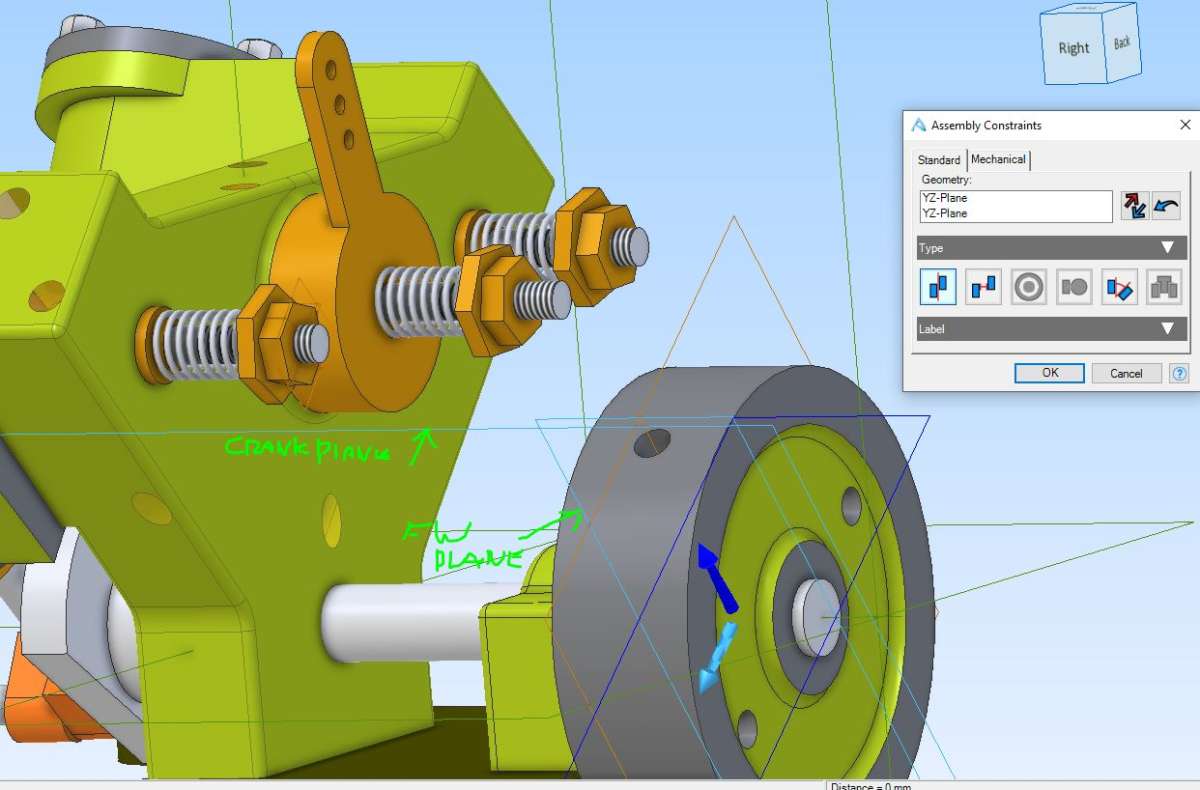
        Right click the two item in turn and select “show reference geometry”

        Constrain one vertical plane of each item

        Click again and remove the Show ref geemetry


        The two will now rotate as one.

        I do this so that things like flywheels and eccentrics all rotate together when the crankshaft is rotated

        planes

        #827589
        JasonB
        Moderator
          @jasonb

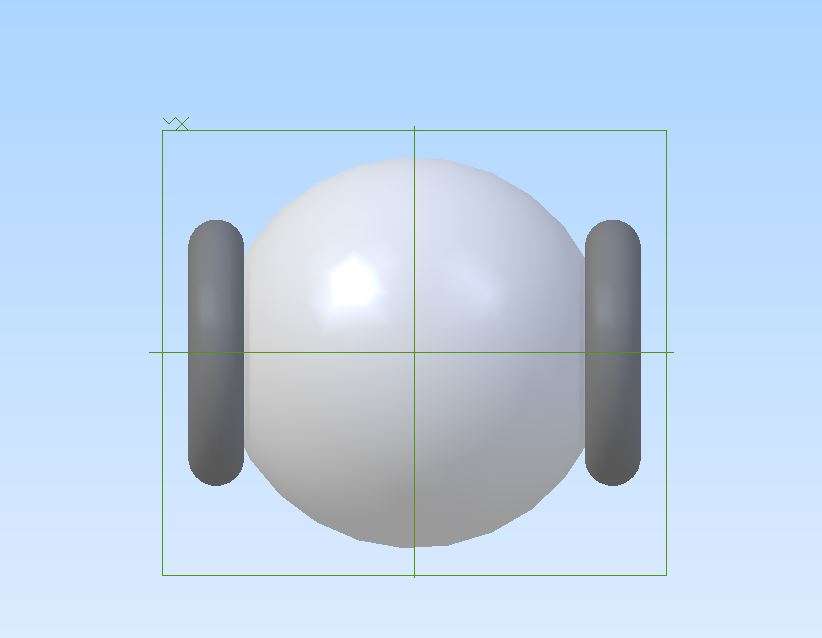
          Also no need to eyeball the O ring position. Similar show ref geometry can be used to make the ring and ball concentric to the bore of the body. Then a Tangent constraint to make the O ring touch the ball valve. Mirror takes care of the O ring on the other side of the valve. I have not shown any compression of the O ring.

          ball 1

          ball 2

          #827590
          David Jupp
          Participant
            @davidjupp51506

            Nigel,

            As per your previous cases, without seeing your files it is next to impossible to guess what you have tried.

            It sounds like you haven’t constrained the ball to the spindle.

            Your assembly constraints should attempt to replicate real life mechanical restrictions of the actual valve.

            Using the reference geometry of the parts will help.

            • Fix the housing in the assembly workspace so it cannot move.  Centred on origin.
            • Ball, align one axis concentric with the cylindrical opening in top of the housing AND one plane co-incident with plane half way up pipe.
            • Spindle – make it concentric with the vertical bore, and make ‘shoulder’ coincident with the corresponding one in housing.
            • Make one plane of the spindle coincident with one plane of the ball, so they rotate together.
            • O-rings, one axis concentric with pipe.  Make the toroid tangent with housing shoulder or clip, or alternatively offset one plane from the shoulder/clip.  In real life the shape will be distorted from a toroid.

            If you send the files I can produce screenshots to detail the constraints.

            #827592
            noel shelley
            Participant
              @noelshelley55608

              In my some what limited experience you seem to have hit on one of the most glaringly obvious problems of model engineering ! That of getting the steam you have from the boiler to the cylinder to do useful work. I am currently faced with a similar exercise with my 9F where a 3mm hole feeds a 7mm valve that feeds a small feed pipe that feeds 2 X 3/8″ pipes and then 2 X 1.5″ cylinders. It can’t work very well. This begs the question, WHO thought this was a good idea ? Is it not glaringly obvious ?

              Or have I misunderstood the question ?  Noel.

              #827604
              Nigel Graham 2
              Participant
                @nigelgraham2

                Thankyou.

                Obviously it’s best to treat a 3D model as entirely static, not try to make it move!


                Jason –

                It was one of the O-rings I had to adjust by eye. The ball behaved itself.

                The left-hand ring is against a bulkhead so was easy.

                It never occurred to me to try to constrain the other ring to the ball. I would not have known that possible, nor how anyway. The ball is central to the spindle, so I set the RH ring from measuring the real parts stacked onto a bolt.

                Then placed the digital ball after the two O-rings, without reference to them.


                Well, I tried modifying it as you describe but it is always “over-constrained” and starts to pull apart.

                I close it without saving, re-open it, try again… worse every time. I’ve no idea if I am following your instructions correctly or if I’ve put something in the drawing that stops them working.

                I thought two objects joined on a single axis would be easy to rotate, unlike all that brake control complexity, but they aren’t.


                David –

                I realised the O-rings would squeeze slightly. They have to. The original ones from the dismantled valve have stiffened in distorted form. If I make a similar (but larger) valve I would retain the mechanism by screwed-in sleeves, making servicing easier.

                I tried but cannot make it work. It’s only five parts but hard to assemble, and I must be installing hidden errors that cause later problems.

                According to the reference geometries the ball and spindle look aligned, but trying to constrain them to each other immediately makes that and at least three existing constraints wrong.


                Incidentally I see that this assembly, and that for my brake valve, do not appear on those file thumbnails. Their names are shown and they open but the panel simply shows a strange grey area. Other assemblies all show. It’s not important but is a bit odd.


                Noel-

                That is indeed related but really I was asking about driving a CAD programme.

                If I measure and draw a real ball-valve, I can calculate the dimensions for a new drawing for my version. I carefully quarter-sectioned an old one as in that Alibre model, and took it all apart to measure all the innards.

                Even so, that steam circuit design is poor and as you say, glaringly so. The exhaust also needs allow free passage. I’d have thought the entire diameter from full regulator port to the branch ought be 3/8″ diameter, at least, maybe 1/2″ to the branch. I could not find appropriate information on this.

                Which also means my proposed 3/8″ pipe and valve might be too small for my engine!


                #827611
                JasonB
                Moderator
                  @jasonb

                  Nigel. Without seeing the files it is hard to say but most likely when positioning the ball you have used a constraint that is stopping it from being able to rotate so when you constrain the spindle to the ball it won’t turn due to a previous constraint.

                  I would suggest opening a new assembly and try to follow David’s order of constraining things.

                  It did also strike me that another option to get the two to rotate as one would be to constrain one side of the slot in the ball to one side of the “blade” at the bottom of the spindle assuming there is no clearance that may be easier for you than using ref geometry.

                  Worth keeping at it as it is a fundamental part of assemblies being able to make parts move as they should. You have modeled the parts well so tehre is some progress being made.

                  #827618
                  David Jupp
                  Participant
                    @davidjupp51506

                    Nigel,

                    If things go wrong, don’t just throw that away – instead create a Package file from the open assembly and send it to me or Jason.  That way we’ll be able to see what conflicts you have.

                    The most common issues come from placing constraints that either

                    • duplicate existing constraint or anchor
                    • conflict with existing constraints (not mechanically compatible)
                    • are more restrictive than needed for the task at hand

                    As soon as constraints show a failure, you know there is an issue with what you have just done – so you need to back track.

                    #827620
                    JasonB
                    Moderator
                      @jasonb

                      To cover another problem of the spindle moving up and down as you try to rotate it that is because you have not constrained it vertically.

                      Best think how the real valve works. That small lip around the bottom of the spindle runs against the recess at the bottom of the vertical hole. So constrain those two surfaces together just as they would be on the real thing. Then the spindle can’t move up or down as you try to rotate it with the mouse.

                      There are a couple of other ways to constrain it vertically but surface to surface would be the best option rather than having to work out numbers to offset say the top of the spindle above the top of the hole.


                      Without getting the thread off topic you can buy “full bore” versions of these domestic plumbing valves which have a hole in the ball that is the same size as the bore of the pipe so less restrictive than the type shown here. Though they are a bit larger overall.

                      #828033
                      Nigel Graham 2
                      Participant
                        @nigelgraham2

                        Thankyou.

                        I’ve not tried re-visiting the problem. I wondered if I’d used so many constraints half of it was locked solid. Half of only two parts, too, not something complicated.

                        I noted that when the “over constrained” flag appears it also indicates existing ones as faulty, but not what is wrong. If I delete the new, incorrect one, the others return to “normal”. Deleting those does not help, even makes things worse.

                        I tried to constrain the side of the spindle’s tenon against the side of the groove in the ball, but it did not agree. Either it rejected it as “over-constrained” or just ignored it.


                        I realise the advantage of being able to move 3D-modelled mechanisms, but know it works only if they are assembled fully correctly. Mine hold faults I cannot avoid making, nor identify and find later.


                        Here, I wanted to investigate these valves to design one as right as ancient photographs allow. The wagon’s original builders seemed not over-fussy about standard parts across their range, but evidence suggests a handsome, spherically-bodied valve with handwheel, as regulator.

                        I would likely need make totally new drawings from scaling the dimensions of the specimen; but originally thought I might be able “simply” to edit the sizes in copies of its drawings.


                        If nothing else this was an Alibre Atom exercise nearly within my reach.

                        I now realise that testing an untried miniature with no guarantee of success could use a commercial valve, swapped to something prototypical only if it works.

                        No point designing pretty fittings before the engine itself; but at least I could model this one; unlike the engine, let alone entire vehicle.

                        #828040
                        David Jupp
                        Participant
                          @davidjupp51506

                          Nigel, an over-constrained situation must involve at least 2 constraints, sometimes more.  All those involved will indicate a problem.  Atom3D isn’t psychic, so doesn’t know what your design intent was – it can only indicate a conflict.  It’s your job to resolve the conflict.

                          My usual approach is to delete the most recently added, and replace with a less restrictive constraint.

                          If there was any clearance allowed between spindle tenon and ball slot, a co-incident constraint will fail, but an offset with the ‘free’ option selected will force the faces to be parallel (as long as rest of design is compatible with that).

                          #828070
                          Nigel Graham 2
                          Participant
                            @nigelgraham2

                            Thankyou.

                            As I recall I created the slot by an extruded cut (in the real valve it seems to have been made with a Woodruff cutter but I drew it with a flat-floor), the tenon as an extruded cuboid, but both of the same 2.00mm width.

                            I also made use of the plane lines on the Part starting page, and extruding through planes to ensure the features all being central.

                            #828072
                            duncan webster 1
                            Participant
                              @duncanwebster1

                              I’ve said this before, you don’t need 3D CAD,  it makes life a lot easier if you know how to use it, but everything can be sorted in 2D.  The Merlin and flying Scotsmen were done with pencil aided design, and they seemed to work OK.

                              #828108
                              David Jupp
                              Participant
                                @davidjupp51506

                                Nigel – as I keep offering, if you send the models to me (with the faults) I’ll find why the motion fails and explain.


                                #828115
                                Nigel Graham 2
                                Participant
                                  @nigelgraham2

                                  Duncan –

                                  Your are right of course, but being able to represent a complete assembly in three dimensions can be very useful, and the ability to synthesise its action is a bonus. Jason’s examples show that.

                                  In the days of manual draughting it was common to create purely static, isometric projections even of complicated machines, to illustrate their assembly and workings; but this is very laborious and difficult.

                                  I started with TurboCAD ‘Deluxe’, the budget but still very powerful variant of each edition, when it was the only CAD package of any use to model-engineers, including its availability at sensible, one-off prices. It is relatively straightforwards for purely orthographic constructions, but extremely difficult in 3D. It has no animation beyond simple “Rotate”, at least not in Deluxe. It does not offer creating an assembly from separate part files, the system that is one of Alibre’s major strengths. Nevertheless it still has one major advantage for me, over its newer rival.


                                  So after failing with Fusion 360 then SolidEdge ‘Community Edition’, the order in which they became available, I tried then bought Alibre Atom.

                                  This is far easier than TurboCAD for producing 3D images, especially of assembled mechanisms. As I had hoped!

                                  Easier, yes, but I still cannot use Alibre Atom for more than very simple, static Assemblies of a very few, simple Parts. So need TurboCAD in 2D mode for anything too difficult in 3D, by either system. I have tried!


                                  Consequently I use CAD only where really useful or necessary. Otherwise, rough pencil sketches that last only as long as it takes to make the thing, or merely measuring and making to fit.

                                  #828119
                                  JasonB
                                  Moderator
                                    @jasonb

                                    I suppose you don’t need electric motors on your machines when a treadle lathe and hand brace will do but some people move with the times😉

                                    This is what it should go together like using a fairly small number of constraints. I also section the main body in the assembly so I can see what I am doing which is only a “View” not an actual lump cut out the part. I also section the other parts at the end.

                                    Note. If making use of Reference Geometry as I show then the parts need to have been modelled correctly as if you eyeballed the position of features on the individual parts then they may not line up with the 3 axis and planes used as the Ref geometry

                                    #828121
                                    SteveP
                                    Participant
                                      @stevepye68246

                                      It’s true you never stop learning. Thank you Jason.

                                      Steve Pq

                                      #828122
                                      JasonB
                                      Moderator
                                        @jasonb

                                        Anyone spot the mistake?

                                        #828124
                                        blowlamp
                                        Participant
                                          @blowlamp
                                          On JasonB Said:

                                          Anyone spot the mistake?

                                          Is it that the screwdriver slot is 90 degrees out, so it doesn’t indicate the on/off position? 😉


                                          Martin.

                                          #828128
                                          Nigel Graham 2
                                          Participant
                                            @nigelgraham2

                                            Sorry Jason but I don’t seen any connection with how to power a lathe…. Not even the two lathes I treated to modern,3ph, VFD drives.


                                            I tried to use Reference Geometry as I believe you explained or suggested a while ago, but still didn’t manage to get it right.

                                            It had occurred to me to use this model to try using rotation, not for any special need in the project itself. If I was trying to plot some complicated cam-driven mechanism or Walschaert’s Valve-Gear, then being able to animate it would be helpful, but it’s not necessary for a simple pipeline valve.

                                            So it was purely an exercise in that, after my previous attempt on a more difficult level failed, but this model is really for designing a larger, custom version of the valve.

                                            If I can’t attain what you find easy, so be it. I’ll have simply to use CAD at only a basic level, but at least I tried.

                                            #828129
                                            David Jupp
                                            Participant
                                              @davidjupp51506

                                              Nigel,

                                              Jason did mention that if any parts were modelled slightly ‘off-centre’ that can mess up the constraints and cause them to conflict.  I’ve seen many cases over the years of sketches slightly off axis, apparent rectangles that were not quite rectangular, and dimensions supposedly the same which differ in the 5th or 6th decimal.

                                              I can’t imaging why you won’t let me study your files to check for the cause – surely you can only benefit from that…  I promise to send what I find to you, and would only ever share the conclusions with others if you agreed to that (after seeing what I found).

                                              #828141
                                              Michael Gilligan
                                              Participant
                                                @michaelgilligan61133
                                                On Nigel Graham 2 Said:

                                                Sorry Jason but I don’t seen any connection with how to power a lathe….

                                                I think Jason’s comment was intended for Duncan

                                                MichaelG.

                                                #828142
                                                duncan webster 1
                                                Participant
                                                  @duncanwebster1

                                                  I did say that 3D CAD makes things a lot easier, but if you are struggling as much as Nigel seems to be it could be best to cut your losses and do it the old way.

                                                  #828148
                                                  JasonB
                                                  Moderator
                                                    @jasonb
                                                    On blowlamp Said:
                                                    On JasonB Said:

                                                    Anyone spot the mistake?

                                                    Is it that the screwdriver slot is 90 degrees out, so it doesn’t indicate the on/off position? 😉


                                                    Martin.

                                                    Guilty as charged, will see if I can scratch it off the screen and redraw.

                                                    #828153
                                                    Nigel Graham 2
                                                    Participant
                                                      @nigelgraham2

                                                      Thankyou.

                                                      Jason – 

                                                      I have just watched your video but I am afraid I gained little from it beyond seeing some things new to me, such as that section view.

                                                      I had to enlarge the screen to readable size, but that also lost definition, so I could not really see what you used and how. Also your version of Alibre looks different from Atom, with extra tools.


                                                      David –

                                                      Though very grateful for the offer, a combination of not wanting to give others the extra trouble of analysing my drawings, and doubting I could learn from it anyway.

                                                      This animating of the models appears beyond me. I asked in the first place hoping but not sure if I could grasp it, now even less sure.


                                                      I’m surprised that those dimensions difference can happen. I thought CAD maths in the background puts only noughts after the last decimal place you enter or specify, so 2mm with a limit of two decimal places means the dimension label reads 2.00mm but the calculated size is 2.0000000000… to the electronics’ limit.


                                                    Viewing 25 posts - 1 through 25 (of 37 total)
                                                    • Please log in to reply to this topic. Registering is free and easy using the links on the menu at the top of this page.

                                                    Latest Replies

                                                    Viewing 25 topics - 1 through 25 (of 25 total)
                                                    Viewing 25 topics - 1 through 25 (of 25 total)

                                                    View full reply list.