Replacing my cross slide screw with a ball bearing one

Replacing my cross slide screw with a ball bearing one

Home Forums Introduce Yourself – New members start here! Replacing my cross slide screw with a ball bearing one

Viewing 25 posts - 1 through 25 (of 25 total)
  • Author
    Posts
  • #825828
    georgelane314
    Participant
      @georgelane314

      I thought I’d pick your collective brains on a problem I’ve had since I replaced my bent screw (machine fell over when moving it after purchase!). I have pretty successfully made the replacement work, but the problem is keeping a stop firmly fixed. The original screw was of course machined for the lathe and the new one is a plain thread with a semi-circular profile to suit the ball bearings housed in the nut. I hope this is making sense.

      So far I have made a slot for a C-clip…that didn’t hold. Then I used a standard M12(?) nut drilled out to fit over the thread and put a grub screw in the side to engage with the thread to support the C-clip, but that moved under a heavy cutting load. I’m thinking that perhaps two homemade nuts with semi-circular threads could be locked together. I’ve no idea if I can even grind a tool to form semi-circular peaks inside a nut! Any ideas/anyone know if nuts like these are available commercially? Cheers, George.

      #825837
      bernard towers
      Participant
        @bernardtowers37738

        you could try fitting a slide locking screw which a lot of people have on their Myfords, I have one on my comp slide on a colchester. A friend of mine fitted a ball screw to a student crosslide and he keeps his jibs fairly tight and when the crosslide does move he says thats a good indication that the tooltip[ is not at its best.

        #825839
        Michael Gilligan
        Participant
          @michaelgilligan61133

          If I have understood correctly, you are using standard ball-screw components … in which case I would simply modify whatever ‘nut’ to can conveniently buy, and secure it with Loctite 638 [or similar]

          MichaelG.

          #825847
          cedric 1
          Participant
            @cedric

            <p style=”text-align: left;”>How hard is the ballscrew? If you were able to machine a C clip groove in it, you should be able to machine the end down parallel and put a conventional thread on it and a nut  to retain a suitable collar to take the load. Bit of Loctite to stop it ever moving.</p>

            #825849
            John Haine
            Participant
              @johnhaine32865

              Quite unclear what you are asking – photos would help.  Generally ball screws/nuts are not a good idea on a manual lathe as they will rotate under pressure.  On my S7 CNC cross slide conversion, if the motor is disconnected and I lean on the slide the screw rotates in the nut.

              #825878
              Bazyle
              Participant
                @bazyle

                Can you fit a friction pressure pad to bear on the screw or the slide. Waaaay back the Drummond hand shaper had such a pad on the cross slide so not a new problem, even with conventional screws.

                #825999
                Huub
                Participant
                  @huub

                  If I understand your problem, You need a nut that fits the threaded portion of the ball screw. If it is a standard metric ball screw, than it is a standard metric thread. A 12 mm ball screw has an M10x1 thread and that is a standard metric fine thread (MF10). I even have a tap for that thread.
                  If your ball screw has an imperial pitch, it probably has an imperial (UNF) thread.

                  Ball screws are held in place by a holder (BK10)  fitted with 2 contact angle bearings.  The inner races of these bearing are bolted together so you can (must) tighten the nut very strong so it will not come lose.
                  Your lathe probably has 2 trust bearings that will need a proper (little) preload to hold the spindle in place.


                  #826003
                  georgelane314
                  Participant
                    @georgelane314

                    <p style=”text-align: left;”>Thank you all for your suggestions. I have bought two nuts after Michael’s suggestion and I’ll see if I have room to fit both together to form a solid stop. I am a fan of Aliexpress.com where I originally purchased the ball screw assembly from. It is a 500mm 1204 screw with 12 mm diameter and 4 mm pitch and fits nicely. The quality and price was excellent; I paid about £15 for the screw + nut. I had to make a mounting for the nut. I don’t have any photos at the moment, sorry. I will endeavour to post some when I get the nuts and try to fit them.</p>

                    #826017
                    JasonB
                    Moderator
                      @jasonb

                      As John Haine says ball screws are regarded as not self holding and can move under load. So you either need to make a lock to lock the slide or buy a trapizoidal threaded screw and suitable nut, also available cheaply from similar sources.

                      #826027
                      georgelane314
                      Participant
                        @georgelane314

                        <p style=”text-align: left;”>Thank you Jason and John for the insight into ball screws being unsuitable versus trapezoidal screws. The history bit is that I did order a new crossslide screw and nut from Warco, but it wasn’t delivered from China, so I gave up on that and went with little/ no backlash with the ball screw. The Warco parts were in the £100s and a cheaper alternative with a little work on my part seemed a reasonable option. I am determined to solve the stop/location problem and I’ll see how that goes with two ball nuts locked together. I do have a lock on the crossslide, but obviously can’t use it when milling in that direction and the cutting forces have moved the crosslide back and forth, particularly at the end of a cut. It is this movement (that would occur with any thread profile) if the screw can move forwards and backwards (axially). Thinking about it, I may well have experienced the movement that Jason and John warn about with the ball screw when turning under heavy load. I can go back to the trapezoidal screw if I need to and appreciate the comments from experienced machinists. I suppose these ball screws are normally connected to stepper motors that hold them in position (stop them rotating). From our perspective we would keep a hand on the handwheel, or lock the crossslide where feasible.</p>
                        <p style=”text-align: left;”></p>

                        #826030
                        georgelane314
                        Participant
                          @georgelane314

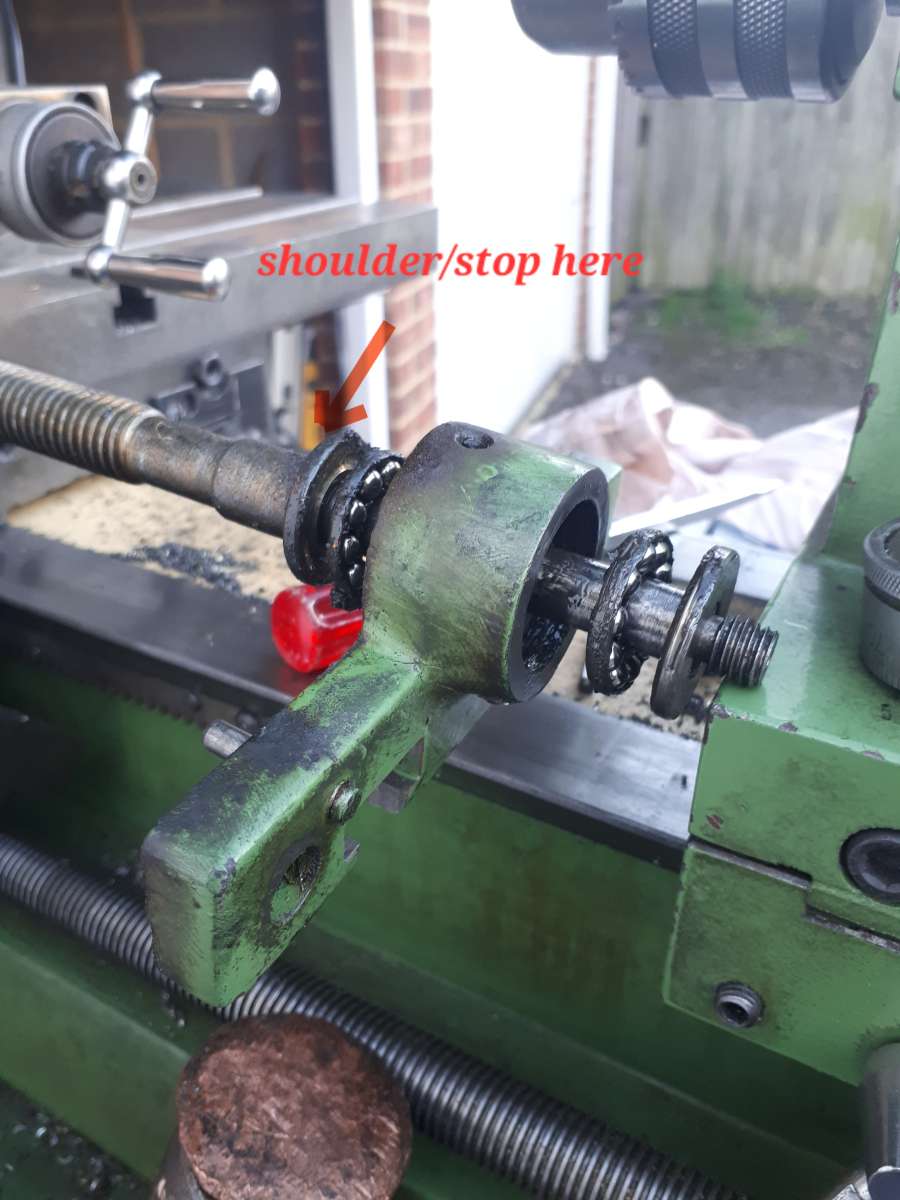
                          Here’s the original 20211102_155021

                          #826032
                          JasonB
                          Moderator
                            @jasonb

                            Seeing your arrowed “stop” looks like you may be dealing with endplay and not the screw rotating/play in the nut/screw.

                            Can you confirm if the issue you have is

                            1. The screw and handwheel slowly rotating under cutting loads

                            2. An in-out movement where the cross slide can be pushed pulled back and forth by either the cutter or just by hand.

                            #826035
                            John Haine
                            Participant
                              @johnhaine32865

                              <p style=”text-align: left;”>And the screw itself doesn’t look much like a ballscrew?</p>

                              #826037
                              georgelane314
                              Participant
                                @georgelane314

                                Yes, it’s a no. 2 for Jason B, and the photo is the original trapezoidal crossslide screw, John ( I did write original)

                                #826038
                                Michael Gilligan
                                Participant
                                  @michaelgilligan61133
                                  On Michael Gilligan Said:

                                  If I have understood correctly, you are using standard ball-screw components … in which case I would simply modify whatever ‘nut’ to can conveniently buy, and secure it with Loctite 638 [or similar]

                                  MichaelG.

                                  ^^^
                                  Thus creating a substitute for the shoulder/stop arrowed in the photo of the original screw.

                                  MichaelG.

                                  #826040
                                  JasonB
                                  Moderator
                                    @jasonb

                                    So that is unlikely to be caused buy your current ballscrew and nut setup. The problem is the screw moving within the casting and no extra nuts or loctite will help


                                    Can you post a similar photo of what your replacement ball screw looks like.

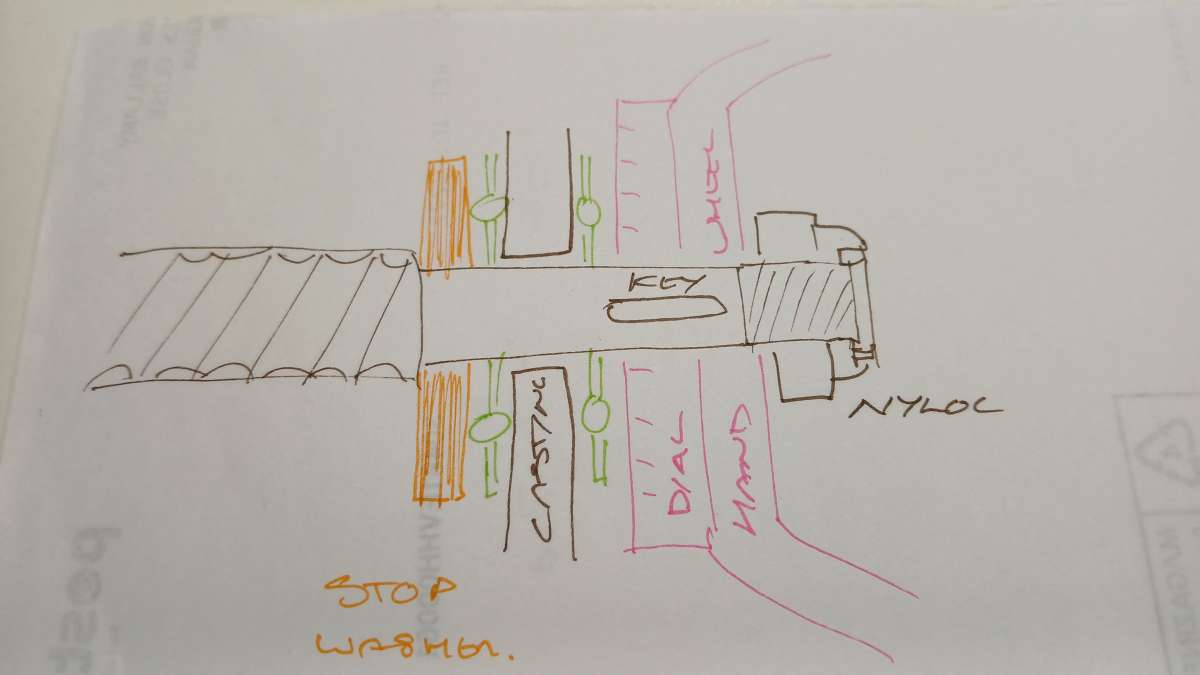
                                    Ideally you would modify the ball screw to create a shoulder at the fixed end which typically involves reducing the diameter. Turn a “washer” which then slips onto the reduced diameter and becomes your “stop” and could be loctited in place.

                                    You then reuse the thrust bearing arrangement of the original with the bearing now running aganst your “washer” and the casting on one side and the other side has the bearing against the casting and handwheel.

                                    You wil also need to add the keyway if that was present on the old one to locate the dial and handwheel plus t  ethread for the nyloc nut that adjusts the bearings preset.

                                    #826044
                                    JasonB
                                    Moderator
                                      @jasonb

                                      Something like this. You may need to bush the diameter back up if the reduced diameter makes it a loose fit in the casting or the dial/handwheel bores are to big.

                                      20251124_100559

                                      #826054
                                      cedric 1
                                      Participant
                                        @cedric
                                        On georgelane314 Said:

                                        Here’s the original 20211102_155021

                                        Cut the end off the original and join it on to the end of the new ballscrew. Usual way of joining is a stepped spigot turned onto the end of the ball screw which fits into a drilled and reamed hole in the original end piece. Cross drill it, insert a tight fitting pin and use Loctite on assembly.

                                        #826059
                                        JasonB
                                        Moderator
                                          @jasonb

                                          More likely the unthreaded bit that got bent when the machine fell over so may not be possible to reuse it.

                                          #826062
                                          georgelane314
                                          Participant
                                            @georgelane314

                                            Many thanks for all your input and effort. I haven’t found a really good photo yet, but I’ll see if there’s an existing one or two. The thoughts on a new /replacement “shoulder” are interesting. I hadn’t thought about cutting the end of and reusing it; certainly a possibility as it bent in the middle. I straightened it and used it for a few years, but the nut  was a bit damaged too and there was lots of backlash. I have remade the end with the handwheel and have that all OK now. It’s really just the “shoulder/stop” being securely fixed.


                                            #826063
                                            Michael Callaghan
                                            Participant
                                              @michaelcallaghan68621

                                              It looks like you need to make a cross slide lock. Easy to do.

                                              #826278
                                              georgelane314
                                              Participant
                                                @georgelane314


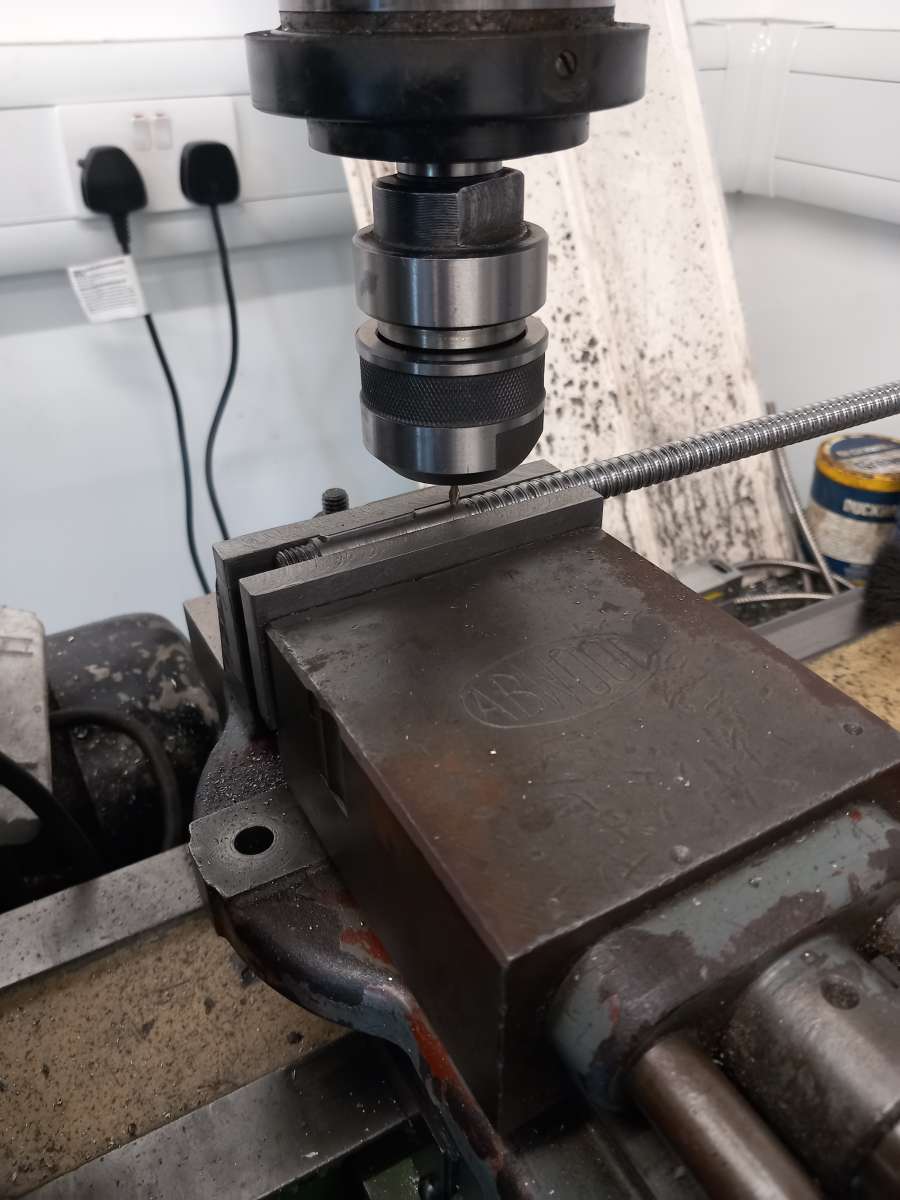
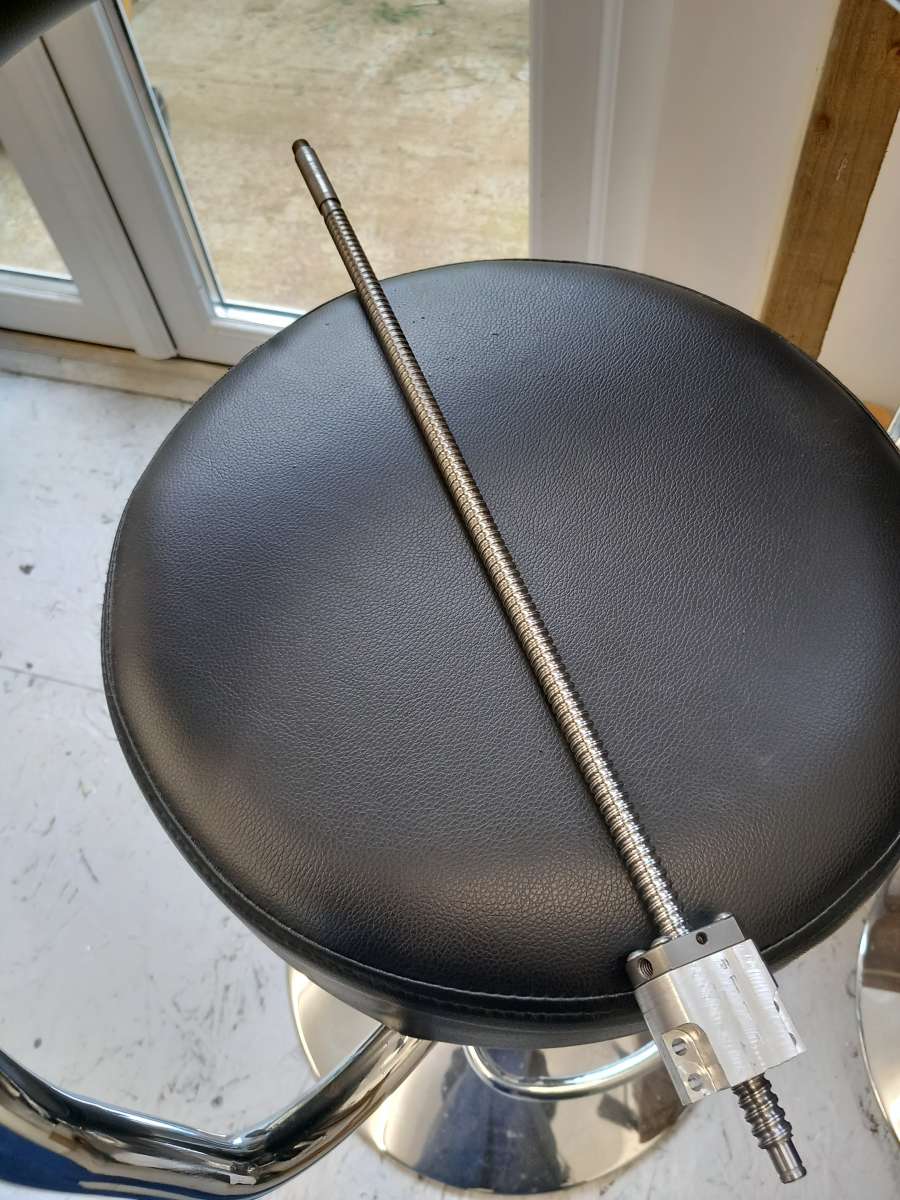
                                                20230513_18132320230510_182606

                                                #826288
                                                georgelane314
                                                Participant
                                                  @georgelane314

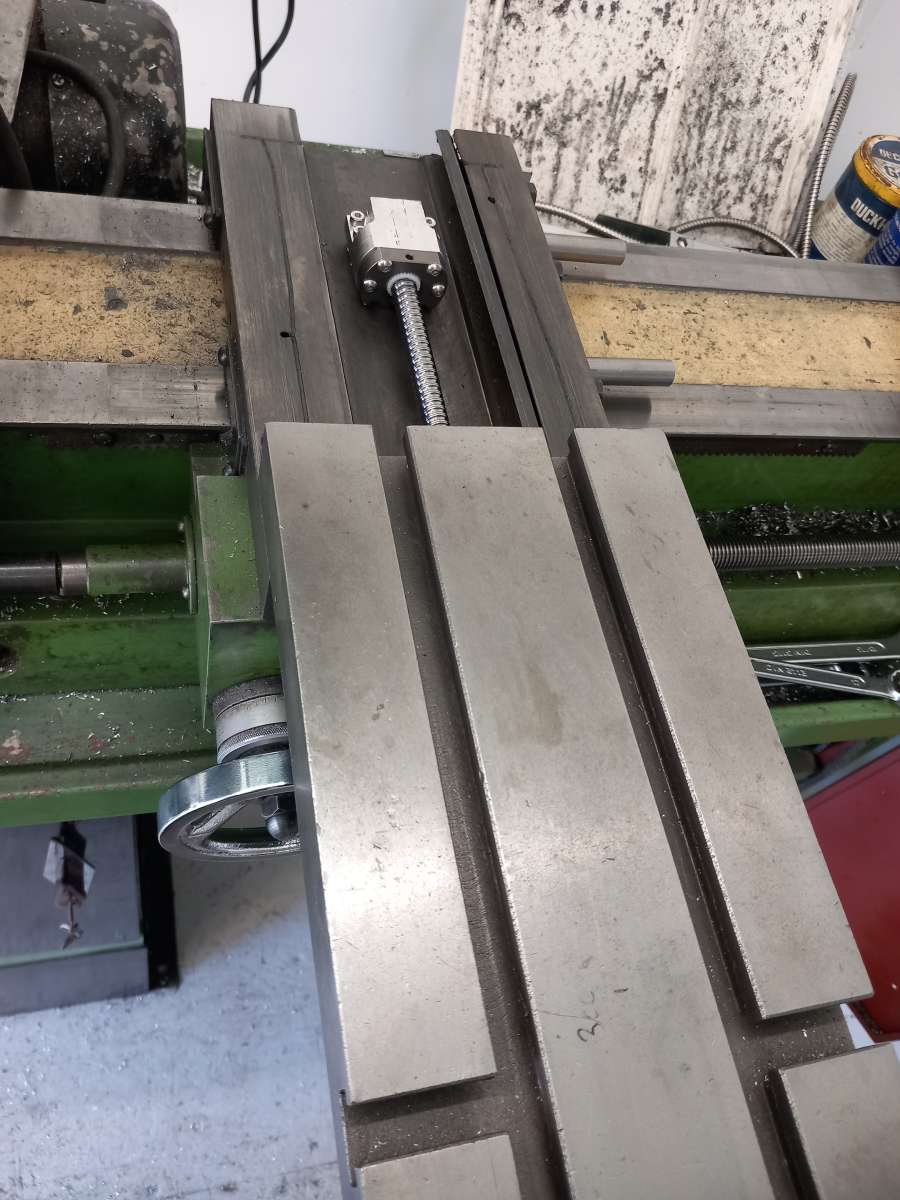
                                                  The two photos are from about 2 years ago when I first machined the ballscrew and made the aluminium housing for the nut. You can just see the groove in the top left of the photo on the stool. I’ll attach a pic of it in situ, but of the opposite end to the problem, unfortunately. 20230524_104439

                                                  #826303
                                                  JasonB
                                                  Moderator
                                                    @jasonb

                                                    You are lacking that disc for the thrust bearings to work against.

                                                    The photo where you are drilling, is that for  apin to join the new screw to the old end? If so can the pin be driven out and the two parts separated. You could then turn down a bit more of the screw and say a 3-4mm thick “washer” which would then act as your stop

                                                    #826605
                                                    georgelane314
                                                    Participant
                                                      @georgelane314

                                                      In response to JasonB’s last comment, I recall that drilling was impossible, but I managed to turn it using a diamond tipped insert. This is an old picture when I had no idea about cutting the original screw, and the positioning of the mill might be just to stop the ballscrew tipping up in the vice! TBH I can’t remember.

                                                      The washer idea might work if I can get it on the end with enough “shoulder” to retain it. I suppose a pin would take a reasonable shear force if not. I would need to disassemble it and remind myself of what’s going on. If I had to turn off all the thread then pin it the remaining shaft might be a bit frail.

                                                      As I’ve got the nuts on the way, I’ll see if they fit and solve the issue before anything else.

                                                    Viewing 25 posts - 1 through 25 (of 25 total)
                                                    • Please log in to reply to this topic. Registering is free and easy using the links on the menu at the top of this page.

                                                    Latest Replies

                                                    Viewing 25 topics - 1 through 25 (of 25 total)
                                                    Viewing 25 topics - 1 through 25 (of 25 total)

                                                    View full reply list.