Made a shiny shiny thing

Made a shiny shiny thing

Viewing 17 posts - 1 through 17 (of 17 total)
  • Author
    Posts
  • #820857
    Dave S
    Participant
      @daves59043

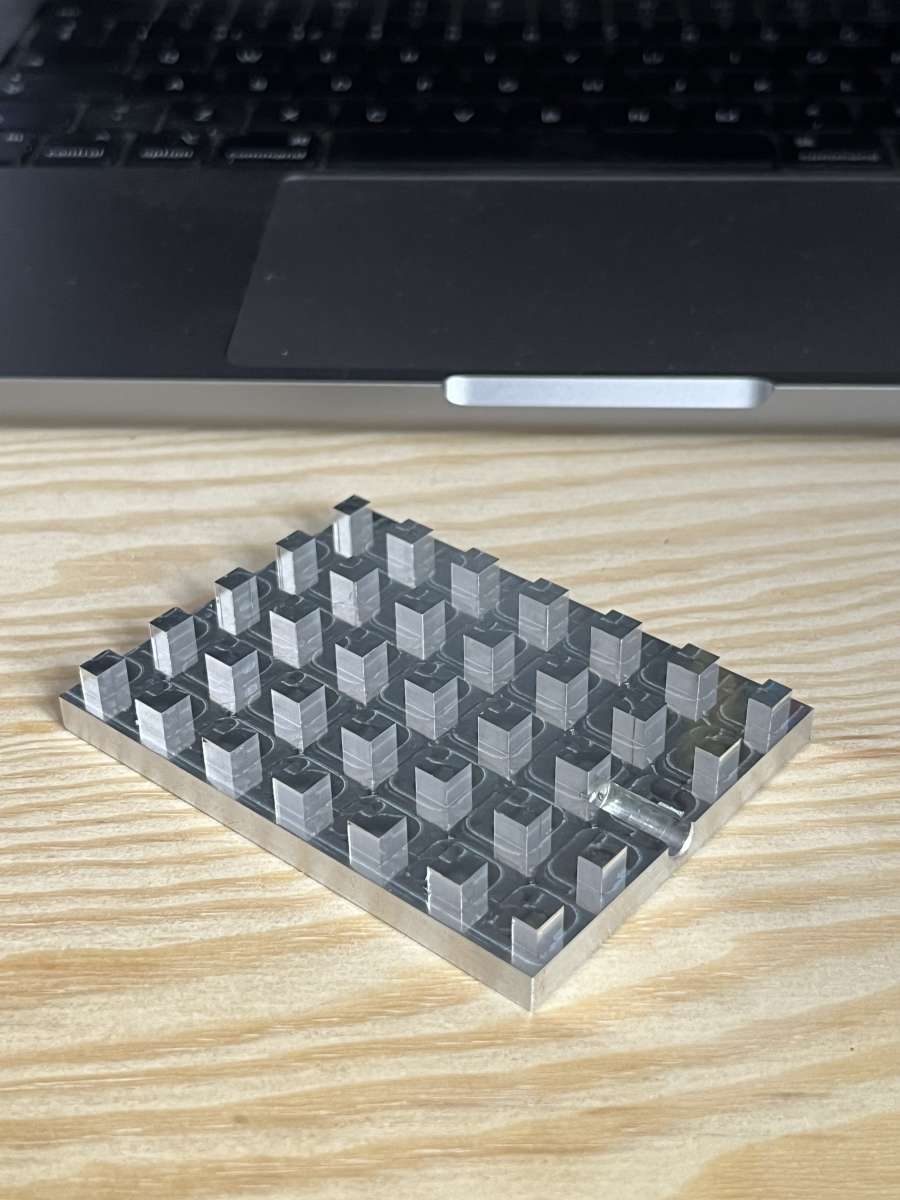
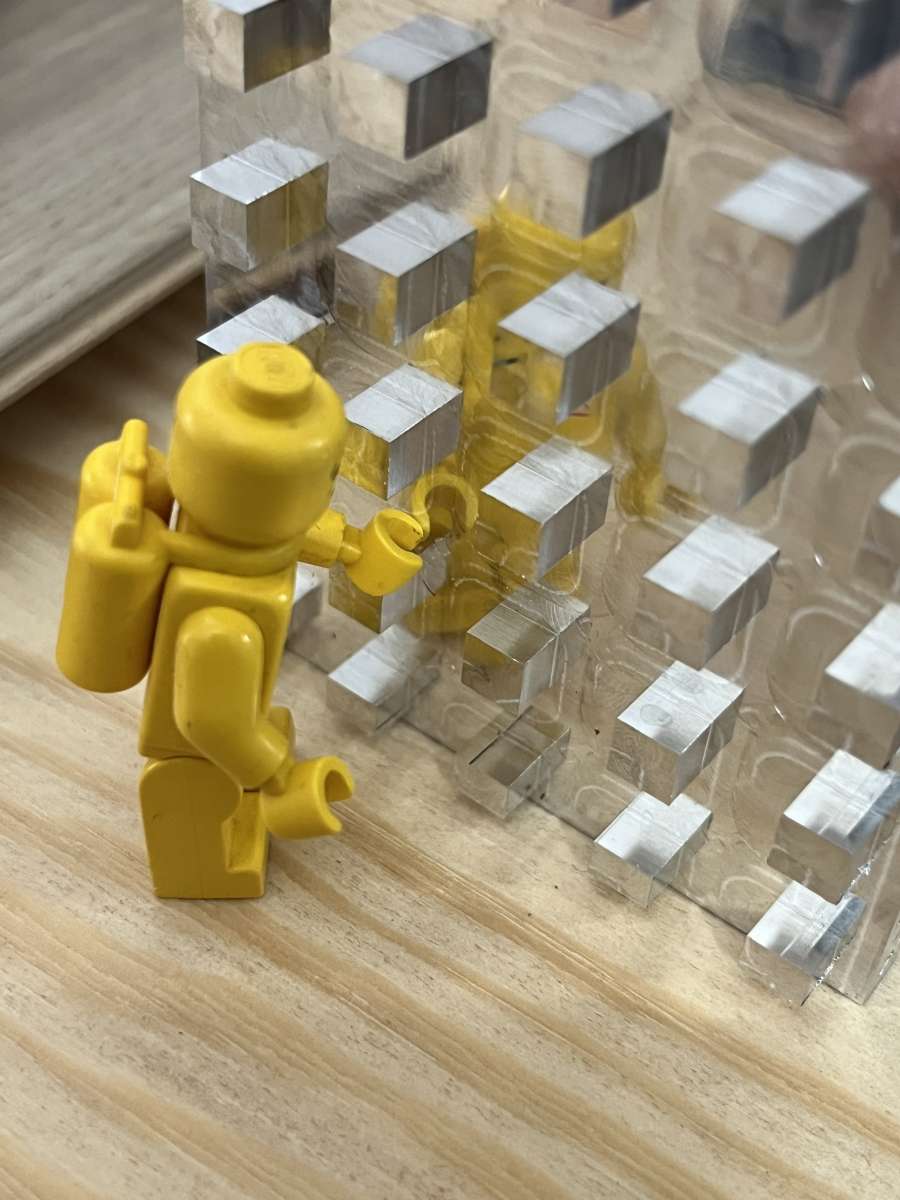
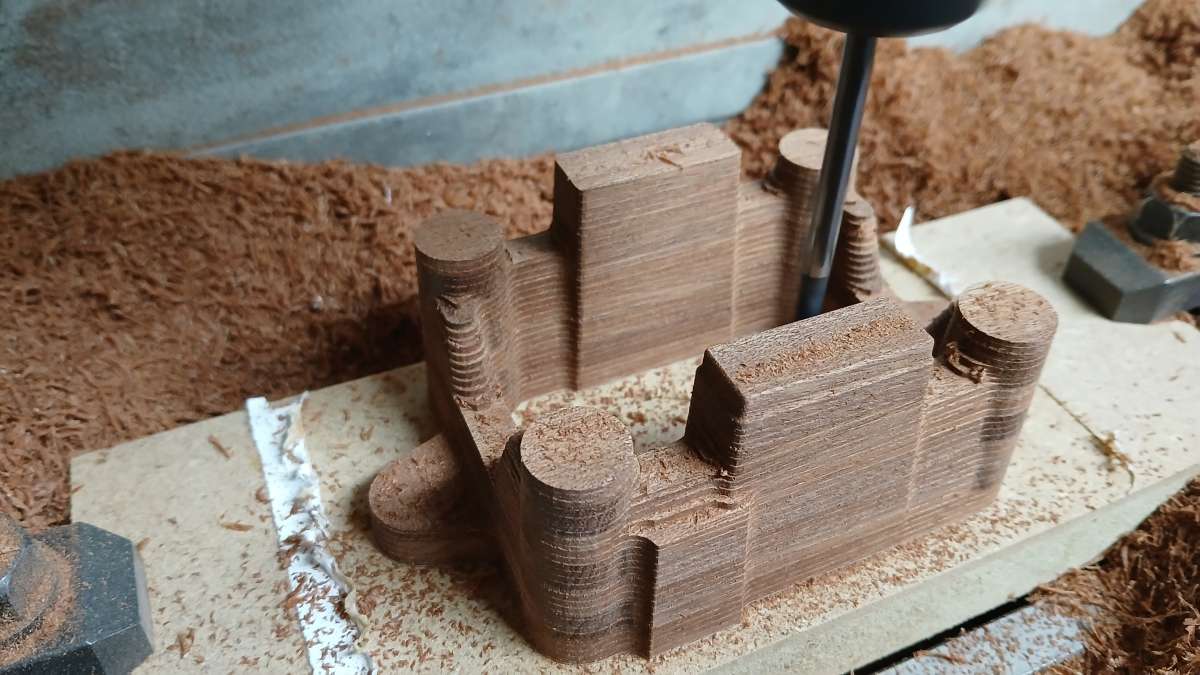
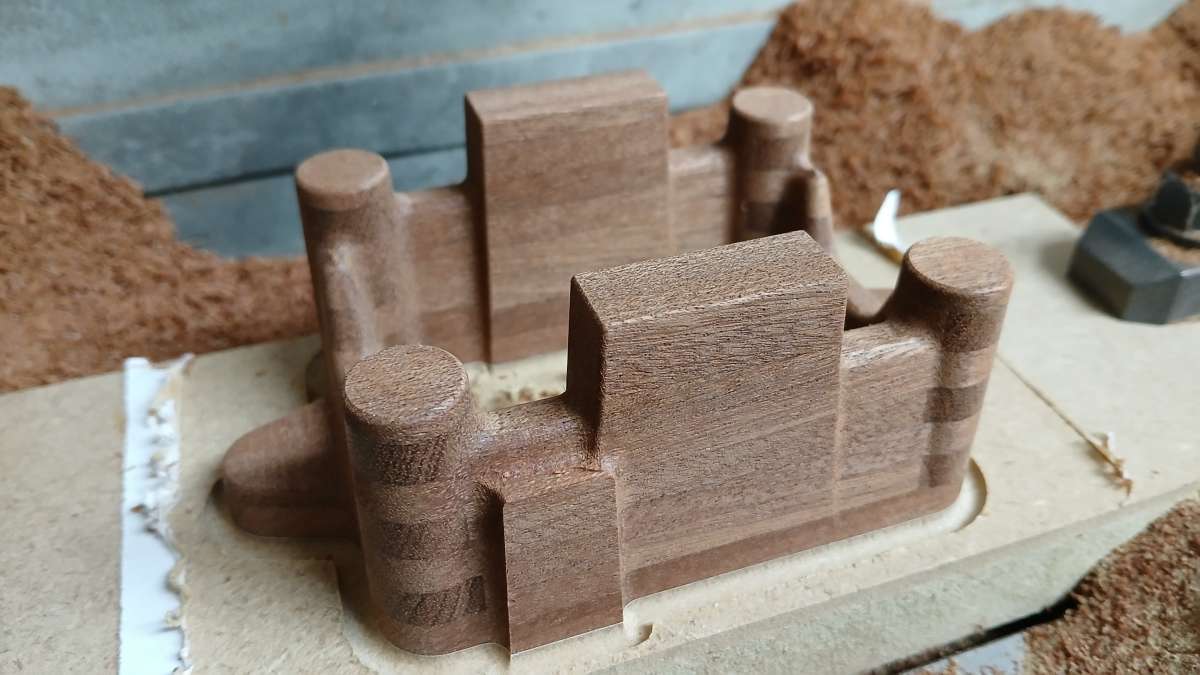
      Managed to run a little job on my CNC today. Very happy with the surface finish:

      IMG_7955

      Couple of short videos of the machining and the optical illusion here:

      https://youtube.com/shorts/K1NHng7rXFQ?feature=share

      https://youtube.com/shorts/aL5zWVPkLDQ?feature=share

      Next comes the inspection for goodness.

      Fingers crossed, although if its not right I cold use it to make waffles I suppose 🙂

      Dave

      #820865
      bernard towers
      Participant
        @bernardtowers37738

        Looks good but wht is it?

        #820885
        Speedy Builder5
        Participant
          @speedybuilder5

          I didn’t understand the logic of the cutting paths.  Why didn’t the path go straight down the x planes and then across all the y planes. Wouldn’t that have been quicker ?

          Bob

          #820909
          bernard towers
          Participant
            @bernardtowers37738

            I did notice a similar situation on the Warco stand at the show, it seemed totally illogical to me.

            #820952
            JasonB
            Moderator
              @jasonb

              CAM works out the quickest option which sometimes can result in what seem like unusual moves.

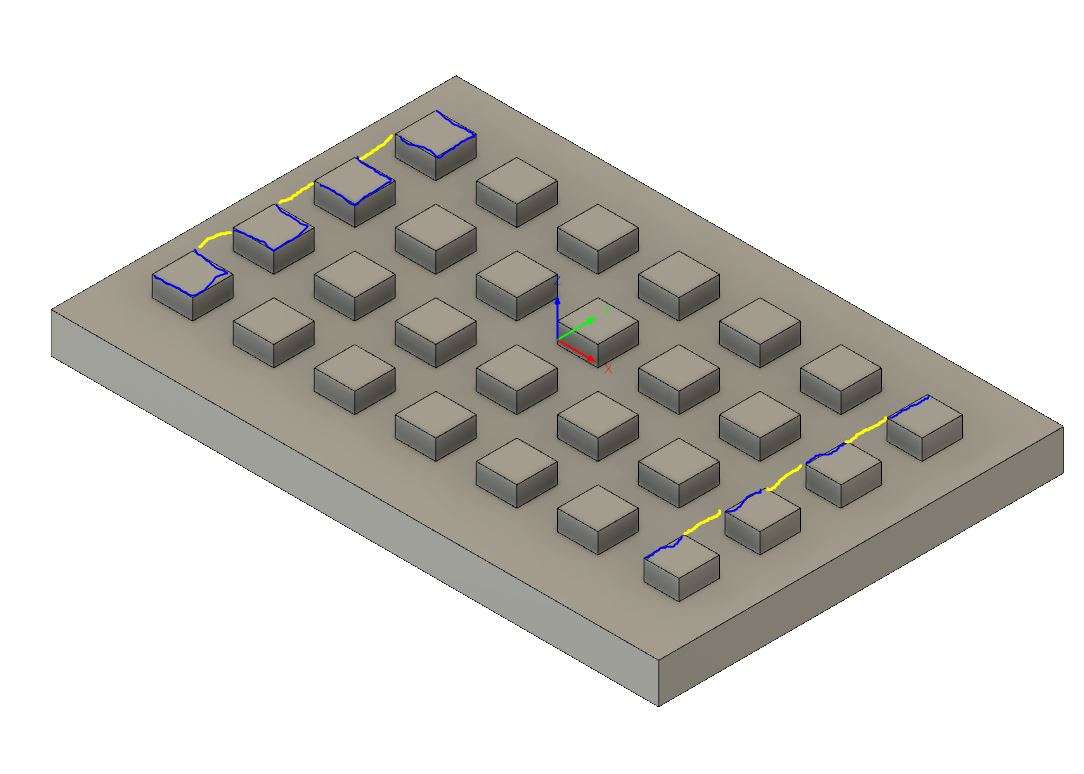
              Looking at the video it seems to be finishing 3 sides of each upstand them moving (at rapid rate) to the next so 3 sides cut and then one non cutting move. So approx 75% cutting and 25% non cutting.

              If it were to straight line the cuts, then it would be one cut one rapid, one cut one rapid so approx 50% cut and 50% non cutting.

              So fairly easy to see the CAM picked the shorter option.

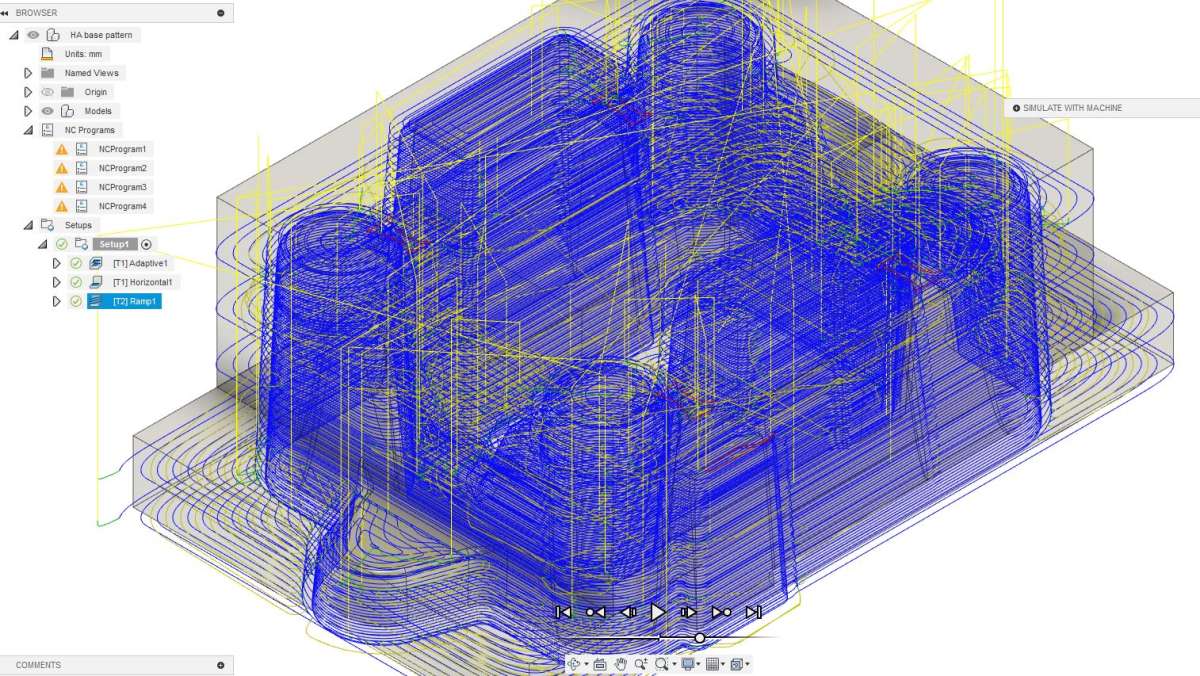
              Blue is cutting, yellow non cutting you can see the far end does mor ecutting to noncutting which is what the video has it doing

              paths

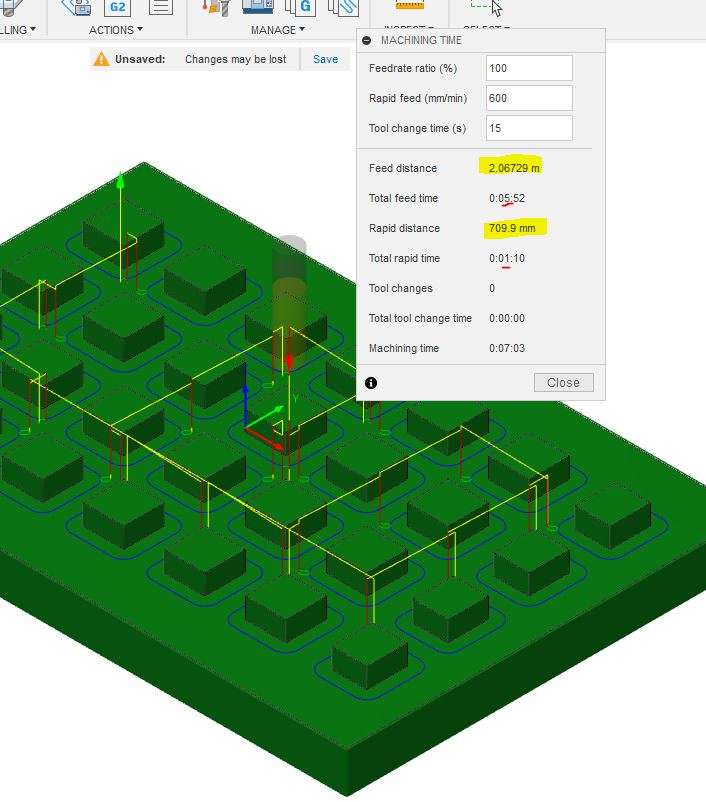
              Tried it myself using contour an that actually does 4 sides at a time, lots of blue cutting and not much yellow non cutting. If you look at the cutting time box the proportion of cut to non cut is 3:1 but as rapids move that distance faster than the cutting speed the ratio is actually 6:1 as far as time goes.

              paths 3


              #820967
              Michael Gilligan
              Participant
                @michaelgilligan61133
                On JasonB Said:

                CAM works out the quickest option which sometimes can result in what seem like unusual moves. […]


                Reminds me of days gone by … when we watched, mesmerised, as the Roland DXY pen-plotter outputted  from AutoCad.

                MichaelG.

                [ dinosaur ]

                #820976
                Dave S
                Participant
                  @daves59043

                  Well Im glad Jason can explain it. I was going to say ‘Thats what the program decided, I assume its doing the correct thing…’ The roughing path was also a bit unusual, but then when I 3d print stuff it also goes around the plate in an order I wouldn’t have usually used.

                  The thingy is supposed to allow me to quantify the errors in my machine. So lots of posts that I can mic between which should be certain distances. Only of course I made the distance between posts just to small to get the mic into, so Ill have to measure it using the surface plate, a height gage and som jo blocks… <sigh>

                  I think my mill is very repeatable, but not actually as accurate as I want. I suspect much more expensive leadscrews might be in my future 🙁

                  Dave

                  #820978
                  SillyOldDuffer
                  Moderator
                    @sillyoldduffer
                    On JasonB Said:

                    CAM works out the quickest option which sometimes can result in what seem like unusual moves…


                    Excellent explanation Jason, thanks.  Much better than mine!

                    If anyone wants to understand the software engineering behind CAM, goes something like this:

                    • The 3D geometry represented by the CAD model is ‘sliced’ to convert it into a stack of thin layers, each close to 2D.  The output is a Standard Tessellated Layer (STL) file or similar.
                    • The 2D layers are analysed flat and stacked to identify edges and faces,  These identify the size, shape and location of features.  Then features are mapped into a “weighted undirected graph”, a data structure of connected nodes.   The data structure is used to generate G-Code, that is the tool movements needed to drive a cutter or print nozzle.  The nodes identify all the features, and the connections identify all the routes between, or around, them.
                    • Tool movement is optimised by analysing the graph for “minimum cost”, basically by counting the cost of each path.   One optimisation is to avoid moving the cutter over paths that have already been cut,  or will be cut more efficiently later.   Optimising for speed rather than cutting time can result in a different tool path.

                    Humans can make a reasonable stab at the route needed to make a simple part on a 3-axis CNC, though as we see in Dave’s example, the obvious route may not be optimum.  But humans don’t have the time needed to find the optimum route needed to cut complex shapes on a 5-axis machine, and a 12-axis machine has far more potential routes.  Experience doesn’t help because CNC often makes new shapes, which the operator may have never seen before.  And he might set up a collision. Therefore use a computer to calculate and compare all the available paths, and leave it to generate G-Code from the best one.

                    Nothing is perfect!  Software Engineers have several choices when developing CAM software.  They choose between algorithms from Bellman-Ford, Dijkstra, Floyd-Warshall and Johnson, plus Breadth First, Depth First, and Topological Searches.  There’s room for mistakes and a particular CAM package may not have all the goodies.   We might guess that the CAM software used to drive a £1M Machine Centre is more complete than, say, GRBL, which has to fit on a tiny Arduino.   (GRBL is impressively good!)

                    Least cost path analysis is widely used in engineering.  Anything involving route Planning: circuit design, PCB layouts, navigation, and all kinds of network – Internet, Roads, National Grid, etc.

                    In 2025  I suggest it’s far more important for young engineers to understand this stuff than learn how to use a screwdriver.  The world has moved on, again!

                    Dave

                    PS,  I guess the part is a heat-sink.


                    #820984
                    Nigel Graham 2
                    Participant
                      @nigelgraham2

                      Can you measure it with a vernier caliper, or its digital equivalent, able to reach into the channels?

                      If you have, or make, a suitable plug-gauge, although it won’t give absolute readings, it would be a rapid way to test for repeatability along the length and width.


                      I know CNC machines are made to very high accuracies and a CAD/CAM file is even more spot-on, but how does the process eliminate backlash on all this to-ing and fro-ing?

                      The heading photograph shows a wonderful optical illusion. I assume it is actually like Jason’s rendered image of it, but how does that curious refelction effect arise? It looks as if covered with a sheet of glass, or submerged in still water.

                      .

                      Michael’s memory of Roland plotters reminds me of my own work experience with HP graph-plotters, quite amusing to watch until you became used to them, in representing the results of certain routine electrical tests.

                      These took A4 sheets and our locally-written, HP-BASIC programmes selected landscape mode. So the x-axis was by rollers driving the paper in and out of the machine, the y-axis by the print-head travelling across it. The pens were miniature fibre-tips lowered and raised as required.

                      One of the most common graphs we used was a loop whose theoretical ideal is a circle with vertical tangent  [plus / minus] y-value tails, centred on y=0 and the particular test’s positive x-value. The plotter would charge up the minus-y tangent, trace the circle very carefully and daintily then race to the end up the plus-y tangent, while applying the title and other text created a frenzy of 3D oscillations.

                      .

                      My previous employment was a specialist manufacturer that installed two CNC milling-machines and a CNC lathe. They were, I think, programmed by the operators although I don’t know by what method, only that the physical recording was by punched paper tape. I was told that the machines’ powerful electromagnetic fields would have disrupted magnetic media – that was in the 1980s when business computers were still infants and if you used Microsoft, it was by MS-DOS.

                      #821002
                      duncan webster 1
                      Participant
                        @duncanwebster1

                        Slight digression: when CNC started to come in, friend of mine and his partner set up converting manual machines to CNC. Not quite as easy as replacing leadscrews with ball screws and fitting servo motors. He used to program a timer into the software so that 30 days after delivery the machine stopped working. If the customer paid up within the allotted time he would pay a courtesy call and disable the timer, no-one any the wiser, non payers soon paid up

                        #821003
                        Martin Kyte
                        Participant
                          @martinkyte99762

                          Talking of tool paths a friend used to tell a story of his company’s move to digitised drawings. (They did airport lighting amongst other things). When printing a finished drawing on a large A0 pen plotter which plotted lines in the order that they were input they noticed that the plotter was spending most of it’s time rolling back and forth between remote areas of the drawing. It turned out that the digitising had been carried out by an ex tracer. When asked why she had done it that way she said it was habit. When tracing a drawing she would do a small area and then go to the opposite corner so that the ink had time to dry on the bit she had just done.!! Hence all the dotting about on the plotter.

                          Sometimes history gets it’s own back.


                          #821008
                          Dave S
                          Participant
                            @daves59043

                            Very-near calibers are not accurate enough to really tell me the answer.

                            setting up on the surface plate is more faff, but will be able to give me repeatable measurements to 0.0001″ with care. Gage R&R studies for this part are not in scope (yet) tho.

                            My machine has approx 2.5 microns (0.0001″) of backlash. I say approx because it’s very hard to measure that small.  if it needed it the controller has programmable backlash compensation built in, a bit like a manual machine turning the handle past and approaching from the same direction.

                            It is like Jasons model – the optical illusion arrises because the surface finish is stunning.

                            IMG_7957

                            Im very happy with that, less so that the beautiful surfaces are where they are supposed to be in space…

                            Dave

                            #821011
                            Julie Ann
                            Participant
                              @julieann

                              One reason for going round the posts rather than just up/down and across is that it avoids the need to deburr the pillars after CNC machining.

                              Julie

                              #821014
                              JasonB
                              Moderator
                                @jasonb

                                It can be quite interesting to follow the toolpaths that are generated and then start to tweak them which I tend to do to get the run time down. Often it is a toss up between taking bigger cuts & risking leaving steps on the surface against smaller cuts (stepovers) that will give a smoother surface but take longer.

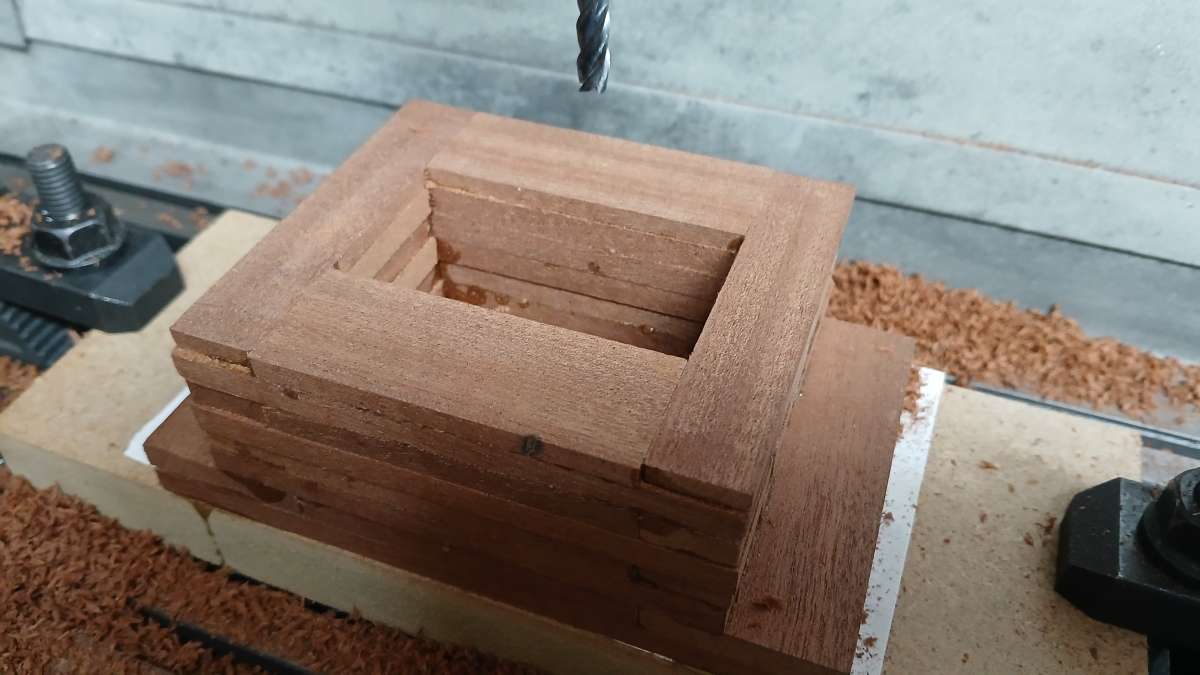
                                No shiny stuff for me this morning, I went for dusty and matt. It is the pattern for an engine sole plate approx 135 x 77x 48. A quick look at the paths shows that the adaptive was 40m long cut at 650mm/min and the ramp finishing cut 60m long and cut at 750mm/min. With that amount of cuts the tool paths all become a bit of a blur but it is possible to follow each one in real time or even slower. The wide spaced ones in layers are the adaptive and the very closely spaced the finish ramp.

                                path4

                                Top leveled and ready to start the adaptive with a long reach cutter

                                20251021_090628

                                Adaptive complete and just starting the ramp. You can see the 1.5mm steps left by the adaptive

                                20251021_105043

                                Job done, hardly needs sanding

                                20251021_120819

                                #821017
                                Speedy Builder5
                                Participant
                                  @speedybuilder5

                                  I go for Julie’s reason as in Jason’s argument, the cutter has to cut the length of the side of the square plus 1*diameter of cutter for each face 28 times.  But I am sure I must be wrong.  Ask a postman how he would deliver letters if each square were a block of 4 houses! (perhaps not)

                                  Bob

                                  #821029
                                  JasonB
                                  Moderator
                                    @jasonb

                                    Yes “cutting length” is measured to the ctr of the tool so things will be different than my basic example. Many factors to consider such as block size, width of gaps, cutter diameter, cutting feed rate, rapid feed rate, feedin/out, etc.

                                    #821039
                                    Dave S
                                    Participant
                                      @daves59043

                                      That is a nice looking piece of wood.


                                    Viewing 17 posts - 1 through 17 (of 17 total)
                                    • Please log in to reply to this topic. Registering is free and easy using the links on the menu at the top of this page.

                                    Latest Replies

                                    Viewing 25 topics - 1 through 25 (of 25 total)
                                    Viewing 25 topics - 1 through 25 (of 25 total)

                                    View full reply list.