Lathe tool inserts

Lathe tool inserts

Home Forums Beginners questions Lathe tool inserts

Viewing 20 posts - 1 through 20 (of 20 total)
  • Author
    Posts
  • #813748
    Andy Brocklehurst
    Participant
      @andybrocklehurst85292

      Hi,

      I’ve just bought a Warco WM180 lathe which im slowly learning how to use. I bought it primarily to make aluminium bronze bushing.

      I bought a cheap set of tools with inserts just to practice with. I’ve got a set of HSS tools on order.

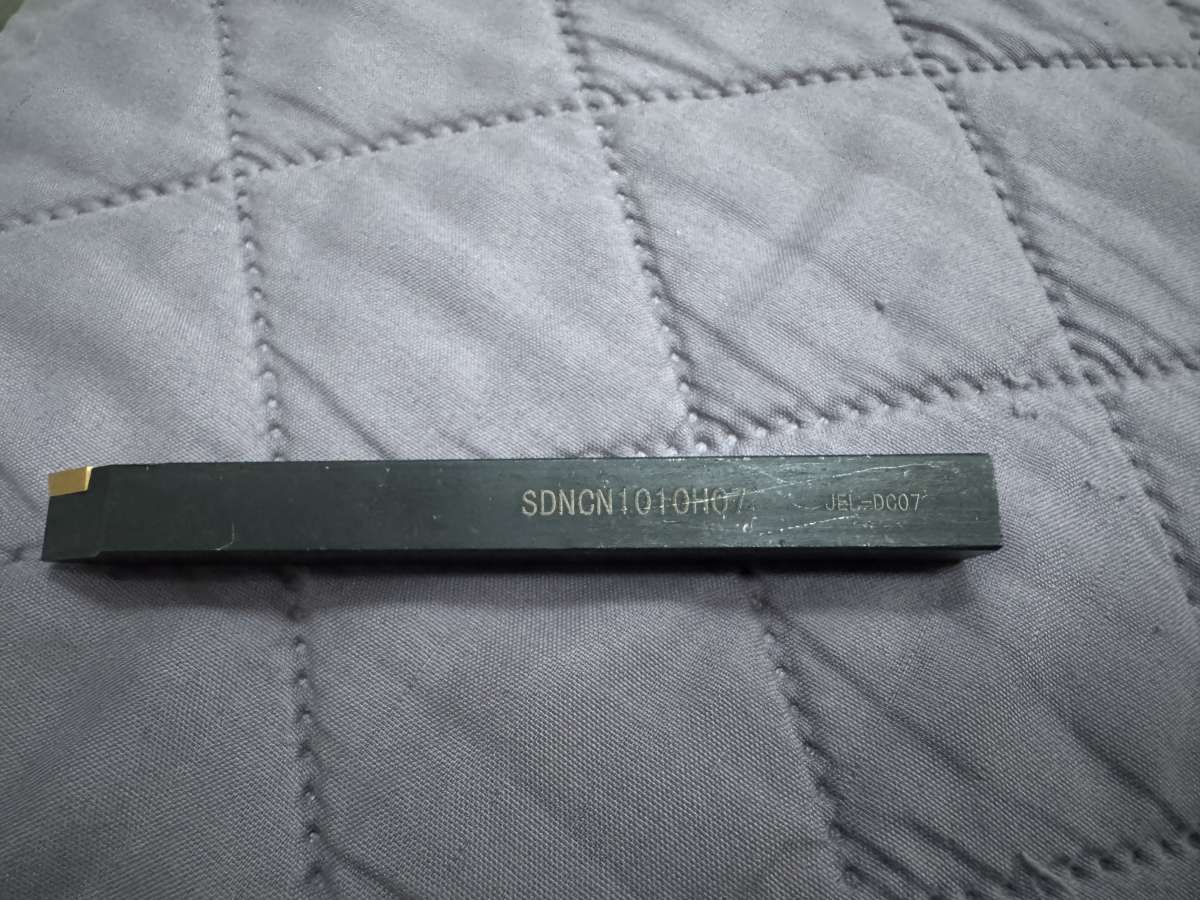
      from the picture can anyone tell me if the insert number is identifiable so I can buy some more? All the different inserts are confusing to say the least!

      thanks

      IMG_1726

      #813758
      Diogenes
      Participant
        @diogenes

        That looks like it is for ‘DC**07020*’ inserts – so for example, something like DCMT070204, or DCGT070202 – broadly, the letters define the shape and style and the numbers represent dimensions.

        Commonly the choices are between M for ‘Moulded’ or G for ‘Ground’, and the final variable requiring you to make a choice is the last number which represents the tip radius in tenths of a mm – usually available in 0.2, 0.4, or 0.8mm

        For most applications (and especially non-ferrous work) the ground DCGT inserts are usually best choice for a hobby machine, and a 0.2mm radius would probably also be better – so those inserts would be ‘DCGT070202’.

        DO the other holders in the set use the exact same tips?! – if not you’ll have to post them individually – some sets are ‘mixed’

        – also have to say that particular tool shape would not be the one I picked out first – is there one called ‘SDJCR’ in your set?


        #813762
        Huub
        Participant
          @huub

          For aluminum bronze the G type inserts are better suitable because they are ground and very sharp. Because of that, the cutting forces are lower then when using a M type insert. I think your WM180 “mini” lathe will do well using these G type inserts, even on steel.

          As said already, a SDJCR type tool would be more suitable for most turning and facing operations.


          #813764
          Andy Brocklehurst
          Participant
            @andybrocklehurst85292
            On Diogenes Said:

            That looks like it is for ‘DC**07020*’ inserts – so for example, something like DCMT070204, or DCGT070202 – broadly, the letters define the shape and style and the numbers represent dimensions.

            Commonly the choices are between M for ‘Moulded’ or G for ‘Ground’, and the final variable requiring you to make a choice is the last number which represents the tip radius in tenths of a mm – usually available in 0.2, 0.4, or 0.8mm

            For most applications (and especially non-ferrous work) the ground DCGT inserts are usually best choice for a hobby machine, and a 0.2mm radius would probably also be better – so those inserts would be ‘DCGT070202’.

            DO the other holders in the set use the exact same tips?! – if not you’ll have to post them individually – some sets are ‘mixed’

            – also have to say that particular tool shape would not be the one I picked out first – is there one called ‘SDJCR’ in your set?

            Hi,

            thank you for the reply it’s very helpful.


            Yes there is a SDJCR1010H07

            MGEHR1010-2

            SCLCR1010H06

            S10K-SCLCR06

            SNR0010K11

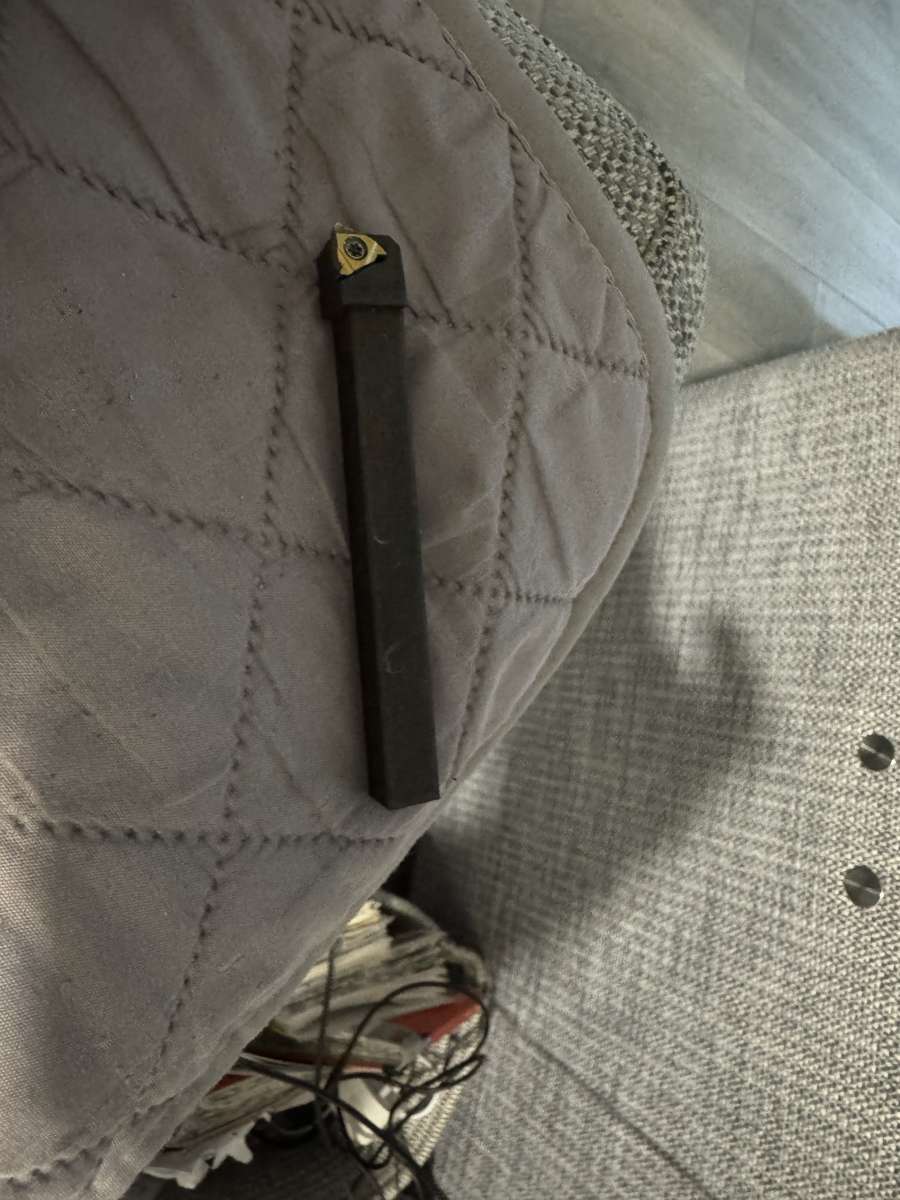
            plus this one that isnt marked

            IMG_1732


            #813765
            Andy Brocklehurst
            Participant
              @andybrocklehurst85292
              On Huub Said:

              For aluminum bronze the G type inserts are better suitable because they are ground and very sharp. Because of that, the cutting forces are lower then when using a M type insert. I think your WM180 “mini” lathe will do well using these G type inserts, even on steel.

              As said already, a SDJCR type tool would be more suitable for most turning and facing operations.


              Thank you.


              #813770
              Diogenes
              Participant
                @diogenes

                MGEHR ****– use grooving / parting inserts MGMN200 (‘straight’ across the front) or MRMN200 (with radius). The 200 indicates they are 2mm wide.

                The turning tool and boring bar marked SCLCR use CC*T 06020*, same conditions apply as with your DC*T inserts so use CCGT060202 (or CCGT060204 if you want a bigger tip radius).

                SNR0010K11 is an internal threading tool for 11NR partial form threading inserts –

                The unmarked tool should be something like SER1010H16, an external threading tool for 16ER partial form threading inserts –

                – with these 11 & 16 denote size, N & E denote whether interNal or External, and R is for Right-cutting (i.e. tool moves towards the chuck).

                Don’t know whether you know about thread angles, but very simplistically ‘55′ inserts are for Whitworth and other threads with 55 degree flanks, and the ‘60′ are standard for ISO metric and UN-series threads – you may come across other or uncertain thread-forms and you can always ask again then..


                #813772
                Diogenes
                Participant
                  @diogenes

                  You will find most (probably all) of the types discussed are available from a supplier such as APT or will come up from a search

                  – it’s worth having a browse of APT’s website nonetheless because it will help you see how the trade lays out the specifications & descriptions, and (hopefully) make it clearer ‘how it works’ when it comes to choosing

                  https://www.shop-apt.co.uk/

                  #813776
                  JasonB
                  Moderator
                    @jasonb

                    If you want to understand the code on the holders then this page from Cutwel is quite easy to follow

                    #813778
                    Andy Brocklehurst
                    Participant
                      @andybrocklehurst85292
                      On Diogenes Said:

                      MGEHR ****– use grooving / parting inserts MGMN200 (‘straight’ across the front) or MRMN200 (with radius). The 200 indicates they are 2mm wide.

                      The turning tool and boring bar marked SCLCR use CC*T 06020*, same conditions apply as with your DC*T inserts so use CCGT060202 (or CCGT060204 if you want a bigger tip radius).

                      SNR0010K11 is an internal threading tool for 11NR partial form threading inserts –

                      The unmarked tool should be something like SER1010H16, an external threading tool for 16ER partial form threading inserts –

                      – with these 11 & 16 denote size, N & E denote whether interNal or External, and R is for Right-cutting (i.e. tool moves towards the chuck).

                      Don’t know whether you know about thread angles, but very simplistically ‘55′ inserts are for Whitworth and other threads with 55 degree flanks, and the ‘60′ are standard for ISO metric and UN-series threads – you may come across other or uncertain thread-forms and you

                      Thank you for taking the trouble to do this, it’s very helpful.


                      #813855
                      old mart
                      Participant
                        @oldmart
                        On JasonB Said:

                        If you want to understand the code on the holders then this page from Cutwel is quite easy to follow

                        The Cutwel picture showing the “height of the shank” also refers to the insert tip height.

                        #813932
                        Dalboy
                        Participant
                          @dalboy

                          For insert sizes I use the guide in the MSC virtual catalogue HERE

                          Click on the turning section and go to page 102-103.


                          #813935
                          Clive Foster
                          Participant
                            @clivefoster55965

                            I think the OP, and other insert novices, would benefit from one of the diagrams showing a basic turned shaft with a line of differently shaped inserts showing the jobs they are most suited for. I have a couple but can’t get them out of the electronic publication.

                            Many jobs can be pretty much equally well be done by several different shapes of insert. For industrial CNC users multiple types of insert for best performance on each job makes sense due to the production efficiencies. For the likes of us choosing the minimum number of shapes, each able to do a range of jobs, is more sensible.

                            Time for a short series methinks from someone with wide experience of operating inserts under typical ME or Home Shop conditions. Nothing I can help with as I didn’t make the jump to inserts (sometimes) until after switching to ex industrial machinery.

                            First part could be naming of names and why different types of mounting are used. Essentially the Cutwel link with added “why?”. As has been said above our smaller machines are much more limited in terms of cutting force than typical commercial ones making selection of free cutting insert more important.

                            Second part could be the cutting task diagram showing the jobs each shape can do including the all important why use this one when that one appears able to do the same.

                            Third part to cover the type of cutting edge, G / M et al, and tip radius. Again with more why information than is usually found in commercial sources.

                            It’s hard to make a fully informed choice when you don’t know the “why” behind the various options. Commercial data tends to be short on basic why, although more advanced options covering high performance version can go into mind boggling detail.

                            The all important how long will it last data in ME hands is never there in commercial catatlogues because we simply don’t drive then as hard as the commercial folk. A major reason for preferring the sharper ground tip styles is that they tend to work better at speeds well below manufactures specifications.

                            Possibly the trickiest part of being a novice Home Workshop insert user is learning to judge the difference between a worn out, or damaged tip, and operating well outside the inserts comfort zone. Both will produce a crap finish.

                            Clive

                            #813954
                            Andy Brocklehurst
                            Participant
                              @andybrocklehurst85292
                              On Clive Foster Said:

                              I think the OP, and other insert novices, would benefit from one of the diagrams showing a basic turned shaft with a line of differently shaped inserts showing the jobs they are most suited for. I have a couple but can’t get them out of the electronic publication.

                              Many jobs can be pretty much equally well be done by several different shapes of insert. For industrial CNC users multiple types of insert for best performance on each job makes sense due to the production efficiencies. For the likes of us choosing the minimum number of shapes, each able to do a range of jobs, is more sensible.

                              Time for a short series methinks from someone with wide experience of operating inserts under typical ME or Home Shop conditions. Nothing I can help with as I didn’t make the jump to inserts (sometimes) until after switching to ex industrial machinery.

                              First part could be naming of names and why different types of mounting are used. Essentially the Cutwel link with added “why?”. As has been said above our smaller machines are much more limited in terms of cutting force than typical commercial ones making selection of free cutting insert more important.

                              Second part could be the cutting task diagram showing the jobs each shape can do including the all important why use this one when that one appears able to do the same.

                              Third part to cover the type of cutting edge, G / M et al, and tip radius. Again with more why information than is usually found in commercial sources.

                              It’s hard to make a fully informed choice when you don’t know the “why” behind the various options. Commercial data tends to be short on basic why, although more advanced options covering high performance version can go into mind boggling detail.

                              The all important how long will it last data in ME hands is never there in commercial catatlogues because we simply don’t drive then as hard as the commercial folk. A major reason for preferring the sharper ground tip styles is that they tend to work better at speeds well below manufactures specifications.

                              Possibly the trickiest part of being a novice Home Workshop insert user is learning to judge the difference between a worn out, or damaged tip, and operating well outside the inserts comfort zone. Both will produce a crap finish.

                              Clive

                              It would be very helpful for beginners like me.

                              #814125
                              Michael Gilligan
                              Participant
                                @michaelgilligan61133

                                With a little assistance from  AI, I located this excellent page:

                                https://waykenrm.com/blogs/lathe-cutting-tools-types/

                                MichaelG.

                                #814127
                                Vic
                                Participant
                                  @vic

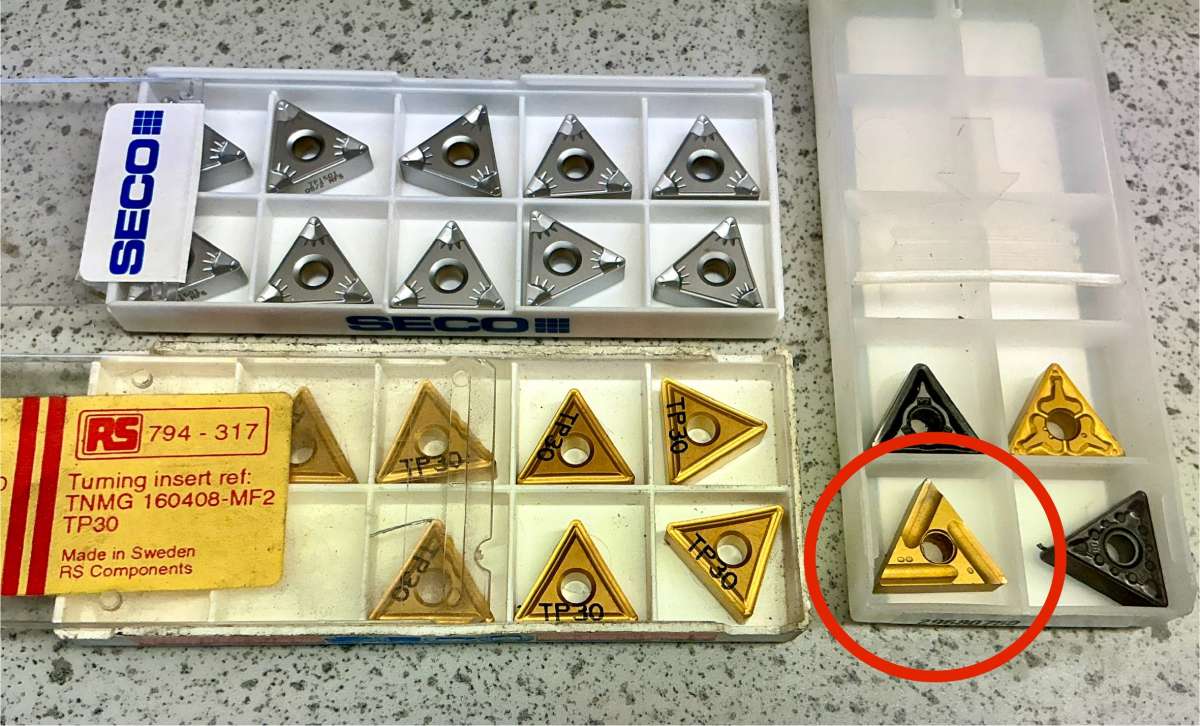
                                  For cutting Aluminium Alloy, all the polished type inserts I’ve bought, in several styles, have worked very well. Even the cut price ones from Amazon and eBay etc. For cutting steel it’s been a bit different. I often use HSS in a tangential tool but have experimented with a few different inserts. Most have, once again, been bought quite cheaply. They have had a variety of different styles to the actual geometry of the tip but once again they’ve all worked well enough. I’ve recently been quite impressed with one particular insert that I got from Jenny of JB tools some time ago. It’s the one circled:

                                  IMG_4917

                                  #814191
                                  Diogenes
                                  Participant
                                    @diogenes

                                    Clive,

                                    I rather think that it’s actually more the case of going back to first principles and deciding how to keep things as simple as possible – IMO, all the shapes and forms illustrated in the sales-blurb of insert manufacturers today, are directly analogous to those illustrations from early C20th turning-manuals and treatises that illustrate 15 different shapes of lathe tools ‘that every serious amateur should have’ –  you know the ones – and, I have no doubt, have decided along with the rest of us that actually one can boil it down to about three favourites that we work with 95% of the time.

                                    Eek, work presses! – Pick a sharp positive-rake insert with a bit of side and end clearance for all turning, facing, and boring – so a rhombus or triangle – in my case, I prefer rhombic CC*T because they fit in a smaller hole when boring.

                                    They are also very flexible in terms of holder shapes – one can readily and cheaply buy a handful of shanks that present these tips in all kinds of attitudes, from through-turning roughers to neutral to boring bars in both R&L-hand variants

                                    – choose small – an ’06’ CC** inserts offers a 6mm cutting edge, but will fit down a ?9something mm hole, and/but usefully, can also be fitted to bars in sequence up to at least 16mm dia. (and maybe larger for all I know).

                                    Smaller is cheaper, and if you can standardise across your tooling, it enables the buying by the box – always some in stock, then, and becomes economical to keep various tip radii etc.

                                    – if you can buy them for less than a quid per edge, it reduces the desire to hang onto them once they are past their best, and causes less tears when one gets chipped.

                                    Smaller is by it’s very nature optimised for cutting performance under lower power, and less stable conditions.

                                    I really must go.

                                    #814237
                                    Clive Foster
                                    Participant
                                      @clivefoster55965

                                      Diognes

                                      Indeed so. Going back to first principles is the best place to start.

                                      Problem for neophytes is there is no sufficiently comprehensive single reference compendium of the first principles thing written in terms of modern insert capabilities. As suggested above it doesn’t have to be of vast length or complexity. Just needs all the starter stuff in one place along with enough “why” to set the direction to move on when starter information is insufficient.

                                      Even in HSS only days things were always bit spotty for the un-mentored as pretty much all the information was delivered by folk who had done their time as apprentices or gained many years of experience. It’s hard to shake off such influence enough to see what things look like to beginner. Not to mention being totally unconscious to the need to have read something in a 5 or 10 year old issue of Model Engineer if the neophyte is to make sense of something crucial that is so totally obvious to the trained or experienced user that they don’t even realise an issue exists.

                                      I’ve stuck my foot in my mouth time or two over that sort of thing when instructing in a totally different area.

                                      Tubal Cain in Model Engineers Handbook was probably the best when it came to covering the very limited number of tool shapes actually needed for all but the most obscure tasks in HSS only days. But I do recall very young Clive being glad to have someone to ask about a particular “doh, obvious now he’s told me” thing I seriously didn’t get at the time and needed to get to make progress. Something so totally obvious that mumble-mumble years later I only recall the embarrassed asking. Not what it was about.

                                      Clive

                                      #814241
                                      Michael Gilligan
                                      Participant
                                        @michaelgilligan61133
                                        On Clive Foster Said:

                                        Diognes

                                        Indeed so. Going back to first principles is the best place to start. […]

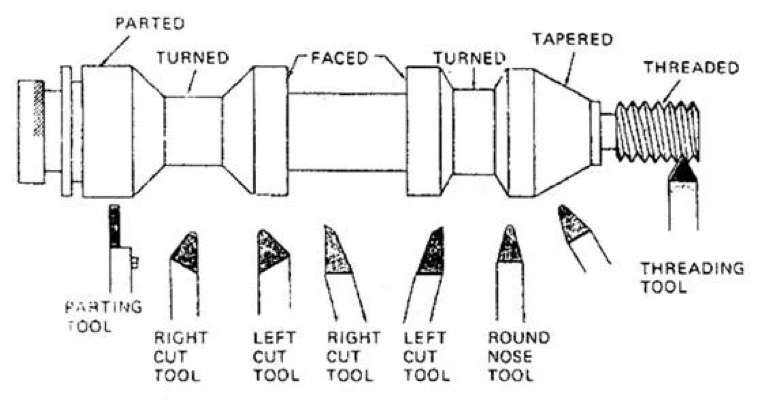
                                        Mmm … I thought this [from the page I linked earlier] was rather a good reference for the neophyte

                                        .

                                        IMG_1017

                                        .

                                        MichaelG.

                                        #814244
                                        JasonB
                                        Moderator
                                          @jasonb

                                          it’s not actually that good for a beginner.

                                          Parting tool should be shown opposite the groove as it looks like it is turning the OD

                                          Round nosed left and right would only do the OD as they can’t get into the sharp internal corners

                                          Unrounded Right and left would again be better if inline with thesurfaces they could “face”

                                          Neutral round nose is about OK for the OD but again if used at an angle won’t cut the tight internal corner shown

                                          Threading OK

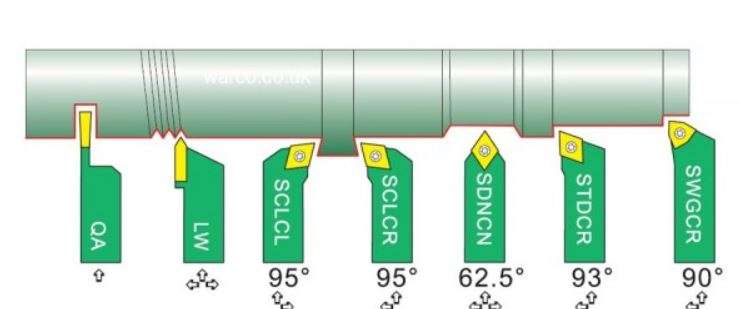
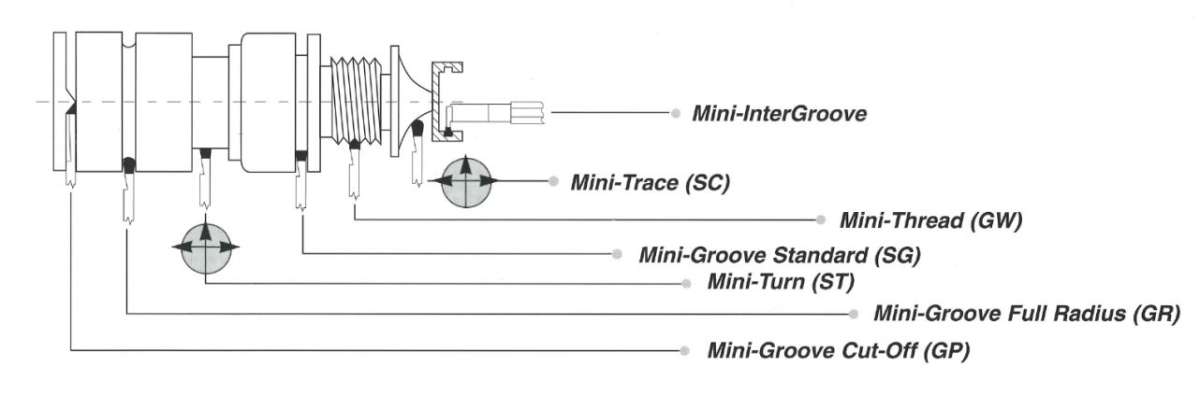
                                          More like below or this, with feed directions shown and surfaces that can be cut in red. No wonder beginners go for Carbide these days!!

                                          cuts

                                          mini

                                          #814268
                                          Diogenes
                                          Participant
                                            @diogenes

                                            Ah, Clive – yes, indeed I see your point now, maybe an article would be a worthwhile venture.

                                            FWIW, the best (only?) source of information within any kind of ‘ME-orientated publication’ that I could find when starting out, was that which dear old Harold (Hall) collated and presented in his ‘Metalworkers Data Book’ (Workshop Practice Series No. 42), which explains the generic codes for both inserts and holders pretty well, but assumes, naturally enough, that anyone buying an engineering data book will already have half-an-idea what they want, and just need the ‘technical language’ to describe it to a supplier.

                                            I agree there’s a gap in basic information for the complete novice – unless anyone knows better?


                                          Viewing 20 posts - 1 through 20 (of 20 total)
                                          • Please log in to reply to this topic. Registering is free and easy using the links on the menu at the top of this page.

                                          Latest Replies

                                          Home Forums Beginners questions Topics

                                          Viewing 25 topics - 1 through 25 (of 25 total)
                                          Viewing 25 topics - 1 through 25 (of 25 total)

                                          View full reply list.