How do PM Research make their pipe fittings ?

How do PM Research make their pipe fittings ?

Home Forums Beginners questions How do PM Research make their pipe fittings ?

Viewing 20 posts - 1 through 20 (of 20 total)
  • Author
    Posts
  • #829364
    Brian John
    Participant
      @brianjohn93961

      How do PM Research make their 3/16-40 and 1/4-40 pipe fittings ? They obviously do not drill and tap each piece by hand but I cannot imagine what sort of machine could do this job ?

      #829370
      noel shelley
      Participant
        @noelshelley55608

        Cast brass or bronze and production machinery, would be my guess. Noel.

        #829372
        Julie Ann
        Participant
          @julieann

          They look clean for a sand casting but not quite up to investment casting standard. Looking at the prices I’d suggest hot stamping in brass and then machined using fixtures on a simple CNC lathe or mill. If the stamping is well controlled the ends only need threading, no need to drill or turn to size first.

          Julie

          #829375
          JasonB
          Moderator
            @jasonb

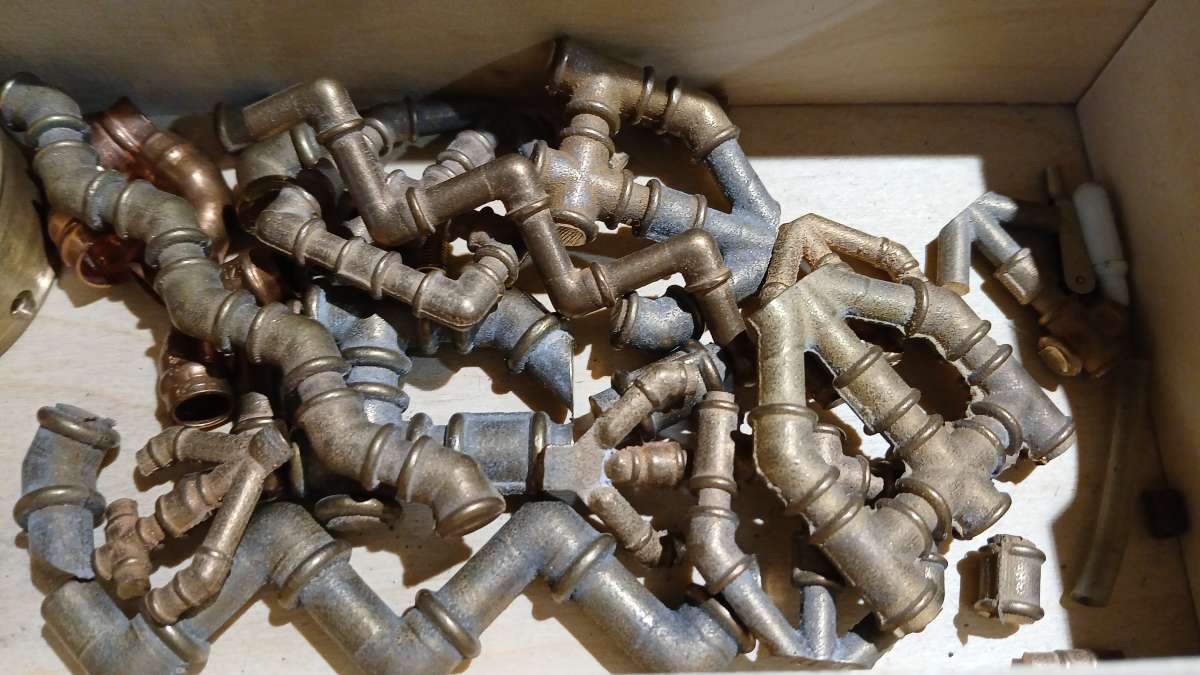
            Definately cast as I have quite a few to look at closely.

            EDIT and just to be sure, they list them as cast bronze on their website

            20251219_153913

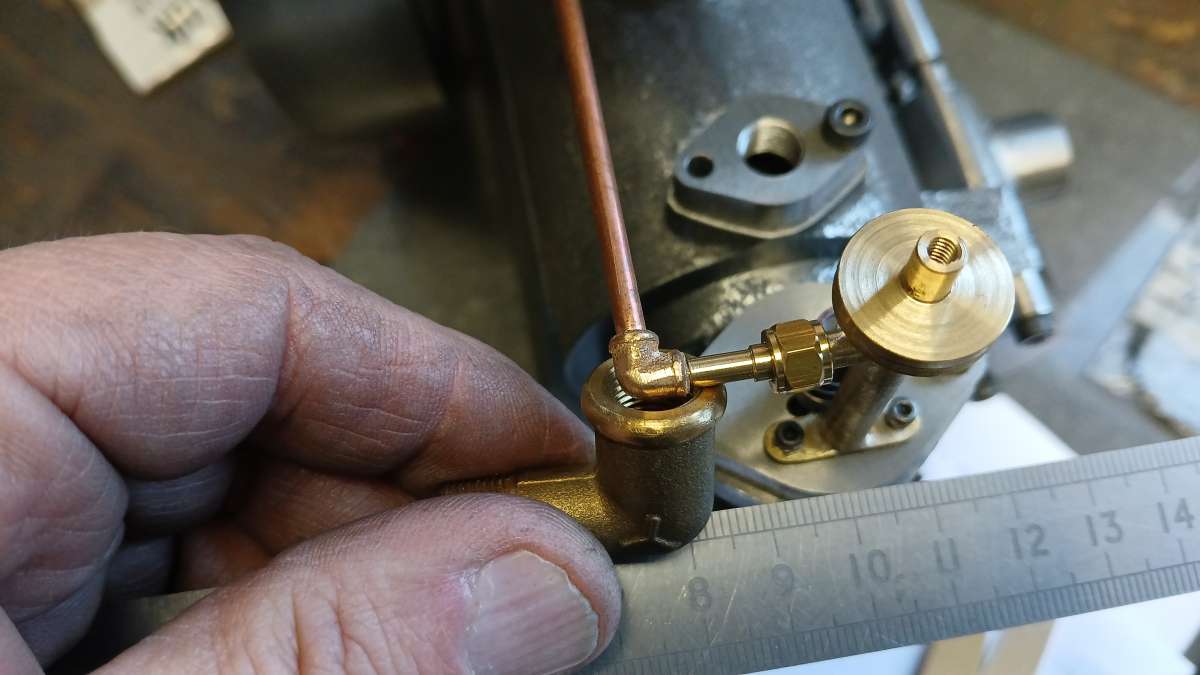
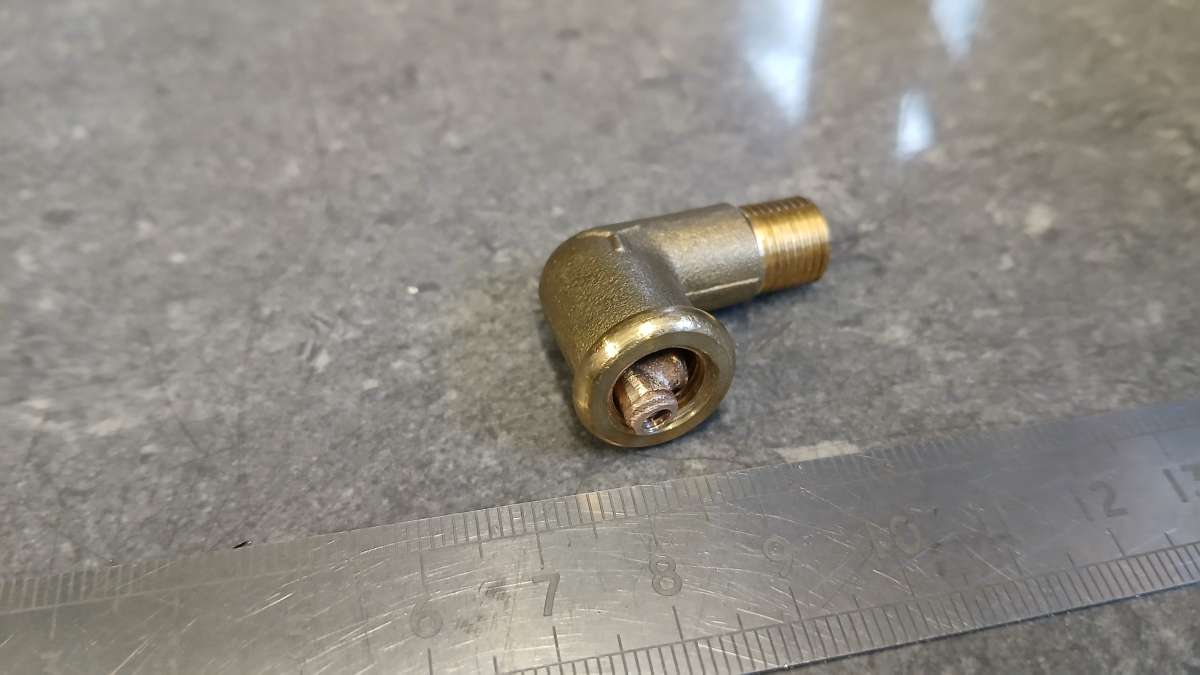
            There have been a few posts on some of the US forums over the years about how people machine their’s and I imagine PMR do similar. Usually a block that is split down the middle that is carved out to hold the casting like nesting jaws. You then have edges to set against a stop so drilling and machine tapping is quick and easy.

            Also need drilling as you need the hole through the fitting and the holes need tapping. The “street Elbows” are cast quite close to size on the externally threded end so would not need turning

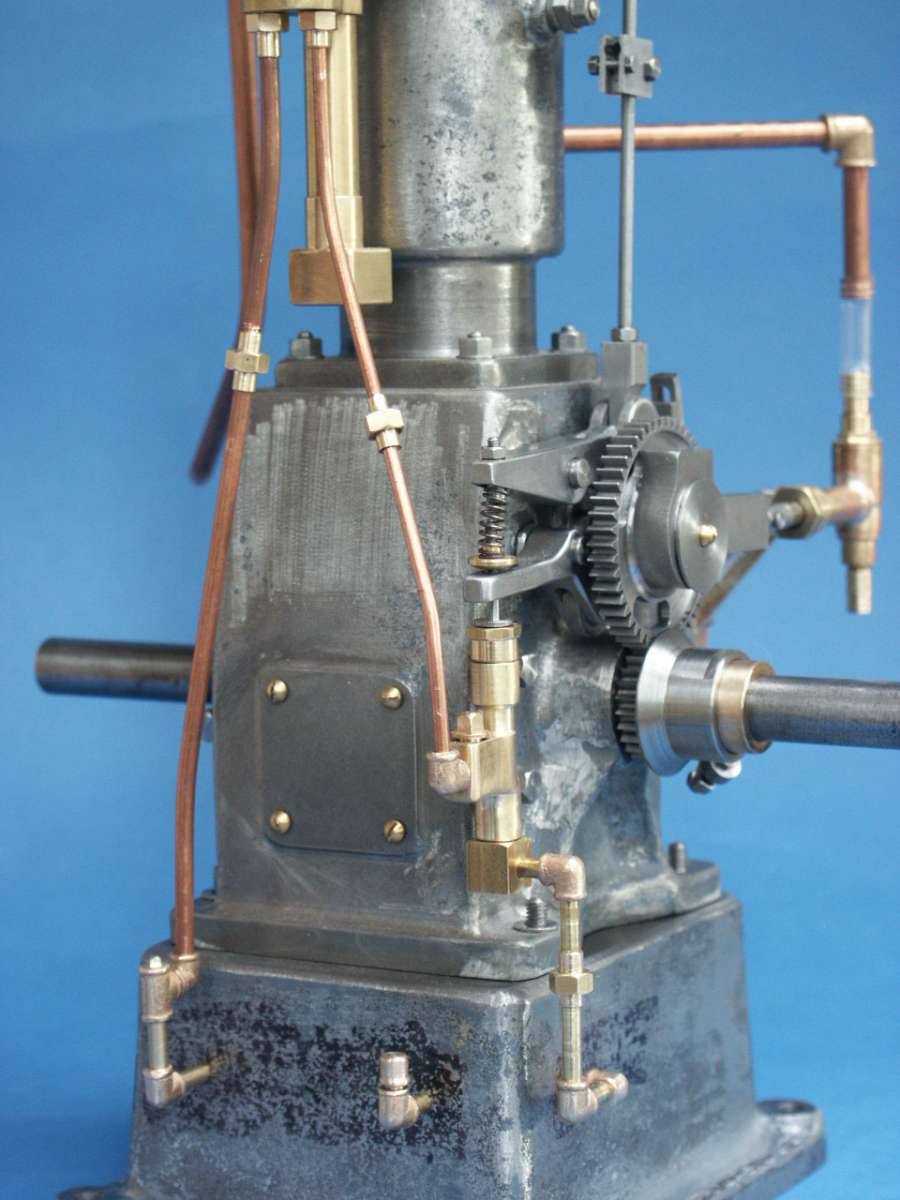
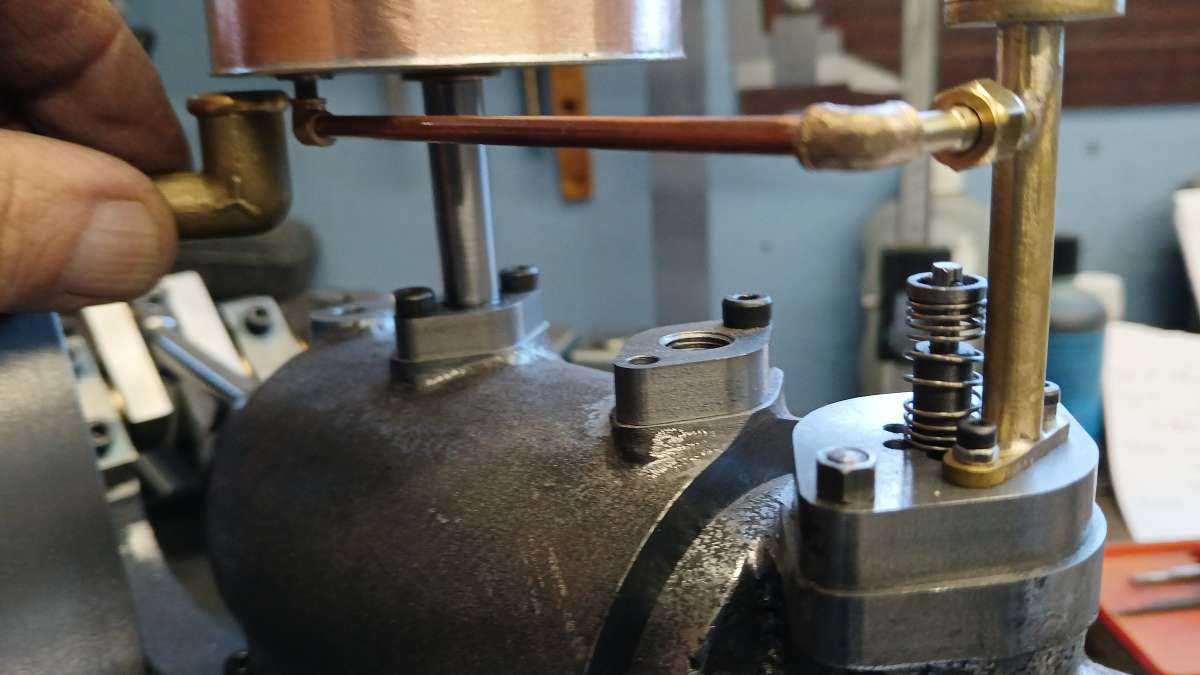
            Some in use

            PICT0341

            #829377
            JasonB
            Moderator
              @jasonb

              See this thread on HMEM for the split block method.

              #829384
              Nigel Graham 2
              Participant
                @nigelgraham2

                Far more prototypical too, where the original engines would have used screwed steel or iron pipe.

                Note the correct in-line patterns on the nearest pipes. The full size versions use nipples that screw onto both pipes, and the flange on one is threaded to take the nut.

                I think the nut in larger sizes is occasionally octagonal rather than hexagonal, although at cost of load-bearing area for the spanner.

                #829389
                JasonB
                Moderator
                  @jasonb

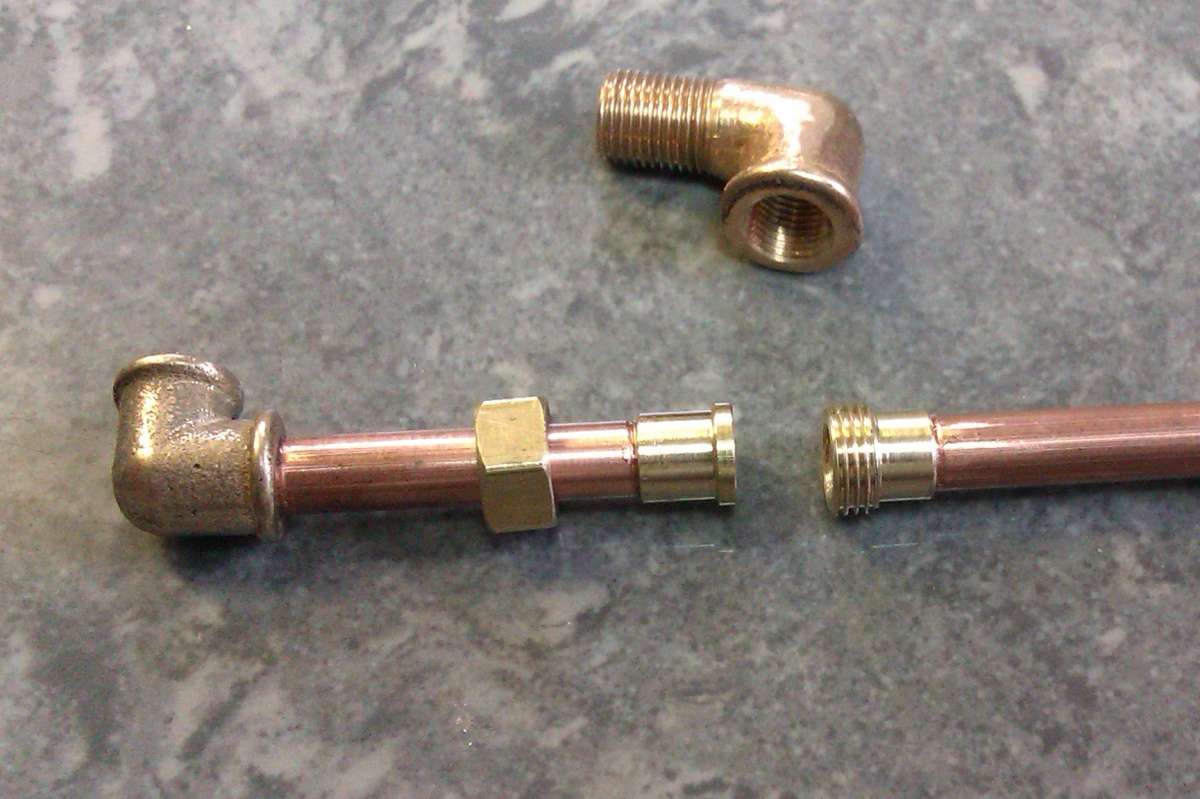
                  That’s it flanged ends on those unions. They don’t make the unions I had to do those from brass stock.This is on 5/32″ pipe, the ones above are 3/32″ on the feed (right) and 1/8″ on the return (left). As you say the bigger they get the more flats to the nut. You can also see an externally threaded street elbow.

                  IMAG2436


                  #829395
                  Michael Gilligan
                  Participant
                    @michaelgilligan61133

                    Turns-out to have been a very good question, Brian

                    MichaelG.

                    #829418
                    noel shelley
                    Participant
                      @noelshelley55608

                      As they go the finish is average for a casting. A good molder with the right sand can get a much better finish than those shown. If their cored then there isn’t much to drill out before threading. Noel.

                      #829420
                      JasonB
                      Moderator
                        @jasonb

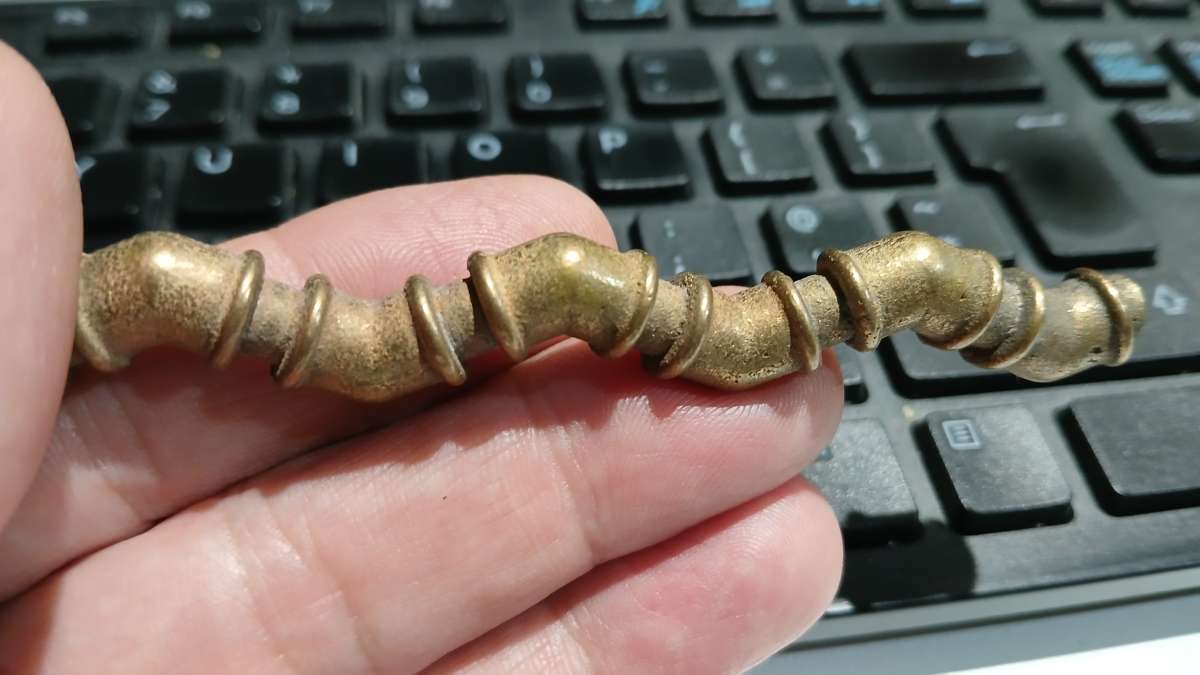
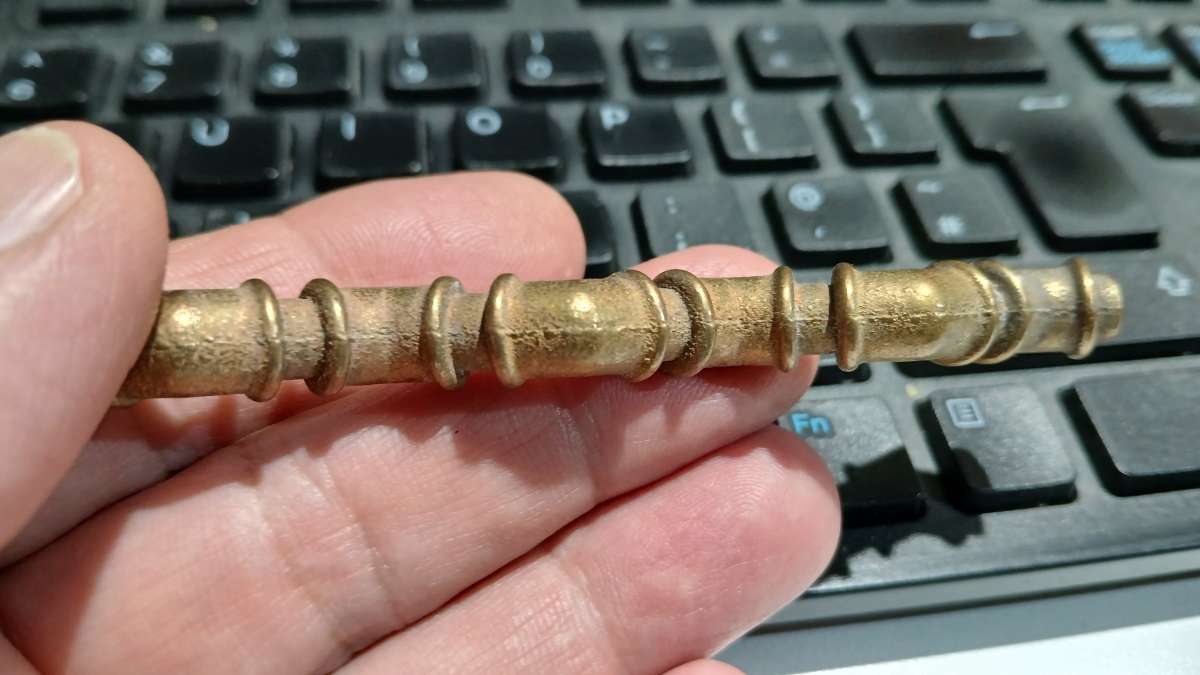
                        Not cored probably because they might be a bit fragile as they would need to be about 2.5mm diameter.

                        Finish is actually quite good, these are the larger 1/4″ size.

                        20251219_203338

                        20251219_203342

                        #829440
                        Nigel Graham 2
                        Participant
                          @nigelgraham2

                          Note that the two halves of the casting are very closely aligned along the parting, both radially and axially.

                          You’ve screwed those unions onto the pipes? I thought they are silver-soldered on!

                          That left-hand one is pretty much as the type that gave me so much grief when I tried hard-soldering it on.

                          #829451
                          JasonB
                          Moderator
                            @jasonb

                            Yes they are all threaded just like the full size.

                            I wonder if some of those posting here have ever used these pipe fittings? The comments about core sand not needing to drill suggest not. These are MODEL pipe fittings and intended for use with MODEL pipe threads. So unlike the full size which are sized according to the ID of the pipe and use NPT and BSP threads. These model fittings are sized to the OUTSIDE DIAMETER of the pipe.

                            Therefore an 1/8″ fitting is drilled 2 to 2.5mm so you don’t break out the corner. Then counter drilled 2.7 and then tapped either 1/8 x 40 or 5BA.

                            #829457
                            JasonB
                            Moderator
                              @jasonb

                              Just as an idea of the size of the fittings being discussed here are a couple I threaded a couple of weeks ago compared to a commercial 1/8″ BSP street elbow.

                              20251220_094025

                              20251220_094000

                              20251220_094230

                              #829470
                              noel shelley
                              Participant
                                @noelshelley55608

                                Yes Jason, your right, A, I have never used these fittings, and B, I had lost sight of just how small they are. To core them would be difficult and rather pointless. Very neat and they really look the part in use, though a little heavy. Admittedly of slightly larger size one can get endfed copper fittings from 6mm/ 1/4″ od, 8mm and 10mm that look OK, are easy to use and are about £1 each. These are fine for some applications on 5″ or 7.25″ models. Noel.

                                #829476
                                Brian John
                                Participant
                                  @brianjohn93961

                                  Thank you for all the interesting and useful answers.

                                  They can’t be too easy to manufacture as there does not seem to be anybody else doing it. They are extremely popular so you would think somebody else would jump in.

                                  #829478
                                  JasonB
                                  Moderator
                                    @jasonb

                                    The Chinese suppliers do them, quite a few on ebay but mostly just the 1/4″ x 40 size. Not cheap though.

                                    #829557
                                    Brian John
                                    Participant
                                      @brianjohn93961

                                      Split block method for L shape : how is the inner flange made on the fixture ?

                                      #829567
                                      noel shelley
                                      Participant
                                        @noelshelley55608

                                        From what Jason has shown they would appear to be supplied in a stick, un drilled or threaded ? Were I to still be running the foundry I would seriously consider making up patterns and casting these, it would be a simple job and worthwhile.  Noel.

                                        #829571
                                        JasonB
                                        Moderator
                                          @jasonb

                                          Brian, you just drill right through to the diameter of the main body then counterbore to the flange size. If that is not clear let me know and I’ll do a CAD image.

                                          I don’t do enough to bother with a jig, I just hold them carfully in the corner of the vice. Same way a sshown here

                                          #829614
                                          Nigel Graham 2
                                          Participant
                                            @nigelgraham2

                                            Very good! Thank you for these, Jason.

                                            You rlast photo, of the model one nestling inside the full-size equivalent, puts them in perspective!.

                                          Viewing 20 posts - 1 through 20 (of 20 total)
                                          • Please log in to reply to this topic. Registering is free and easy using the links on the menu at the top of this page.

                                          Latest Replies

                                          Home Forums Beginners questions Topics

                                          Viewing 25 topics - 1 through 25 (of 25 total)
                                          Viewing 25 topics - 1 through 25 (of 25 total)

                                          View full reply list.