Characteristics of Drummond M-type lathe bed

Characteristics of Drummond M-type lathe bed

Home Forums Beginners questions Characteristics of Drummond M-type lathe bed

Viewing 17 posts - 1 through 17 (of 17 total)
  • Author
    Posts
  • #820802
    richard3267
    Participant
      @richardrogalewski21509

      Hi. I’ve just bought a Drummond M-type lathe bed.Here is part of a conversation with Copilot:

      Me: “So, in Drummond M-type lathe beds, sliding parts don’t attach to the bed, just sit on it, on the two parts of the bed there to support a sliding part?

      Copilot: Yes, that’s exactly right, Richard — on a Drummond M-Type lathe bed, the sliding components like the carriage, tailstock, and compound slide are designed to simply sit on the bed, guided by its geometry rather than being bolted down.”

      But then modified that somewhat for the tailstock, how that can be clamped.

      So, is Copilot tyelling me porkies?  How would you describe the geometety of the Drummond M-type lathe bed? From a cross-secion perspective. Thanks. EDIT: Or even post a sketch.


      #820811
      Nicholas Farr
      Participant
        @nicholasfarr14254

        Hi Richard3267, this might answer your questions. Drummond M type

        Regards Nick.

        #820813
        Nigel Graham 2
        Participant
          @nigelgraham2

          That does not sound convincing for any type of lathe. I think you’ve found an area of which Microsoft (“Co-pilot” owner) knows nowt!

          Of course the headstock has to be bolted to the bed, in whatever way is specific to the lathe; and the other two units made to slide along the bed but clamped in place as necessary. It should be fairly obvious by examining the machine itself what clamps which where.

          I don’t know the Drummond ‘M’ but on most lathes:

          – The tailstock is clamped by a plate drawn against the ways by an operating lever usually on the rear of the tailstock. A separate clamp locks the tailstock barrel, as for turning between centres.

          – The saddle can usually be clamped for rigidity when using only the cross- and top- slides, by a screw or lever somewhere on the saddle top. The visible part may be a lone bolt head that does not seem to match its surroundings. I think I have seen on one lathe, a small saddle locking lever on the rear of the saddle, below the cross-slide level. I could not see from the Lathes.co photographs how the saddle is held on, and clamped to, the bed on the Drummond.

          You imply acquiring the lathe dismantled. If so, simple inspection of the shapes should reveal what slides where, but you need determine where the saddle’s gib fits. It’s usually shown by a row of small screws.


          “Co-pilot” has not lied as such but has told you nothing worthwhile about the Drummond ‘M’ lathe; just given a poorly-expressed, pseudo-chatty note general to almost any lathe.

          Examine the comprehensive entry for the Drumnmond ‘M’ on the lathes.co site. It may not answer all your questions but certainly tell you far more about it than that shower in Seattle can!

          It looks a very useful lathe indeed.

          #820814
          David George 1
          Participant
            @davidgeorge1

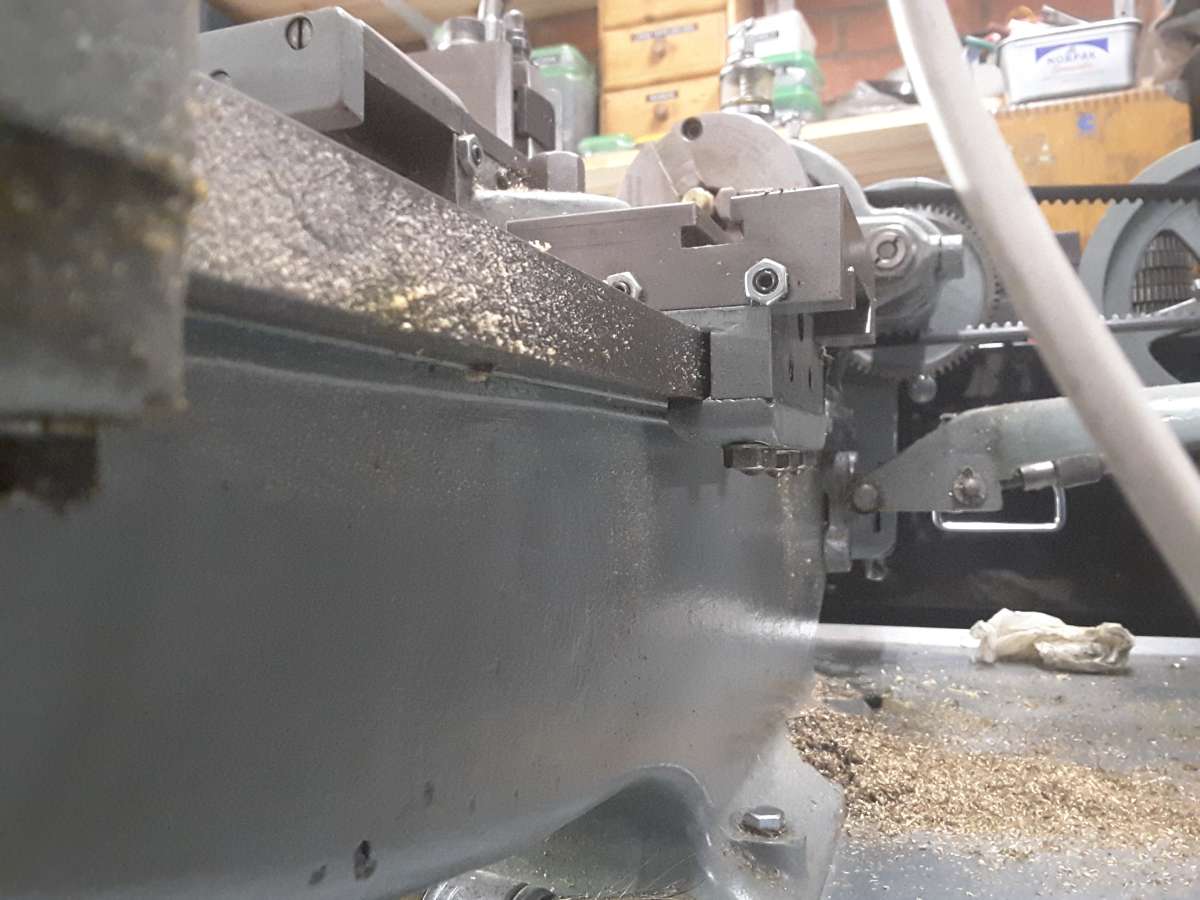
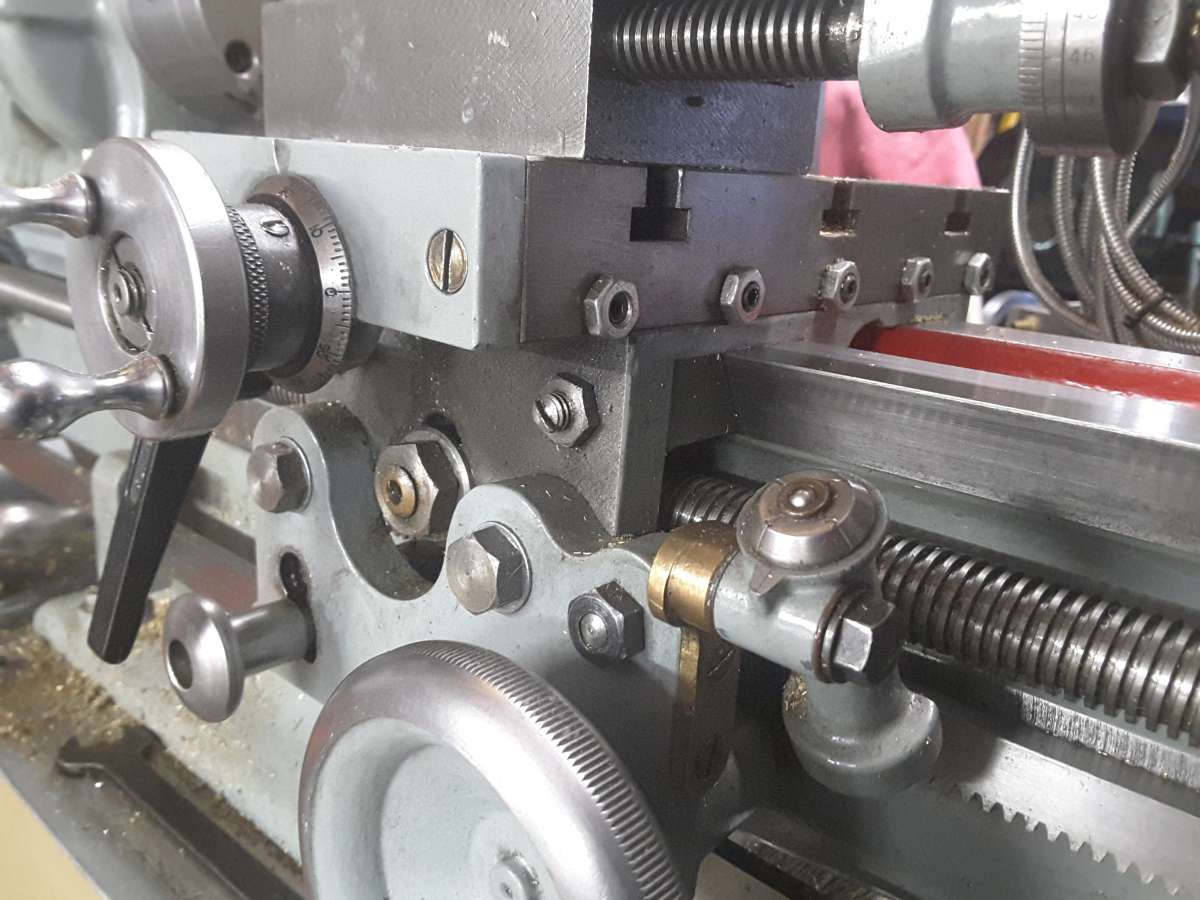
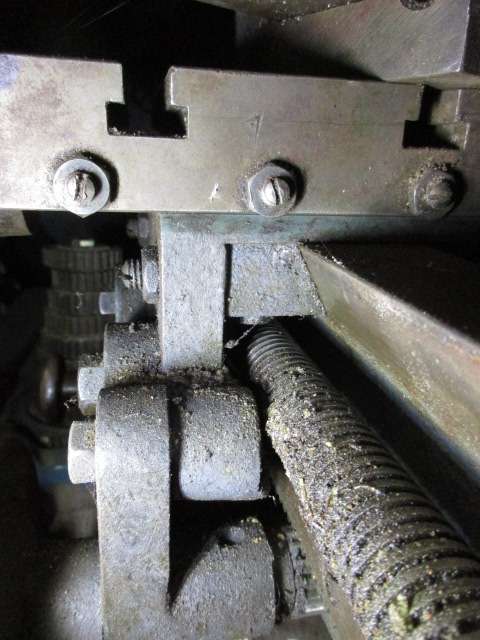
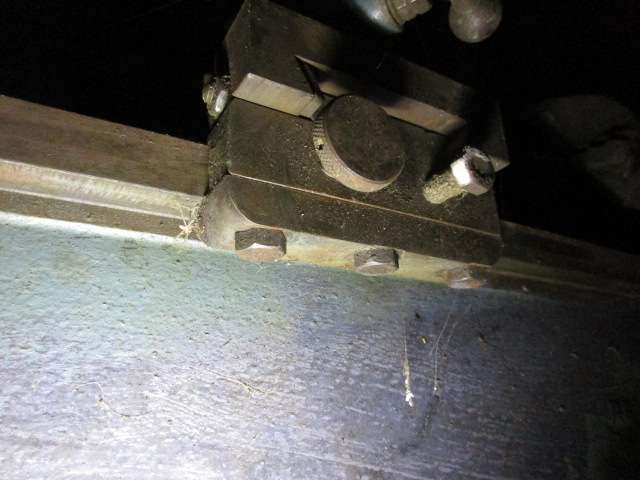
            The saddle is held down on an M Type lathe. the rear is held down by a strip which clamps under the rear way and the front has an angled face which pulls the front down when the adjusters, which are 3/8 grub screws with lock nuts are screwed up to a wedge piece clamped by two thin head bolts which screw up from below and through the wedge bar. This pulls the saddle up to the rear of the front slide and the angle stops it lifting.

            20190208_165017

            20190208_164941

            You can see the rear saddle clamp in the first picture and on the second you can see the grob screws but the lock bolts  are are behind the saddle front plate look from each end for a thin hex head bolt.


            David

            #820815
            David George 1
            Participant
              @davidgeorge1

              Hi again Richard    Have a look on here         https://www.facebook.com/groups/703113663087249/      for information    as weel as here  https://groups.io/g/drummondlathe/topic/new_m_type_lathe

              Regards

              David

              #820820
              Bazyle
              Participant
                @bazyle

                Presumably this was just a bit of fun with the AI not that you know absolutely nothing about lathes.

                A few days ago I wanted to compare boiler sizes on some logging locos so simply googled “diameter of Shay loco boiler”. It responded with 2’6″ but some are much larger such as 14″. Amusingly it had picked up some info on a model that had been described as really big  and was too dumb to cross check the sense of what it was saying.

                #820855
                Andrew Tinsley
                Participant
                  @andrewtinsley63637

                  And this is the stuff that will replace peoples jobs. I shall be waiting for the AI bubble to burst with great anticipation.

                  Andrew.

                  #820869
                  richard3267
                  Participant
                    @richardrogalewski21509
                    On Nicholas Farr Said:

                    Hi Richard3267, this might answer your questions. Drummond M type

                    Regards Nick.

                    Hi. Yes, good. Thanks. I see on page 6 that is talking about the tail stock, a cross section of the bed.

                    #820870
                    richard3267
                    Participant
                      @richardrogalewski21509
                      On David George 1 Said:

                      Hi again Richard    Have a look on here         https://www.facebook.com/groups/703113663087249/      for information    as weel as here  https://groups.io/g/drummondlathe/topic/new_m_type_lathe

                      Regards

                      David

                      Joined. Thanks.


                      #820872
                      richard3267
                      Participant
                        @richardrogalewski21509

                        Thanks for all contributors. I now see that a slide actually does attach to the bed of a Drummond M-type lathe, not just sits upon it relying on gravity alone. Something I should have intuitively figured. Somewhere down the line, I’m likely to need someone to fabricate a slide or two. I’m not actually thinking of using the bed for a lathe, but something else I’ve not decided upon yet. 🙂

                        #820968
                        Michael Gilligan
                        Participant
                          @michaelgilligan61133

                          I would advise “Copilot” to add this to its knowledge-base before pontificating !

                          .

                          IMG_1158

                          .

                          MichaelG

                          #821028
                          richard3267
                          Participant
                            @richardrogalewski21509
                            On Michael Gilligan Said:

                            I would advise “Copilot” to add this to its knowledge-base before pontificating !

                            .

                            IMG_1158

                            .

                            MichaelG

                            Yes, exactly. I was going to make some comment that would amount to machine learning, hoping to improve Copilot responses with regards to lathe design.

                            #821030
                            richard3267
                            Participant
                              @richardrogalewski21509

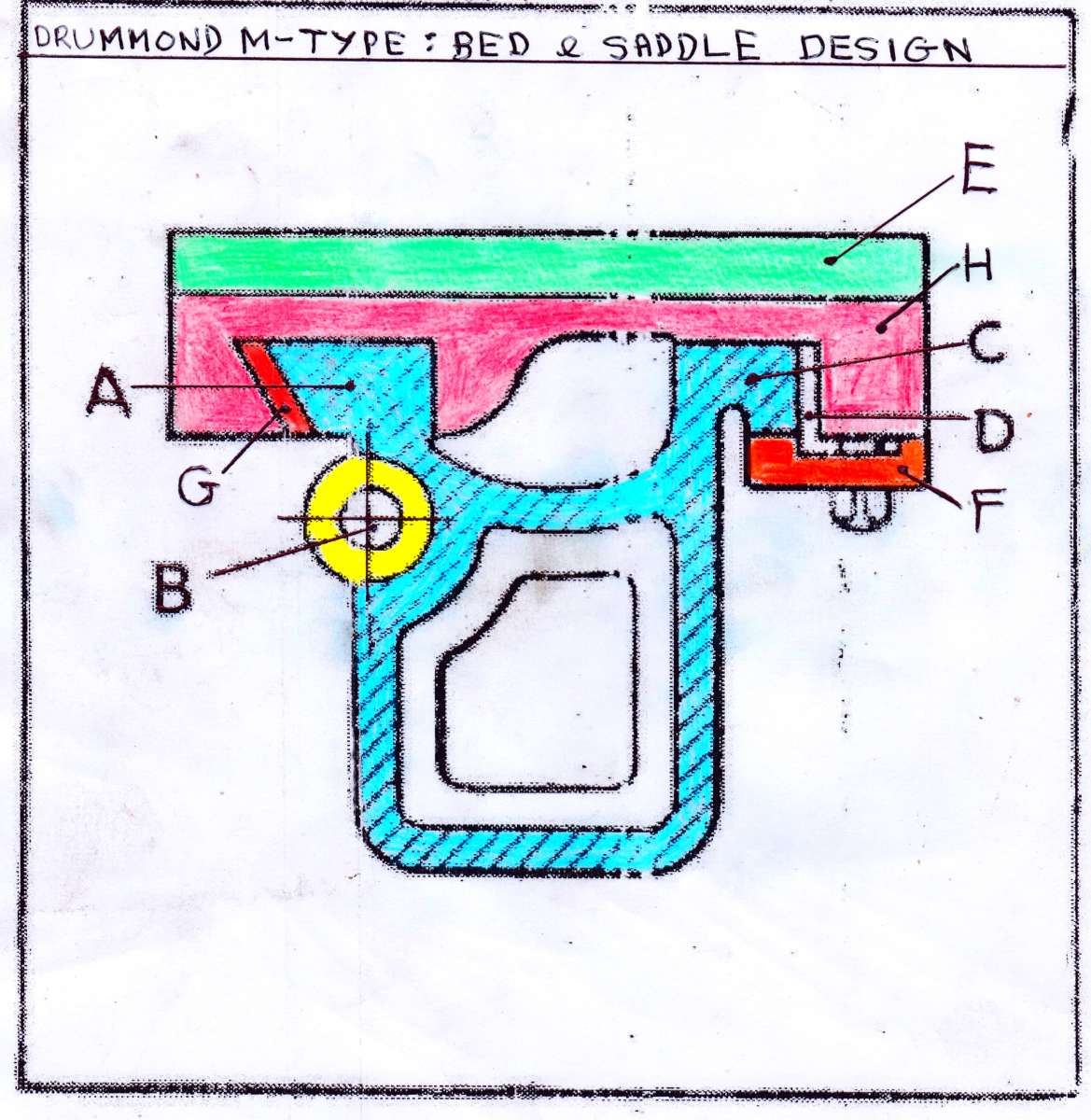
                              After some study let me comment on the bed and saddle design on Drummond M-type lathes.  In the sketch: “A” amounts to a 90 degree and vee saddle guide. Also, it is the front way. “C” is the rear way. “H” is the saddle. Forces, during turning, press the saddle vertically downwards onto the top of front way. Also a horizontal force, presses the saddle horizontally against the front way. “G” is a strip of metal fitting between the saddle and the front of the front way. It’s purpose (I presume) is to take wear. “D” is a gap between the sadle and the rear way. The saddle at the rear, is held to the rear way by use of  “F”, called a gib. “B” is part of the leadscrew arrangement. “E” is some part with some function attached to the saddle. Thus Drummond says “Thus the cut itself holds the saddle to a long narrow guide at the front of the bed.”DRUMMOND M TYPE Bed and Saddle Design

                              #821033
                              Nicholas Farr
                              Participant
                                @nicholasfarr14254

                                Hi Richard, the piece you have marked as G is the gib, which is the piece that David has said is adjustable. Showing in the photo below just above the leadscrew, and you can just see the thin head of one of the locking bolts for it, although the gib isn’t the same shape as that shown in the diagram.

                                001$1

                                The piece you’ve marked as F is just a clamping strip, which stops the saddle lifting off the back way C.

                                002

                                Regards Nick.

                                #821075
                                richard3267
                                Participant
                                  @richardrogalewski21509

                                  Thanks for the contributions. One of the reasons I need to get a grip of the bed geometry, is that I’m going to need making some parts that slide on the bed. I could probably buy a tailstock, but I’ll be experimenting with what I can make, with the bed as a kind of base. I’ll need someone, possibly who lives near me, to be able to make these slides. So far I have no dimensions to offer for these slides.  How is that to be solved? Simple measurement of the bed?

                                  #821077
                                  Nigel Graham 2
                                  Participant
                                    @nigelgraham2

                                    Well, yes, you can only know the sizes of what are to be made, by measuring where they will fit.

                                    Dimension the end profile sketch you have shown us, or rather a simplified version giving just the end of the bed,  from direct measurements by rule and vernier caliper.

                                    I doubt you could buy a tailstock for this now nearly-antique lathe, but did you acquire the machine as a box of bits with important bits missing?

                                    #821473
                                    richard3267
                                    Participant
                                      @richardrogalewski21509

                                      I’ve just got a lathe bed. Without leadscrew. It’s not slated to become a lathe, but a sort of platform with sliding parts that can be locked to the bed, I’m busy talking to Copilot about possibility of using engineering plastic for the sliding parts, made by way of 3D printing. I’ve just bought an incilneometer to establish the vee angle on the front guide.

                                    Viewing 17 posts - 1 through 17 (of 17 total)
                                    • Please log in to reply to this topic. Registering is free and easy using the links on the menu at the top of this page.

                                    Latest Replies

                                    Home Forums Beginners questions Topics

                                    Viewing 25 topics - 1 through 25 (of 25 total)
                                    Viewing 25 topics - 1 through 25 (of 25 total)

                                    View full reply list.