If I were coming here I wouldn’t have started there… (possibly)

If I were coming here I wouldn’t have started there… (possibly)

Home Forums Beginners questions If I were coming here I wouldn’t have started there… (possibly)

Viewing 16 posts - 1 through 16 (of 16 total)
  • Author
    Posts
  • #430068
    Robin Graham
    Participant
      @robingraham42208

      I'm bad at planning machining sequences. Sometimes if I want to make a thing involving new (to me) techniques I'll do the operations I know about, thinking "I'll cross that new bridge when I come to it". It doesn't always, or even often, work out well.

      This is a very simple project – a handle mounted on a taper, such as one often sees – eg:

      img_2076.jpg

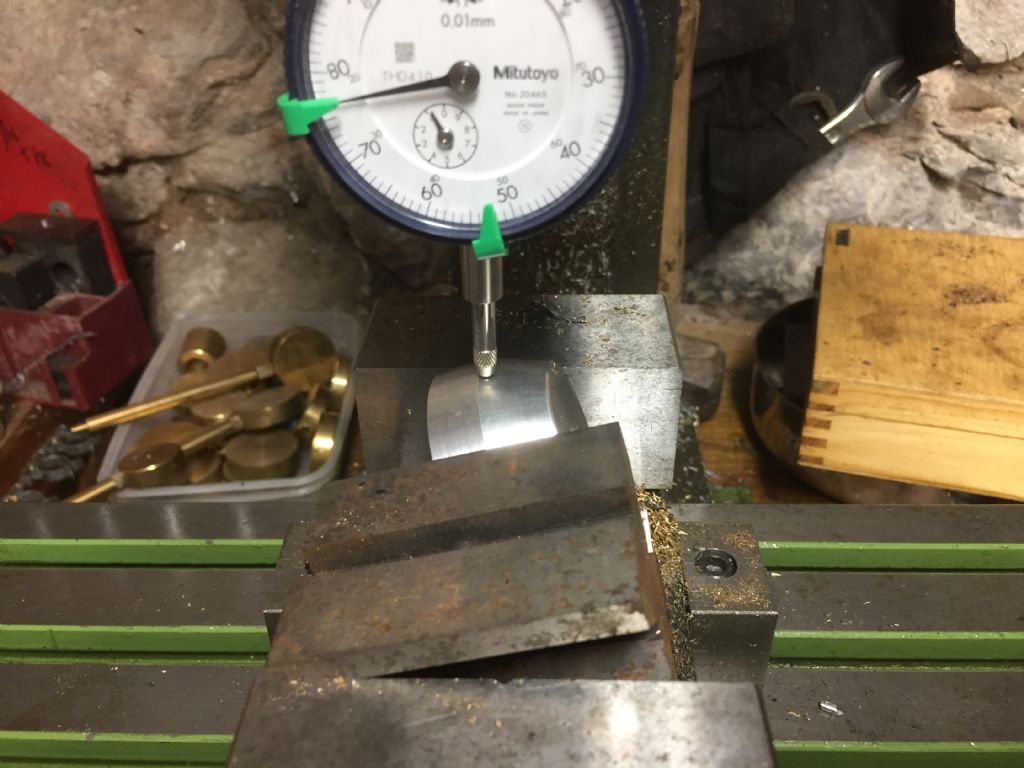
      I turned the taper then thought how am I going to get the handle true? I've ended up like this:

      img_2075.jpg

      ie sticking the piece in the mill vice with a v-block and clocking the taper square. It'll work I'm sure, but it took ages to set the work and I have a nagging idea that I could have done better with more forethought. How would this normally be done on manual machines? Any more elegant ways of doing this?

      Robin.


      Edited By Robin Graham on 23/09/2019 00:11:26

      Edited By Robin Graham on 23/09/2019 00:15:11

      Edited By Neil Wyatt on 23/09/2019 13:57:48

      #9868
      Robin Graham
      Participant
        @robingraham42208
        #430071
        not done it yet
        Participant
          @notdoneityet

          Don’t often see one like that, that way up!

          It’s as good a way as any. Rough and ready might be a level sat on the bevel.

          An angle vise comes in handy for jobs such as that. But you just do it with what you have available, until your collection of holding options grows.

          #430072
          Robin Graham
          Participant
            @robingraham42208
            Posted by not done it yet on 23/09/2019 00:31:46:

            Don’t often see one like that, that way up! …

            Just trying to be inclusive NDIY – there are antipodeans on this forum remember.

            Thanks for your opinion that my method wasn't insane – I'm self-taught mainly and worry about re-inventing wheels.

            Robin.

            #430076
            David George 1
            Participant
              @davidgeorge1

              I have angle piece plates which you can put in the vice which set's the angle by pushing the the V block up to. IE 15 – 20 – 30 – 45 degrees it makes such jobs a bit more simple.

              David

              #430081
              JasonB
              Moderator
                @jasonb

                As you have a hole running through it the other way use that to bolt it to an angle plate or block of metal that can be set at an angle.

                Edited By JasonB on 23/09/2019 18:28:25

                #430086
                Brian G
                Participant
                  @briang

                  I have zero trust in the nasty plastic protractor on a mini lathe, and always use a square or an angle gauge to set the compound. This would put me off using an angle plate or angle vice but I just realised that the same angle plate could be used to set the angle of the compound as well. David's method doesn't even require accurate angle plates, and I could make my own as long as I used the same one for both setups.

                  To be honest though, if nobody was looking I would probably not have planned ahead and would have put a square against the end of the vice, then felt guilty that I didn't clock it as Robin has done.

                  Regardless, all the methods on this thread so far look like less faffing around than tilting the head and re-tramming the mill afterwards.

                  Brian

                  #430088
                  Anonymous

                    Good grief, it all seems way over-complicated for a simple non-precision part. Techniques need to be appropriate for the level of precision needed.

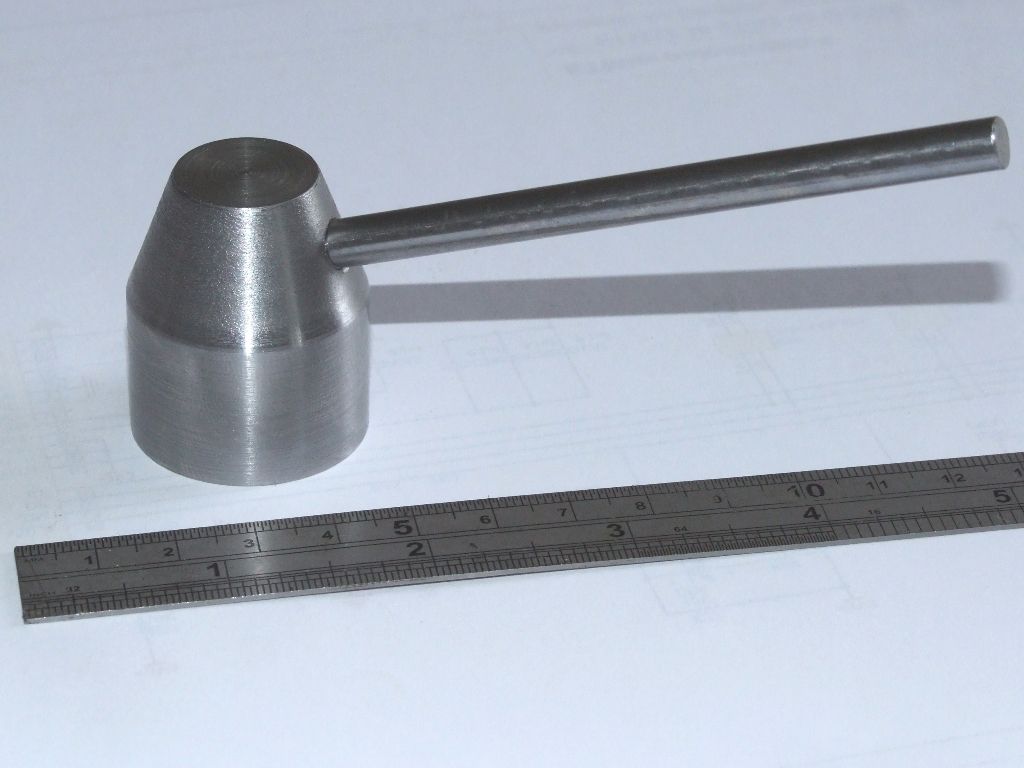
                    I made this as an exercise some years ago to prove a long forgotten point on the forum:

                    handle.jpg

                    It was made in less than 15 minutes using no measuring equipment, not even a rule. Everything was done by eye. Precision where precision is needed is good, but precision where it isn't needed is simply a waste of resource. smile

                    Andrew

                    #430091
                    Chris Evans 6
                    Participant
                      @chrisevans6

                      Well put Andrew, I never chase thous unless it is required. Following on from Jasons method I regularly bolt two angle plates together to give the tilt required.

                      #430098
                      Clive Foster
                      Participant
                        @clivefoster55965

                        Take a bit of time to set the mill bed (and drill table) level then you can use a half decent spirit level to set the job. I have a baby magnetic one that came with a plasma TV VESA mount which can be right handy on small parts. Not super accurate but good enuf for "needs to look right" jobs. Or just set a longer level behind as an eyeball reference and look across.

                        Whilst you are at it arrange a couple of vertical / horizontal references on the wall behind the vice to eyeball across for quick straight up or straight across setting.

                        My Bridgeport table ended up about 10 or 15 seconds of arc out of dead level when I dropped it in place. More by luck than judgement really but I did make an effort to get the shop floor level when I built the place. Nice smooth waterproof chipboard under flooring surface very, very close to level has proved handy at times when setting stuff up or making large things. Normal long builders level says its level!

                        Clive

                        #430100
                        Peter G. Shaw
                        Participant
                          @peterg-shaw75338

                          Horses for courses. Does it really matter how you do it, as long as the end result works. And I quite agree with Andrew, why waste time over measuring something that most people will only glance at before putting their hand on it.

                          Cheers,

                          Peter G. Shaw

                          #430120
                          larry phelan 1
                          Participant
                            @larryphelan1

                            I think this is what other Members refer to as "Experience" !

                            Sad to say, I,m still slowly acquiring it . Long way to go !

                            This often results in some weird set-up.s, and I mean WEIRD !

                            But as long as it works, so what?

                            #430126
                            Jim Butler 1
                            Participant
                              @jimbutler1
                              Posted by Andrew Johnston on 23/09/2019 08:45:36:

                              . Precision where precision is needed is good, but precision where it isn't needed is simply a waste of resource. smile

                              Agreed, good enough is perfect.

                              But for someone who is an amateur machinist, aiming for good precision when it is not really required is good practice for when it is required.

                              I once made a couple of paxolin spacers for mounting a numberplate. I was rather disappointed when I measured them an found that the difference in thickness was 0.005".

                              Chasing accuracy for the fun of it?

                              JimB

                              #430129
                              Michael Gilligan
                              Participant
                                @michaelgilligan61133

                                Posted by Jim Butler 1 on 23/09/2019 13:18:07:

                                [ … ]

                                Chasing accuracy for the fun of it?

                                JimB

                                .

                                … an admirable pursuit for the true amateur yes

                                MichaelG.

                                #430169
                                Howard Lewis
                                Participant
                                  @howardlewis46836

                                  Being realistic, if the part is the base of a clamp for a toolpost clamp, setting with a spirit level, or a digital angle gauge should be OK. Visually, unless it is well out of line, unlikely to cause a problem. Unless you are an absolute perfectionist with time to spare.

                                  It won't function any better because it is within a second of a degree!.

                                  If it has to interface with some other part so that the angles match then things will be different.

                                  Again, as long as the angles complement each other, is the absolute value critical?

                                  Howard

                                  #431994
                                  Robin Graham
                                  Participant
                                    @robingraham42208

                                    Thanks for your replies, and apologies for my delay in responding – stuff happened. Back in the saddle now.

                                    I do take the points about being over-obsessed with accuracy. It doesn't matter too much in this case I agree – I could probably do it by eye – but, as a self-teaching amateur, that's the way that I work. I've read posts from people who have who have had formal engineering training saying that they were required to file down a cube to a thou in size and squareness. Obviously not the most efficient route to the end product but good training. In my own experience, when first I got a lathe I would turn to the limit of what I could measure even when it was unnecessary for the project. That's stood me in good stead in that I can now turn to within a couple of thou confidently and quickly – two thou seems bags of room! It's the same with workholding and the many other things I have to learn. For me it's not all about the destination. In doing something I've not done before I try to get knowledge and skill which will help with something I've not even thought of yet. Lord only knows what the final destination is – for the mo I just like making things from metal!

                                    Thanks again for your comments, Robin

                                    Edited By Robin Graham on 06/10/2019 00:17:08

                                  Viewing 16 posts - 1 through 16 (of 16 total)
                                  • Please log in to reply to this topic. Registering is free and easy using the links on the menu at the top of this page.

                                  Latest Replies

                                  Home Forums Beginners questions Topics

                                  Viewing 25 topics - 1 through 25 (of 25 total)
                                  Viewing 25 topics - 1 through 25 (of 25 total)

                                  View full reply list.