What has happened to this die to cause this ?

What has happened to this die to cause this ?

Home Forums Beginners questions What has happened to this die to cause this ?

  • This topic has 44 replies, 18 voices, and was last updated 2 May 2016 at 22:42 by SillyOldDuffer.
Viewing 20 posts - 26 through 45 (of 45 total)
  • Author
    Posts
  • #236786
    JasonB
    Moderator
      @jasonb

      Dave, option 4. Find a bit of bar that will slide into the hollow small end and hold that in the drill chuck. With work rotating at slowest speed, tailstock clamped to bed hold die holder in finger and thumb and slide along bar until it engages on the work and cuts thread, just loosen your grip when desired length of thread cut, stop lathe and then wind the die off either by hand or under reversed power.

      J

      #236791
      SillyOldDuffer
      Moderator
        @sillyoldduffer
        Posted by JasonB on 29/04/2016 20:43:28:

        Dave, option 4. Find a bit of bar that will slide into the hollow small end and hold that in the drill chuck. With work rotating at slowest speed, tailstock clamped to bed hold die holder in finger and thumb and slide along bar until it engages on the work and cuts thread, just loosen your grip when desired length of thread cut, stop lathe and then wind the die off either by hand or under reversed power.

        J

        Thanks Jason! It's easy when you know how. I would never ever have thought of that and it's just so obvious…

        Cheers,

        Dave

        #236798
        Howard Lewis
        Participant
          @howardlewis46836

          The M3 thread is only 0.25mm deep, (Tapping size for M3 x 0.5 is 2.5mm) that is most unlikely to withstand the force needed to drag the Tailstock along the bed. So even with a new die, do use a Tailstock Die Holder, and lubrication. The only force imposed on the freshly cut thread will be that needed to slide the Die Holder along the Arbor, (which will be absolutely minimal).

          Cutting a thread with a Die, in one pass, you are removing, relatively, a lot of metal. If you were cutting the thread with a single point tool, you would use several passes, with increasing depth of cut.

          Using a handheld Die Holder, and resisting rotation by resting against the Bed, or the Toolpost, may tend to lever the die off the lathe axis, which will not improve the cut at all. The Arbor, mentioned above, allows the Die to pick up and follow the workpiece, but keeps it more closely aligned.

          Howard

          #236808
          Peter Krogh
          Participant
            @peterkrogh76576
            Posted by SillyOldDuffer on 29/04/2016 20:19:51:

            Can anyone advise on the correct way to cut a thread using the set-up shown in Brian's picture? I have the same type of die holder and am not clear on how it is meant to be used.

            Read my previous post: next to last on the first page of this thread!!

            Pete

            #236816
            Brian John
            Participant
              @brianjohn93961

              The reason I am using silver steel is because that is what was supplied in the Bengs kit for piston rods and crank bolts. I have cut many threads on this material before with no problems. I will try again this afternoon with some brass rod and see what happens ; I do not have any mild steel on hand.

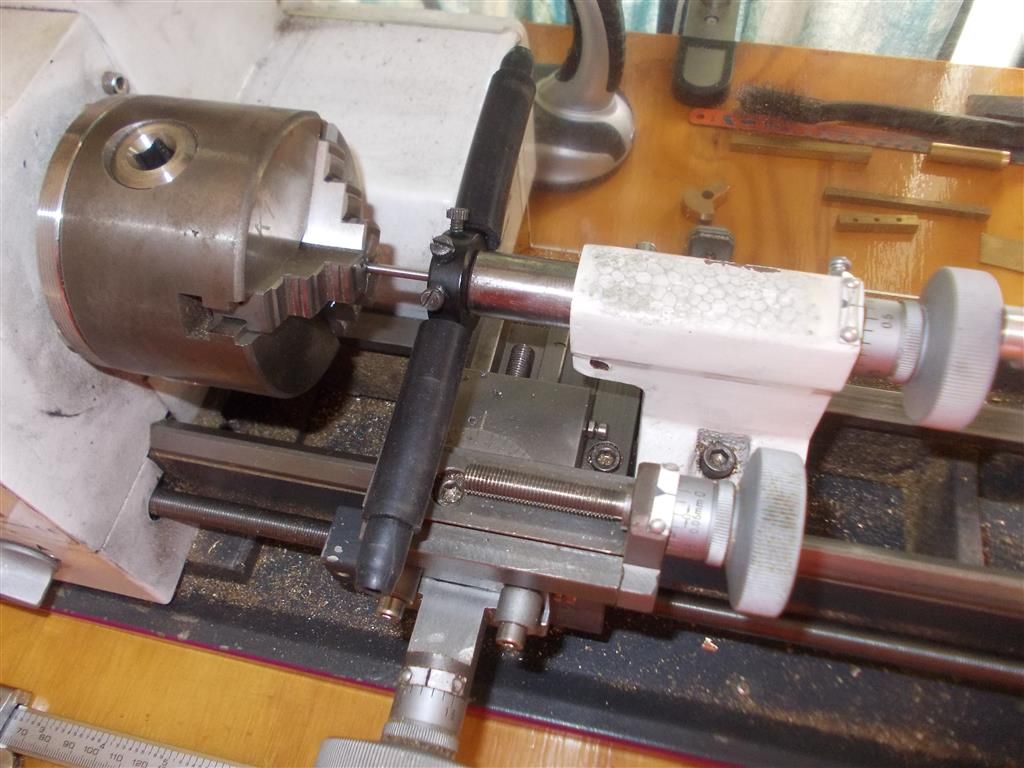
              The above photo is not my usual thread cutting setup. I usually just remove the topslide and use a manual die holder in the lathe with the tailstock up against it to keep it on course. The lathe chuck is turned by hand but I usually reverse it out slowly under power when I have finished cutting the thread. It has never failed before.

              Rubber sleeves have been fitted over the handles to prevent damage to the lathe :

              die problem 3.jpg

              Edited By Brian John on 30/04/2016 02:41:21

              #236817
              Brian John
              Participant
                @brianjohn93961

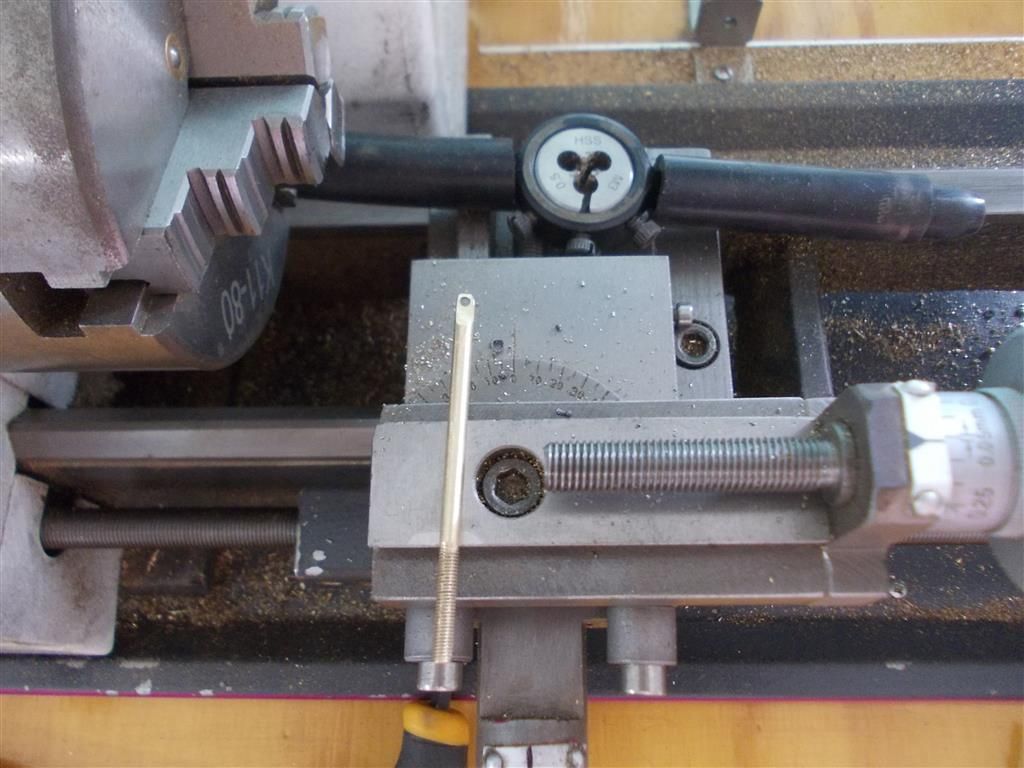
                I have successfully cut a piston rod using some 1/8'' brass. I turned down the end to 2.9mm to get it started and used a drop of tap magic on the end. It easily cut 15mm of M3 thread with no problems. I can only assume that by not previously using any cutting compound that I have blunted the cutting edges of the die and it is now having problems cutting silver steel. A new die will be ordered on Tuesday.

                die problem 4.jpg

                Edited By Brian John on 30/04/2016 07:13:21

                #236818
                JasonB
                Moderator
                  @jasonb

                  Brian are you sure they supply silver steel with the kit as it is a most unlikely material for this purpose. Stainless steel would be more usual. Is the material supplied in the kit magnetic?

                  If it is cutting brass OK then it is unlikely to be blunt as brass needs a very sharp cutting edge.

                  #236821
                  Brian John
                  Participant
                    @brianjohn93961

                    It is listed on the instructions as silver steel. I am using my own silver steel now as the supplied silver steel was a bit undersized which caused problems getting a good fit on the D. piston rod as it passed through the D. cylinder cover.

                    I thought brass was softer and easier to cut than silver steel ? I thought stainless steel was harder than silver steel ?

                    Anyway, I will know more when I get my hands on a new die. I thought I had a spare M3 die ; I always have a spare M2 die having chipped the edge off the first one I bought.

                    Edited By Brian John on 30/04/2016 08:01:19

                    Edited By Brian John on 30/04/2016 08:05:29

                    #236822
                    JasonB
                    Moderator
                      @jasonb

                      Would still be interested to know if the supplied material is magnetic as something may have got lost in the translation, being undersize would also suggest it is not silver steel.

                      The softness is why you need sharp tools for brass otherwise it just gets pushed about by the cutting edge.

                      #236823
                      Brian John
                      Participant
                        @brianjohn93961

                        I thought stainless steel was tougher than silver steel ? Is that not correct ?

                        #236842
                        Chris Evans 6
                        Participant
                          @chrisevans6

                          Depends on the grade of stainless as to which is tougher, I have always avoided trying to thread silver steel as it usually rips and also ruins dies. Stainless is easy to thread in 303 and 304 grades, 316 a little more difficult and hard on taps and dies. The 400 magnetic series stainless seems to cut well but is less common.

                          #237063
                          SillyOldDuffer
                          Moderator
                            @sillyoldduffer
                            Posted by Peter Krogh on 29/04/2016 23:36:36:

                            Posted by SillyOldDuffer on 29/04/2016 20:19:51:


                            Can anyone advise on the correct way to cut a thread using the set-up shown in Brian's picture? I have the same type of die holder and am not clear on how it is meant to be used.


                            Read my previous post: next to last on the first page of this thread!!

                            Pete


                            Hi Pete,

                            I did see your earlier post thanks and thought your method was the same as Option 3 of my question. It's the way I used to use that type of die holder on my lathe.

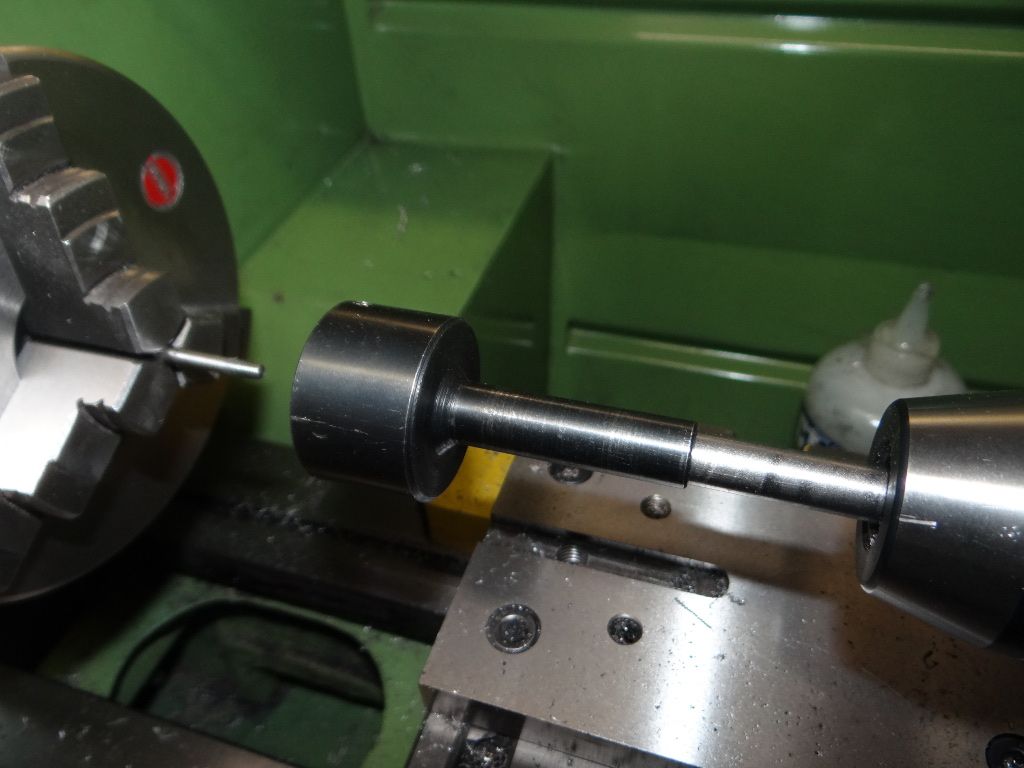
                            Anyway the clarification gives me the chance to report back on JasonB's suggestion which was to mount the die holder on a rod gripped by the drill chuck.

                            dieholder.jpg

                            I just tried doing M4 the Jason way with a cheap nasty die and am impressed. His advice has two advantages over Option 3: first you don't have to fiddle with the drill chuck until to get a suitably loose grip; secondly it is much easier to firmly grasp the die holder whilst cutting the thread.

                            I had to turn down a length of rod to fit into the die holder and then tidy up the die holder's bore to get smooth running. Took about 10 minutes and I was probably being unnecessarily fastidious in cleaning up the bore..

                            Thanks again Jason.

                            Cheers,

                            Dave

                            Edited By SillyOldDuffer on 01/05/2016 16:07:42

                            #237065
                            SillyOldDuffer
                            Moderator
                              @sillyoldduffer

                              Further to Brian's original question I created a similar disappointment on a mild steel rod by cutting under power with a cheap die this morning.

                              The problem was due to swarf blocking the cutter. I was able to cut a reasonable thread using the same set-up by turning the lathe chuck by hand with frequent reversals to remove chips and add more lubrication.

                              I wonder if Brian's problem might be due to a blunt die tearing rather than cutting compounded by scrapings choking the cutter?

                              #237070
                              Brian John
                              Participant
                                @brianjohn93961

                                I always turn the lathe chuck by hand ; I never cut under power.

                                Please excuse my ignorance but I really do not understand that photo above : why is putting the die holder on a rod in a chuck better than putting the die holder directly in the chuck ?

                                Edited By Brian John on 01/05/2016 17:17:15

                                #237074
                                JasonB
                                Moderator
                                  @jasonb

                                  You can lock the tailstock to the lathe bed so its all nice and rigid. Then the die & holder will simply be drawn along the work as the die cuts. A lot easier than a loose tailstock that needs to be pushed up against the work and if it starts to drag could strip the thread if it is a fine one.

                                  #237080
                                  Peter Krogh
                                  Participant
                                    @peterkrogh76576

                                    Yes, with the die holder 'loose', cutting under power is really safe and easy as you have full control. When you want to stop, just let go of the holder and it will spin on the rod or in the chuck depending upon how you've set it up. A long time ago I made a double ended holder (13/16 and 1) with a 1/2" hole all the way through. I have a 1/2" rod that goes in the tail stock chuck for it to slide on. The 'standard' gadget. Haven't gone back yet!

                                    I have found that inexpensive dies can suffer from a variety of defects, from just plain dull to little or no 'top rake', the flute holes being quite small thus not giving the right rake or enough room for chips to clear. It really pays to closely examine your dies. I have had good success sharpening/increasing rake/enlarging holes with a small stone in my flex shaft tool. A few minutes can turn a dud into a good 'un.

                                    For steels I use the old lard/sulfur cutting oil, plain lard or Crisco for aluminum. Dies for aluminum must be very sharp.

                                    And always a lead-in chamfer on the end of the material.

                                    Best of luck sorting this out,

                                    Pete


                                    Edited By Peter Krogh on 01/05/2016 17:50:28

                                    #237138
                                    Brian John
                                    Participant
                                      @brianjohn93961

                                      So the shaft of the die holder has to be bored out to accept the rod ? I don't think my lathe would manage that ; die holders are made of pretty tough material. It is a good idea though.

                                      #237139
                                      JasonB
                                      Moderator
                                        @jasonb

                                        Dave's one came with a hole in it.

                                        #237154
                                        Neil Wyatt
                                        Moderator
                                          @neilwyatt
                                          Posted by Brian John on 02/05/2016 07:54:25:

                                          So the shaft of the die holder has to be bored out to accept the rod ? I don't think my lathe would manage that ; die holders are made of pretty tough material. It is a good idea though.

                                          Use a tube instead of a rod

                                          Neil

                                          #237252
                                          SillyOldDuffer
                                          Moderator
                                            @sillyoldduffer
                                            Posted by Brian John on 02/05/2016 07:54:25:

                                            So the shaft of the die holder has to be bored out to accept the rod ? I don't think my lathe would manage that ; die holders are made of pretty tough material. It is a good idea though.

                                            Hi Brian,

                                            Yes my die holder already had a hole drilled through it. Mine looks just like yours from the side but it must be a different make. It isn't "made of pretty tough material" either: I didn't have any trouble tidying up the bore, possibly because the thing was cheap and cheerful!

                                            I wouldn't go to the trouble of drilling out a solid shank especially when using a tube as suggested by Neil is such an easy alternative.

                                            I've had mixed results when threading. I suspect my issues were due to a mix of cheap and/or blunt dies, awkward metals and inexperience. Although practice has made me much better at recognising when to back off, I still mess up more often than I like to admit. One good tip I learned on this forum is that slightly reducing the diameter of the rod being threaded helps considerably in awkward cases, as does using lots of cutting fluid.

                                            It's worth double-checking the diameter of your rod too: I have various examples of "4mm" rod in my scrap-box that actually range in size from 3.85 to 4.1mm Chaos ensues whenever I try to cut an M4 thread on to the 4.1mm rod.

                                            Cheers Dave

                                          Viewing 20 posts - 26 through 45 (of 45 total)
                                          • Please log in to reply to this topic. Registering is free and easy using the links on the menu at the top of this page.

                                          Latest Replies

                                          Home Forums Beginners questions Topics

                                          Viewing 25 topics - 1 through 25 (of 25 total)
                                          Viewing 25 topics - 1 through 25 (of 25 total)

                                          View full reply list.