Bigger workshop

Bigger workshop

Home Forums General Questions Bigger workshop

Viewing 16 posts - 1 through 16 (of 16 total)
  • Author
    Posts
  • #117838
    Rik Shaw
    Participant
      @rikshaw

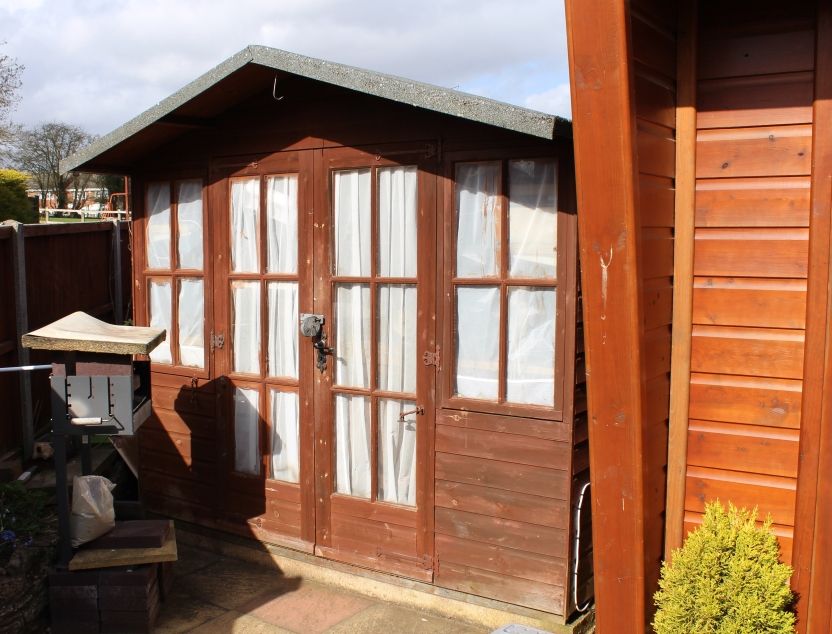
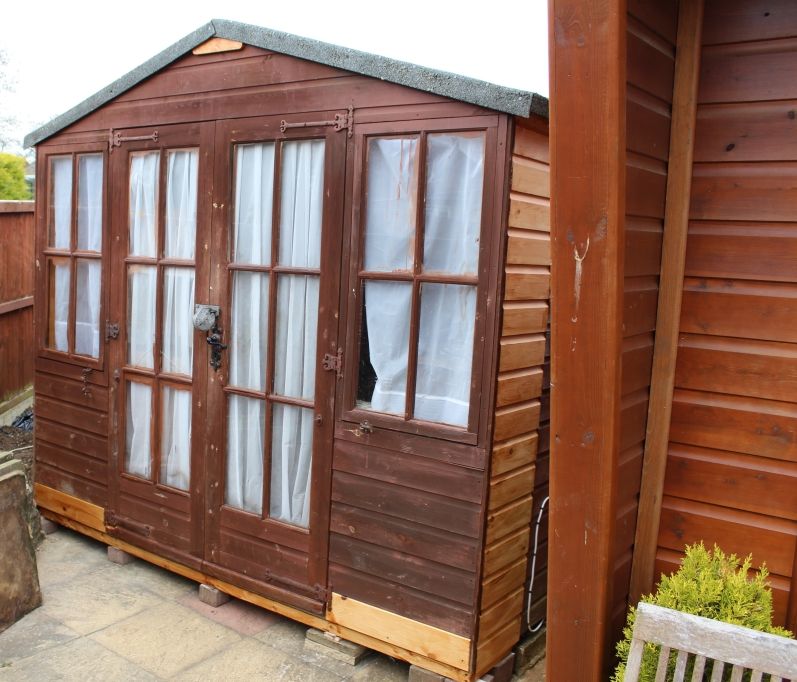
      My workshop has been an 8ft x 6ft summer house which meant that my new lathe choice was restricted to – in the WARCO range – a WM 240. Due to available space in the garden a newer, larger workshop allowing for a larger lathe was not an option. Well there is always more than one way to skin a cat as they say so I have let a "chippy" relation loose with a big hammer and some wood and over two days he has crafted me a stretch job on the summer house. I now have an extra 14 inches – plenty of space now for the larger WM 250.

      Before……………..

      before.jpg

      …………..and after.

      after.jpg

      All I have to do now is decide on either the belt drive version or the variable speed with powered cross slide version. Any advice much appreciated.

      Rik

      #22605
      Rik Shaw
      Participant
        @rikshaw

        ……..stretching it a bit!

        #117841
        Martin Kyte
        Participant
          @martinkyte99762

          Suggestion.

          When you install the lathe, drill a hole in the wall of th building exactly in line with the mandrel and slightly larger than the bore. You can then mount the lathe as close as you like to the wall and still feed long lengths of material down the spout and out through the hole. When not in use a bung in the hole keeps the rain and the wasps out.

          Simples

          regards Martin

          #117844
          Eric Cox
          Participant
            @ericcox50497

            "I now have an extra 14 inches "

            Sounds like you're bragging

            #117847
            Springbok
            Participant
              @springbok

              Martin,
              there are some jokers on this forum, The summer house looks great are you going to line /insulate it before putting anything in. would recomend for the winter months. Electrics install before lining, ensure lots of sockets every ware some you may never use, but you never know. Lighting there has been many debates on this subject so worth looking up past threads.
              My workshop is down in an old pub cellar (cottage was a cider house in around 17c)
              Good luck and enjoy

              As far as the lathe is concerned a variable speed wins every time, I had all my machinery converted to 3 phase.  If you are also contemplating a Mill get one with DRO you will never regret it.
              Once again there has been many dicususions on this.
              Bob

              Edited By Springbok on 26/04/2013 09:49:58

              #117851
              NJH
              Participant
                @njh

                Hi Rik

                I echo Bob's advice. Insulate – warmer in winter, cooler in summer. It will also help in the fight against the dreaded condensation / rust cycle. I have a small thermostatically controlled oil filled radiator which I use as required. The objective is to keep the temperature above the dew point and hence avoid condensation. Last year this cost me just under £16 to run. ( Additional heating, as needed, is used when I'm working in there.)

                Install lots of sockets ( I have 30 in my workshop – most have a plug in them!) and mount the majority above bench height. You will need a few lower down for things like heaters…. or vacuum cleaners! I have flourescent tubes as the main lighting but I also have bright lights on each machine and anglepoise lamps on the benches.

                Regards

                Norman


                Edited By NJH on 26/04/2013 10:24:40

                #117858
                1
                Participant
                  @1

                  Rik

                  I have a variable speed WM240 and would wholeheartedly recommend this functionality. Regarding the reliability of the controller electronics, mine is 2 years old and I have had no problems so far. "If I knew then what I know now" I would probably have dug a little deeper in to ErIndoors purse and gone for the WM250 with powered cross feed as a nice to have luxury, but the lack of it is not that big a deal.

                  Jim

                  Edited By Im Indoors. on 26/04/2013 12:03:18

                  #117862
                  Martin Kyte
                  Participant
                    @martinkyte99762

                    Springbok

                    Why do you think that was a joke? My mate Barrie has done just that and finds it very usefull.

                    Martin

                    #117866
                    Trevor Wright
                    Participant
                      @trevorwright62541

                      Martin – a company I worked for used to machine long tubes, but could not get them through the spindle of the lathe, due to the tailstock – they drilled holes in the brick wall and we had to go outside and feed the tubes through the holes into the back of the lathe from the pavement……..The holes were blocked up with steel plates…..happy days……

                      Trevor

                      #117868
                      Boiler Bri
                      Participant
                        @boilerbri

                        Rik,


                        Go for the best you budget will run to. No point regretting it later.


                        bri

                        Edited By Boiler Bri on 26/04/2013 13:07:45

                        #117875
                        Rik Shaw
                        Participant
                          @rikshaw

                          I should have pointed out before that the unstretched version of the summer house was home to a now sold mini lathe. It also (and still does) house a lifetimes collection of tooling and other machine tools. All of this is housed in and on custom built shelves and cupboards anchored firmly to the building. This means that insulation is only an option if I gut the innards and start again. Life is to short for that and I will soldier on in uninsulated mode. I do however appreciate the advice and agree that if I was just starting model engineering I would insulate without a doubt.

                          In the six years that I have been using this particular "building" as a workshop WD40 has become my best friend for keeping the rust at bay. To improve things more and as an experiment I am installing a greenhouse type electric tube heater shortly that I will leave on at night when the weather turns cold. Not sure whether a 180W will be enough or to use one with a higher wattage.

                          Rik

                          #117879
                          Bazyle
                          Participant
                            @bazyle

                            A dehumidifier is better than a heater and protects everything.. Once it had sucked the water out of the papier mache walls mine hardly runs. 100% draughtproofing is important too.

                            #117880
                            Bazyle
                            Participant
                              @bazyle

                              Nice little shed. You know what you could do – extend the roof out the front a bit to act as a sun/rain shade for those windows. Then in a year or so invite your relative around again……..

                              #117883
                              john kennedy 1
                              Participant
                                @johnkennedy1

                                You know what you could do – extend the roof out the front a bit

                                laughlaughlaugh

                                #117884
                                Rik Shaw
                                Participant
                                  @rikshaw

                                  Bazyle – Bought a dehumid (Argos own brand) four weeks ago. Ran it in the workshop for 24 hrs as advised. Result? It collected zero water. Ran it for another 24 hrs outside whilst raining but under cover. Result? It collected zero water. Ran it back to Argos. Result? Full refund!

                                  I take your advice on board re: dehumid being better than greenhouse heater and I intend keeping my eye out for one at my more reliable retailer – our local Sunday car boot sale!!!!

                                  Rik

                                  PS —- Stretch the roof again? —– made ME laugh!! face 20

                                  #118118
                                  frank brown
                                  Participant
                                    @frankbrown22225

                                    My last shed had to be extended when I bought a milling machine. It was 12' by 8' and I went for a 4' extention but because of its location this had to be done by extending each end by 2', oh yes!, the thing was built on a sloping site of about 12". So I dug out foundations at one end, built a retaining wall, back filled it and put a 4" concrete top to it. My plan A, was then to roll the shed over this new "base" then rebuild it at the other end. This I thougth I could do by putting scaffold poles under the shed and use them as rollers . The plan failed!!, there was not enough clearance under the shed for the scaffold poles and trying to slide them underneath caused the poles to jam and scar the underneath of the shed's floor. So on to plan B

                                    Foundations were dug and the base extended at the other end. Both end walls of the shed were then taken down, leaving the end trusses with their vertical struts under their centres. One end was then extended and re-clad using new shiplac boarding, re-using the boards from end to "fill in " the 2' flont and back, so it matched the rest of the front..

                                    At the othe end the roof truss was re-inforced with steel plate, so the roof weight would be taken down to the side walls and the vertical strut removed , and the end wall wall was built from scratch. Again the front and back wall "extensions" were built using the old planking fom the end. I moved the door from the this end round to the front with a short panel about 12" between tit and the corner, this was so I could unscrwew the door frame and this panel, to give me a 4' width to get the new machine .

                                    So I had a clear area at one end for the mill and a 2' wide extra bit with a roof pillar between it and the rest of the shed at the other end. I used this area as a "store" (biggest junk box in the world?)

                                    Eventually i settled a a "Deckel"stlye mill (low head height precluded a "Bridgeport&quot, which was brought home by a Hiab equipped vehicle, which had to lift it over a 8' Victorian brick wall to get it into my garden – wish I had taken some photographs of it.

                                    Frank

                                  Viewing 16 posts - 1 through 16 (of 16 total)
                                  • Please log in to reply to this topic. Registering is free and easy using the links on the menu at the top of this page.

                                  Latest Replies

                                  Home Forums General Questions Topics

                                  Viewing 25 topics - 1 through 25 (of 25 total)
                                  Viewing 25 topics - 1 through 25 (of 25 total)

                                  View full reply list.