Trouble getting started

Trouble getting started

Home Forums Beginners questions Trouble getting started

Viewing 25 posts - 1 through 25 (of 65 total)
  • Author
    Posts
  • #6762
    Paul Harrison 5
    Participant
      @paulharrison5

      How much equipment do I really need

      #123112
      Paul Harrison 5
      Participant
        @paulharrison5

        In September I will be 57 and my very supportive partner has encouraged me to buy a lathe and fulfil a childhood dream of building a traction engine. I was unsure, however she has assured me that if I don't do it now, in 10 years time I will regret it. Having no experience at all I listened to a lot of people and took a lot of advice, which ended up with the arrival of a WARCO GH1232 lathe last month. I have now, rather embarrassingly found out that almost every engineering project involves as much milling as turning, a facility I do not have. A vertical slide seems rather useless on larger jobs like a 4" road loco and so I have been looking at a couple of mills, the WARCO Major and the WARCO GH Universal mill. I would really appreciate answers to a couple of very basic questions. How valuable is it to have a mill with a tilting head rather than fixed and what is the difference between an MT3 and R8 tool holder and which is better.

        I know everyone must get fed up of answering these basic questions but it seems that the more I learn, the more I need to learn!

        #123121
        Another JohnS
        Participant
          @anotherjohns

          Paul; Random but numbered comments.

          0) The best time to start was years ago, the second best time to start is now. So, start.

          1) Warning – it is really easy to go overboard and purchase more than you need.

          2) I have 2 mills, one horizontal/vertical. Have only used the horizontal arbour once in 20 years, and the vertical head has NEVER been swivelled since I last put it on and aligned it.

          3) my 2 mills – I seem to ONLY use ER-style collets. ER25 on one mill, ER16 on the other; both mills have MT2 spindles, and I have lots of MT2 tooling, but it never seems to get plugged in.

          4) Maybe see if there are others nearby that you can wander over to and ask questions of. Is there a Model Engineers club close by? Model Engineers seem to love giving advice (usually following their own workshop practices!) but at least you can make your own decisions when you have more knowledge.

          Another JohnS.

          #123124
          JasonB
          Moderator
            @jasonb

            If you are going to do a 4" then forget the Major, its not really got the capacity and yes at that scale a tilting head will be a bonus. I'd be thinking of a turret mill myself.

            I went for MT3 on my mill so I could also sleeve down the lathe and use the same tooling on that which has prooved worthwhile.

            If you are not already a member of Traction Talk Forum then join us there in the miniatures section and read through some of the build threads there, they will show you lots of machine setups so you will get an idea of want machines and tooling will be required. This is another build, have a look through and see what he does with his mill

            Jason

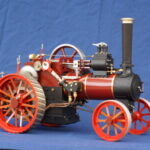
            PS the traction engine in my avitar was done without a mill but would not want to try it with a 4"

            Edited By JasonB on 25/06/2013 21:01:45

            Edited By JasonB on 25/06/2013 21:06:08

            #123125
            Sub Mandrel
            Participant
              @submandrel

              Paul,

              I echo all of John's comments, except I have only had my mill for about seven years without tilting the head!

              R8 tooling is more expensive than MT and you can share MT tooling with the lathe (adaptor may be needed).

              Most expensive equipment buys you time. If cashflow is tight spend ingenuity and time instead of money. You will make more friends by passing on how you solved a tricky task than sjhowing of flash ki (Ok we do all secretly like seeing/showing off flash kit but…)

              Pace your jobs, and if you get stuck someone here may be able to help.

              Neil

              #123126
              Bob Perkins
              Participant
                @bobperkins67044

                Welcome Paul

                A couple of comments from a newbie with about 18 months under his belt. I took advice and bought a mill with a fixed column and an R8 collet system. No regrets with my choice.
                Never worry about asking questions. My experience in getting helpful responses have always been positive.
                Happy building…
                Bob..
                #123128
                Chris Heapy
                Participant
                  @chrisheapy71135

                  Yes Paul, you will want a mill for the job you have in mind. Generally, the advice is to get the largest, heaviest machine you can accommodate. What taper it has in the spindle is somewhat irrelevant really, International Tapers are used on large machines, R8 is common on mid-size mills, MT2/3 (Morse Tapers) on smaller machines, but there is no rule as to which the manufacturer will use. Tooling for mills is exchanged rather frequently and Morse tapers are a bit 'sticky' (need a knock to release if the machine doesn't have an auto-eject facility), R8 comes out a bit easier. Anyway, R8 is very common so you will find a plethora of chucks, collets, boring heads, drill chucks, arbours and other tools (that are essential to get the thing to do some work for you) either new or second-hand.

                  Many years ago I bought a Warco A2S turret mill – the largest machine I could conveniently fit in my garage workshop – and it has served well ever since. It is rare to require the tilt function but more common to need the extending head to provide a larger 'throat' (distance between spindle center and rear of the machine, allows a wide workpiece to be machined). It is no good trying to compile a list of all the accessories you'll need, better to aquire them over time as the need arises.

                  Good luck in your venture.

                  Chris

                  Buying a mill is only part of the equation, you need cutters and chucks of some sort, and preferably some way of sharpening the cutters when they get blunt.

                  #123140
                  GoCreate
                  Participant
                    @gocreate

                    I think the Warco VMC is worth a look as it's very versatile and has good capacity at a fairly low price.

                    I have been using this to build my 3" scale TE for which it has surplus capacity. I have not had any problem with my VMC, speed change is however, by changing the drive belts. I assume the major and GH machines you mention have variable speed which is an advantage.

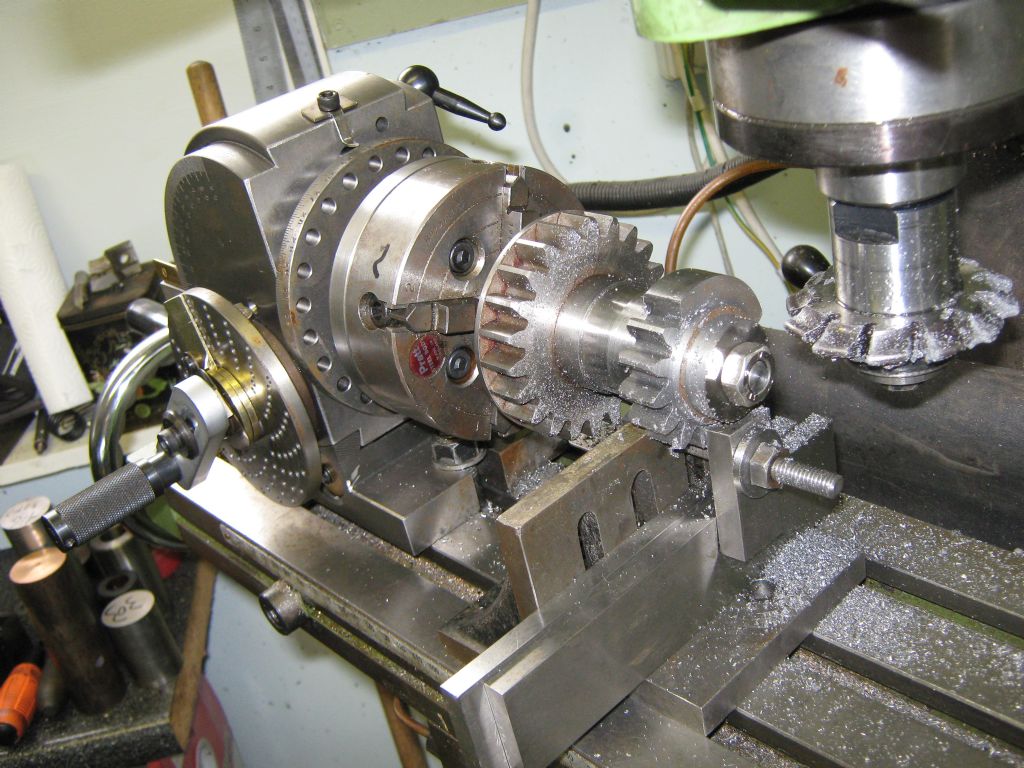
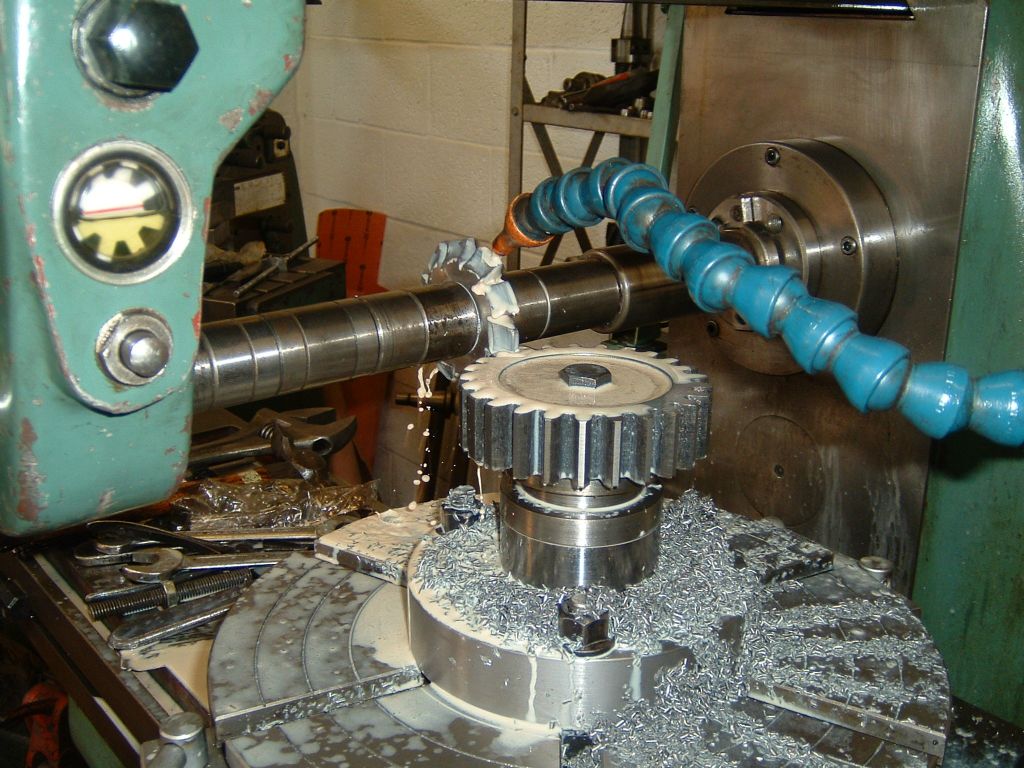
                    These gears cut in one pass, 7.2mm depth, with no problem.

                    gear cutting

                    Nigel

                    #123141
                    Chris Heapy
                    Participant
                      @chrisheapy71135

                      Changing to 3-phase was the best mod I did on my A2S, I take variable speed for granted now but recall I havent needed to change belt position for a year.

                      A 4" scale TE is a major undertaking for a first project, what with all the gears required, some large wheels to fabricate, not to mention the boiler… Might be better to tackle something smaller to begin with?

                      Chris

                      #123148
                      I.M. OUTAHERE
                      Participant
                        @i-m-outahere

                        Hi Paul and welcome to the Forum.

                        I have the direct equivalent to the Warco universal and have fitted DRO 'S etc .
                        I went through the same sort of i suppose uncertainty as to which mill to buy as i wanted something with more capacity than the SEIG X2
                        I would have liked a Bridgeport but the funds were not available so i had to stick with an asian made machine – not that there is anything wrong with that !
                        Having a look at the Warco Website you will notice a few things that may be of importance to you and help you to make an educated decision as to which mill to buy .

                        The universal has a bigger table with 4 tee slots against the 3 of the vmc and it has more quill to table clearance than the vmc .
                        It is also has a geared head so no changing belts but that comes at a cost of less speeds .
                        As for tilting heads i usually set the work up on the required angle and leave the head alone as i detest having to re- tram it although not difficult it just annoys me !
                        The old Warco Major style of machine has been around for a million years and there must have been millions of models made on them !
                        They are a reliable unit but the problem is if you need to raise or lower the head it can rotate on the column and you lose your datum where as a dovetail column or turret mill will not .
                        R8 vs MT ?? I chose MT as i can use it on my lathe as well and if you don't tighten it too much it will come out with a decent tap on the drawbar and as my mill uses tapered roller bearings that i feel can handle the shock loading from tapping the drawbar with a hammer but i have an idea i my head for a cam actuated device to push on the drawbar but that's a little down the track !

                        There is no such thing as basic questions on this forum everyone has to start somewhere and here you will only find fellow Model Engineers who are more than happy to help if they can !

                        P.S i would still get a vertical slide for your lathe as there are many things that can be machined without upsetting your set up on the mill – just another option .

                        Ian.

                        #123152
                        RICHARD GREEN 2
                        Participant
                          @richardgreen2

                          Hello Paul,

                          Do you realise how big some of the castings will be for a 4" scale road loco ?

                          You will need some serious kit to do some of them,

                          I am 3/4 through building a 6" Burrell, and even some of my industrial machines were near the limit of their capacity !

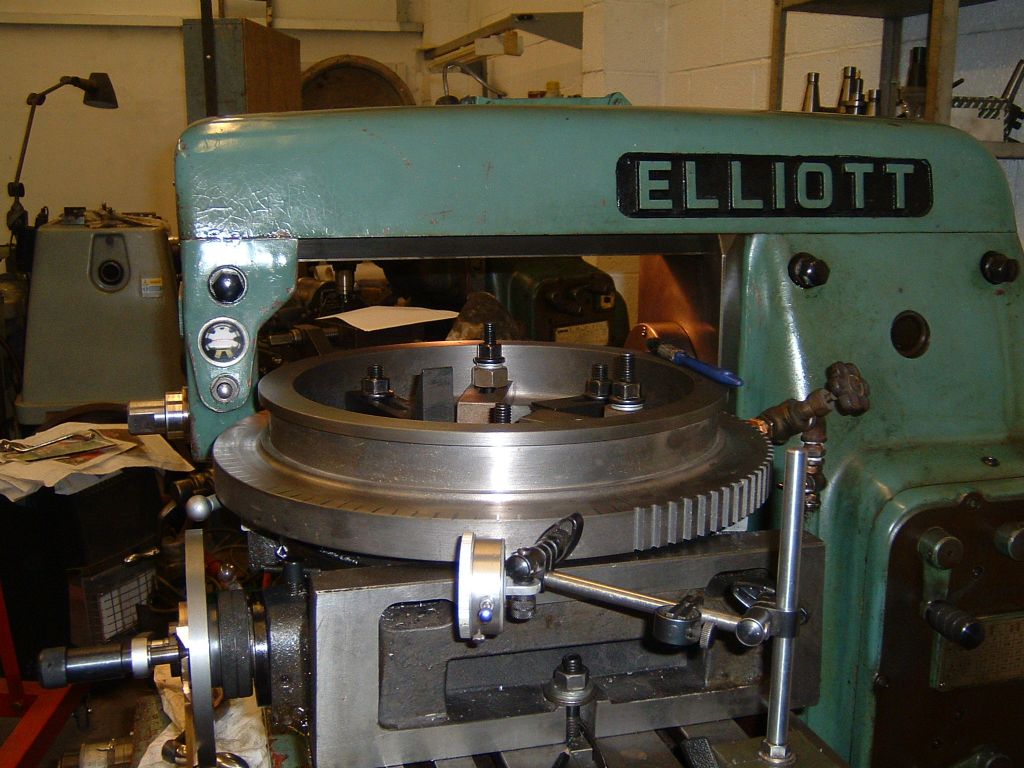
                          The method Nigel shows for gear cutting is perfectly OK, until you get to the large final drive gear which in my opinion can only be done horizontally,on a rotary table, using a horizontal mill, due to the machine capacity required, The money you save by cutting your own gears will more than pay for a decent H/V rotary table with division plates,

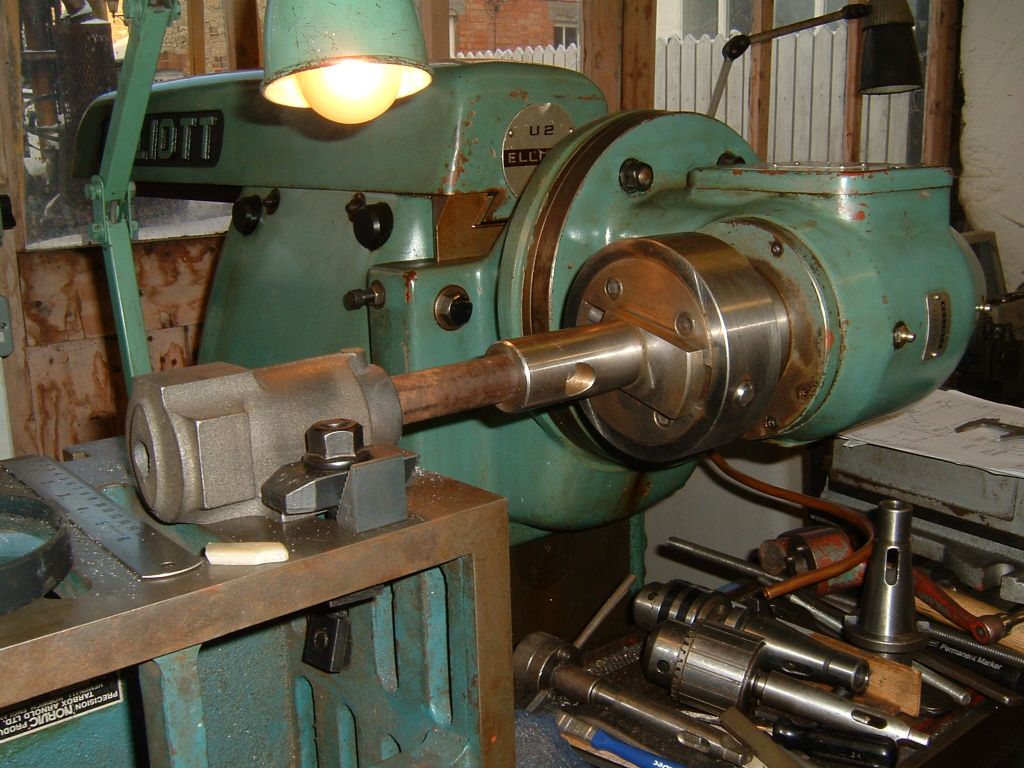
                          Also a mill with swivelling head is useful with the head in the horizontal direction, used as a horizontal borer, for boring cylinders etc, you will find that set up very useful, I know I did.

                          Don't restrict yourself to modern imported machines either, there are plenty of very good S/H english machines still out there , probably better suited to your needs.

                          However, don't let anyone put you off your intended project, you will have loads of fun, and a lot of head scratching, but you will end up with something really worth having.

                          If I can be of any help don't hesitate to contact me.

                          Richard.

                          gardner 102.jpg

                          gear cutting 012.jpg

                          gear cutting 001.jpg

                          #123154
                          Graham Butcher
                          Participant
                            @grahambutcher80356

                            Paul,

                            When I started out I wanted to build an Allchin traction engine in 1 1/2" scale. At the time I had a pillar drill a vice and some basic hand tools which I had used for car restoration. I started by making as many parts that I could with these tools such as hornplates etc. I then acquired a Myford ML7 and so i made as many of the easier parts as I could with this gaining experience along the way. I then got a Tom senior M1 which I then produced some more parts, then with a rotary table I could produce some other parts. I finally finished it about eleven years later. I will add a picture to my album. So my advice would be to make a start, then as your experience grows you will be able to decide what equipment you need.

                            Good Luck

                            Regards

                            Graham

                            #123155
                            Geoff Rogers
                            Participant
                              @geoffrogers81118

                              hi Paul, I have a Warco GH1232 and the max swing in gap is 18inches. The 4" Burrells I am making have flywheels at 18inches diameter. Also, I have the long bed version of that lathe and this is just long enough to machine the front axles. My Sieg X3 mill will be pushed to limits when I come to machine the rear axle gears.

                              #123173
                              Springbok
                              Participant
                                @springbok

                                Paul

                                What have you used as a text editor as everything runs up to the sunset and most is unreadable

                                Bob

                                #123182
                                Paul Harrison 5
                                Participant
                                  @paulharrison5

                                  Goodness me, what a load of replies! First of all let me say thank you to everyone who has taken the trouble to reply. I have endeavoured to send a personal 'thank you' to each of you but if I've missed someone please accept my apologies. i will now try and cover all your comments in one post!

                                  On a personal level I didn't feel ready to make a start in the engineering world, but I know that that is just me not wanting to be out of my comfort zone. My partner and some friends 'pushed' rather than encouraged me to 'get stuck in' hence my current situation. I have received advice saying buy new Chinese equipment as it will be unworn and come with a guarantee and second hand stuff may well need a fortune spending on it, while others have told me to avoid Chinese stuff. Some have said buy the biggest and best you can afford while others have said buy what will get you by and move up as your experience increases. Most people have said start with something small and get bigger, while a few have said don't waste time building 'Stuart' models or the like, just build what you want. I was going to have a go at a 1" Minnie, however the universal advice was it's easier to build a 2" than a 1" and at least you'll have a useable engine. This was further compounded with the advice, if you're going to build 2" you might as well build 4" if your equipment will take it. This then became, if your going to do a 4", why not do a showman's? So, Buy British or buy Chinese: Buy small or Go for the biggest: Start with small easy model or Just go for it. My poor head is spinning. Thank you for the attached photographs, there is some truly amazing stuff out there. I reply to you, John, the Hull and District Club meets tonight, so I'm going to have a wander down there. I do also realise the size of some of the bits on a 4" engine, but have decide I would be happy to outsource anything that I couldn't accomodate, rather than downsize the engine. I am on teh Traction Talk Forum but haven't seen the miniatures section; I'll make a point of looking.

                                  Once again a big thank you to you all and when I make my decision I will let you know and then take the pats on the back along with the riducule and dissmay!

                                  Regards,

                                  Paul.

                                  P.S. Hope you can read this, Bob.

                                  #123185
                                  Chris Heapy
                                  Participant
                                    @chrisheapy71135

                                    Much of the learning process involves developing a strategy for tackling a machining operation, the strategy is often similar on a large or small engine – which cut to make first, which holes to reference and so on. The benefit of working at a smaller scale first is that the cost of mistakes are less (and not one of us hasn't made quite a few along the learning road). That would be my main reason for recommending tackling a smaller project to begin with.

                                    Chris

                                    #123187
                                    Paul Harrison 5
                                    Participant
                                      @paulharrison5

                                      Thanks Chris,

                                      I have to agree with you there, I know for a fact I am going to make LOTS of mistakes. For that reason I thought it might be nice to have a go at something like a gauge 1 loco, something relatively simple like an 0-6-0 before venturing further.

                                      Anyway, we'll see what comes of my meeting with the local group tonight.

                                      #123191
                                      Another JohnS
                                      Participant
                                        @anotherjohns

                                        Paul;

                                        Whatever you decide to do, it will not be the wrong decision.

                                        My first project was a locomotive (small 3-1/2" gauge 0-4-0, "Tich&quot  which is still running 40 years after starting it. Yes, it did take time, but I started it as a young teenager, and then there was University, and cars, and women, and… well, the locomotive took a back seat for a while.

                                        I finally sold the "do a Stuart" castings about a decade ago; no interest.

                                        I used to work on full size locomotives, but now prefer the smaller ones, easily managed, less expensive, and more fun than driving the full size. (well, more challenging technically, and usually without the issue of 1,000 people about giving advice or criticism!)

                                        Yes, you can sub-contract, or get others to help, or what else comes along. So, just do it.

                                        Another JohnS


                                        Edited By John Alexander Stewart on 26/06/2013 18:15:02

                                        Edited By John Alexander Stewart on 26/06/2013 18:15:26

                                        #123193
                                        JasonB
                                        Moderator
                                          @jasonb

                                          With traction engines most people tend to start at the front end which is relatively straight forward and depending on the chosen model may not entail many castings so there is little risk of making an expensive mistake, even then tollerances are not as tight as when you come to work on the cylinder or gear train so adjustments can be made if needed to save a part.

                                          There are also a whole host of parts that can be made from raw stock that will get you used to machining and having them ready for when the larger parts start to be worked on will help the whole engine come together a lot faster.

                                          Do you have a particular 4" in mind yet? Fowler B6, Mclaren, Burrell.

                                          J

                                          #123215
                                          Anonymous

                                            I'm building two 4" scale Burrell SCC traction engines. My lathe is 6.5" centre height by 40" and will swing 19" in the gap; it has easily handled anything I've needed to machine for the engines so far. It would of course be possible to do without a mill, but it'd be really tedious. I have three milling machines; vertical, horizontal and CNC. You don't need a CNC mill, although it does make some operations easier, and allows you to do some things that can't be done on conventional machines, such as machining true bevel gears. Neither do you need a horizontal mill, although I use mine a lot for gear cutting and removing metal in a hurry, as it is more powerful and rigid than my vertical mill. I've got plenty of other toys too, but we won't mention those. wink

                                            So, in summary, you only need a lathe and ideally a vertical mill, to start with. My vertical mill has a swivel and tilt head, and I've used it precisely once. So it's not essential. Personally I'd go for an R8 taper in the mill rather than MT3. The R8 taper is much more widely used, and is sold by many commercial tool outlets, so there's a wide range of price/quality tradeoffs available. In general I don't swap tooling between lathe and mill, so I see no advantage in having a Morse taper in the mill spindle.

                                            I'm not going to get involved in the new versus old, or Far East versus UK/USA debate. Everybody has their own opinion, and it's just that, an opinion.

                                            One point that hasn't been raised is the drawings. You may be sadly disappointed if you expect the drawings to be accurate. I am redrawing my engines in 3D CAD, to correct errors in the drawings, make changes to allow for metric material where imperial isn't available, and to simplify where appropriate.

                                            I'm also awkward in that I'm making all the parts that I can, including all the gears, rolling and welding my own wheels and making all my own wheel spokes. I'm also looking at making my own pressure gauges, and possibly injectors.

                                            I have a build diary on 'TractionTalk' under the name of 'oly2brf5'.

                                            Regards,

                                            Andrew


                                            PS: If you're ever in the Cambridge area, PM me and drop in.

                                            Another PS: You can tell I'm awkward, because the first bits I made for my engine were some of the gears.

                                            Edited By Andrew Johnston on 26/06/2013 23:19:38

                                            #123226
                                            roy entwistle
                                            Participant
                                              @royentwistle24699

                                              Andrew believe me true bevel gears were produced LONG before anyone even thought of CNC

                                              Roy

                                              #123227
                                              Anonymous
                                                Posted by roy entwistle on 27/06/2013 09:23:30:

                                                Andrew believe me true bevel gears were produced LONG before anyone even thought of CNC

                                                Roy

                                                Correct, but not with the equipment found in most ME workshops – Andrew

                                                #123233
                                                roy entwistle
                                                Participant
                                                  @royentwistle24699

                                                  We come back to the humble shaper

                                                  Roy

                                                  #123235
                                                  roy entwistle
                                                  Participant
                                                    @royentwistle24699

                                                    I have also seen a passable bevel gear for a turret clock cut with a hacksaw and file

                                                    Roy

                                                    #123236
                                                    RichardS
                                                    Participant
                                                      @richards31161

                                                      A computer, printer and at least 2D CAD.

                                                      By redrawing in CAD you can:

                                                      1. Correct any errors, as was said above, drawings are rarely 100% accurate.

                                                      2. Make any modifications you need.

                                                      3. Preserve the original drawings by only taking CAD prints into the workshop.

                                                      4. Many drawings are in fractions, machine tools are decimal.

                                                      5. You can add the reference/machining dimensions you want/need.

                                                      6. Update the CAD file when the part is finished then you have a record of what _you_ made.

                                                    Viewing 25 posts - 1 through 25 (of 65 total)
                                                    • Please log in to reply to this topic. Registering is free and easy using the links on the menu at the top of this page.

                                                    Latest Replies

                                                    Home Forums Beginners questions Topics

                                                    Viewing 25 topics - 1 through 25 (of 25 total)
                                                    Viewing 25 topics - 1 through 25 (of 25 total)

                                                    View full reply list.