Moving Machines

Moving Machines

Home Forums Beginners questions Moving Machines

Viewing 18 posts - 26 through 43 (of 43 total)
  • Author
    Posts
  • #148352
    John Stevenson 1
    Participant
      @johnstevenson1

      Next time you want to move something a bit heavy, in fact find something and try this.

      Get two lengths of 1/2" round bar and lever one side of what you want to move up and slide the bar under pointing in the direction you want to go.

      Do the same the other side.

      So basically it's now sitting on two rails, pry bar behind it and it will slide very easily on these 'rails' just before it gets to the end drop two more bars at the side of the existing ones and make sure they don't skid out as you travel over them.


      Now if you are using say 6' long bars, that's 12 foot you have moved in a matter of a couple of minutes.


      No faffing about swapping rollers over from end to end, can't tip over as it's only 1/2" off the deck. In fact with a drop of oil on the bars chances are you can actually just push the machine once it's got started.


      I was show this trick many years ago by on old guy nearly 70 who insisted I not help him and he got an Elliot vertical mill out his shop into the yard on his own just using 4 lengths of 3/4" angle dropped down so the Vee was uppermost and the floor in his shop was a brick floor and not that level.


      If you insist on using skates then bolt the Machine to each skate because at that hight if you loose one it's going to go over.


      These are my skates, rated at 5 tonnes each skate but I have has a 28 tonne machine on them before. I would never use these on something like a Bridgeport, far too narrow a base for the hight involved. I'd use rails as described above


      Edited By John Stevenson on 28/03/2014 23:56:23

      #148393
      Russ B
      Participant
        @russb

        John Stevenson obviously has a point regarding the rolling poles, certainly if we're talking SCAFFOLD poles – I mean blimey that's asking for trouble – if it rocks off on one corner, its going to have a fair way to fall, and given the momentum and the angle it will drop to……………. I think we can rule out such huge poles!

        I still wouldn't be deterred – just like anything there are many hazards just waiting to cause disaster or injury and good practice and discipline are all that stands between safe success and failure or worse.

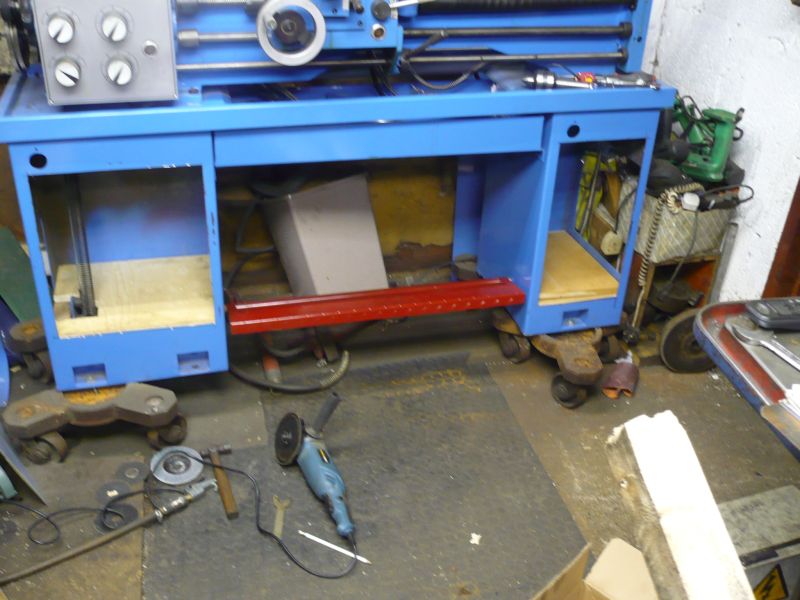
        Here's how I "roll"……

        This was done about 45 minutes ago, notice the poles they're 13-15mm diameter so if it does drop off on one corner, its not going anywhere or tipping to unsafe angles. Also I use 4-5 poles with a minimum of 3 under the machine at all times, and I don't use skids or anything like that as if it does run away, it just rolls off the poles and stops.

        (Sorry for the terrible pun…..)

        EDIT, John I wish I'd read your last post 2 hours ago! I would have cetainly created some rails and given it a go!!

        Edited By Russ B on 29/03/2014 16:04:42

        #158124
        David Cambridge
        Participant
          @davidcambridge45658

          Thanks everybody for all your input and advice. I received my WM16 today and used an engine crane – worked perfectly!

          David

          #158144
          Martin King 2
          Participant
            @martinking2

            Hi,

            Sorry to interupt this thread but I have a similar problem on anothere thread with no preplies so here goes:

            Quote:

            Some progress, have cleared out a load of junk from WS and now working on where things will go.

            This may be really silly but here goes:

            All my woodworking machinery was located on various forms of castored machine bases; on nice day I could wheel them outside for use which made working much nicer and less dust to worry about, (long extractor hoses!)

            More importantly when not in use they could be pushed into a corner to free up space. Machines are now mostly gone, (large table saw and router table ready to go) but I still have one of the bases left. This is a very strongly built 18mm marine ply box on 250kg industrial castors with treble thickness top and space beneath for storage. Can easily be cross braced inside if needed.

            Could this be used for the Warco Mill (or whatever)? The large Axminster Morticer that used to sit on it seemed fine and that was very heavy indeed, (could look up the weight I suppose).

            Just wondering if this is viable from a using the mill properly and safely point of view? UNQUOTE

            This would save the expense of the stand/cabinet.

            Also is it acceptable to design a low slung steel frame with levelling jacks and removeable castors?

            Cheers,

            martin

            #158147
            Russ B
            Participant
              @russb

              Martin,

              Personally, once a machine is in place, and levelled and adjusted, I'd be very reluctant to move it as it will impact on the alignment of the machine be a lathe or mill (more important on a lathe I'd say)

              Woodworking machines do not have a great deal of inherent accuracy and little adjustment compared to a precision metalworking machine.

              I have my lathe on a wooden bench made from 6×2 timber with coach bolts in the legs for simple levelling – I installed it months ago and it's still settling so I'm going to bolt an RSJ to the underside of the bench to brace the lathe from underneath. Once it's settled I'll cement the feet in place (with polythene to act as a barrier between the fresh concrete and wooden legs) – I would much prefer a proper lathe stand/cabinet and if I see one, I'll be thowing the wood bench out straight away.

              #158149
              Anonymous

                It's been done for rather larger mills; here's a link, including a picture illustrating why you might not want to do it:

                **LINK**

                Personally I wouldn't have my machines on frames or castors. I made a small trolley to hold the chucks, faceplates and capstan unit etc, for the lathe. It's ok moving it a foot this way or that, but it is unstable, so you need to move it slowly and carefully.

                Regards,

                Andrew

                #158150
                Martin King 2
                Participant
                  @martinking2

                  Hmmmm!

                  Interesting points, well taken.

                  How about a low slung steel frame with levelling jacks that can be raised up JUST enough to allow the castors to be fitted and then dropped down onto the castors to allow movement if needed, then reverse the action to remove the castors and go back on the levelling jacks? I am not advocating wheeling this around like I did with the woodworking kit; it is just that I can see situations where I might need to move it. To get to my CH boiler for any or servicing for example. I guess this would add aound 2" to overall height.

                  Martin

                  #158151
                  Brian Wood
                  Participant
                    @brianwood45127

                    A different approach which makes a good story

                    A good many years ago, Rolls-Royce in Derby had a huge vertical broaching machine to move to another site in Scotland.

                    Normally the 'Heavy Gang' did this sort of work but this time they had a problem in that the works had grown around this machine and it stood taller than cranage.

                    Derby still had an ice factory in those days so a truck was despatched to collect all the ice in yard square blocks it could which was then built up into a large stack on the one side of the machine that allowed access and a line down a gangway between the rest of the machines in the shop. The machine was then jacked over to rest on the ice stack which was left to melt and lower it slowly and gently onto the usual wheeled machine skids they used. After 2 days it was possible to tow it out as planned and load onto a flatbed for the journey north. An elegant solution to a difficult problem.

                    Regards Brian.

                    #158152
                    Roderick Jenkins
                    Participant
                      @roderickjenkins93242

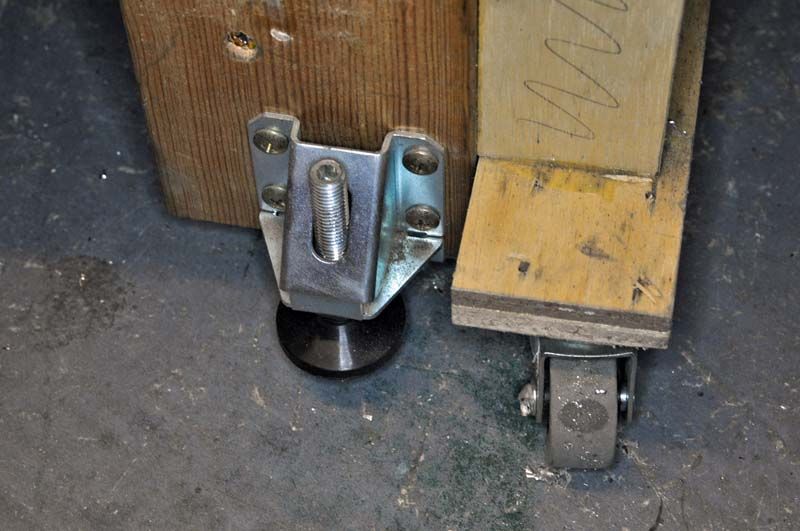
                      I have a bench in the middle of the workshop which I use as a tool table and which can be wheeled close to the lathe or the mill as required. This bench also serves as a woodworking bench which needs to be solid enough to stand some hand planing, in which case I lower the feet:


                      wide 2.jpg

                      feet.jpg

                      The fact that each foot is lowered individually means that I can get it solidly levelled on the slightly uneven concrete floor. I store some cast iron dumbell weights on a lower shelf which keeps the centre of gravity low.

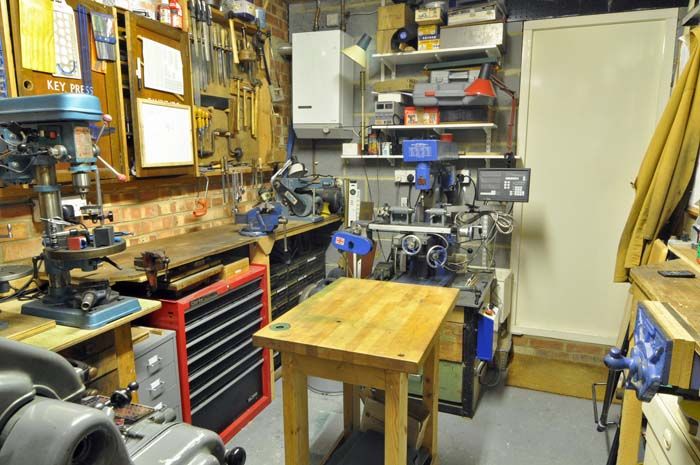
                      The feet were from Axminster. I have also used these to level my Sharp milling machine on its stand.  (The photo of my unusually tidy workshop was taken before I added the feet to the mill)

                      Cheers,

                      Rod

                      Edited By Roderick Jenkins on 18/07/2014 12:12:58

                      #158153
                      Bob Brown 1
                      Participant
                        @bobbrown1

                        here's a solution **LINK**

                        #158159
                        Neil Wyatt
                        Moderator
                          @neilwyatt

                          > It's been done for rather larger mills; here's a link, including a picture illustrating why you might not want to do it:

                          **LINK**

                          It's interesting that a few posts below that picture someone claims that if the castors are more widely spaced than the machine base, the result is more stable… technically this may be true, but it happily ignores the risks of rolling over a hole or that stationary machinery doesn't topple the way that moving machinery can when it hits an obstruction.

                          Neil

                          #158166
                          Bazyle
                          Participant
                            @bazyle

                            Are machines meant to be supported on their corners for use? The screw for the knee on a BP is unsupported in one of the illustrations which must put a strain on it. I rather thought you were supposed to level the machine half an inch off the floor then ram cement in underneath in the process the manuals call 'grouting in'. I'm sure I recall seeing square pads of cement on the workshop floor to show where the manuals had been when the new CNC mill came in.

                            #158171
                            Roderick Jenkins
                            Participant
                              @roderickjenkins93242
                              Posted by Neil Wyatt on 18/07/2014 14:36:08:

                              It's interesting that a few posts below that picture someone claims that if the castors are more widely spaced than the machine base, the result is more stable… technically this may be true, but it happily ignores the risks of rolling over a hole or that stationary machinery doesn't topple the way that moving machinery can when it hits an obstruction.

                              Don't forget that when the castors, err… castor, the centre of gravity of the load is shifted with respect to the contact points of the wheels so I suggest that you need a wide wheelbase to take account of the shift.

                              Rod

                              #158178
                              Muzzer
                              Participant
                                @muzzer

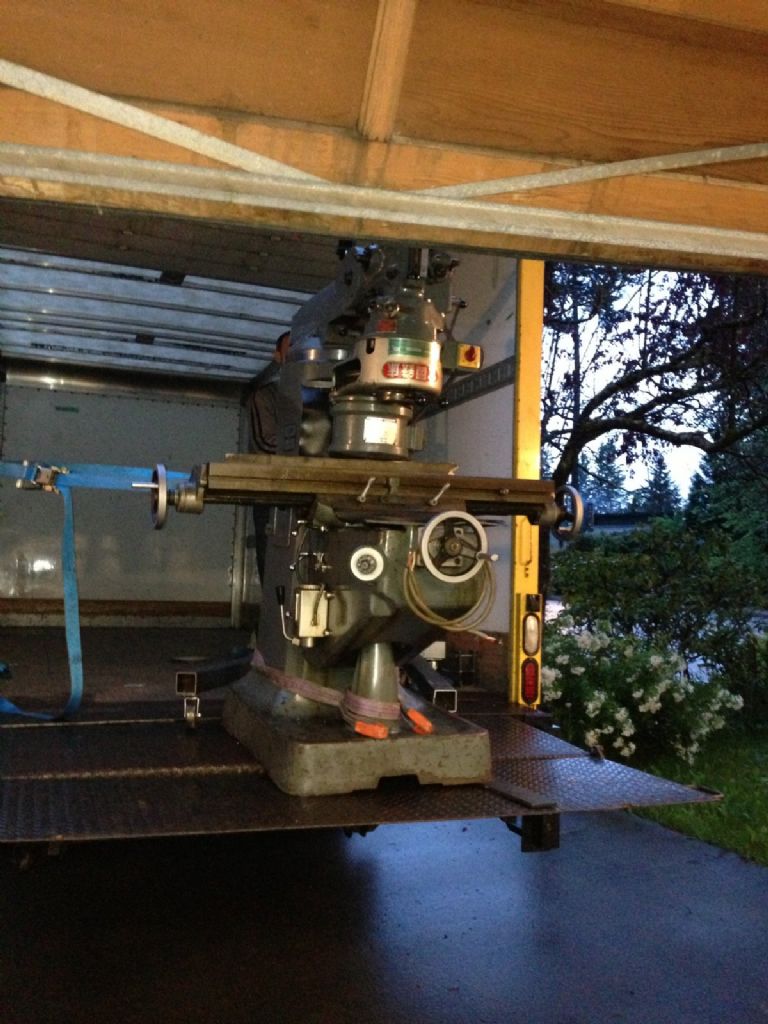
                                I've always kept a decent engine crane as part of my workshop. I regard it almost as part of the machines. The advantage of a crane is that you can lift the tool just enough to get it off the ground. If it or the crane had a wobbly, there isn't generally far for it to drop and it will land on its feet. You can also manoeuvre it around in a way that bars won't allow so easily. The disadvantage of cranes is that they require more floor space and you need to store them somewhere.

                                My milling machine doesn't have a flat rim on the bottom of its base (it has raised corners), so rolling bars wouldn't be much use. You'd have the devil of a job extracting them from the back and recycling them at the front:

                                img_0470-001.jpg

                                I like John's method. I've never heard of that one before but it's very simple and sounds pretty safe too. Sounds like a good reason to lay in large qties of steel bar stock. After all, you never know when you may be required to move things around!

                                I've fitted resilient feet to my lathe and milling machine. These are adjustable (the garage floor isn't as flat as it looks) and don't cost a lot (a tenner each). If I move a machine, I can easily true it up again.

                                Murray

                                #158182
                                norman valentine
                                Participant
                                  @normanvalentine78682

                                  It is very interesting to read all of these suggestions, all of which are very sensible. But, when you are starting from scratch, with no lumps of timber or lengths of steel rod laying around it becomes very expensive. My workshop is at the bottom of a 15 foot(feet) high muddy slope. I can only access it in dry weather and have so far managed to install a couple of smallish lathes but fear having to remove them. The only practical way that I can see is using lots of manpower, but where do I find them?

                                  #158184
                                  Bob Brown 1
                                  Participant
                                    @bobbrown1

                                    Another way is to take them to bits such that the bits are more manageable, did that with my Marlow mill as I had to get it in via the side door of the garage. Individual parts were just about manageable on my own with the aid of a sack barrow. Heaviest part was the column or at least trying to get it back on it's stand, bits of wood and a turfer helped. it also gave me the chance to clean the parts.

                                    #158190
                                    Michael Gilligan
                                    Participant
                                      @michaelgilligan61133
                                      Posted by norman valentine on 18/07/2014 20:15:59:

                                      The only practical way that I can see is using lots of manpower, but where do I find them?

                                      .

                                      The local Rugby Club … reward them with beer [after the job is done]

                                      MichaelG.

                                      #158209
                                      Fatgadgi
                                      Participant
                                        @fatgadgi

                                        For moving machines around the workshop I also use 15mm steel bars as per JS's suggestion where I can. I tend to keep 3 bars specially for the job as they get chewed up in use. My mill has a reasonably flat base, but there are some pads that catch the bars after a few inches of movement, so it's a bit more tricky – still works I just take my time.

                                        But I used specially welded up frames when I originally brought my lathe and mill home – for the mill I made a single frame out of some old angle I had knocking about and for the lathe I made two, one for each end and each with two wheels on and kept them attached whilst I refurbished them in my garage.

                                        Both times I used the existing foot holes on the bases to bolt the frames to (measured them when bought) and I made the frames wider than the machines so that there was no chance of tipping. I borrowed a car trailer with a solid base both times and winched the machines onto it to bring them home without drama. All single handed ….. but I was a couple of years younger.

                                        Will

                                      Viewing 18 posts - 26 through 43 (of 43 total)
                                      • Please log in to reply to this topic. Registering is free and easy using the links on the menu at the top of this page.

                                      Latest Replies

                                      Home Forums Beginners questions Topics

                                      Viewing 25 topics - 1 through 25 (of 25 total)
                                      Viewing 25 topics - 1 through 25 (of 25 total)

                                      View full reply list.