Myford Lathe Identification

Myford Lathe Identification

Home Forums Manual machine tools Myford Lathe Identification

Viewing 14 posts - 1 through 14 (of 14 total)
  • Author
    Posts
  • #861913
    Captain Barnacles
    Participant
      @captainbarnacles

      Hello All,

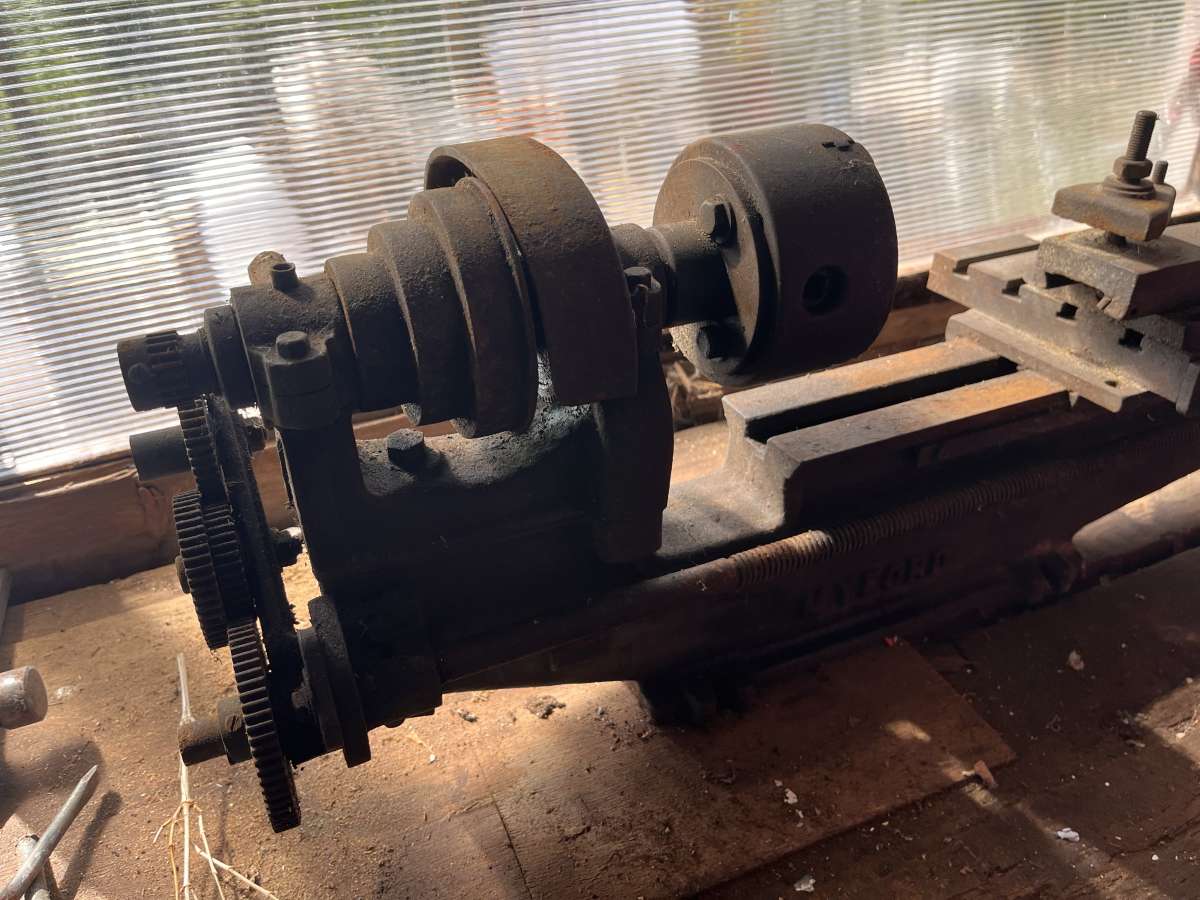
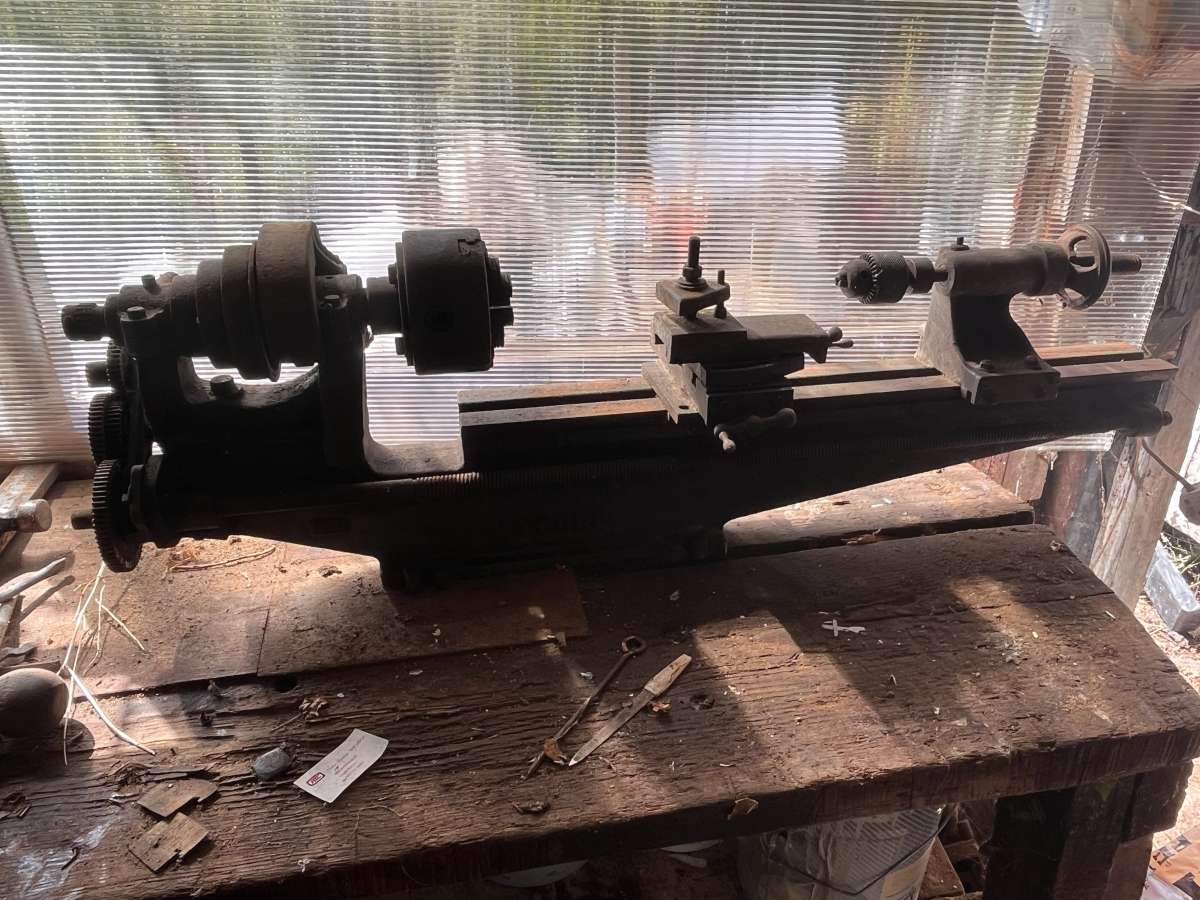
      I have been helping my friend clear out her old shed and it seems the previous owner was a keen model engineer. So far we have discovered 3 lathes!

      One of the lathes looks “Heath Robinson” and was probably constructed by the owner, the next is definitely factory made but I can’t find any identifying marks on it. I’m going to give a bit of a clean up and see if I can get any clues about its origin.

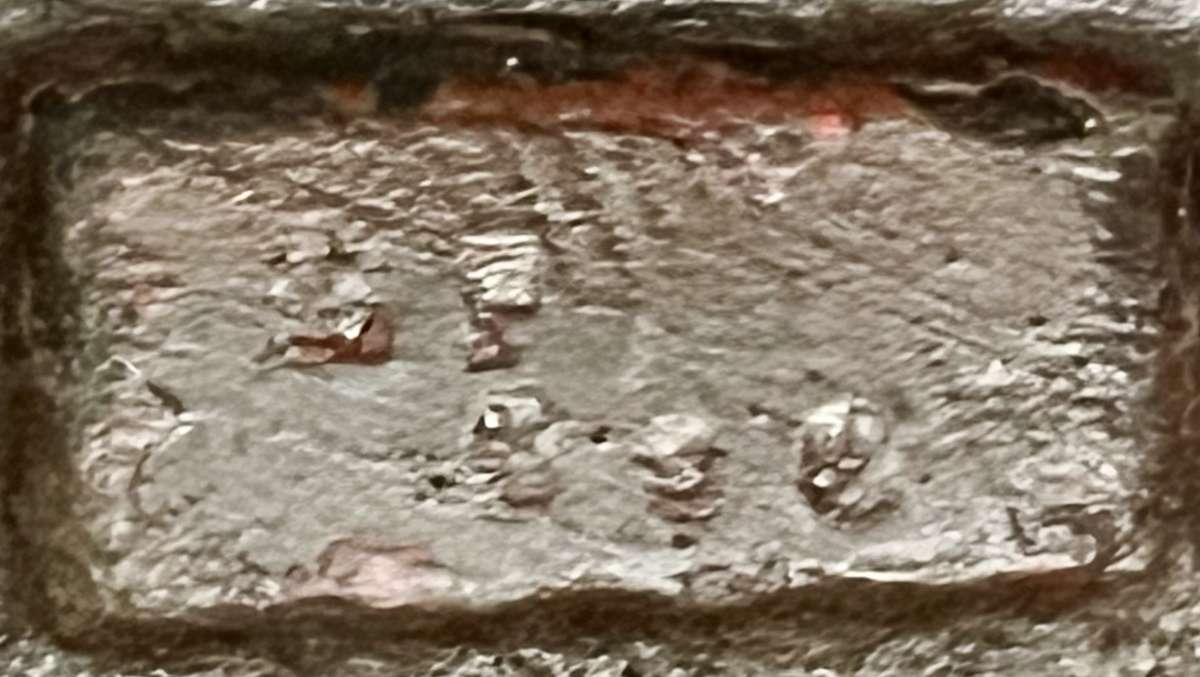
      The third lathes in the collection is unmistakably a Myford but I’m unsure about the model and the serial number is difficult to read. To me it appears to be a ML4 but a confirmation from you good folk would be much appreciated.

      Many thanks,

      Patch

      IMG_2149

      IMG_2153IMG_2152

      #861916
      Bazyle
      Participant
        @bazyle

        Measure centre height and bed length and look at Lathes.co.uk which explains the differences between types.

        #861924
        ega
        Participant
          @ega

          It also bears a superficial resemblance to other makes.

          #861939
          Georgineer
          Participant
            @georgineer

            If you search this forum for “ML4” you will find 865 hits (so far), with your post at the top.  If you can spare the time to trawl through them you will benefit from decades of accumulated knowledge and wisdom.  There’s even a table of differences to distinguish the ML4 from the ML1,2,3 and others.

            George

            #861943
            Pete
            Participant
              @pete41194
              #861953
              duncan webster 1
              Participant
                @duncanwebster1

                I think that is the ‘boat anchor’ model

                #861978
                Captain Barnacles
                Participant
                  @captainbarnacles

                  Thank you for all the links and advice. I’m particularly intrigued by the “boat anchor” suggestion 🙂 I presume that means it’s probably reached the end of it’s working life as a lathe?

                  I’ll have a trawl through the archive at lathes.co.uk and see what I can unearth.

                  #861982
                  Howard Lewis
                  Participant
                    @howardlewis46836

                    Certainly looks like a very early ML1 2, 3, or 4 (Centre height and centre distance will define which)

                    I thought that they ceased production in the early 1940s, and have only seen ones with Vee belt pulleys

                    Any sign of a serial number on the the ways, back or front?

                    But, with flat belt drive, could it be an even earlier Drummond?

                    Cleaned up it might still be capable of useful work, even has some changewheels, so possibly power feed for turning, or a limited range of screw cutting (Although for a machine of that size I would make a mandrel handrel, sliding tap and die holders, and use Taps and Dies)

                    I know one person who uses a ML4 to earn a living, and another who does spendid work on a century old Drummond, so don’t give up because of its age

                    Howard

                    #861987
                    Captain Barnacles
                    Participant
                      @captainbarnacles

                      Thank you Howard, that’s very useful to know.

                      I have just had a quick look on lathes.co.uk and my initial impression (based on my poor quality photos) is that it could be a ML3. I will go and have another look at it today and take some measurements to try and confirm it. The first of my photos was of what I thought was the serial number plate but it wasn’t legible. I’ll have a look and see if there’s a serial number stamped on the ways.

                      Thankfully the lathe appears to have been heavily coated in oil before it was abandoned 20+ years ago. It didn’t look to be heavily rusted or pitted but a good clean up will reveal all.

                      I will report back with my findings.

                      #862047
                      old mart
                      Participant
                        @oldmart

                        Despite being old and poorly, it could be refurbished fairly easily especially if you have access to working machine tools to make any parts that cannot be cleaned up. To remove the surface coating try a Stanley knife blade scraped gently along followed by wire wool and oil. This will minimise and damage to machined surfaces. Avoid wet and dry abrasives, you don’t want to loose tolerances by rubbing out any pitting, the pits left will help to hold lubricants.

                        #862059
                        Georgineer
                        Participant
                          @georgineer
                          On Howard Lewis Said:

                          Certainly looks like a very early ML1 2, 3, or 4 (Centre height and centre distance will define which)

                          I thought that they ceased production in the early 1940s, and have only seen ones with Vee belt pulleys

                          Any sign of a serial number on the the ways, back or front?

                          But, with flat belt drive, could it be an even earlier Drummond?

                          Cleaned up it might still be capable of useful work, even has some changewheels, so possibly power feed for turning, or a limited range of screw cutting (Although for a machine of that size I would make a mandrel handrel, sliding tap and die holders, and use Taps and Dies)

                          I know one person who uses a ML4 to earn a living, and another who does spendid work on a century old Drummond, so don’t give up because of its age

                          Howard

                          The ML1-4 never had serial numbers, though the casting numbers have misled many.

                          I owned an early ML4 with flat pulleys and an overhead drive through a leather belt, on which I did professional work.  I then owned a later ML4 with attached motor and V-belt drive, so I can vouch for the fact that they used both types of drive over the years.  I now own an ML7 but miss the original ML4…

                          With minor surgery the changewheels for the ML7 can be used on the ML1-4, so the full range of screw threads and fine feeds is available to those who want them.

                          George

                          #862063
                          Captain Barnacles
                          Participant
                            @captainbarnacles

                            On 24 August 2026 at 17:43 old mart Said:
                            Despite being old and poorly, it could be refurbished fairly easily especially if you have access to working machine tools to make any parts that cannot be cleaned up. To remove the surface coating try a Stanley knife blade scraped gently along followed by wire wool and oil. This will minimise and damage to machined surfaces. Avoid wet and dry abrasives, you don’t want to loose tolerances by rubbing out any pitting, the pits left will help to hold lubricants.

                            Thank you for that advice. I was just about to ask for advice on the best way to go about cleaning it up. 🙂

                            #862066
                            Captain Barnacles
                            Participant
                              @captainbarnacles


                              On Georgineer Said:
                              On Howard Lewis Said:

                              Certainly looks like a very early ML1 2, 3, or 4 (Centre height and centre distance will define which)

                              I thought that they ceased production in the early 1940s, and have only seen ones with Vee belt pulleys

                              Any sign of a serial number on the the ways, back or front?

                              But, with flat belt drive, could it be an even earlier Drummond?

                              Cleaned up it might still be capable of useful work, even has some changewheels, so possibly power feed for turning, or a limited range of screw cutting (Although for a machine of that size I would make a mandrel handrel, sliding tap and die holders, and use Taps and Dies)

                              I know one person who uses a ML4 to earn a living, and another who does spendid work on a century old Drummond, so don’t give up because of its age

                              Howard

                              The ML1-4 never had serial numbers, though the casting numbers have misled many.

                              I owned an early ML4 with flat pulleys and an overhead drive through a leather belt, on which I did professional work.  I then owned a later ML4 with attached motor and V-belt drive, so I can vouch for the fact that they used both types of drive over the years.  I now own an ML7 but miss the original ML4…

                              With minor surgery the changewheels for the ML7 can be used on the ML1-4, so the full range of screw threads and fine feeds is available to those who want them.

                              George

                              I was looking for the serial number for ages this afternoon 🙂

                              I had a good look over the lathe again today. The ways are 26″ long and measure 3.5″ from the ways to the chuck centre. I did forget to measure the distance between centres but I would imagine it’s probably 22″. I’ll try and check tomorrow.

                              The pulleys are for a flat belt and there’s another piece of the puzzle that has emerged today which I believe is a MA61 countershaft. We have also found 6 different motors in the shed.

                              Does the 3.5″ centre mean it’s likely to be a ML4?

                              #862080
                              Howard Lewis
                              Participant
                                @howardlewis46836

                                The ML3 and 4 were 3.5″ centre height. (ML1 and 2 were 3.125″)

                                The difference was that the ML4 had a slightly greater centre distance than the ML3.

                                The dials for the Cross Slide and top slide are not ABSOLUTELY accurate, in that they have 80 divisions, and the leadscrews are 12 tpi, so each division is dlightly greater than the 0.001″ that you would expect with 100 divisions and a 10 tpi leadscrew.

                                If you need extra changewheels, those from a ML7 are the same dimensionally, but use a 3/32″ pin for a drive, rather than the keyway of the ML7, and will need a hole drilling halfway through the hub to take the pin to drive either the second gear in a compound, or the driving collars on spindle and leadscrew.

                                Since it is flat belt drive, the spindle thread is likely to be 3/4 BSW (3/4 x 9 tpi)

                                Later versions changed this to 3/4 x 12 tpi (i think that the very later ones had 1. 125 x 12 tpi (Like the ML7, but without the 1.25″ register)

                                So if you want to add an extra chuck, catch plate, Faceplate, you will need to make up adptors of some sort.

                                For one ML4, I made an adaptor with a 3/4 BSW internal thread, and an external 1.125 x 12 tpi external, with a 1.25″ register, so that standard “Myford” chucks / backplates etc could be fitted. It included two external flats, for a spanner, to allow removal when the 3 jaw that came with the machine was to be used.

                                In a similar way, I modified a Myford fitting backplate, so that a modern asian chuck could be fitted to another lathe with a smaller spindle thread.

                                Once you have a lathe, a whole new world opens up!

                                But with a 4 jaw independant, you will need some means of centering work accurately. Ideally a D T I and a magnetic base (or a means of holding it, on the horizontal or vertical centreline, in the toolpost).

                                Once cleaned up, and adjusted, it will be a useful machine. You will need to become accustomed to the quirk of the Saddle moving AWAY from the chuck when the handwheel is rotated anti clockwise

                                Remember that being British vintage, threads will be BSW, BSF (or BA for gibs)

                                Howard

                              Viewing 14 posts - 1 through 14 (of 14 total)
                              • Please log in to reply to this topic. Registering is free and easy using the links on the menu at the top of this page.

                              Latest Replies

                              Home Forums Manual machine tools Topics

                              Viewing 25 topics - 1 through 25 (of 25 total)
                              Viewing 25 topics - 1 through 25 (of 25 total)

                              View full reply list.