Milling – How to get a good finishing cut?

Milling – How to get a good finishing cut?

Home Forums Beginners questions Milling – How to get a good finishing cut?

Viewing 18 posts - 1 through 18 (of 18 total)
  • Author
    Posts
  • #323783
    Steve Withnell
    Participant
      @stevewithnell34426

      I've milled a cavity in some Aluminium plate 22mm wide x 56mm long and 15mm deep. The corner radius is 2mm. I need to take a couple of finishing cuts, whats the best technique to get very best finish? Clue – 22mm is a quarter wavelength

      I've obviously got a long series 4mm cutter, which is a standard helix carbide type and the only other cutter I have is a 5mm high helix version (which would obviously leave a bit of cleaning up for the corner radius. The depth of the cavity is the critical dimension.

      Steve

      #8932
      Steve Withnell
      Participant
        @stevewithnell34426
        #323786
        Anonymous

          A CNC mill, climb mill, and use a 3mm cutter so you don't get chatter in the corners. thumbs up

          Failing that I'd leave about 10 thou or so on width and length and climb mill full depth. The depth can be set accurately using the knee, or quill, depending upon the mill type.

          If 22mm is a quarter wavelength why is the 15mm depth the critical dimension?

          Andrew

          #323787
          Sam Stones
          Participant
            @samstones42903

            Hi Steve,

            Sounds like 'Plumber's radio' to me (wave guides and cavities?)wink 2.

            Climb milling; slow feed; plenty of turps.

            Regards,

            Sam

            #323793
            Muzzer
            Participant
              @muzzer

              Perhaps worth trying the high helix cutter? 55 degrees and higher seem to be recommended for best finish in loominum. Also – is it worth looking for a more machining friendly alloy? It wouldn't be cheating but could make the job easier. When you say corner radius, presumably that defines the cutter diameter.

              Where are the feeds and speeds coming from? And are you using an adaptive toolpath to control the load on the cutter?

              Murray

              #323913
              Steve Withnell
              Participant
                @stevewithnell34426
                Posted by Andrew Johnston on 26/10/2017 22:23:18:

                A CNC mill, climb mill, and use a 3mm cutter so you don't get chatter in the corners. thumbs up

                Failing that I'd leave about 10 thou or so on width and length and climb mill full depth. The depth can be set accurately using the knee, or quill, depending upon the mill type.

                If 22mm is a quarter wavelength why is the 15mm depth the critical dimension?

                Andrew

                Thanks Andrew.

                I keep avoiding sending Ketan a wedge for a KX1, which would be ideal for this application The 22mm is not critical because the resonators are tunable. The depth of the case affects the impedance and bandwidth of the filter (etc). The cleaner the finish the better the overall performance.

                #323914
                Steve Withnell
                Participant
                  @stevewithnell34426
                  Posted by Sam Stones on 26/10/2017 22:25:30:

                  Hi Steve,

                  Sounds like 'Plumber's radio' to me (wave guides and cavities?)wink 2.

                  Climb milling; slow feed; plenty of turps.

                  Regards,

                  Sam

                  Interdigital Digita Filters – I've made a few at 1.3GHz and this is the first I've attempted for 3.4GHz. I thought with less metal to remove it would be easier, but I've also a lot less 'elbow room' with this one. I shall break out some turps! (I've been working with Parafin and Neatcut, but the Neatcut ends up in sticky mess).

                  #323918
                  JasonB
                  Moderator
                    @jasonb

                    I'd drill out the corners 3.9 then mill out the rest with say a 10mm just under size, clean out the corners then do a full depth climb cut with your 4mm long series cutter assuming it is sharp. Just take a very little off so you keep chatter to a minimum and use a bit of paraffin to help stop swarf sticking to the cutter

                    #323923
                    not done it yet
                    Participant
                      @notdoneityet

                      As i see it, if the depth is crucial, is the ally plate a good constant thickness or has it been faced off? No real problem if youogo slightly too deep – just face again? Another ploy, if the surface finish in the bottom of the cut is needed to be a polished surface, would be to fabricate with a through slot and affix a flat back plate?

                      #323928
                      Neil Wyatt
                      Moderator
                        @neilwyatt

                        FWIW uncoated carbide is supposed to stick to aluminium less than carbide with a fancy coating.

                        #323940
                        JasonB
                        Moderator
                          @jasonb

                          And I should think even less to uncoated HSS as the non sintered material is smoother.

                          #323942
                          Muzzer
                          Participant
                            @muzzer

                            When I worked in microwaves, the duplexers, loads, waveguides etc were made of copper, brass etc that could be silver plated. It was also pretty handy for brazing the bits together. To my understanding, the purpose of the plating is to improve the contact resistance between components which presumably isn't ideal with aluminium. Similarly, when I used aluminium for high current busbars, it was necessary to use special conductive grease (copper bearing, IIRC) to get a good contact. Don't you need a good contact anywhere, or is the cavity free floating electrically?

                            For (my) reference, I see the skin depth of sliver at 3.4GHz(?) is about 1um and aluminium about 1.5um whereas the layer of aluminium oxide is only 10nm or so, apparently.

                            Murray

                            #323948
                            Steve Withnell
                            Participant
                              @stevewithnell34426
                              Posted by Muzzer on 27/10/2017 18:27:03:

                              When I worked in microwaves, the duplexers, loads, waveguides etc were made of copper, brass etc that could be silver plated. It was also pretty handy for brazing the bits together. To my understanding, the purpose of the plating is to improve the contact resistance between components which presumably isn't ideal with aluminium. Similarly, when I used aluminium for high current busbars, it was necessary to use special conductive grease (copper bearing, IIRC) to get a good contact. Don't you need a good contact anywhere, or is the cavity free floating electrically?

                              For (my) reference, I see the skin depth of sliver at 3.4GHz(?) is about 1um and aluminium about 1.5um whereas the layer of aluminium oxide is only 10nm or so, apparently.

                              Murray

                              Hi Murray,

                              I'm using stainless screws through the case into copper rods. It's all about skin effect so the stainless screw is literally a mechnical fixing and irrelevant to performance. The bottom of the copper rods, I chamfer towards the tapped hole so that the edges bite into the aluminium. Instead of conductive grease, I'm using gold leaf as a gasket to ensure a good seal. This is the other reason for needing a nice flat finish to the walls of the case.

                              #323949
                              Steve Withnell
                              Participant
                                @stevewithnell34426
                                Posted by not done it yet on 27/10/2017 16:49:29:

                                As i see it, if the depth is crucial, is the ally plate a good constant thickness or has it been faced off? No real problem if youogo slightly too deep – just face again? Another ploy, if the surface finish in the bottom of the cut is needed to be a polished surface, would be to fabricate with a through slot and affix a flat back plate?

                                My technique is to machine out the cavity a little too deep than skim the top to size, so the bottom of the cavity is parallel to the top of the walls. I could machine a through slot, but I'd still be left with the key issue of getting a nice finish to the side walls and I'd have 16 holes to drill and tap rather than 8 and two lids to make! So all trade offs as ever.

                                Steve

                                Edited By Steve Withnell on 27/10/2017 18:58:14

                                #323964
                                MW
                                Participant
                                  @mw27036
                                  Posted by Neil Wyatt on 27/10/2017 16:54:40:

                                  FWIW uncoated carbide is supposed to stick to aluminium less than carbide with a fancy coating.

                                  That's also why the ones designed for aluminium have their surface polished and buffed, would be great to see a video of how they do that.

                                  Michael W

                                  #324367
                                  Steve Withnell
                                  Participant
                                    @stevewithnell34426

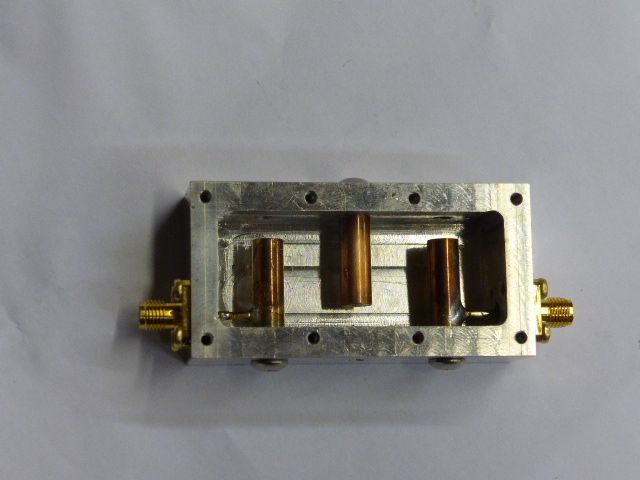
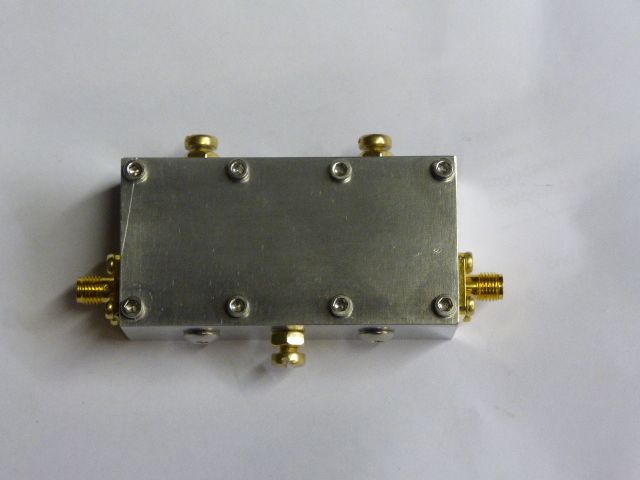
                                    All done – next step is to see if it performs!. I ended up polishing the sides with the flat of a file, I still had some noticeable ripples in the walls. More practice is probably in order.

                                    p1010078.jpg

                                    p1010082.jpg

                                    #324383
                                    Marcus Bowman
                                    Participant
                                      @marcusbowman28936

                                      If it was me, I would use a polished, uncoated single-flute carbide cutter with an aggressive geometry designed specifically for machining aluminium. If possible, I would avoid using long small diameter cutters,

                                      Speeds and feeds are pretty important. Spindle speed shold be basded on around 100metres/minute, so a 3mm cutter should be turning at somewhere around 10,000rpm. I'm guessing you are not running your spindle at that speed. A 10mm cutter should spin at around 3000rpm, which is achievable on many small mills, so that's a good go-to size for starters. Won't work for tight corners, of course, but ,as JasonB says, you may be able to deal with those by drilling, or by machining separately.

                                      Rough out, leaving 0.2mm to finish. Climb cut the finishing cut. High speed, but a slower linear feed may help.

                                      I have had decent results with a long series 2 flute cutter on 50mm deep finishing cuts, but it was a 10mm cutter, not a 3mm matchstick. Roughing at 3000rpm, and up to 500mm/min, taking cuts of 15, 15 and 20mm down the face, finisihing with a single climb cut pass at full depth, 3000rpm and 120mm/min. Material was grade 6082 (HE30).

                                      Marcus

                                      #324517
                                      Steve Withnell
                                      Participant
                                        @stevewithnell34426
                                        Posted by Marcus Bowman on 29/10/2017 23:34:07:

                                        If it was me, I would use a polished, uncoated single-flute carbide cutter with an aggressive geometry designed specifically for machining aluminium. If possible, I would avoid using long small diameter cutters,

                                        Speeds and feeds are pretty important. Spindle speed shold be basded on around 100metres/minute, so a 3mm cutter should be turning at somewhere around 10,000rpm. I'm guessing you are not running your spindle at that speed. A 10mm cutter should spin at around 3000rpm, which is achievable on many small mills, so that's a good go-to size for starters. Won't work for tight corners, of course, but ,as JasonB says, you may be able to deal with those by drilling, or by machining separately.

                                        Rough out, leaving 0.2mm to finish. Climb cut the finishing cut. High speed, but a slower linear feed may help.

                                        I have had decent results with a long series 2 flute cutter on 50mm deep finishing cuts, but it was a 10mm cutter, not a 3mm matchstick. Roughing at 3000rpm, and up to 500mm/min, taking cuts of 15, 15 and 20mm down the face, finisihing with a single climb cut pass at full depth, 3000rpm and 120mm/min. Material was grade 6082 (HE30).

                                        Marcus

                                        Cheers Marcus. I've been asked to make another one of these, so I'll work out the machining as above. I've seen a few single flute cutters around from China, but may stick to a decent slot drill. My mill is flat out at 2,000, so will have to make do at that too!

                                      Viewing 18 posts - 1 through 18 (of 18 total)
                                      • Please log in to reply to this topic. Registering is free and easy using the links on the menu at the top of this page.

                                      Latest Replies

                                      Home Forums Beginners questions Topics

                                      Viewing 25 topics - 1 through 25 (of 25 total)
                                      Viewing 25 topics - 1 through 25 (of 25 total)

                                      View full reply list.