Parting Off With an Interrupted Cut – Is it a daft idea?

Parting Off With an Interrupted Cut – Is it a daft idea?

Home Forums Beginners questions Parting Off With an Interrupted Cut – Is it a daft idea?

Viewing 24 posts - 1 through 24 (of 24 total)
  • Author
    Posts
  • #317725
    SillyOldDuffer
    Moderator
      @sillyoldduffer

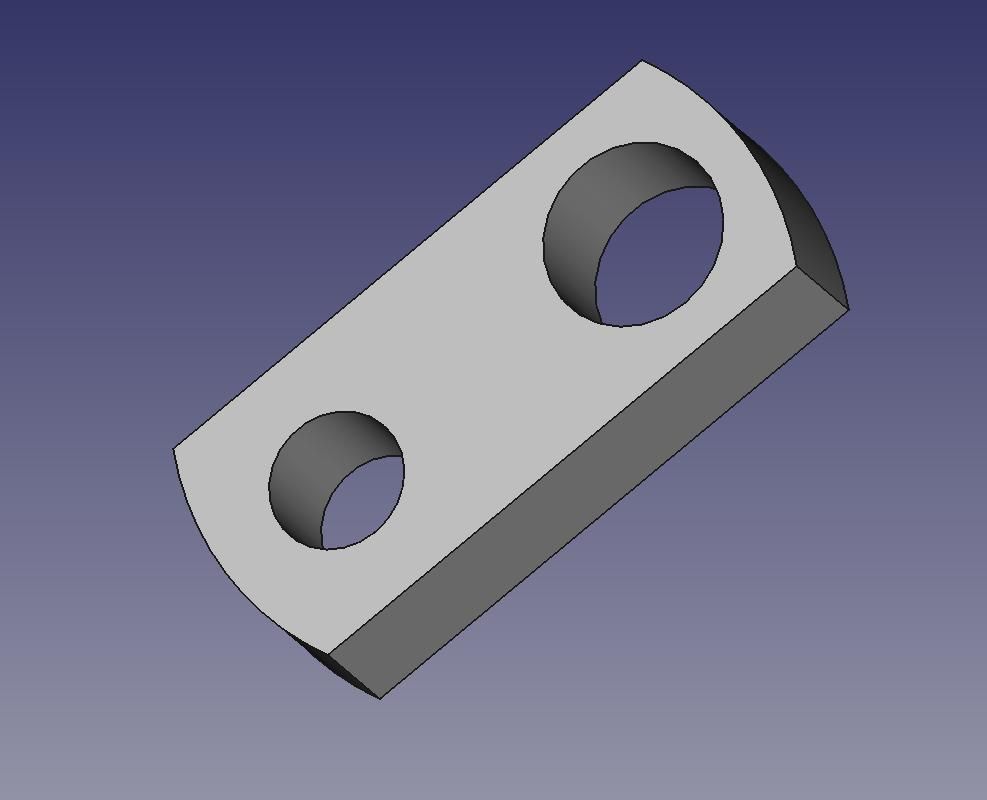
      I'm making a matching pair of side arms for a crankshaft. The finished arms look like this and are mild steel about 12x28x6mm in size:

      crank_arm.jpg

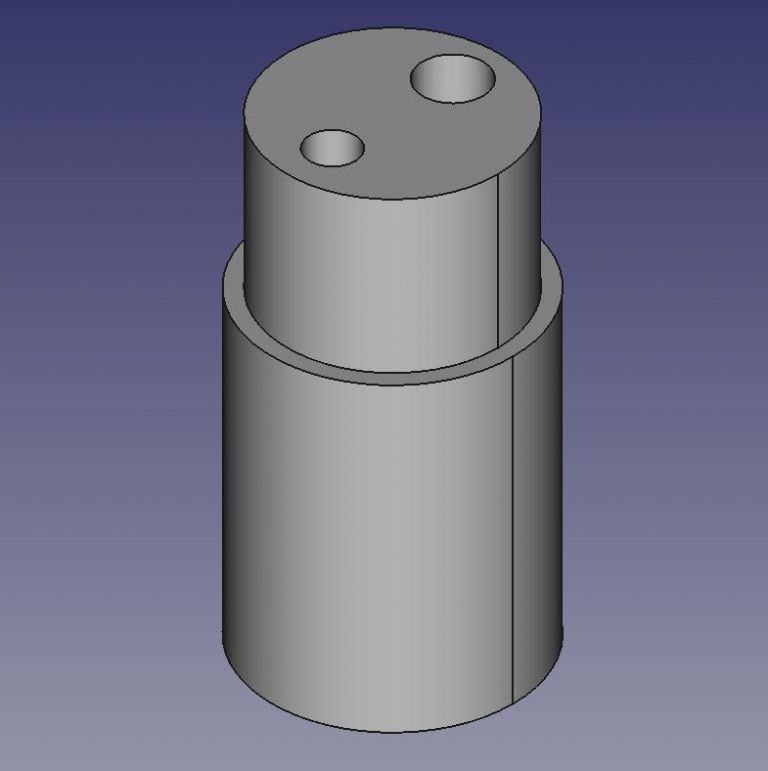
      I'm thinking of making them by turning and drilling a rod thus:

      crank_round.jpg

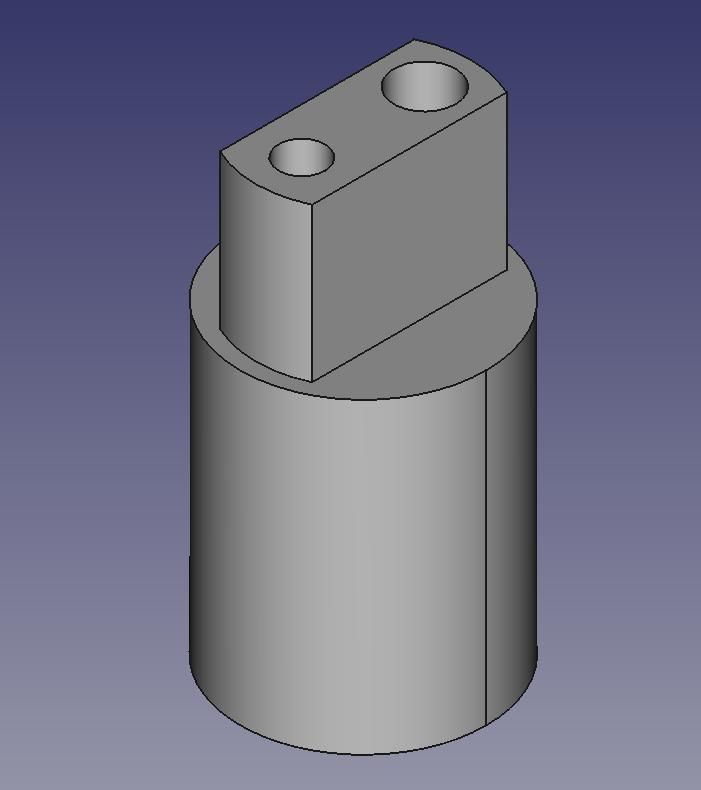
      Then milling the sides:

      crank_milled.jpg

      And finally producing the finished crank arms by parting them off in a lathe. I'd use a carbide blade in a rear tool-post.

      The sequence has the advantage that I can grip the work firmly during all the machine operations, both lathe and milling.

      But the last stage has me worried because the parting cuts in a lathe will be interrupted because of those milled flats. Am I foolish to attempt making the arms by parting them off? If it is a daft idea, how else might a pair of identical arms be made?

      Thanks,

      Dave

      #8873
      SillyOldDuffer
      Moderator
        @sillyoldduffer
        #317727
        Jeff Dayman
        Participant
          @jeffdayman43397

          nope

          #317728
          David George 1
          Participant
            @davidgeorge1

            I would be more inclined to slit or saw of otherwise looks good to me.

            David

            #317732
            MW
            Participant
              @mw27036

              I think it would be fine dave, only risk might be to an insert tool where the tip might get knocked out, so a solid tool would be safer. I think I've attempted far worse than that otherwise. 😛

              Keep the speed of the lathe fairly steady, a bit faster than might use for a round bar, maybe 700 to 800rpm as a guess, to avoid stalling the spindle on the knocks. 

              I'll presume you realize that by parting, you'll inevitably leave a pip of some sort when it falls off. Maybe you're a lot better at it than I am. So the back would need to be skimmed again to finish or maybe just filed off if you're not so fussy. 

              Michael W


              Edited By Michael-w on 19/09/2017 18:21:19

              #317738
              Hillclimber
              Participant
                @hillclimber

                What if you significantly 'straddle' the continuous round bar with your parting tool to reduce/ practically eliminate the interruption to the cut?

                #317739
                I.M. OUTAHERE
                Participant
                  @i-m-outahere

                  Considering you will have to set it up in the mill to machine the flats the slitting saw idea would be easiest .

                  #317741
                  Roderick Jenkins
                  Participant
                    @roderickjenkins93242

                    Certainly not a problem with a Q cut in the rear toolpost on my S7. I was happily parting of 1" square at the weekend. Mind you, it makes a bit of noise.

                    HTH,

                    Rod

                    #317742
                    JasonB
                    Moderator
                      @jasonb

                      You could turn down the OD and then put two parting cuts in to stop just inside where the two holes come, over to mill and do the holes and flats then back to the lathe to complete the parting off.

                      Or soft solder two discs onto the end of a bar, do all you machining and then melt them apart so no parting needed.

                      Or saw off the first one, face the bar and saw off the secont and then mill or turn to finished thickness

                      I usually make them from flat bar and use the mill to set out the holes accurately so the two parts match

                      Edited By JasonB on 19/09/2017 19:09:19

                      #317751
                      Sam Longley 1
                      Participant
                        @samlongley1

                        deleted

                        Edited By Sam Longley 1 on 19/09/2017 20:09:13

                        #317752
                        Niels Abildgaard
                        Participant
                          @nielsabildgaard33719

                          https://www.youtube.com/watch?v=lKTbQ-rwaRI

                          Some Iscar Carbide parting square steel.

                          https://www.youtube.com/watch?v=Sdmqk5oJ7OE


                          Edited By Niels Abildgaard on 19/09/2017 20:25:19

                          Edited By Niels Abildgaard on 19/09/2017 20:28:16

                          #317755
                          Jon Cameron
                          Participant
                            @joncameron26580

                            Is the radius critical for clearance, if not, then possibly forget the parting off that's causing the concern. Make from 1/4"x1/2" steel cut two lengths oversized, drill and bolt the outer edges, of the two plates together, then set up in the mill to profile both sides, you'll have over half a mil to play with. Then spot and bore the holes to size. The two halfs can then be cut to length and finished with a file. Or clamped in the end of the mills vise and milled off.

                            I think the slitting saw idea sounds best as it saves time on having to set up the work several times in the clamps/jaws.

                            #317777
                            Marcus Bowman
                            Participant
                              @marcusbowman28936

                              If you are worried, part off with by parting the major (continuous) diameter section of the bar, with the edge of the tool just at the intersection of the continuous section and the milled section. Any clean up or bringing to final finished width can be done using a 4 jaw chuck.

                              Marcus

                              #317780
                              IanT
                              Participant
                                @iant

                                Dave

                                The only times I've broken an inserted tool in my rear-tool post has been during an interrupted cut (done it twice now) – admittedly on larger work (< 2" ) – managed to break a large chunk out of them both. First time I thought it was just bad luck, got away with it on the next cut and then banjaxed a second insert on the third.

                                So last time I used a HSS blade (from the front) to get past the 'interrupted' section (gentle stepped cuts – in, back, feed over a bit, in, back, feed back again) and once I was past the 'knock' – I had made a wide enough channel to feed in the inserted tool straight from the rear…

                                A compromise solution – but I don't like taking deep cuts with the HSS tool from the front and my (inserted tip) rear tool holder doesn't seem to like being 'clunked'… although it works really well on deep parting cuts normally

                                Others here seem luckier with their inserted tooling but different lathes/users/tools behave differently. Anyway, that's what I do now.

                                Your job is a bit different in that the 'clunky' bit extends just about the whole way. So once you've moved over to the mill, I think I'd stay on it and just cut them off as other have suggested.

                                Regards,

                                IanT

                                Edited By IanT on 19/09/2017 22:28:27

                                #317793
                                Neil Wyatt
                                Moderator
                                  @neilwyatt

                                  A less challenging cut than turning the whole thing from a single bar, which has been done by enough people before.

                                  Neil

                                  #317801
                                  not done it yet
                                  Participant
                                    @notdoneityet

                                    Lathe? I would be making them, from flat, on the mill. Two pieces strapped, glued, soldered or welded together (whatever you choose) and machine them. Rotary table for the curved ends.

                                    #317803
                                    Mick B1
                                    Participant
                                      @mickb1

                                      While yer've bin gassin', yer could've sawed it off wi' an 'acksaw an' faced it in a 4-jaw or milled it flat in vice wi' a flycutter or owt… 😀

                                      Edited By Mick B1 on 20/09/2017 09:12:12

                                      #317807
                                      IanT
                                      Participant
                                        @iant

                                        Very True Mick – I know I often over-complicate things (some sort of ME anxiety complex!)

                                        But then again you can probably saw a lot straighter and neater than I seem able to do. I usually manage to skid a little off the line too – making an ugly scratch – despite sacrificing a thumb nail to try and keep things on track….

                                        I know – practice makes perfect – but I can't see my sawing and filing skills improving any time soon I'm afraid.

                                        Regards,

                                        IanT

                                        #317815
                                        SillyOldDuffer
                                        Moderator
                                          @sillyoldduffer

                                          Excellent responses! Once again I'm left wondering 'why didn't I think of that!'.

                                          I ought to have mentioned that I'm experimenting with building a PottyMill 'properly'. Rather than accepting my usual 'close enough' bodges, I'm trying to make all the parts to specification and with a decent finish. This is proving to be quite a challenge! My scrap box is filling up with rejects, it's taking a lot of time, and I am guilty of over-complicating the production. However, there's nothing like a challenge for learning new tricks.

                                          The crank arms are simple enough and can be made is a variety of ways. Some methods work 'better' than others. One problem I've hit is holding small parts firmly when the work flow requires a heavy operation like drilling, milling or parting-off on a nearly finished or awkwardly shaped part. The advantages of making the arms from round bar are that the end radii can be accurately made in the lathe and then the bar can be used to support the work for most of the other operations. Not having to reset the work between cuts makes it easier to maintain accuracy.

                                          I really like the slitting saw suggestion. Apart from being to position the cut accurately and getting a good finish, the work can be left in the mill. There's no need move it back to the lathe. The only disadvantage is that I may need to buy a larger saw.

                                          Bit frustrating as I have to go out today. I can't wait to to try the new ideas.

                                          Thanks,

                                          Dave

                                          Edited By SillyOldDuffer on 20/09/2017 10:39:04

                                          #317818
                                          Danny M2Z
                                          Participant
                                            @dannym2z

                                            I would just part it off on the round section and then clamp it in a vice under an end milling cutter and trim it to size.

                                            * Danny M *

                                            #317819
                                            Circlip
                                            Participant
                                              @circlip

                                              Surprising how "Straight" you can cut wiv a nacksaw by initially cutting a 1/16th (1.6mm) deep groove in one face and then rotating workpiece by 90deg and repeating same depth, rotate again and repeat another twice. Carry on in 1/16th deep cuts and rotate 'till through. Providing you cut square on initial guide grooves, takes no time at all. Works well on round bar too. Cut a piece of 30mm square 070 (1.5mm deep cuts – adjusted cos it was metric) on garden wall using one hand as vice and a 12" (304mm) hacksaw.

                                              Exercises the whole arm rather than a couple of fingers.

                                              Regards Ian.

                                              #317835
                                              Muzzer
                                              Participant
                                                @muzzer

                                                I'd part it off so the tool straddles both sections, round and lumpy, only just shaving the lumpy bit. Ideally you'd have thought of this and dimensioned it accordingly. That way the tool and cross slide etc will remain constantly loaded – and you won't have any finishing off to do either.

                                                It's not so much the insert that is the problem as the backlash and spring in the machine between the work, all the way round the machine through the spindle and bed and finally back to the tool and the insert.

                                                Murray

                                                #317849
                                                Mick B1
                                                Participant
                                                  @mickb1
                                                  Posted by Muzzer on 20/09/2017 12:39:47:

                                                  I'd part it off so the tool straddles both sections, round and lumpy, only just shaving the lumpy bit.

                                                  If you do that, there'll be side loading on the tool from the chuck side, and by the time you hit the lumpy bit, the blade will already be deflected rightwards. I've always thought you need to equalise the load both sides of the parting tool to get a straight plunge – and if you don't get one o' them, there are several undesirable possibilities, depending on exact circumstances…

                                                  #317903
                                                  mark costello 1
                                                  Participant
                                                    @markcostello1

                                                    Parting tools are regularly ground at an angle to either leave the pip on the part, or leave the pip on the remaining stock.

                                                  Viewing 24 posts - 1 through 24 (of 24 total)
                                                  • Please log in to reply to this topic. Registering is free and easy using the links on the menu at the top of this page.

                                                  Latest Replies

                                                  Home Forums Beginners questions Topics

                                                  Viewing 25 topics - 1 through 25 (of 25 total)
                                                  Viewing 25 topics - 1 through 25 (of 25 total)

                                                  View full reply list.