Solving Engineering Mistakes

Solving Engineering Mistakes

Home Forums Beginners questions Solving Engineering Mistakes

Viewing 18 posts - 1 through 18 (of 18 total)
  • Author
    Posts
  • #420294
    Mike Donnerstag
    Participant
      @mikedonnerstag

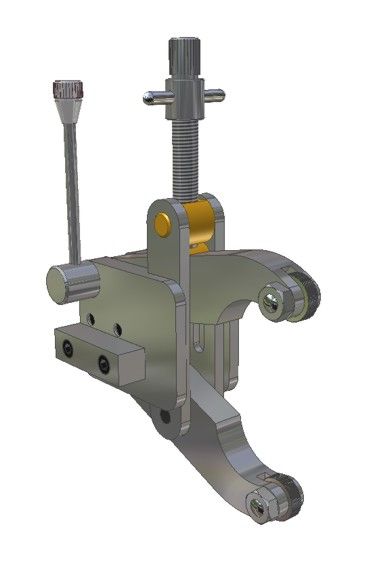
      I'm sure this is a beginner's question: I've been making the Hemingway Sensitive Knurling Tool, as in the picture below:

      hemingway sensitive knurling tool.jpg

      As a rookie engineer, I made several mistakes in the making, mainly during the use of the Myford Super 7 for the milling operations. Specifically, I machined the side plate step 20thou too deep. This surface of this milled step is 2" x 7/8". My question is, rather than scrap the part and re-make it, can I 'add' a piece 20thou thick to this surface in some way?

      I also wondered whether anyone had any other tips for solving common engineering mistakes, at least for non-critical parts that aren't under any strain.

      Many thanks,

      Mike

      #9763
      Mike Donnerstag
      Participant
        @mikedonnerstag
        #420297
        John Hinkley
        Participant
          @johnhinkley26699

          Mike,

          If I have understood your predicament correctly, instead of "adding thickness" to the side plates, I would personally remake the mating pieces in thicker material to 20 thou thicker. They look to be the easier to construct and from less expensive stock.

          Is the fact that there is extra clearance that critical? Depending on the construction, a large brass, or similar, washer might take up the "slack"?

          There's more than one way to skin a cat. I have no doubt others will come along soon with more ideas.

          John

          #420300
          Watford
          Participant
            @watford

            I also wondered whether anyone had any other tips for solving common engineering mistakes, at least for non-critical parts that aren't under any strain.

            Neil …..Perhaps this would make a good series for MEW.

            Mike

            #420311
            Brian G
            Participant
              @briang

              I don't know the component, but wonder if you can take the same amount off of the rest of the same component? From the picture I would guess it to be at least 3/8" thick, so at most there would only be a 5% reduction in stiffness.

              Brian

              #420344
              Mike Donnerstag
              Participant
                @mikedonnerstag

                One idea was to sweat a thin piece of mild steel onto the piece using silver solder, or perhaps even 'glue' a piece on using loctite? I assume that 20thou isn't a thick enough piece to hold in place using any kind of countersunk screw. Ideally, the solution would not show on the outside of the tool.

                John: The knurling tool seems to work okay, traversing in both directions without excessive play in the arms, so you may well be right that I can leave it 'as is'. As the tool is near to being finished, it's too late to change the dimensions of any other pieces. If I were to use a brass washer or thin sheet, how should I fix it to the component?

                #420359
                John Hinkley
                Participant
                  @johnhinkley26699

                  Mike,

                  Without knowing the design of the tool, I was just throwing a few ideas into the ring! Think of the washer idea as similar to using one of the Teflon-style coatings used to refurbish machine ways. Twenty thou is pretty thin – a piece of brass shim that thick secured with superglue would probably withstand what little load there is on the tool when in use.  ( Even if it meant machining a bit more off to accommodate it .)

                  John

                  Edited to add the afterthought in brackets.

                  Edited By John Hinkley on 22/07/2019 15:36:02

                  #420371
                  Speedy Builder5
                  Participant
                    @speedybuilder5

                    Superglue a "shim" of metal to the inside face?

                    #420373
                    Mick B1
                    Participant
                      @mickb1

                      Fixing your errors in a sound and practical manner is one of the things engineering is about.

                      Everybody makes them, but not everybody owns up.

                      If the side plate step is where I think it is, some sort of shim 20 thou thick should work, but you need a way to stop it slipping out. I think I'd try drilling and tapping a couple of (say) 5 BA or M3-ish holes through both sideplate and shim and put screws or studs in to anchor it. Don't think you can have them protruding on the inside, so you'll need an exact length and Loctite 271 or suchlike would probably help. Whether you can remove invisibly or otherwise disguise the outer ends, countersink, or just leave them visible, is largely an aesthetic/social decision.

                      I'm sure there are other solutions: quot homines, tot sententiae. wink

                      Edited By Mick B1 on 22/07/2019 16:56:52

                      #420425
                      Enough!
                      Participant
                        @enough
                        Posted by Mick B1 on 22/07/2019 16:55:12:

                        If the side plate step is where I think it is, some sort of shim 20 thou thick should work, but you need a way to stop it slipping out. I think I'd try drilling and tapping a couple of (say) 5 BA or M3-ish holes through both sideplate and shim and put screws or studs in to anchor it.

                        Am I misunderstanding this? Is this feasible with a 20 thou shim?

                        What you (he) might be able to do though is to drill and tap say, four places. Insert and loctite screws then mill down the heads of the screws to 20 thou thickness and treat that as the shim.

                        (If it were me, I'd remake the easiest part as John Hinkley said).

                        #420453
                        not done it yet
                        Participant
                          @notdoneityet

                          I would either make the ‘mistake’ as large as possible and replace the removed metal with something as thick as possible, before re-machining, or remake the easier part(s).

                          In this case, it might be a simple case of filling with a good bearing material, if the load is minimal and it just needs to be a sliding fit. Maybe drilling holes as a key, in some cases c an bne. Advantageous.

                          All mistakes can be corrected, by changing dimensions of other parts, repairing, or replacing. Sometimes one just starts again, from scratch! Every instance will have one or more options and each will need its own particular problem considering, before continuing. Some items are heavy load-bearing parts, and some are simply supportive. Consideration of any load-bearing part being altered should take into account the risk of later failure.

                          Even the order of making parts can help in reducing errors or making it easier to recover a mistake. Like carrying out the difficult machining operations before spending a lot of time on the item. Scrapping a complex item because of the last machining operation going wrong is the worst scenario!

                          #420478
                          AdrianR
                          Participant
                            @adrianr18614

                            If you want it perfect, remake the side. Adding shims will always remind you of your mistake. I would mill the rest of it down by 0.02" so the step returns to the correct size. I would probably do the same to the other side piece to make it symmetrical.

                            I really doubt 20 thou will be a strength problem for a knurling tool, but if it is you can always remake the part later.

                            #420491
                            John Hinkley
                            Participant
                              @johnhinkley26699

                              It must be catching! Yesterday I returned to the mill to continue machining a 3mm thick plate on which I'm mounting a small electric motor. I'd spent quite a while getting it nice and square and drilling a number of holes correctly. ( DRO helps. ) I set it up ready to drill the hole for the motor spindle to poke through. Next day and too late, I realised that I'd mis-read the diameter dimension as a radius, and drilled the hole twice the size it should have been. Then spent over an hour trying to remedy the mistake by "bodging". Gave up in disgust with myself and now I'm off out to the workshop to remake the part from scratch – what I should have done in the first place.

                              Sometimes you just have to look big and "pay up".

                              John

                              #420495
                              Neil Wyatt
                              Moderator
                                @neilwyatt
                                Posted by Watford on 22/07/2019 10:31:40:

                                I also wondered whether anyone had any other tips for solving common engineering mistakes, at least for non-critical parts that aren't under any strain.

                                Neil …..Perhaps this would make a good series for MEW.

                                Mike

                                I would have ago myself, but I never make mistakes…

                                Start writing!

                                Neil

                                #420497
                                Neil Wyatt
                                Moderator
                                  @neilwyatt

                                  You could thin the pivot end of the arms down by 10 thou a side.

                                  #420696
                                  Mike Donnerstag
                                  Participant
                                    @mikedonnerstag

                                    I knew you fellas wouldn't let me down!

                                    AdrianR: Why didn't I think about reducing the overall thickness of the side piece, and thereby reducing the over-milled step? That's exactly what I'm going to do, so many thanks! That way I'm not affecting any of the other (correctly sized) components. If anything goes wrong, I'll just re-make that side piece. (Did I say 'just'??)

                                    The side piece that is a close fit supports the knurling tool when it traverses towards the headstock, it's only when it traverses towards the tailstock that it is not so well supported, due to the over-milled side piece.

                                    Anyway, there are some great tips here. All the books explain how things 'should be done', but the real skill seems to be in solving or at least working around these mistakes. It reminds me of articles I've read in Fine Woodworking in the past on how to solve common woodworking mistakes. (Neil: I have the PDF articles if you're interested, though I realise of course that metal is a very different material to wood. It helps that a glued wood joint, if done well, is as strong, if not stronger, than the wood itself.)

                                    Once again, many thanks!

                                    #420800
                                    larry phelan 1
                                    Participant
                                      @larryphelan1

                                      I do not make "Engineering mistakes", I make Cock up*s ! Sad to say, they can seldom be "Repaired"

                                      Anyone else like that out there? can we form a club ?

                                      #420823
                                      Phil Whitley
                                      Participant
                                        @philwhitley94135

                                        I always find the problem is making more than one of anything! If you are making say, three, number three is always slightly better than number one, and so the temptation is to remake number one, and try to bring number two up to number three's standard, and it is quite possible to disappear down the rabbit hole of perfection trying to make three identically good items, and completely forget about the purpose those items are going to serve. If it is a part for a model or machine that is going to be admired as an excercise in perfection, then you have to scrap a lot of parts and start again, if it is a shelf bracket etc, then you have to decide if the function/appearance balance is acceptable. A tale from the "one guy from Barlick" forum tells of the Rolls Royce Barnoldswick factory, which was right next to the canal, and the answer to all cock ups was "Chuck it in the cut" You could have a field day fishing there!

                                      Viewing 18 posts - 1 through 18 (of 18 total)
                                      • Please log in to reply to this topic. Registering is free and easy using the links on the menu at the top of this page.

                                      Latest Replies

                                      Home Forums Beginners questions Topics

                                      Viewing 25 topics - 1 through 25 (of 25 total)
                                      Viewing 25 topics - 1 through 25 (of 25 total)

                                      View full reply list.