
CAST IRON JOINING

CAST IRON JOINING

Home › Forums › Beginners questions › CAST IRON JOINING

Viewing 17 posts - 1 through 17 (of 17 total)
  • Author
    Posts
  • #869501
    ian Holdsworth
    Participant
      @ianholdsworth27760

      I sit possible to silver solder cast Iron. If not how can two pieces be joined that is steam leak free.

      #869508
      JasonB
      Moderator
        @jasonb

        It is possible. First bring teh carbon to the surface by heating to red heat, allow to cool and wire brush the surfac ewell. Then silver solder with HT5 Flux. Be carful to bring the part to an even temp.

        JBWeld (original formula) can be used to fabricate steam cylinders and the like by bomding pieces of cast iron.

        #869511
        ega
        Participant
          @ega

          MMA weld with a suitable rod might be steam-tight if done well.

          #869522
          noel shelley
          Participant
            @noelshelley55608

            Are we talking of 2 machines surfaces or a broken part ? MMA with near pure nickel rods at huge cost per rod, oxy propane brazing or Jasons method. Good Luck.  Noel.

            #869543
            Trevor Drabble 1
            Participant
              @trevordrabble1

              I have available at reasonable cost some MMA CI rods ( 2.5mm dia I think ) plus both fluxed and unfluxed ( my preference for such work ) SIF Bronze No 1 rods and separate flux . More details of job and equipment available will be needed before  suitable suggestions can be offered.

              #869583
              Andrew Tinsley
              Participant
                @andrewtinsley63637

                My father used to use brass rods and Sif bronze flux with his oxy acetylene welding gear. It appeared to be dead easy. Although I have similar kit, my efforts have not been very good. I suspect the old man was a very experienced welder, sheet metal worker.

                Andrew.

                #869617
                Nicholas Farr
                Participant
                  @nicholasfarr14254

                  Hi, I’ve done both with nickel type electrodes, which will often require penning on each weld run, to combat distortion, and brass, the brass with with flux impregnated ones, and with Sif flux. I’ve also gas welded with pure cast iron welding rods, which may also require penning of weld run, but that is a bit more tricky to do, but as been said, a little more info of the joint type would be helpful.

                  Regards Nick.

                  #869698
                  ian Holdsworth
                  Participant
                    @ianholdsworth27760

                    The work I need to do is a repair to a cast Iron cylinder for a Midland Spinner in 5″. I have messed up a port and would like to inlay a piece of Iron to make new and re cut the slide valve ports

                    #869703
                    JasonB
                    Moderator
                      @jasonb

                      JBWeld would do that and not risk damage to the rest of the casting. I have even seen it done with araldite and screws on a larger model but for your smaller cylinder the JB Weld will be fine on it’s own. Just make sure you buy “original formula” not a fast setting one.

                      https://www.jbweld.co.uk/originalepadh

                      #869743
                      Trevor Drabble 1
                      Participant
                        @trevordrabble1

                        I have now found some square cast iron rods and cast iron flux ! DURRR ! If you do eventually decide to go down the ” metal joining” route it is desirable to remove as much of the free carbon flakes as possible by burning them off and this is usually done with oxy-acetylene by heating the job to quite a high temperature . For this and other reasons , SIF Bronze 1 is the better option because it has a melting point higher than most silver soldiers , is nearer to the temperature required for the cast iron , and will tolerate a degree of carbon flake contamination . Also note that both pre and post heating of the job is to be recommended . The pre heating may be done in a brazing hearth with propane , but post should be done is a substantial sand trough . Many will say such a faff is unnecessary , but I’ve had too many cracks appear post job using other simpler methods .

                        #869759
                        bernard towers
                        Participant
                          @bernardtowers37738

                          shouldnt that sifbronze be Manganese bronze rod for cast iron?

                          #869762
                          JasonB
                          Moderator
                            @jasonb

                            To me welding would be very difficult for this job. The OP wants to add a new port face. Now that would entail cutting three new ports which all need to be individually steam tight.

                            Not sure if there would be much of the cylinder left if you cut your weld prep back far enough to get to the centre of the repair plate and did a number of passes to build it out to profile and little hope of poking a rod down each port.

                            Similar with braze, you would need the filler material to fully penetrate the joint between cylinder and repair piece so that when you cut the ports again there is no risk of steam tracking between them via and gaps.

                            Silver solder is more likely to fully penitrate but there could always be doubts as just like brazing you would nee dto cut the joint through to check.

                            JBW you can see that you have fully coated the surfaces before putting the two together so very little chance of a poor joint

                            With welding there is also a chance of distortion of what sounds to be a partially machined (bored) cylinder so the non heat approach would have no affect on any work previously done.

                            #869765
                            JasonB
                            Moderator
                              @jasonb

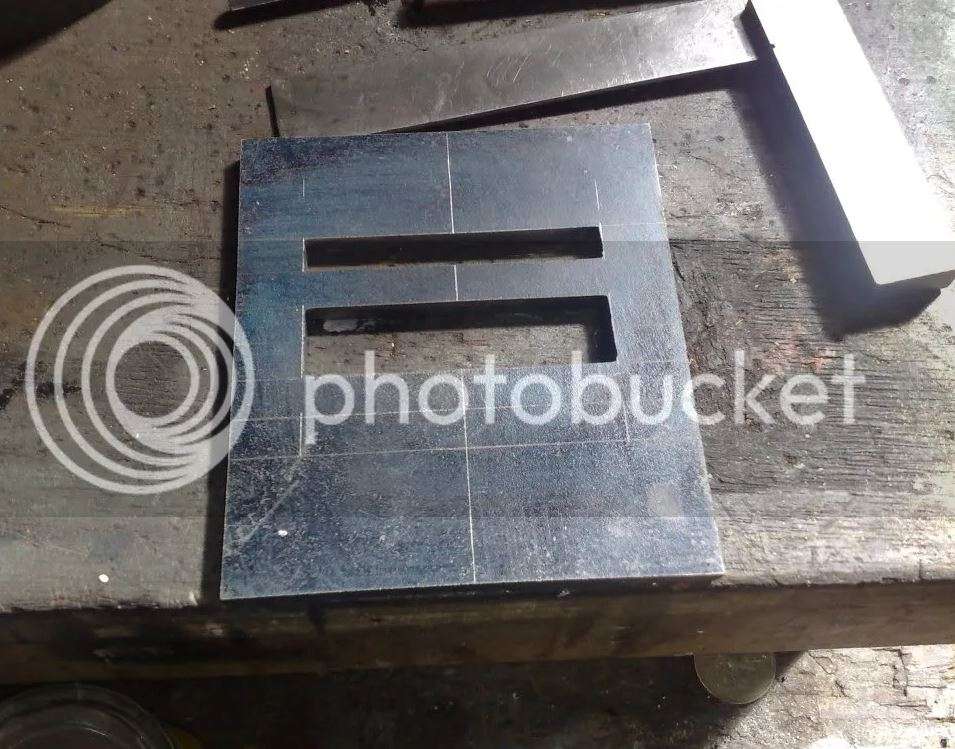
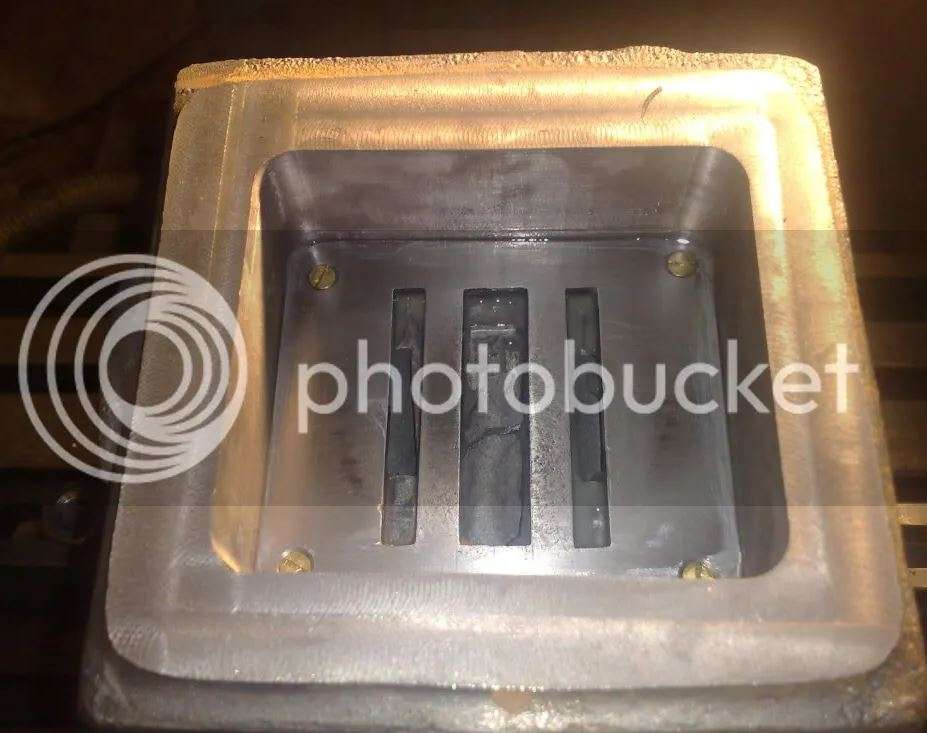
                              This is the type of job being discussed, 3″ traction engine cylinder in this case

                              kev 1

                              kev 2


                              #869775
                              howardb
                              Participant
                                @howardb

                                I used to have to repair broken, fractured machine parts many years ago, no other option, the machines were ancient and had to be kept running.

                                I used SIF bronze fluxed rods with a lot of oxy- acetylene heat, get it close to red heat if possible, together with some powder flux. Gritblast the fracture, vee it out etc

                                Cooling the repair down slowly helps.

                                You can’t rely on this type of repair to be reliable.

                                #869778
                                Mike Crossfield
                                Participant
                                  @mikecrossfield92481

                                  A friend broke the cast iron grid on her gas job. Following advice on this forum, I heated the broken areas to red, brushed the surface with a stainless steel wire brush, and tinned the fractured surfaces with silver solder and ht flux. I then wired the broken parts together, and applied lots of heat and more solder and flux. Result was good joints which have lasted now for 5 years.

                                  Although somewhat off-topic, I also recall breaking my cast iron 4 inch Record vice in half, trying to use it as a press. This was over 40 years ago, and being newly married with no money, I took it to an old chap who had a reputation as a great welder. For very little money he joined the halves back together, Unfortunately I can’t say how the repair was done, but the vice is still regularly used today. In fact until now I had forgetter the repair.

                                  So sound cast iron repairs are certainly possible if you know what your are doing.

                                  #869786
                                  Bill Phinn
                                  Participant
                                    @billphinn90025

                                    Jason is recommending a repair that is far more accessible and less costly than brazing with silver or Sifbronze or MMA welding.  It also seems to do the job well enough in circumstances like these or I’m confident he wouldn’t be recommending it.

                                    I’m puzzled by Trevor’s comment: “Sif Bronze 1 is the better option because it has a melting point higher than most silver soldiers , is nearer to the temperature required for the cast iron…”

                                    Could Trevor explain why Sifbronze no. 1 having a higher melting point than most silver solders makes it more suitable than silver solder here, and also explain what he means by it being nearer to the temperature required for cast iron? What temperature is required for cast iron?

                                    I wasn’t aware that Sifbronze no.101 (containing manganese), or its older counterpart Sifbronze no. 10, was a better option for cast iron than silicon bronze, i.e. Sifbronze no 1, or C2 rods as they are known generically. Nos. 10 and 101 are certainly freer flowing than no.1/C2 but I’ve not heard them being recommended in preference to the latter for repairing cast iron before.

                                    Recommending oxy-acetylene for brazing is all very well, but in my area at least* acetylene has been unobtainable for new customers for several years whether rental or rent-free, and the rental suppliers slightly further afield from me will only enter into a rental agreement for ludicrously large sized cylinders that they will only deliver to business premises, and no-one would want one of that size on domestic premises anyway, I imagine, even if they could justify the cost.


                                    * And I live in one of the biggest UK conurbations outside London.


                                    #869793
                                    JasonB
                                    Moderator
                                      @jasonb

                                      I was not really thinking of cost and accessibility I was thinking it is a more appropriate method for the job in hand.

                                      Anyone who has machined a steam engine cylinder will have done the ports and passages as one of the last operations so there is already a lot of finished work in a small engine cylinder of about 1.5″ bore and maybe 2.5″ long. JB Weld is not very invasive compared with other methods that are perfectly suitable for other CI  items that may need repair.

                                      As I have said going at a nearly finished casting with an angle grinder to provide sufficient weld prep is not going to do it a lot of good, probably not even enough material to get a deep enough prep without cutting into the outer surfaces. It’s a well known aero engine building trick that heating CI parts will make them grow, fine when you need it bit it will also shrink the already machined bore and there is also the risk of distortion particularly as weld material cools which could result in the bore no longer being round or parallel.

                                      Again brazing with oxy/fuel will put a lot of heat into the small part with the risk of the cooling filler material distorting the casting. And as mentioned by Bill needs the heating equipment.

                                      Silver solder should be more within the reach of most model engineers as a decent size burner will get a casting of that size upto temp and there is a good chance that teh solder will flow completely under the repair piece but again there is heating involved.

                                      JB Weld does not need heat, has been shown by other model engineers to be upto the job including doing tests to 300psi while the test joints are in boiling water. But mostly you can be sure that all surfcaes are coated so that when you later come to mill the ports and drill the passages to meet them there wil be no leakage of steam from one hole to another.


                                    Viewing 17 posts - 1 through 17 (of 17 total)
                                    • Please log in to reply to this topic. Registering is free and easy using the links on the menu at the top of this page.

                                    Latest Replies

                                    Home › Forums › Beginners questions › Topics

                                    Viewing 25 topics - 1 through 25 (of 25 total)
                                    Viewing 25 topics - 1 through 25 (of 25 total)

                                    View full reply list.