Avoiding Work Holding Damage: How do you decide the cutting order?

Avoiding Work Holding Damage: How do you decide the cutting order?

Home Forums Beginners questions Avoiding Work Holding Damage: How do you decide the cutting order?

Viewing 18 posts - 1 through 18 (of 18 total)
  • Author
    Posts
  • #304974
    SillyOldDuffer
    Moderator
      @sillyoldduffer

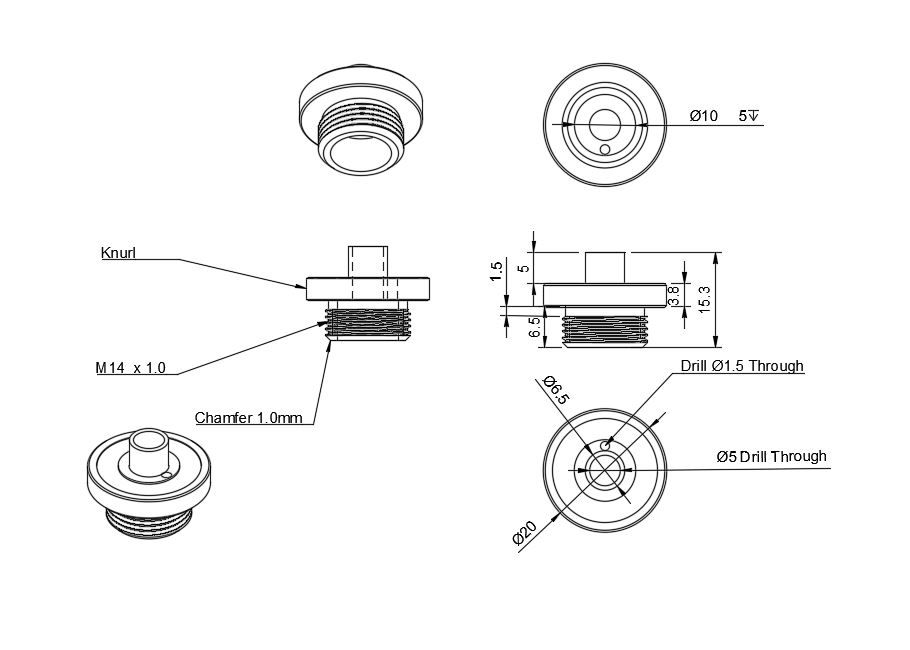
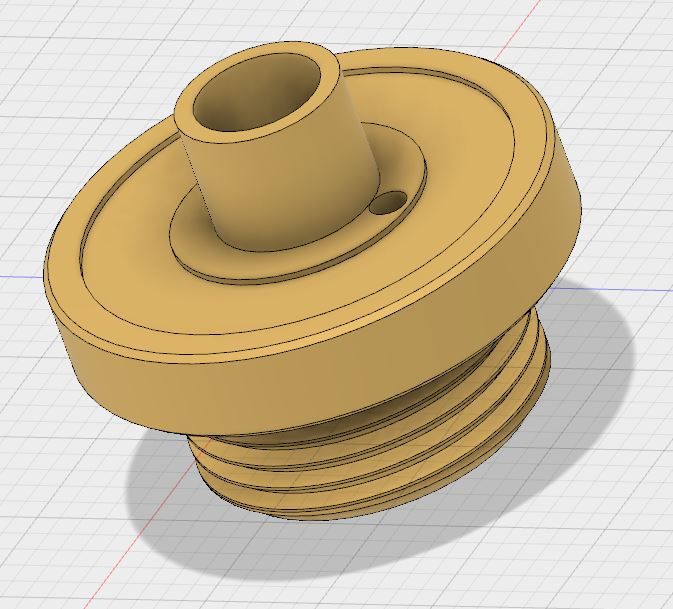
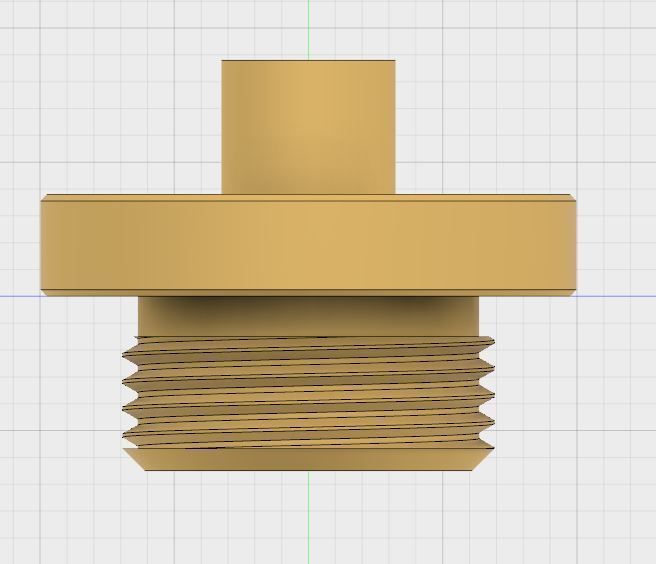
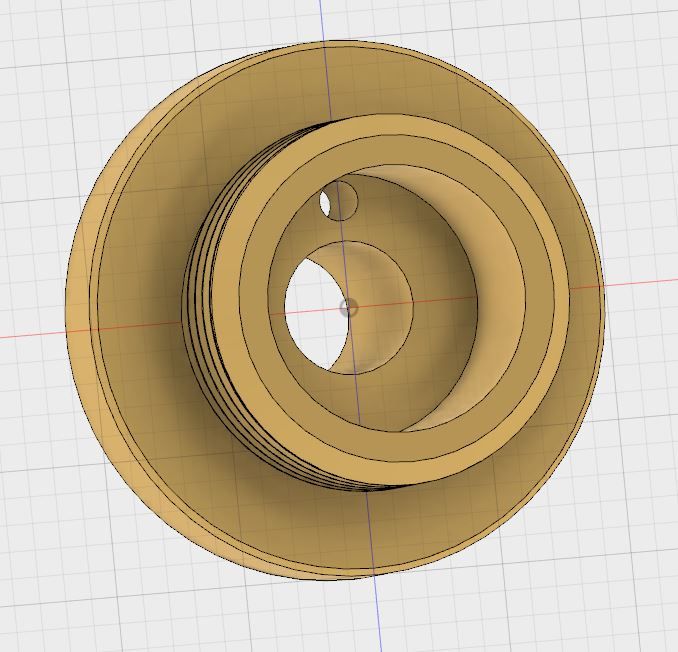
      I had trouble today making a replacement top for a spirit lamp, as per this Fusion 360 drawing and model:

      plan_spirit.jpg

      top_spirit_top.jpg

      side_spirit.jpg

      bot_spirit.jpg

      I plunged into making this and got into trouble at the end because to finish the job I had to hold the work using either the decorative knurl (not shown but on the major diameter), or the delicate thread. Despite wrapping them in electrical tape, I damaged both getting a sufficiently good grip. (Didn't help I used Aluminium rather than brass.)

      I did it in this order (troublesome steps in bold):

      1. Put 20mm rod in 3-jaw chuck with 25mm protruding
      2. Faced off rod
      3. Knurled length 20mm
      4. Reduced diameter to 14mm over 6.5mm to take thread
      5. Chamfered end of rod 1mm to for thread entry
      6. Centre drilled rod
      7. Drilled 5.4mm hole 16mm deep
      8. Widened 5.4mm hole to 10mm diameter for 6.5mm
      9. Cut 1.5mm groove to end the thread
      10. Chamfered bottom of 20mm diameter. 0.5mm (lower part of finger grip)
      11. Cut M14x1.0 thread (25.4 tpi as ersatz 26tpi), and checked fit.
      12. Part off at 16mm
      13. Reversed part in chuck and gripped it by the thread
      14. Reduced diameter at top create the wick nozzle.
      15. Chamfered top of finger grip 0.5mm
      16. Used sideways on parting tool to cut decorative groove
      17. Moved work to mill. Gripped work in vice by knurl and drilled 1.5mm breather hole.

      Now the result is 'good enough' but I had to clean up a damaged thread before it would fit the spirit lamp again. Also, in the right light, the knurl has been visibly squeezed by the vice. I'm disappointed that the part is spoilt cosmetically: it's a million miles from exhibition standard and I don't know how to avoid repeating the problem.

      The trouble started at step 13 where I gripped the finished thread in the chuck, and again at 17 where I put the knurl in the milling vice.

      Is there a smart way to plan a sequence of work to avoid mangling something done earlier?

      Also, if it's unavoidable, what's the best way to hold delicate items firmly so that they aren't damaged by later work?

      Any other comments welcome!

      Thanks,

      Dave

      #8763
      SillyOldDuffer
      Moderator
        @sillyoldduffer
        #304977
        Anonymous

          In a word – jigs.

          Nowt wrong with the sequence, except the bits in bold. I'd have made a short length of bar with a matching internal thread to hold the part in the chuck without damaging the thread. You can use the same jig to hold the part in the mill for drilling.

          Andrew

          #304979
          David George 1
          Participant
            @davidgeorge1

            Hi Dave after No12 part off, I would have made a small mandrel to hold it on. use same material unless I had something I already have. Make a washer to trap end 3mm thick 5mm hole and outside slightly larger than 5mm cap screw. Then I would turn a spigot to just fit into the larger bore and drill and tap a hole 5mm long enough to take cap screw. Put on to mandrel and finish turn you can also use mandrel to hold it to drill vent.

            David

            #304980
            mechman48
            Participant
              @mechman48
              Posted by Andrew Johnston on 30/06/2017 18:03:34:

              In a word – jigs.

              Nowt wrong with the sequence, except the bits in bold. I'd have made a short length of bar with a matching internal thread to hold the part in the chuck without damaging the thread. You can use the same jig to hold the part in the mill for drilling.

              Andrew

              ​+1… beat me to it posted as I typed.

              George.

              #304981
              JasonB
              Moderator
                @jasonb

                Same as what Andrew suggests, I have amassed quite a few male and female threaded bits of metal that are used to hold threaded parts to do second ops. Keep them all in a box to save having to make the same holder over again.

                Another alternative is soft jaws

                #304988
                RichardN
                Participant
                  @richardn

                  If you didn't want to thread cut the female to match as a one off, could you have turned the 'top' first to diameter and held that end in a collet with a single layer of paper for protection, or even drilled the 5mm central bore first and super glued to a 5mm shaft and machined the entire part in one go, just warming to release the glue bond when ready?

                  #304996
                  Neil Wyatt
                  Moderator
                    @neilwyatt

                    I would have roughed out the general shape, then poked a nutted mandrel through the hole.

                    Neil

                    #305004
                    duncan webster 1
                    Participant
                      @duncanwebster1

                      Manage without the decorative groove, then you can machine all over before parting off. If you really must have the groove then +1 for Andrew's threaded bush, although to be pedantic that would be a fixture as it doesn't guide the tool. I've got a box full of mainly ME threaded ones for making boiler fittings. Worth making a decent job and putting a punch mark against jaw 1 so when you put it back in the 3 jaw it's got a good chance of being concentric.

                      You could drill the 1.5mm hole as a first op, then you don't have to grip the final piece.

                      #305009
                      Ian P
                      Participant
                        @ianp

                        My take on this is that the sequence used is not ideal (unless I've missed something)

                        1 and 2 are OK but then I would fully machine ALL the features you can on the threaded end. You do not say if you used a die or screwcut but both need a fair amount of torque as does the knurling, so best done whilst its still in the chuck, everything will be concentric including the 10mm and the 5mm through hole. Then part off, (possibly roughing the tubular spigot with the parting tool before the part detaches).

                        Put a bit of scrap bar in the chuck and turn a stub mandrel so that the10mm bore is a firm fit. push on the part machined component and finish machining the spigoted end.

                        Ian P

                        #305027
                        Hopper
                        Participant
                          @hopper

                          Brass shim .020" thick works well for holding threaded parts in the chuck. Better than aluminium.

                          Or a turned aluminium ring with a split in it. Wall thickness of 1/8" or more so threads are not damaged.

                          Also when holding for drilling, instead of using a vice, you can take the chuck off the lathe and hold the part in that before laying chuck on the drill table. It takes less pressure to hold three points than two.

                          #305028
                          Neil Lickfold
                          Participant
                            @neillickfold44316

                            It is not easy to get a straight answer. What is the precision required, how many being made. Is material conservation important. After that you can figure it out. This part can be turned and parted off after all operations being completed including the drilled hole if a live tooling drill is added to the lathes cross slide. It will require left hand turning tools and a left hand trepan tool. The live spindle to spin a drill bit can be as simple as a Dremel hand piece held in the tool post and pitched out using a locked spindle.

                            Lots of ways to making parts these days on home machines if you think about the product as a whole and what can be achieved if you have some form of indexing on the lathes spindle. Having a spindle for milling is very handy for making model parts and when only a few are being made. Dremel is fairly low power so definitely has its limitations for materials you can drill and mill with. Unless you get or make another spindle for the milling on a lathe situation.

                            Neil

                            PS. Well done on the cad. Is it possible for you to email to me your fusion 360 drawing model please. I would like to learn how you drew it up and made the model.  I also use fusion 360 but am a very much beginner.

                            Thanks

                            Edited By Neil Lickfold on 01/07/2017 05:52:13

                            #305034
                            Rick Kirkland 1
                            Participant
                              @rickkirkland1

                              If you want a fairly straight answer here’s two.
                              1, Sparey. The Amateurs Lathe.
                              2, Tubal Cain. Work holding in the Lathe.
                              All being well you should never need a third answer

                              Edited By Rick Kirkland 1 on 01/07/2017 07:53:46

                              #305035
                              Matthew Reed
                              Participant
                                @matthewreed92137

                                Does holding work in a collet reduce damage to the part?

                                I had a similar issue recently, although a slightly smaller part in silver steel , and opted for the ER32 set, rather than the 3 jaw.

                                The result was ok, but was that a waste of time?

                                #305037
                                Martin Connelly
                                Participant
                                  @martinconnelly55370

                                  The order of machining for any part is often determined by the available tooling. In this I agree with RichardN that machining the top first and holding it in a collet if you have a suitable collet would be good way to go. If you don't have a collet then a chuck with soft jaws machined to hold the 8.5 diameter would be a good option. If you want to hold a threaded part drill a suitable hole in some soft wood and cut a slot from the edge to the hole. This will allow the wood to close onto the thread and grip it without damage. Best used with a 4 jaw chuck to get concentricity.

                                  Martin C

                                  #305038
                                  Chris Evans 6
                                  Participant
                                    @chrisevans6

                                    "Does holding work in a collet reduce damage to the part?"

                                    In a word yes. I must do 80% of my work in 5C collets and often hold on a threaded part without damage. Also as above I have a good selection of aluminium split rings built up over the years for work in the chuck.

                                    #305068
                                    duncan webster 1
                                    Participant
                                      @duncanwebster1
                                      Posted by Matthew Reed on 01/07/2017 08:28:33:

                                      Does holding work in a collet reduce damage to the part?

                                      I had a similar issue recently, although a slightly smaller part in silver steel , and opted for the ER32 set, rather than the 3 jaw.

                                      The result was ok, but was that a waste of time?

                                      Holding short bits in ER collets isn't too good, they should really close down on something full length. It's just occured to me that had the OP machined a stub just less than root diameter of thread, say 11.5 dia * 15 long sticking out from the thread, he could simply have used that as a chucking piece in a 3 jaw (jaw engagement 10mm) and then parted the chucking piece off. Wastes a bit of material but nice and easy.

                                      #305100
                                      SillyOldDuffer
                                      Moderator
                                        @sillyoldduffer

                                        Wow, loads of good ideas, all much appreciated. I don't know which to try first!

                                        As a result of the replies I've also had an insight into my dodgy workshop practice. Some of the tips I know about but somehow I didn't apply any of them in practice. Why not I wondered?

                                        I think the answer is a mix of inexperience and laziness. I tend to bodge when I most ought to be taking care. Too many "short-cuts" that go wrong and too much hoping that I'll "get away with it".

                                        I'm improving slowly: the more experienced I get, the longer I spend planning and setting up work before cutting metal. Perhaps one day I'll pull it all together and be able to produce good work quickly. As it is – with your help – my education continues…

                                        Many thanks,

                                        Dave

                                      Viewing 18 posts - 1 through 18 (of 18 total)
                                      • Please log in to reply to this topic. Registering is free and easy using the links on the menu at the top of this page.

                                      Latest Replies

                                      Home Forums Beginners questions Topics

                                      Viewing 25 topics - 1 through 25 (of 25 total)
                                      Viewing 25 topics - 1 through 25 (of 25 total)

                                      View full reply list.