Drummond/Myford M type cross slide

Drummond/Myford M type cross slide

Home Forums Beginners questions Drummond/Myford M type cross slide

Viewing 19 posts - 1 through 19 (of 19 total)
  • Author
    Posts
  • #299813
    Brokentechie
    Participant
      @brokentechie

      Hello all.

      I’m having awful trouble adjusting my cross slide to a balance of freedom of movement and backlash.

      Can someone please guide me in the correct adjustment procedure for my M type.

      Thanks

      #8732
      Brokentechie
      Participant
        @brokentechie
        #299823
        Swarf, Mostly!
        Participant
          @swarfmostly

          Hi there, Andy,

          You need to separate (in your mind) the two different phenomena of back-lash and freedom of movement.

          The former is a function of the fit of the feed-screw in its nut, together with the fit of the feed-screw (at the handle end) in the bracket on the end of the cross-slide.

          Freedom of movement is a function of the grip of the moving part of the cross-slide, including the gib strip, on the fixed dovetail part of the saddle. This will be difficult to adjust if wear has resulted in the effective width of the slide dovetail (either male or female parts or both) being different at different cross-slide positions.  Freedom of movement can also be reduced if the feed-screw & handle are over-tight in the bracket.

          I suggest that you slack off your cross-slide gib strip and attend to diagnosing the condition of the feed-screw, nut and bracket first.

          (Diagnosis should always precede remedial action.)

          Best regards,

          Swarf, Mostly!

          Edited By Swarf, Mostly! on 27/05/2017 14:17:09

          Edited By Swarf, Mostly! on 27/05/2017 14:18:37

          #299835
          Brokentechie
          Participant
            @brokentechie

            Hi Swarf,

            I get the difference between backlash and free movement (aeronautical engineer) however the design of the M type is such that the handle locking setup affects the ability to turn the screw.

            I’m not sure if you’re aware of it but there is a grub screw that locates on a flat taper set into the screw and there is a collet type locking ring within the end of the handle which when tightened locks the smooth rotational movement somewhat.

            I’m considering some thin ptfe washers to generally improve the fit and rotation, or a thrust washer between the saddle front face and screw stop.

            #299840
            Swarf, Mostly!
            Participant
              @swarfmostly

              Hi there, again, Andy,

              I'm not familiar with the particular details of the M-type so my previous post was, of necessity, general in nature.

              I know that there are M-type owners on this forum and, hopefully, one or more of them will be along soon to help you. Apart from that, have you tried the Drummond group on Yahoo? The Yahoo groups are frequently recommended though I have personally abandoned them because they cause my computer severe cyber-colic!!

              I hope that you get some knowledge-based advice soon.

              Best regards,

              Swarf, Mostly!

              #299841
              Eugene
              Participant
                @eugene

                Andy,

                Welcome to that part of the asylum that is especially reserved for M type users.sad

                The first time I tried to adjust the cross slide it just about drove me potty, it's one of those occasions when "simple" which the mechanism is, doesn't mean "easy".

                The procedure I use is to remove the whole of the feed screw assembly, and throughly clean it taking care not to allow the small leaf type pressure spring inside the micrometer dial fly off into some dark corner. Then adjust the gib strip screws aiming for a nice silky movement when moved by hand.

                Lubricate the screw with medium grease and the micrometer assembly with a light oil. I use gun oil because it doesn't gum up as badly as some others. When you put it all back together, don't fully tighten up the grub screw you mentioned, leave it just lightly in contact with the flat taper.

                The handle locking set up acts as a crude thrust bearing. Tighten the inner nut using a box spanner until it just starts to resist, then pull up the outer nut to lock it into place. Try the handle and see what you've got. From there on it's just a matter of sickening off the outer nut, and nipping up the inner one just tad, and repeating until you get what you feel is acceptable. Only when you're happy with the action do you fully tighten the grub screw.

                I've tried the PTFE washer thing and it sort of works for a bit, then it compresses and needs adjusting again; non starter in my view.

                In fairness I've got the backlash down to about .006-8" which is bearable (pun intended) but I'd like to see the back of it altogether. I'm sure you're right, the best option is some proper thrust bearings and that's going to be one of my first projects when I get my new workshop up and running.

                As Swarf! says the Drummond forum is a clumsy effort, but there is a lot of good stuff in there. I've asked about the mod you and I are contemplating but didn't find anyone who had done it. It's common enough on the Myford 7 series lathes though.

                Eug


                Edited By Eugene on 27/05/2017 17:06:04

                Edited By Eugene on 27/05/2017 17:07:55

                #299850
                David George 1
                Participant
                  @davidgeorge1

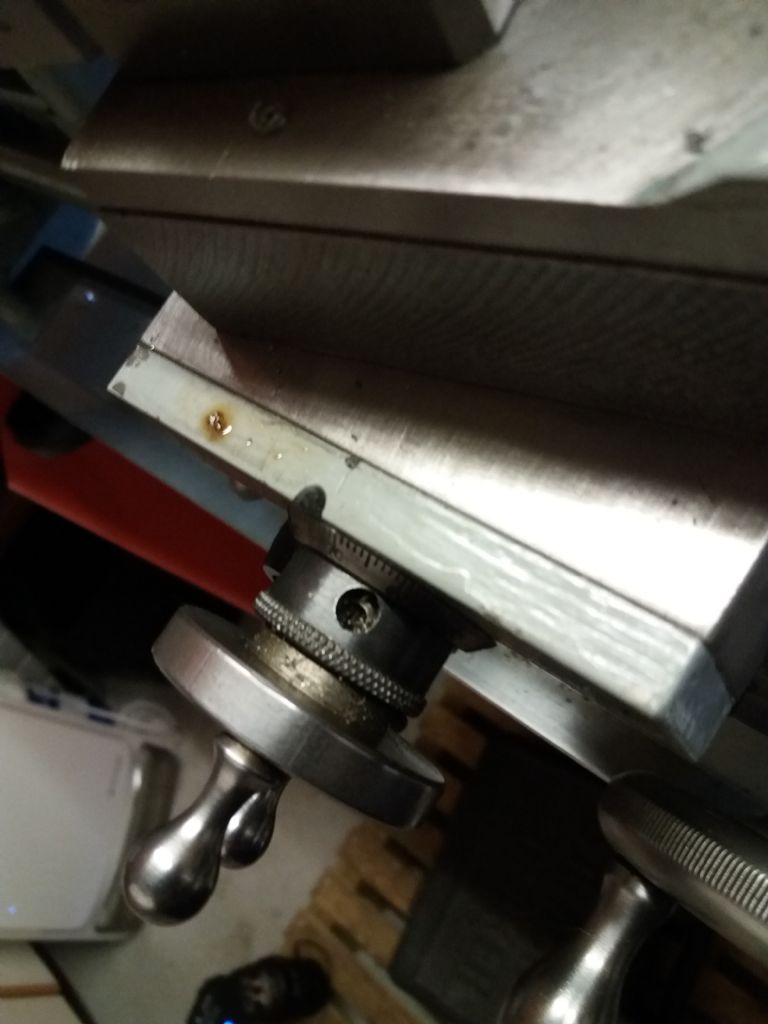
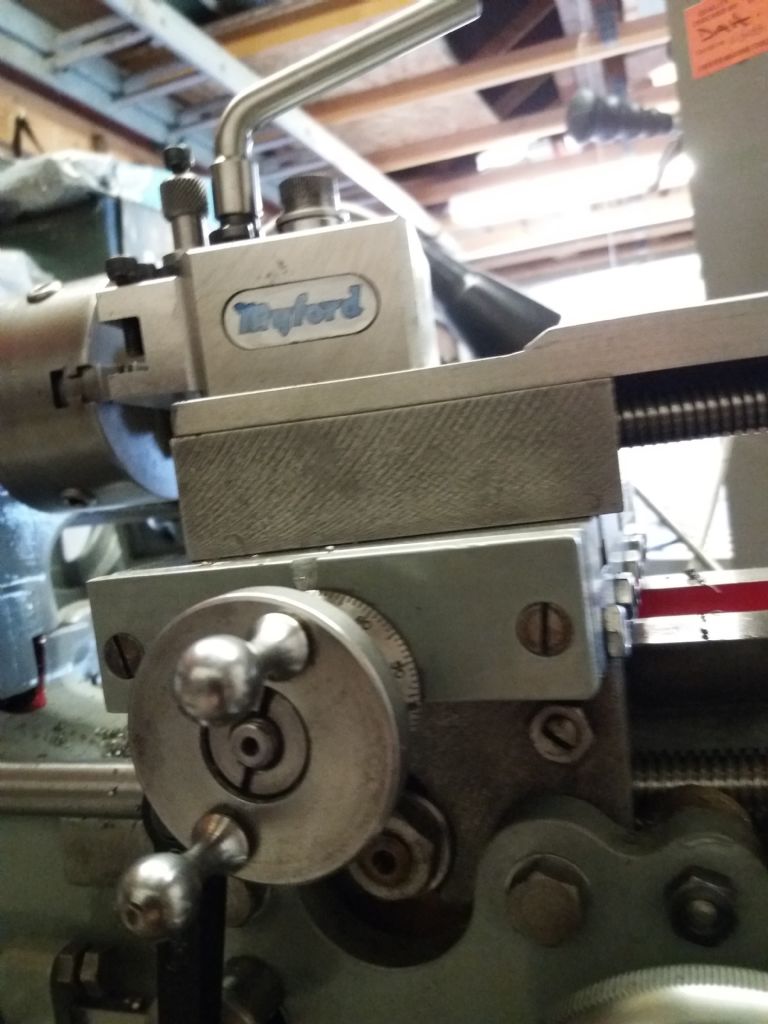
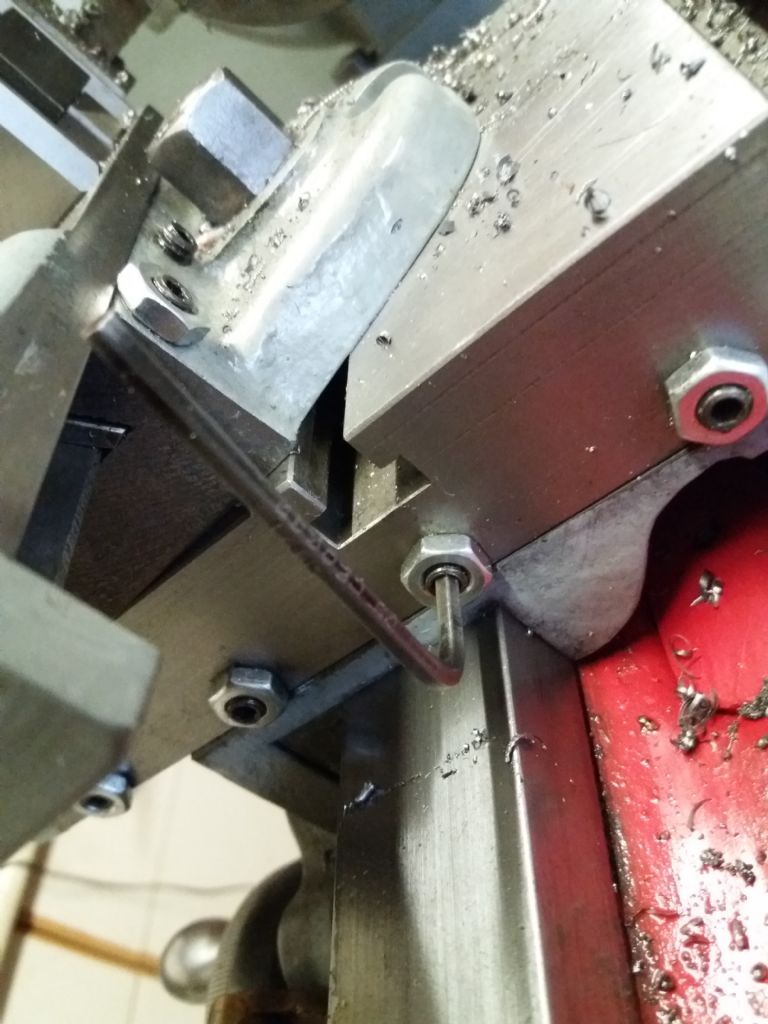
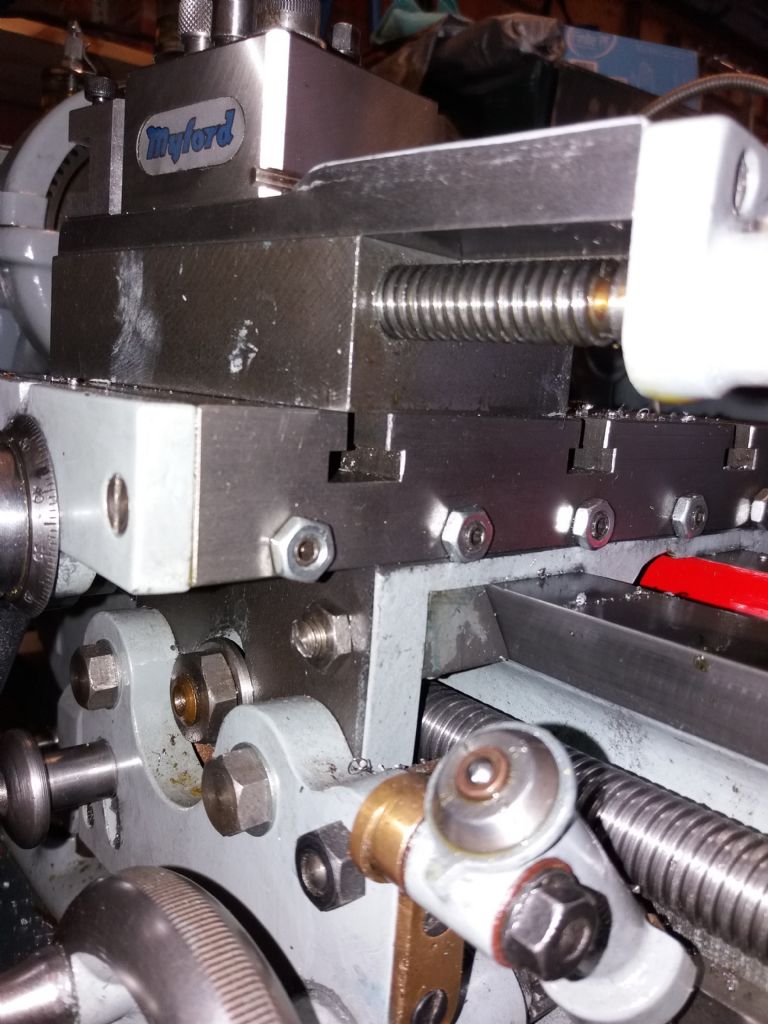
                  Hi Andy. The grub screw adjustment is to remove backlash and not to lock the slide way. If you rotate the micrometer bezel after loosening the outer grub screw you can see through the hole in the bezel another grub screw, lower down, and slightly out of centre. This is slackened to adjust back lash so that rotation is ok but minimum backlash using the outer nut and then retightened and checked again. I adjust the slide gib strips with the handle plate screws out so that you can push and pull the slide as you tighten the screws ( and on mine I have replaced the screws with longer screws and lock nuts) until it just slides smoothly without undue force, and then replace the handle plate screws. I use one of the centre gib screws to lock the slide when I have a big cut to do. The play in any of the slides will cause all sorts of problems and it is usually one of the gibs not adjusted closely of play in the spindle bearings. I suggest that you put a dial test indicator against suspect parts and give them a tweak to see if you can find any play. IE put a shaft into the chuck and check up and sideway play when pulled. Don't forget to adjust the main carriage gib strip.

                  please find attached pictures.

                  David

                  slide adjustment 1.jpg

                  slide adjustment 2.jpg

                  slide adjustment3.jpg

                  slide adjustment 4.jpg

                  #299930
                  Brokentechie
                  Participant
                    @brokentechie
                    Posted by Swarf, Mostly!:

                    Hi there, again, Andy,

                    I'm not familiar with the particular details of the M-type so my previous post was, of necessity, general in nature.

                    I hope that you get some knowledge-based advice soon.

                    Best regards,

                    Swarf, Mostly!

                    Hi Swarf! I hope you don't think I was being ungrateful – any help is good help!

                    Posted by Eugene:

                    Andy,

                    Welcome to that part of the asylum that is especially reserved for M type users.sad

                    The handle locking set up acts as a crude thrust bearing. Tighten the inner nut using a box spanner until it just starts to resist, then pull up the outer nut to lock it into place. Try the handle and see what you've got. From there on it's just a matter of sickening off the outer nut, and nipping up the inner one just tad, and repeating until you get what you feel is acceptable. Only when you're happy with the action do you fully tighten the grub screw.

                    Hi Eugene,

                    Many thanks for the advice – that said I'm a little confused with what I have made bold above – all I have on mine is the slotted "nut" (round) that screws onto the "handle" part of the slide leadscrew and the two grub screws in the handle and micrometer dial – am I missing a part?

                    I understand you also use insert tooling from reading another forum about your rebuild – I have identified Glanze as a good brand, can you also give me some guidance on what style holder and tips to use for Aluminium, various steels and also Stainless please – I believe CC are the way to go, although I like the look of the triangular inserts (3 indices per tip – possibly more financially sound?)

                    I'm aware I may get told "Carbide don't work" however I have read some excellent posts and seen some results online to the contrary – like you I am 99% sure I will not be able to grind HSS!

                    #299932
                    Brokentechie
                    Participant
                      @brokentechie
                      Posted by David George 1 on 27/05/2017 18:07:16:

                      Hi Andy. The grub screw adjustment is to remove backlash and not to lock the slide way. If you rotate the micrometer bezel after loosening the outer grub screw you can see through the hole in the bezel another grub screw, lower down, and slightly out of centre. This is slackened to adjust back lash so that rotation is ok but minimum backlash using the outer nut and then retightened and checked again. I adjust the slide gib strips with the handle plate screws out so that you can push and pull the slide as you tighten the screws ( and on mine I have replaced the screws with longer screws and lock nuts) until it just slides smoothly without undue force, and then replace the handle plate screws. I use one of the centre gib screws to lock the slide when I have a big cut to do. The play in any of the slides will cause all sorts of problems and it is usually one of the gibs not adjusted closely of play in the spindle bearings. I suggest that you put a dial test indicator against suspect parts and give them a tweak to see if you can find any play. IE put a shaft into the chuck and check up and sideway play when pulled. Don't forget to adjust the main carriage gib strip.

                      please find attached pictures.

                      David

                      Hi David,

                      Many thanks for all your help so far – great info for a beginner!

                      I like your toolpost mod – do you have any details of how you went about converting the existing post to accept the QCTP?

                      Also did you make your gib screws or if not could you tell me where I can find a decent supplier of such (gibs and grubs etc) and what sizes they are – I don't have any imperial thread gauges at home so whilst I'm not a stranger to imperial work (I'm trained in both because of the old aircraft I cut my teeth on) I do have trouble identifying threads!

                      Many thanks

                      Andy

                      #299942
                      Hopper
                      Participant
                        @hopper

                        Mine has the same slotted nut recessed in the end of the handle like yours, and the small grub screw accessed by aligning the hole in the micrometer dial with the inner screw. From memory, (haven't done it in a while) you just loosen the slotted nut, undo the inner grub screw and screw the handle in until you get the desired end-float (a thou or two) between the handle and the cross slide end plate. Then nip up the grub screw, followed by nipping up the slotted screw to lock it in position. It's best done with the cross slide pulled out far enough the leadscrew is disengaged from the thread in the carriage. This way, you are observing only the end float in the leadscrew/handle unit and not getting mixed up with the backlash, which is the wear between the threads on the leadscrew and the carriage and is not adjustable. Gib adjustment is yet a separate adjustment and has no bearing on the backlash or endfloat in the leadscrew.

                        With the cross slide lead screw, it can help to pull the slotted nut right off, slacken off the grub screw, unscrew the handle unit and take the leadscrew out for a good clean and tidy up. Machining or filing the surface where the shoulder on the lead screw contacts the cross slide end plate is a big help. Or a steel washer to cover the groove worn in the end plate can help too.

                        #299955
                        David George 1
                        Participant
                          @davidgeorge1

                          Hi Andy I actually used 1/4 UNC grub screws and lock nuts for the gib adjusters as the original Whitworth wern't available but as they are the same pitch and diameter but a different thread angle were ok. The information on toolpost mods etc are in some of the albums in my area including drawings but if you need further info send a message.

                          David

                          #299963
                          Ady1
                          Participant
                            @ady1

                            I actually have a spare saddle casting and a shaper so I'm going to have a go at a tapered gib cross slide for my own Drummond at some point

                            I already have a tapered gib cross slide on a Pultra and so I can use that as a general arrangement layout for converting a Drummond saddle casting

                            It's a lovely smooth movement on the pultra but it's definitely not the sort of job you can hurry and I always seem to have a thousand other things which need doing

                            #299984
                            Swarf, Mostly!
                            Participant
                              @swarfmostly
                              Posted by Brokentechie on 28/05/2017 11:29:50:

                              Posted by Swarf, Mostly!:

                              Hi there, again, Andy,

                              I'm not familiar with the particular details of the M-type so my previous post was, of necessity, general in nature.

                              I hope that you get some knowledge-based advice soon.

                              Best regards,

                              Swarf, Mostly!

                              Hi Swarf! I hope you don't think I was being ungrateful – any help is good help!

                              SNIP

                              Hi there, Andy,

                              It never entered my head that you were ungrateful. Even if/though my posts didn't answer your query, they seem to have elicited replies so maybe my pitching in did serve some useful purpose – I'll settle for that!

                              It can be a dilemma answering a query from a poster one hasn't encountered before. One has to avoid blinding them with science on the one hand and telling Granny how to suck eggs on the other!

                              The important thing is for us to help you get your machine into good shape so you can get on with making swarf – I hope you reach that happy state soon.

                              Best regards,

                              Swarf, Mostly!

                              #300005
                              Eugene
                              Participant
                                @eugene

                                Andy,

                                Your set up does sound a bit different from mine, but the principles seem to be the same; just do the adjustment stepwise.

                                Ref. the insert tooling. When i first started out I had no tooling of any kind. My attempts at grinding HSS were dispiritingly pathetic and produced things with the profile of a pineapple and cut about as well. Ready made HSS tools from E-bay were awful; they just chipped as soon as you used them.

                                At the Harrogate Show I got some advice from Jenny at J B Cutting tools and ordered left and right holders for CCGT09T304NF25 inserts and with these did my first successful turning. They work a charm, but be under no illusion that you won't bust a few tips; as clumsy beginner, I sure did. The "04" bit in the description refers to the radius of the cutting tip in mm. 04 is general purpose, 02 is fine finishing, 08 is roughing.

                                Using them I could at least turn stuff with a passable finish, and learn more about the job, the lathe, and the necessary techniques. I did run into a problem with chatter when taking any cut much over .010" but I cured that with the "secondary bearing dodge" described elsewhere in the forum. I can take .050" cuts (i.e. .100" off diameter) with complete confidence when using clean steel with a good end face.

                                I then built the HSS tool grinding jig designed by Harold Hall; his "Simple Grinding Rest". There is a learning curve associated with it, and getting the initial rough profile on the tool is still a bind, but results have been pretty gratifying. With a deep angle knife tool the machine will do very heavy cuts even on rough steel that would chip an insert.

                                So that's my experience, if it's any help great, mind you I don't have your engineering background so I do tend to find out things the hard way. There is no attempt here to teach Granny how to suck eggs!

                                Eug


                                Edited By Eugene on 28/05/2017 18:20:24

                                #300013
                                Brokentechie
                                Participant
                                  @brokentechie

                                  Thanks all for the further help, knowledge and assistance!

                                  I really appreciate eveyone taking the time to help me out.

                                  Eug, I can assure you your knowledge around a lathe far outstrips mine, my engineering is all hand skills as most of my job in the RAF was structural repair of skins, heat shields etc. I’m very good with “mandraulic ” tools such as guillotine, rolling machines and hacksaw and hand files, but absolutely zero machining experience!

                                  I found a sharp round nose tool and the finish on Aluminium was much better, but Steel is still shocking hence wanting to try inserts.

                                  Thanks again,

                                  BT

                                  #300078
                                  Brokentechie
                                  Participant
                                    @brokentechie

                                    Hello again,

                                    Sorry for the raft of questions, I don't suppose anyone knows the size of the two grub screws in the cross slide handle and dial at all?

                                    I wish to eventually replace all of the grubs on the lathe with hex type as the original flat heads appear to be made of cheese!

                                    Thanks

                                    BT

                                    #300153
                                    David George 1
                                    Participant
                                      @davidgeorge1

                                      Hi The grub screws are 2BA . Most of the screws are BA the larger bolts are Whitworth or BSF look at the thread pitch and Whitworth are much a courser pitch than BSF (British Standard Fine).

                                      Dave

                                      #301732
                                      Brokentechie
                                      Participant
                                        @brokentechie

                                        Hi all!

                                        Many thanks for the further replies, I have just one more question if I may?

                                        Eugene, or anyone. What are the best size tool holders to buy?

                                        I’m thinking 12mm are ok, but I will likely upgrade to a QCTP in the future and I’m told 10mm square will only fit these.

                                        Many thanks

                                        BT

                                        #301745
                                        Eugene
                                        Participant
                                          @eugene

                                          BT,

                                          I use the 10mm insert holders from JB Cutting tools. They fit quit nicely into the original Norman Patent tool "block" that was standard issue with the M type.

                                          Eug

                                        Viewing 19 posts - 1 through 19 (of 19 total)
                                        • Please log in to reply to this topic. Registering is free and easy using the links on the menu at the top of this page.

                                        Latest Replies

                                        Home Forums Beginners questions Topics

                                        Viewing 25 topics - 1 through 25 (of 25 total)
                                        Viewing 25 topics - 1 through 25 (of 25 total)

                                        View full reply list.